Xiaotingia
Type species Xiaotingia zhengi
- Lived
- 168 to 152 million years ago, Middle Jurassic to Late Jurassic
- Diet
- Omnivore
- Group
- Theropods, Troodontidae
- Found in
- China
- Named by
- Xu et al. 2011
Where its fossils were found
The evidence
Today

160 million years ago
Habitat
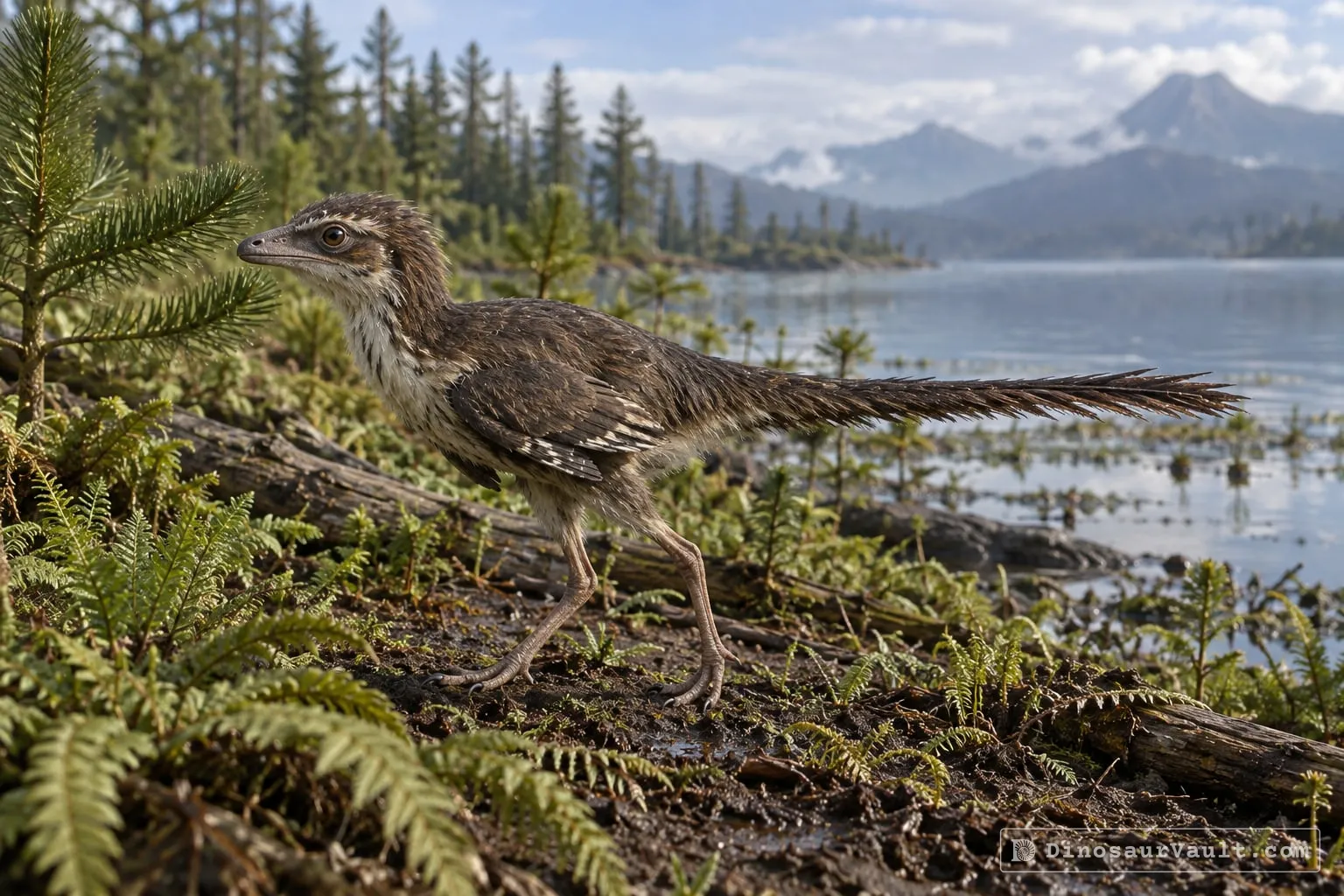
The Tiaojishan landscape supported conifers, ginkgo trees, cycads and ferns. Other dinosaurs in these rocks included Anchiornis, Yi and Tianyulong.
Field notes
About Xiaotingia
What it was like
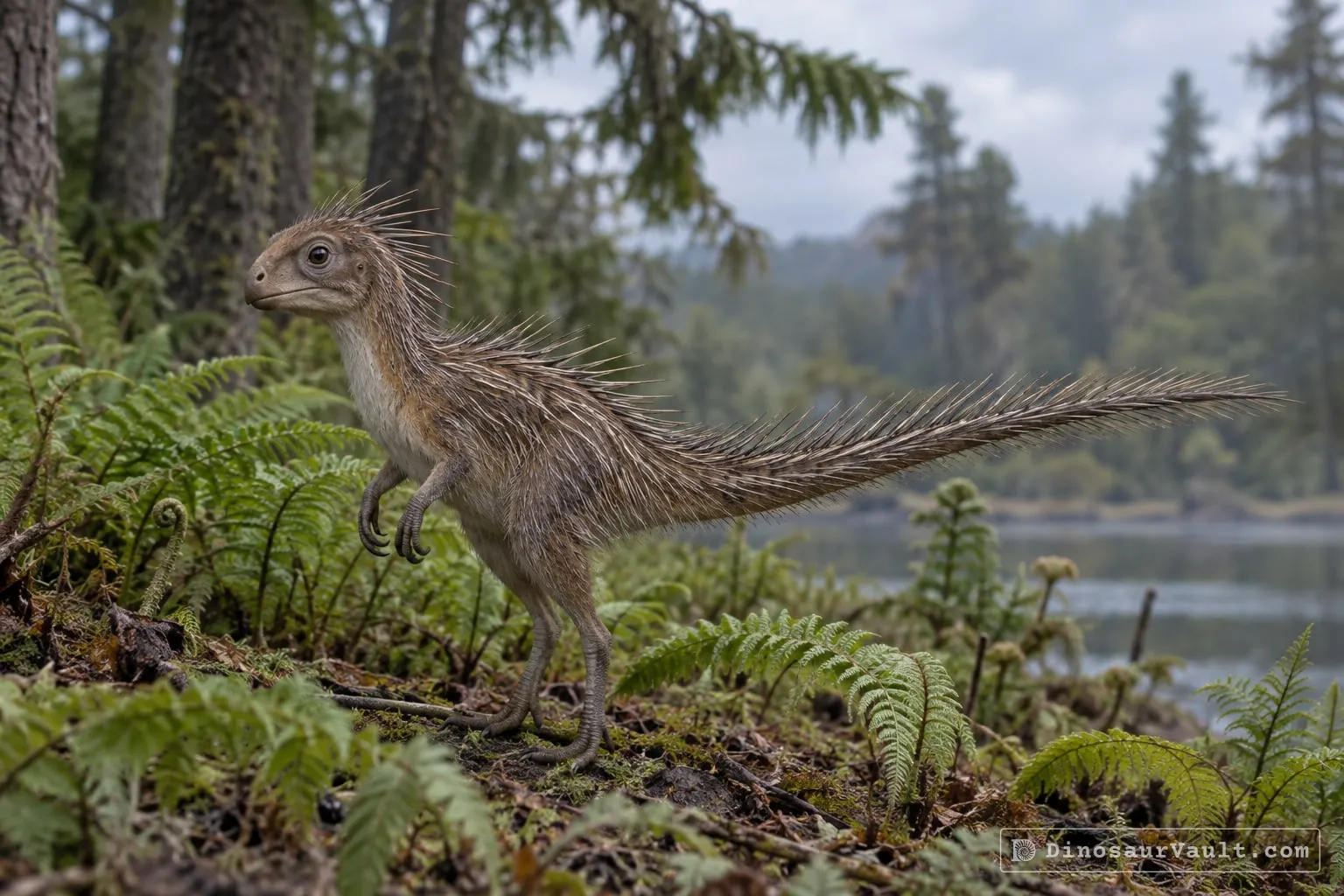
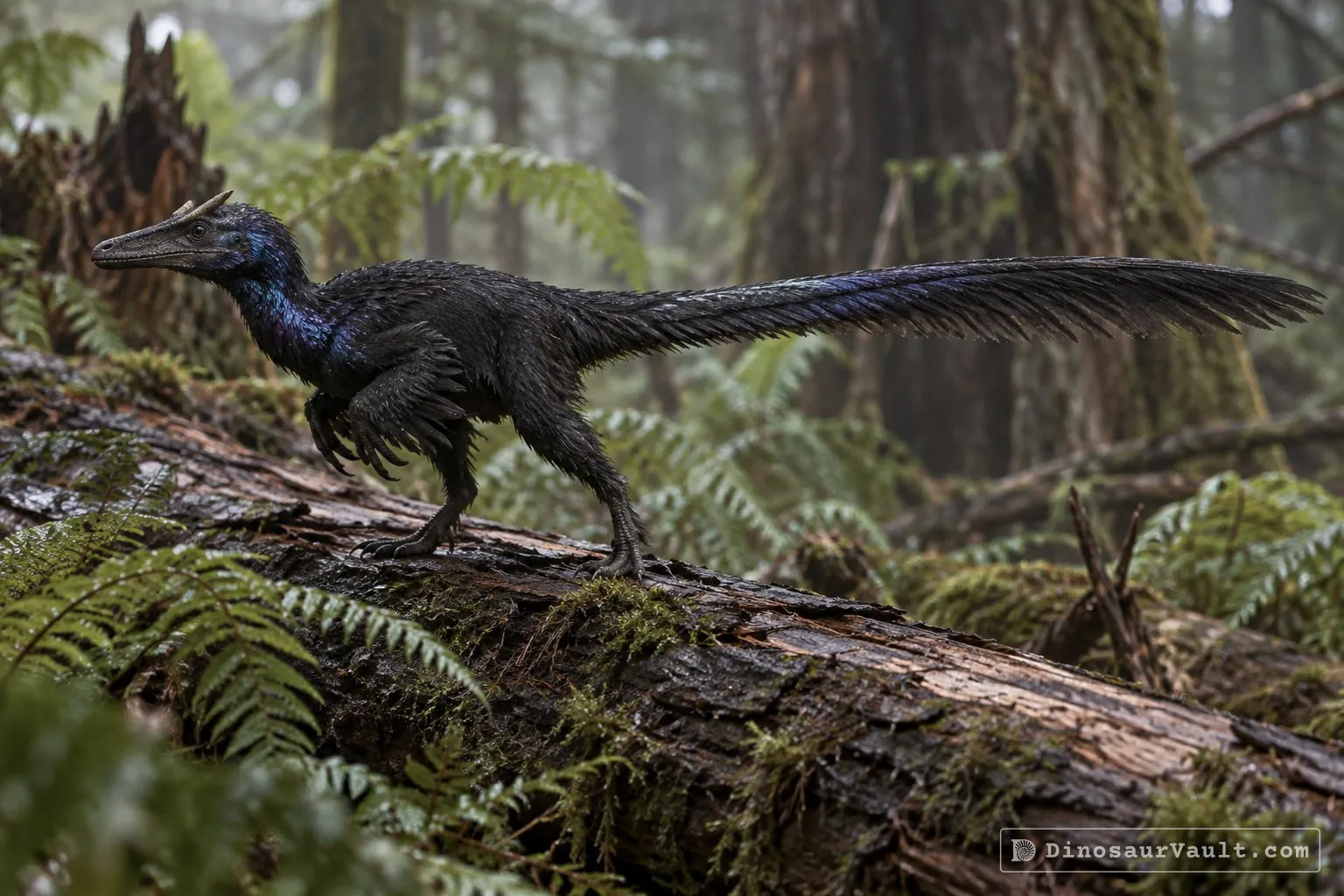
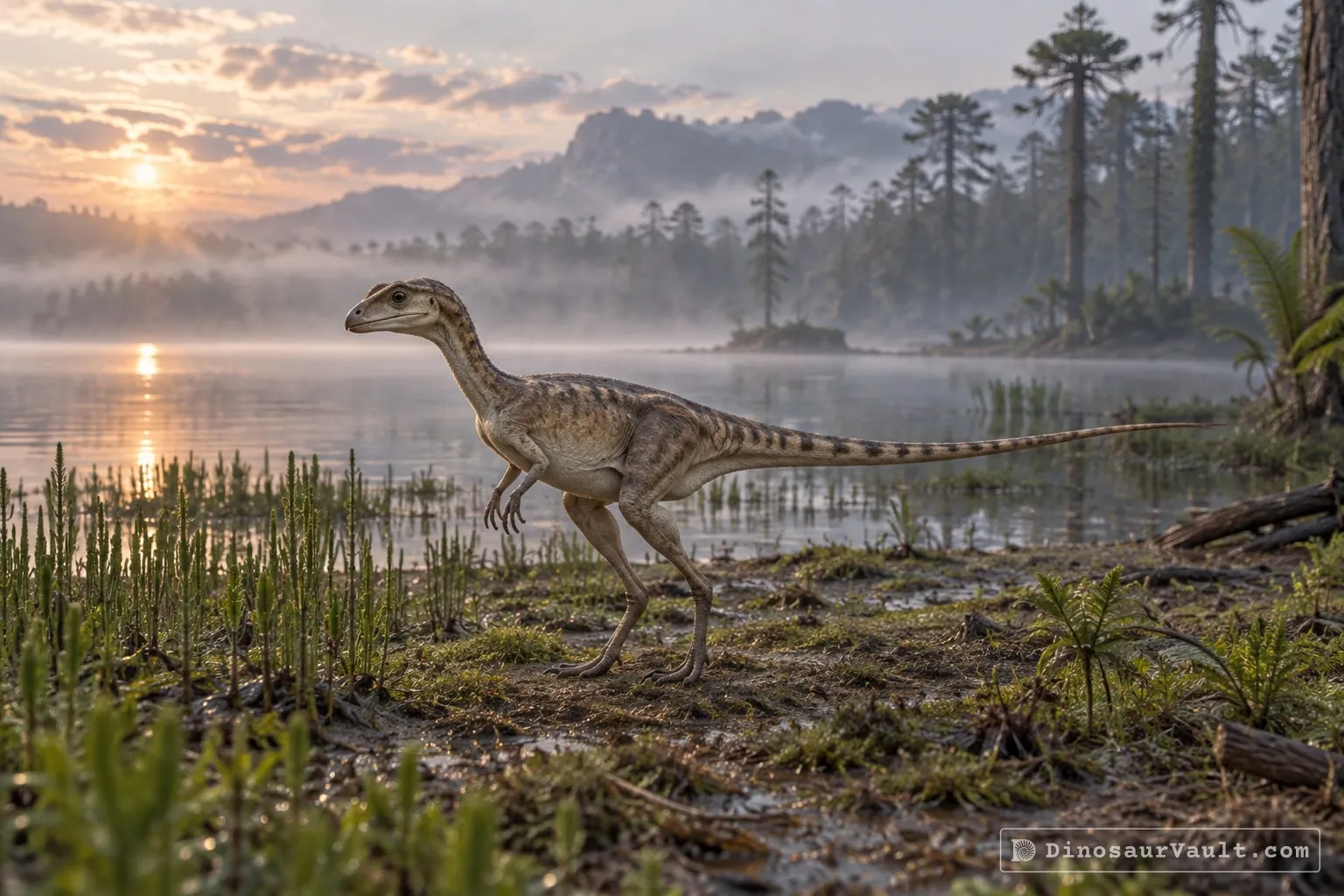
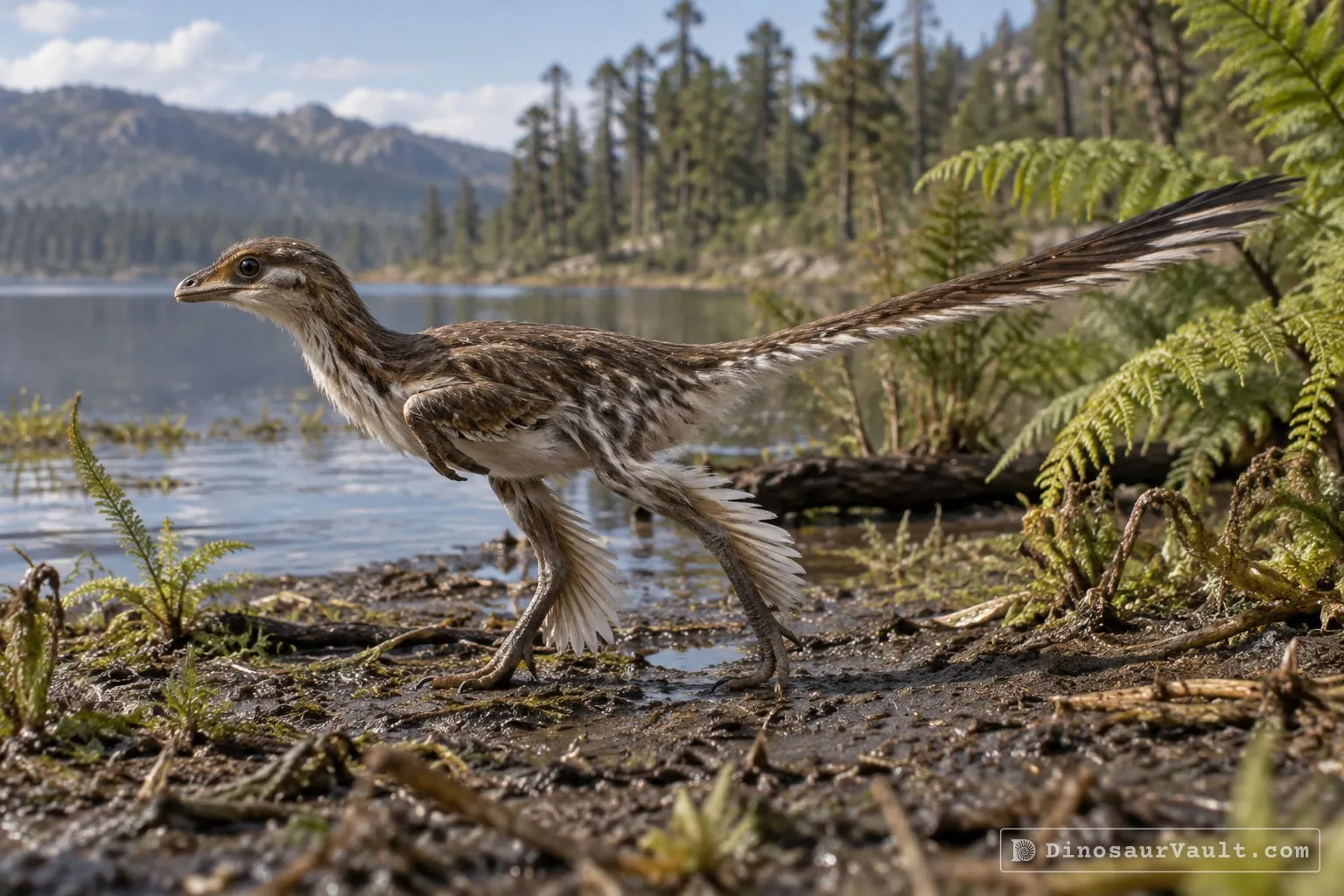
Xiaotingia was a small feathered theropod, about the size of a chicken, related to Anchiornis. It had long arms and long feathers. When it was named, it was thought to be close to the first birds, but its position is still debated.
Its world
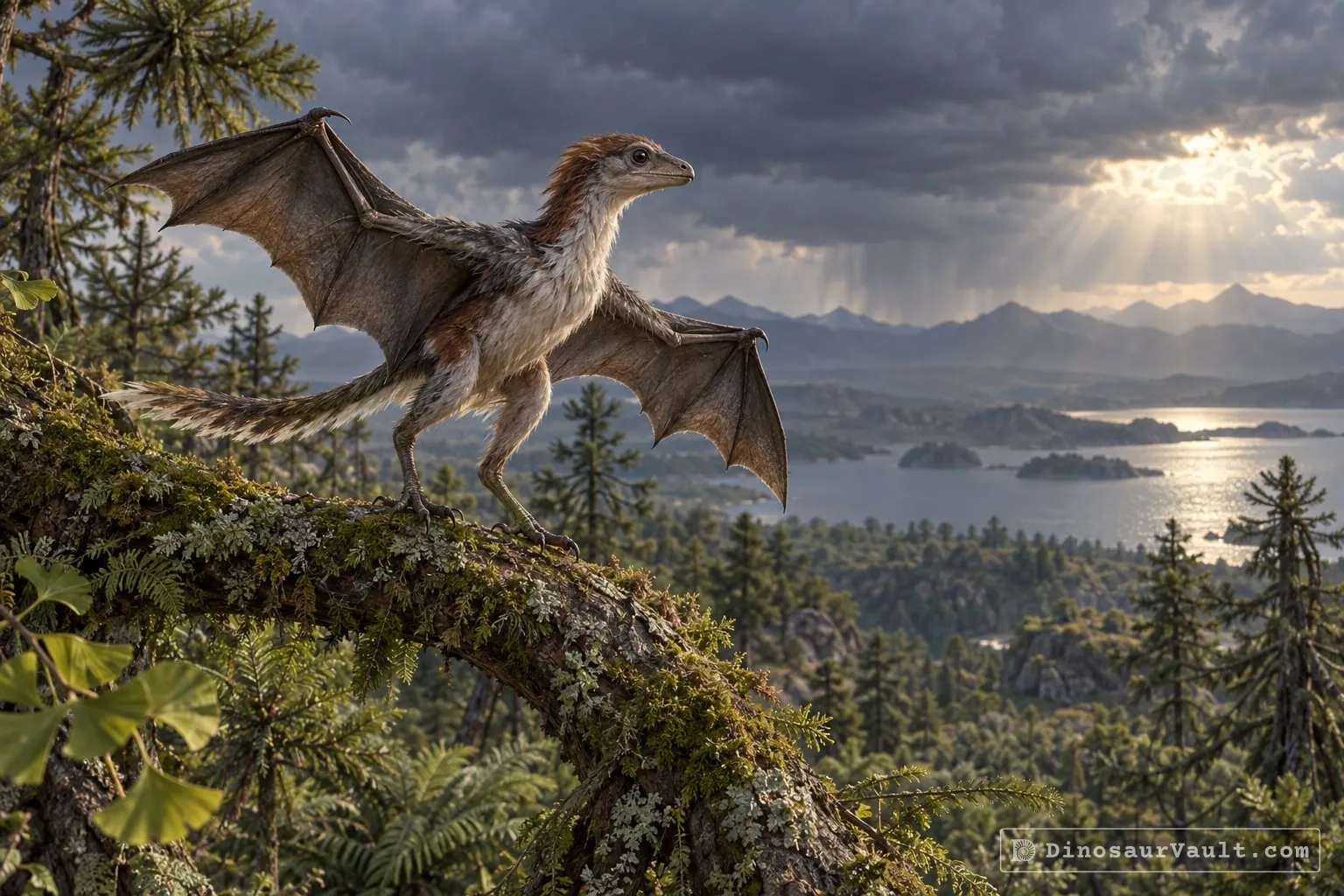
It lived in the Jurassic, in what is now China. It comes from the same fossil beds as the feathered Anchiornis, the bat-winged Yi and the fuzzy plant eater Tianyulong.
How it was found
Xu and colleagues named Xiaotingia in 2011. The type species is Xiaotingia zhengi.
Field gallery
More views of Xiaotingia
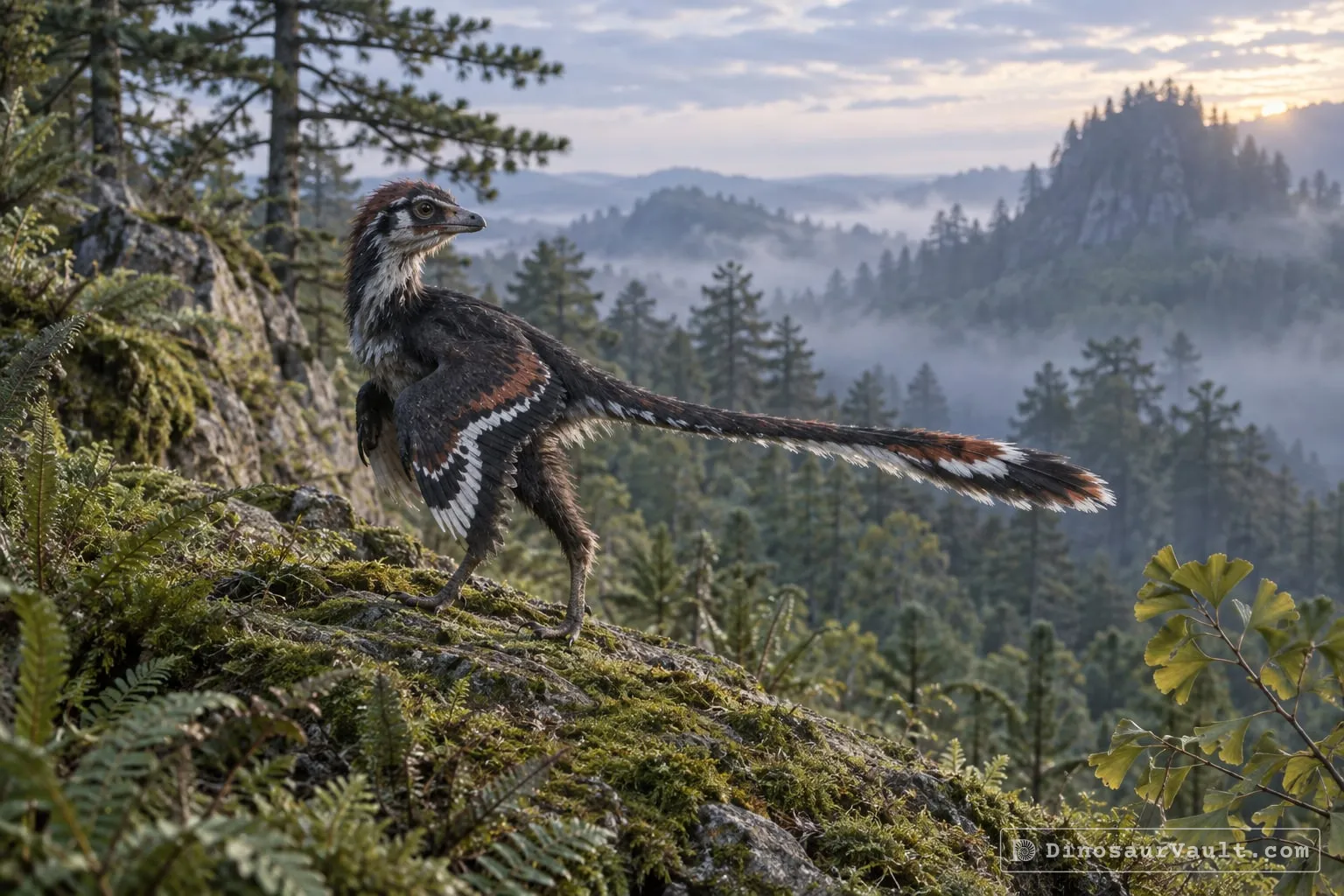
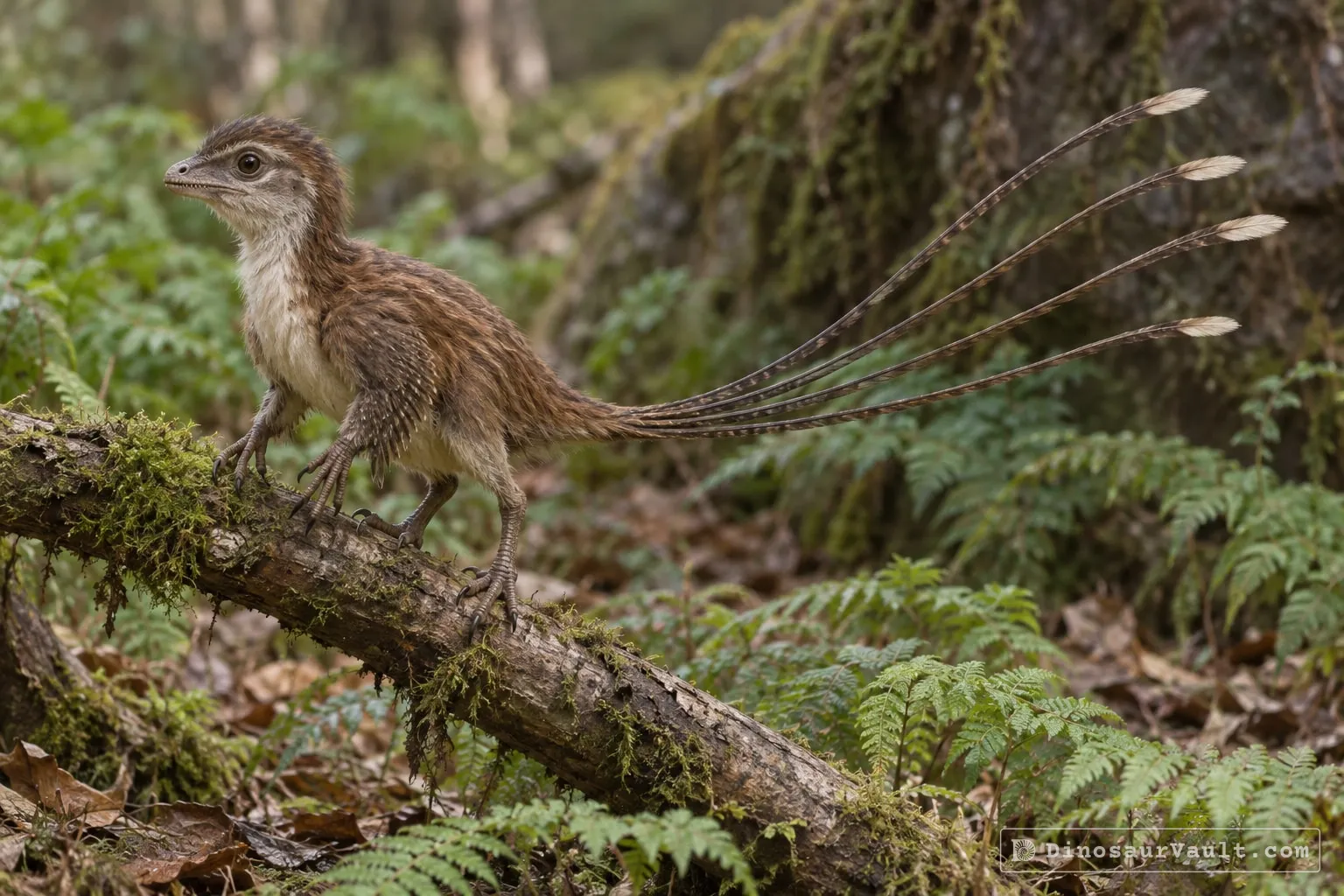
Scenes reconstructed from the available fossil evidence.
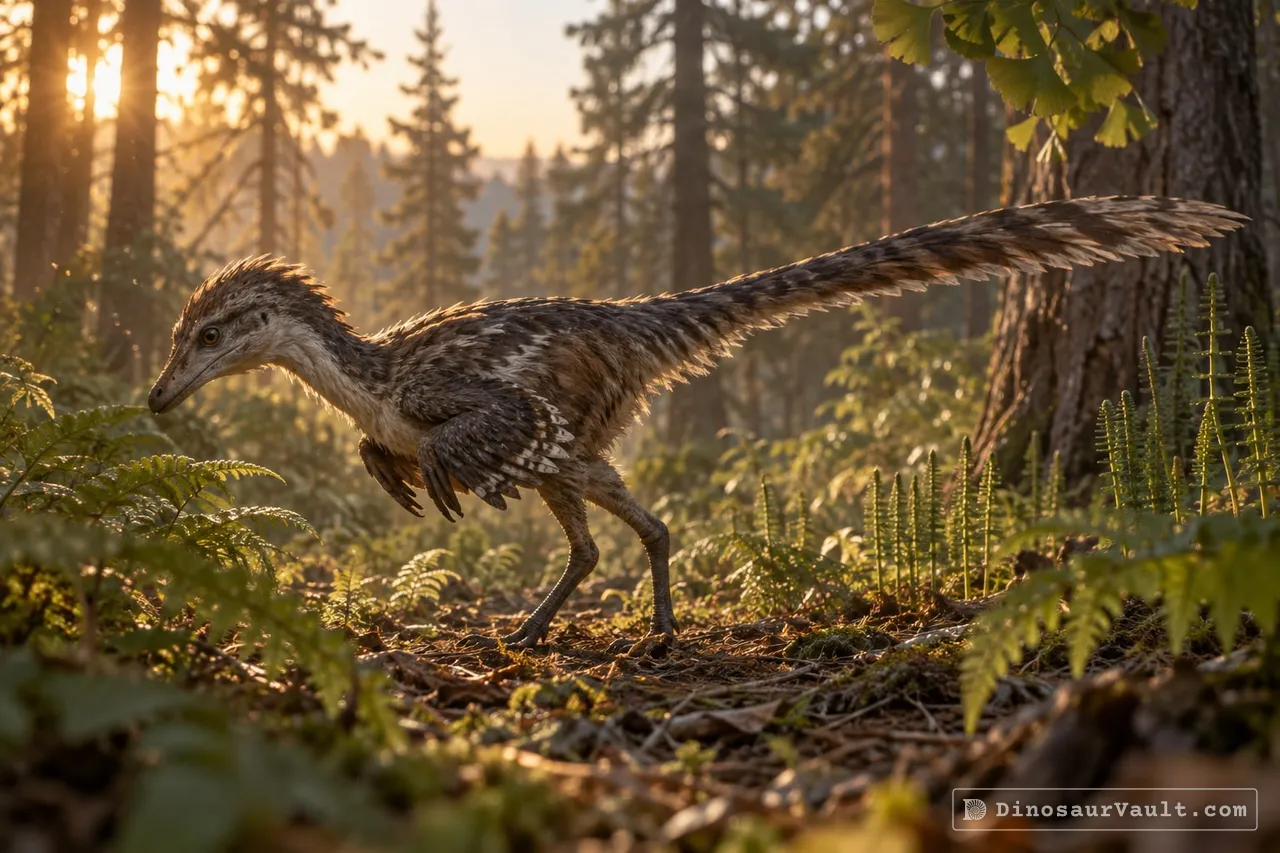
1 of 3
Lived alongside
Found in the same rock formations


A rock formation can hold fossils laid down millions of years apart, so not every animal here met Xiaotingia.
The evidence
The science behind Xiaotingia
Which parts of the picture come from its own bones, and which come from its relatives.
From its own fossils
- A nearly complete skeleton preserves the skull, long arms, clawed hands and hindlimbs.
- Feathers are preserved around the skeleton, including long feathers beside the thighs.
Borrowed from relatives
- Most of its body shape comes from its own skeleton.
- Details of its feather arrangement can be compared with Anchiornis, another small feathered dinosaur from the same rocks.
Still unknown
- Its exact place on the dinosaur family tree.
- Whether it could fly or glide.
- Its feather colors.
Discovery timeline
- 2011Named itXu et al.
- 2011Family treeLee & Worthy
- 2013Family treeGodefroit et al.
- 2016Its worldJiang et al.
Key papers
The research behind what we know of Xiaotingia
Named it
Named Xiaotingia and showed how its anatomy could change the family tree around the earliest birds.
An Archaeopteryx-like theropod from China and the origin of Avialae. Nature 475: 465-470
Read the paper : An Archaeopteryx-like theropod from China and the origin of Avialae (opens in a new tab)Family tree
Different methods returned Archaeopteryx to the bird branch while placing Xiaotingia weakly with troodontids.
Likelihood reinstates Archaeopteryx as a primitive bird. Biology Letters 8: 299-303
Read the paper : Likelihood reinstates Archaeopteryx as a primitive bird (opens in a new tab)Family tree
Described Eosinopteryx and compared the feather coverings and relationships of small Jurassic dinosaurs, including Xiaotingia.
Reduced plumage and flight ability of a new Jurassic paravian theropod from China. Nature Communications 4
Read the paper : Reduced plumage and flight ability of a new Jurassic paravian theropod from China (opens in a new tab)Its world
Described ginkgo wood and reviewed conifers, cycads and ferns preserved in the Tiaojishan Formation.
A Jurassic wood providing insights into the earliest step in Ginkgo wood evolution. Scientific Reports 6
Read the paper : A Jurassic wood providing insights into the earliest step in Ginkgo wood evolution (opens in a new tab)
Close relatives
Other members of Troodontidae


Sources: Wikidata