Tienshanosaurus
"Tian Shan lizard"
- Lived
- 162 to 155 million years ago, Late Jurassic
- Diet
- Herbivore
- Group
- Sauropods, Mamenchisauridae
- Found in
- China
- Named by
- Young 1937
Where its fossils were found
The evidence
Today

160 million years ago
Habitat
The Shishugou Formation records rivers, floodplains and wetlands, with fossil wood among the sediments. Mamenchisaurus, Sinraptor and Guanlong lived in this landscape.
Field notes
About Tienshanosaurus
What it was like
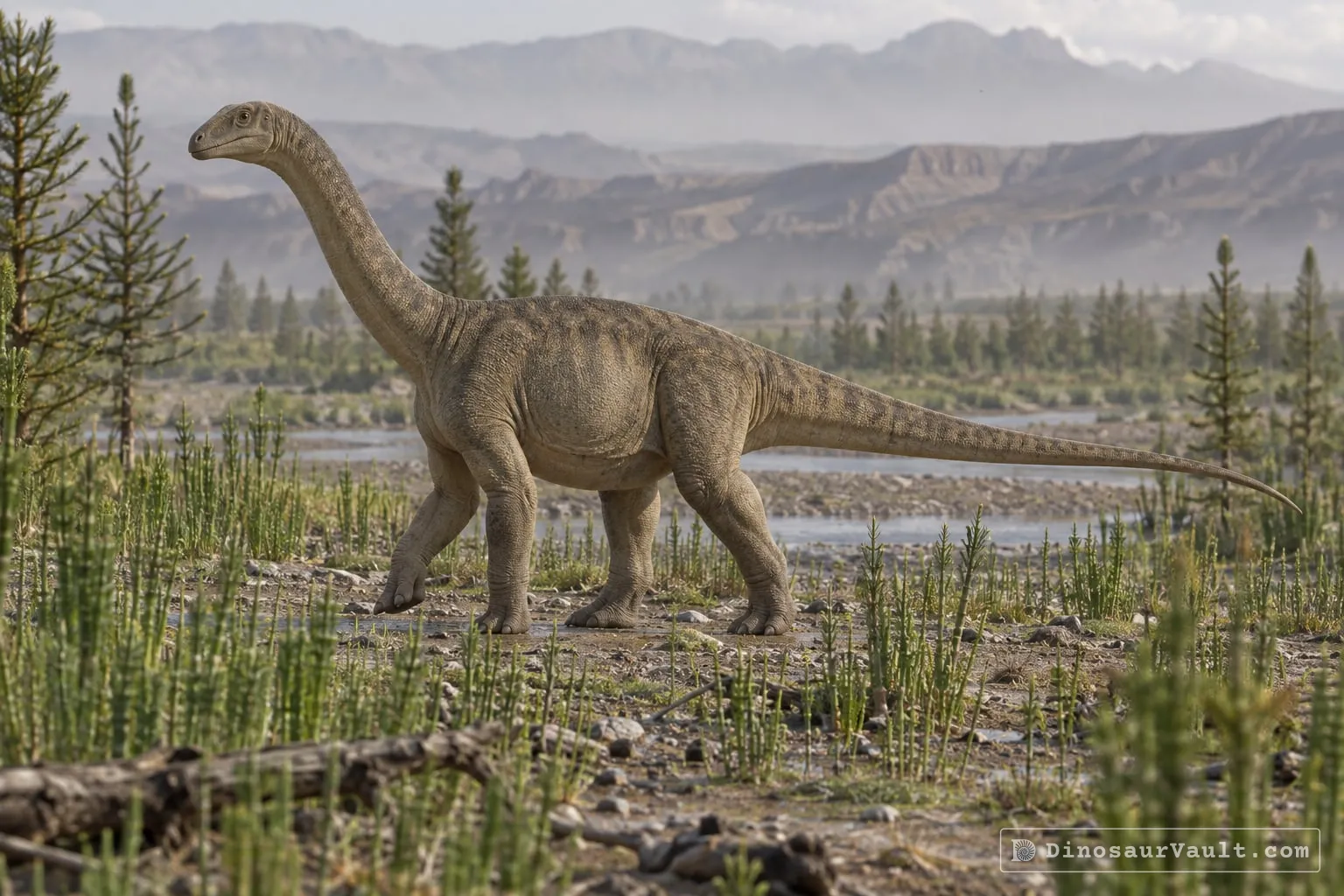
Tienshanosaurus was a long-necked, four-legged plant eater, a relative of Mamenchisaurus. It is known from part of a skeleton.
Its world
It lived in the Late Jurassic in what is now northwestern China. Its bones come from the Shishugou Formation, where it shared the land with Mamenchisaurus, the big hunters Sinraptor and Monolophosaurus and the crested Guanlong.
How it was found
Young named Tienshanosaurus in 1937. Three finds are known.
Field gallery
More views of Tienshanosaurus
Scenes reconstructed from the available fossil evidence.
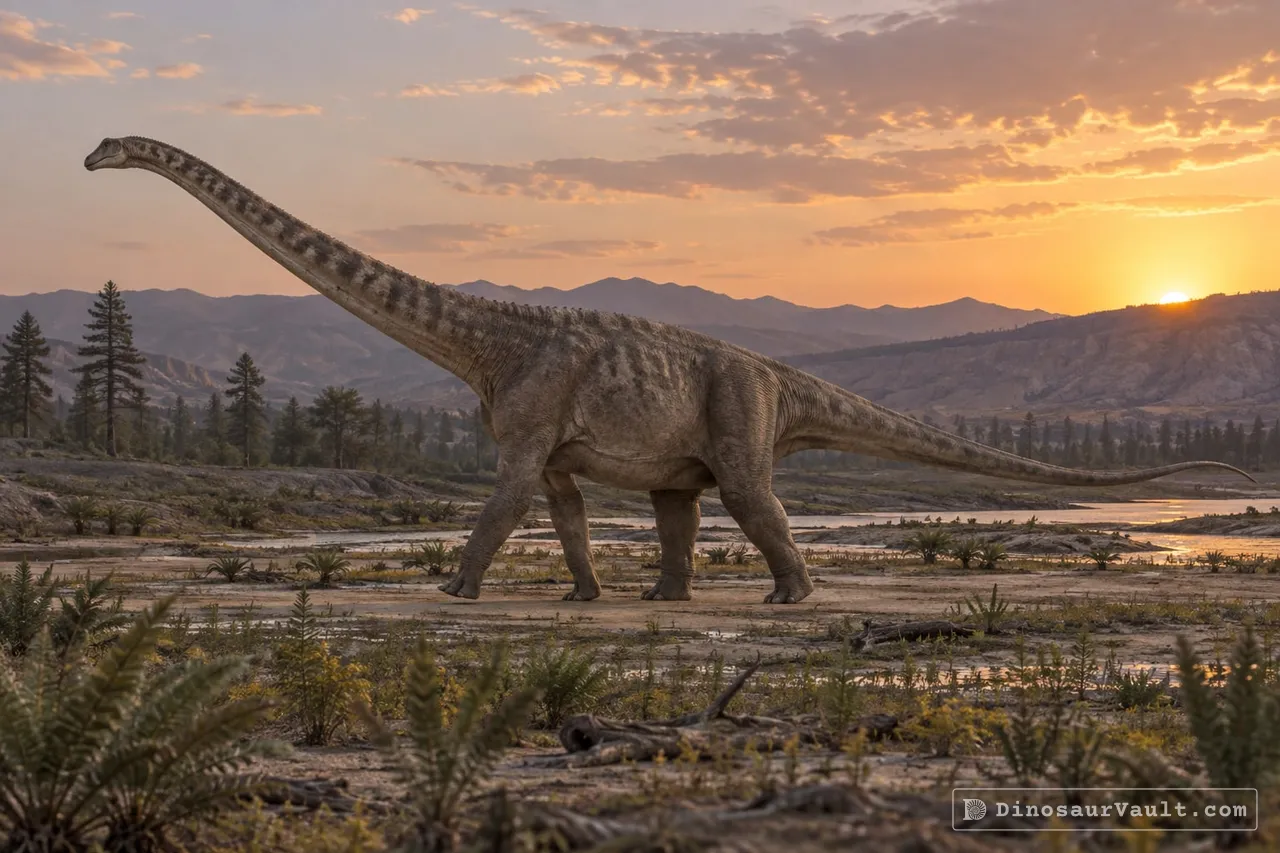
1 of 3
Lived alongside
Found in the same rock formations
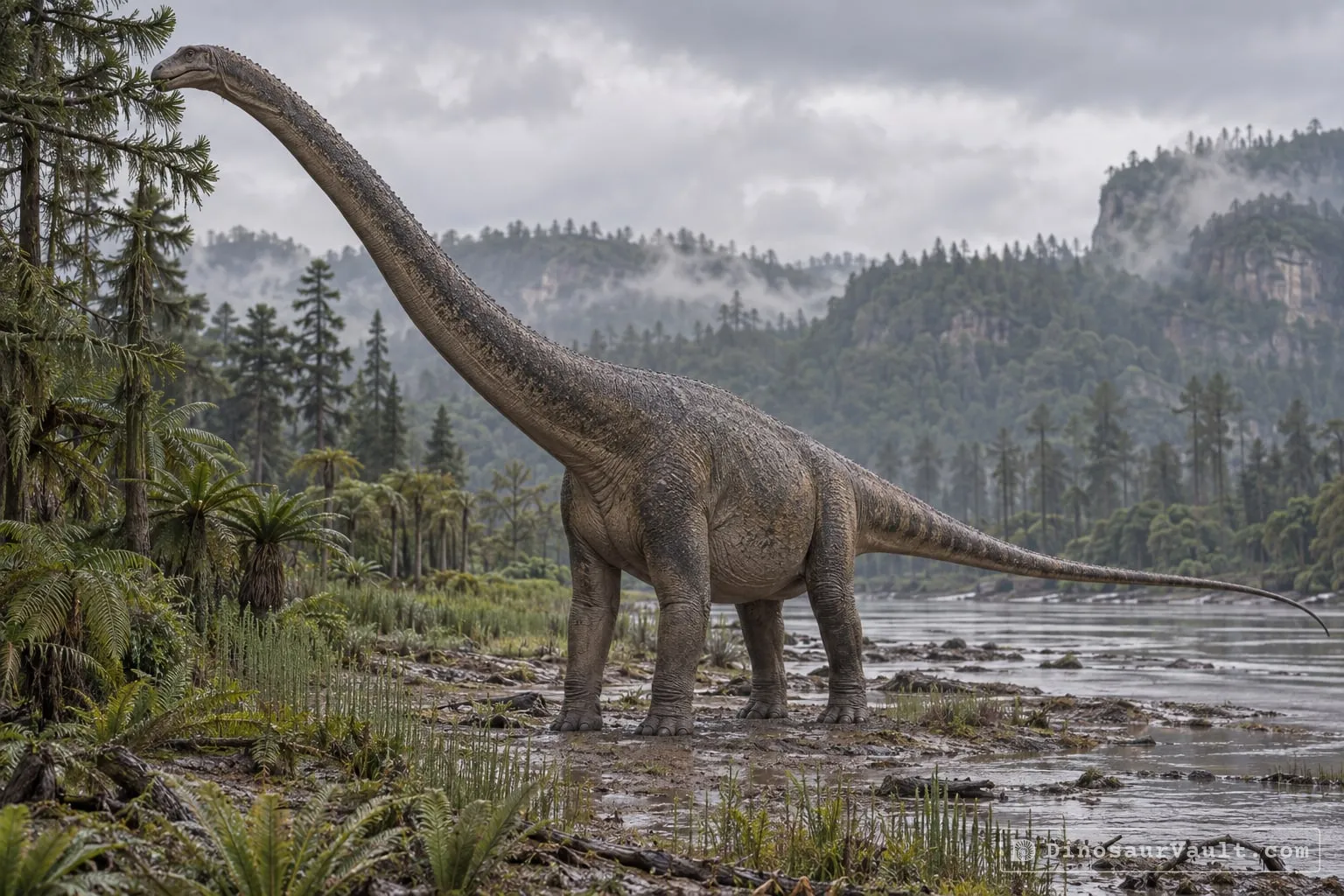
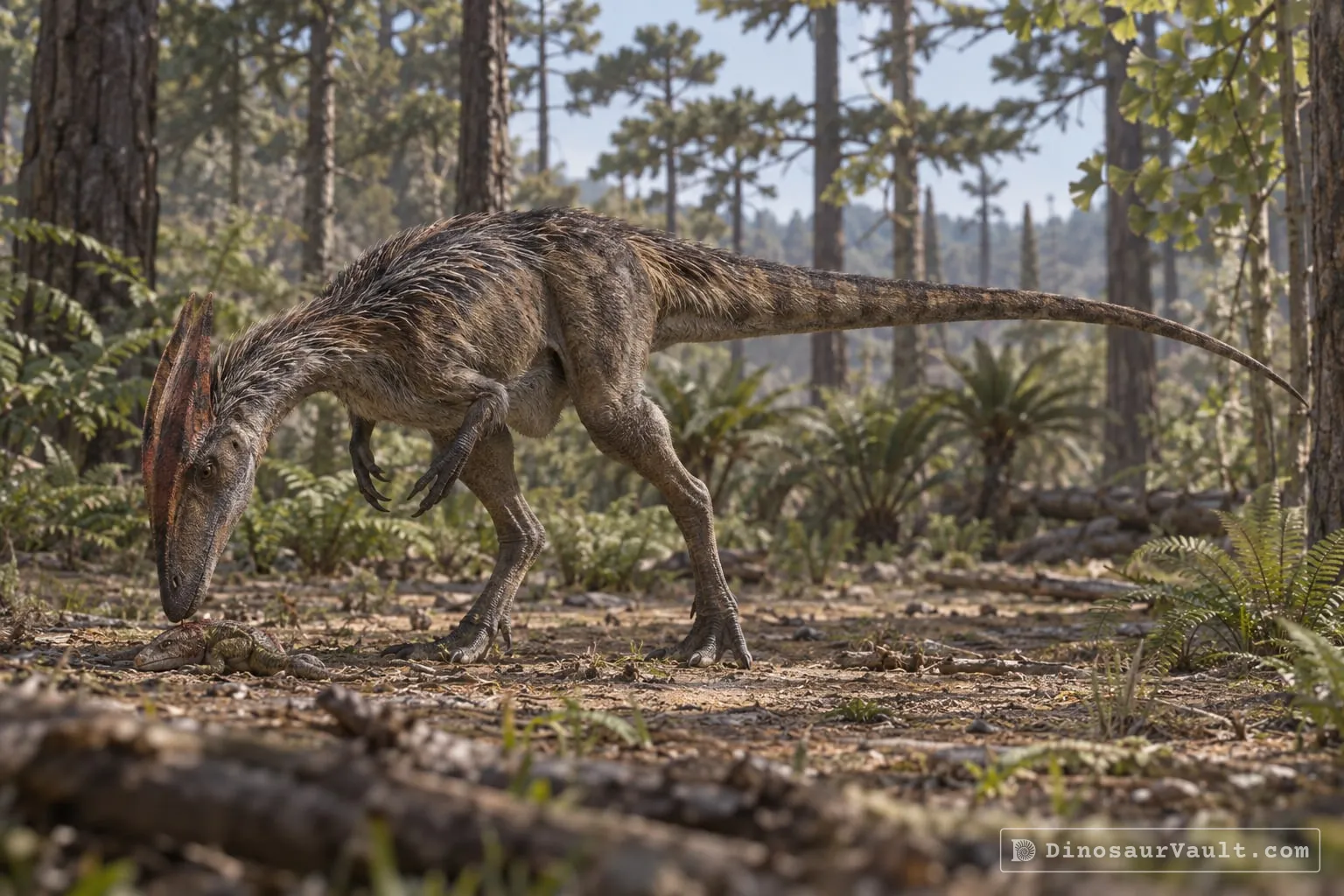
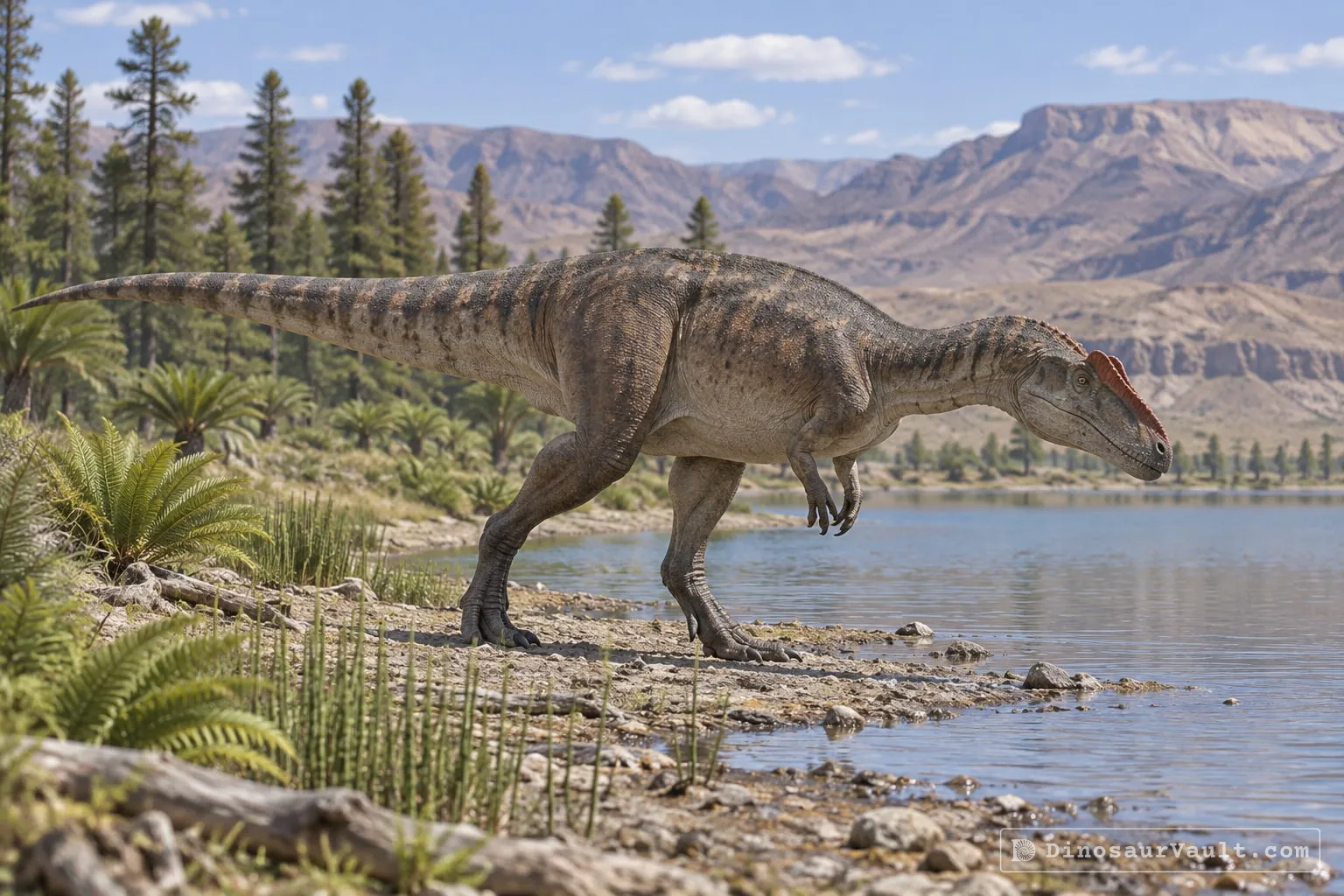
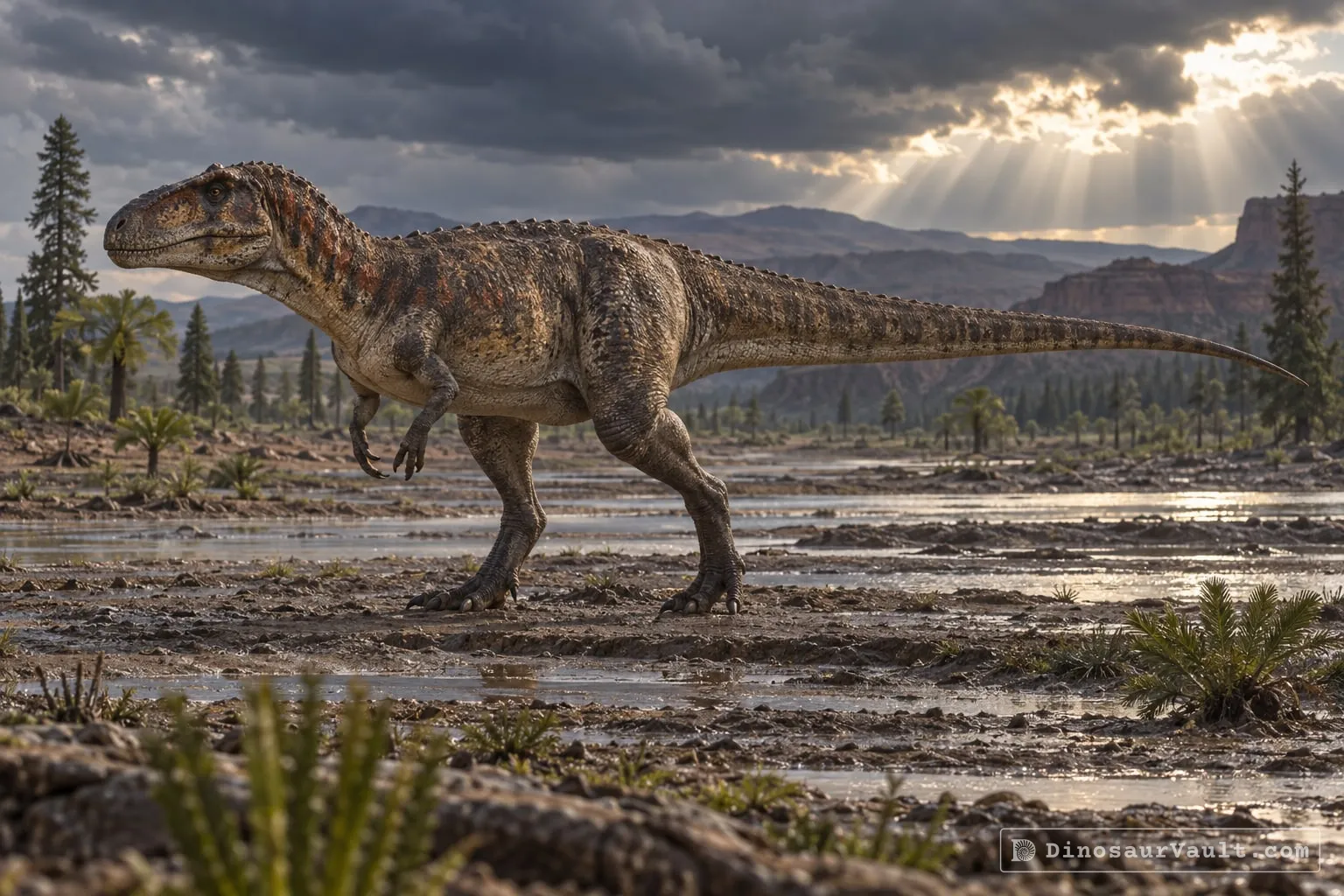
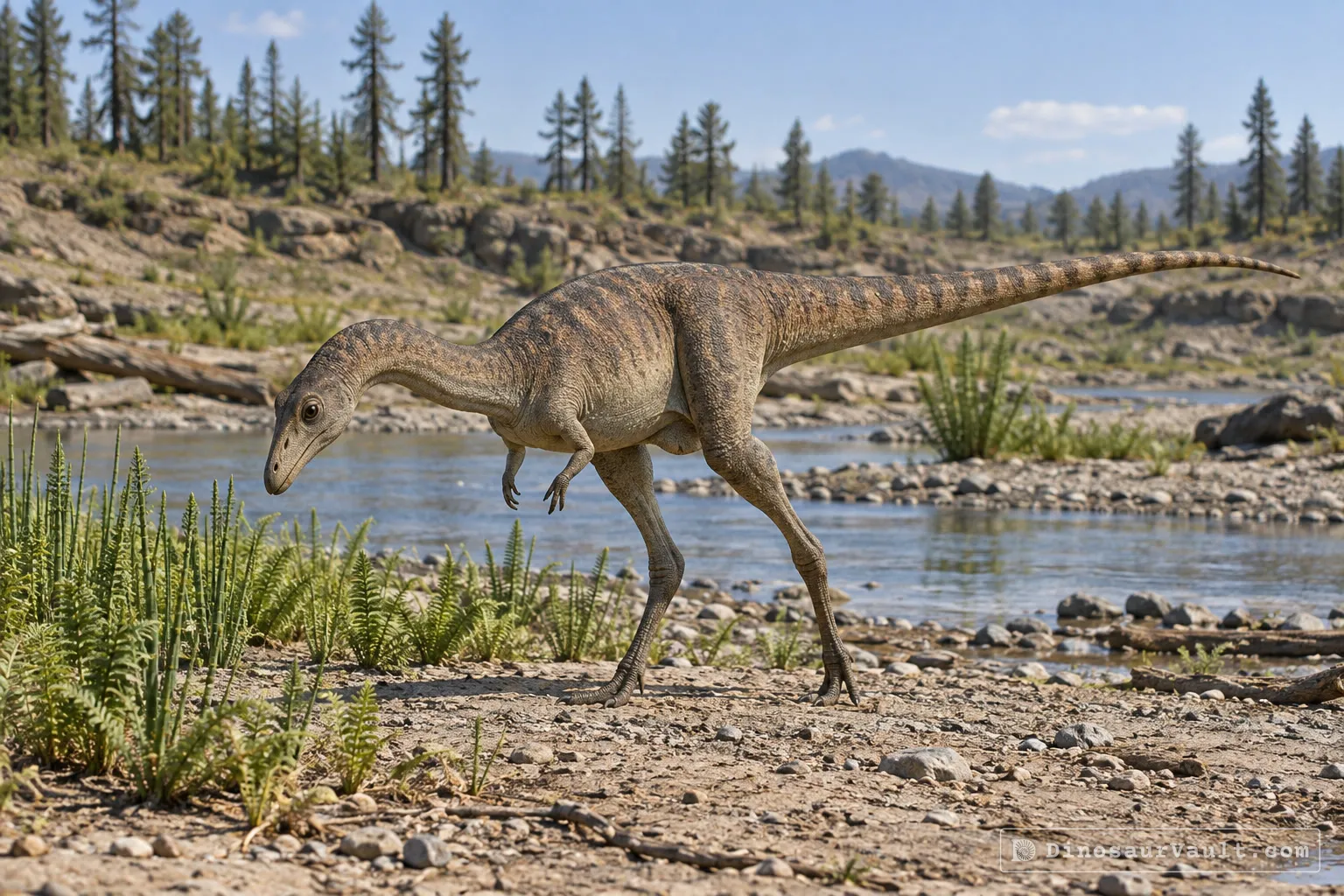
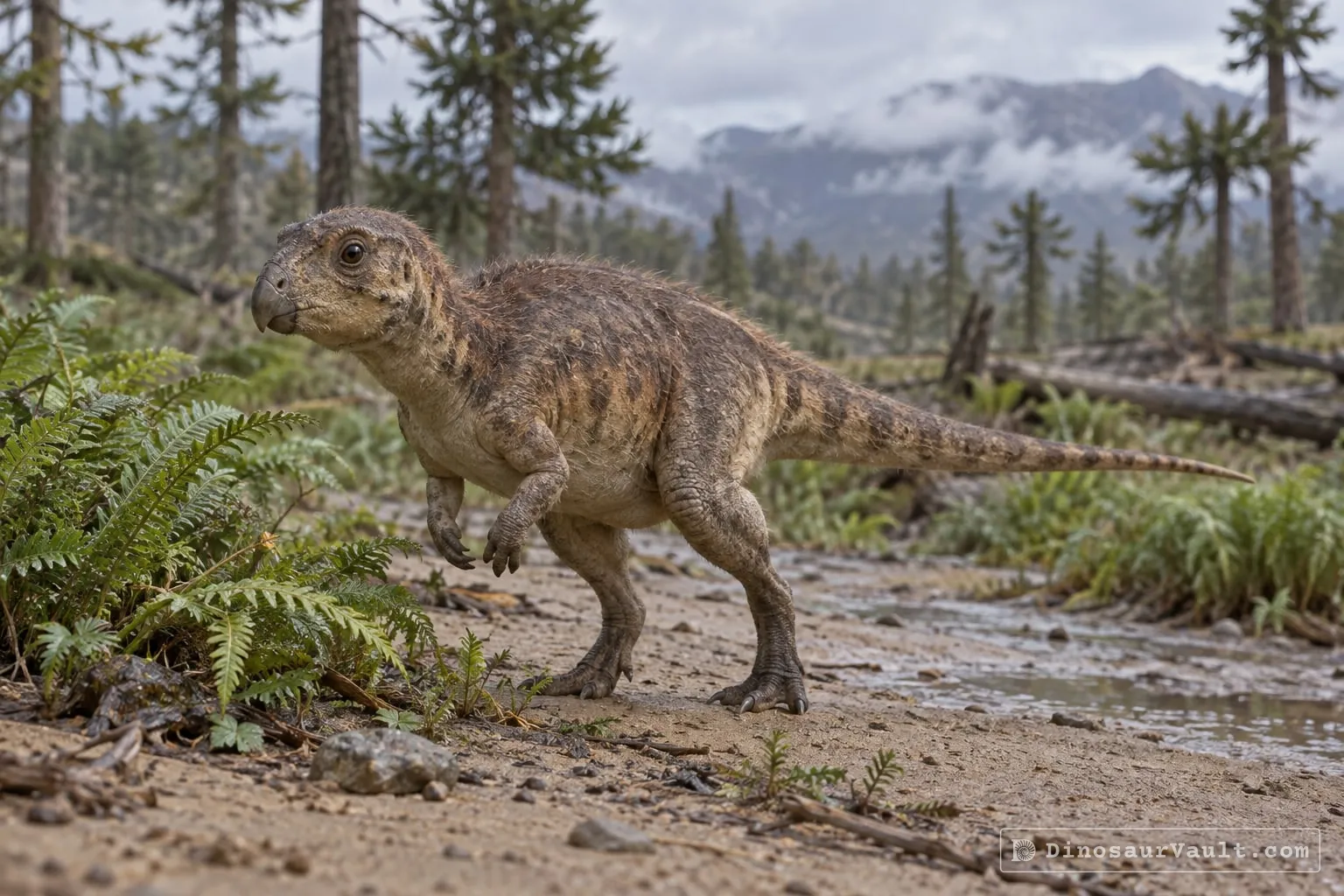
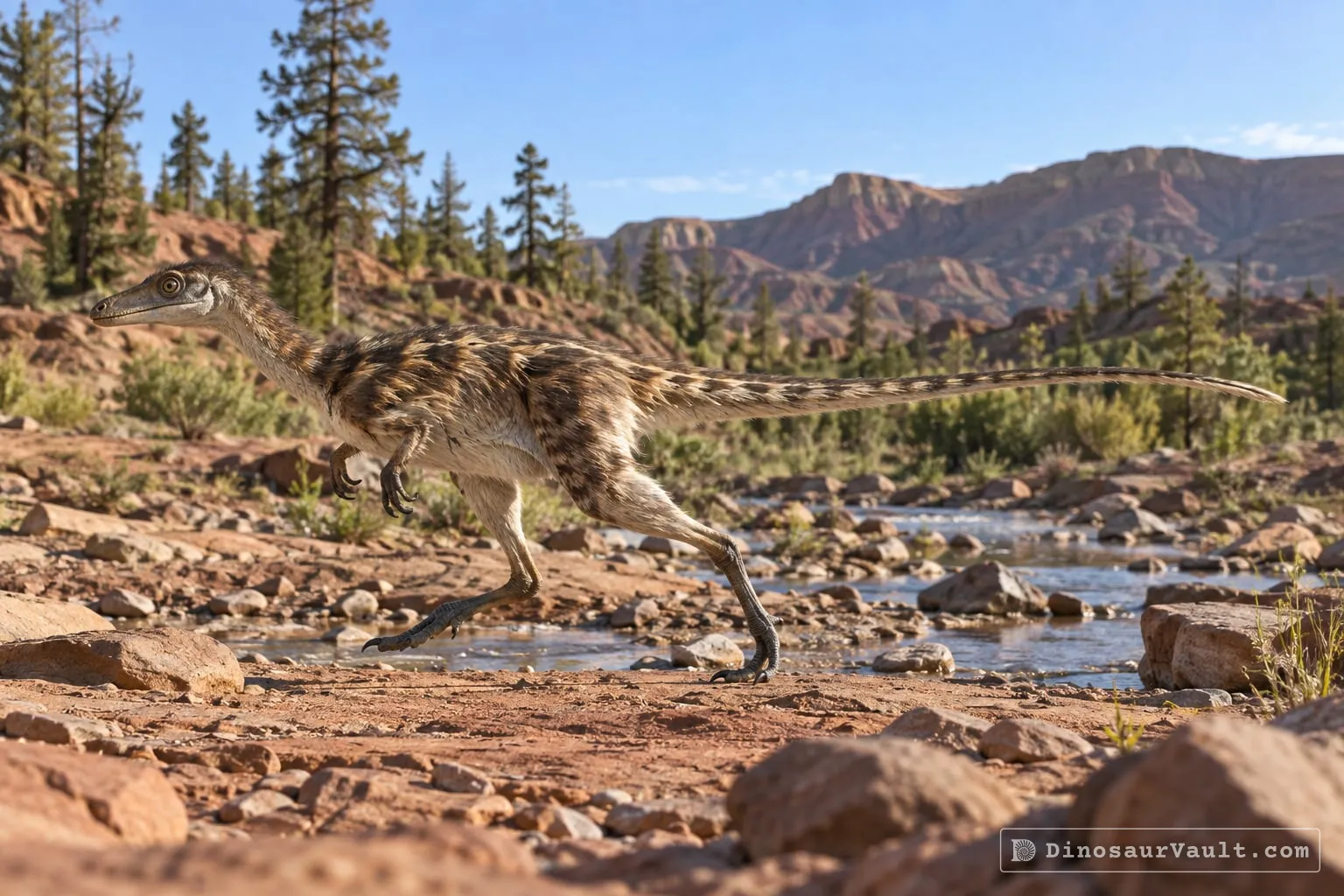


A rock formation can hold fossils laid down millions of years apart, so not every animal here met Tienshanosaurus.
The evidence
The science behind Tienshanosaurus
Which parts of the picture come from its own bones, and which come from its relatives.
From its own fossils
- The original material, collected as two separate sets of bones, forms the basis of the name Tienshanosaurus. Some of these bones appear to have been lost since they were first described.
- Back vertebrae in one of these sets have tall arches and single, undivided spines that lean slightly backward. Its shoulder blade is less long and less flared at the end than that of Bellusaurus.
- Neck vertebrae with ribs and a run of tail vertebrae from a separate find were assigned to Tienshanosaurus provisionally, without naming a species.
Borrowed from relatives
- Its head is restored by comparison with Euhelopus, and its neck, chest and legs with other sauropods such as Mnyamawamtuka.
- Its closest known relatives seem to be mamenchisaurids such as Mamenchisaurus.
Still unknown
- Its complete neck length and body proportions.
- Whether all the bones assigned to it belong to the same genus.
- Its exact place among sauropods. It seems close to the mamenchisaurids but still needs a full modern description.
Discovery timeline
- 1937Named itYoung
- 2020Family treeMoore et al.
- 2022Its worldXU et al.
- 2022Close relativeZhang et al.
- 2025Close relativeWei et al.
Key papers
The research behind what we know of Tienshanosaurus
Named it
Named Tienshanosaurus from a partial sauropod skeleton found in China.
A new dinosaurian from Sinkiang. Palaeontologia Sinica, New Series C, Whole Series No. 132 213: 1-29
No link available
Family tree
Redescribed Klamelisaurus and tested how Jurassic Chinese sauropods are related to one another.
Osteology ofKlamelisaurus gobiensis(Dinosauria, Eusauropoda) and the evolutionary history of Middle–Late Jurassic Chinese sauropods. Journal of Systematic Palaeontology 18: 1299-1393
Read the paper : Osteology ofKlamelisaurus gobiensis(Dinosauria, Eusauropoda) and the evolutionary history of Middle–Late Jurassic Chinese sauropods (opens in a new tab)Its world
Reviewed the animals and sedimentary environments of the Shishugou Formation, including Tienshanosaurus and its sauropod neighbors.
The Shishugou Fauna of the Middle‐Late Jurassic Transition Period in the Junggar Basin of Western China. Acta Geologica Sinica - English Edition 96: 1115-1135
Read the paper : The Shishugou Fauna of the Middle‐Late Jurassic Transition Period in the Junggar Basin of Western China (opens in a new tab)Close relative
Redescribed the back vertebrae of Xinjiangtitan and showed how they differ from the back vertebrae of Tienshanosaurus.
Redescription of the dorsal vertebrae of the mamenchisaurid sauropod Xinjiangtitan shanshanesis Wu et al. 2013. Historical Biology 36: 49-75
Read the paper : Redescription of the dorsal vertebrae of the mamenchisaurid sauropod Xinjiangtitan shanshanesis Wu et al. 2013 (opens in a new tab)Close relative
Named Tongnanlong and compared its shoulder with that of Tienshanosaurus, which differs in the curve of the seam between its shoulder bones and the position of a ridge.
A new mamenchisaurid from the Upper Jurassic Suining Formation of the Sichuan Basin in China and its implication on sauropod gigantism. Scientific Reports 15
Read the paper : A new mamenchisaurid from the Upper Jurassic Suining Formation of the Sichuan Basin in China and its implication on sauropod gigantism (opens in a new tab)
Close relatives
Other members of Mamenchisauridae


Sources: Wikidata