Thanatotheristes
"reaper of death"
Type species Thanatotheristes degrootorum
- Lived
- 84 to 72 million years ago, Late Cretaceous
- Diet
- Carnivore
- Group
- Theropods, Tyrannosauridae
- Found in
- Canada
- Named by
- Voris et al. 2020
Where its fossils were found
The evidence
Today

80 million years ago
Habitat
It lived on a low coastal plain beside the Western Interior Seaway, with freshwater and brackish wetlands. Other dinosaurs from the Foremost Formation include Xenoceratops, Colepiocephale and Dromaeosaurus.
Field notes
About Thanatotheristes
What it was like
Thanatotheristes was a tyrannosaur, a big two-legged hunter with a deep skull and strong teeth. Its long upper jaw carried rows of ridges and pits along its sides, a feature not seen in other tyrannosaurs.
It was a close cousin of Daspletosaurus and belongs to the same branch of the tyrannosaur family.
Its world
It lived in the Late Cretaceous, between about 84 and 72 million years ago, in what is now Alberta, Canada. Its fossils come from the Foremost Formation, where it would have been the top predator. It shared the land with the horned Xenoceratops, the dome-headed Colepiocephale and the small raptor Dromaeosaurus.
How it was found
Voris and colleagues named Thanatotheristes in 2020, from two finds. It is the oldest tyrannosaur known from Canada.
Field gallery
More views of Thanatotheristes
Scenes reconstructed from the available fossil evidence.
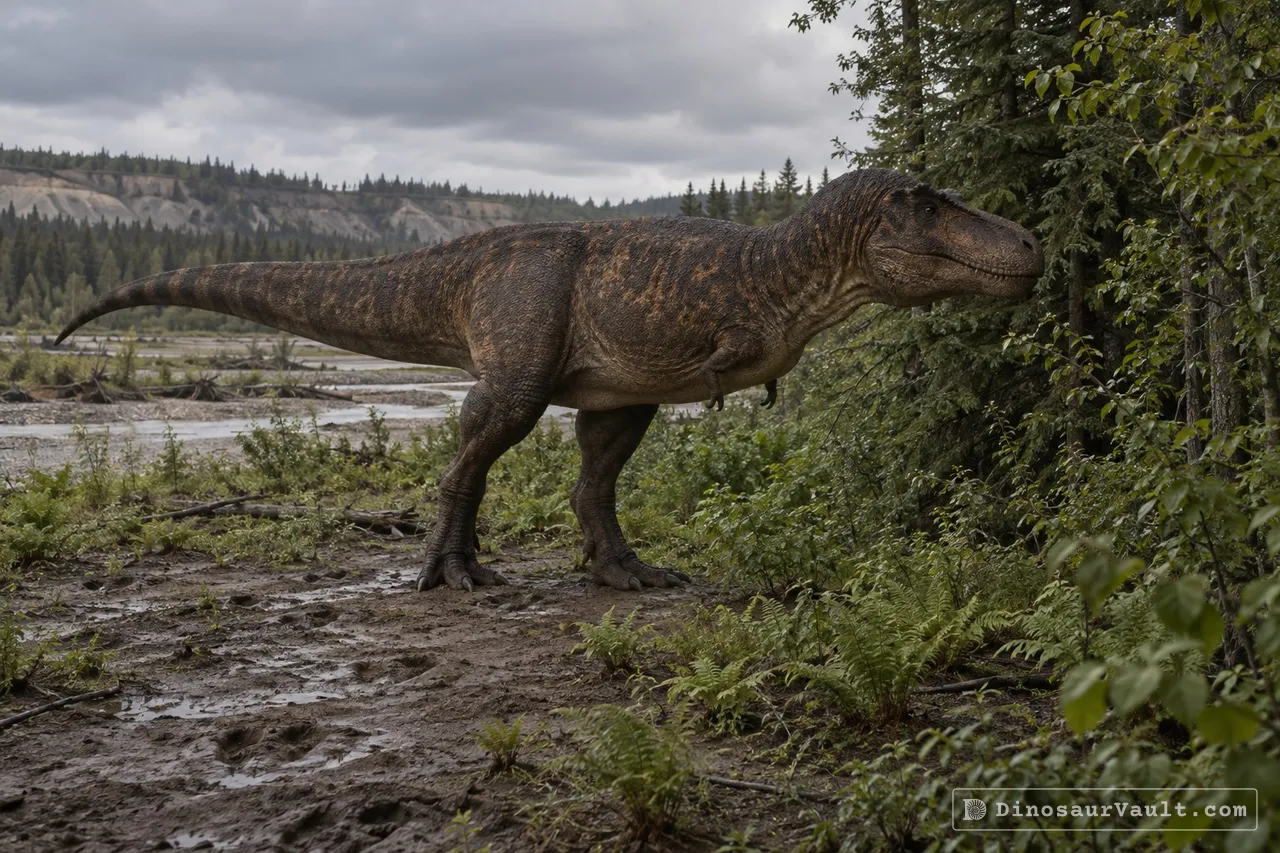
1 of 2
Lived alongside
Found in the same rock formations
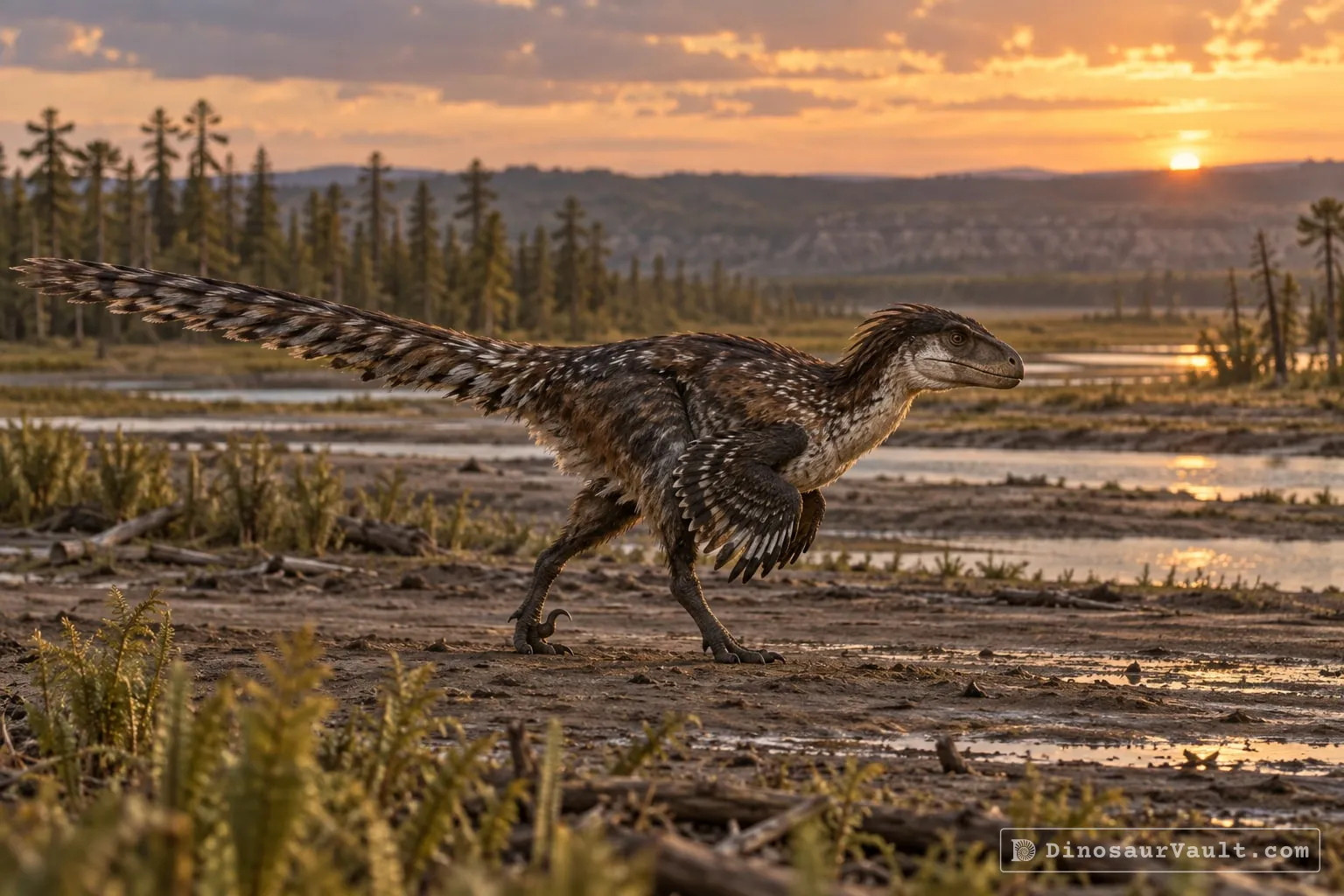
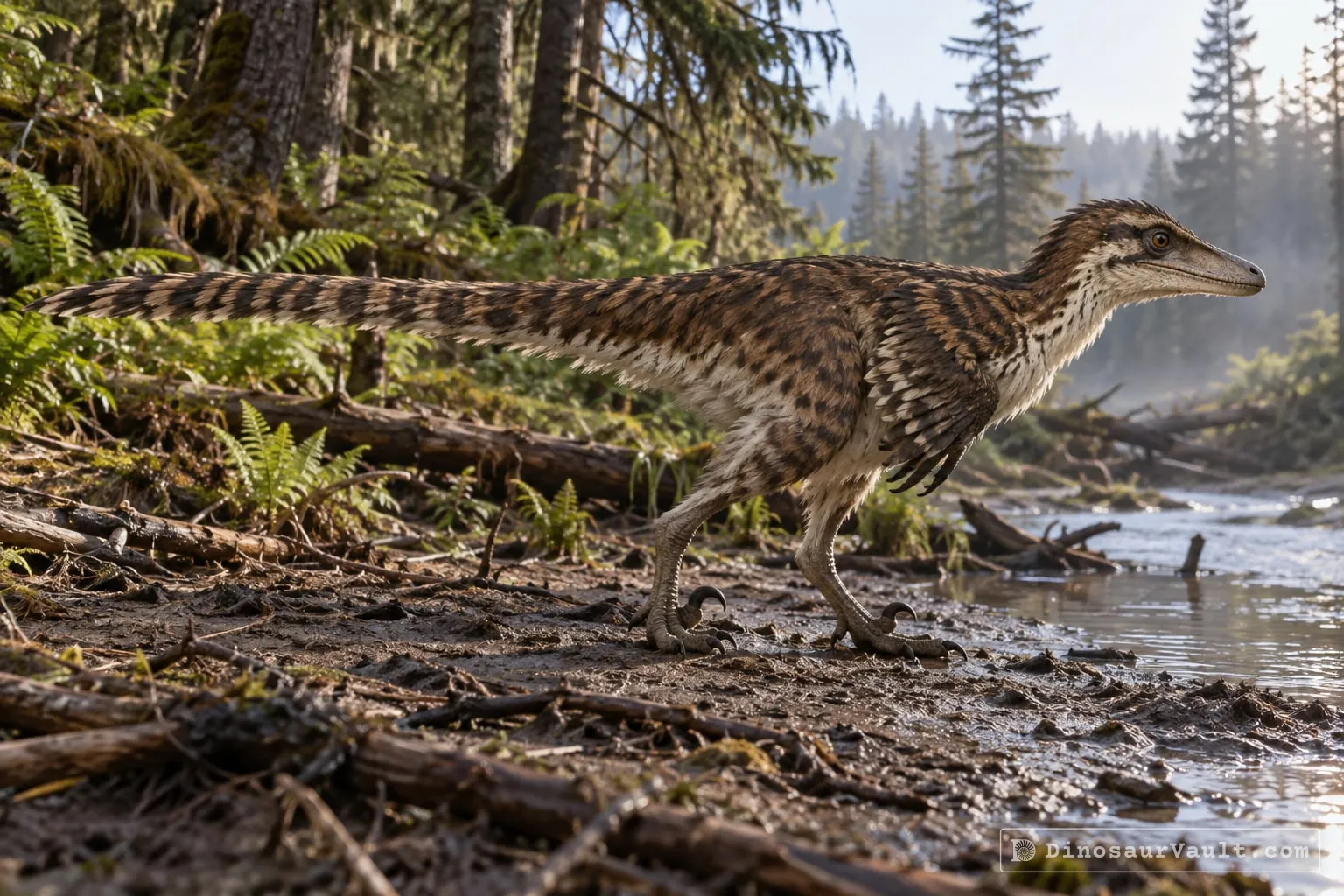
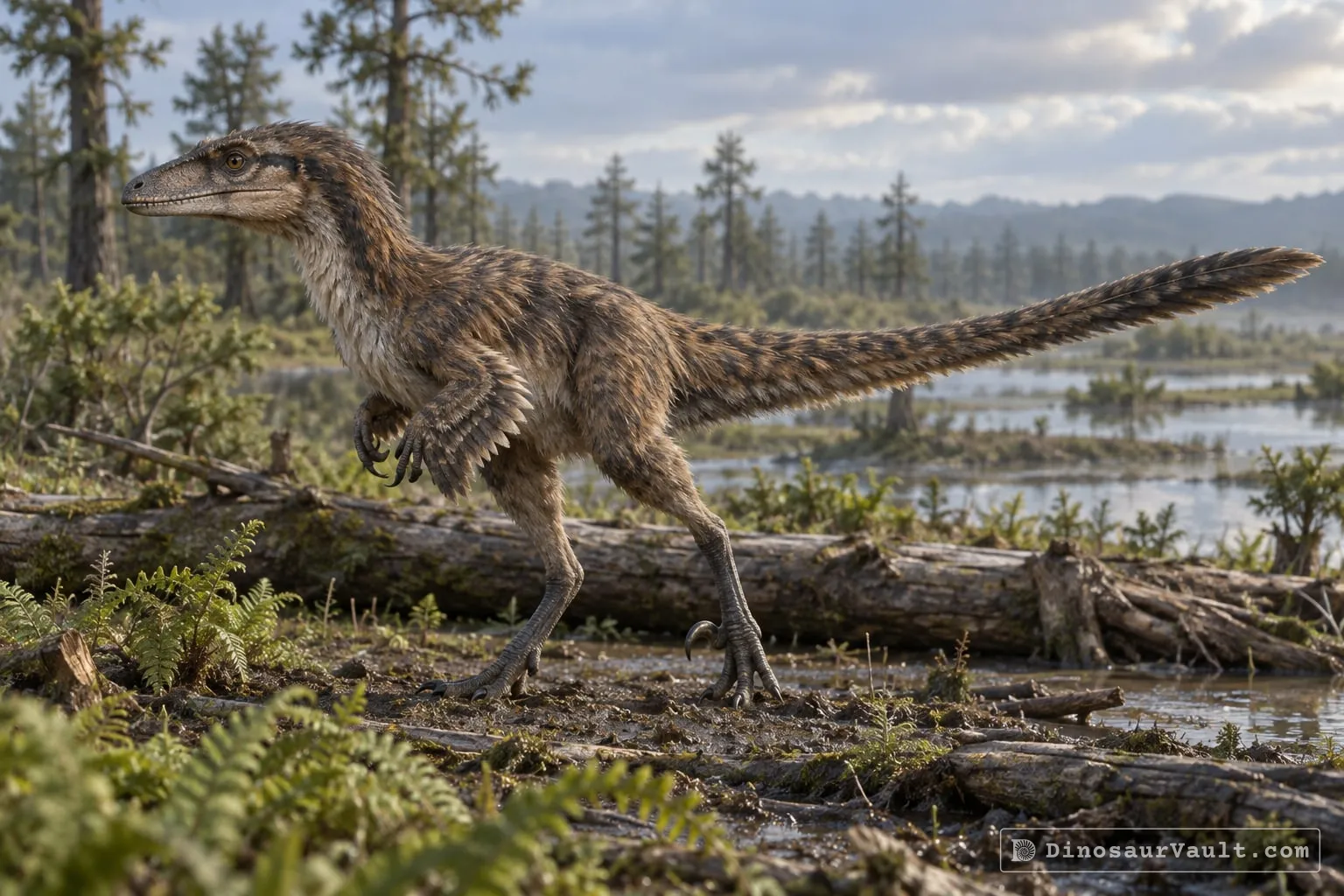
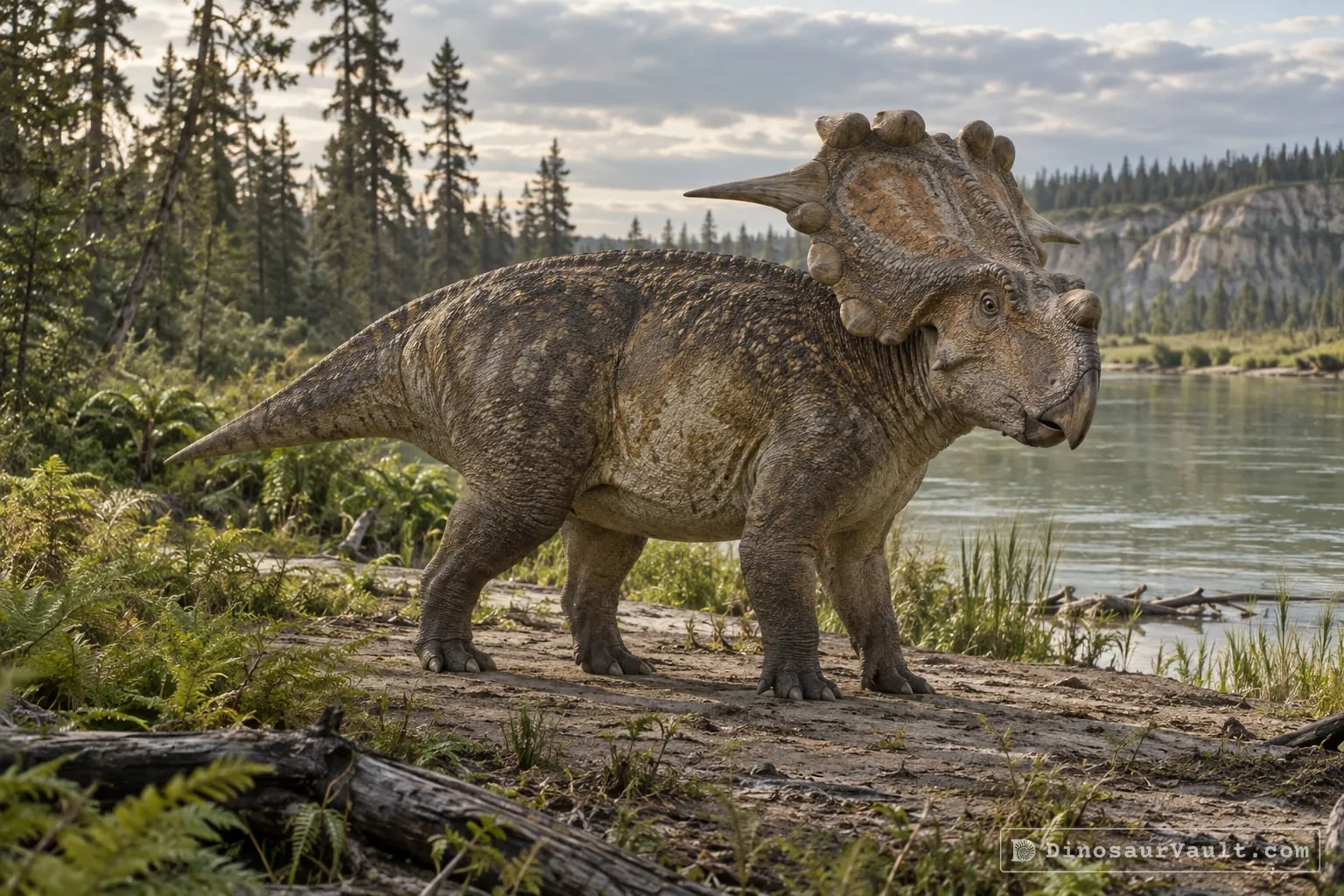
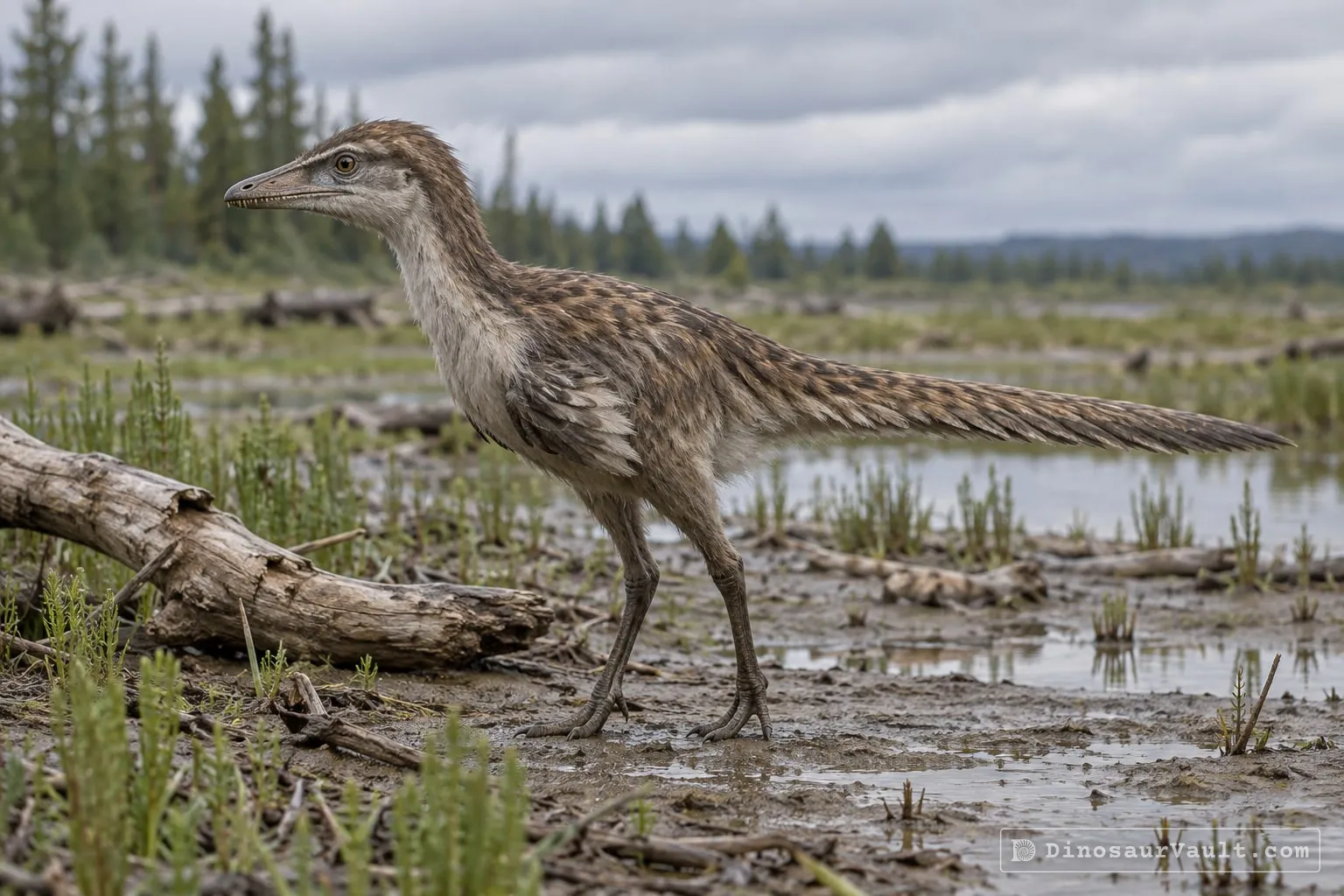
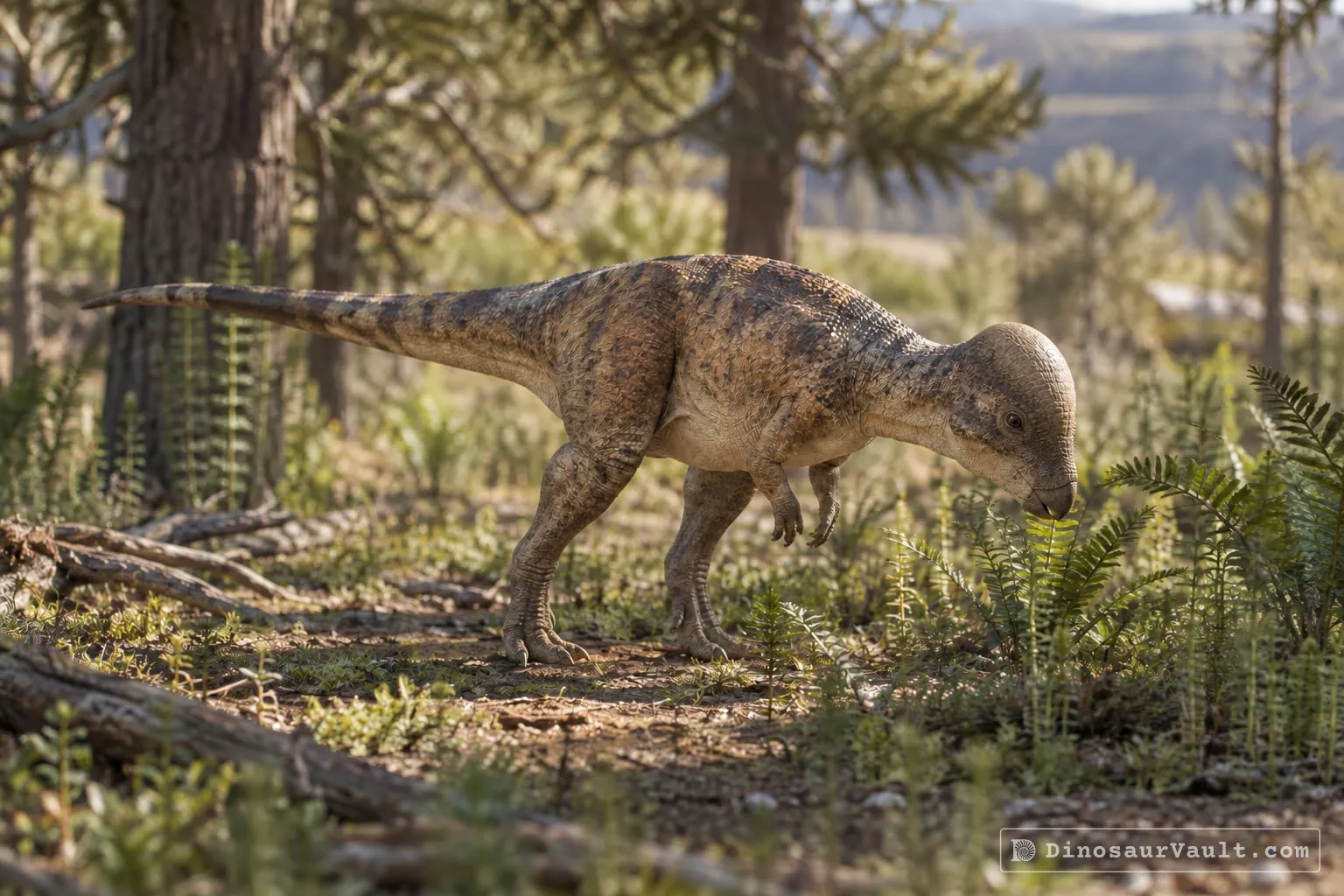


A rock formation can hold fossils laid down millions of years apart, so not every animal here met Thanatotheristes.
The evidence
The science behind Thanatotheristes
Which parts of the picture come from its own bones, and which come from its relatives.
From its own fossils
- The known remains are skull and jaw bones, including a deep upper jaw.
- The outer surface of the upper jaw carries a row of branching vertical ridges. They are natural bone texture, not healed bite wounds.
- Its cheek bone has a wide, rounded lower edge below the eye.
Borrowed from relatives
- Daspletosaurus guides the restoration of the missing neck, body, legs and tail.
- The short arms and small hands follow the shared body plan of large tyrannosaurs.
Still unknown
- The shape and proportions of its body below the skull.
- Whether it is its own genus. One study argued it belongs in Daspletosaurus, and a later study identified a key specimen in that comparison as a Gorgosaurus.
- Its skin pattern and color.
Discovery timeline
- 2016Its worldCullen et al.
- 2020Named itVoris et al.
- 2021SkullBrown, Currie & Therrien
- 2021Family treeVoris et al.
- 2022Close relativeWarshaw & Fowler
Key papers
The research behind what we know of Thanatotheristes
Its world
Studied small fossils from the Foremost Formation, tracing the shift from marine animals toward a community with more land animals.
A vertebrate microsite from a marine-terrestrial transition in the Foremost Formation (Campanian) of Alberta, Canada, and the use of faunal assemblage data as a paleoenvironmental indicator. Palaeogeography, Palaeoclimatology, Palaeoecology 444: 101-114
Read the paper : A vertebrate microsite from a marine-terrestrial transition in the Foremost Formation (Campanian) of Alberta, Canada, and the use of faunal assemblage data as a paleoenvironmental indicator (opens in a new tab)Named it
Named a tyrannosaur with distinctive ridges on its upper jaw and identified Daspletosaurus as its closest relative.
A new tyrannosaurine (Theropoda:Tyrannosauridae) from the Campanian Foremost Formation of Alberta, Canada, provides insight into the evolution and biogeography of tyrannosaurids. Cretaceous Research 110: 104388
Read the paper : A new tyrannosaurine (Theropoda:Tyrannosauridae) from the Campanian Foremost Formation of Alberta, Canada, provides insight into the evolution and biogeography of tyrannosaurids (opens in a new tab)Skull
Surveyed healed bite wounds on tyrannosaur faces and told the natural ridges on the Thanatotheristes upper jaw apart from old injuries.
Intraspecific facial bite marks in tyrannosaurids provide insight into sexual maturity and evolution of bird-like intersexual display. Paleobiology 48: 12-43
Read the paper : Intraspecific facial bite marks in tyrannosaurids provide insight into sexual maturity and evolution of bird-like intersexual display (opens in a new tab)Family tree
Described two young Gorgosaurus specimens and identified as Gorgosaurus a specimen once used to merge Thanatotheristes into Daspletosaurus.
Two exceptionally preserved juvenile specimens of Gorgosaurus libratus (Tyrannosauridae, Albertosaurinae) provide new insight into the timing of ontogenetic changes in tyrannosaurids. Journal of Vertebrate Paleontology 41
Read the paper : Two exceptionally preserved juvenile specimens of Gorgosaurus libratus (Tyrannosauridae, Albertosaurinae) provide new insight into the timing of ontogenetic changes in tyrannosaurids (opens in a new tab)Close relative
Described a new Daspletosaurus species and compared its skull with Thanatotheristes and other tyrannosaurs.
A transitional species of Daspletosaurus Russell, 1970 from the Judith River Formation of eastern Montana. PeerJ 10: e14461
Read the paper : A transitional species of Daspletosaurus Russell, 1970 from the Judith River Formation of eastern Montana (opens in a new tab)
Close relatives
Other members of Tyrannosauridae


Sources: Wikidata