Outline: a typical theropod
Suskityrannus
"coyote tyrant"
- Lived
- 94 to 90 million years ago, Late Cretaceous
- Diet
- Carnivore
- Group
- Theropods
- Found in
- United States
- Named by
- Nesbitt et al. 2019
Where its fossils were found
The evidence
Today
90 million years ago
Field notes
About Suskityrannus
What it was like
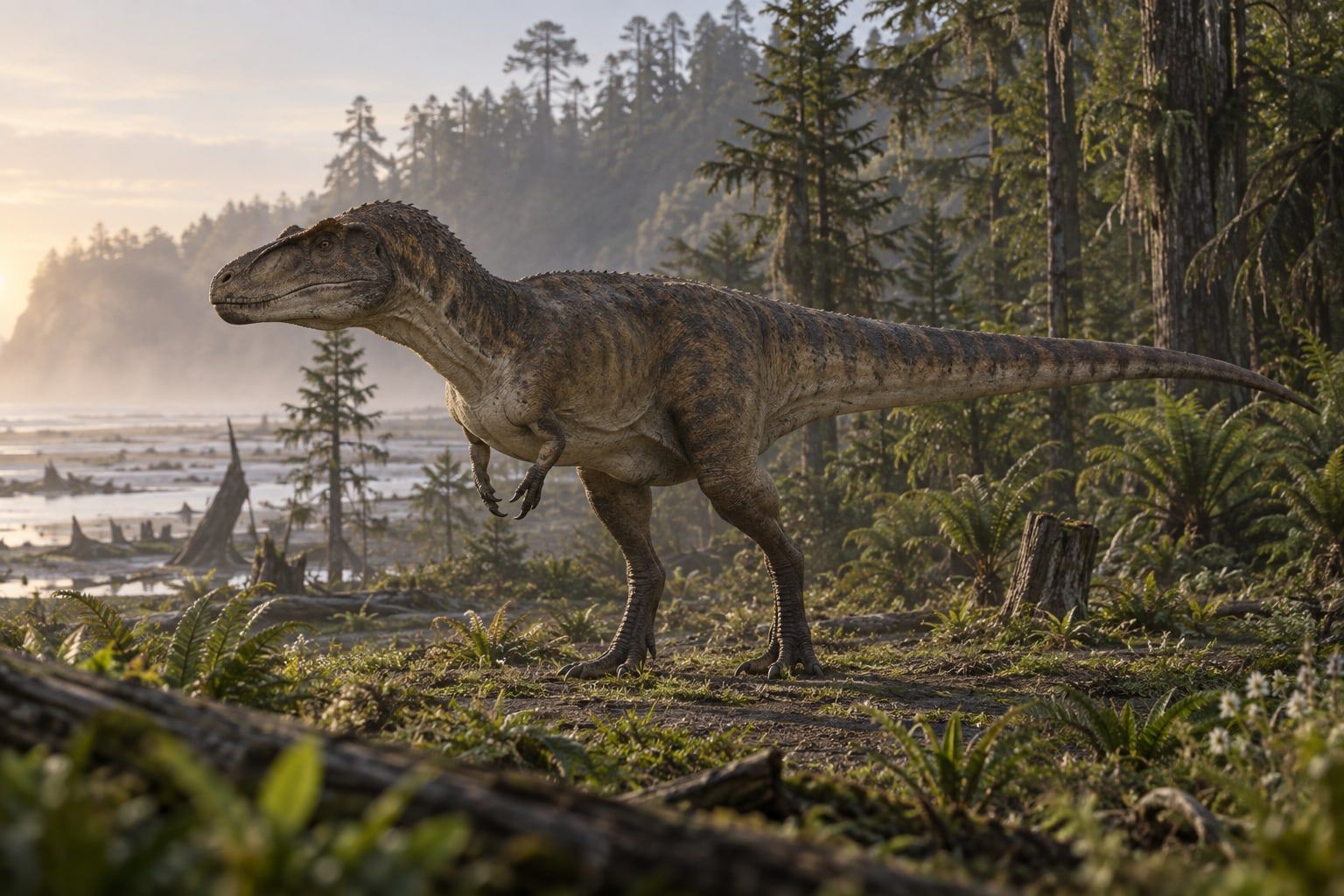
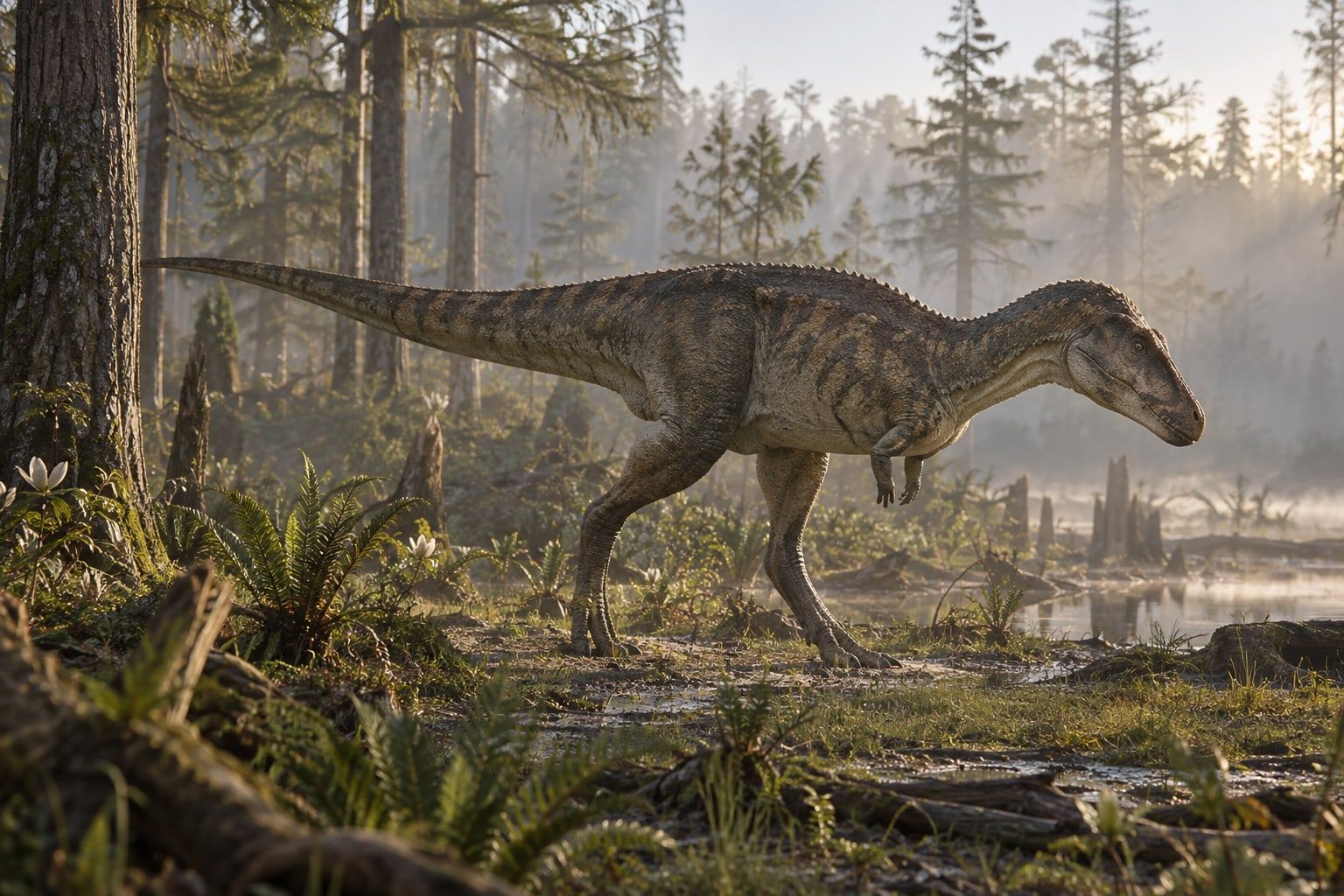
Suskityrannus was a small relative of the tyrannosaurs, roughly the size of a large dog as an adult or near adult. It was lightly built, with long legs and a narrow skull.
It shows what tyrannosaurs looked like before they grew into giants. Some of its features, in the skull and feet, were already like those of the later tyrannosaurs.
Its world
It lived about 94 to 90 million years ago, in the Late Cretaceous, in what is now New Mexico, in the United States. Its bones come from the Moreno Hill Formation, where it shared the land with the therizinosaur Nothronychus, the early horned dinosaur Zuniceratops and the plant eater Jeyawati.
How it was found
Nesbitt and colleagues named Suskityrannus in 2019. The fossil had been found years earlier by a teenager on a dig, and is one of the most complete small tyrannosaur relatives from North America.
Lived alongside
Found in the same rock formations
Close relatives
Other members of Tyrannosauroidea
Sources: WikidataNamed in: S. J. Nesbitt, R. K. Denton, and M. A. Loewen, S. L. Brusatte, N. D. Smith, A. H. Turner, J. I. Kirkland, A. T. McDonald, D. G. Wolfe. 2019. A mid-Cretaceous tyrannosauroid and the origin of North American end-Cretaceous dinosaur assemblages. Nature Ecology & Evolution 3(6):892-899