Secernosaurus
"severed lizard"
Type species Secernosaurus koerneri
- Lived
- 72 to 66 million years ago, Late Cretaceous
- Diet
- Herbivore
- Length
- about 3 m (10 ft)
- Group
- Ornithopods, Hadrosauridae
- Found in
- Argentina
- Named by
- Brett-Surman 1979
Size comparison
To scale

Scale in metersOutline: typical ornithopod shape
Where its fossils were found
The evidence
Today

70 million years ago
Habitat
Secernosaurus lived on river plains in what is now Argentina. Aeolosaurus, Argyrosaurus and Sektensaurus are also known from the same formation.
Field notes
About Secernosaurus
What it was like
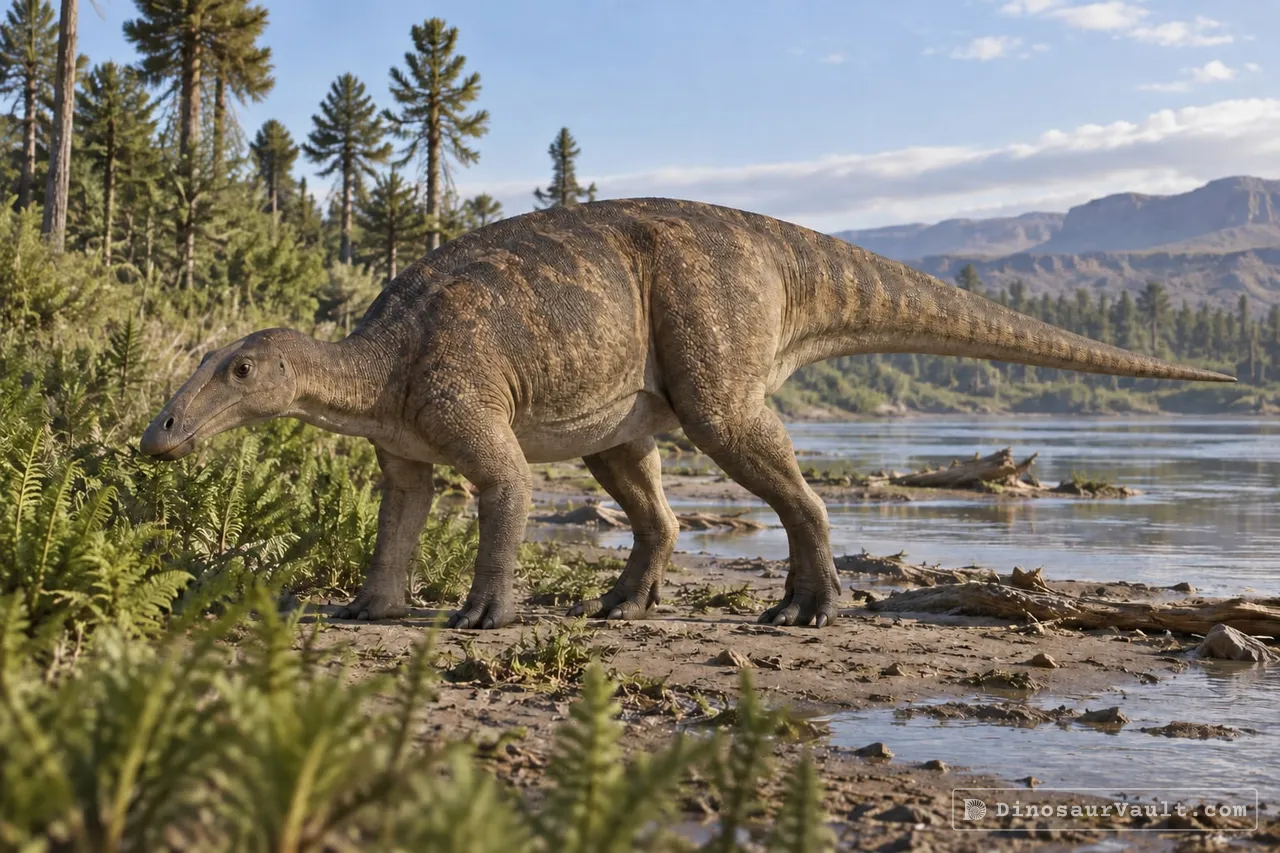
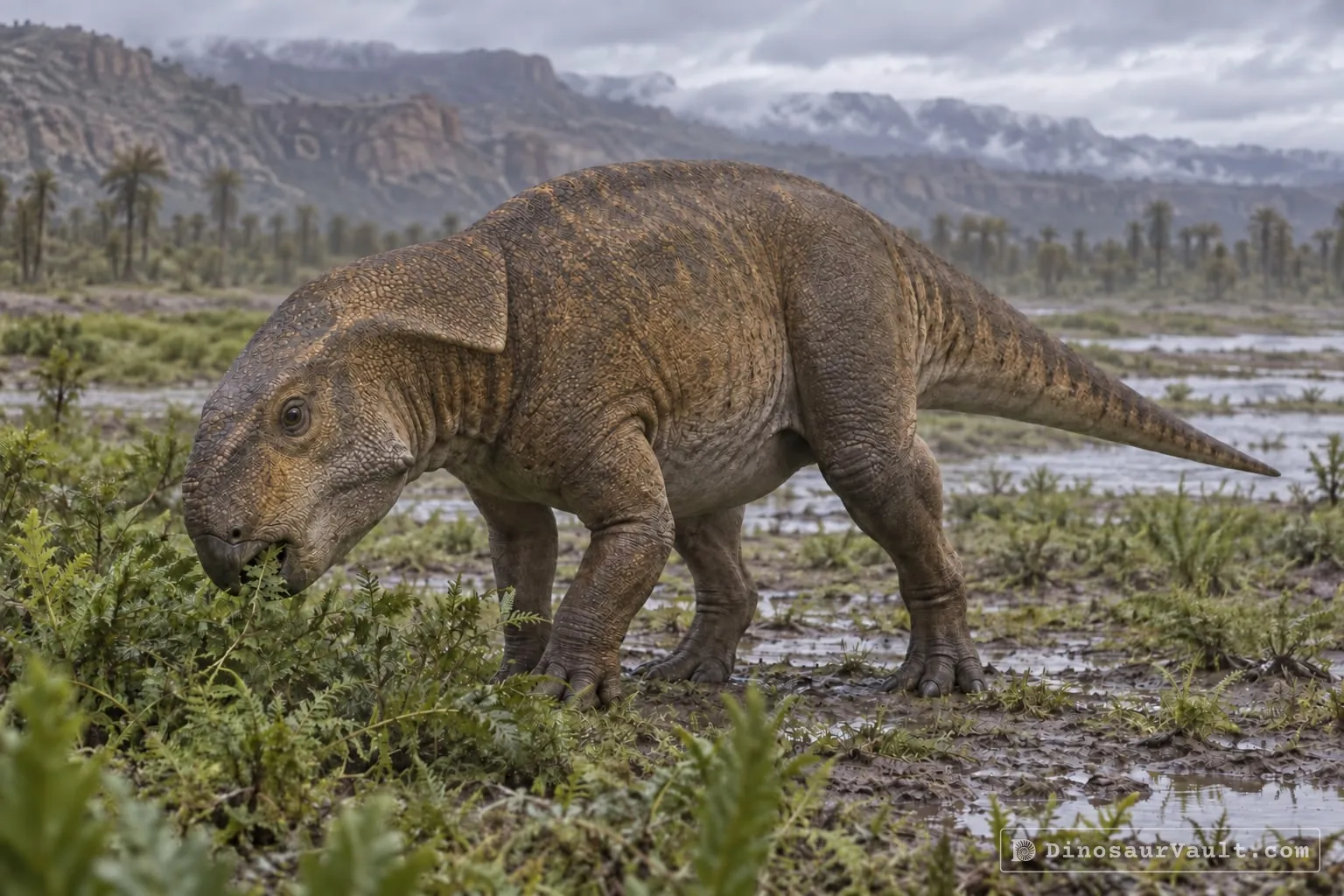
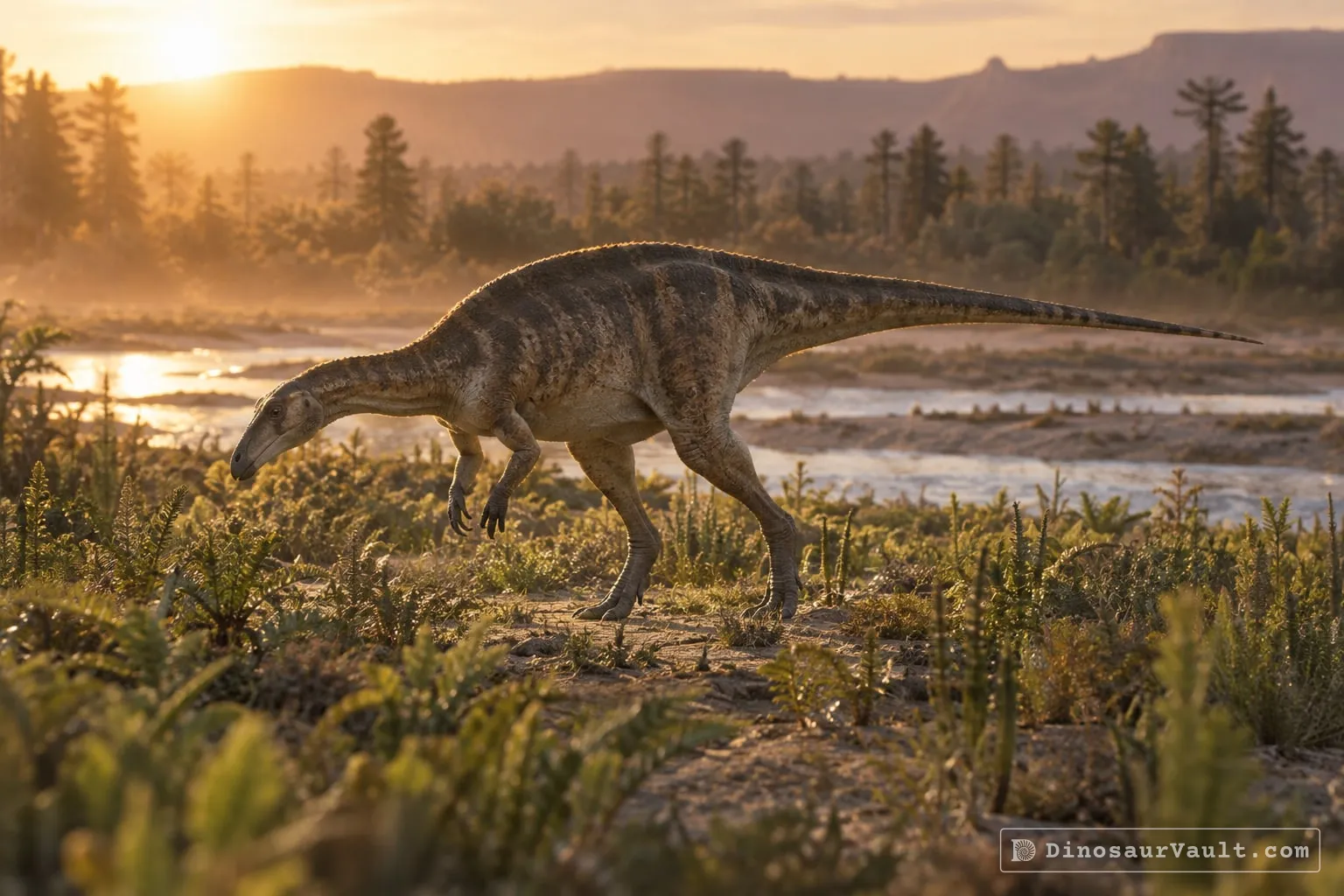
Secernosaurus was a duck-billed plant eater about 3 meters (10 feet) long, small for a hadrosaur. It is known from part of the hips, tail and a few other bones.
Its world
It lived about 72 to 66 million years ago, at the end of the Late Cretaceous, in what is now Argentina. Hadrosaurs mostly lived in the northern continents, and scientists think the ancestors of Secernosaurus crossed from North America to South America over land that joined them for a time.
How it was found
Brett-Surman named Secernosaurus in 1979, from a single find. It was the first hadrosaur named from South America.
Field gallery
More views of Secernosaurus
Scenes reconstructed from the available fossil evidence.
Lived alongside
Found in the same rock formations
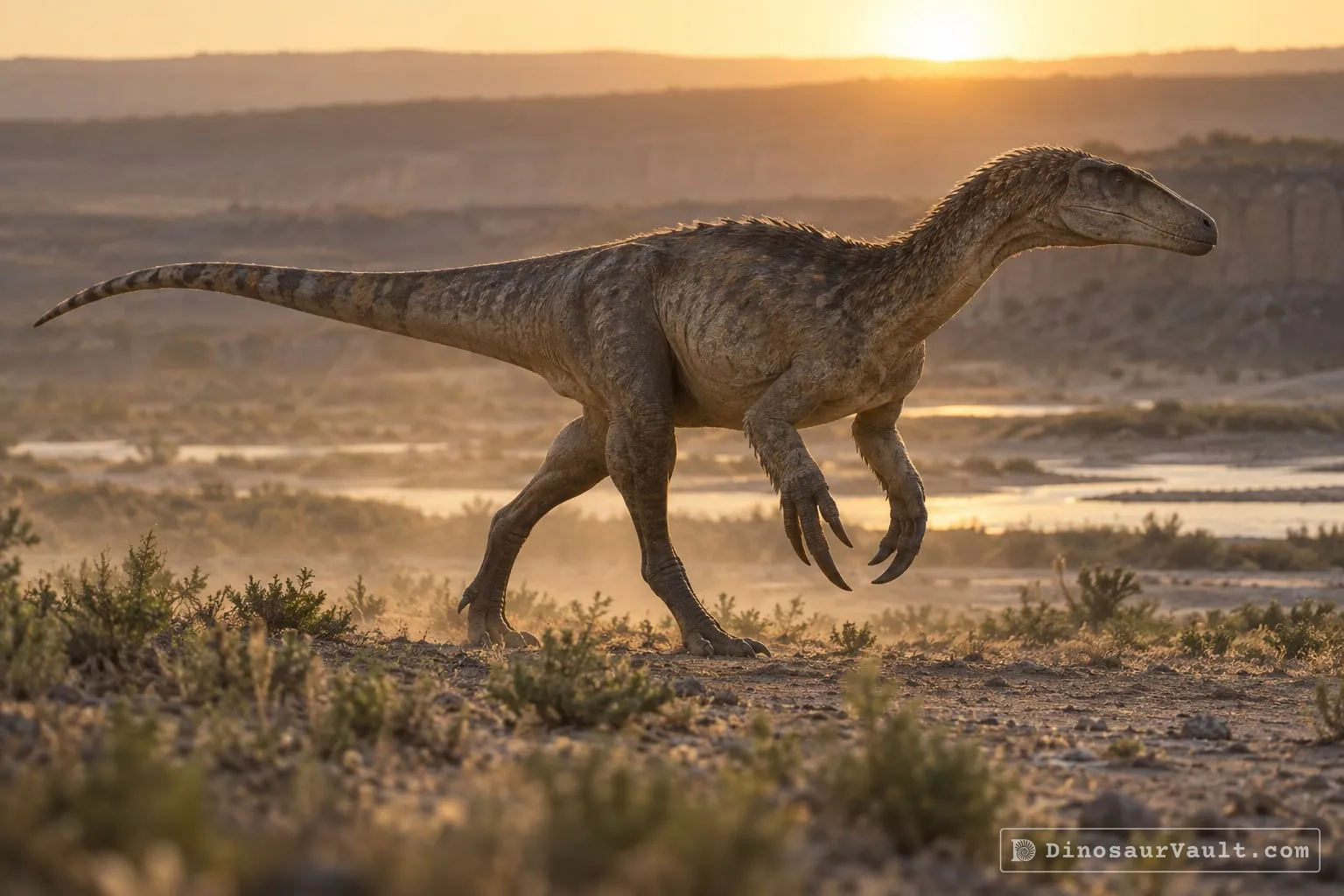
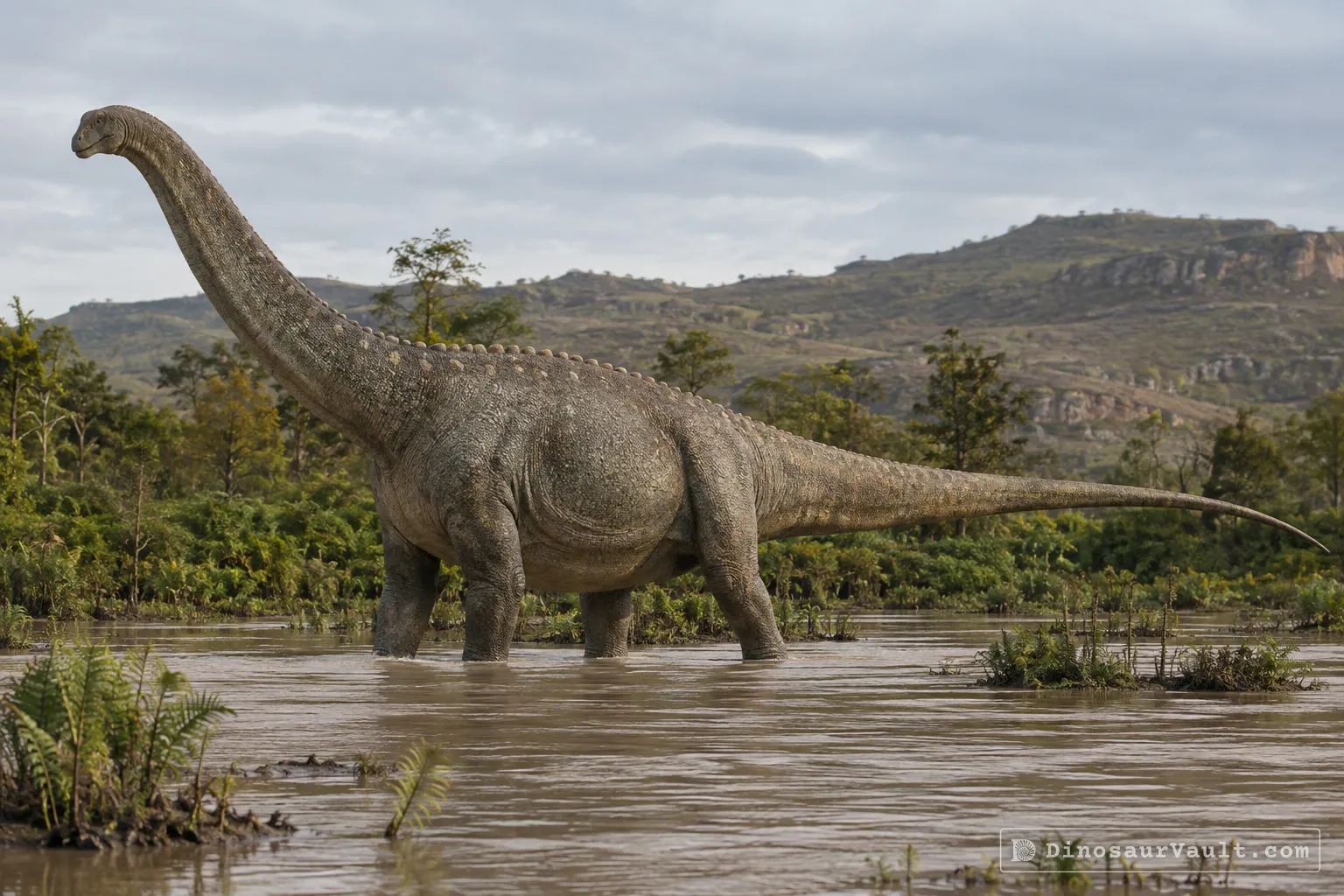
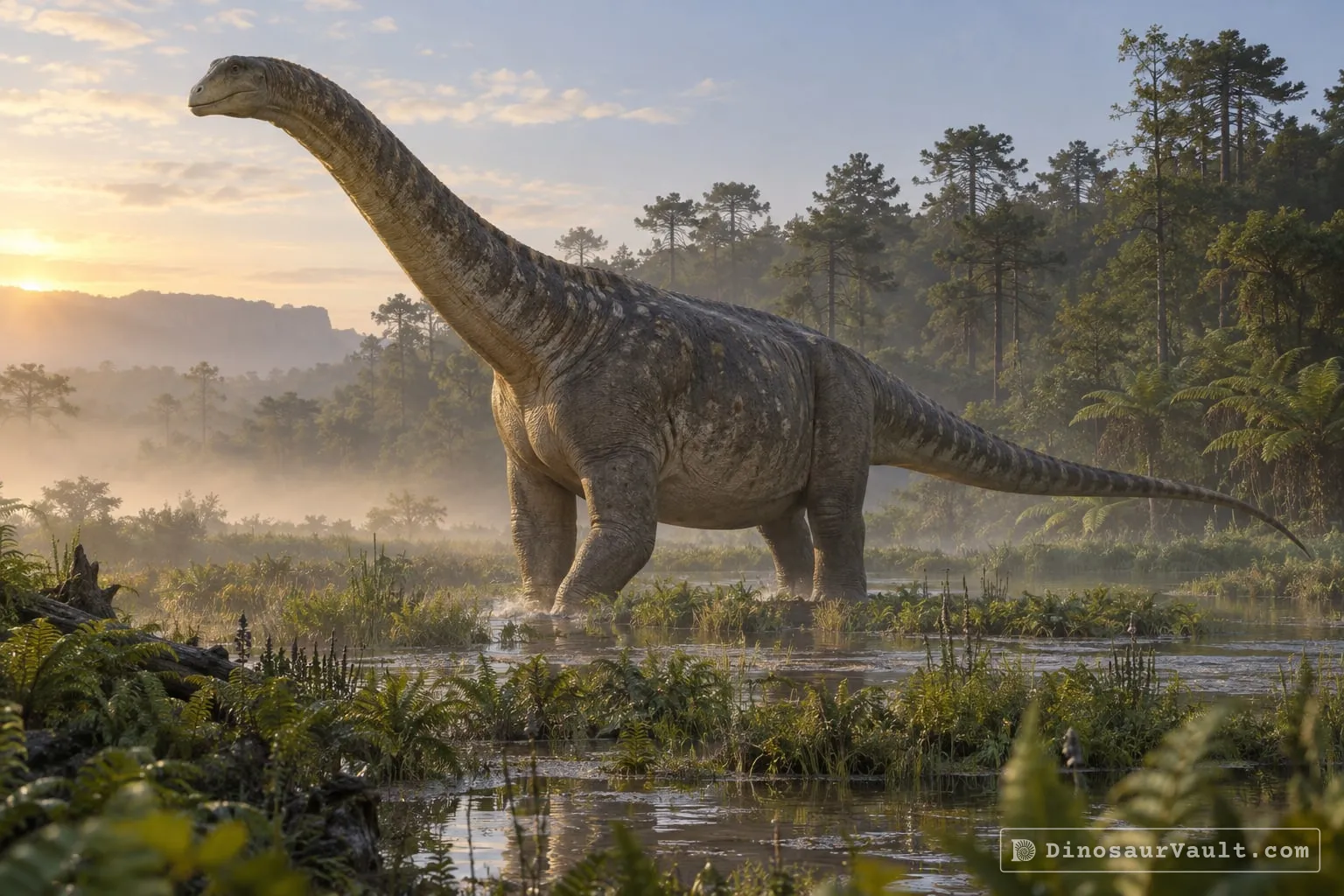


A rock formation can hold fossils laid down millions of years apart, so not every animal here met Secernosaurus.
The evidence
The science behind Secernosaurus
Which parts of the picture come from its own bones, and which come from its relatives.
From its own fossils
- Fragments of tooth batteries and the back of the skull survive alongside parts of the backbone, limbs and hips.
- The hip has a long, narrow extension behind the socket for the hind leg.
Borrowed from relatives
- Huallasaurus helps restore the missing curve of the upper beak.
- Edmontosaurus provides a broader comparison for the head, body outline and weight-bearing feet.
Still unknown
- The full shape of its skull and any head ornament.
- Its skin covering and color.
- The complete proportions of its body and the arrangement of its fingers and toes.
Discovery timeline
- 1979Named itBRETT-SURMAN
- 2010Full descriptionPrieto-Marquez & Salinas
- 2021Family treeRozadilla et al.
Key papers
The research behind what we know of Secernosaurus
Named it
Named the first recognized hadrosaur from South America from a partial skeleton found in Argentina.
Phylogeny and palaeobiogeography of hadrosaurian dinosaurs. Nature 277: 560-562
Read the paper : Phylogeny and palaeobiogeography of hadrosaurian dinosaurs (opens in a new tab)Full description
Described the known Secernosaurus bones and proposed grouping Kritosaurus australis with it, a classification later revised.
A re-evaluation ofSecernosaurus koerneriandKritosaurus australis(Dinosauria, Hadrosauridae) from the Late Cretaceous of Argentina. Journal of Vertebrate Paleontology 30: 813-837
Read the paper : A re-evaluation ofSecernosaurus koerneriandKritosaurus australis(Dinosauria, Hadrosauridae) from the Late Cretaceous of Argentina (opens in a new tab)Family tree
Separated Huallasaurus from Secernosaurus and proposed a related group of South American duck-billed dinosaurs.
A new hadrosaurid (Dinosauria: Ornithischia) from the Late Cretaceous of northern Patagonia and the radiation of South American hadrosaurids. Journal of Systematic Palaeontology 19: 1207-1235
Read the paper : A new hadrosaurid (Dinosauria: Ornithischia) from the Late Cretaceous of northern Patagonia and the radiation of South American hadrosaurids (opens in a new tab)
Close relatives
Other members of Hadrosauridae


Sources: Wikidata