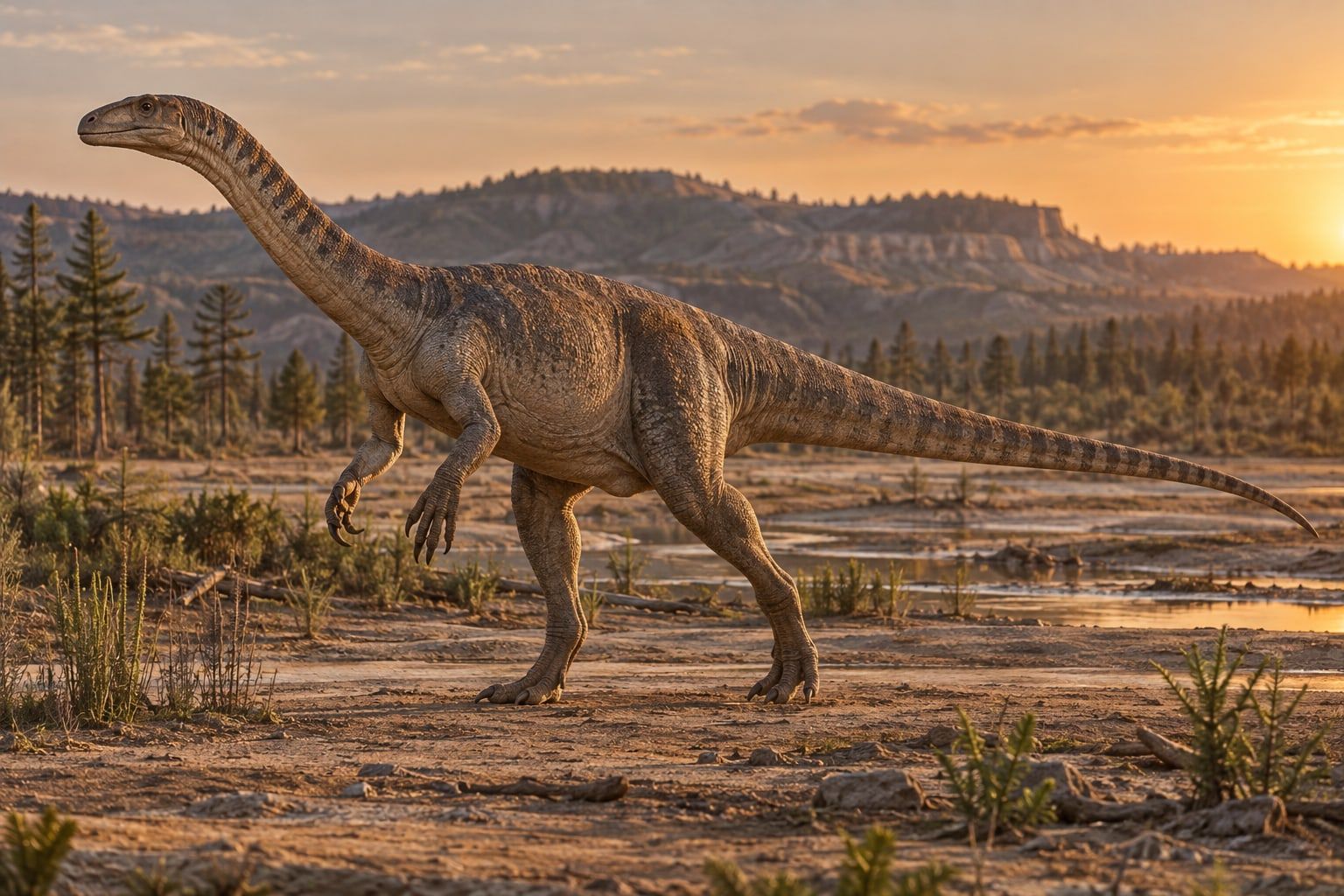
Outline: a typical early sauropodomorph
Issi
"cold"
Type species Issi saaneq
- Lived
- 227 to 206 million years ago, Late Triassic
- Group
- Early sauropodomorphs, Plateosauridae
- Found in
- Greenland
- Named by
- Beccari et al. 2021
Where its fossils were found
The evidence
Today

220 million years ago
Field notes
About Issi
What it was like
Issi was an early relative of the giant sauropods, a plant eater with a long neck and a small head. It was a close relative of Plateosaurus and probably walked on its hind legs. It is known from two skulls and some other bones.
Its world
It lived in the Late Triassic in what is now Greenland. At that time Greenland lay much farther south and was joined to Europe and North America in the supercontinent Pangaea. Its bones come from rocks of the Malmros Klint layer.
How it was found
Its bones were first thought to belong to Plateosaurus. Beccari and colleagues gave it its own name in 2021. The type species is Issi saaneq, meaning "cold bone" in the language of Greenland.
Close relatives
Other members of Plateosauridae
Sources: WikidataNamed in: V. Beccari, O. Mateus, and O. Wings, J. Milàn, L. B. Clemmensen. 2021. Issi saaneq gen. et sp. nov.—A New Sauropodomorph Dinosaur from the Late Triassic (Norian) of Jameson Land, Central East Greenland. Diversity 13:561:1-59