Outline: a typical early sauropodomorph
Unaysaurus
"black water lizard"
- Lived
- 227 to 206 million years ago, Late Triassic
- Length
- about 2.5 m (8 ft)
- Group
- Early sauropodomorphs, Plateosauridae
- Found in
- Brazil
- Named by
- Leal et al. 2004
Size comparison
To scale

Scale in metersOutline: typical early sauropodomorph shape
Where its fossils were found
The evidence
Today
220 million years ago
Field notes
About Unaysaurus
What it was like
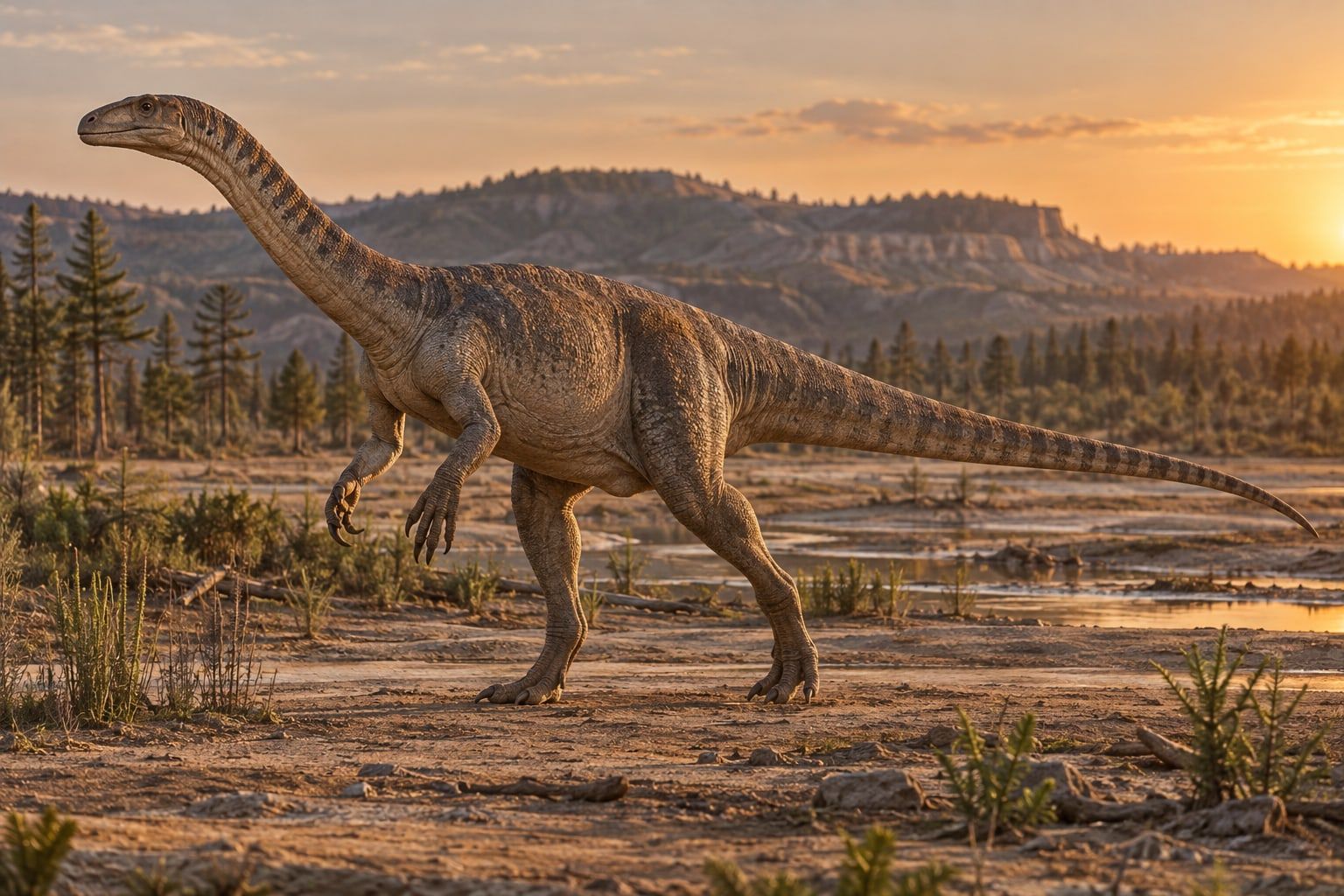
Unaysaurus was a small plant eater about 2.5 meters (8 feet) long, an early member of the long-necked line that later produced the giant sauropods. It walked on its hind legs and had a long neck and a small head.
It was closely related to Plateosaurus from Germany, which suggests animals could move easily across the joined continents of the time.
Its world
It lived in the Late Triassic in what is now southern Brazil. Its bones come from the Caturrita Formation, where it shared the land with Guaibasaurus and the long-necked Macrocollum.
How it was found
Leal and colleagues named Unaysaurus in 2004, from a single skeleton with a skull, one of the most complete early dinosaurs from Brazil.
Lived alongside
Found in the same rock formations
Close relatives
Other members of Plateosauridae
Sources: WikidataNamed in: L. A. Leal, S. A. K. Azevedo, and A. W. A. Kellner, A. A. S. Da Rosa. 2004. A new early dinosaur (Sauropodomorpha) from the Caturrita Formation (Late Triassic), Paraná Basin, Brazil. Zootaxa 690:1-24