Mymoorapelta
- Lived
- 155 to 143 million years ago, Late Jurassic
- Diet
- Herbivore
- Group
- Ankylosaurs
- Found in
- United States
- Named by
- Kirkland and Carpenter 1994
Where its fossils were found
The evidence
Today

150 million years ago
Habitat
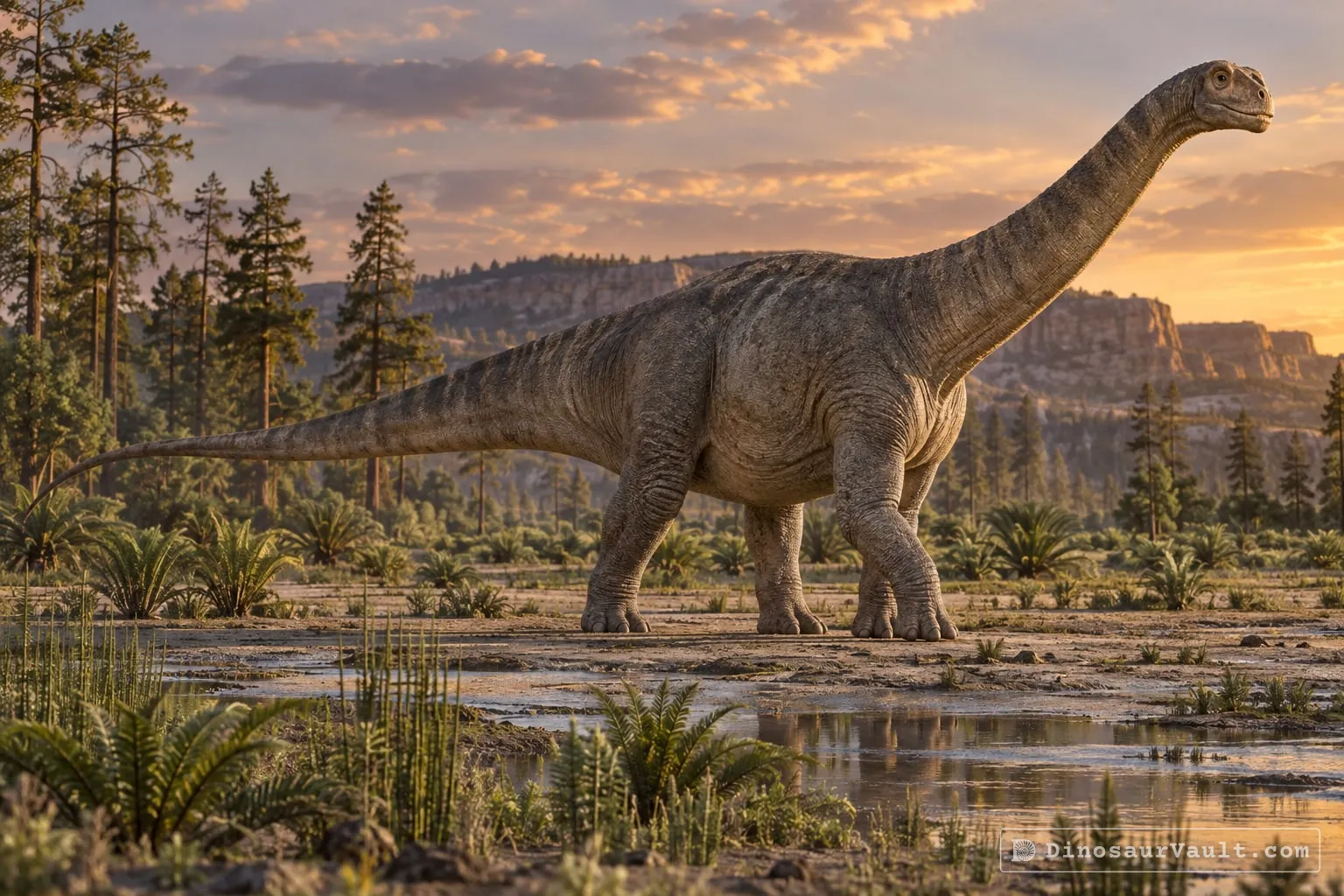
Rivers crossed broad plains with conifers, ferns and horsetails in the Morrison Formation. Other dinosaurs in this landscape included Allosaurus, Stegosaurus and Camarasaurus.
Field notes
About Mymoorapelta
What it was like
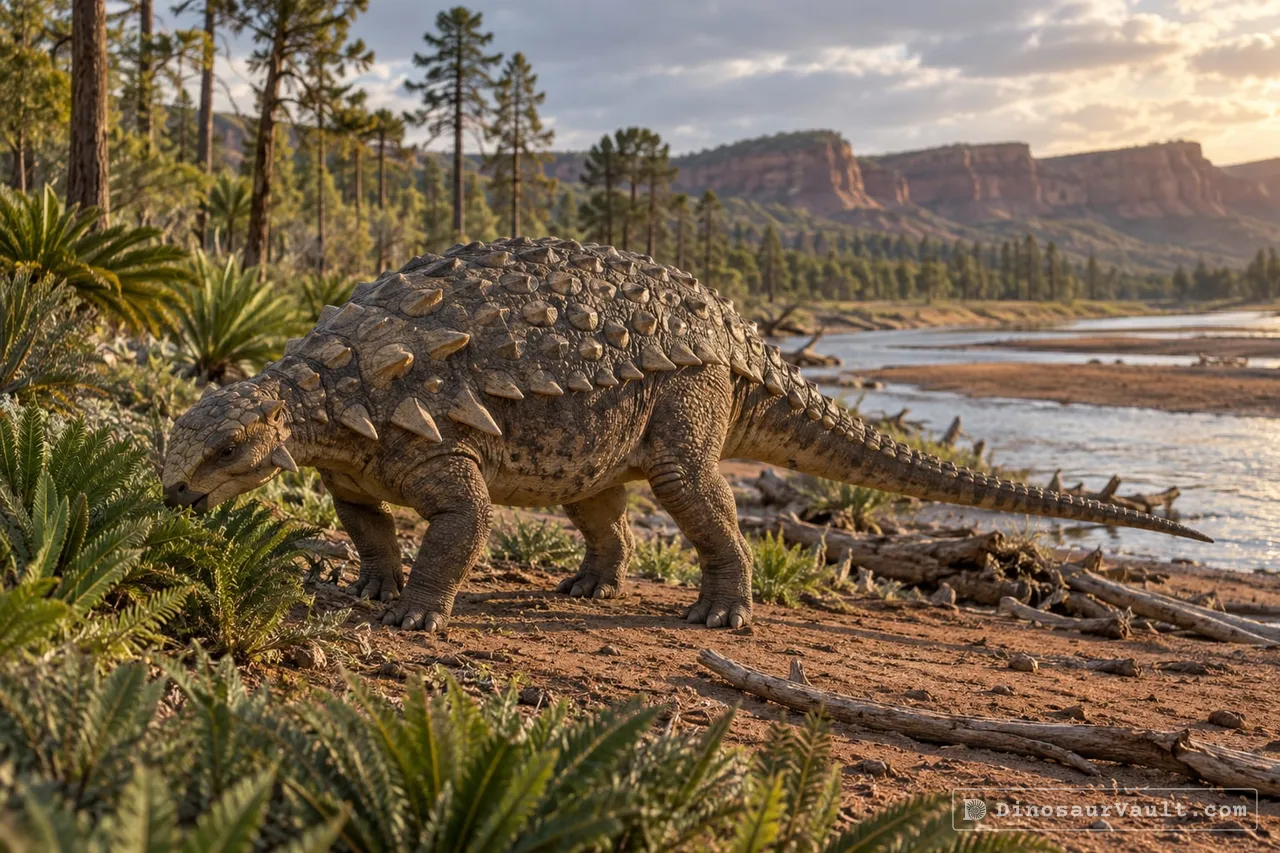
Mymoorapelta was a small armored plant eater. Bony plates and spikes covered its back and sides, and a shield of fused armor lay over its hips. It was one of the earliest armored dinosaurs known from North America.
Its world
It lived in the Late Jurassic in what is now Colorado and Utah. Its bones come from the Morrison Formation, a land of rivers and open plains shared with Allosaurus, Stegosaurus and giant sauropods such as Camarasaurus.
How it was found
Kirkland and Carpenter named it in 1994. Its name comes from the quarry where it was found, which is named after the two people who discovered it.
Field gallery
More views of Mymoorapelta
Scenes reconstructed from the available fossil evidence.
1 of 3
Lived alongside
Found in the same rock formations
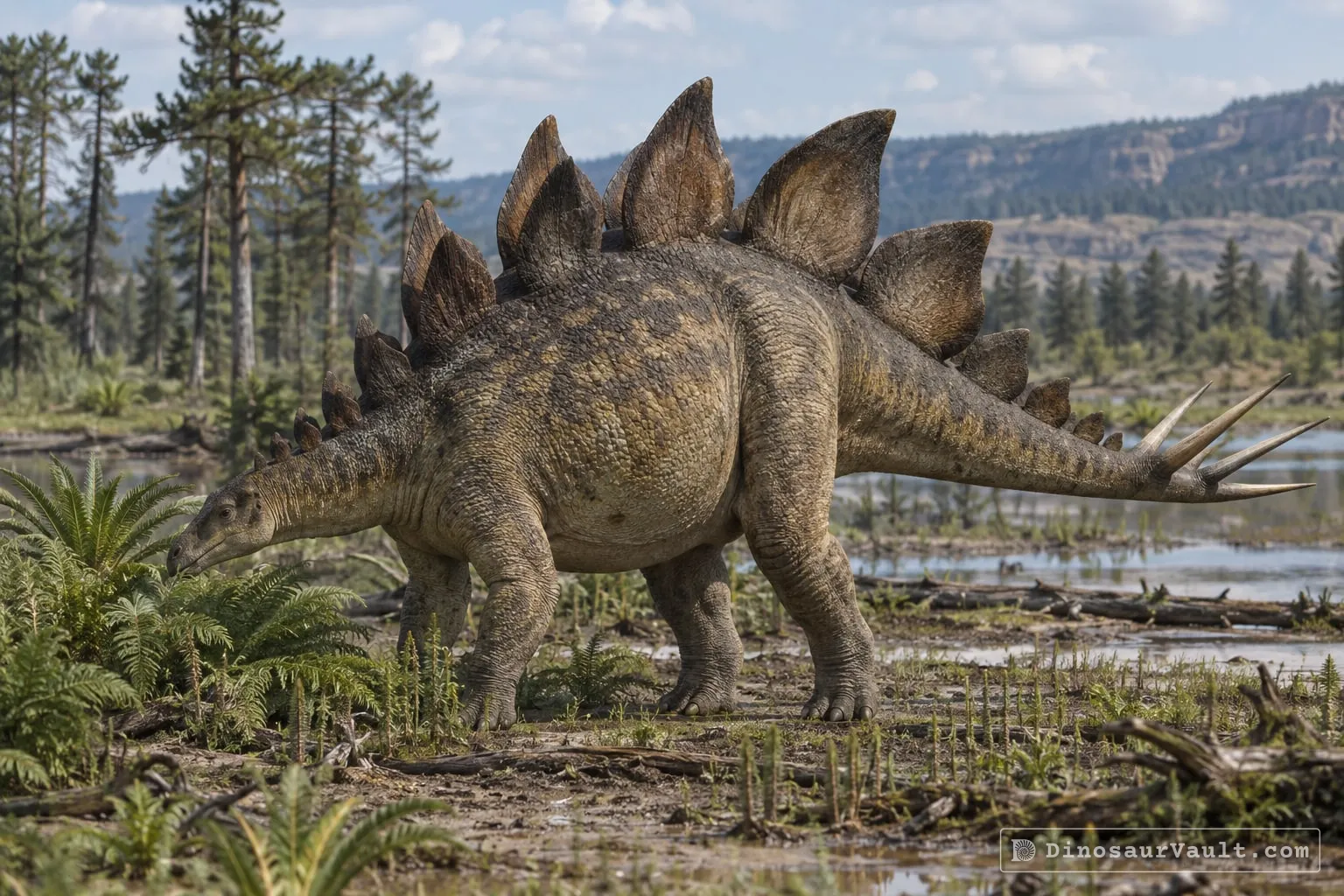
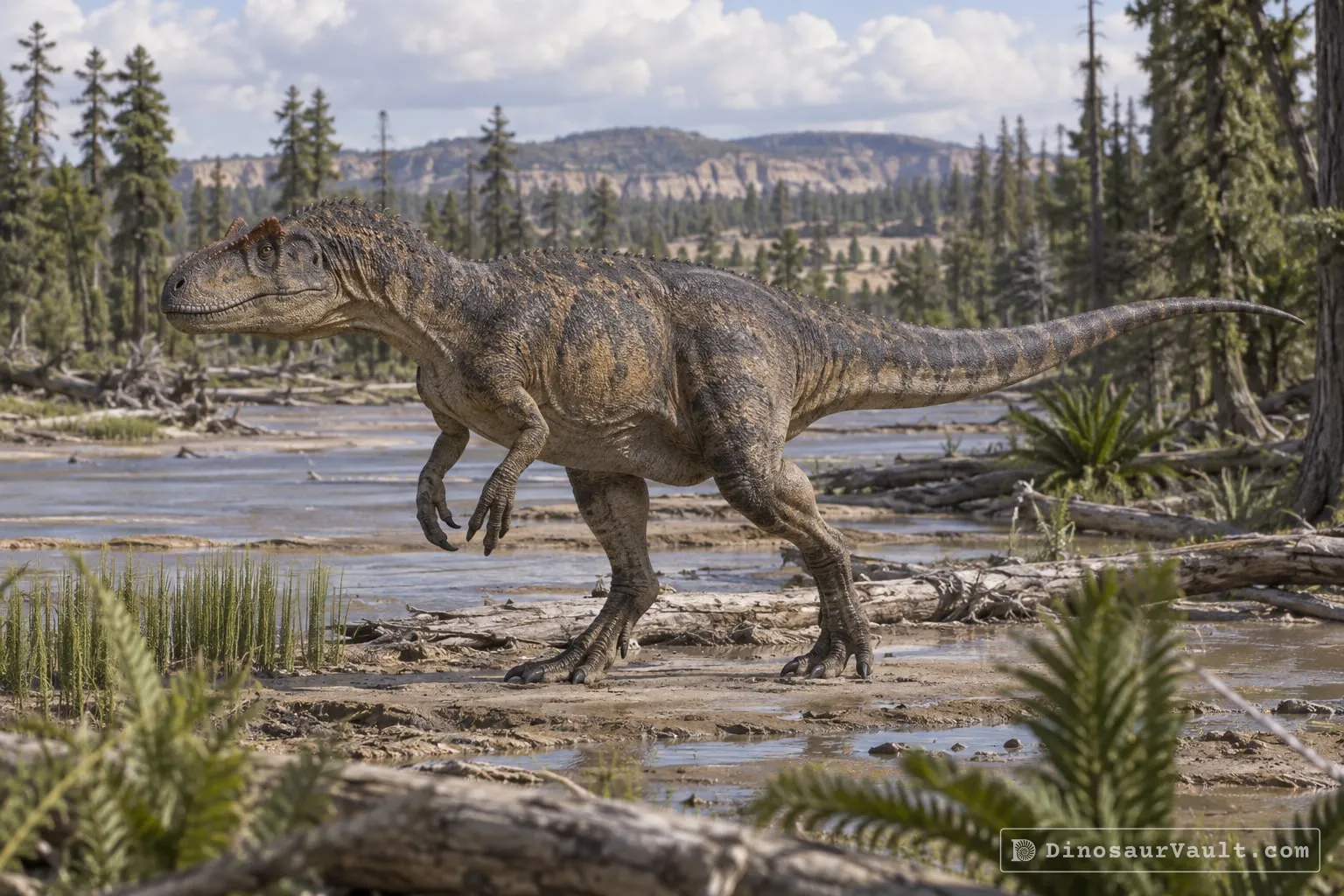
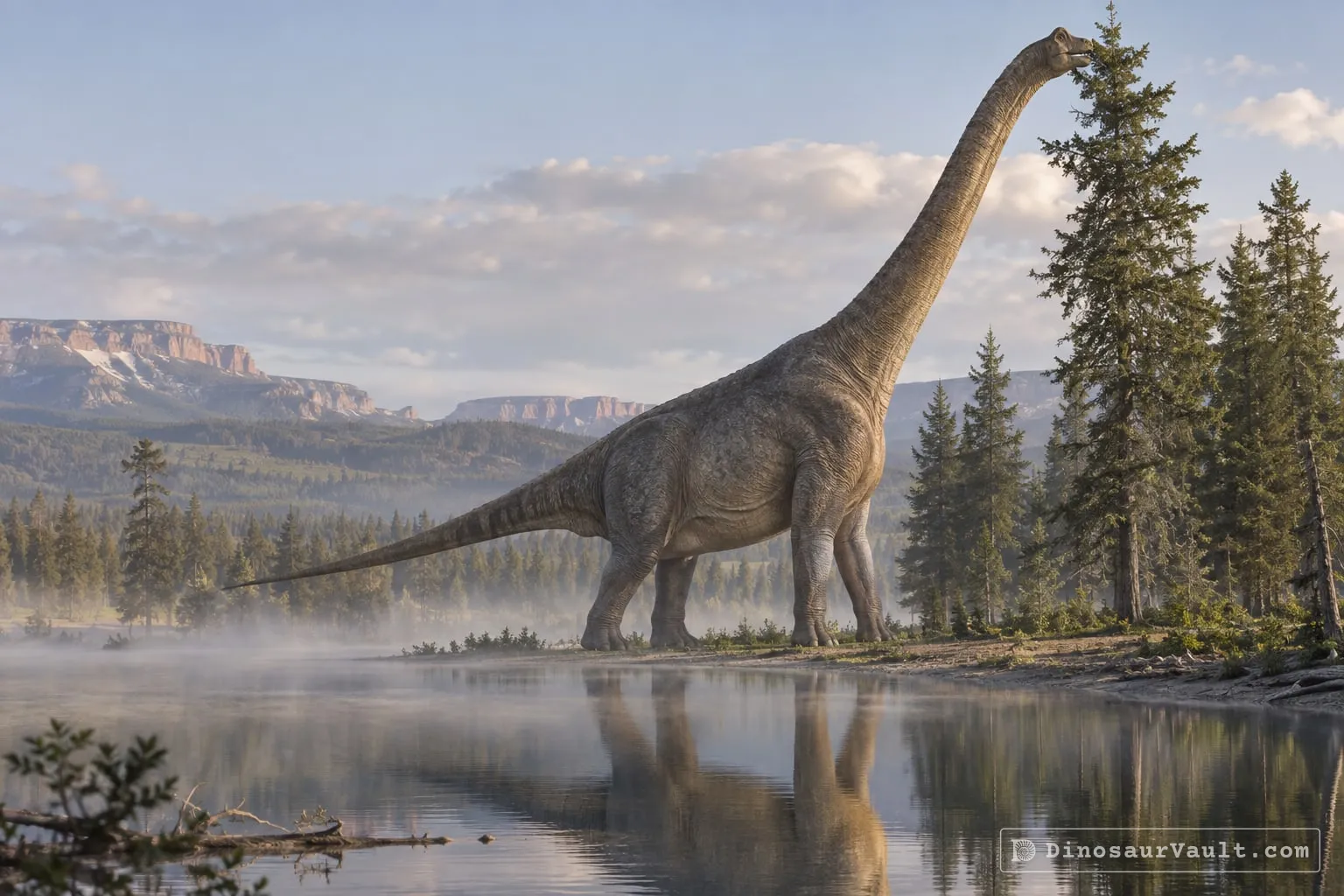
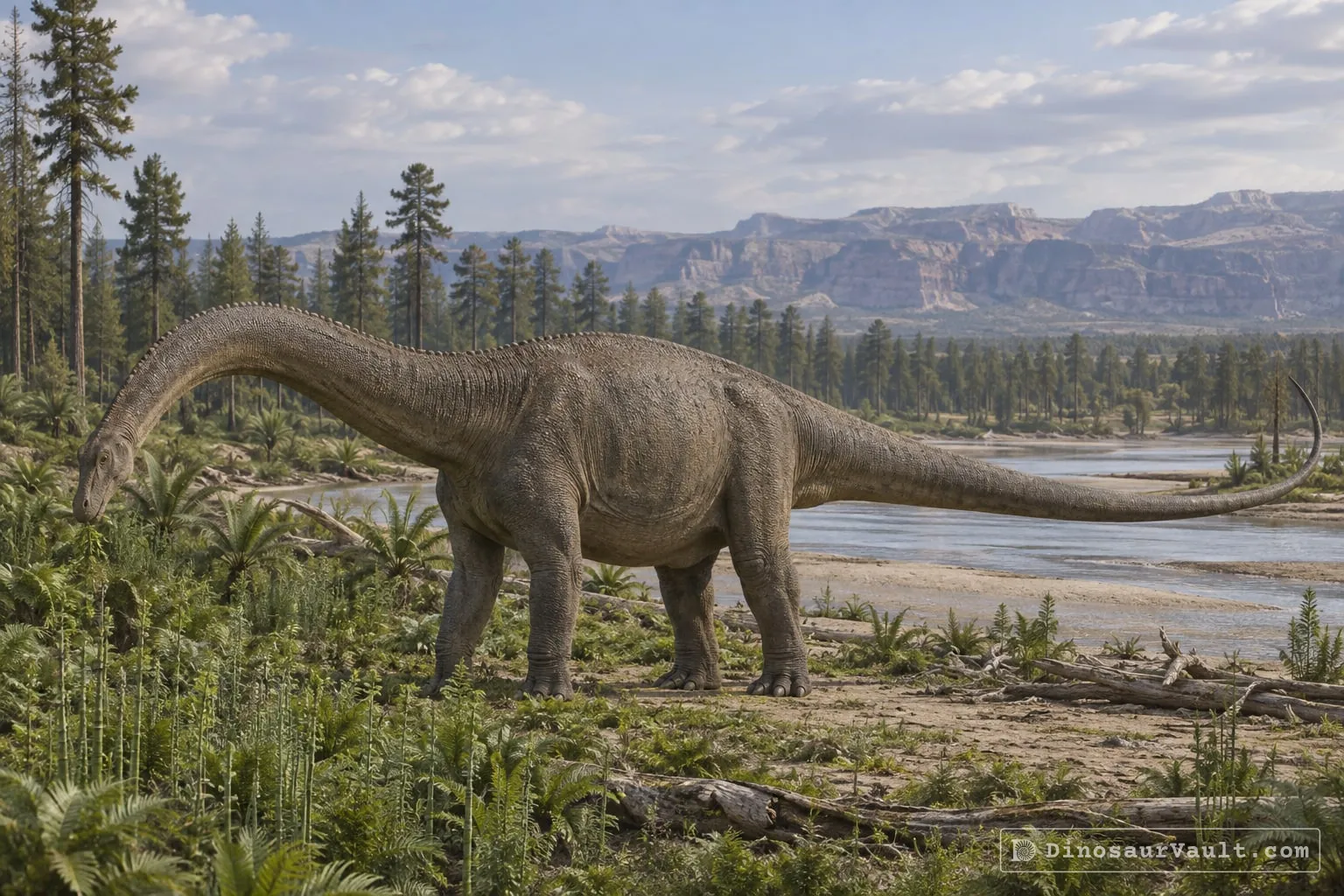
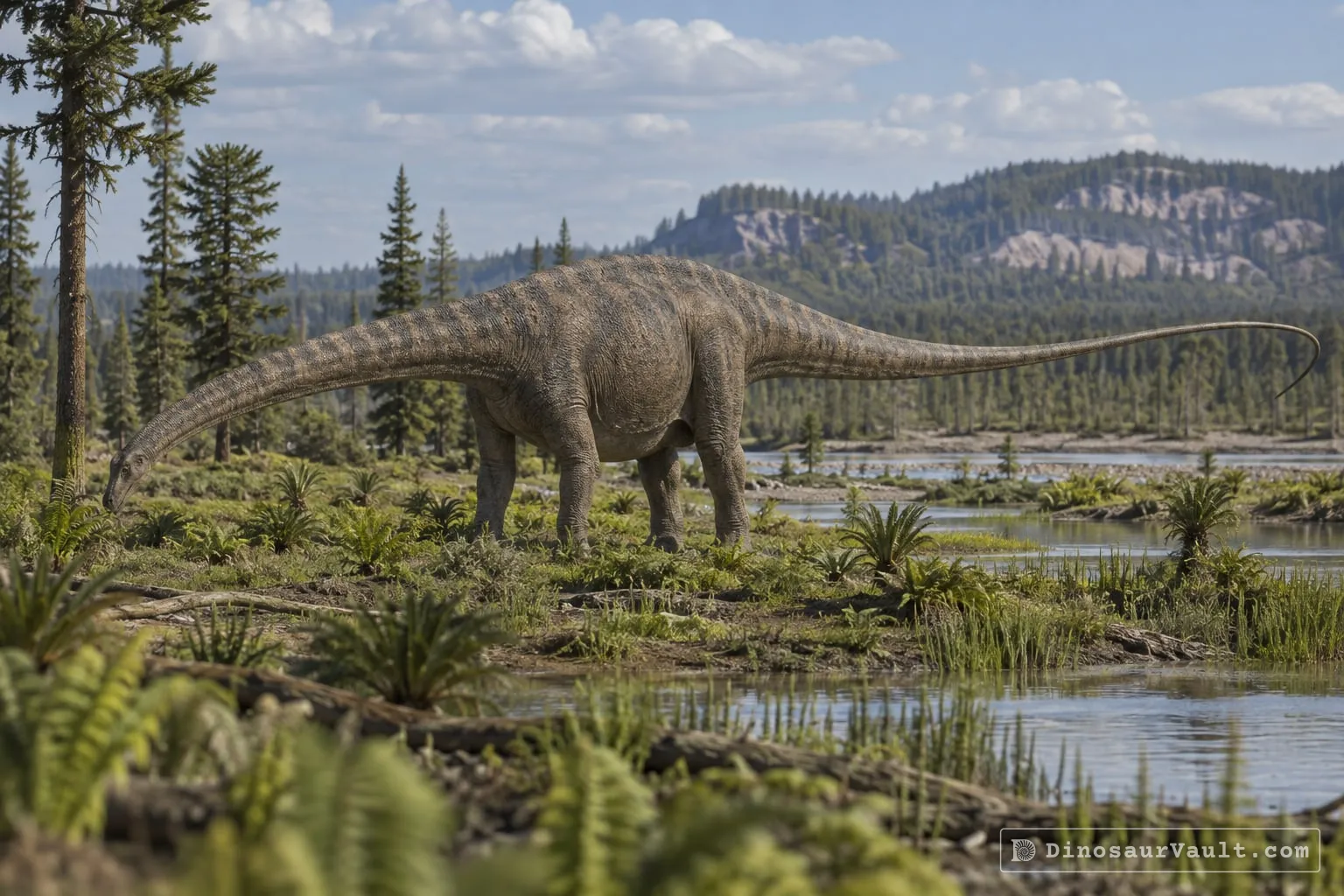
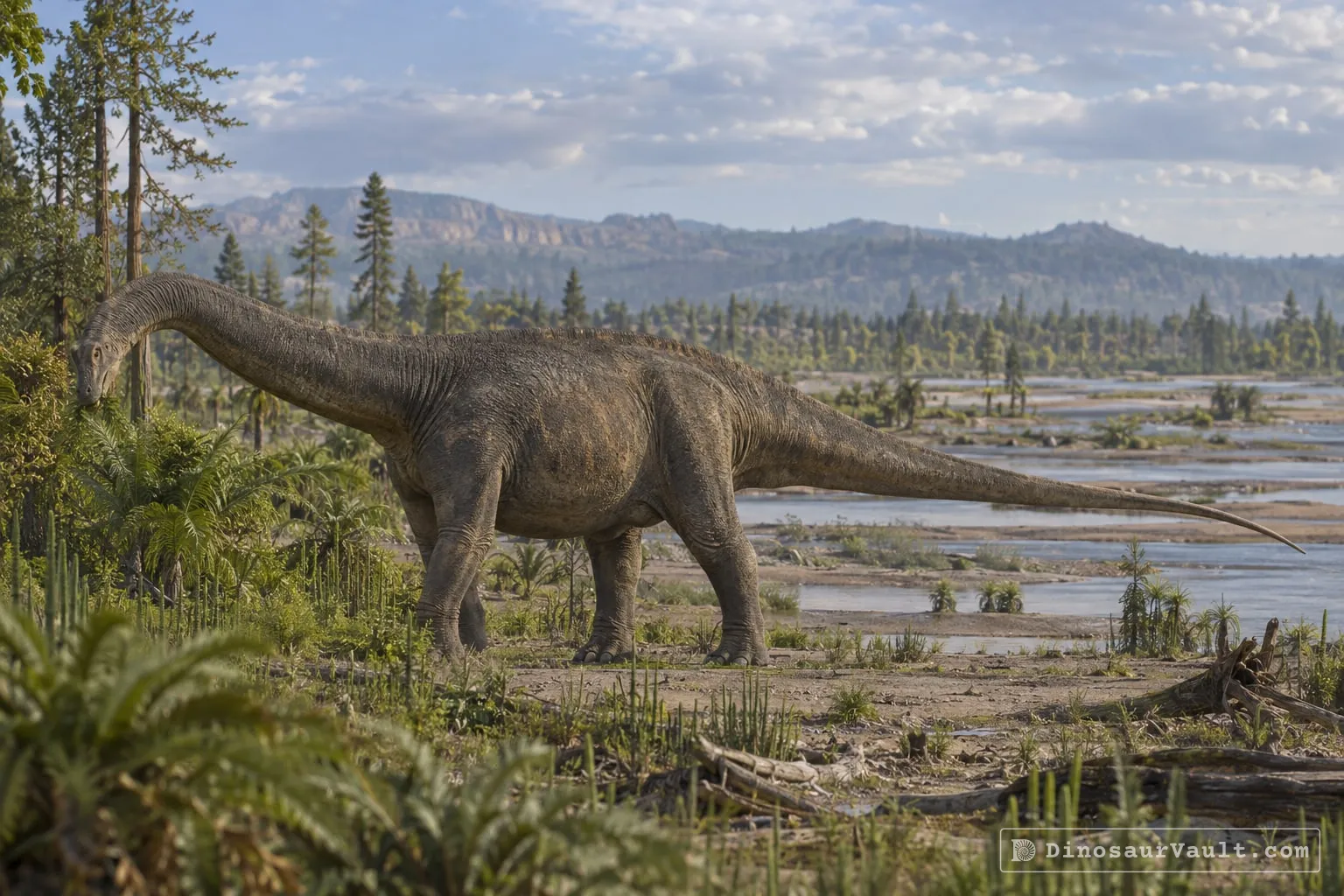
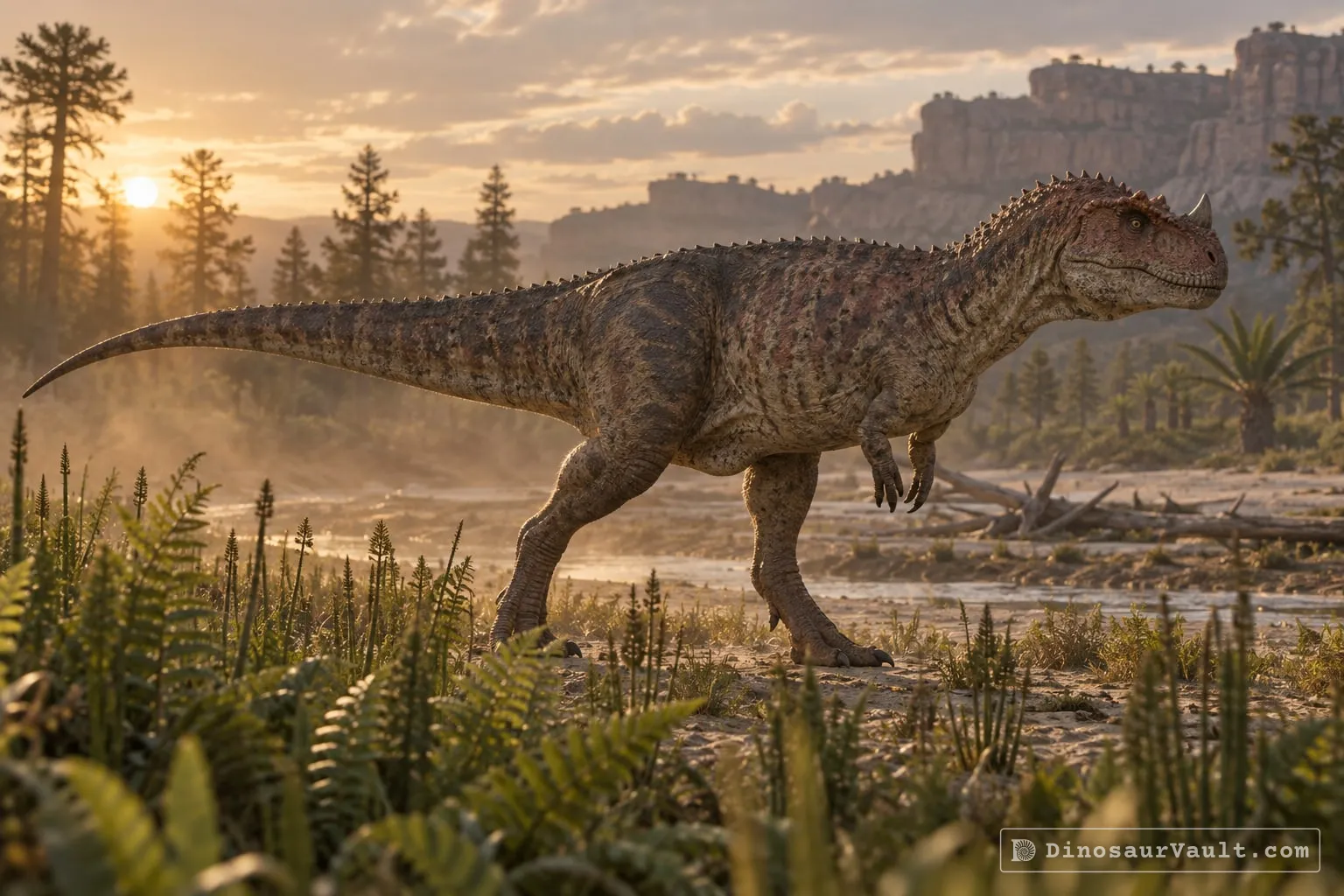


A rock formation can hold fossils laid down millions of years apart, so not every animal here met Mymoorapelta.
The evidence
The science behind Mymoorapelta
Which parts of the picture come from its own bones, and which come from its relatives.
From its own fossils
- Skull bones preserve a pyramid-shaped projection behind the eye, and limb bones show short legs and very short finger bones.
- Its armor includes low keeled plates, backward-leaning shoulder spikes and narrow plates along the tail.
- The ends of its toes carried rounded, wedge-shaped claws.
Borrowed from relatives
- The missing front of the skull is restored from Gargoyleosaurus, another armored dinosaur from the Morrison Formation.
Still unknown
- The exact arrangement of armor over the back and hips.
- The shape of the front of its face.
- Its color and how its appearance changed as it grew.
Often drawn wrong
- A heavy tail club like that of Ankylosaurus has no fossil support.
Discovery timeline
- 1994Named itKirkland & Carpenter
- 2023Family treeRaven et al.
- 2025Full descriptionKirkland et al.
Key papers
The research behind what we know of Mymoorapelta
Named it
Named a small armored dinosaur from the Morrison Formation using a partial skeleton and bony armor.
North America's first pre-Cretaceous ankylosaur (Dinosauria) from the Upper Jurassic Morrison Formation of western Colorado. Brigham Young University Geology Studies 40: 25-42
No link available
Family tree
Compared armored dinosaurs, including Mymoorapelta, and found that relationships changed with the bones and methods used in the analysis.
The phylogenetic relationships and evolutionary history of the armoured dinosaurs (Ornithischia: Thyreophora). Journal of Systematic Palaeontology 21
Read the paper : The phylogenetic relationships and evolutionary history of the armoured dinosaurs (Ornithischia: Thyreophora) (opens in a new tab)Full description
New skull, limb and armor material showed that Mymoorapelta was distinct from Gargoyleosaurus and clarified where each occurred within the Morrison Formation.
Differentiating ankylosaur species in the Upper Jurassic Morrison Formation in light of newly recovered skeletal elements of Mymoorapelta maysi from its type locality. Geology of the Intermountain West 12: 315-393
Read the paper : Differentiating ankylosaur species in the Upper Jurassic Morrison Formation in light of newly recovered skeletal elements of Mymoorapelta maysi from its type locality (opens in a new tab)
Close relatives
Other members of Ankylosauria


Sources: Wikidata