Vectipelta
"Wight shield"
Type species Vectipelta barretti
- Lived
- 139 to 137 million years ago, Early Cretaceous
- Diet
- Herbivore
- Group
- Ankylosaurs
- Found in
- United Kingdom
- Named by
- Pond et al. 2023
Where its fossils were found
The evidence
Today

140 million years ago
Habitat
Meandering rivers crossed floodplains with conifers and ferns. Other dinosaurs from the Wessex Formation include Iguanodon, Neovenator and Ceratosuchops.
Field notes
About Vectipelta
What it was like
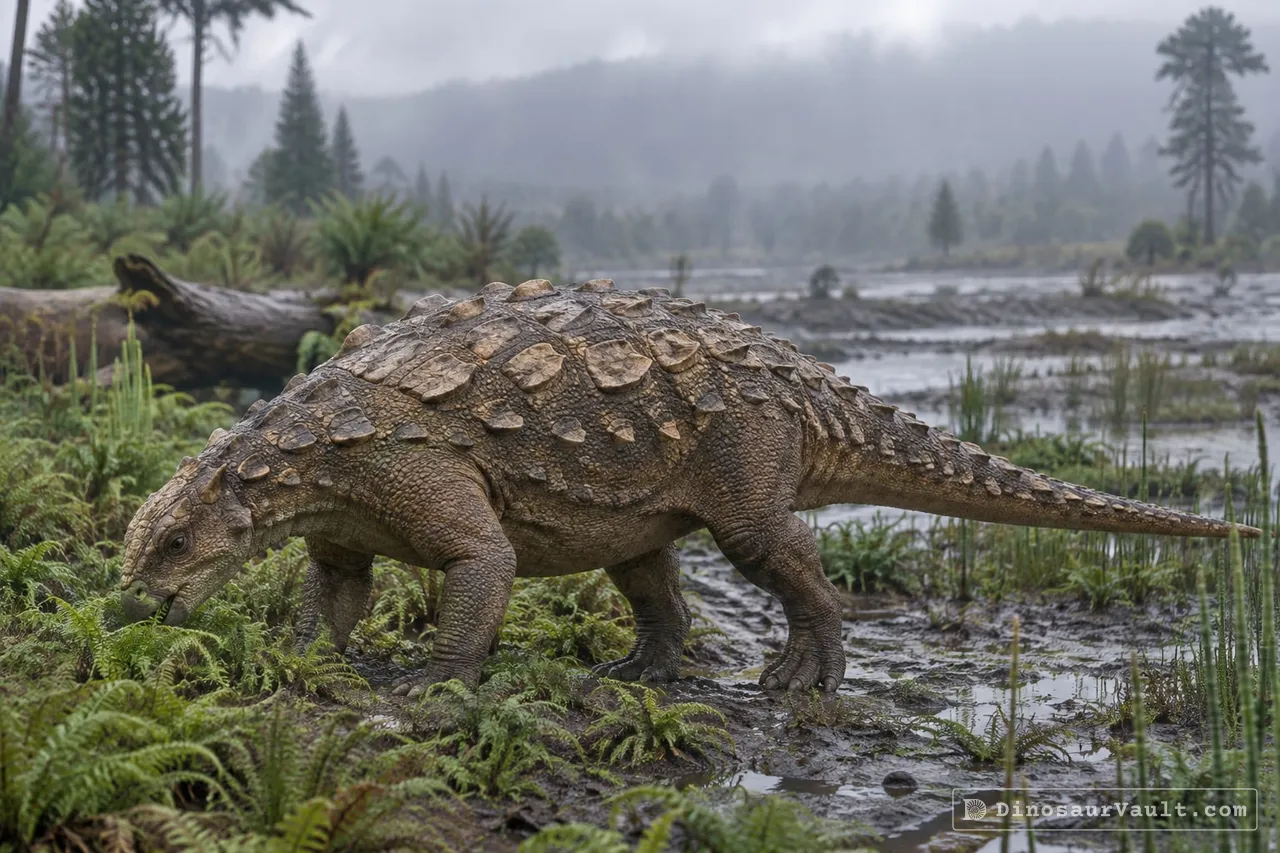
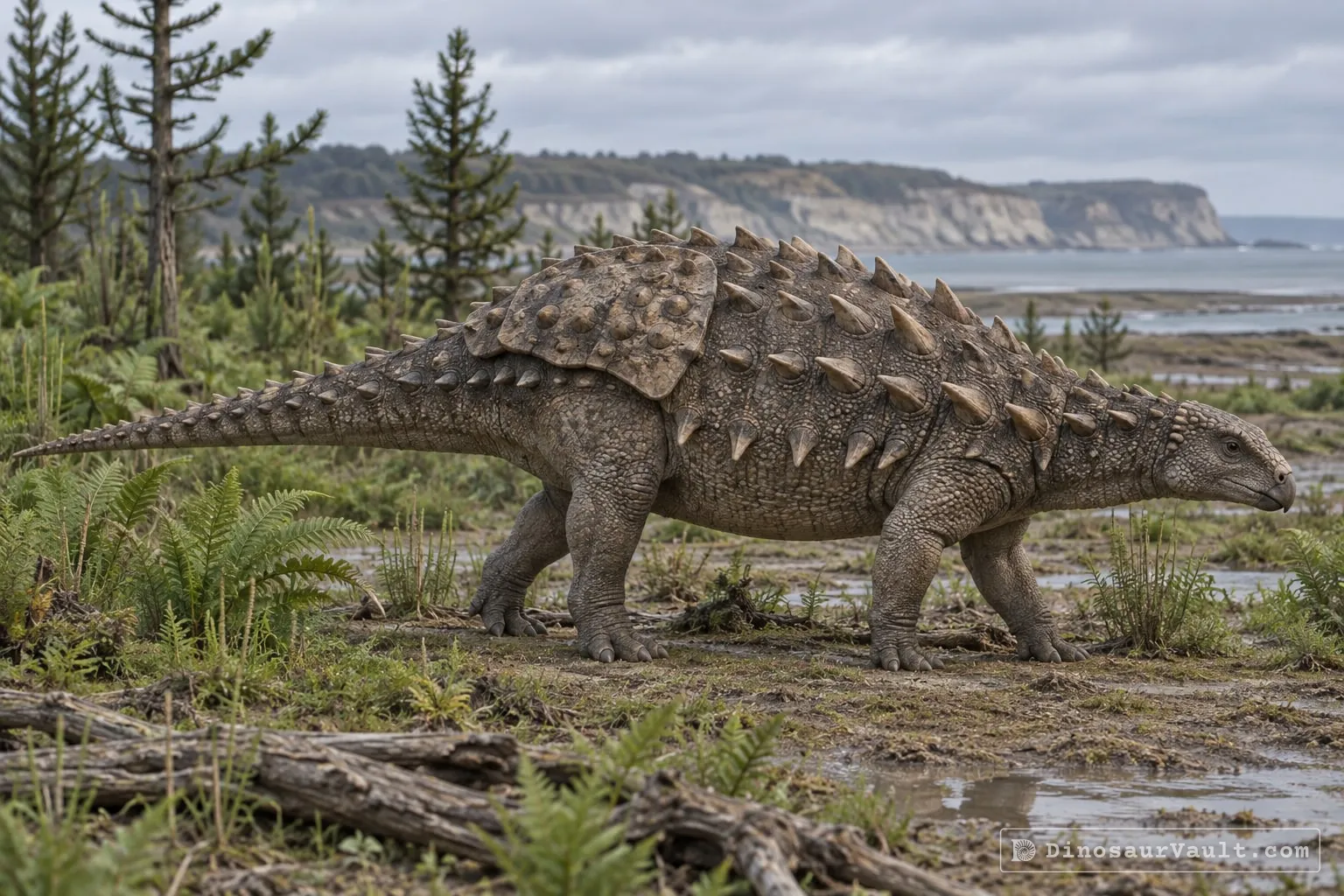
Vectipelta was an armored plant eater, a relative of Polacanthus. It is known from a partial skeleton with many pieces of armor, including spikes.
Its world
It lived in the Early Cretaceous in what is now England. Its bones come from the Wessex Formation, where it lived alongside the fish-eating Baryonyx, the predators Neovenator and Eotyrannus and the plant eater Mantellisaurus.
How it was found
Pond and colleagues named it in 2023. The type species is Vectipelta barretti, which honors a paleontologist.
Field gallery
More views of Vectipelta
Scenes reconstructed from the available fossil evidence.
Lived alongside
Found in the same rock formations
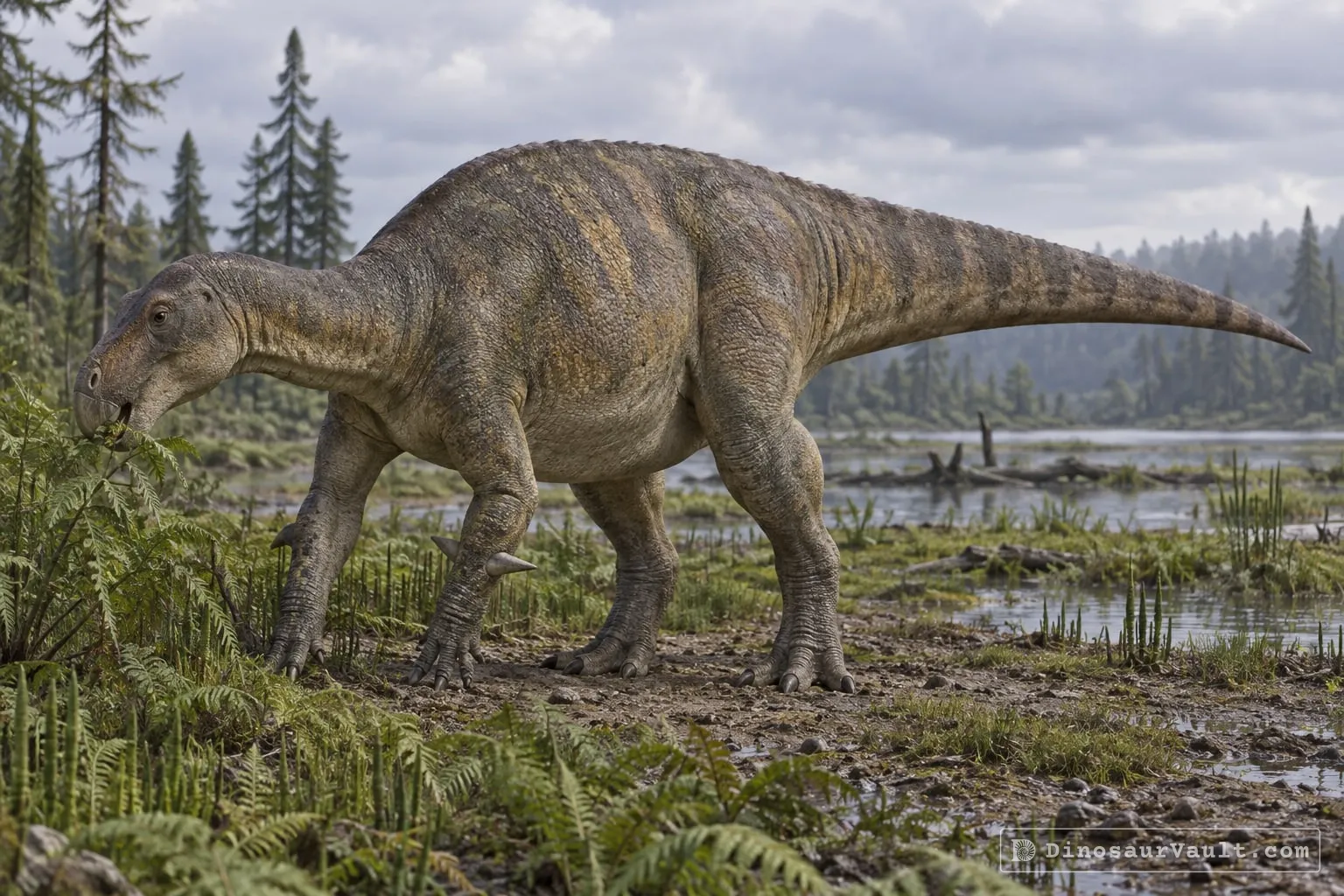
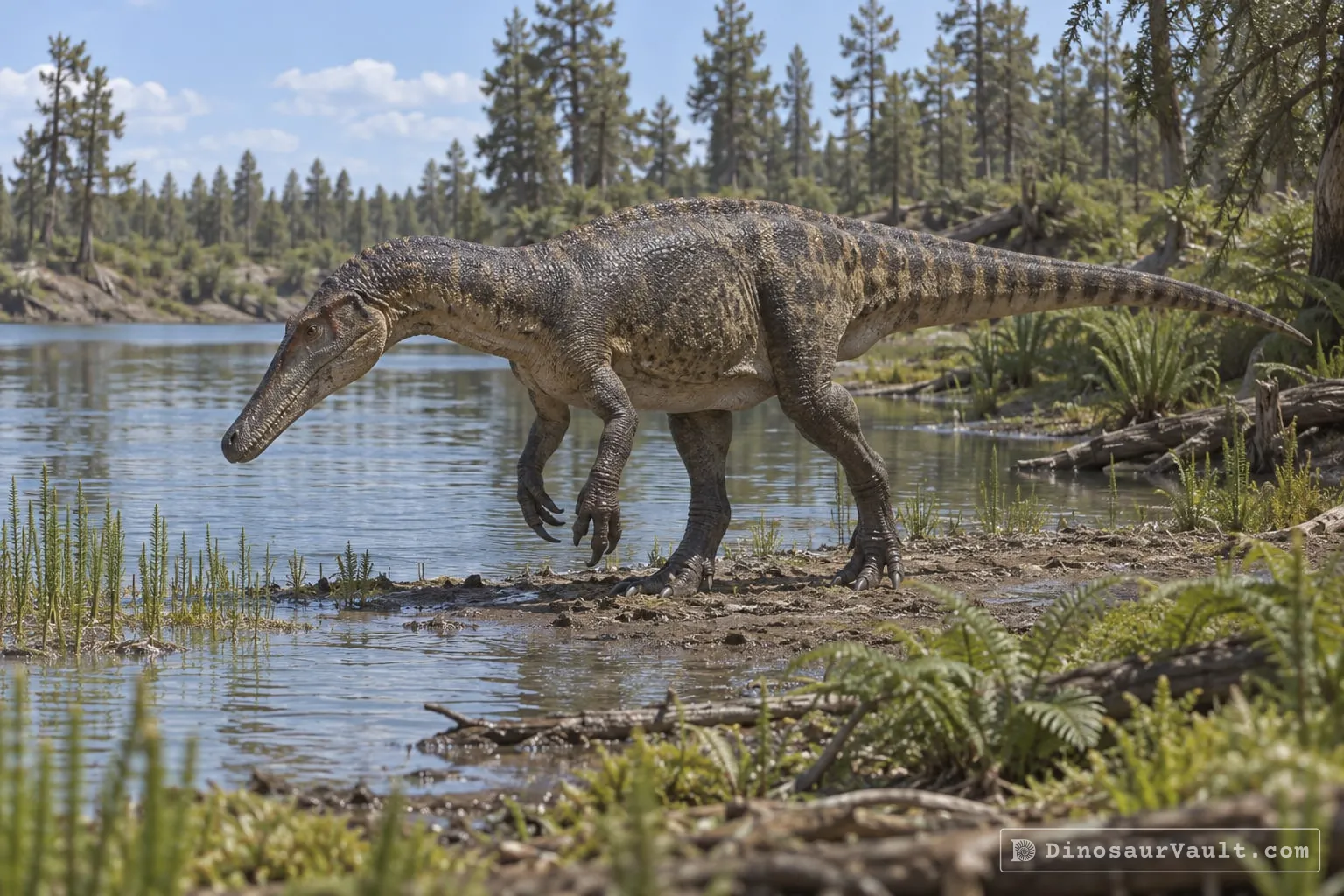
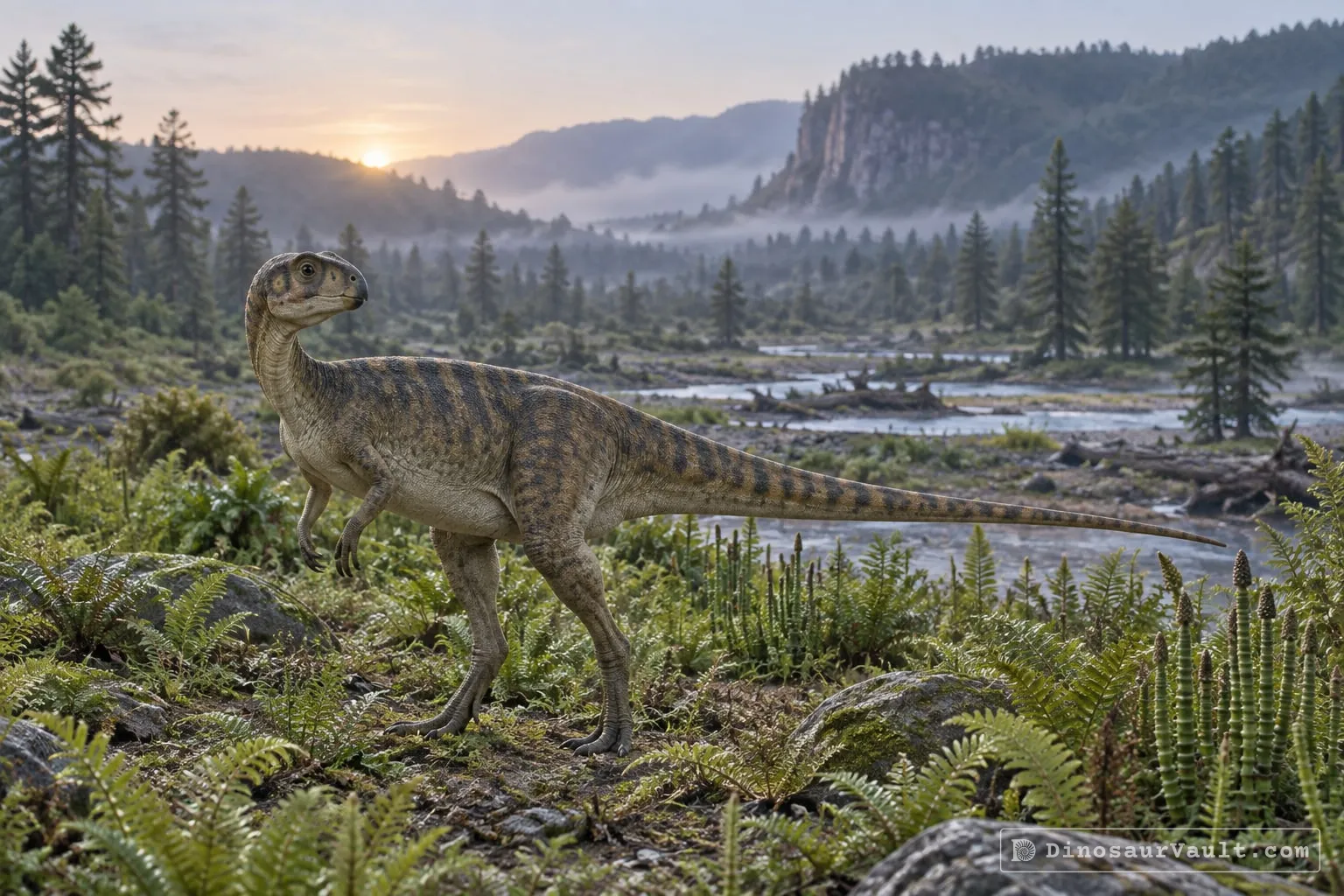
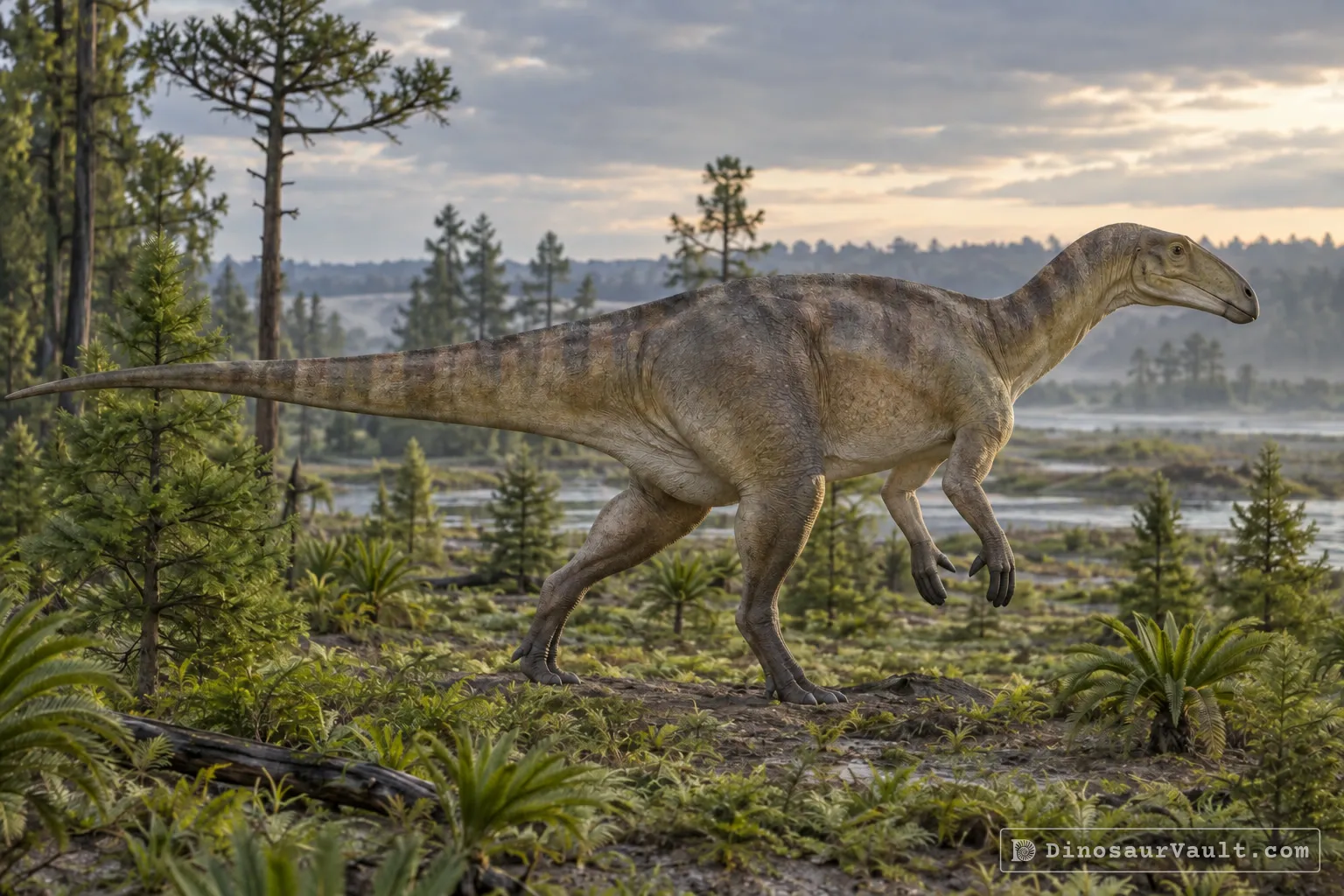
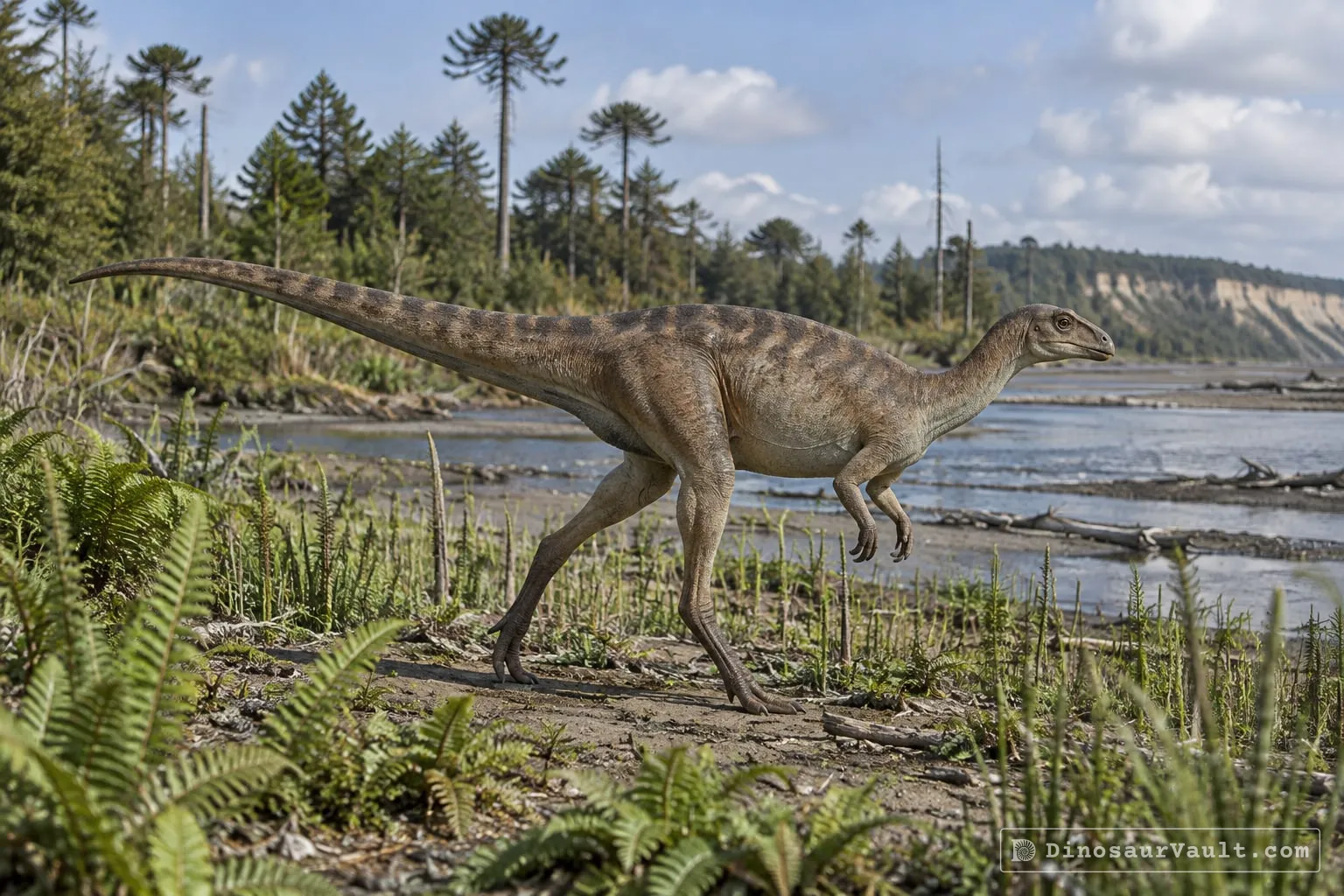
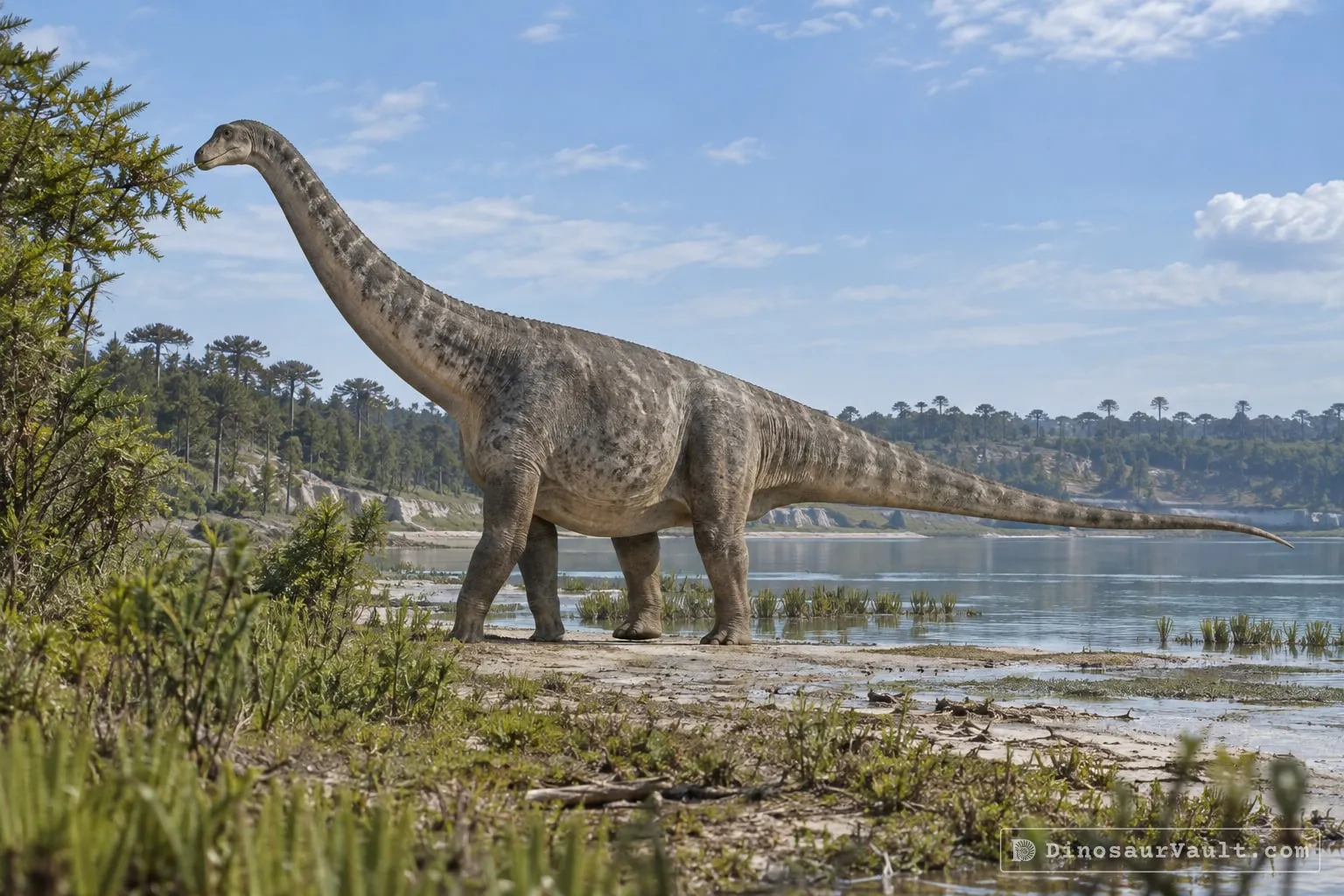


A rock formation can hold fossils laid down millions of years apart, so not every animal here met Vectipelta.
The evidence
The science behind Vectipelta
Which parts of the picture come from its own bones, and which come from its relatives.
From its own fossils
- A partial skeleton preserves parts of the backbone, hips and limbs, along with bony armor. A low shield of armor over the hips has a smooth surface.
- Its armor comes in five shapes, from small, low-keeled scutes to large spines and thin blades that curve backward.
- When the skeleton was dug up, the largest spines lay near its front end.
Borrowed from relatives
- The missing head, lower jaw, neck and shoulders are restored by comparison with Europelta, an armored dinosaur from Spain.
Still unknown
- Its skull. A braincase, a thigh bone and a hip bone found nearby are not counted as part of the skeleton, since they may come from other animals.
- Where each kind of armor sat on the living animal.
- Its closest relatives. The naming study's unconstrained analysis put it with armored dinosaurs from China and a constrained one near Texasetes, and its authors noted few shared features.
Discovery timeline
- 2013SkullsKirkland et al.
- 2021Same rocksBarker et al.
- 2023Named itPond et al.
- 2023Family treeRaven et al.
Key papers
The research behind what we know of Vectipelta
Skulls
Named Europelta, an early armored dinosaur whose crushed skull, jaws and short neck vertebrae give a comparison for armored dinosaurs that lack a head.
The Basal Nodosaurid Ankylosaur Europelta carbonensis n. gen., n. sp. from the Lower Cretaceous (Lower Albian) Escucha Formation of Northeastern Spain. PLoS ONE 8: e80405
Read the paper : The Basal Nodosaurid Ankylosaur Europelta carbonensis n. gen., n. sp. from the Lower Cretaceous (Lower Albian) Escucha Formation of Northeastern Spain (opens in a new tab)Same rocks
Named Ceratosuchops and Riparovenator from the Wessex Formation, showing that its large fish-catching predators were more diverse than previously recognized.
New spinosaurids from the Wessex Formation (Early Cretaceous, UK) and the European origins of Spinosauridae. Scientific Reports 11
Read the paper : New spinosaurids from the Wessex Formation (Early Cretaceous, UK) and the European origins of Spinosauridae (opens in a new tab)Named it
Described an armored dinosaur told apart by its backbone, hip bones and a low armor shield over the hips, separating it from fossils previously assigned to Polacanthus.
Vectipelta barretti , a new ankylosaurian dinosaur from the Lower Cretaceous Wessex Formation of the Isle of Wight, UK. Journal of Systematic Palaeontology 21
Read the paper : Vectipelta barretti , a new ankylosaurian dinosaur from the Lower Cretaceous Wessex Formation of the Isle of Wight, UK (opens in a new tab)Family tree
Included the skeleton before it was named Vectipelta and proposed a new family tree for armored dinosaurs.
The phylogenetic relationships and evolutionary history of the armoured dinosaurs (Ornithischia: Thyreophora). Journal of Systematic Palaeontology 21
Read the paper : The phylogenetic relationships and evolutionary history of the armoured dinosaurs (Ornithischia: Thyreophora) (opens in a new tab)
Close relatives
Other members of Ankylosauria


Sources: Wikidata