Marshosaurus
MARSH-oh-SORE-us
"Marsh's lizard"
- Lived
- 155 to 143 million years ago, Late Jurassic
- Diet
- Carnivore
- Length
- about 6 m (20 ft)
- Group
- Theropods, Piatnitzkysauridae
- Found in
- United States
- Named by
- Madsen 1976
Size comparison
To scale


Scale in metersOutline: typical theropod shape
Where its fossils were found
The evidence
Today

150 million years ago
Habitat
Rivers crossed the open plains of the Morrison Formation, with conifers and ferns growing near water. Allosaurus, Stegosaurus and Camarasaurus shared this landscape.
Field notes
About Marshosaurus
What it was like
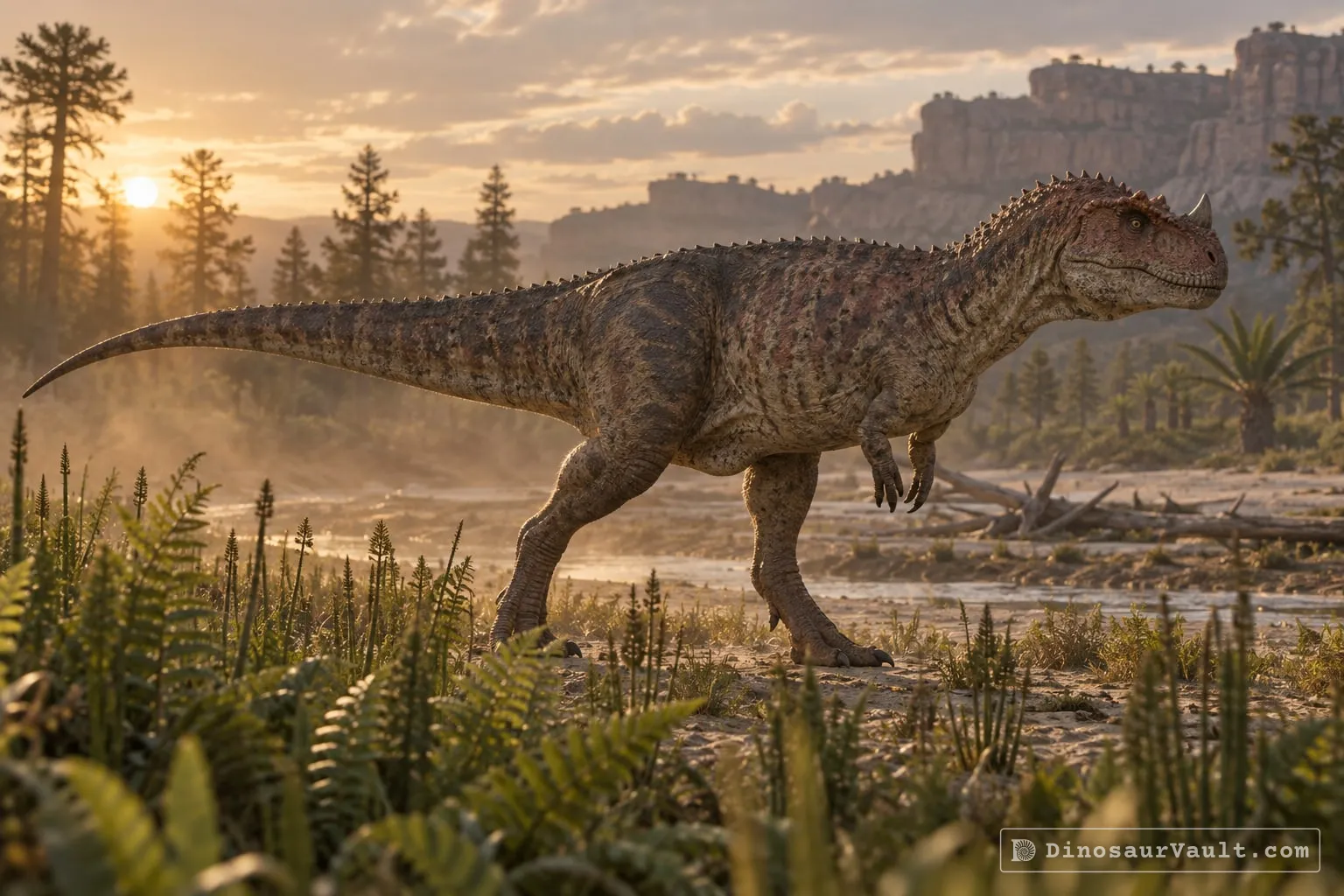
Marshosaurus was a medium-sized two-legged predator about 6 meters (20 feet) long. It is known mainly from hip bones and a few pieces of the skull, so its full appearance is uncertain.
Its world
It lived in the Late Jurassic in what is now Utah and Colorado. Its bones come from the Morrison Formation, a land of rivers and open plains shared with Allosaurus, Ceratosaurus, Stegosaurus and giant sauropods such as Camarasaurus and Diplodocus.
How it was found
Madsen named Marshosaurus in 1976. Its closest known relative is Piatnitzkysaurus from Argentina.
Field gallery
More views of Marshosaurus
Scenes reconstructed from the available fossil evidence.
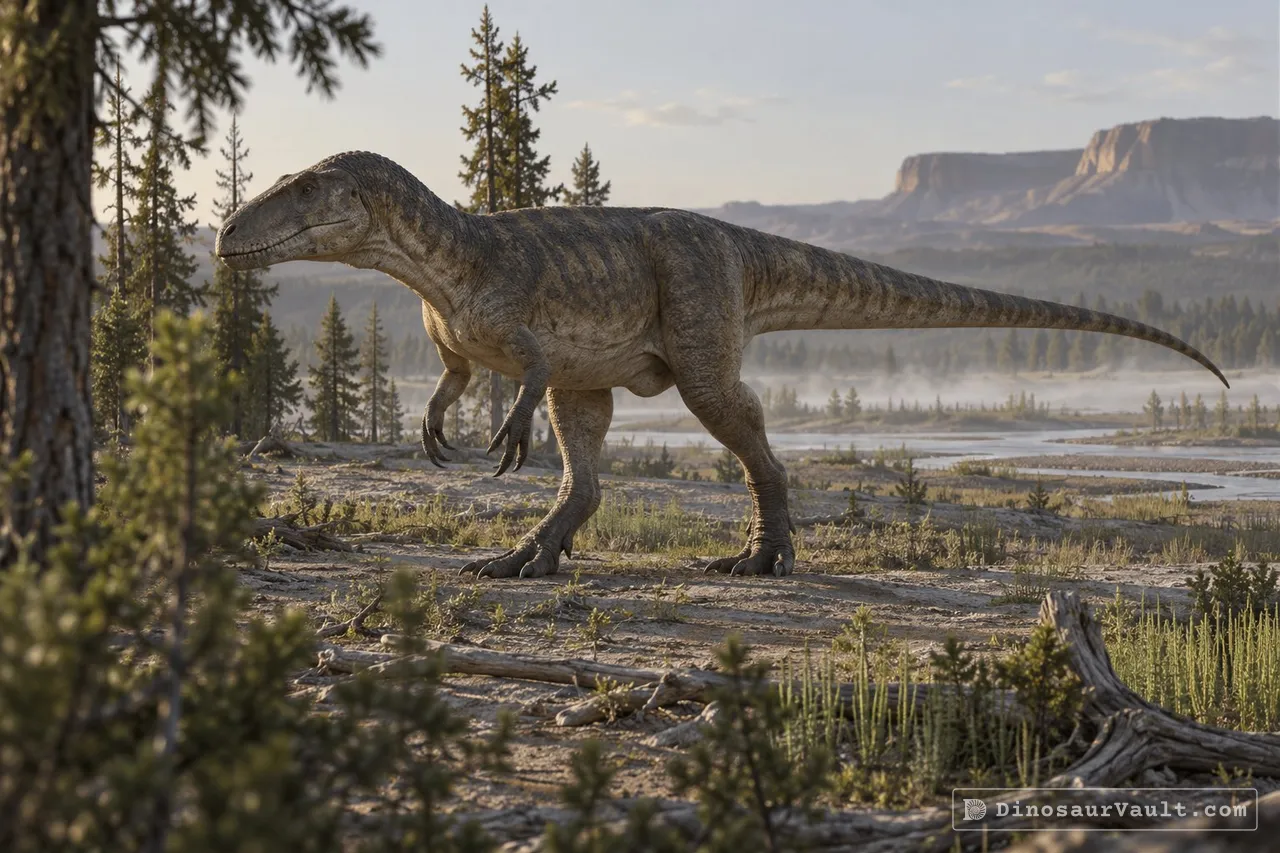
1 of 3
Lived alongside
Found in the same rock formations
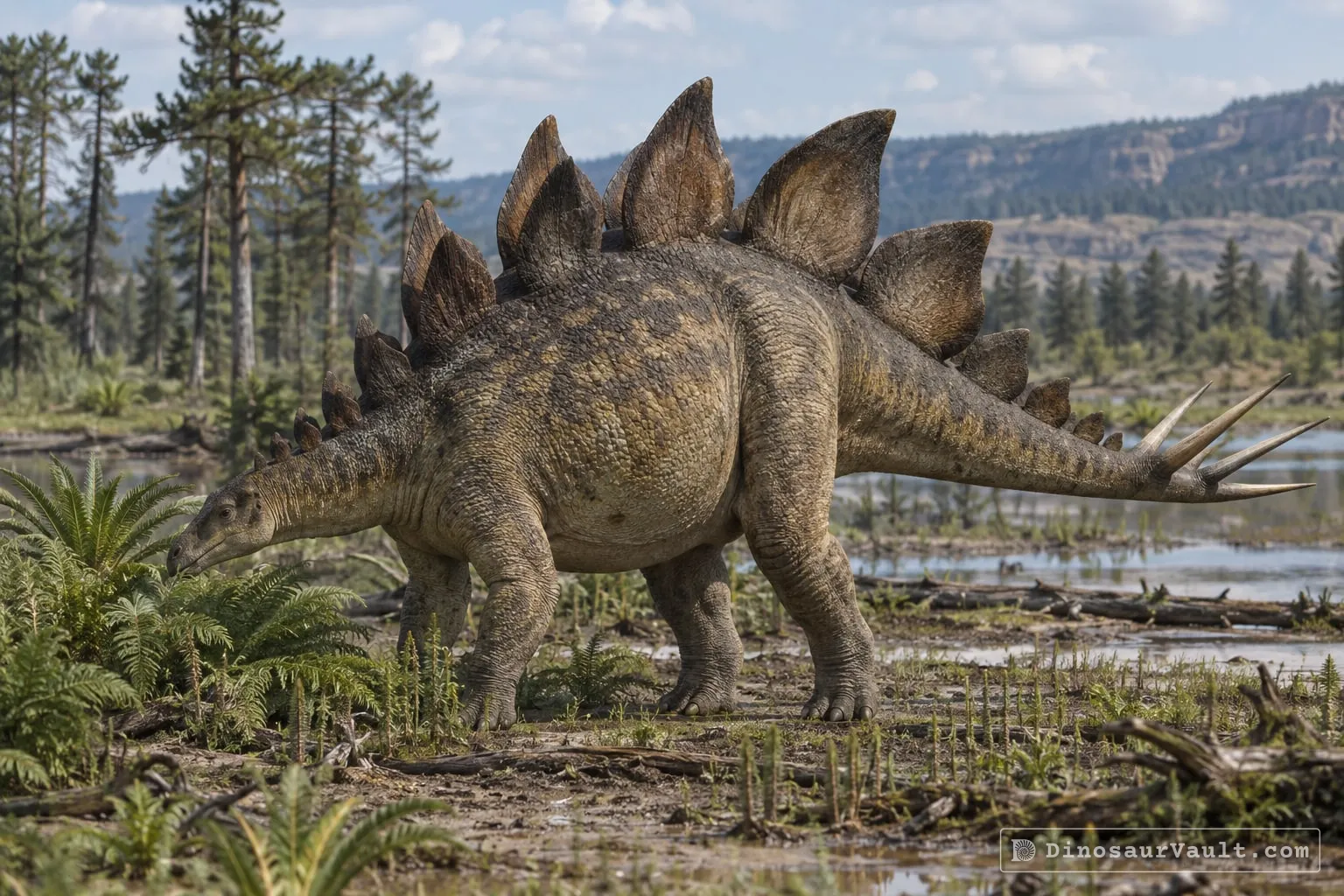
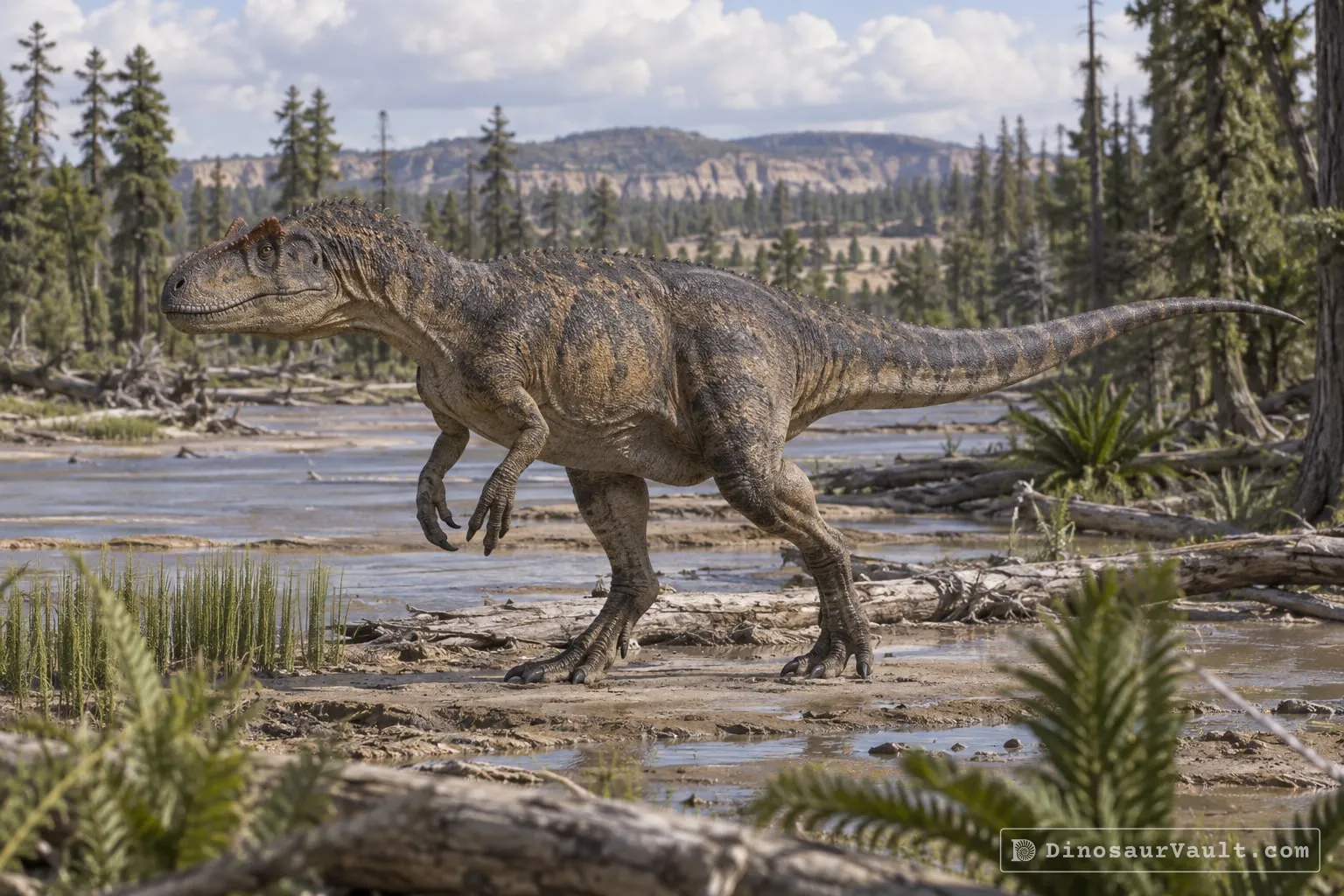
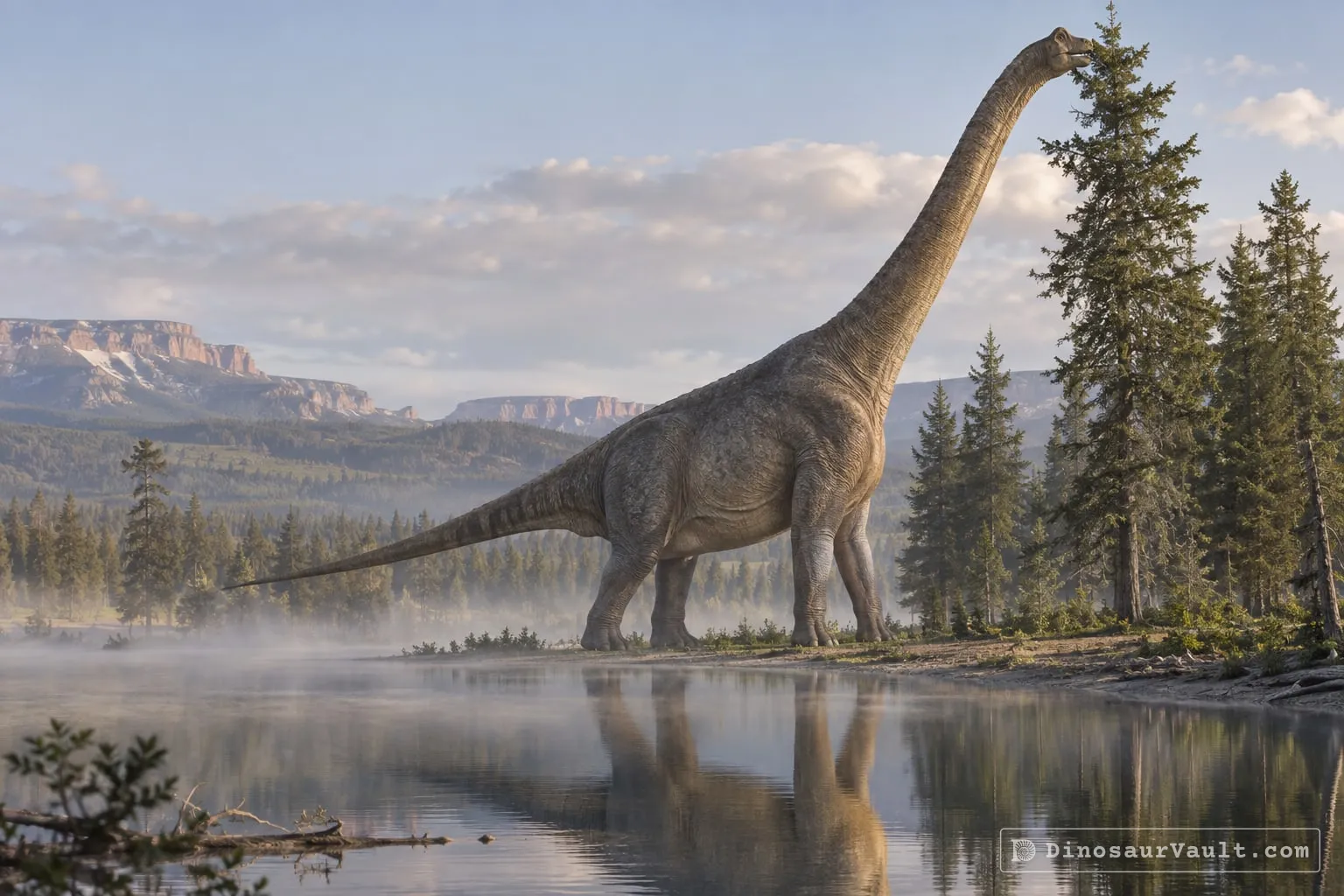
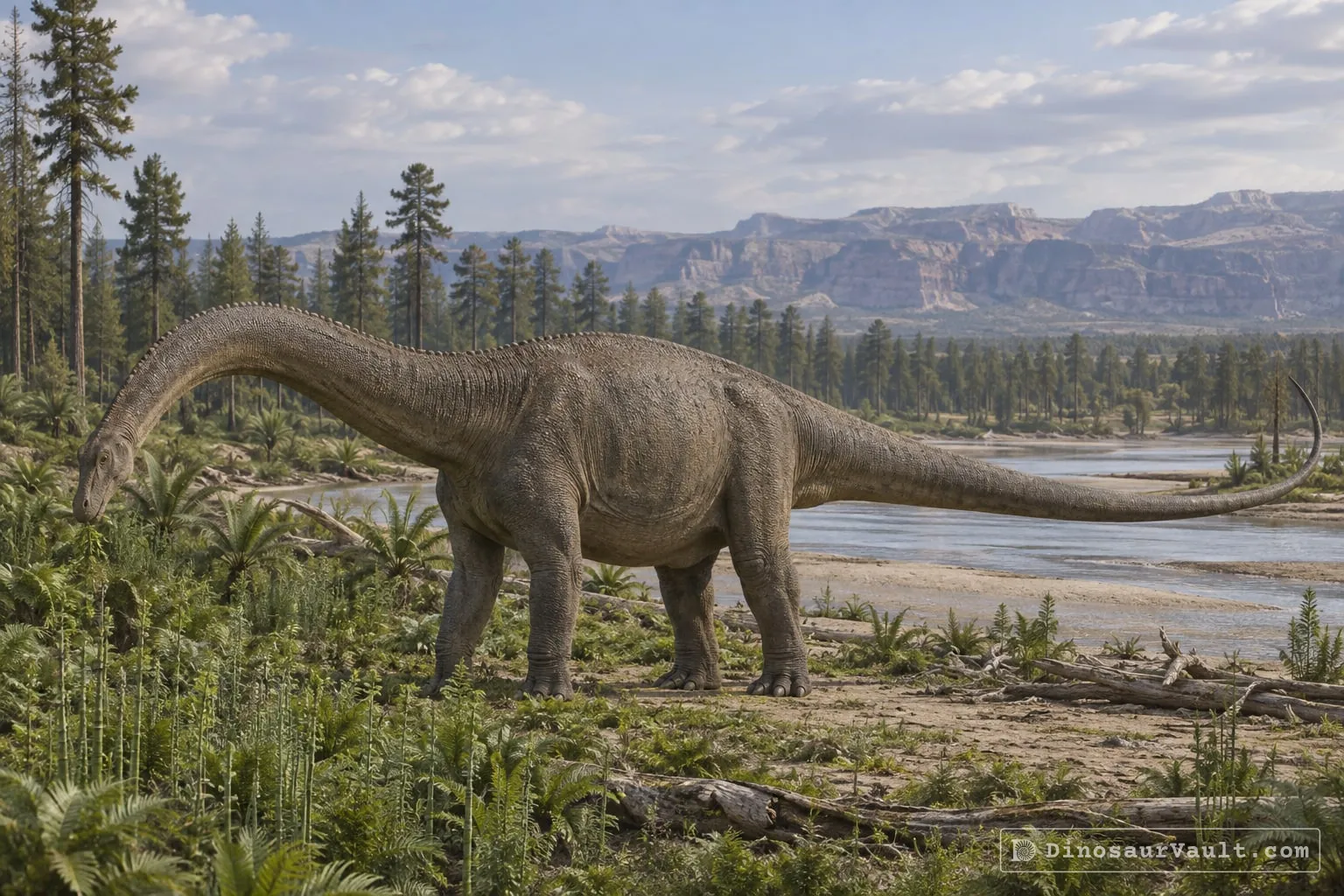
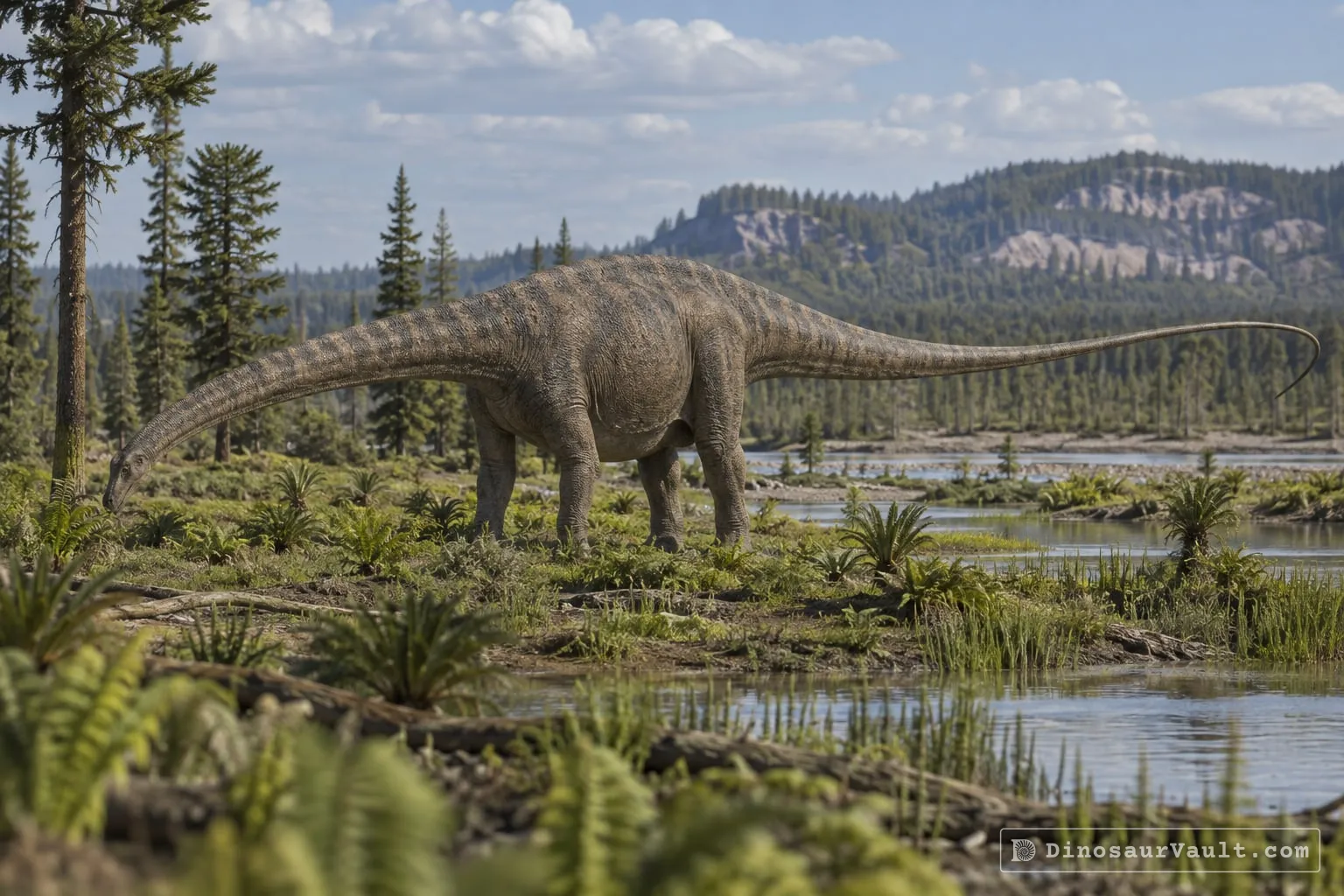
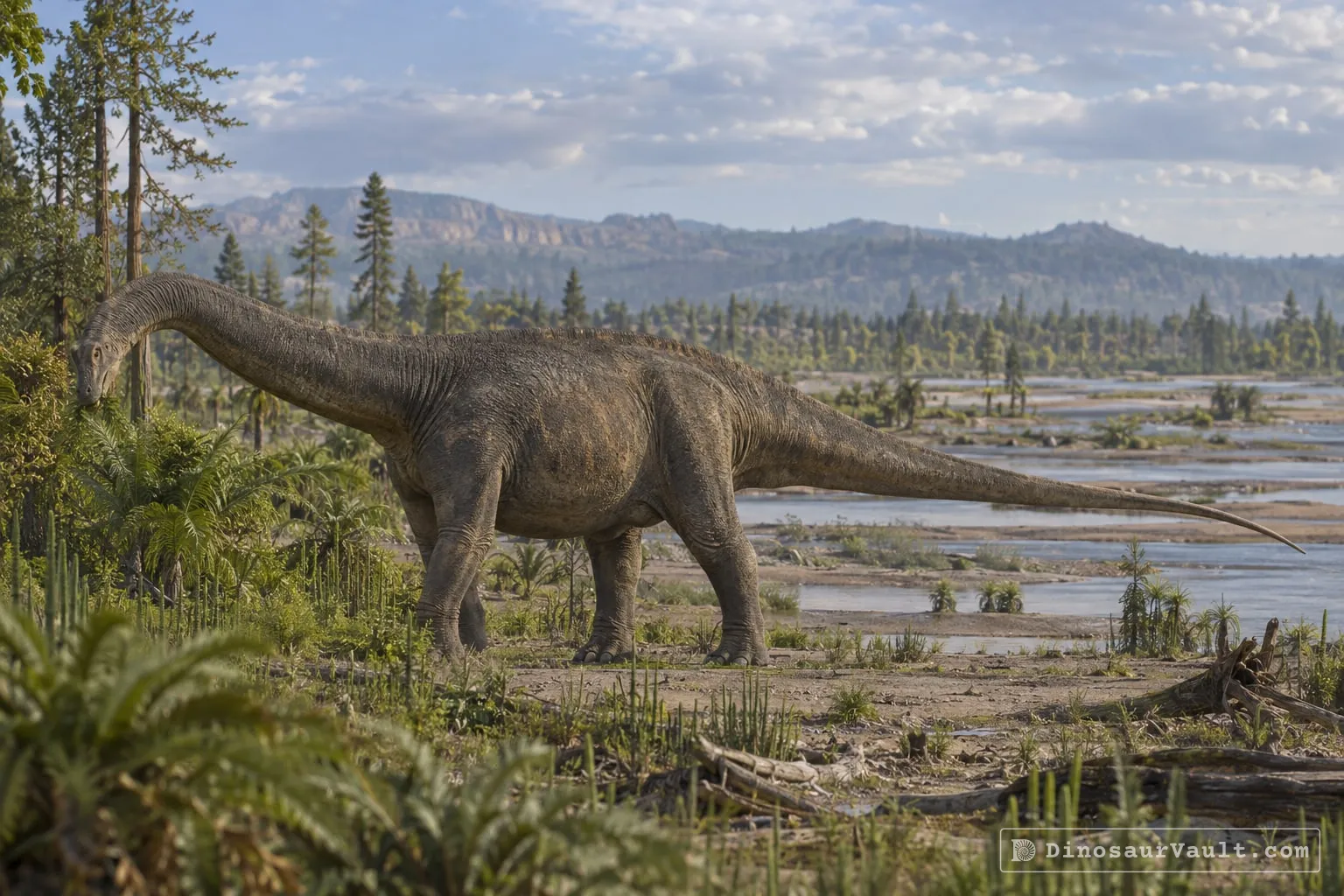
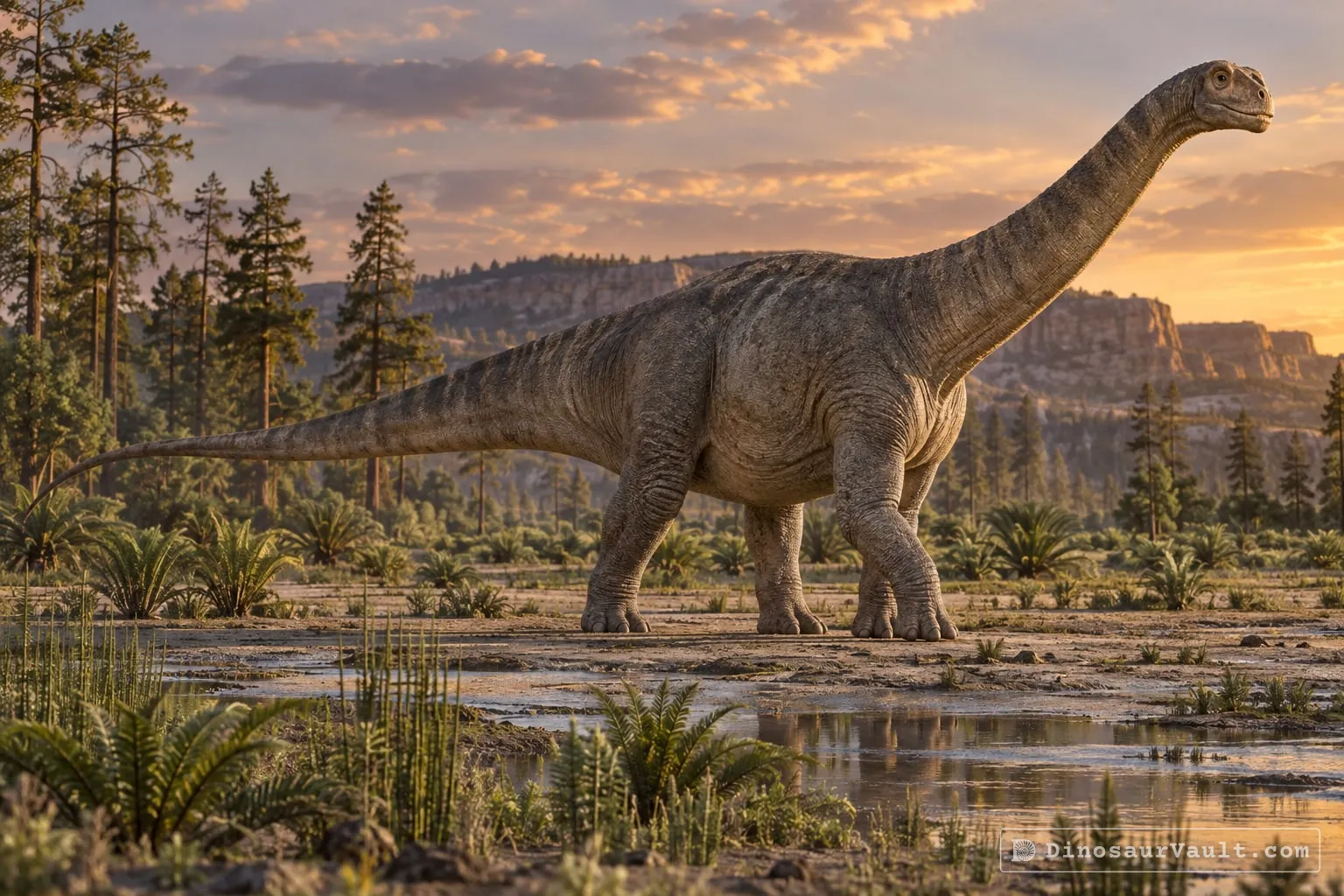


A rock formation can hold fossils laid down millions of years apart, so not every animal here met Marshosaurus.
The evidence
The science behind Marshosaurus
Which parts of the picture come from its own bones, and which come from its relatives.
From its own fossils
- A hip bone formed the basis for naming Marshosaurus, with further hip and backbone material assigned to it.
- Jaw bones show a curved tooth-bearing edge in the upper jaw and a straighter lower jaw.
Borrowed from relatives
- Piatnitzkysaurus and Condorraptor guide the restoration of missing parts of the head, limbs and tail.
- Lips and skin are restored from comparisons with other theropods.
Still unknown
- The complete shape of its skull and the proportions of its hands and feet.
- Its skin covering and color.
- Which of the isolated bones assigned to it really belong to Marshosaurus.
Often drawn wrong
- Its hands should face inward rather than palm down.
- A large hooked toe claw like a raptor's is an unsupported addition.
Discovery timeline
- 1976Named itMadsen
- 2012Family treeCarrano, Benson & Sampson
- 2023PostureLacerda, Bittencourt & Hutchinson
Key papers
The research behind what we know of Marshosaurus
Named it
Named a new predator from hip bones and other remains in the Morrison Formation.
A Second New Theropod Dinosaur from the Late Jurassic of East Central Utah. Utah Geology 3: 51-60
Read the paper : A Second New Theropod Dinosaur from the Late Jurassic of East Central Utah (opens in a new tab)Family tree
Grouped Marshosaurus with Piatnitzkysaurus and Condorraptor and reviewed the bones assigned to it.
The phylogeny of Tetanurae (Dinosauria: Theropoda). Journal of Systematic Palaeontology 10: 211-300
Read the paper : The phylogeny of Tetanurae (Dinosauria: Theropoda) (opens in a new tab)Posture
Reconstructed hip and hindlimb muscles in Marshosaurus and its relatives using attachment marks on bones and comparisons with living animals.
Reconstruction of the pelvic girdle and hindlimb musculature of the early tetanurans Piatnitzkysauridae (Theropoda, Megalosauroidea). Journal of Anatomy 244: 557-593
Read the paper : Reconstruction of the pelvic girdle and hindlimb musculature of the early tetanurans Piatnitzkysauridae (Theropoda, Megalosauroidea) (opens in a new tab)
Close relatives
Other members of Piatnitzkysauridae


Sources: Wikidata