Garumbatitan
"Garumba giant"
Type species Garumbatitan morellensis
- Lived
- 126 to 121 million years ago, Early Cretaceous
- Diet
- Herbivore
- Group
- Sauropods
- Found in
- Spain
- Named by
- Mocho et al. 2024
Where its fossils were found
The evidence
Today

125 million years ago
Habitat
A coastal plain crossed by rivers near a delta in what is now Spain. Iguanodon, Morelladon and Vallibonavenatrix lived in the same region.
Field notes
About Garumbatitan
What it was like
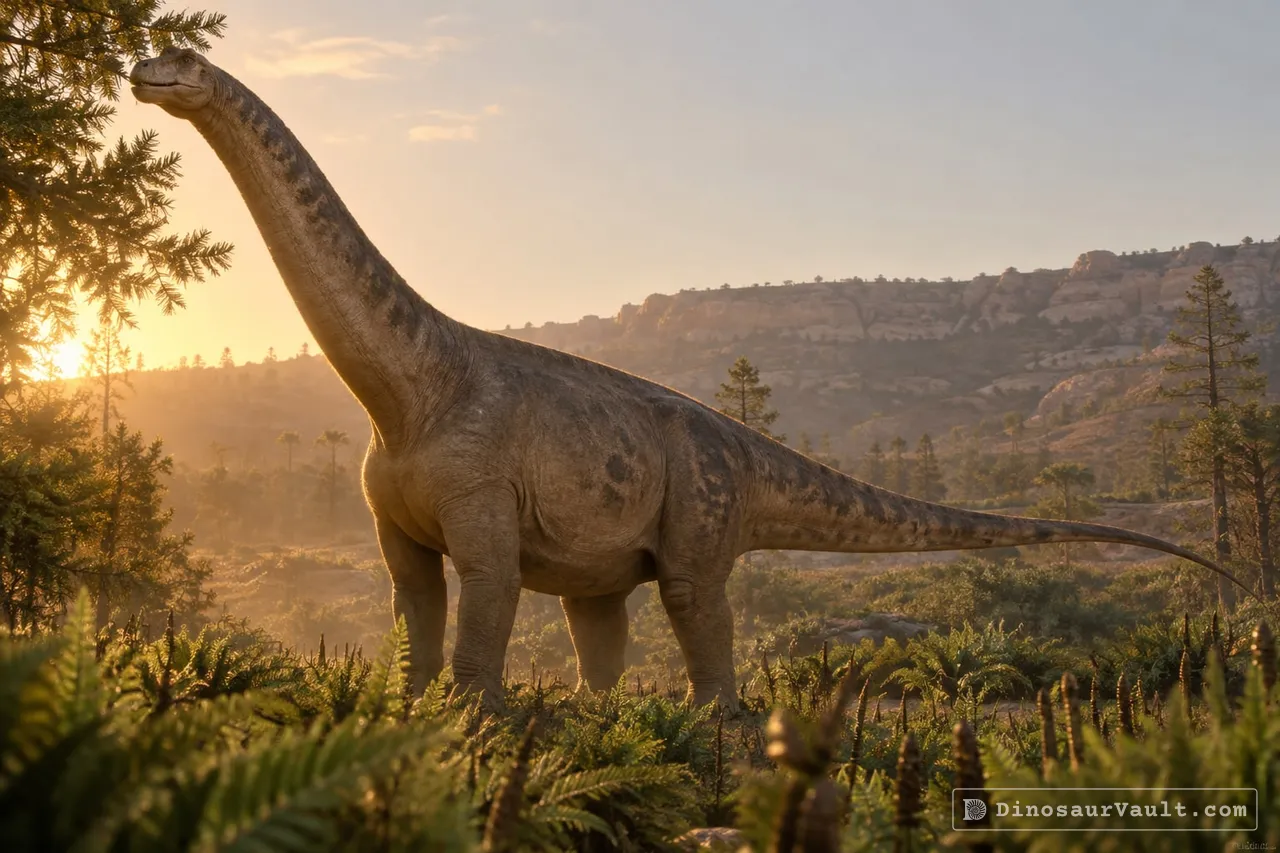
Garumbatitan was a large sauropod, a long-necked plant eater. It is known from bones of the legs, feet and back.
Its world
It lived in the Early Cretaceous, in what is now Spain. It comes from the Arcillas de Morella Formation, where it shared the land with the plant eaters Iguanodon and Morelladon and the spinosaur Vallibonavenatrix.
How it was found
Mocho and colleagues named Garumbatitan in 2024. The type species is Garumbatitan morellensis.
Field gallery
More views of Garumbatitan
Scenes reconstructed from the available fossil evidence.
1 of 2
Lived alongside
Found in the same rock formations
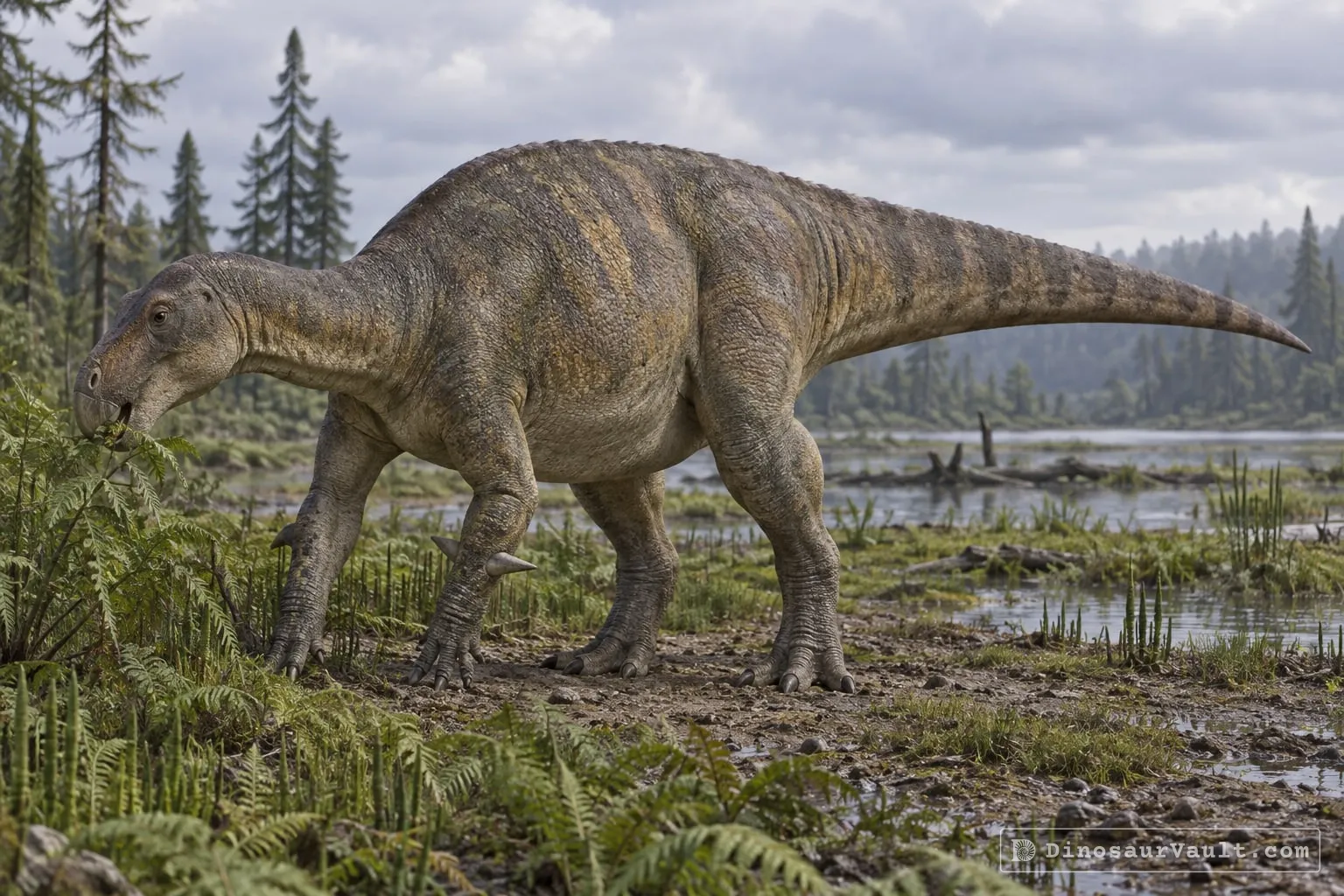
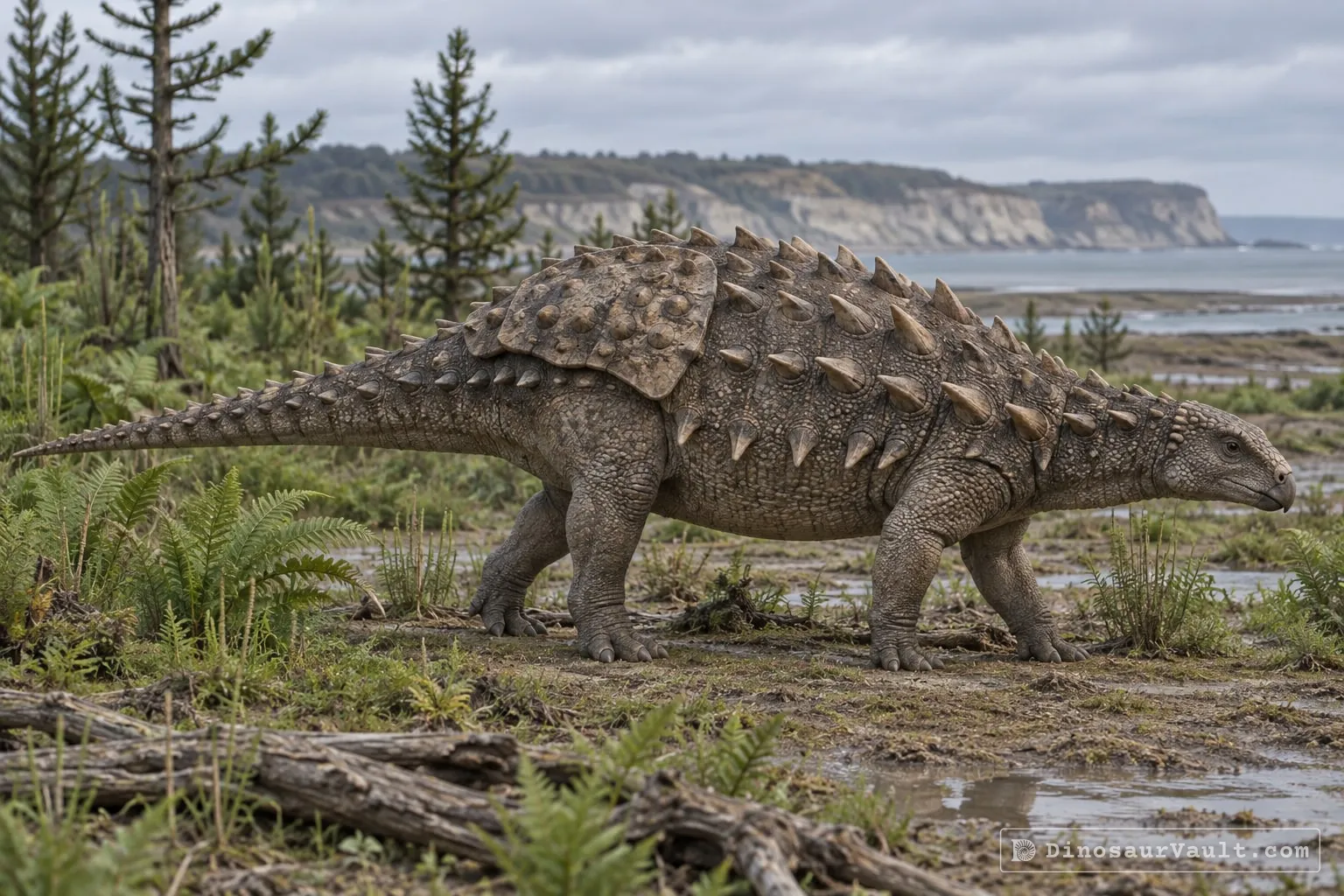
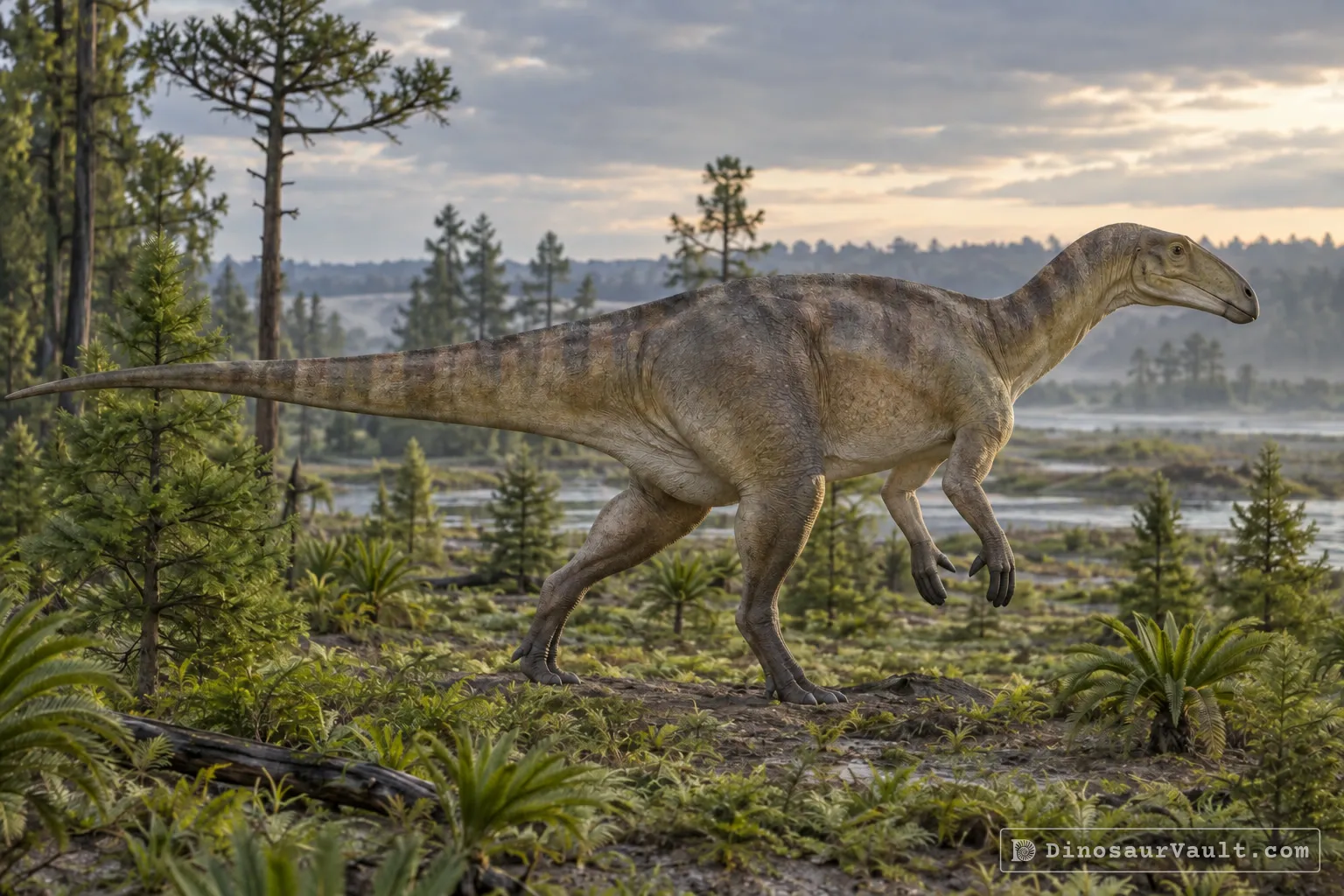
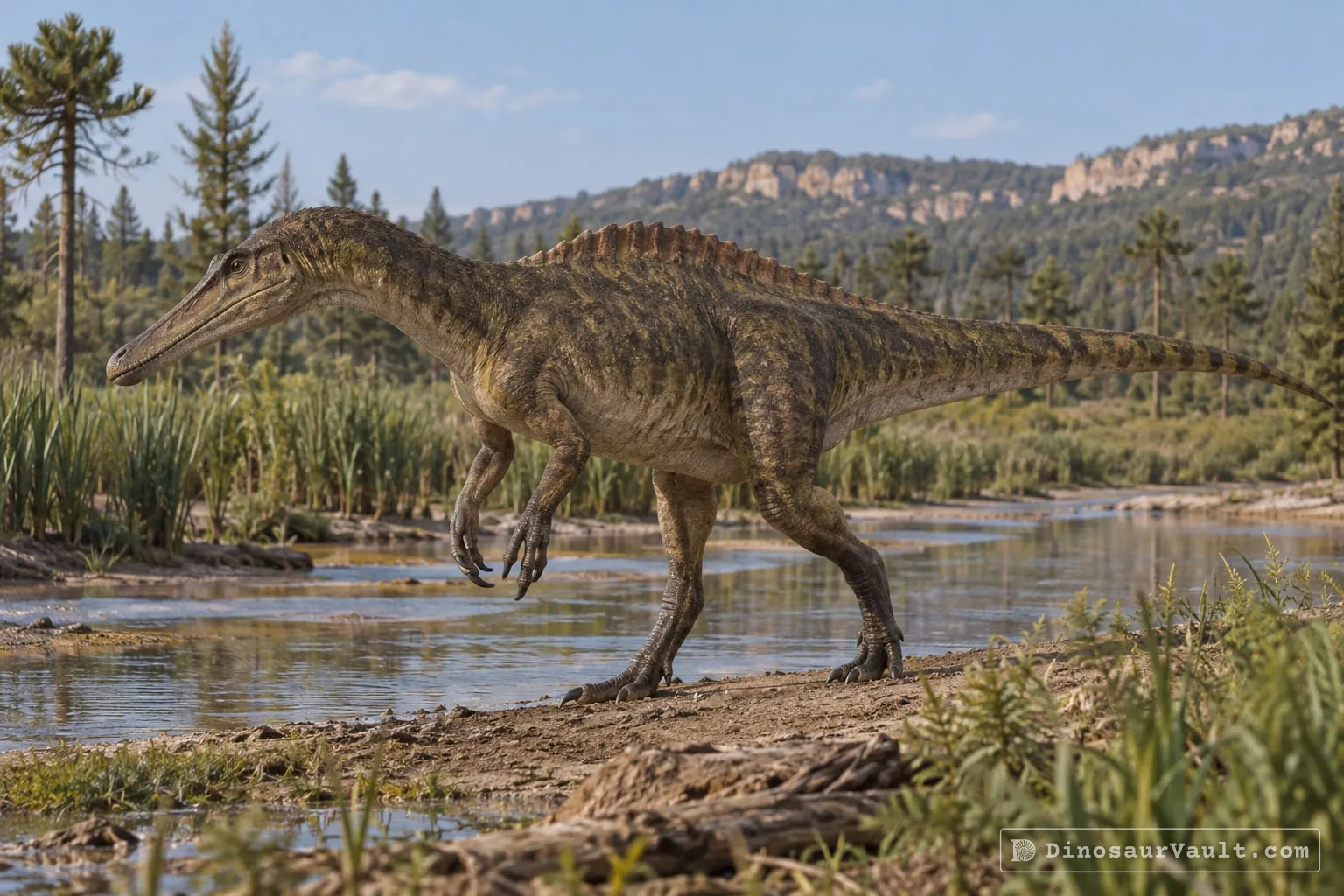
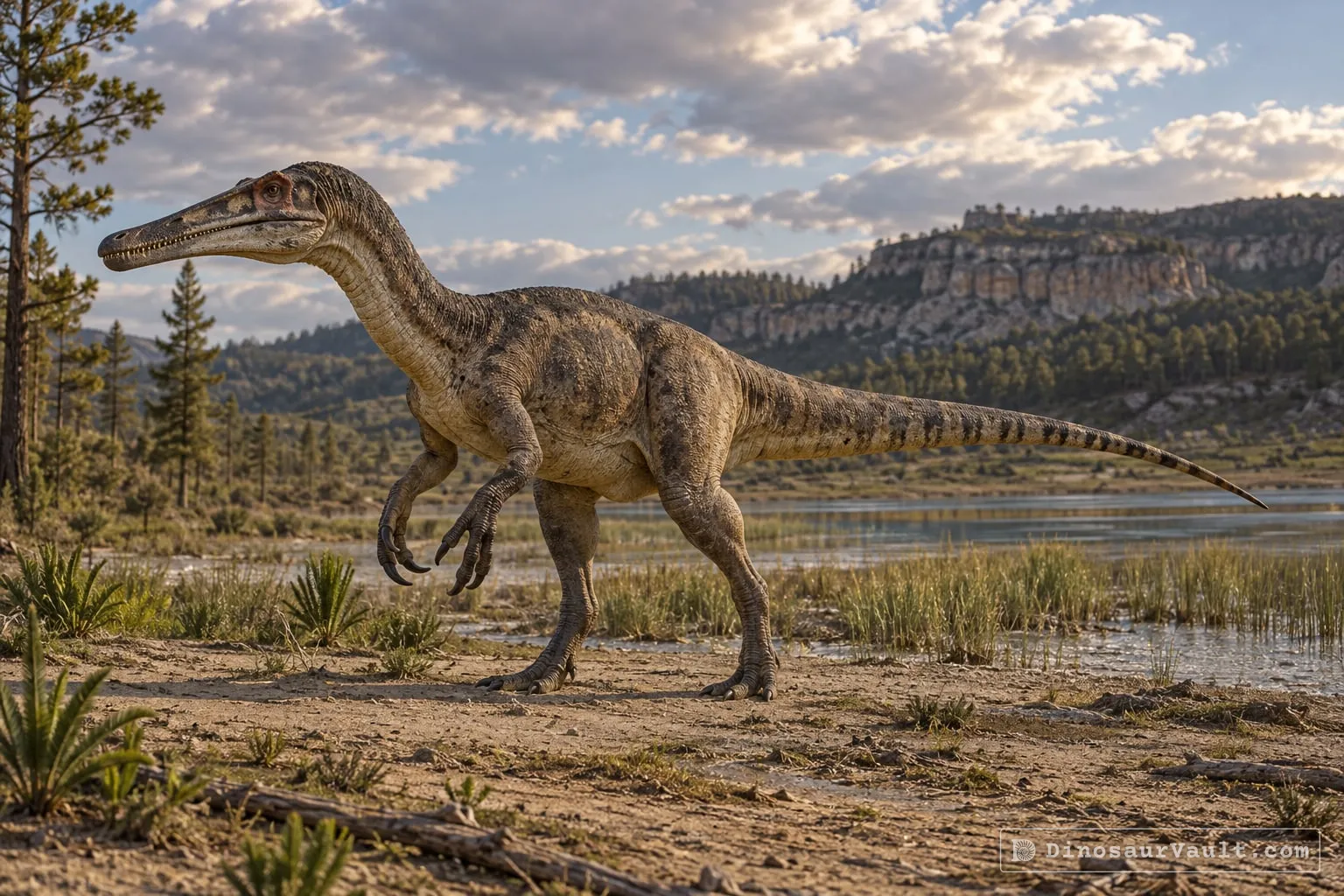
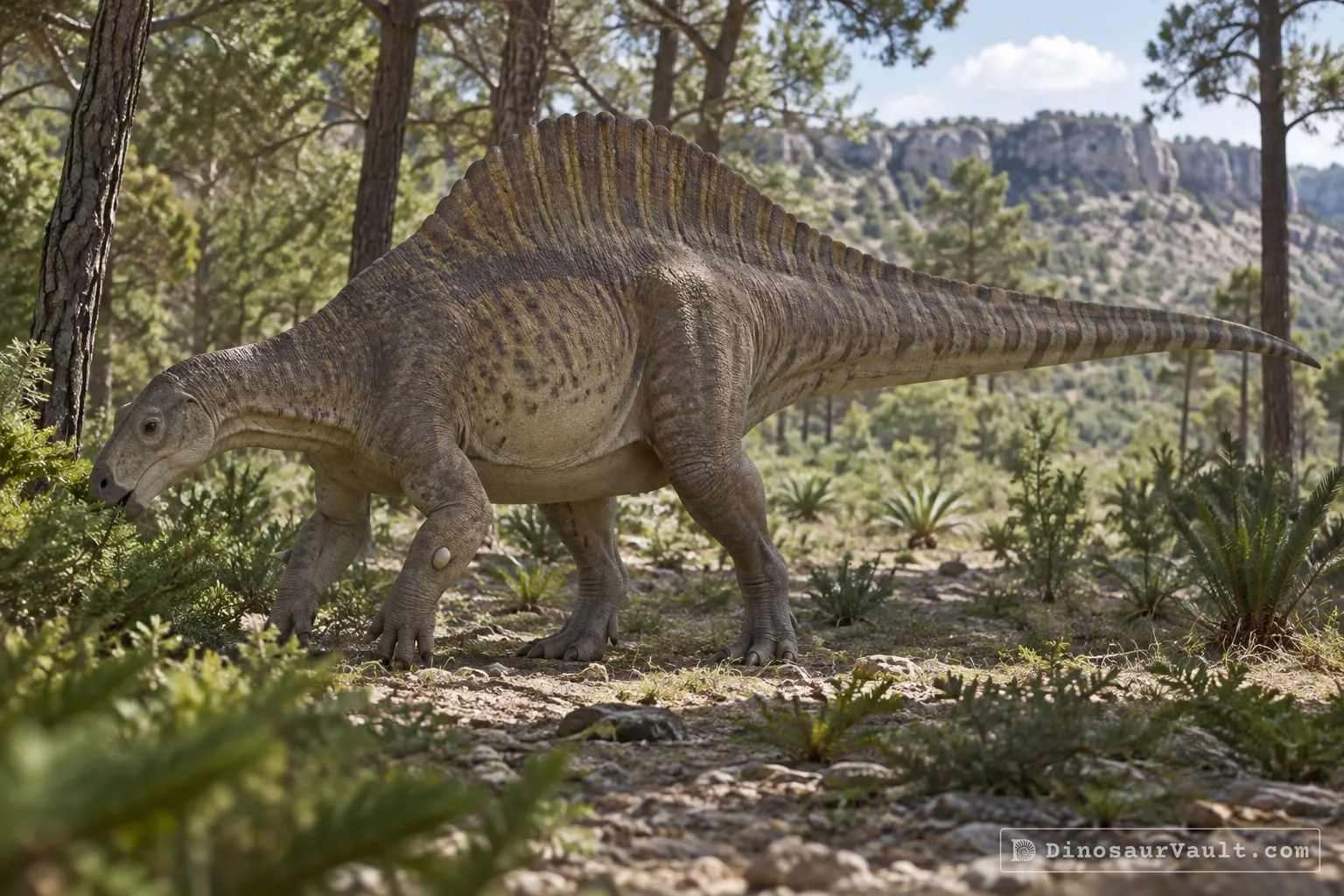


A rock formation can hold fossils laid down millions of years apart, so not every animal here met Garumbatitan.
The evidence
The science behind Garumbatitan
Which parts of the picture come from its own bones, and which come from its relatives.
From its own fossils
- The type skeleton, the largest, includes joined neck and back vertebrae, tail vertebrae, ribs, hind leg bones and a nearly complete right foot. A second skeleton adds more leg, foot and hip bones, and smaller duplicate foot bones show there was at least one more animal.
- The thighbone has a strongly projecting bulge on its outer side.
- The three middle foot bones are long and slender, while the inner and outer ones are short and sturdy. The first two toes end in narrow, curved claws, and the third in a much smaller one; the first claw is less curved than in Tastavinsaurus.
Borrowed from relatives
- The missing head is restored by comparison with Europasaurus, and the hands and front of the body by comparison with Camarasaurus.
Still unknown
- The shape of its skull. None of the described skeletons include head bones.
- Whether the hollows on the sides of its tail vertebrae held air sacs. Its describers thought so, but a later study found the evidence too weak.
- How its body changed as it grew.
Discovery timeline
- 2015Same rocksGasulla et al.
- 2023Its worldSantos-Cubedo et al.
- 2024Named itMocho et al.
- 2026Inside the bonesBeeston et al.
Key papers
The research behind what we know of Garumbatitan
Same rocks
Described Morelladon, a plant eater with tall back spines from the same formation as Garumbatitan.
A New Sail-Backed Styracosternan (Dinosauria: Ornithopoda) from the Early Cretaceous of Morella, Spain. PLOS ONE 10: e0144167
Read the paper : A New Sail-Backed Styracosternan (Dinosauria: Ornithopoda) from the Early Cretaceous of Morella, Spain (opens in a new tab)Its world
Described Protathlitis and the coastal delta deposits of the Arcillas de Morella Formation.
A new spinosaurid dinosaur species from the Early Cretaceous of Cinctorres (Spain). Scientific Reports 13
Read the paper : A new spinosaurid dinosaur species from the Early Cretaceous of Cinctorres (Spain) (opens in a new tab)Named it
Described Garumbatitan from partial skeletons and identified distinctive features in its thighbones, ankles and feet.
New sauropod dinosaur from the Lower Cretaceous of Morella (Spain) provides new insights on the evolutionary history of Iberian somphospondylan titanosauriforms. Zoological Journal of the Linnean Society 201: 214-268
No link available
Inside the bones
Traced air spaces in sauropod tail bones and judged the side hollows on the tail vertebrae of Garumbatitan too weak to show air sacs.
Computed tomography reveals multiple origins of extreme caudal vertebral pneumaticity in sauropod dinosaurs. Journal of Anatomy
Read the paper : Computed tomography reveals multiple origins of extreme caudal vertebral pneumaticity in sauropod dinosaurs (opens in a new tab)
Close relatives
Other members of Somphospondyli


Sources: Wikidata