Galvesaurus
"Galve lizard"
- Lived
- 152 to 145 million years ago, Late Jurassic
- Diet
- Herbivore
- Group
- Sauropods, Brachiosauridae
- Found in
- Spain
- Named by
- Barco et al. 2005
Where its fossils were found
The evidence
Today

150 million years ago
Habitat
Coastal plains crossed by rivers, with tidal flats near the sea. Turiasaurus, Dacentrurus and Losillasaurus also occur in the Villar del Arzobispo Formation.
Field notes
About Galvesaurus
What it was like
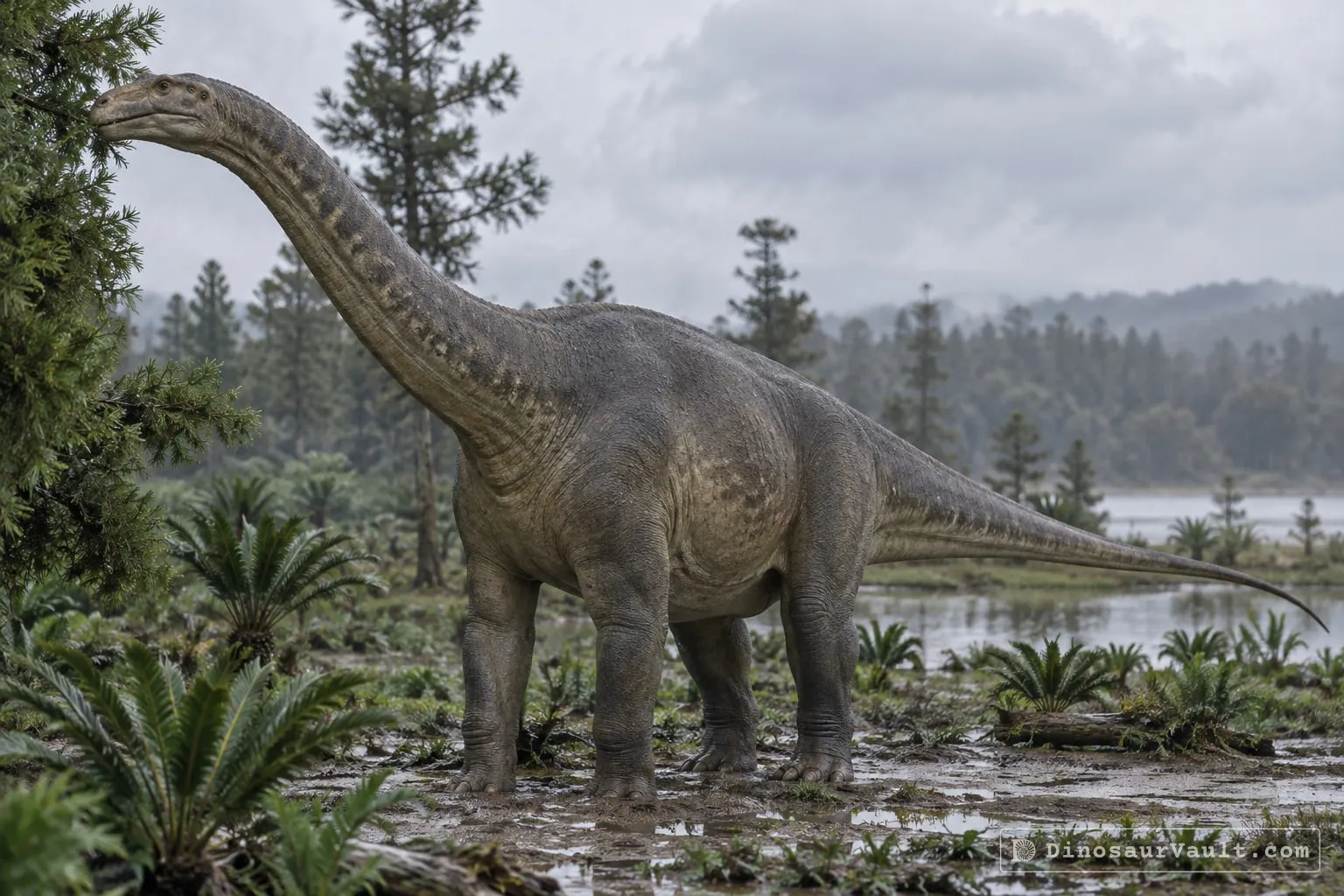
Galvesaurus was a sauropod, a long-necked plant eater. It is known from part of the skeleton, including neck, back and tail bones.
Its world
It lived in the Late Jurassic, in what is now Spain. It comes from the Villar del Arzobispo Formation, where it shared the land with the huge sauropod Turiasaurus and the stegosaur Dacentrurus.
How it was found
Barco and colleagues named Galvesaurus in 2005. Another team gave the same bones the name Galveosaurus in the same year, which caused a dispute over which name to use.
Field gallery
More views of Galvesaurus
Scenes reconstructed from the available fossil evidence.
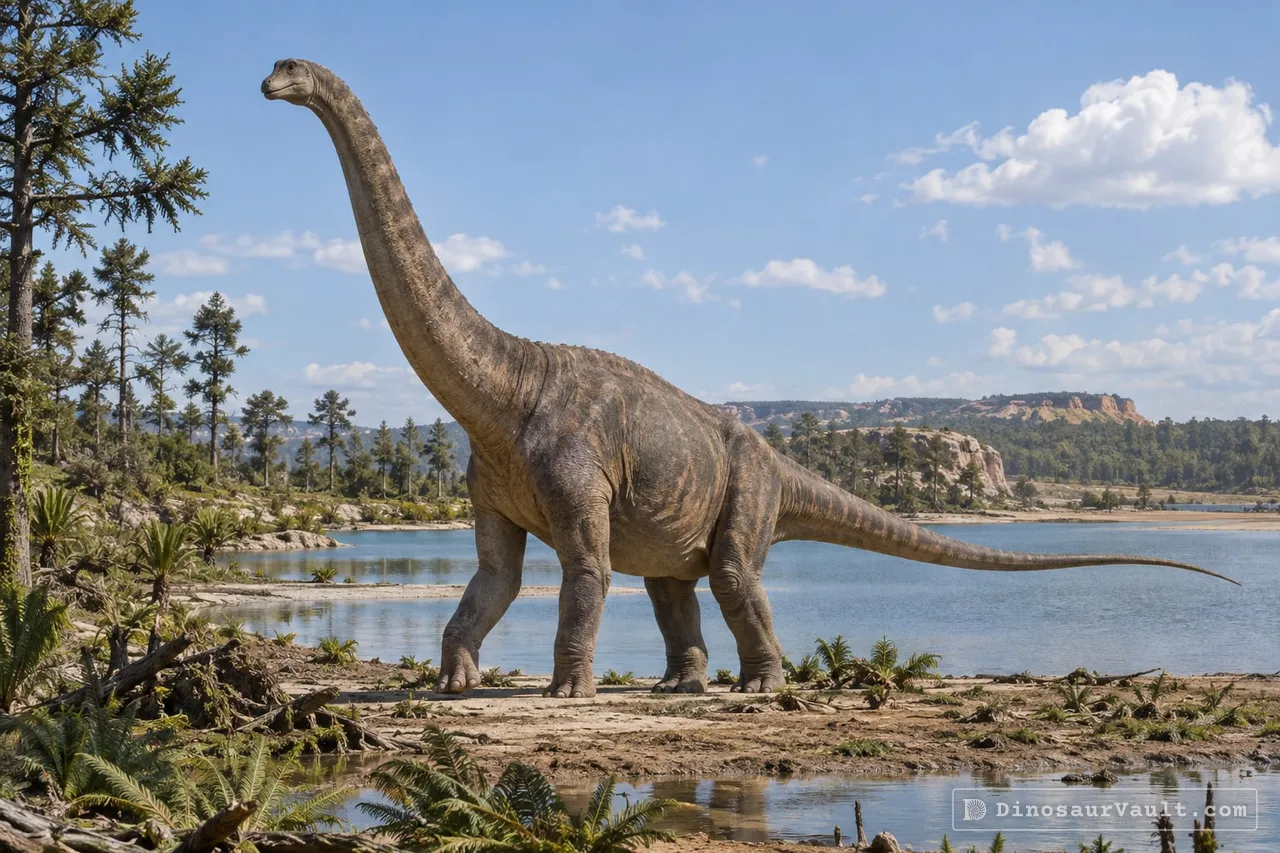
1 of 3
Lived alongside
Found in the same rock formations
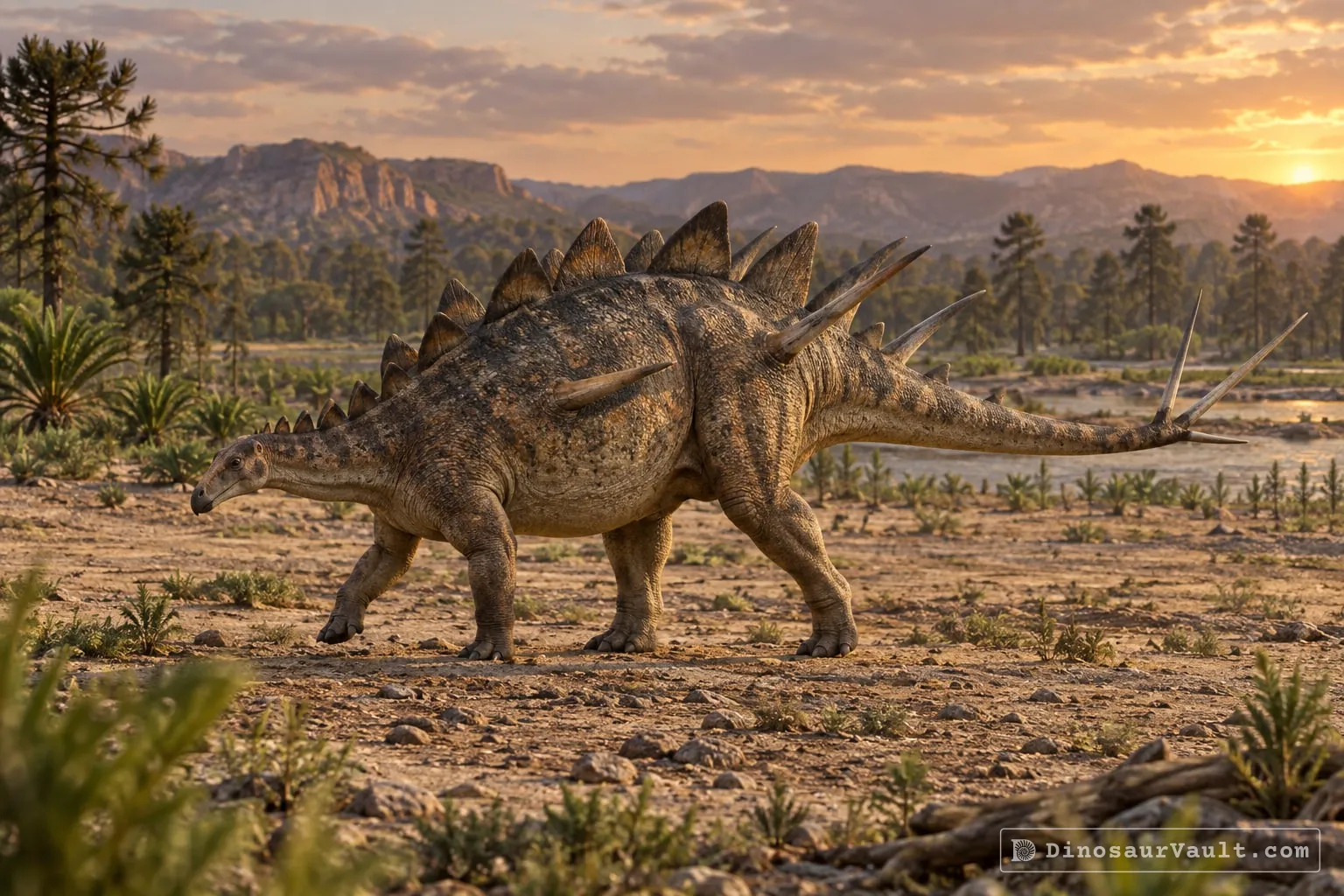
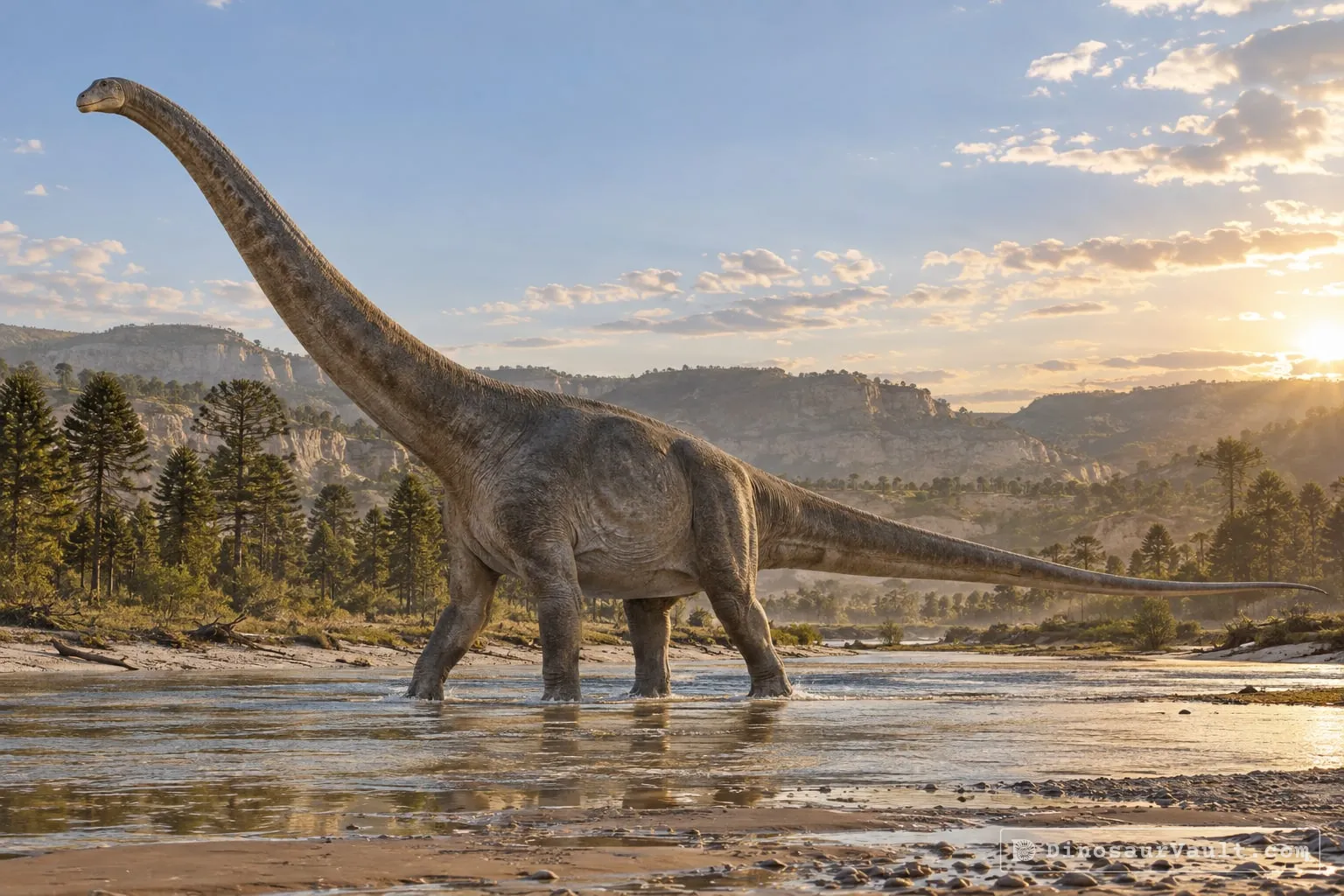
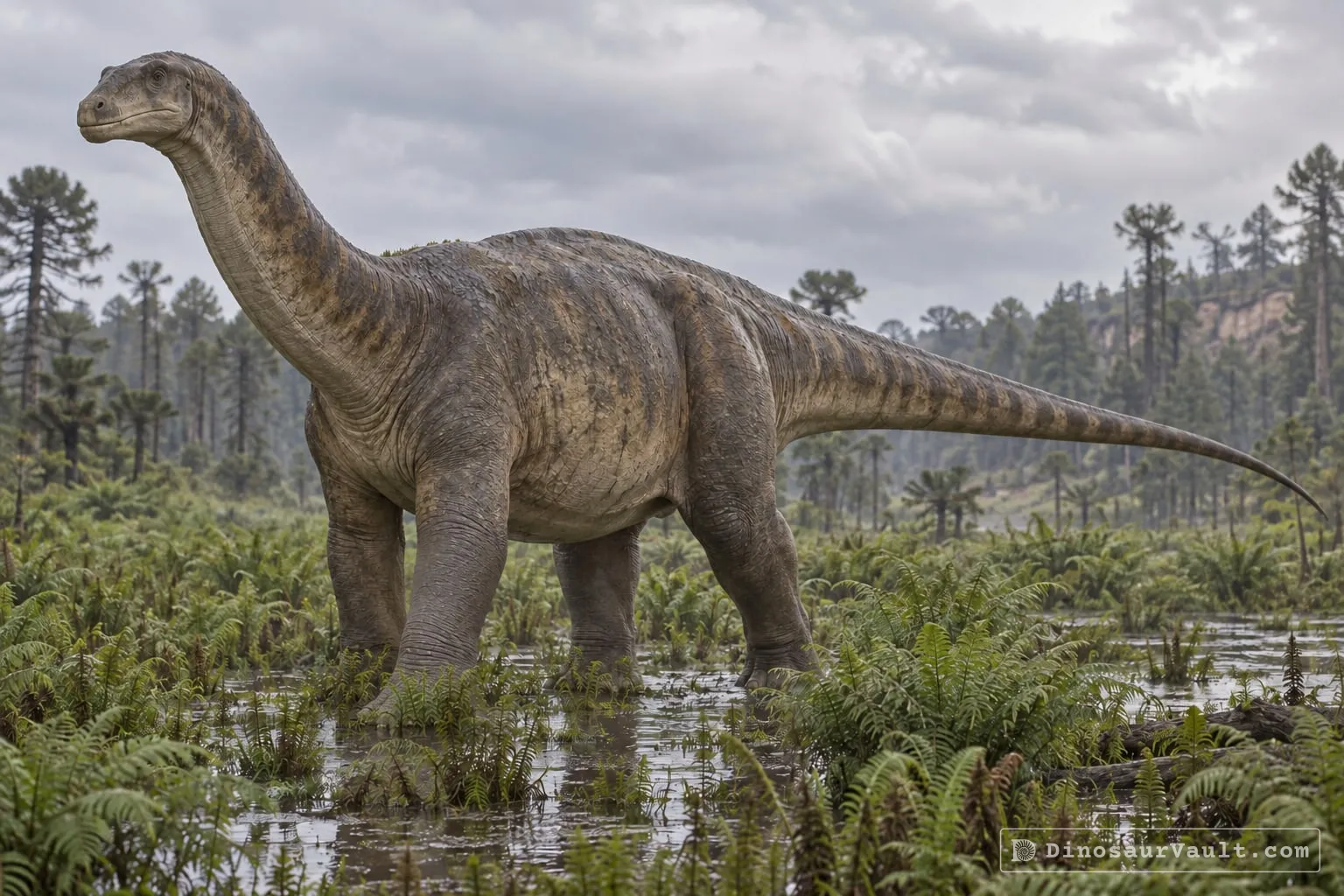


A rock formation can hold fossils laid down millions of years apart, so not every animal here met Galvesaurus.
The evidence
The science behind Galvesaurus
Which parts of the picture come from its own bones, and which come from its relatives.
From its own fossils
- The type specimen is a single back vertebra. Scattered bones from the same site add neck, hip and tail vertebrae, both upper arm bones, a shoulder blade and parts of the pelvis.
- Its upper arm bones are straight and slender, with a narrow ridge for the chest muscles.
- Later study assigned another shoulder bone and a piece of the pelvis to it.
Borrowed from relatives
- The missing skull, hands and feet are restored by comparison with Camarasaurus.
- The general build of the neck, body, legs and tail follows other sauropods such as Mnyamawamtuka.
Still unknown
- The shape of its skull. No part of the head has been found.
- Its closest relatives. Depending on the data and method, analyses place it among early macronarians, with the brachiosaurids, or among the somphospondylans.
- Whether all the scattered bones come from one animal, and its full neck length and body proportions.
Discovery timeline
- 2005Named itBarco et al.
- 2005RedescriptionSÁNCHEZ-HERNÁNDEZ
- 2006RedescriptionSÁNCHEZ-HERNÁNDEZ
- 2019Family treePérez-Pueyo et al.
- 2026Family treeReutter et al.
Key papers
The research behind what we know of Galvesaurus
Named it
Named a sauropod from a partial skeleton in Spain.
Un nuevo dinosaurio saurópodo, Galvesaurus herreroi gen. nov., sp. nov., del tránsito Jurásico-Cretácico en Galve (Teruel, NE de España) [A new sauropod dinosaur, Galvesaurus herreroi gen. nov., sp. nov., from the Jurassic-Cretaceous transition in Galve (Teruel, NE Spain)]. Naturaleza Aragonesa 15: 4-17
No link available
Redescription
Described the same partial skeleton under the name Galveosaurus herreroi.
Galveosaurus herreroi, a new sauropod dinosaur from Villar del Arzobispo Formation (Tithonian-Berriasian) of Spain. Zootaxa 1034
Read the paper : Galveosaurus herreroi, a new sauropod dinosaur from Villar del Arzobispo Formation (Tithonian-Berriasian) of Spain (opens in a new tab)Redescription
Argued that Galveosaurus and Galvesaurus name the same animal and disputed which name should take priority.
The new sauropod from Spain: Galveosaurus or Galvesaurus? Zootaxa 1201
Read the paper : The new sauropod from Spain: Galveosaurus or Galvesaurus? (opens in a new tab)Family tree
Restudied the bones, told Galvesaurus apart from Lusotitan by its hips, and placed it close to Lusotitan within Brachiosauridae.
New contributions to the phylogenetic position of the sauropod Galvesaurus herreroi from the late Kimmeridgian-early Tithonian (Jurassic) of Teruel (Spain). Boletín Geológico y Minero 130: 375-392
Read the paper : New contributions to the phylogenetic position of the sauropod Galvesaurus herreroi from the late Kimmeridgian-early Tithonian (Jurassic) of Teruel (Spain) (opens in a new tab)Family tree
Named a new Jurassic sauropod and found that the place of Galvesaurus in the family tree shifts with the data and method used.
Bicharracosaurus dionidei, gen. et sp. nov., a new macronarian (Dinosauria, Sauropoda) from the Late Jurassic Cañadón Calcáreo Formation of Argentina and the problematic early evolution of macronarians. PeerJ 14: e20945
Read the paper : Bicharracosaurus dionidei, gen. et sp. nov., a new macronarian (Dinosauria, Sauropoda) from the Late Jurassic Cañadón Calcáreo Formation of Argentina and the problematic early evolution of macronarians (opens in a new tab)
Close relatives
Other members of Brachiosauridae


