Outline: a typical theropod
Fukuivenator
"Fukui hunter"
Type species Fukuivenator paradoxus
- Lived
- 121 to 113 million years ago, Early Cretaceous
- Diet
- Carnivore
- Group
- Theropods
- Found in
- Japan
- Named by
- Azuma et al. 2016
Where its fossils were found
The evidence
Today

115 million years ago
Field notes
About Fukuivenator
What it was like
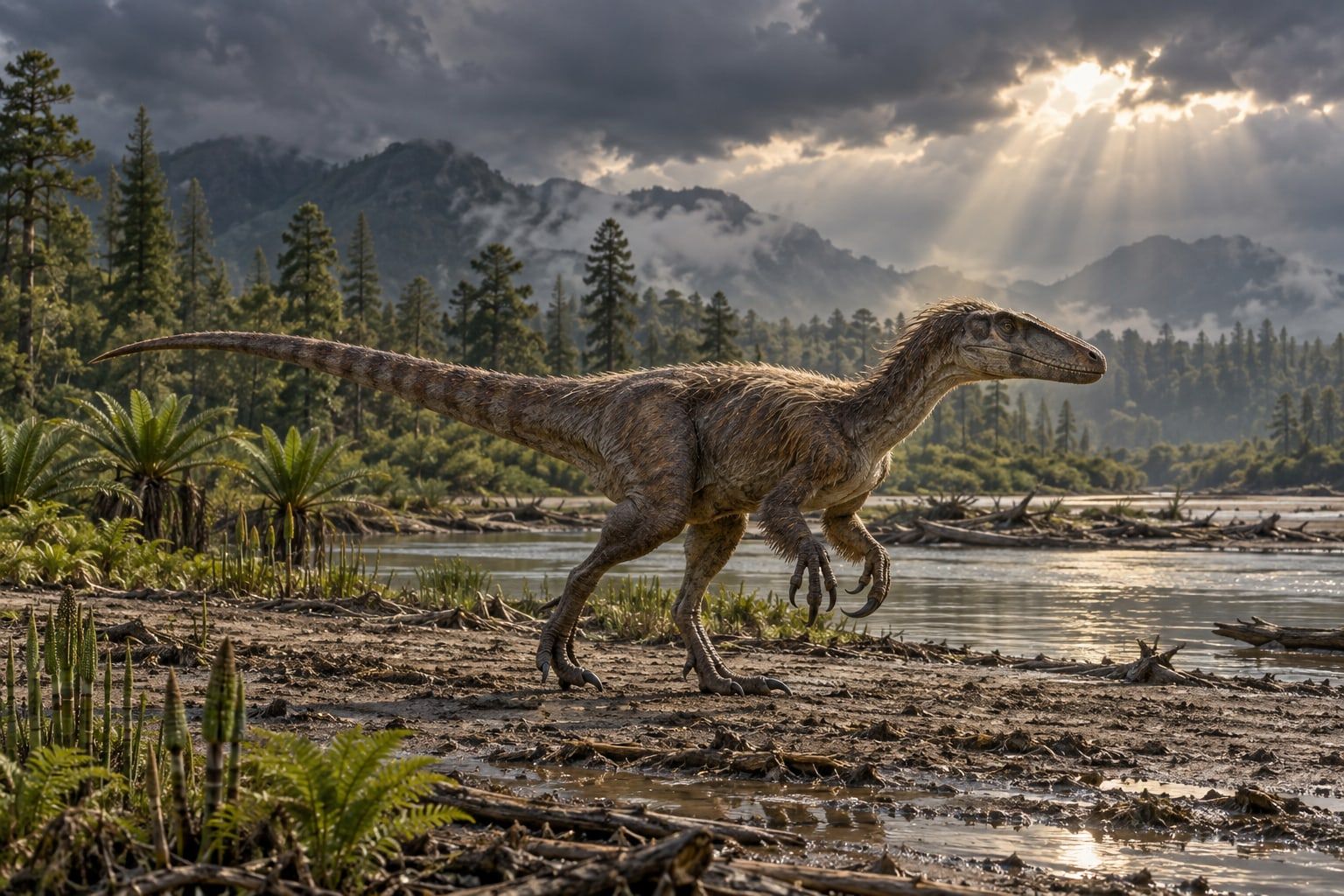
Fukuivenator was a small feathered theropod with a strange mix of features, which is why its species name means "puzzling". Its teeth and skeleton look partly like those of meat eaters and partly like those of plant eaters.
Scientists now think it was an early relative of the therizinosaurs, the long-clawed plant eaters, and that it probably ate both plants and small animals.
Its world
It lived about 121 to 113 million years ago, in the Early Cretaceous, in what is now Japan. Its bones come from the Kitadani Formation, where it shared the land with the hunter Fukuiraptor, the plant eater Fukuisaurus and the long-necked Fukuititan.
How it was found
Azuma and colleagues named Fukuivenator paradoxus in 2016, from a single skeleton, one of the most complete dinosaurs found in Japan.
Lived alongside
Found in the same rock formations
Close relatives
Other members of Therizinosauria
Sources: WikidataNamed in: Y. Azuma, X. Xu, and M. Shibata, S. Kawabe, K. Miyata, T. Imai. 2016. A bizarre theropod from the Early Cretaceous of Japan highlighting mosaic evolution among coelurosaurians. Scientific Reports 6:20478