Coronosaurus
"crown lizard"
- Lived
- 84 to 72 million years ago, Late Cretaceous
- Diet
- Herbivore
- Length
- about 5 m (16 ft)
- Group
- Ceratopsians, Ceratopsidae
- Found in
- Canada
- Named by
- Ryan et al. 2012
Size comparison
To scale


Scale in metersOutline: typical ceratopsian shape
Where its fossils were found
The evidence
Today

80 million years ago
Habitat
It lived on plains in what is now Alberta, Canada, where rivers deposited the sands and muds of the Oldman Formation. Daspletosaurus and Dromaeosaurus are also recorded from these rocks.
Field notes
About Coronosaurus
What it was like
Coronosaurus was a horned plant eater about 5 meters (16 feet) long, related to Centrosaurus. The top of its frill carried a cluster of small, twisted spikes, like a crown. Its brow horns varied between individuals.
Its world
It lived in the Late Cretaceous in what is now Alberta, Canada. Its bones come from the Oldman Formation, where it shared the land with the tyrannosaur Daspletosaurus.
How it was found
It was first named as a species of Centrosaurus. Ryan and colleagues gave it its own genus in 2012. It is known from two bonebeds with many individuals.
Field gallery
More views of Coronosaurus
Scenes reconstructed from the available fossil evidence.
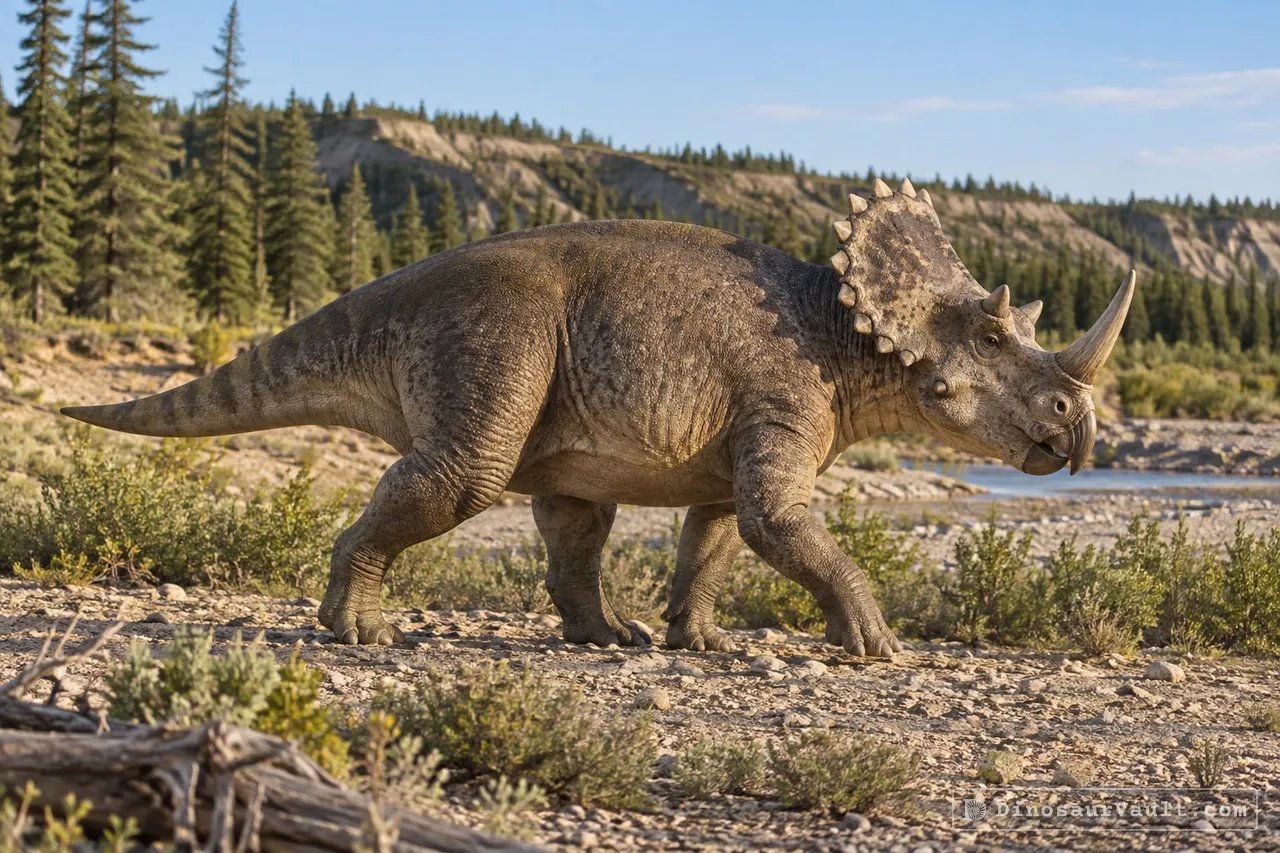
1 of 3
Lived alongside
Found in the same rock formations
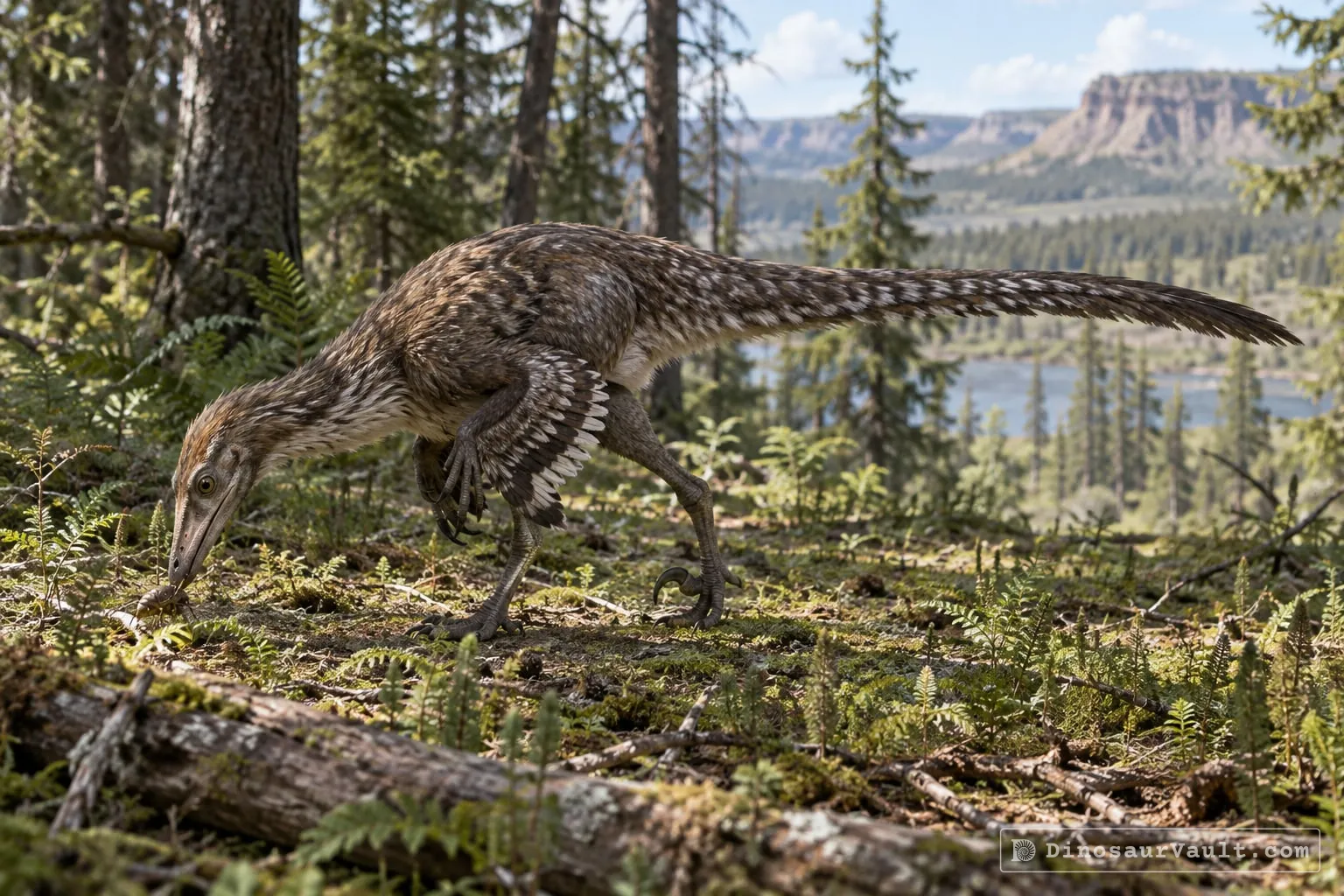
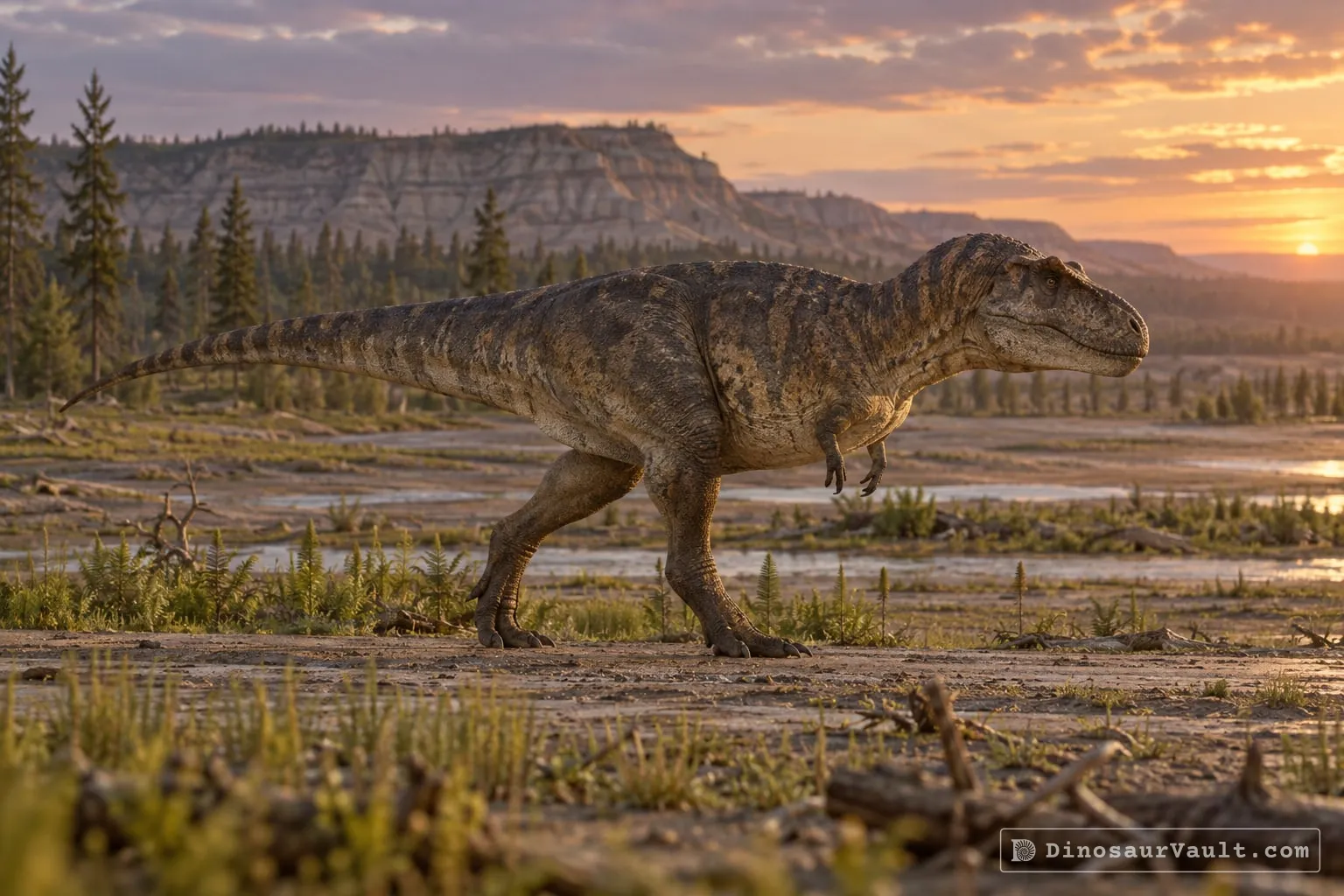
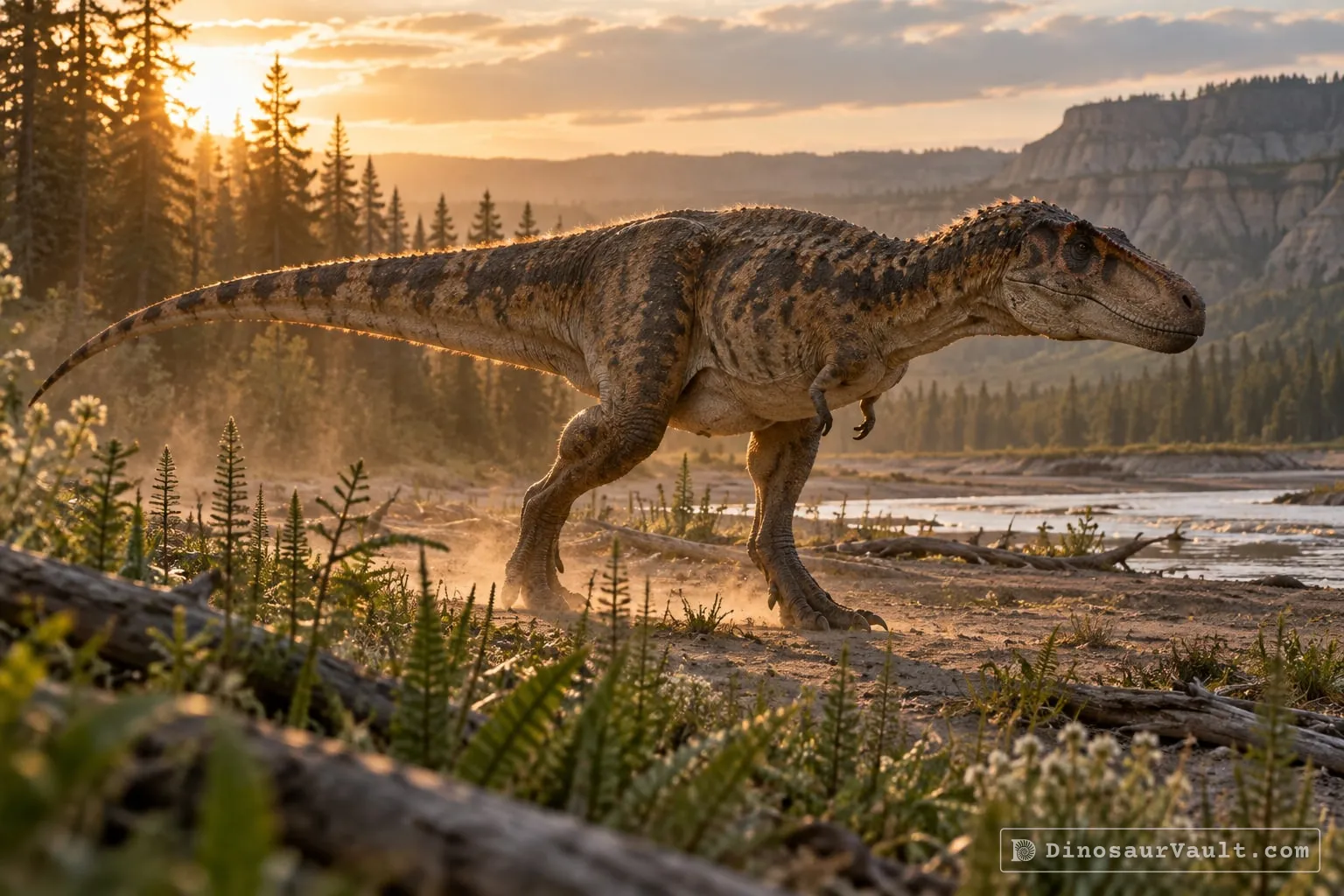
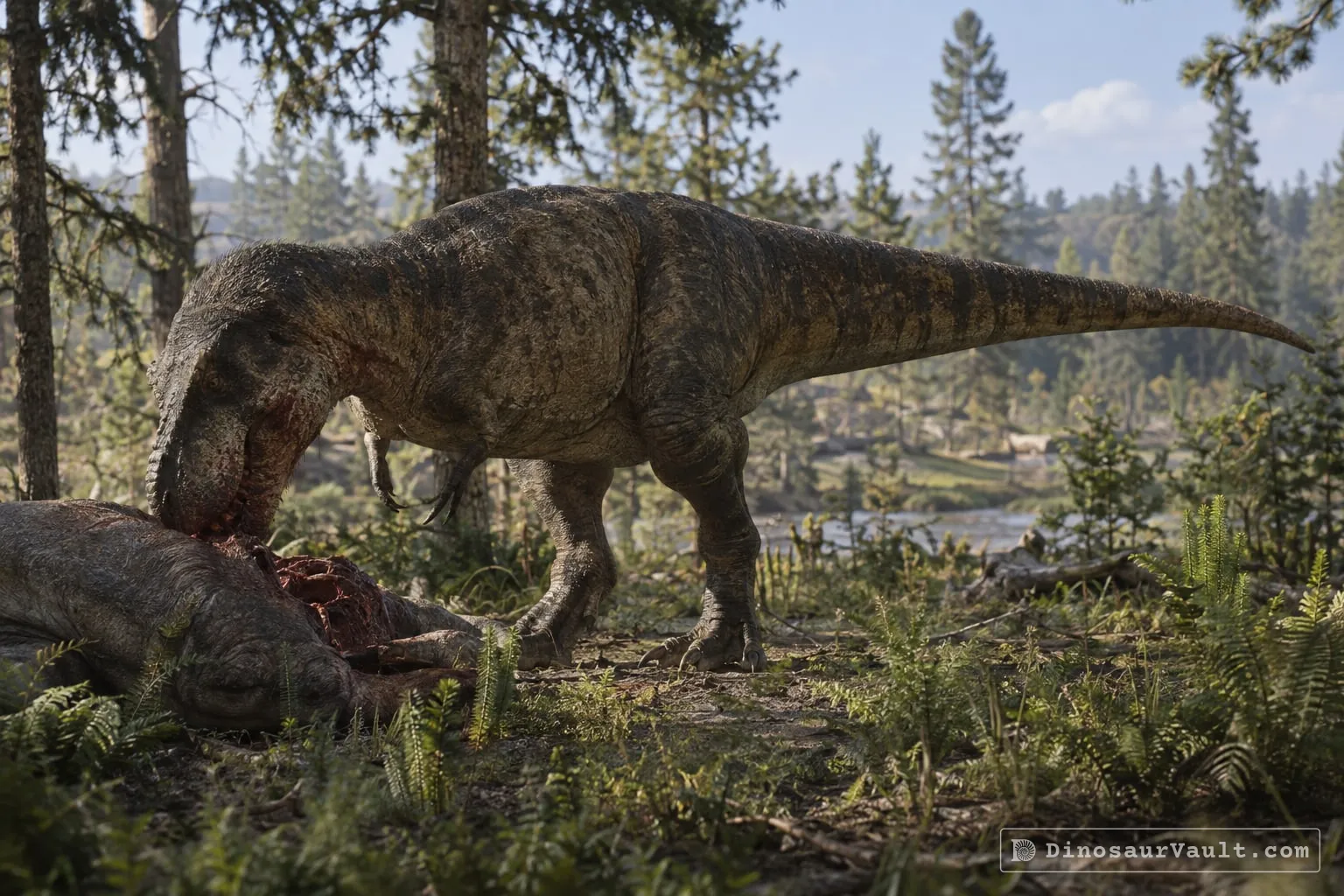
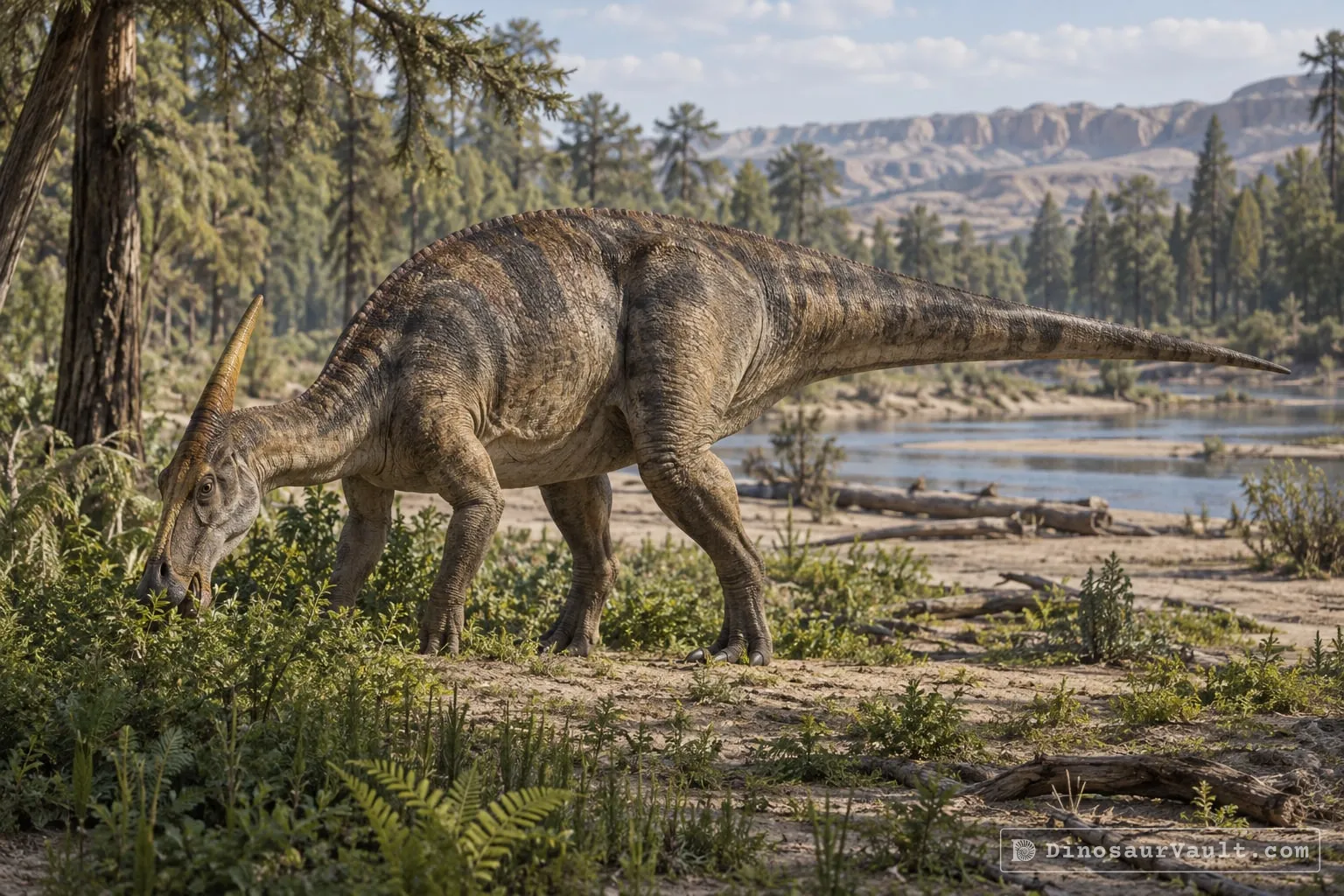
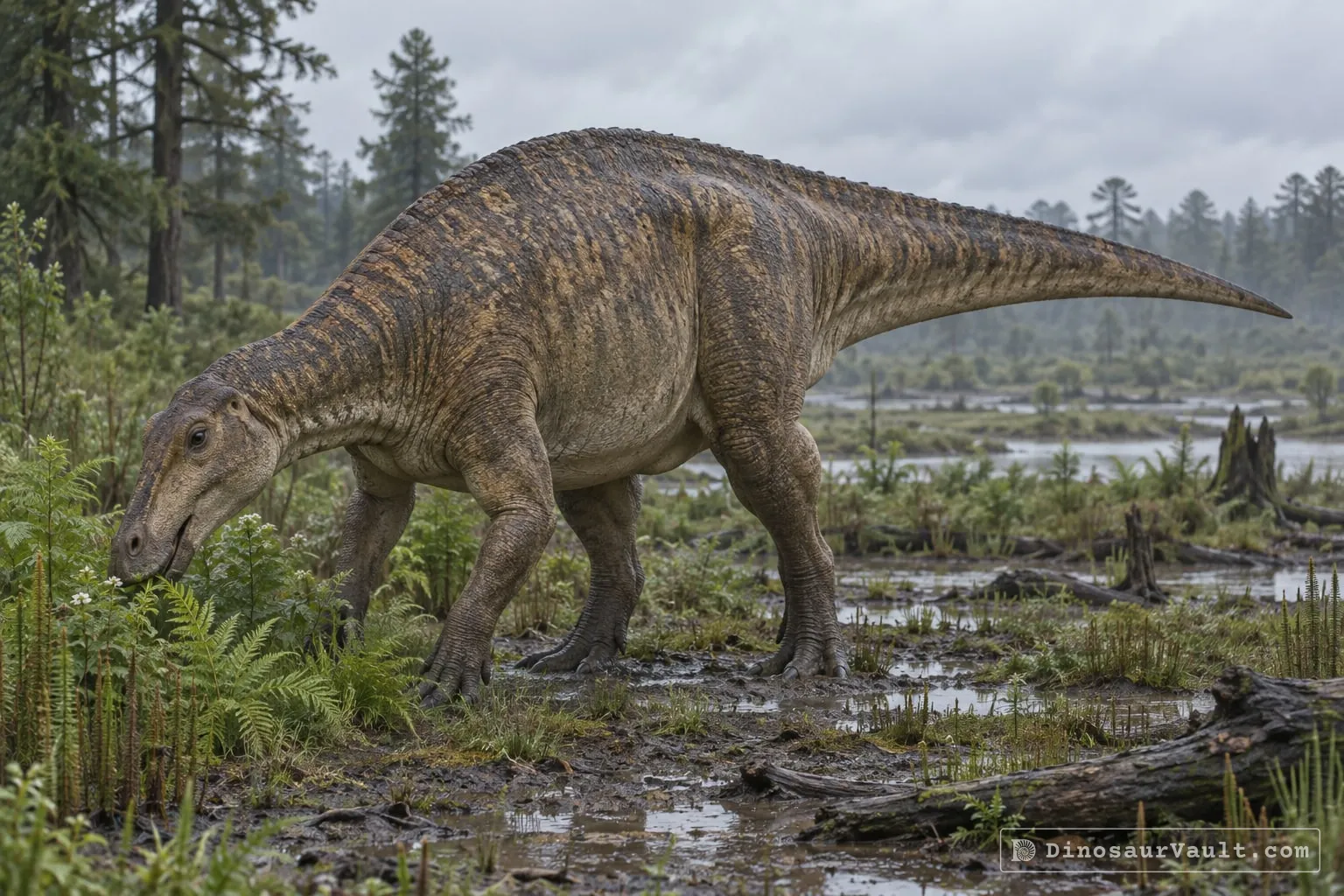
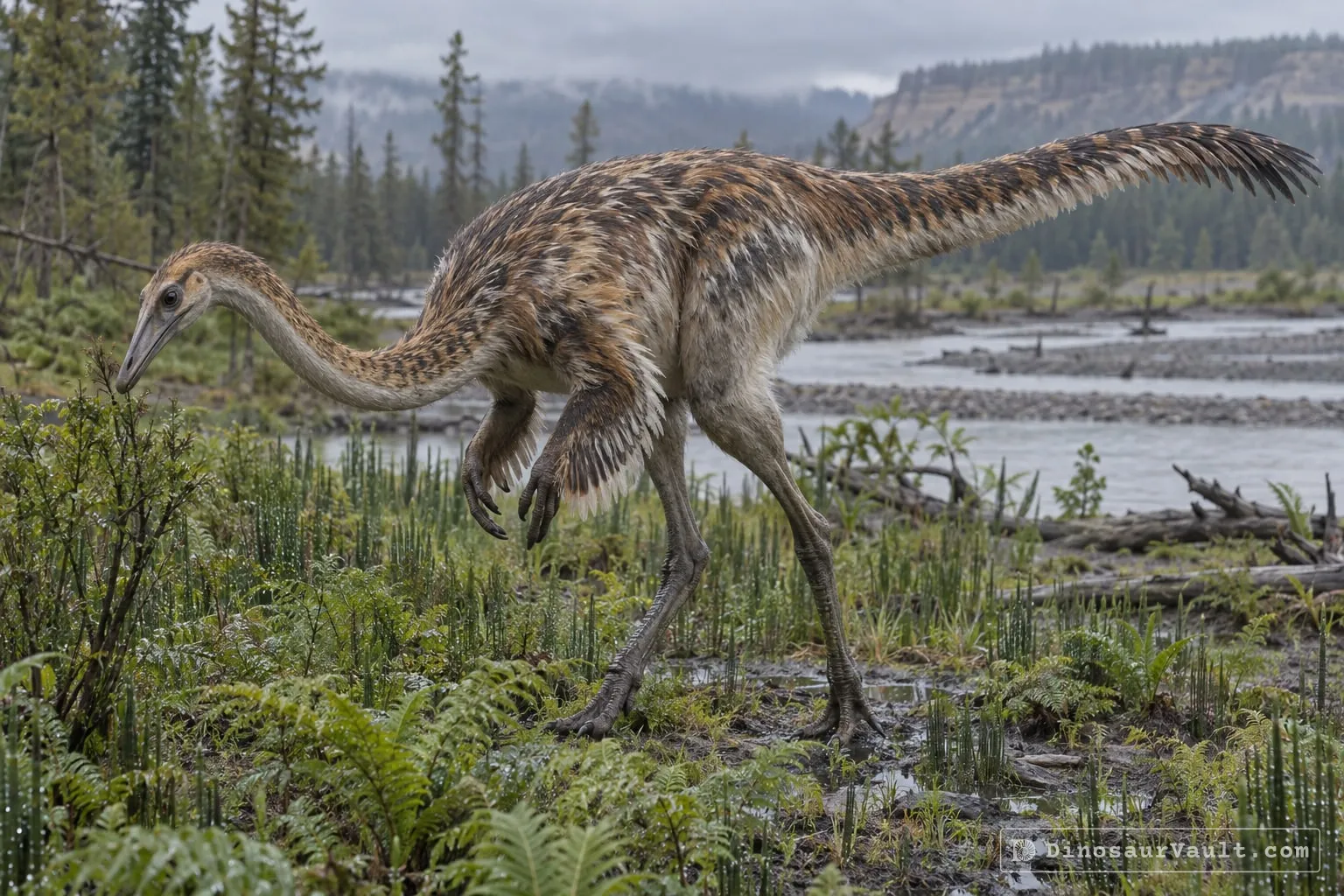
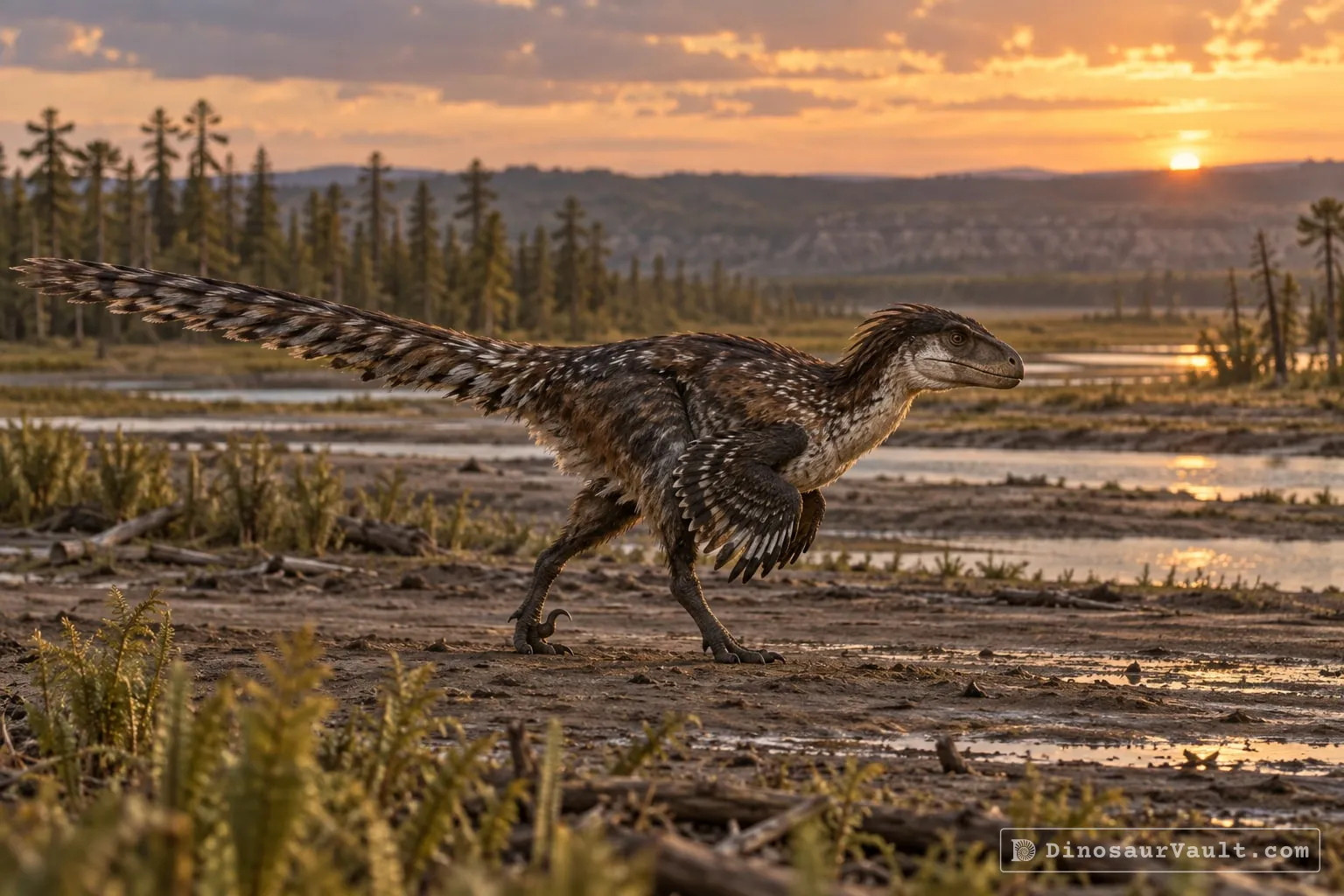


A rock formation can hold fossils laid down millions of years apart, so not every animal here met Coronosaurus.
The evidence
The science behind Coronosaurus
Which parts of the picture come from its own bones, and which come from its relatives.
From its own fossils
- Bonebeds contain skull bones from many individuals, including young animals and adults.
- The frill carried clusters of extra bony spikes, giving it its crown-like outline.
- Its skull bones show a large upright nose horn and brow horns that pointed outward.
Borrowed from relatives
- Its body is restored with help from better-known relatives such as Centrosaurus and Styracosaurus.
Still unknown
- Its skin color and patterns.
- How it used its frill and horns in life.
- Whether the bonebed groups stayed together throughout the year.
Discovery timeline
- 2005Full descriptionRyan & Russell
- 2012Named itRyan, Evans & Shepherd
- 2015Same rocksEvans & Ryan
Key papers
The research behind what we know of Coronosaurus
Full description
Originally described the species within Centrosaurus, documenting its frill spikes, outward-pointing brow horns and changes during growth.
A new centrosaurine ceratopsid from the Oldman Formation of Alberta and its implications for centrosaurine taxonomy and systematics. Canadian Journal of Earth Sciences 42: 1369-1387
Read the paper : A new centrosaurine ceratopsid from the Oldman Formation of Alberta and its implications for centrosaurine taxonomy and systematics (opens in a new tab)Named it
Gave Coronosaurus its own genus after comparing its distinctive frill with those of other horned dinosaurs.
A new ceratopsid from the Foremost Formation (middle Campanian) of Alberta. Canadian Journal of Earth Sciences 49: 1251-1262
Read the paper : A new ceratopsid from the Foremost Formation (middle Campanian) of Alberta (opens in a new tab)Same rocks
Described Wendiceratops from older beds in the same formation and compared the evolution of large nose horns, including that of Coronosaurus.
Cranial Anatomy of Wendiceratops pinhornensis gen. et sp. nov., a Centrosaurine Ceratopsid (Dinosauria: Ornithischia) from the Oldman Formation (Campanian), Alberta, Canada, and the Evolution of Ceratopsid Nasal Ornamentation. PLOS ONE 10: e0130007
Read the paper : Cranial Anatomy of Wendiceratops pinhornensis gen. et sp. nov., a Centrosaurine Ceratopsid (Dinosauria: Ornithischia) from the Oldman Formation (Campanian), Alberta, Canada, and the Evolution of Ceratopsid Nasal Ornamentation (opens in a new tab)
Close relatives
Other members of Ceratopsidae


Sources: Wikidata