Ptychotherates
"fold hunter"
Type species Ptychotherates bucculentus
- Lived
- 206 to 201 million years ago, Late Triassic
- Group
- Early dinosaurs
- Found in
- United States
- Named by
- Srivastava and Nesbitt 2026
Where its fossils were found
The evidence
Today

200 million years ago
Habitat
It lived on a river plain in what is now New Mexico. Coelophysis and Daemonosaurus occur in the same fossil quarry.
Field notes
About Ptychotherates
What it was like
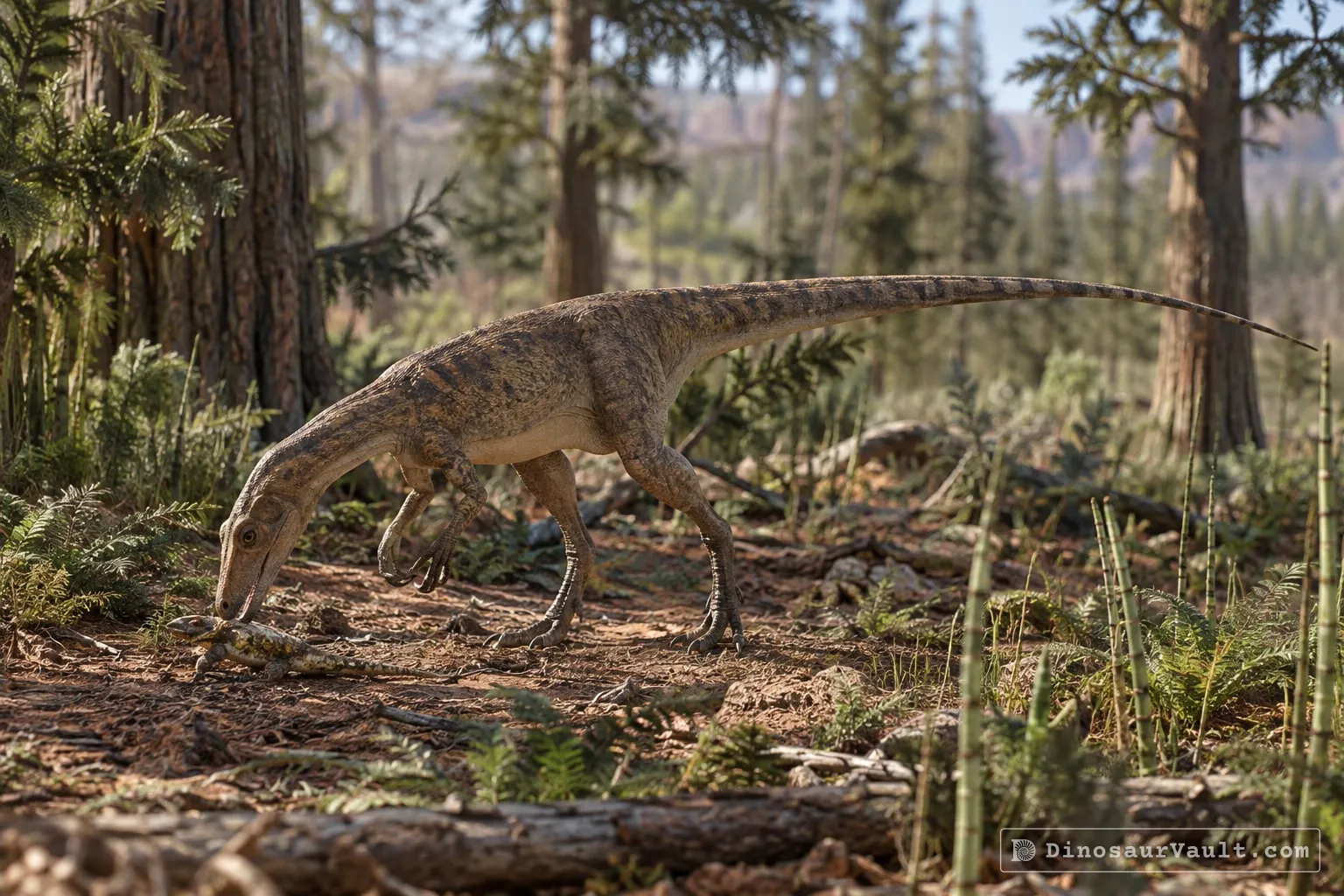
Ptychotherates was a small, early saurischian dinosaur known from part of a skull. The bone under its eye was unusually deep, which gave its face a tall cheek.
Its world
It lived near the end of the Triassic, in what is now New Mexico. It comes from the Chinle Formation, where it lived beside the early theropod Coelophysis and the buck-toothed Daemonosaurus.
How it was found
Srivastava and Nesbitt named Ptychotherates in 2026. The type species is Ptychotherates bucculentus.
Field gallery
More views of Ptychotherates
Scenes reconstructed from the available fossil evidence.
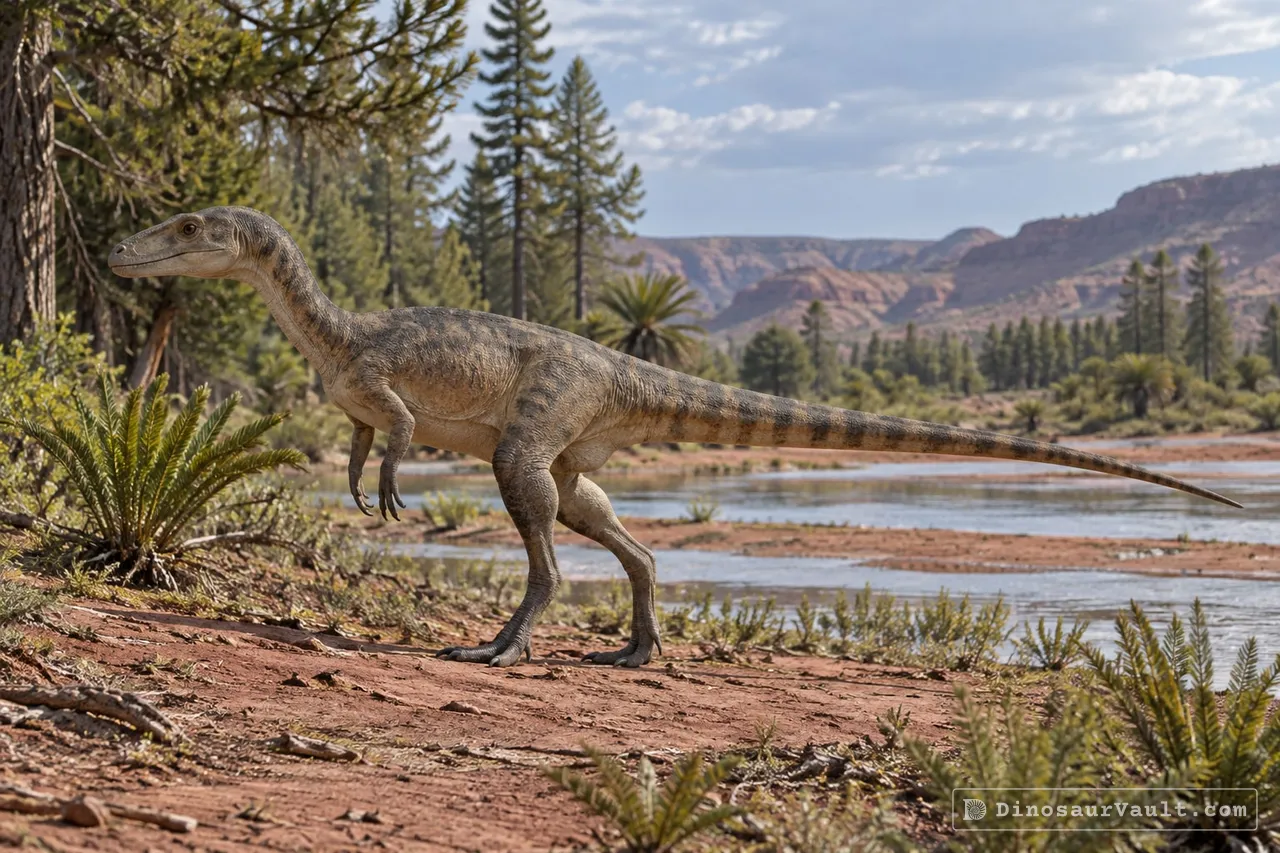
1 of 2
Lived alongside
Found in the same rock formations
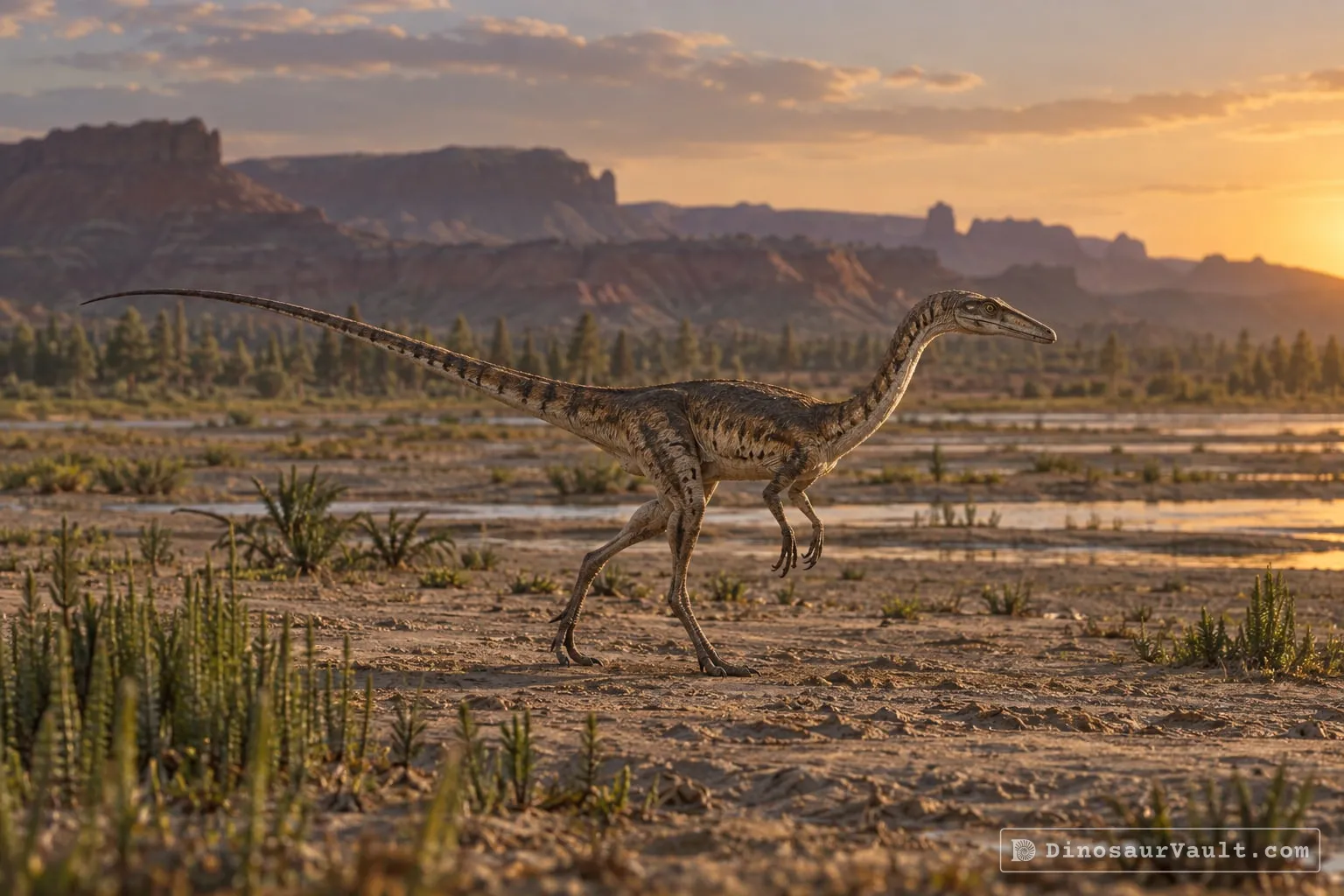
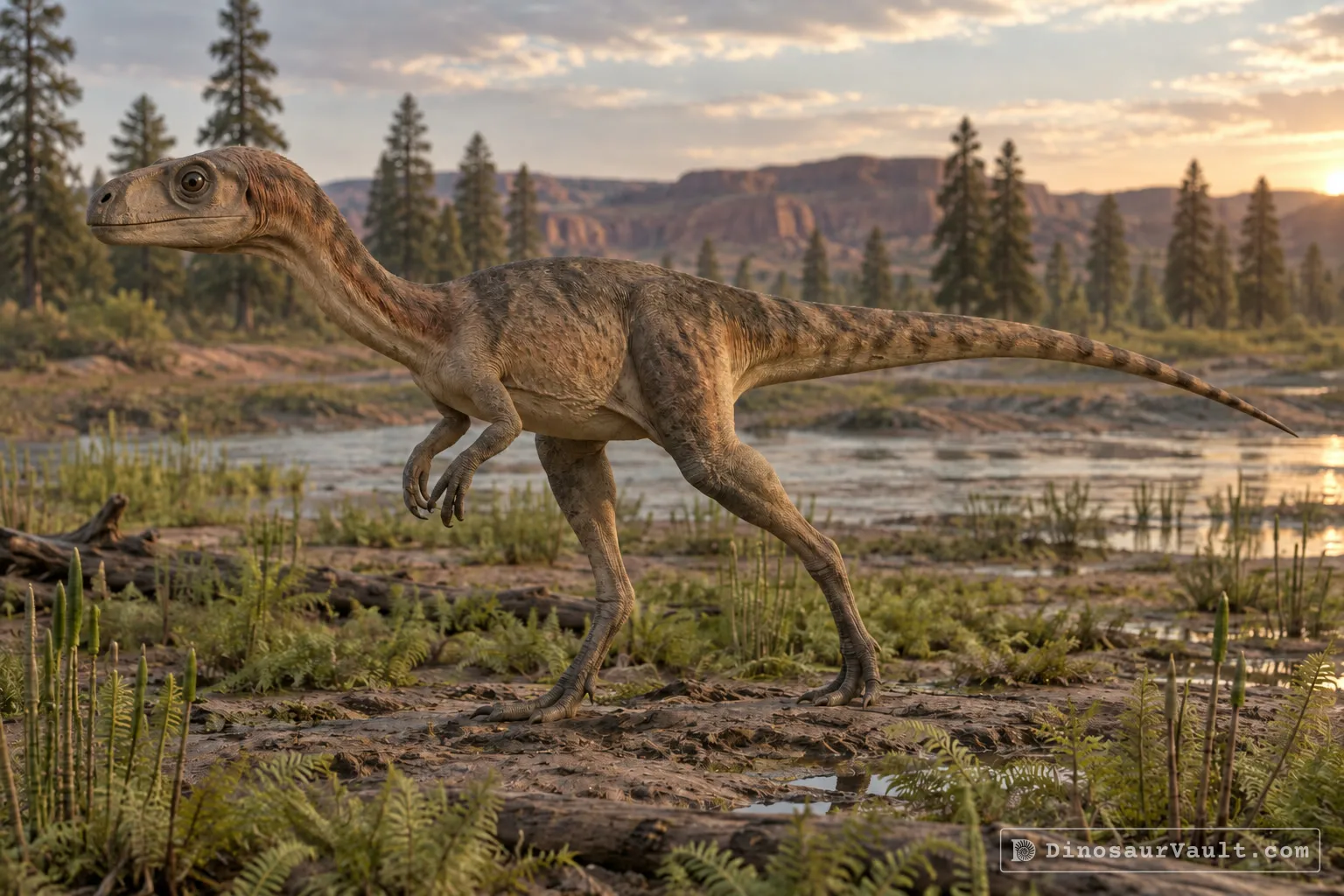
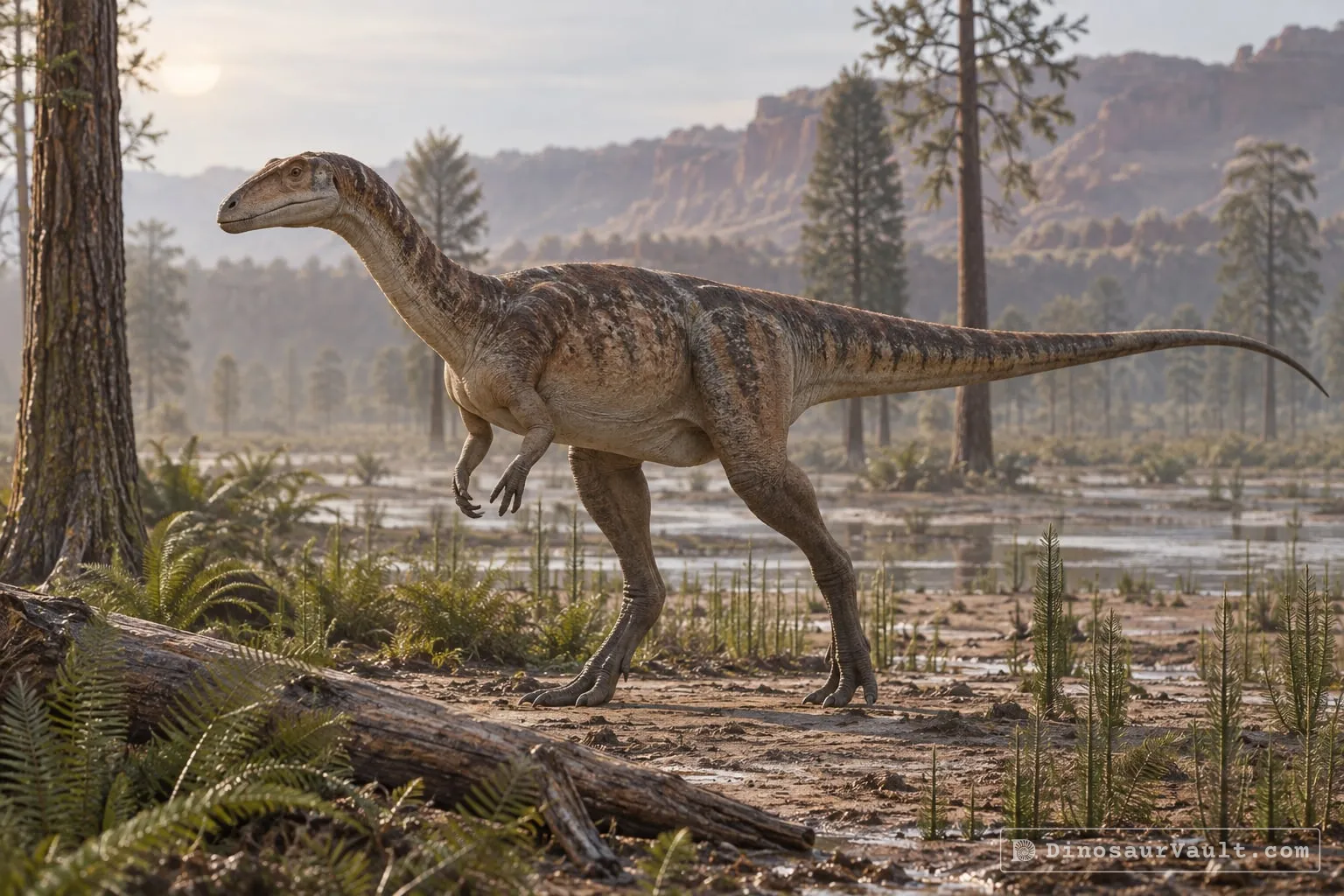
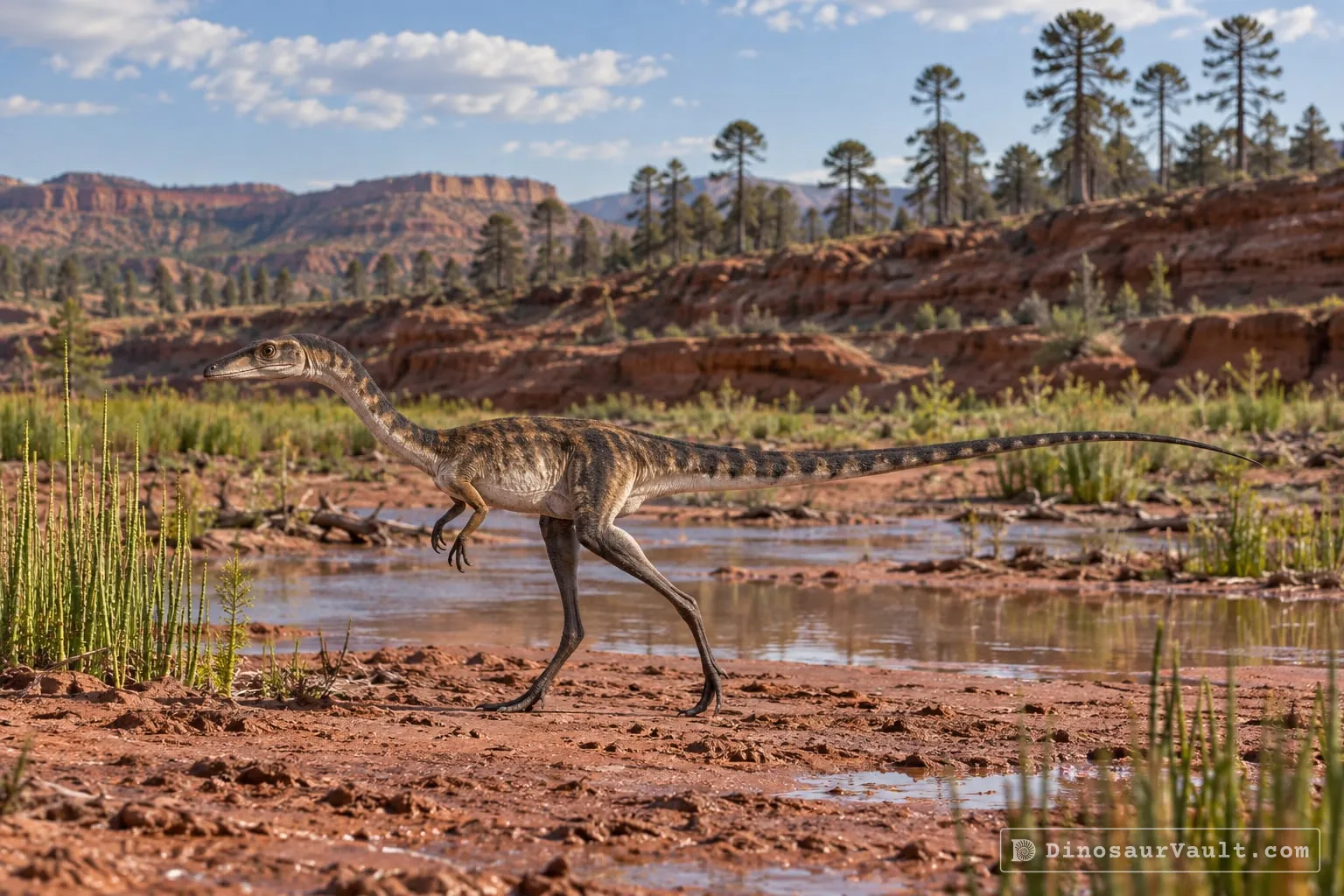
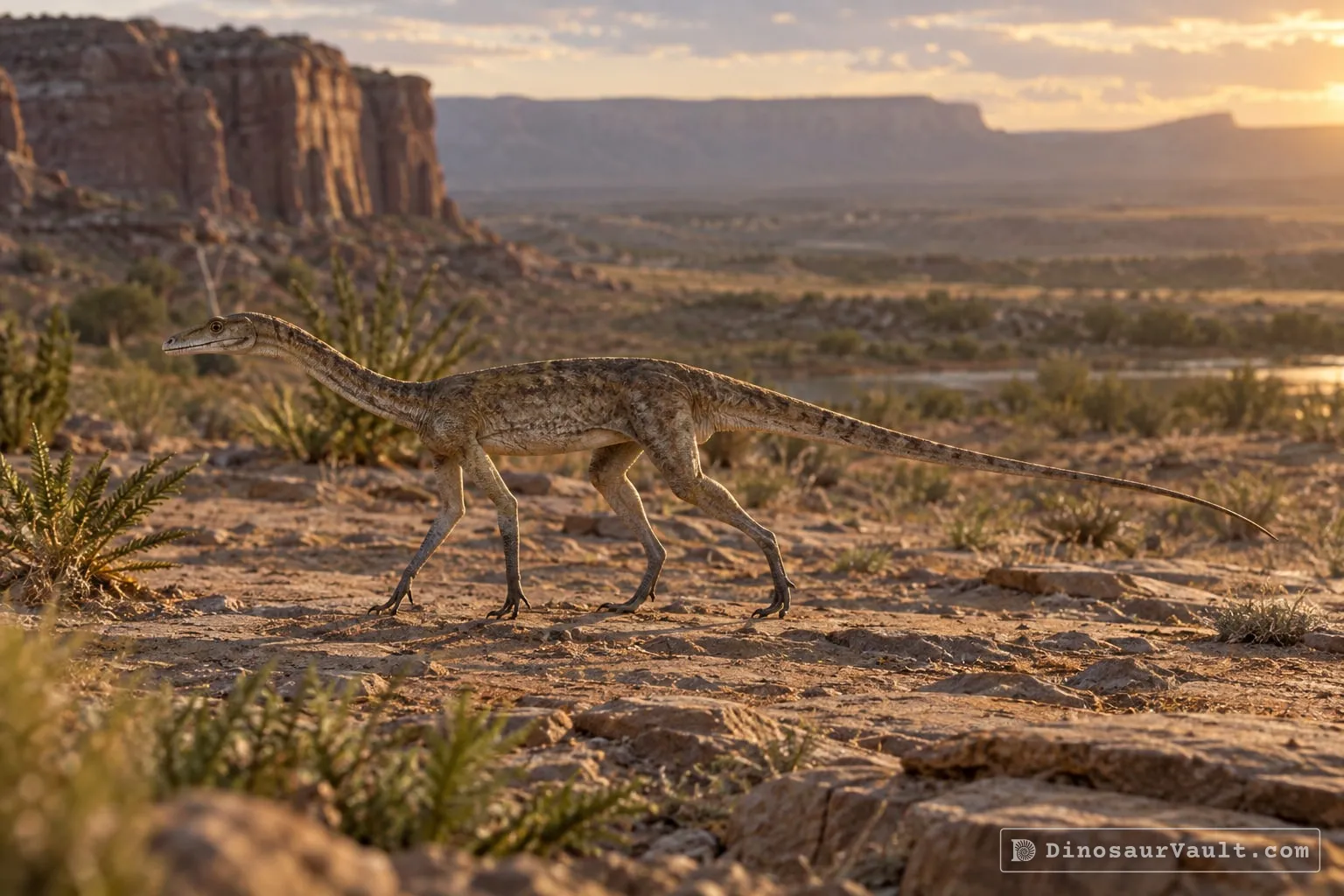
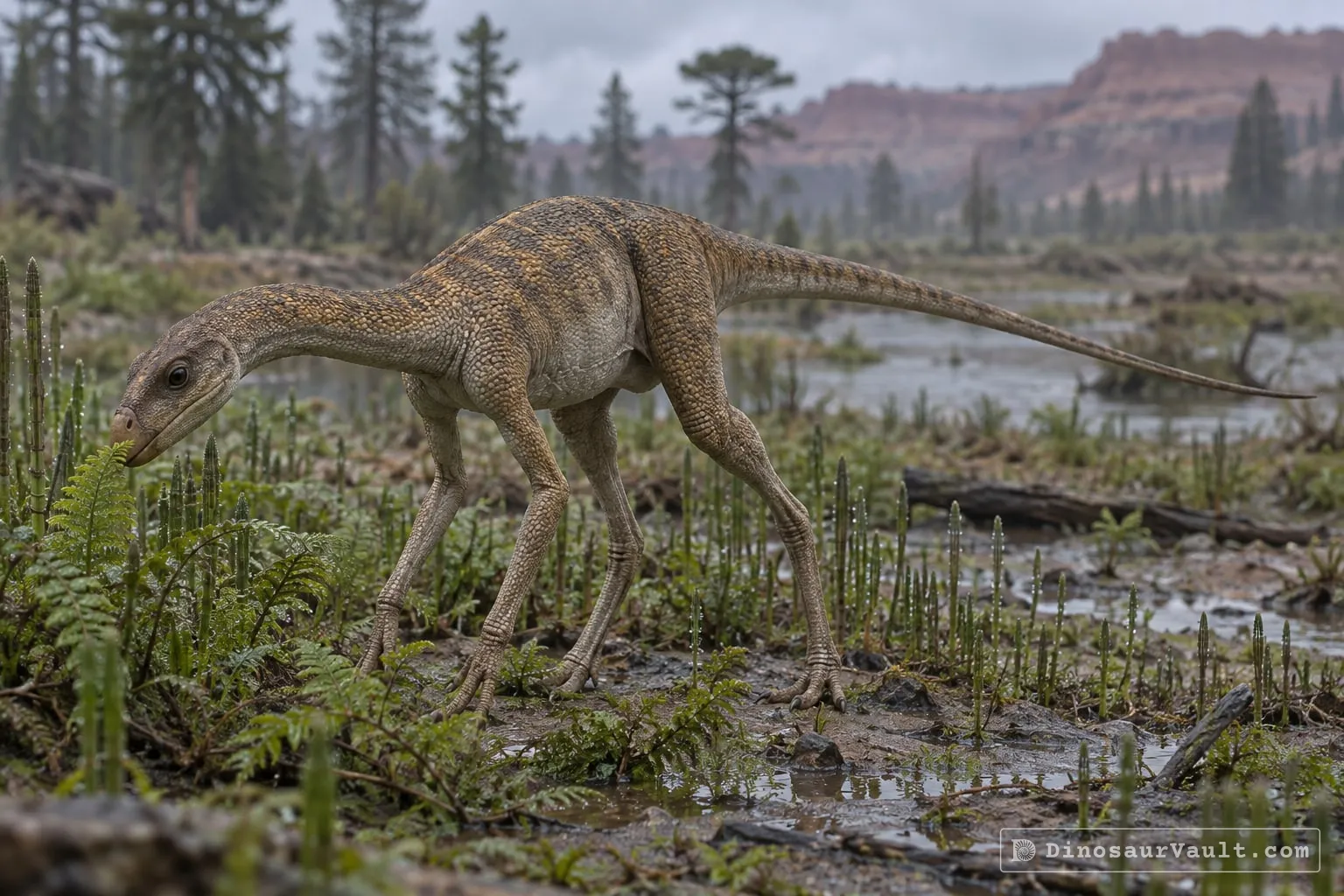
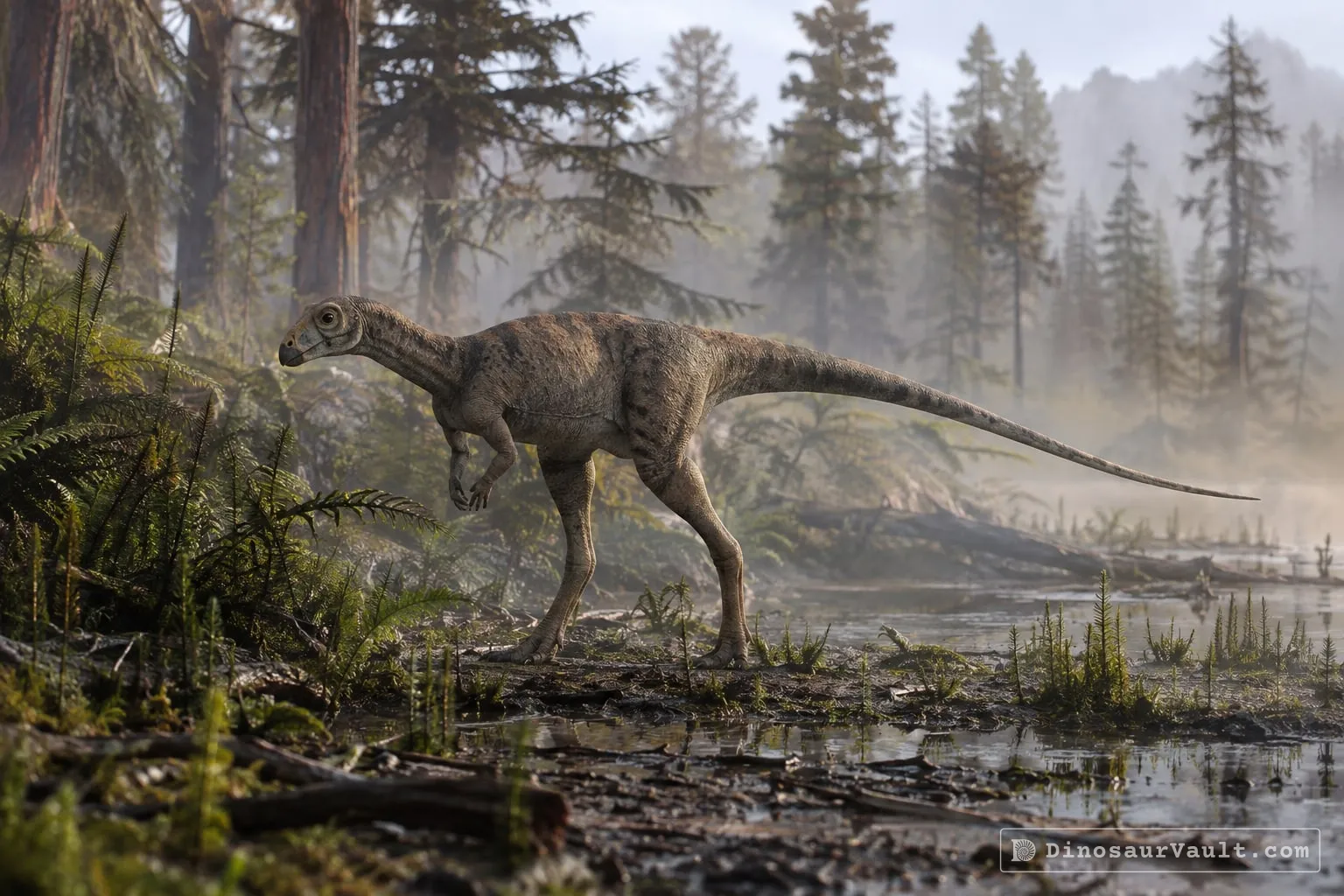


A rock formation can hold fossils laid down millions of years apart, so not every animal here met Ptychotherates.
The evidence
The science behind Ptychotherates
Which parts of the picture come from its own bones, and which come from its relatives.
From its own fossils
- A single partial skull, distorted after burial, preserves much of the braincase, skull roof and jaws. No body bones have been linked to it.
- The cheekbone below the eye is exceptionally tall and flat from side to side. The upper surfaces of its nose and forehead bones are flat, and a ledge of bone overhangs the eye socket.
- Its teeth curve backward and have finely serrated edges.
Borrowed from relatives
- The missing tip of the snout, neck and body can be modeled on Tawa, a close relative with a much more complete skeleton.
Still unknown
- The front of its snout. The tip of the upper jaw and the front of the nose and forehead bones are missing, so the length of its head is not known.
- Its body size and limb proportions.
- Exactly where its branch fits among the earliest dinosaur groups.
Discovery timeline
- 2009Close relativeNesbitt et al.
- 2019Close relativeMarsh et al.
- 2020Same rocksNesbitt & Sues
- 2026Named itSrivastava & Nesbitt
Key papers
The research behind what we know of Ptychotherates
Close relative
Described Tawa from a nearly complete skull and skeletons. As a close relative, it serves as a guide to the parts of Ptychotherates that have not been found.
A Complete Skeleton of a Late Triassic Saurischian and the Early Evolution of Dinosaurs. Science 326: 1530-1533
Read the paper : A Complete Skeleton of a Late Triassic Saurischian and the Early Evolution of Dinosaurs (opens in a new tab)Close relative
Reexamined Chindesaurus and found a close relationship with Tawa, helping define the branch later joined by Ptychotherates.
Redescription of the holotype specimen ofChindesaurus bryansmalliLong and Murry, 1995 (Dinosauria, Theropoda), from Petrified Forest National Park, Arizona. Journal of Vertebrate Paleontology 39: e1645682
Read the paper : Redescription of the holotype specimen ofChindesaurus bryansmalliLong and Murry, 1995 (Dinosauria, Theropoda), from Petrified Forest National Park, Arizona (opens in a new tab)Same rocks
Described the skull of Daemonosaurus, another early dinosaur from the same quarry, and compared it with other early dinosaur skulls.
The osteology of the early-diverging dinosaurDaemonosaurus chauliodus(Archosauria: Dinosauria) from theCoelophysisQuarry (Triassic: Rhaetian) of New Mexico and its relationships to other early dinosaurs. Zoological Journal of the Linnean Society 191: 150-179
Read the paper : The osteology of the early-diverging dinosaurDaemonosaurus chauliodus(Archosauria: Dinosauria) from theCoelophysisQuarry (Triassic: Rhaetian) of New Mexico and its relationships to other early dinosaurs (opens in a new tab)Named it
Described the deep-cheeked skull and grouped Ptychotherates with Tawa, Chindesaurus and Daemonosaurus in an early dinosaur branch.
A new taxon of saurischian dinosaur from the Coelophysis Quarry of New Mexico, USA (Triassic: latest Norian or Rhaetian) highlights herrerasaurian diversity in the latest Triassic. Papers in Palaeontology 12
Read the paper : A new taxon of saurischian dinosaur from the Coelophysis Quarry of New Mexico, USA (Triassic: latest Norian or Rhaetian) highlights herrerasaurian diversity in the latest Triassic (opens in a new tab)
Sources: Wikidata