Kwanasaurus
"eagle lizard"
- Lived
- 227 to 201 million years ago, Late Triassic
- Diet
- Herbivore
- Group
- Early ornithischians, Silesauridae
- Found in
- United States
- Named by
- Martz and Small 2019
Where its fossils were found
The evidence
Today

210 million years ago
Habitat
It lived in the Chinle Formation landscape of what is now Colorado. Dromomeron occurs at its fossil sites; Coelophysis and Chindesaurus lived elsewhere in the same formation.
Field notes
About Kwanasaurus
What it was like
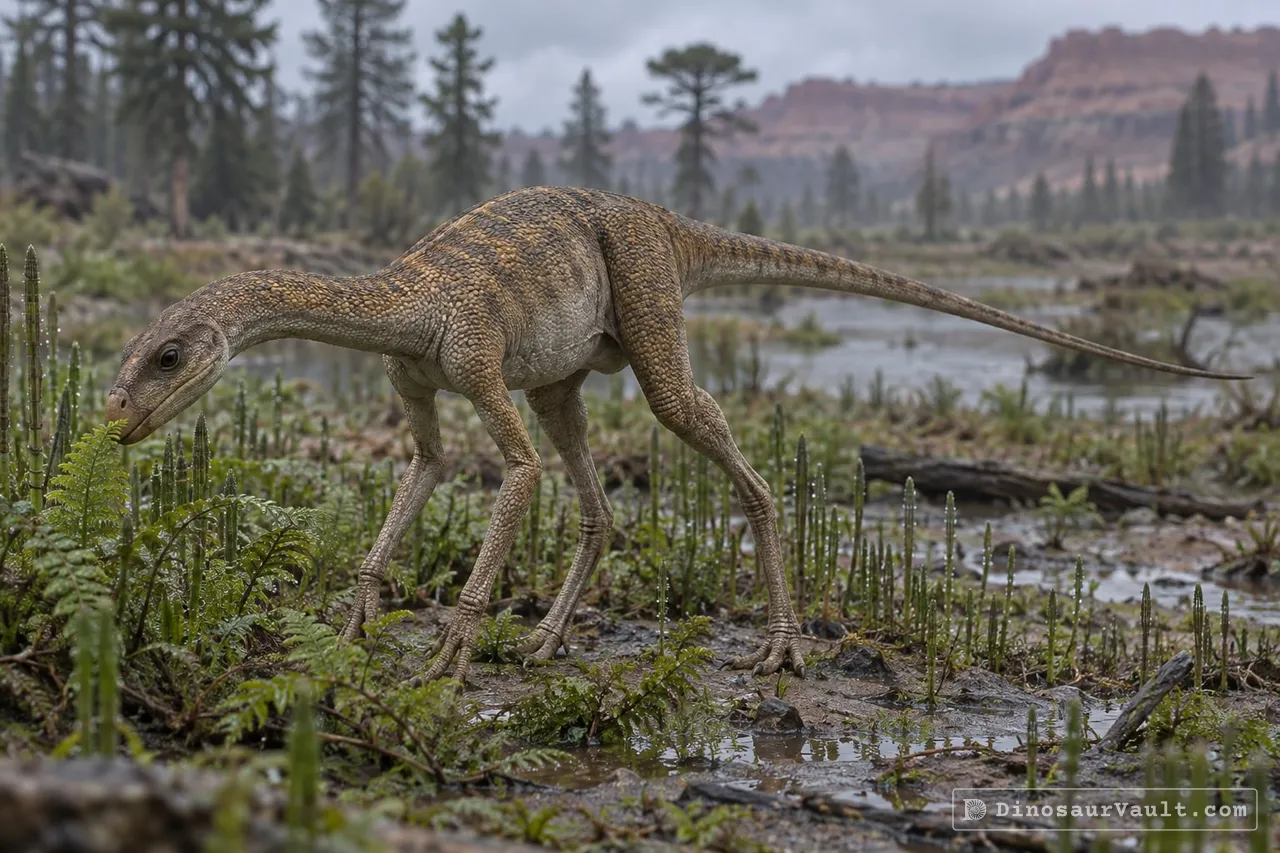
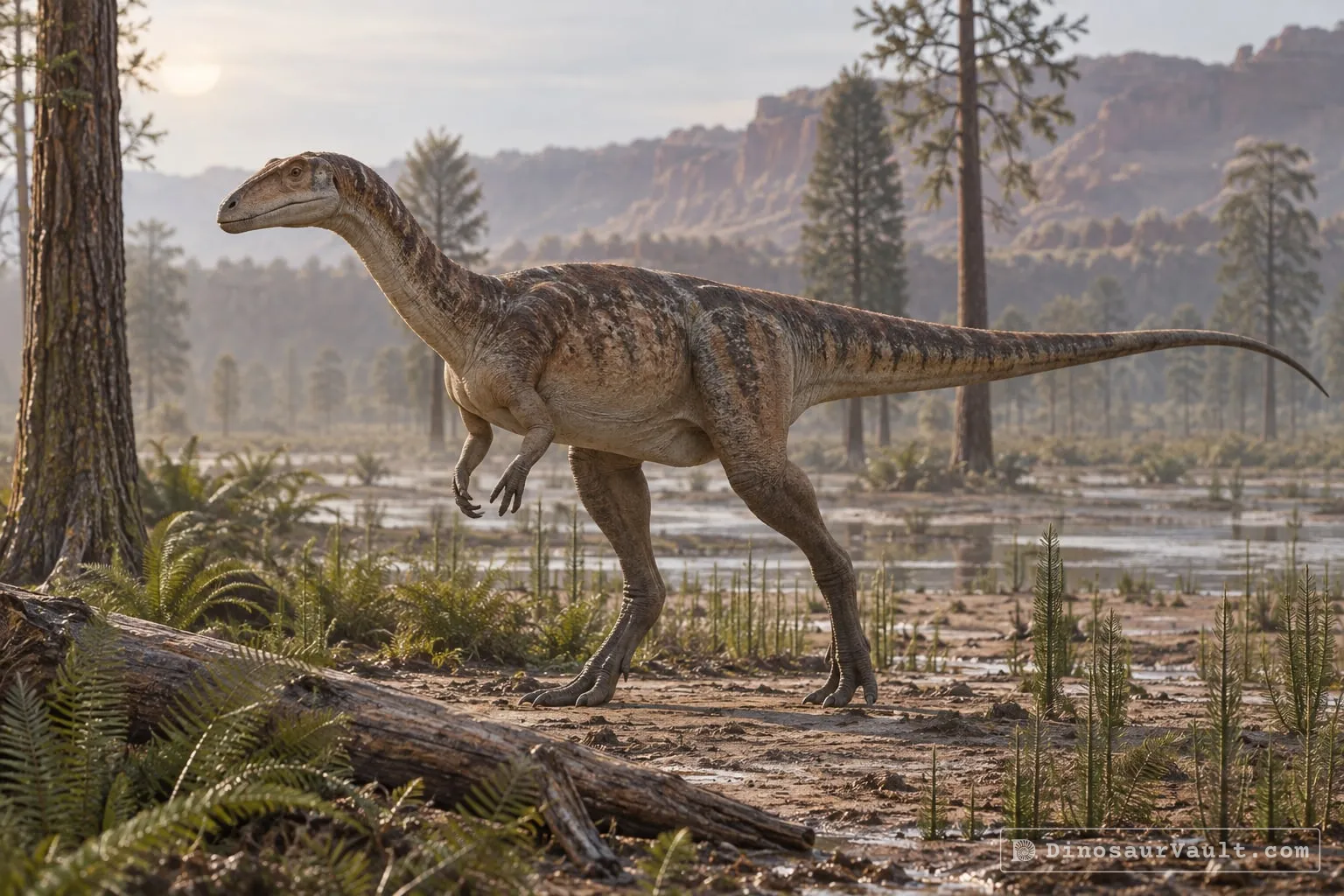
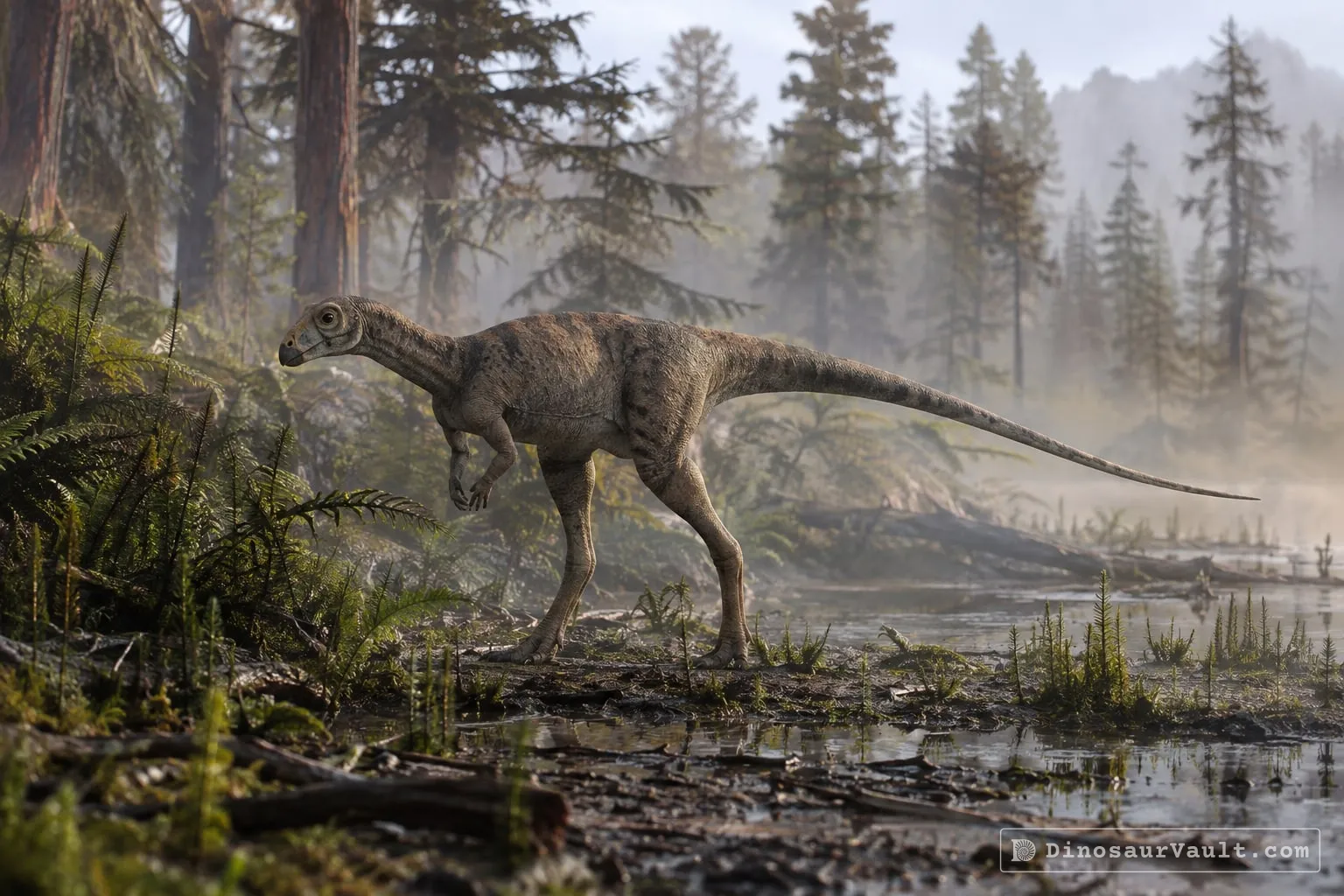
Kwanasaurus was a silesaur, a slender, four-legged plant eater from a group close to the first dinosaurs. It had a deep, strong skull and teeth suited to chewing plants.
Some scientists think silesaurs were early relatives of the ornithischian dinosaurs; others think they sat just outside the dinosaurs.
Its world
It lived in the Late Triassic in what is now Colorado, in the United States. Its bones come from the Chinle Formation, where it shared the land with the early meat eaters Coelophysis and Chindesaurus.
How it was found
Martz and Small named Kwanasaurus in 2019. Six finds are known.
Field gallery
More views of Kwanasaurus
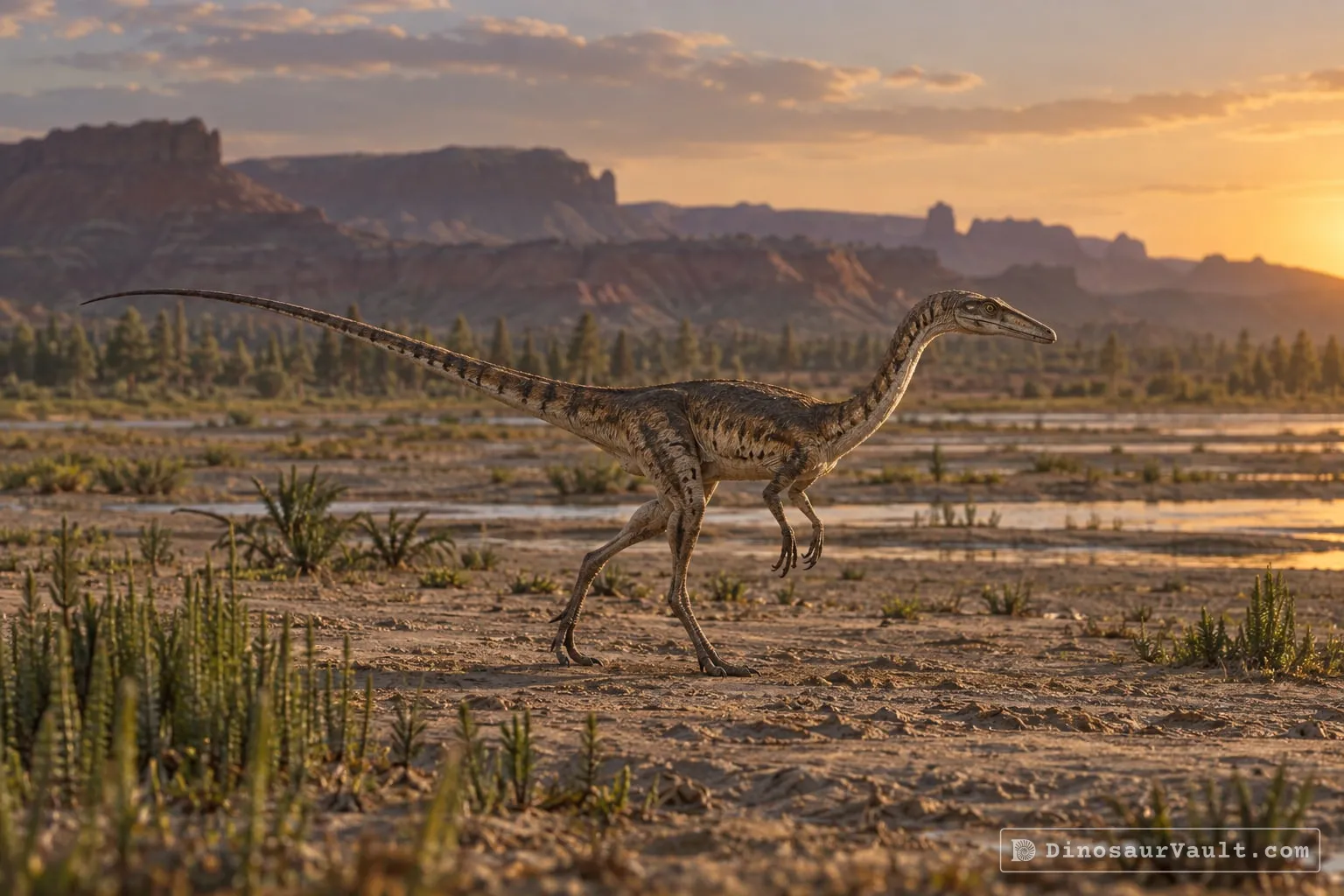
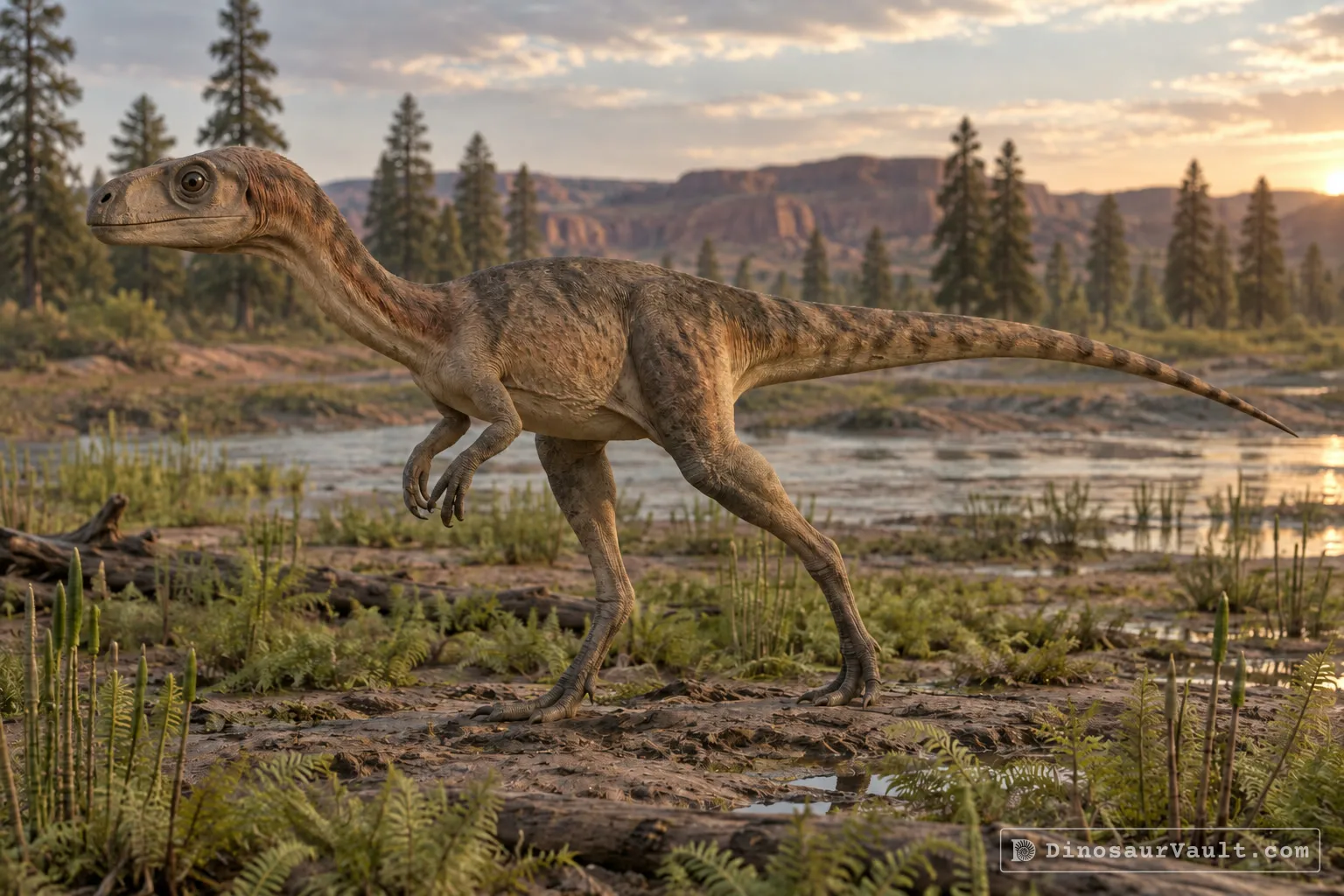
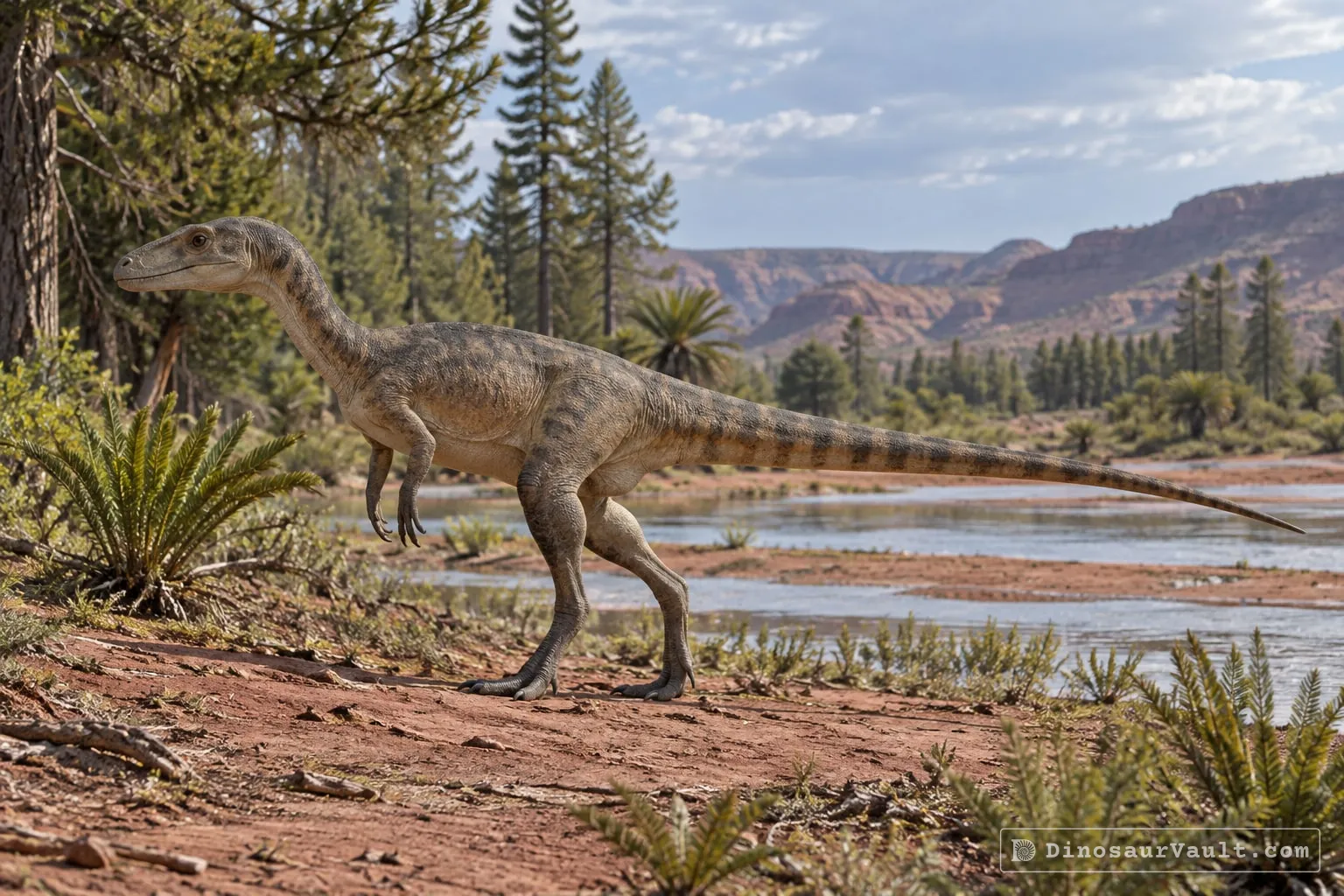
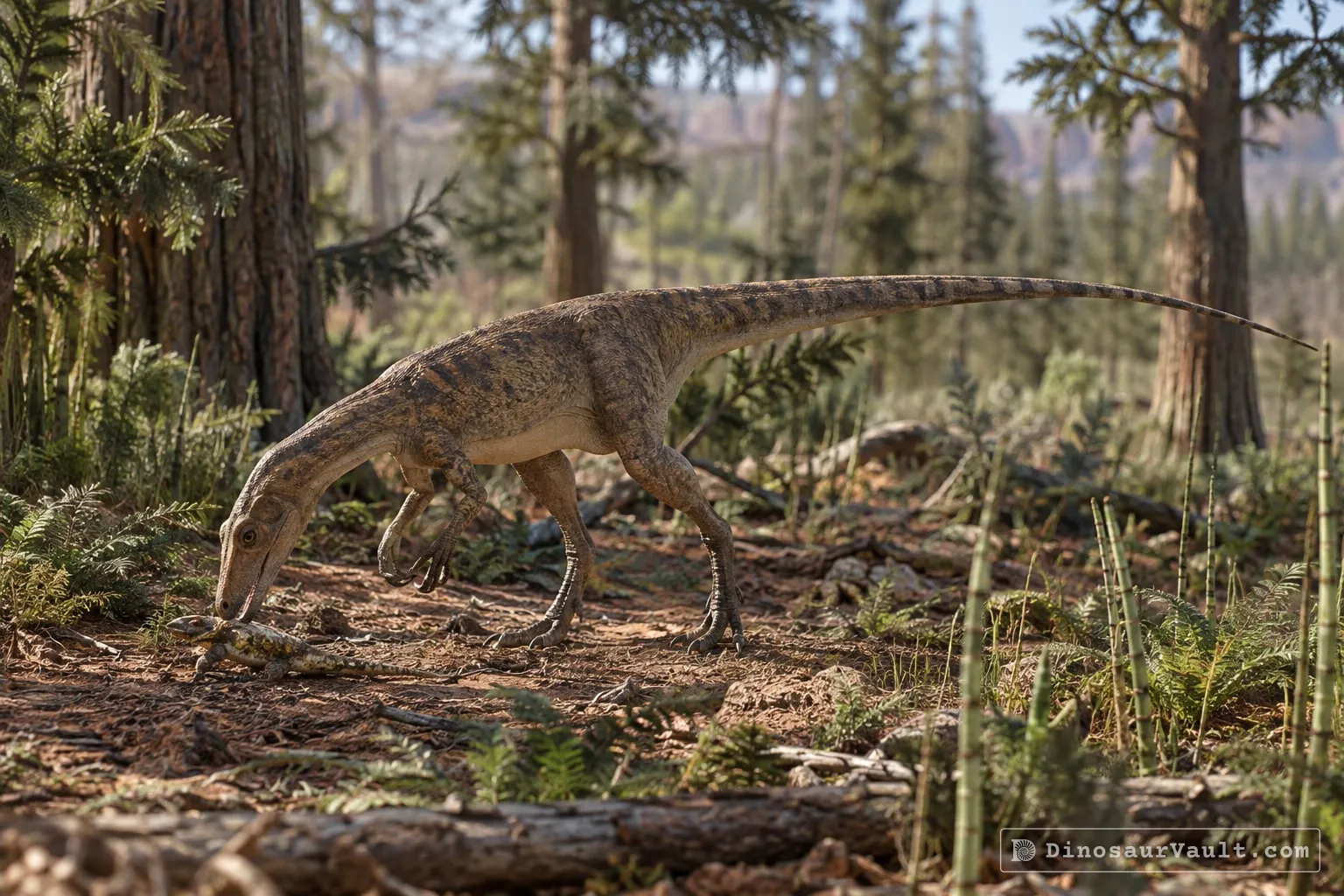
Scenes reconstructed from the available fossil evidence.
1 of 3
Lived alongside
Found in the same rock formations
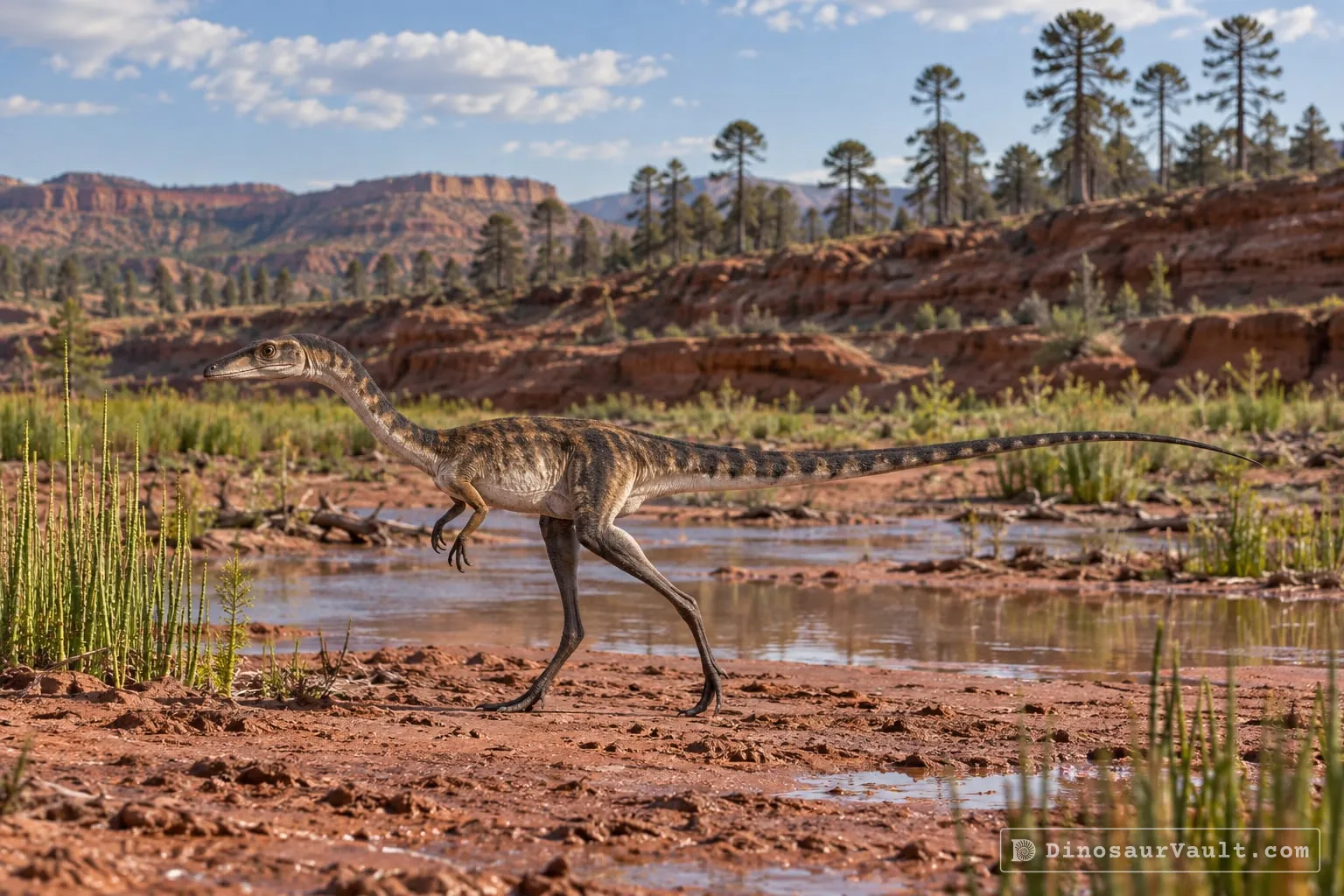
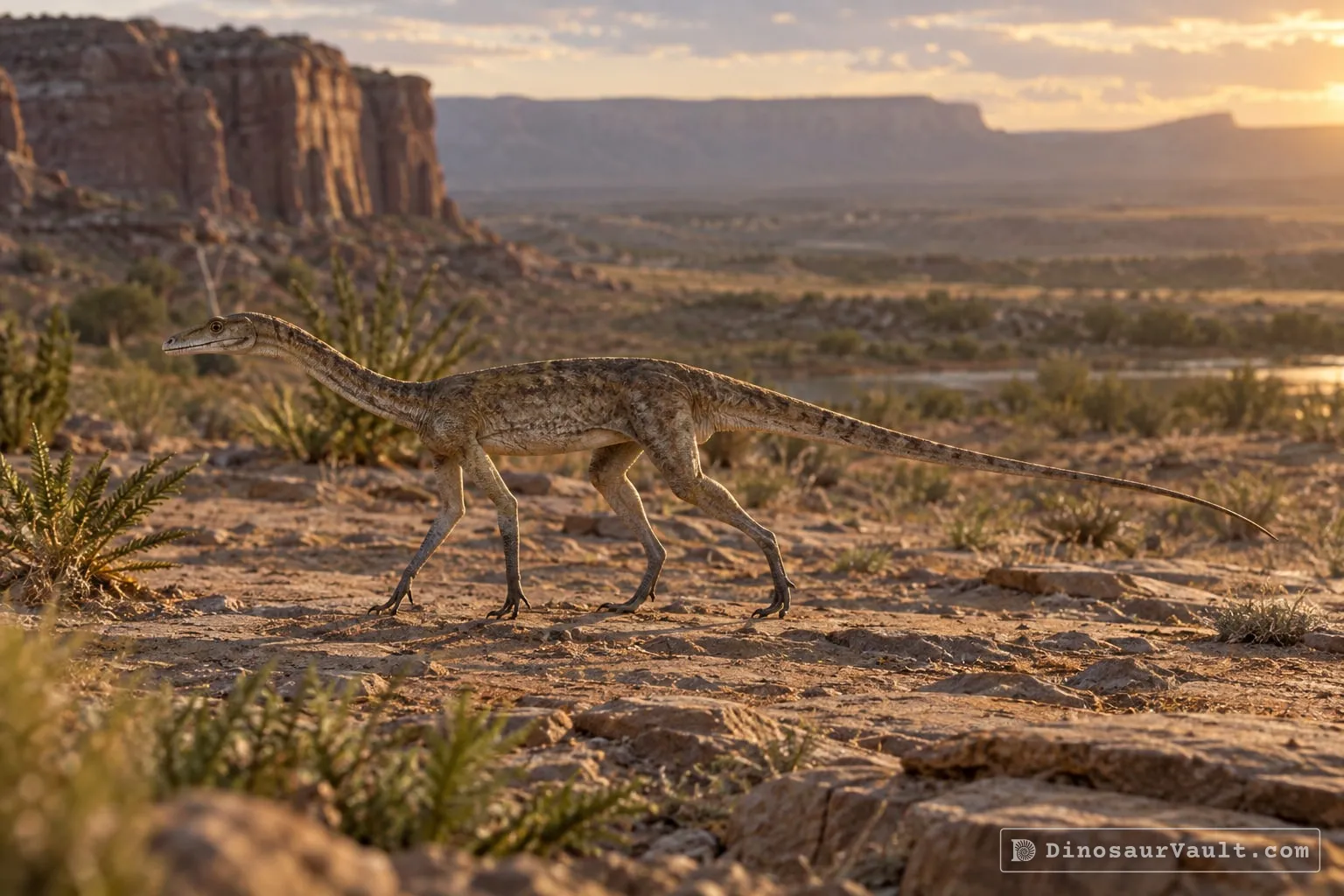


A rock formation can hold fossils laid down millions of years apart, so not every animal here met Kwanasaurus.
The evidence
The science behind Kwanasaurus
Which parts of the picture come from its own bones, and which come from its relatives.
From its own fossils
- The type specimen is part of a left upper jaw: short, unusually deep and sturdy, with broad, leaf-shaped teeth suited to eating plants.
- Other upper jaws were assigned to it for sharing that sturdy shape. Lower jaws assigned to it less securely are deep and narrow to a sharp, toothless front point.
- Arm, hip and thigh bones from the same rocks are also assigned to it less securely, since nearly all the bones were found separately and come from several animals.
Borrowed from relatives
- The missing snout tip, skull roof and neck, and its body proportions, are restored after Silesaurus, which has more complete skeletons.
Still unknown
- Its exact body proportions.
- Whether silesaurs belong within the dinosaurs or just outside them.
- Whether it is truly distinct from Technosaurus, whose comparable jaw bones are poorly preserved. The naming paper separated the two only tentatively.
Discovery timeline
- 2019Named itMartz & Small
- 2020Family treeMüller & Garcia
- 2022Family treeNorman et al.
- 2025Family treeTolchard, Perkins & Nesbitt
Key papers
The research behind what we know of Kwanasaurus
Named it
Named a silesaur with a sturdy upper jaw and leaf-shaped teeth, alongside remains of another dinosaur relative.
Non-dinosaurian dinosauromorphs from the Chinle Formation (Upper Triassic) of the Eagle Basin, northern Colorado: Dromomeron romeri (Lagerpetidae) and a new taxon, Kwanasaurus williamparkeri (Silesauridae). PeerJ 7: e7551
Read the paper : Non-dinosaurian dinosauromorphs from the Chinle Formation (Upper Triassic) of the Eagle Basin, northern Colorado: Dromomeron romeri (Lagerpetidae) and a new taxon, Kwanasaurus williamparkeri (Silesauridae) (opens in a new tab)Family tree
Proposed that silesaurs form successive early branches of the ornithischian dinosaurs rather than a separate family outside Dinosauria.
A paraphyletic ‘Silesauridae' as an alternative hypothesis for the initial radiation of ornithischian dinosaurs. Biology Letters 16: 20200417
Read the paper : A paraphyletic ‘Silesauridae' as an alternative hypothesis for the initial radiation of ornithischian dinosaurs (opens in a new tab)Family tree
Expanded the anatomical comparisons and found further support for silesaurs as early branches leading to later ornithischian dinosaurs.
Taxonomic, palaeobiological and evolutionary implications of a phylogenetic hypothesis for Ornithischia (Archosauria: Dinosauria). Zoological Journal of the Linnean Society 196: 1273-1309
Read the paper : Taxonomic, palaeobiological and evolutionary implications of a phylogenetic hypothesis for Ornithischia (Archosauria: Dinosauria) (opens in a new tab)Family tree
Described silesaur bones from Texas; its family tree kept Kwanasaurus as a separate animal among the early branches leading to ornithischian dinosaurs.
Silesaurid ( Archosauria: Dinosauriformes ) remains from the base of the Dockum Group ( Late Triassic: Otischalkian ) of Texas provide new insights to the North American record of dinosauriforms. The Anatomical Record 309: 293-313
Read the paper : Silesaurid ( Archosauria: Dinosauriformes ) remains from the base of the Dockum Group ( Late Triassic: Otischalkian ) of Texas provide new insights to the North American record of dinosauriforms (opens in a new tab)
Close relatives
Other members of Silesauridae


Sources: Wikidata