Chindesaurus
CHIN-dee-SORE-us
- Lived
- 227 to 206 million years ago, Late Triassic
- Length
- about 4 m (13 ft)
- Group
- Early dinosaurs
- Found in
- United States
- Named by
- Long and Murry 1995
Size comparison
To scale

Scale in metersOutline: typical early dinosaur shape
Where its fossils were found
The evidence
Today

220 million years ago
Habitat
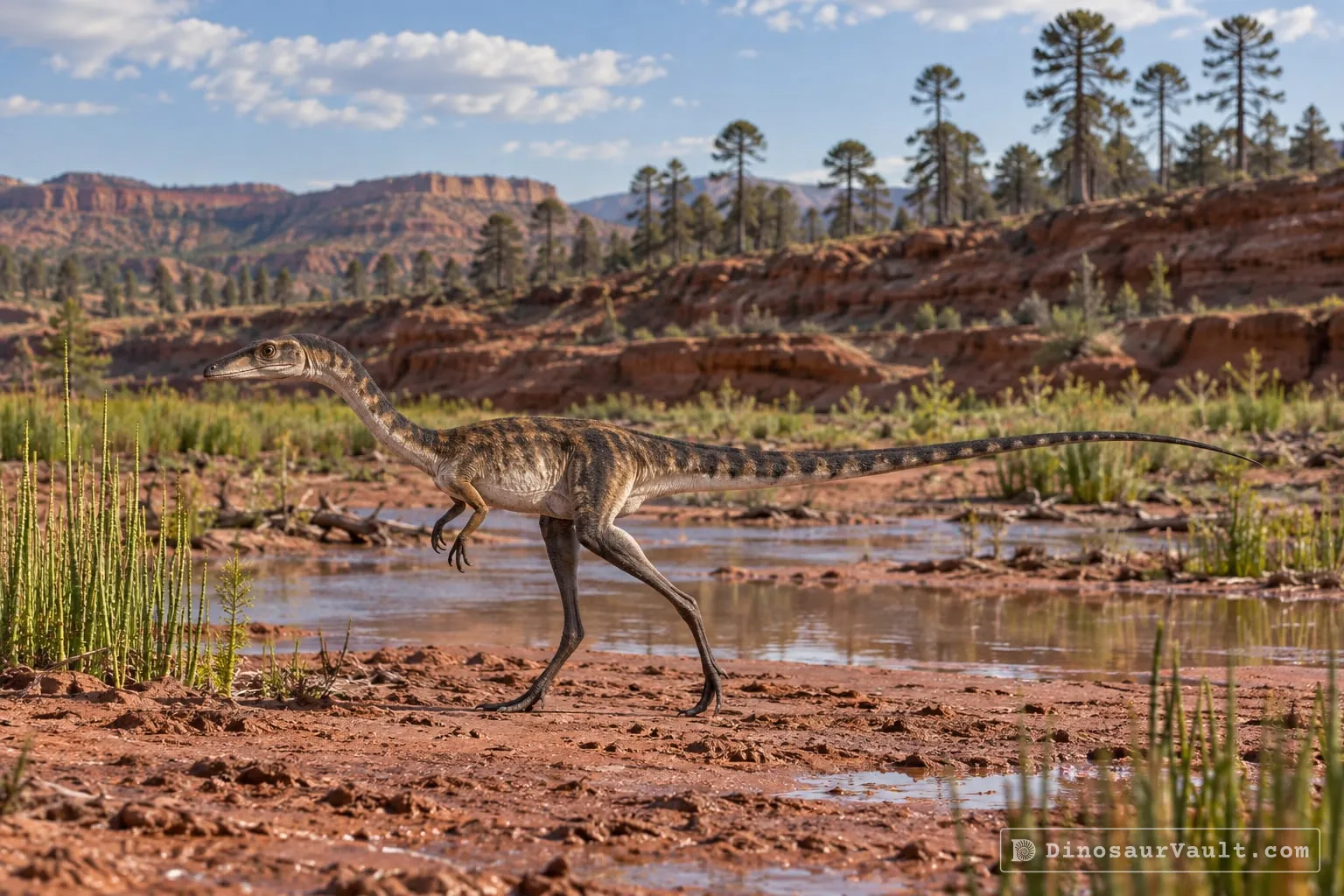
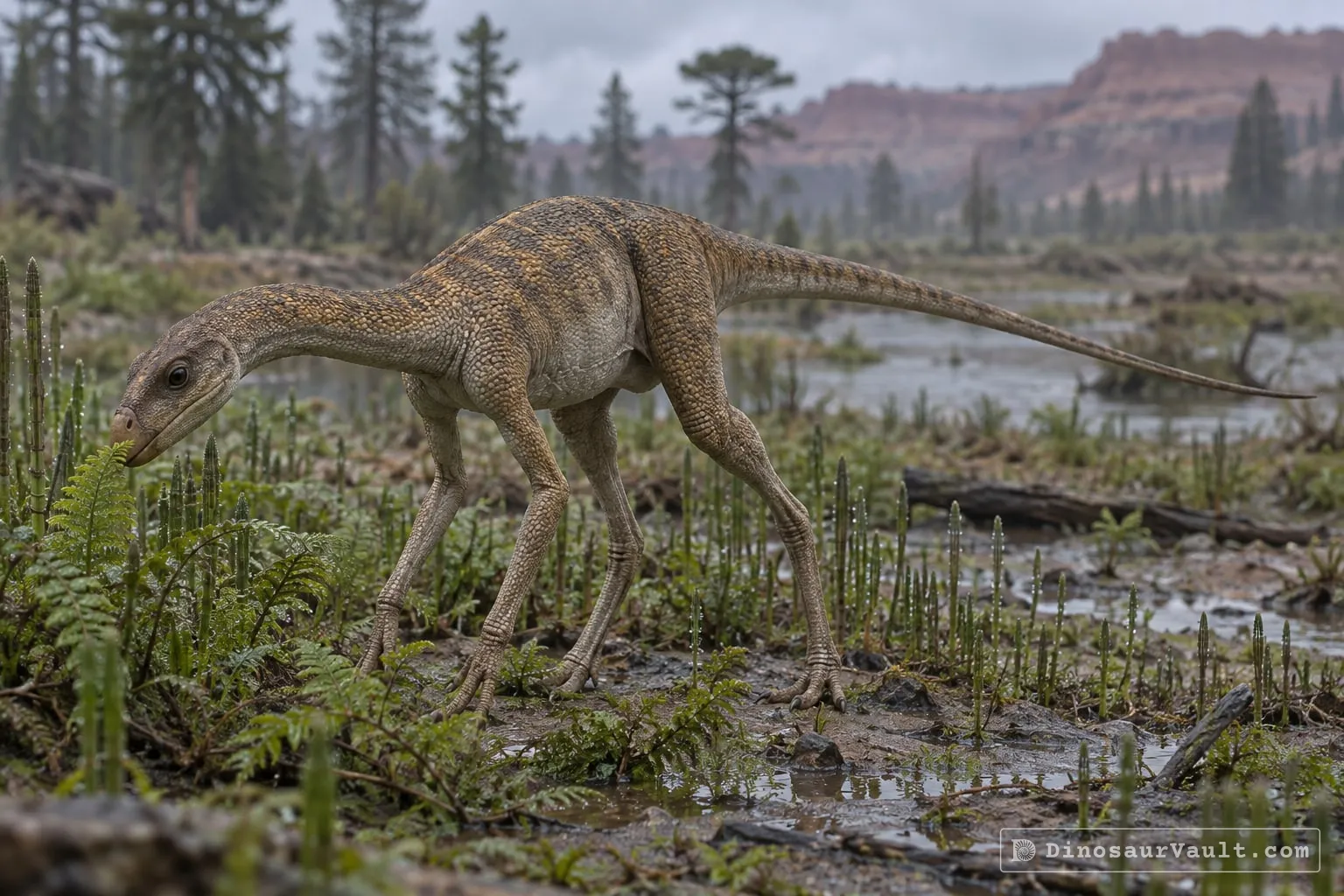
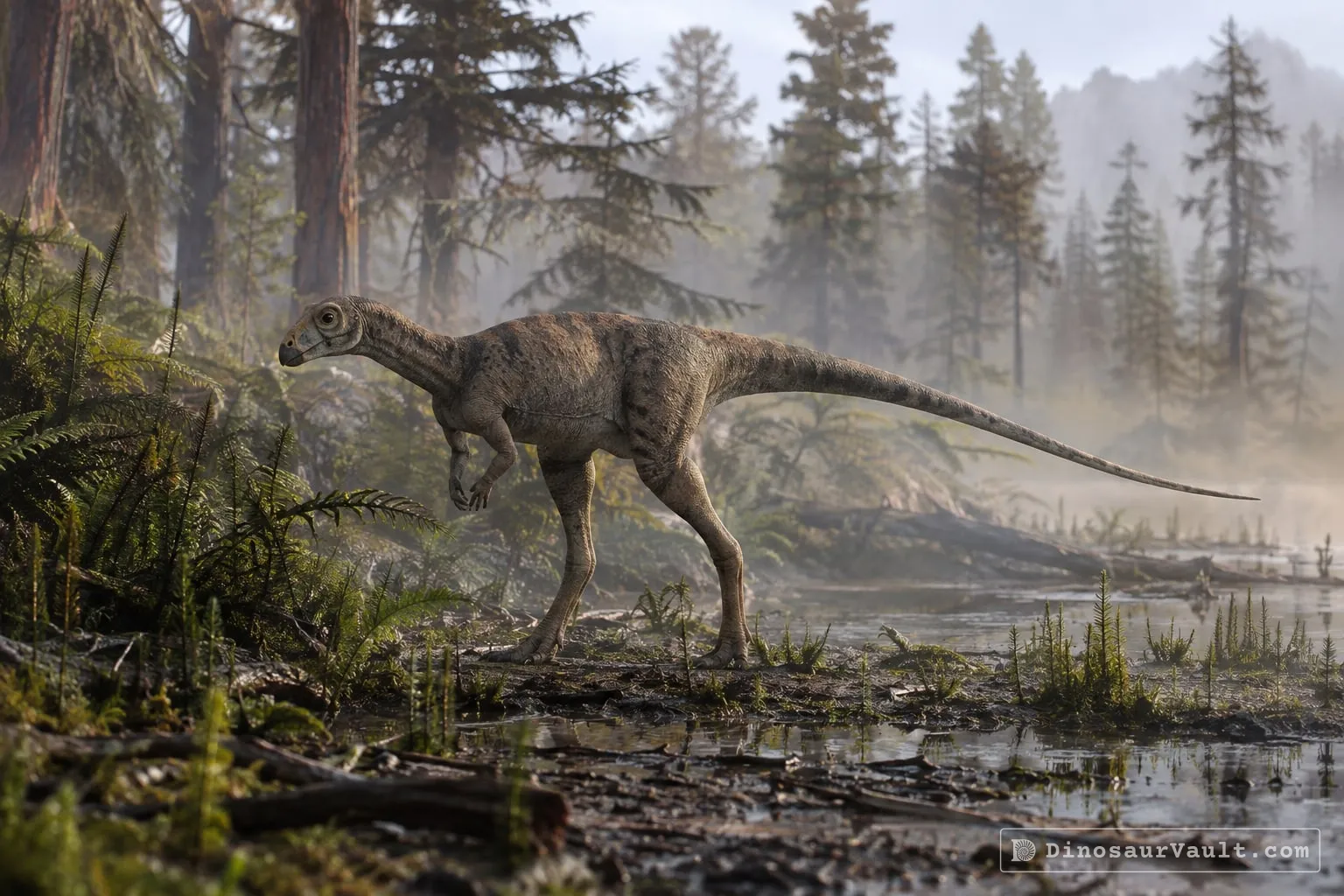
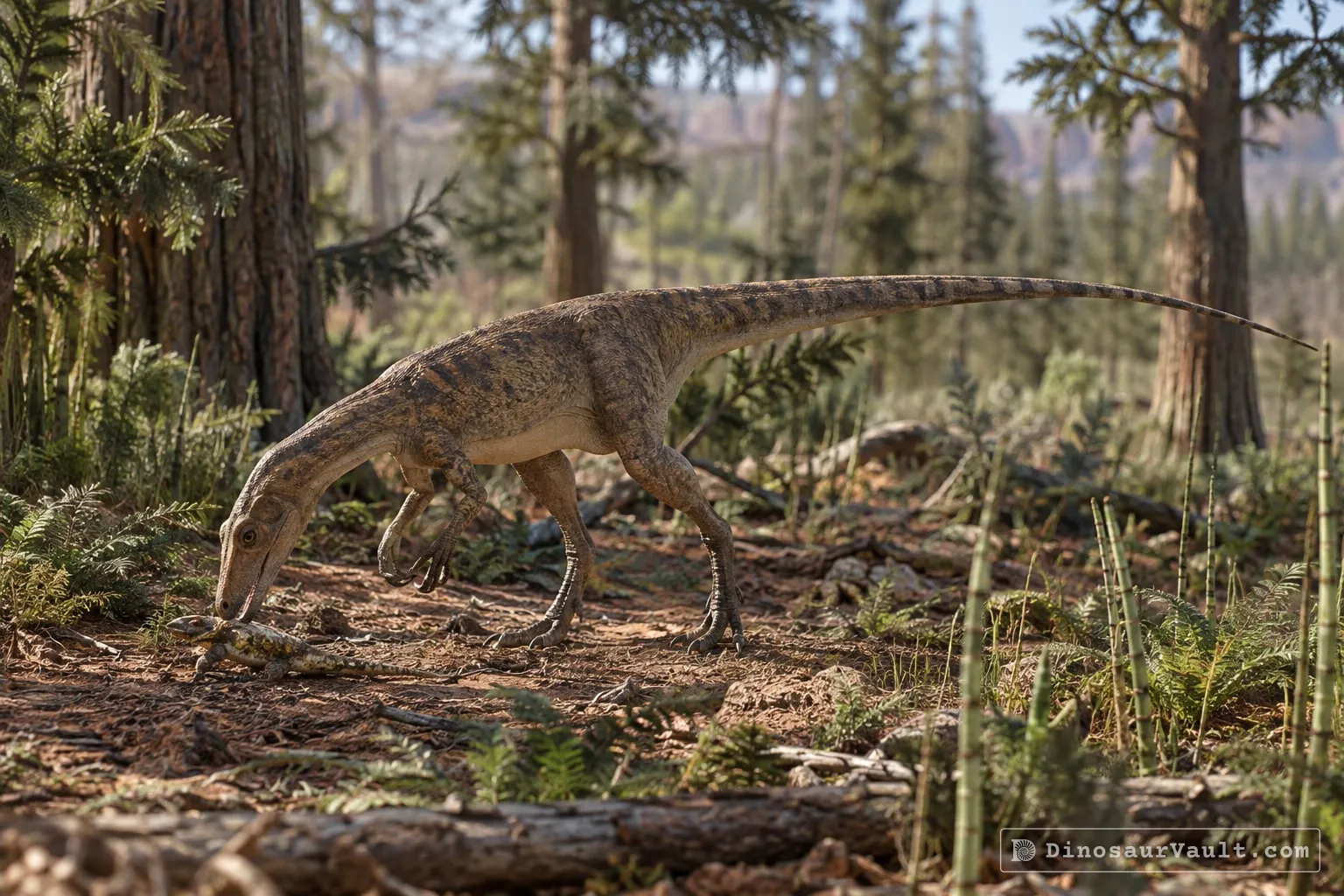
Rivers and floodplains supported conifers and ferns in what is now Arizona. Other dinosaurs recorded from the Chinle Formation include Coelophysis, Tawa and Daemonosaurus.
Field notes
About Chindesaurus
What it was like
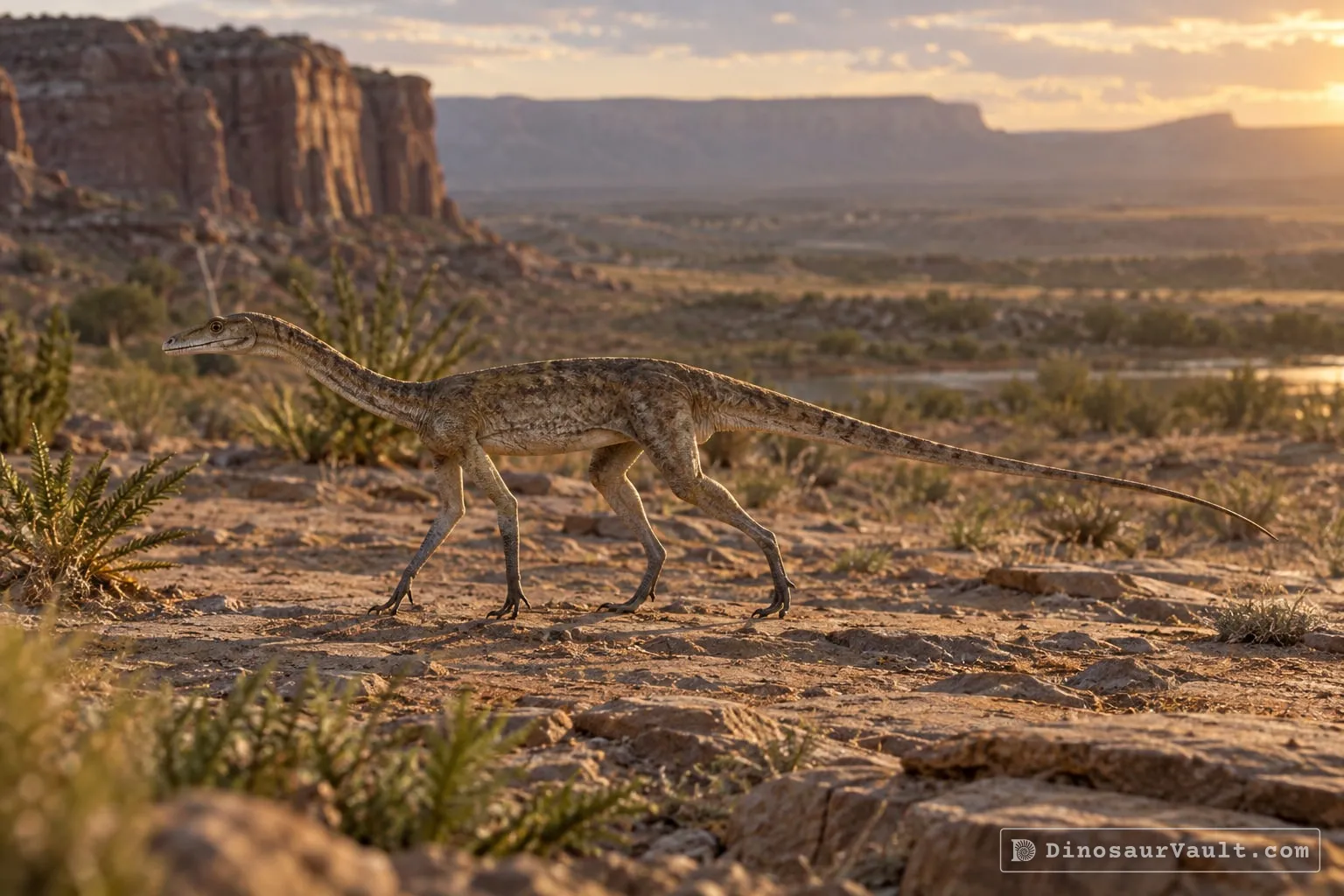
Chindesaurus was an early two-legged predator known from a partial skeleton. It had long, slender legs and was probably a quick hunter of small animals. It may be related to Herrerasaurus, but its exact place among early dinosaurs is still debated.
Its world
It lived in the Late Triassic in what is now Arizona. Its bones come from the Chinle Formation, a land of rivers and forests where early dinosaurs lived alongside much larger reptiles.
How it was found
Long and Murry named Chindesaurus in 1995. The name comes from a place near where it was found.
Field gallery
More views of Chindesaurus
Scenes reconstructed from the available fossil evidence.
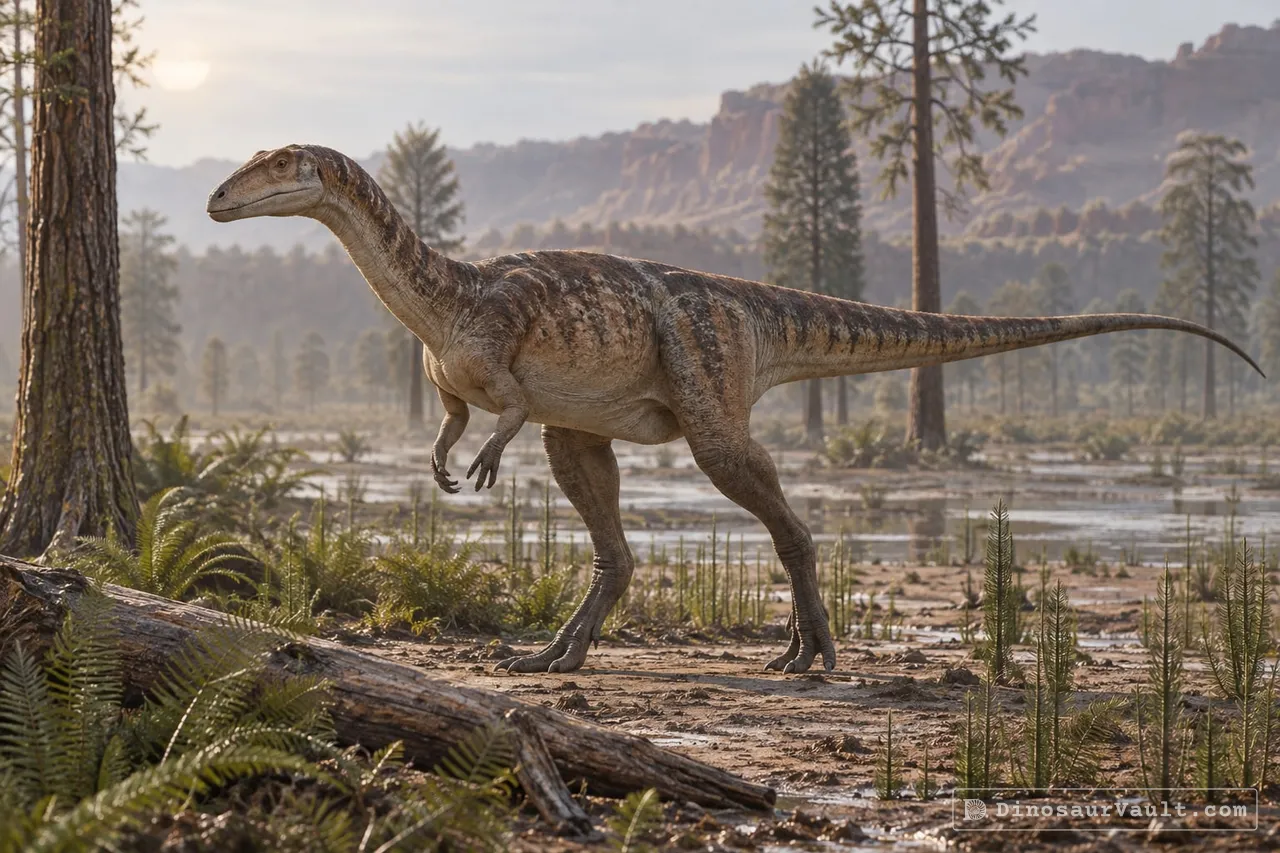
1 of 3
Lived alongside
Found in the same rock formations
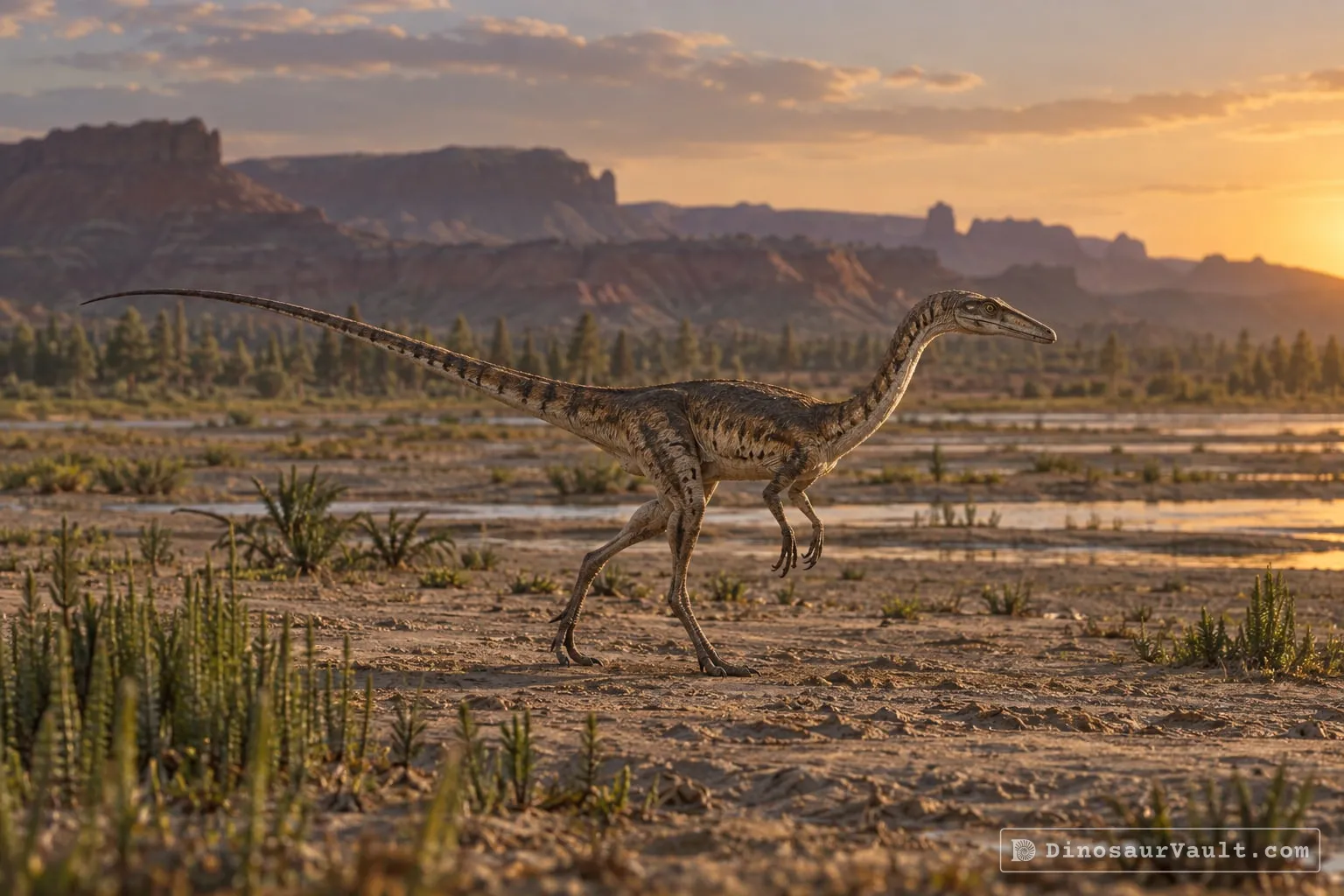
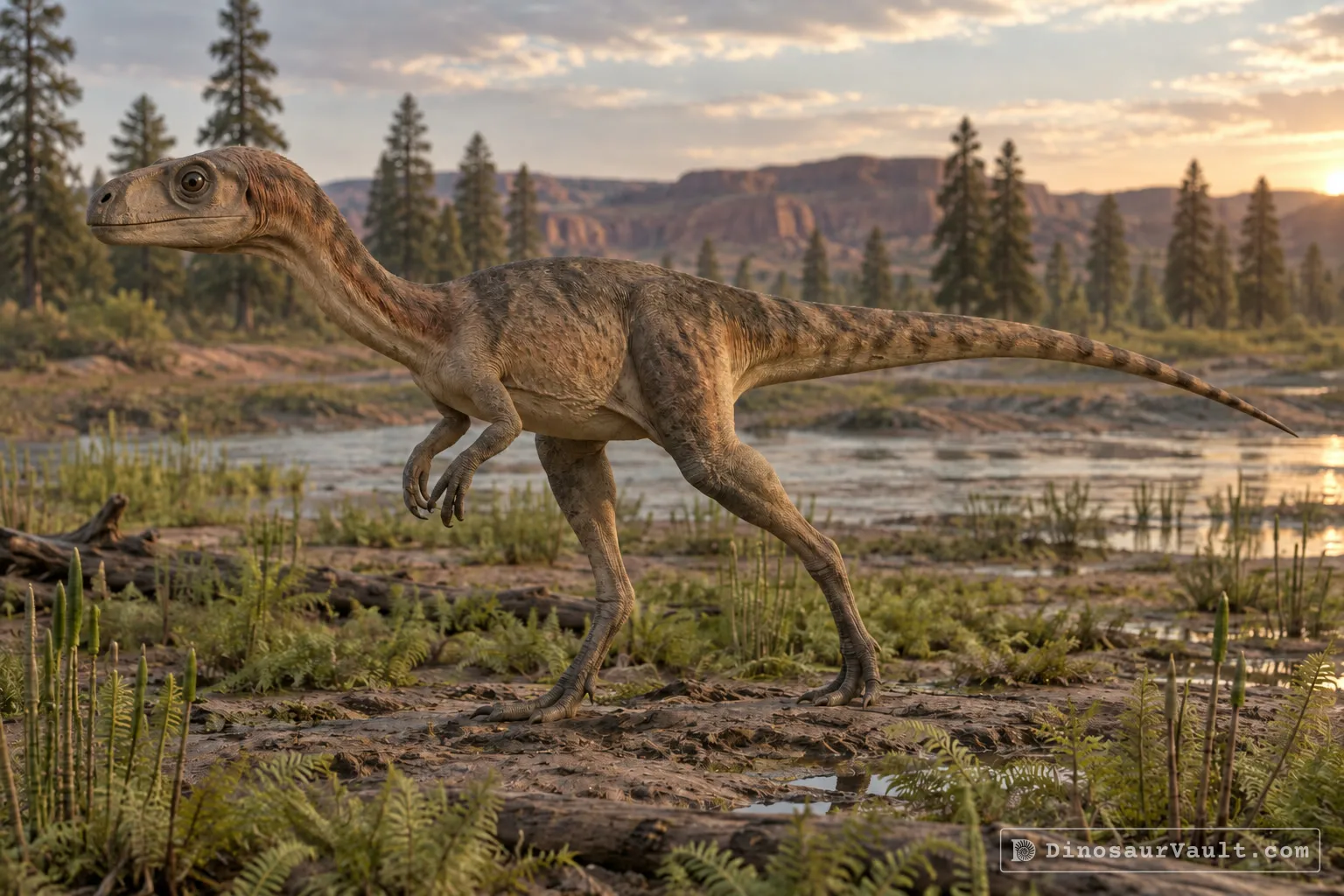
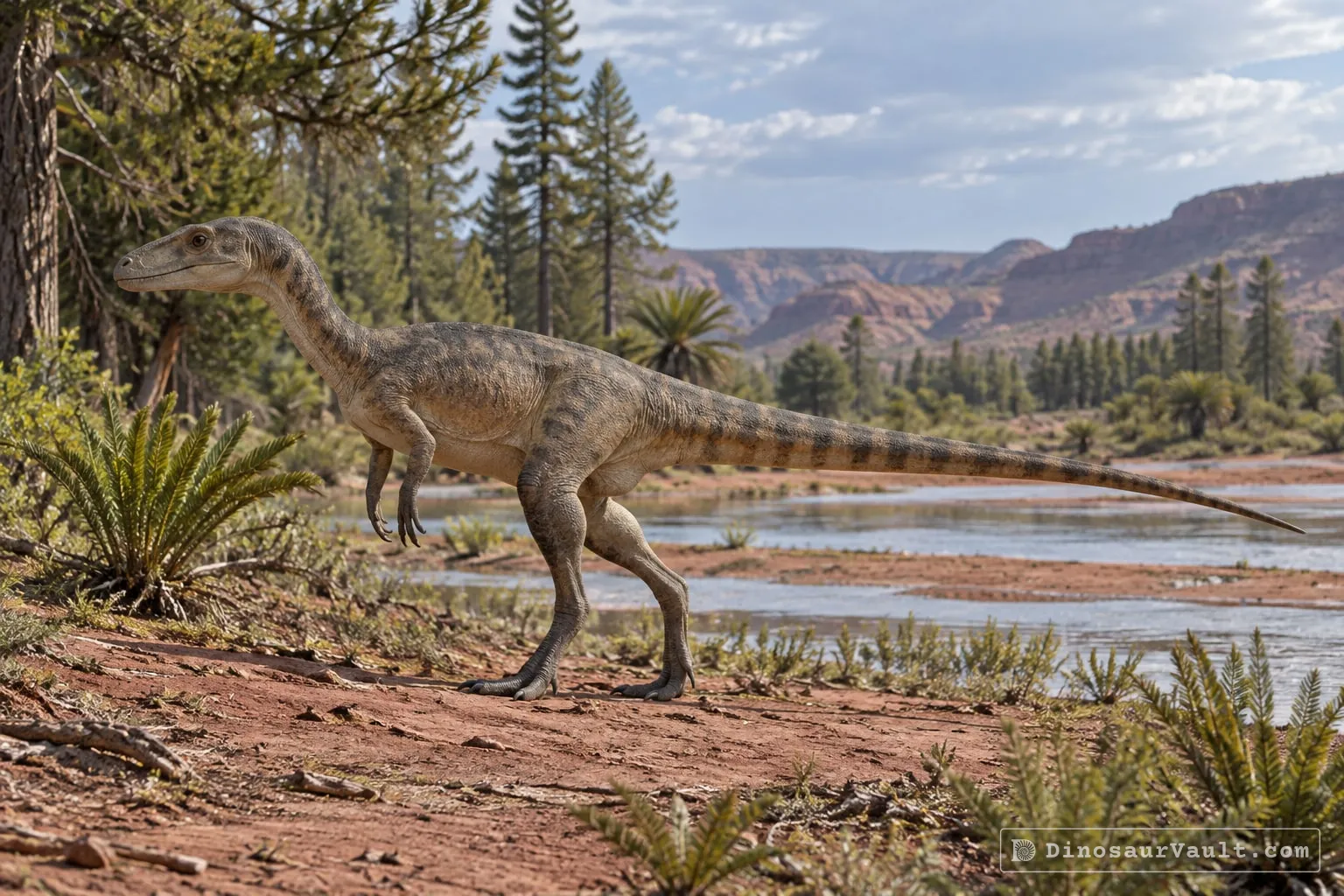


A rock formation can hold fossils laid down millions of years apart, so not every animal here met Chindesaurus.
The evidence
The science behind Chindesaurus
Which parts of the picture come from its own bones, and which come from its relatives.
From its own fossils
- A partial skeleton preserves vertebrae, fragments of the hips and long leg bones.
- The skeleton includes long leg bones and an ankle bone.
Borrowed from relatives
- Its missing skull and arms are reconstructed by comparison with other early dinosaurs.
Still unknown
- Its skull shape and tooth arrangement.
- Its skin covering and color.
- Experts disagree on where it belongs among early dinosaurs.
Discovery timeline
- 1995Named itLong & Murry
- 2019RedescriptionMarsh et al.
- 2026Family treeSrivastava & Nesbitt
Key papers
The research behind what we know of Chindesaurus
Named it
Named Chindesaurus from a partial skeleton while reviewing the Late Triassic reptiles of the southwestern United States.
Late Triassic (Carnian and Norian) Tetrapods from the Southwestern United States. New Mexico Museum of Natural History and Science Bulletin 4: 1-254
No link available
Redescription
Corrected earlier bone identifications and, in one analysis, grouped Chindesaurus with Tawa.
Redescription of the holotype specimen ofChindesaurus bryansmalliLong and Murry, 1995 (Dinosauria, Theropoda), from Petrified Forest National Park, Arizona. Journal of Vertebrate Paleontology 39: e1645682
Read the paper : Redescription of the holotype specimen ofChindesaurus bryansmalliLong and Murry, 1995 (Dinosauria, Theropoda), from Petrified Forest National Park, Arizona (opens in a new tab)Family tree
Grouped Chindesaurus with Tawa, Ptychotherates and Daemonosaurus, placing their branch among herrerasaurians.
A new taxon of saurischian dinosaur from the Coelophysis Quarry of New Mexico, USA (Triassic: latest Norian or Rhaetian) highlights herrerasaurian diversity in the latest Triassic. Papers in Palaeontology 12
Read the paper : A new taxon of saurischian dinosaur from the Coelophysis Quarry of New Mexico, USA (Triassic: latest Norian or Rhaetian) highlights herrerasaurian diversity in the latest Triassic (opens in a new tab)
Close relatives
Other members of Saurischia


Sources: Wikidata