Tawa
- Lived
- 227 to 206 million years ago, Late Triassic
- Group
- Early dinosaurs
- Found in
- United States
- Named by
- Nesbitt et al. 2009
Where its fossils were found
The evidence
Today

220 million years ago
Habitat
It lived on the Late Triassic land of what is now New Mexico. Other dinosaurs from the Chinle Formation include Coelophysis and Chindesaurus.
Field notes
About Tawa
What it was like
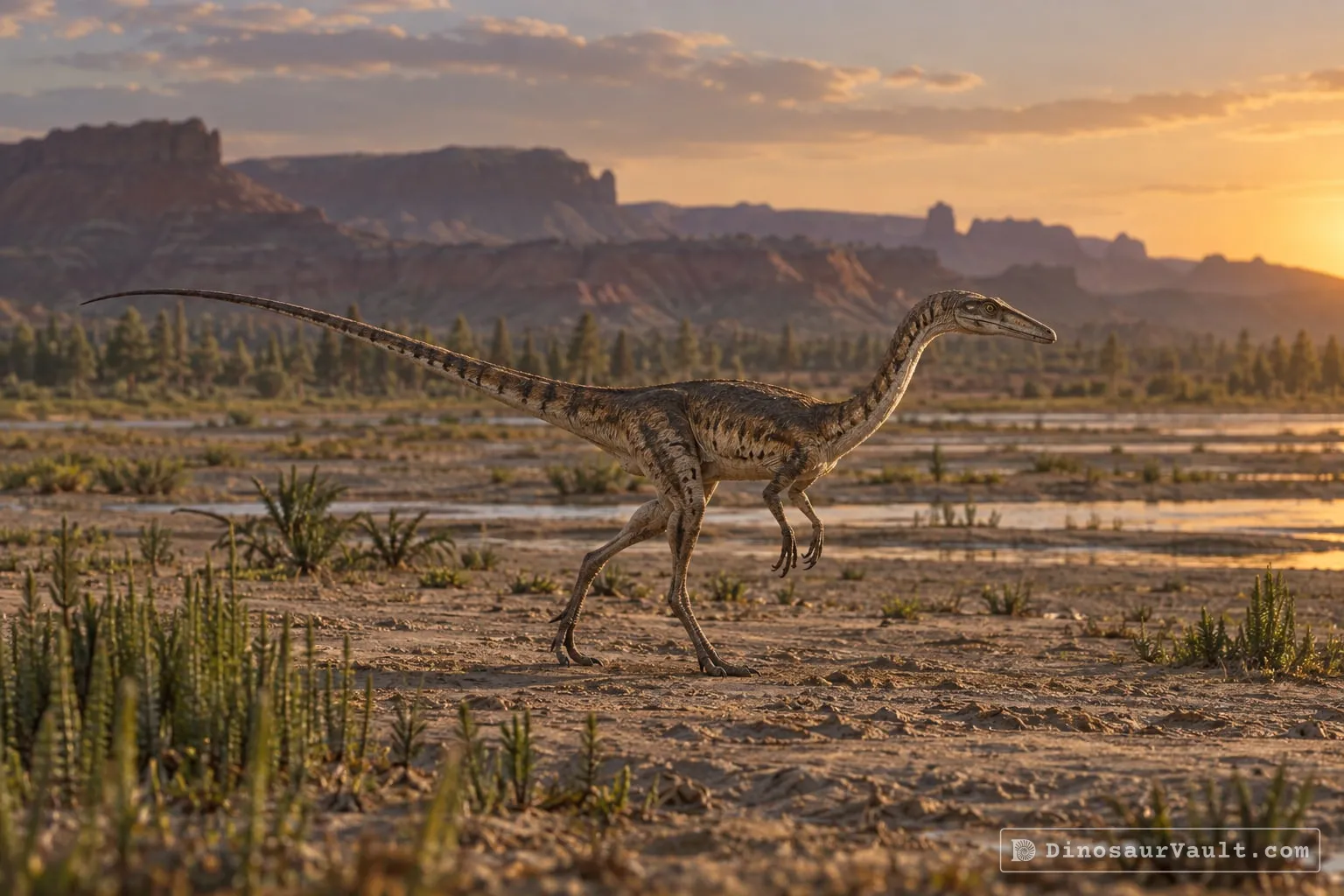
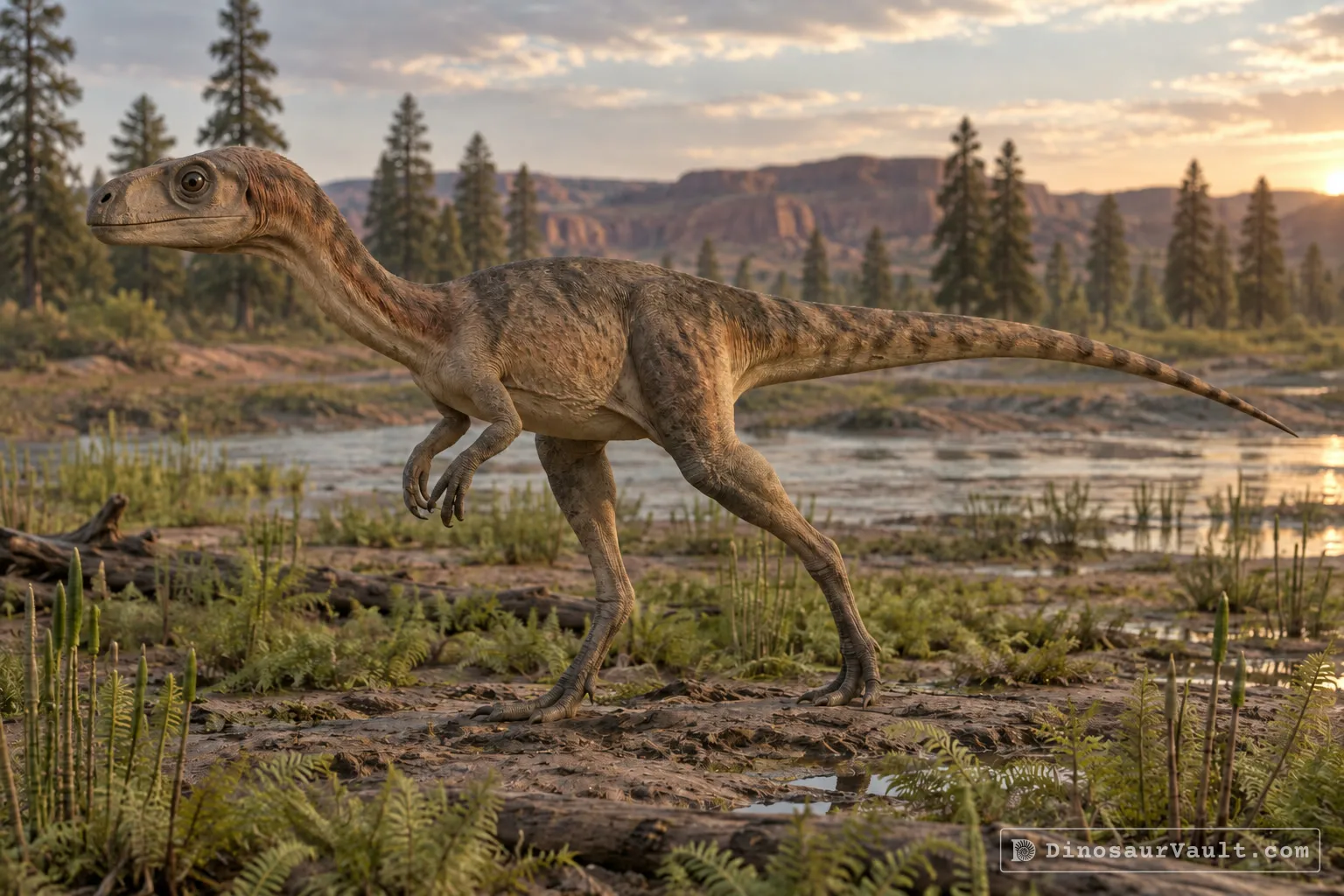
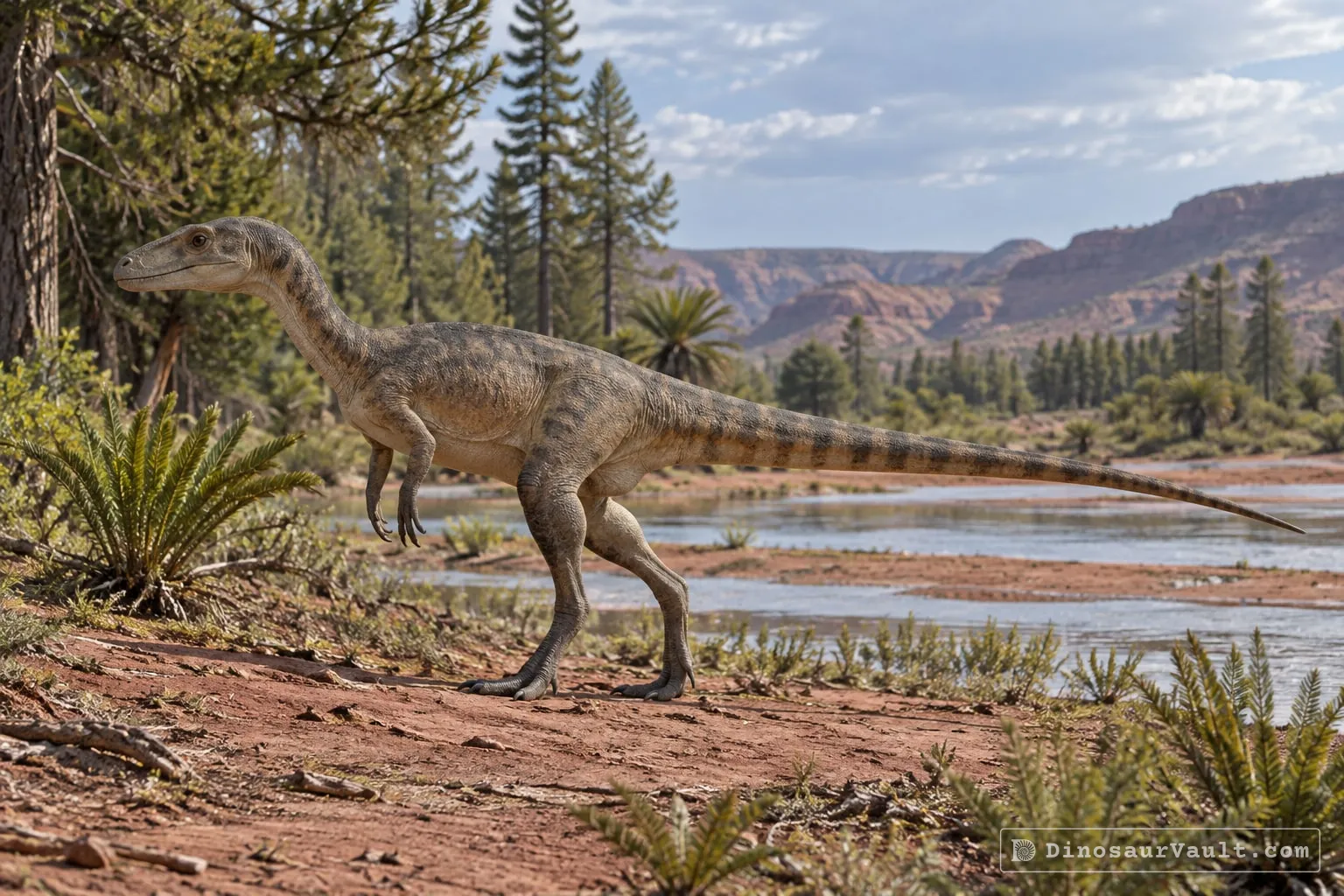
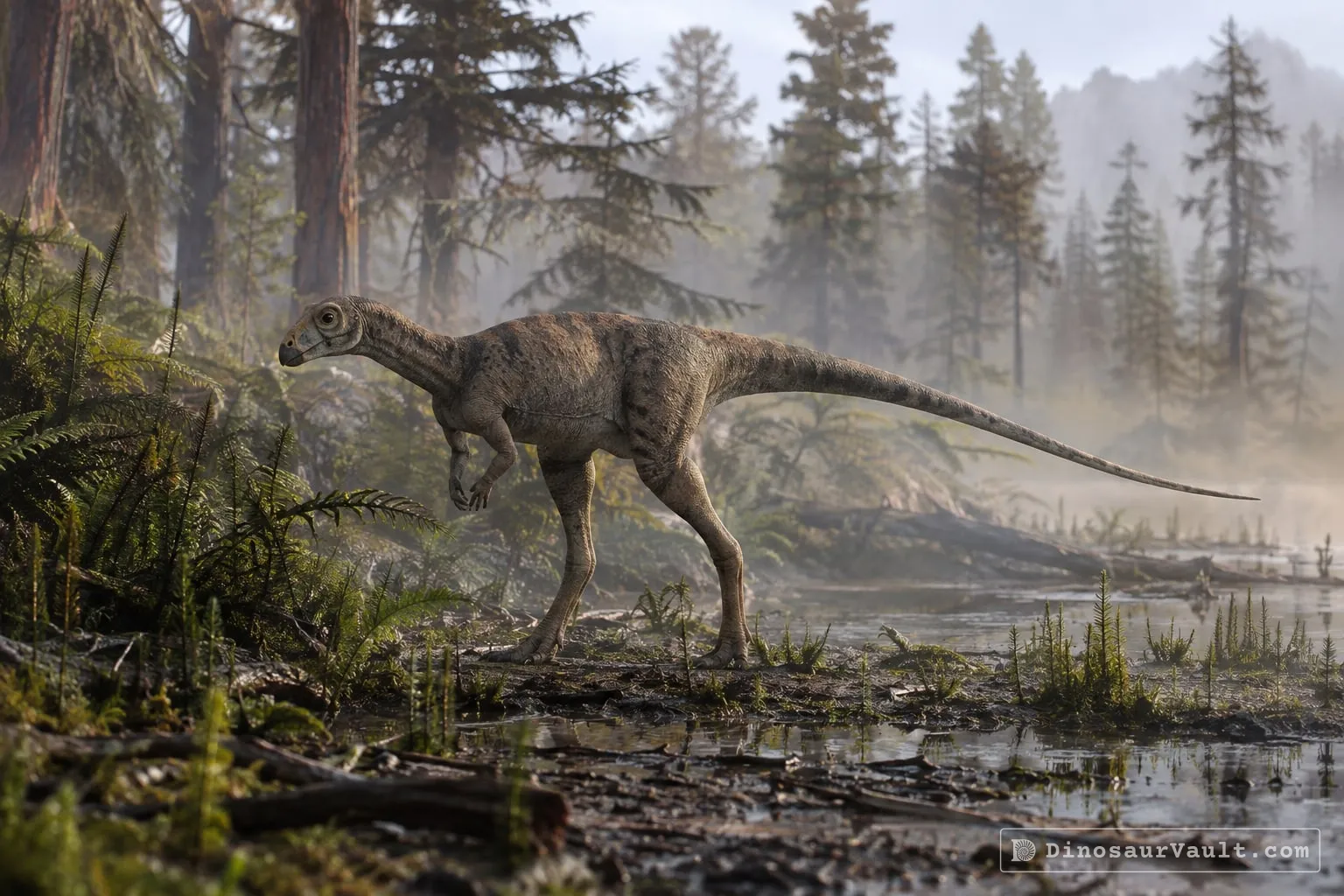
Tawa was a small, early theropod with a long neck and tail and sharp, curved teeth. Several skeletons are known, which have helped scientists work out how the first theropods were related.
Its world
It lived in the Late Triassic, in what is now New Mexico. It comes from the Chinle Formation, where it shared the land with Coelophysis and the early predator Chindesaurus.
How it was found
Nesbitt and colleagues named Tawa in 2009. Its name comes from a sun god of a local native people.
Field gallery
More views of Tawa
Scenes reconstructed from the available fossil evidence.
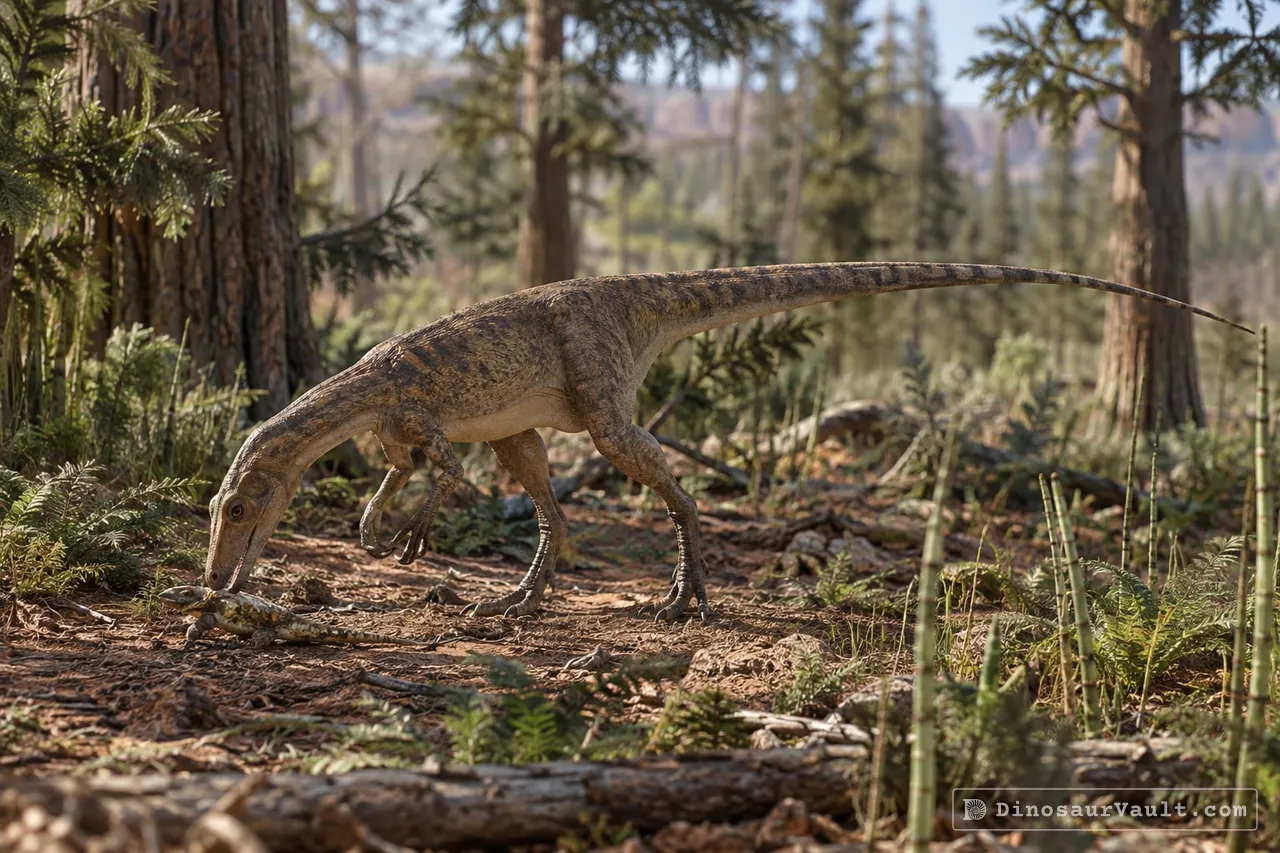
1 of 3
Lived alongside
Found in the same rock formations
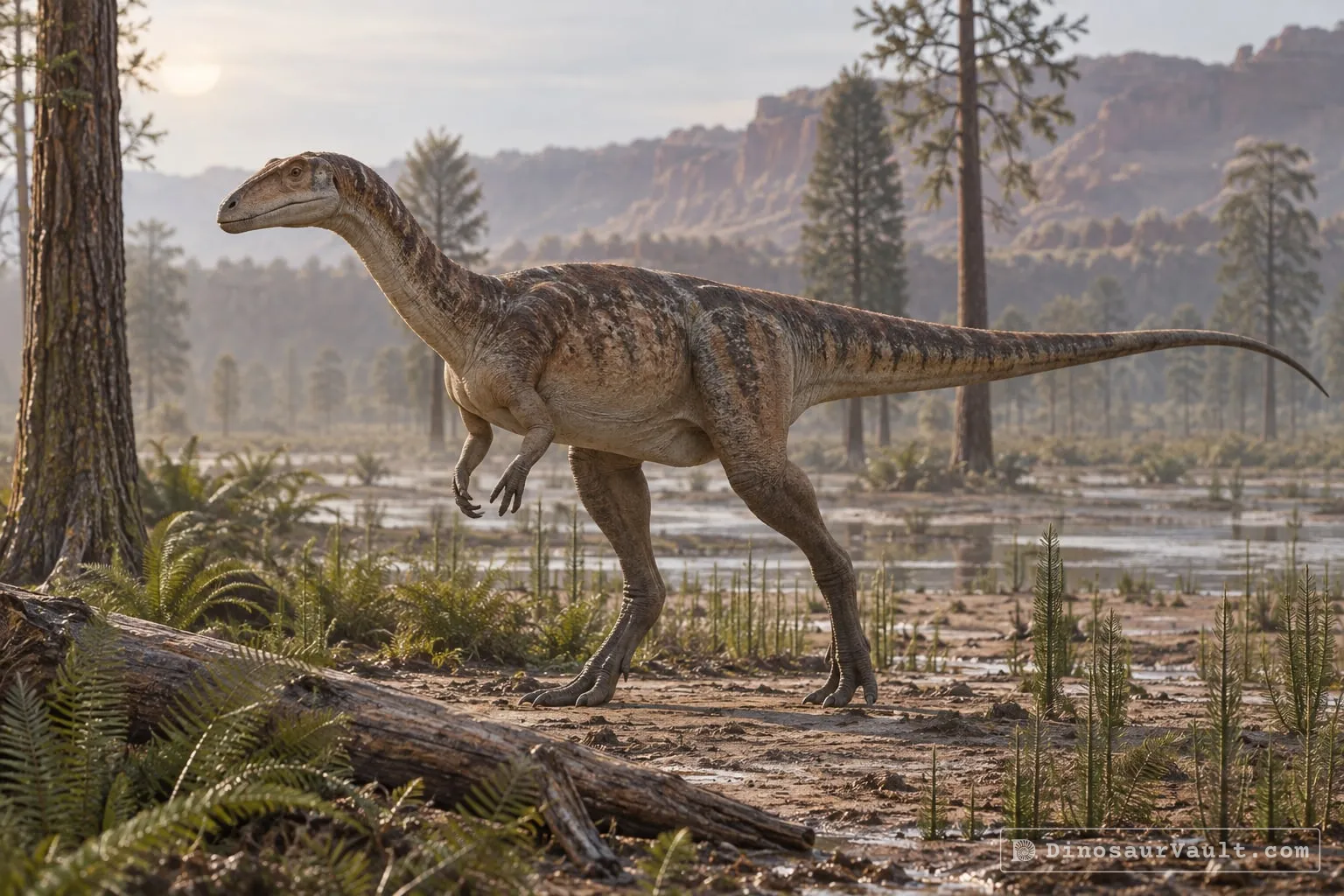
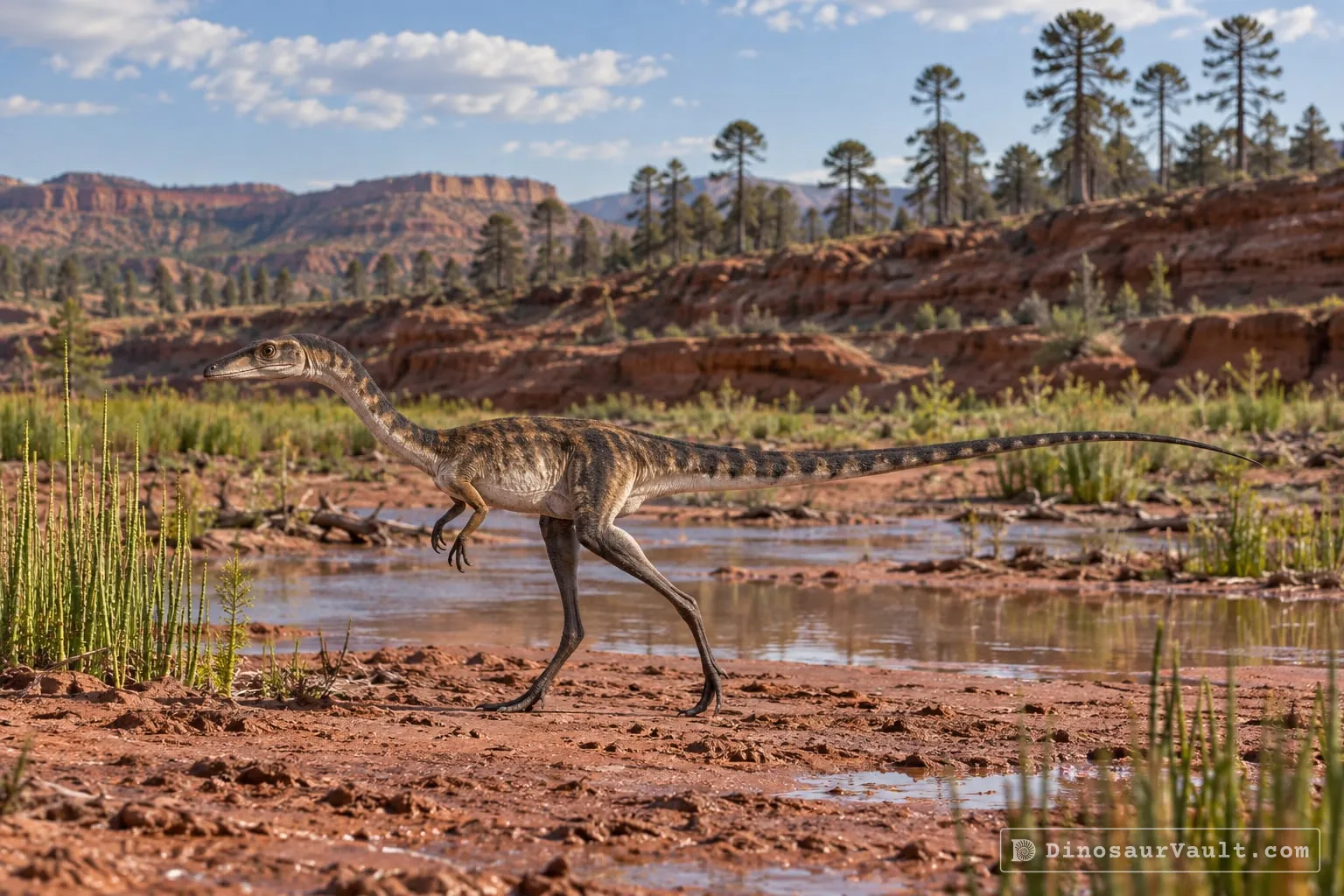
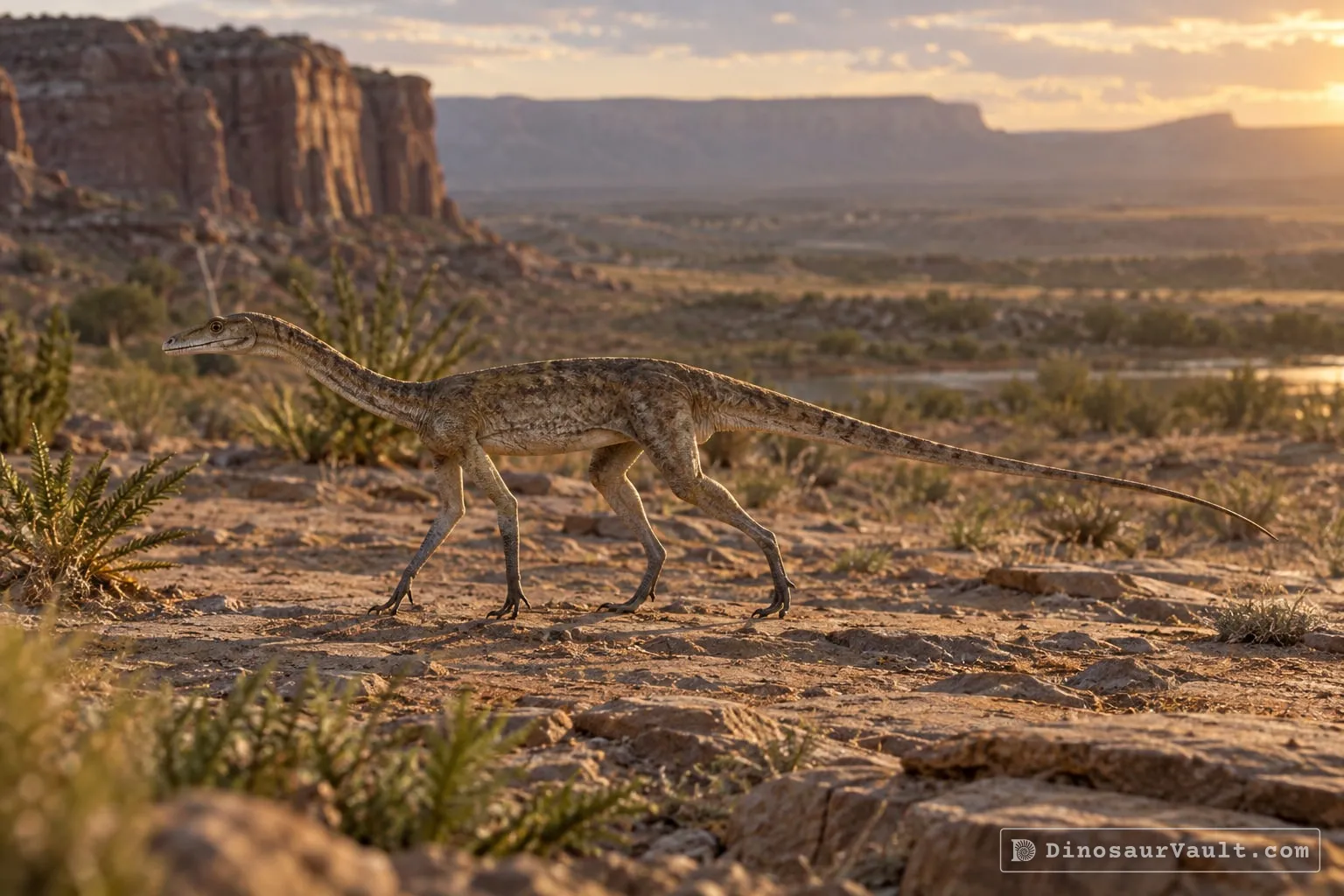
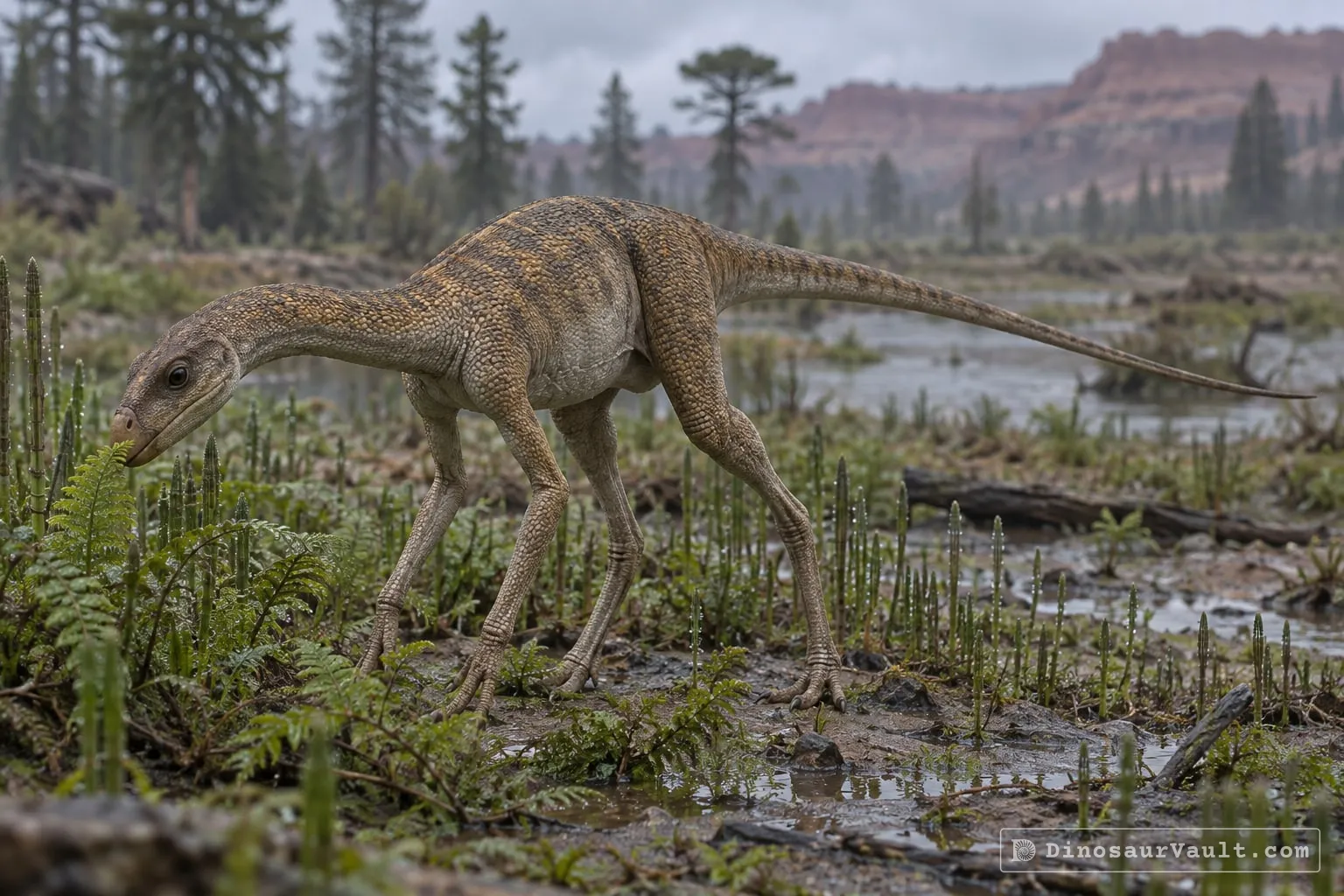


A rock formation can hold fossils laid down millions of years apart, so not every animal here met Tawa.
The evidence
The science behind Tawa
Which parts of the picture come from its own bones, and which come from its relatives.
From its own fossils
- Several skeletons preserve the skull, backbone and limbs of a slender, two-legged predator.
- Its jaws carried sharp, curved teeth.
- Flat bones formed paired plates beneath the chest.
Borrowed from relatives
- Most of its skeleton is known from its own bones.
- Arm muscles are restored by comparing its bones with the muscles of living birds and crocodilians.
Still unknown
- Its color and body covering.
- Whether it hunted alone or in groups.
- How it cared for its young.
Discovery timeline
- 2009Named itNesbitt et al.
- 2014How it fedBurch
- 2019New findBradley et al.
Key papers
The research behind what we know of Tawa
Named it
Described nearly complete skeletons of an early predator and used their anatomy to study how the first dinosaurs spread and diversified.
A Complete Skeleton of a Late Triassic Saurischian and the Early Evolution of Dinosaurs. Science 326: 1530-1533
Read the paper : A Complete Skeleton of a Late Triassic Saurischian and the Early Evolution of Dinosaurs (opens in a new tab)How it fed
Restored the arm muscles from bones and living relatives, suggesting strong grasping movements for catching prey.
Complete forelimb myology of the basal theropod dinosaur T awa hallae based on a novel robust muscle reconstruction method. Journal of Anatomy 225: 271-297
Read the paper : Complete forelimb myology of the basal theropod dinosaur T awa hallae based on a novel robust muscle reconstruction method (opens in a new tab)New find
Identified paired chest plates in Tawa, extending the record of dinosaur breastbones back into the Late Triassic.
Sternal elements of early dinosaurs fill a critical gap in the evolution of the sternum in Avemetatarsalia (Reptilia: Archosauria). Journal of Vertebrate Paleontology 39: e1700992
Read the paper : Sternal elements of early dinosaurs fill a critical gap in the evolution of the sternum in Avemetatarsalia (Reptilia: Archosauria) (opens in a new tab)
Close relatives
Other members of Saurischia


Sources: Wikidata