Eucoelophysis
"true hollow form"
- Lived
- 227 to 201 million years ago, Late Triassic
- Diet
- Herbivore
- Group
- Early ornithischians, Silesauridae
- Found in
- United States
- Named by
- Sullivan and Lucas 1999
Where its fossils were found
The evidence
Today

210 million years ago
Habitat
Streams, temporary floods and pools shaped its landscape in New Mexico, with conifers, seed ferns and ferns growing nearby. Coelophysis, Chindesaurus and Tawa also lived in this region.
Field notes
About Eucoelophysis
What it was like
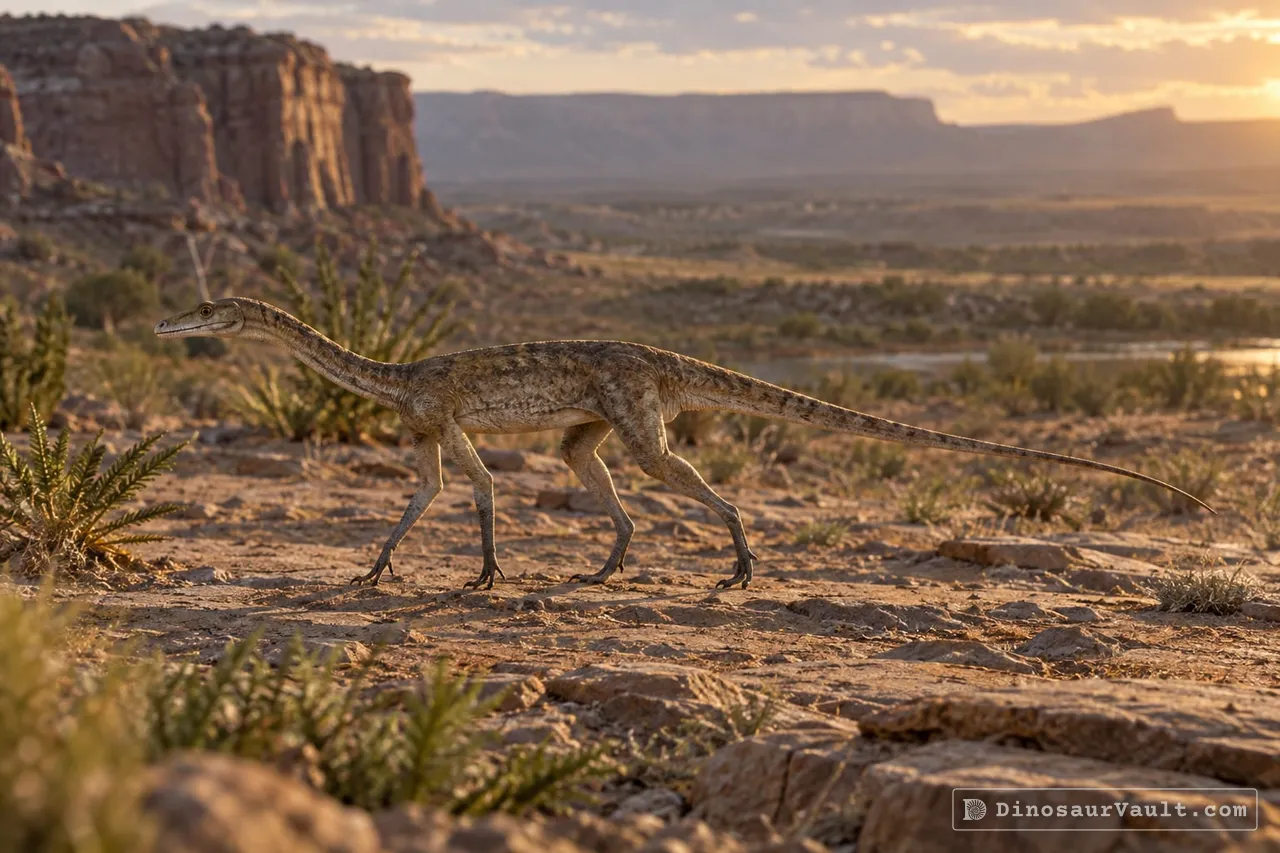
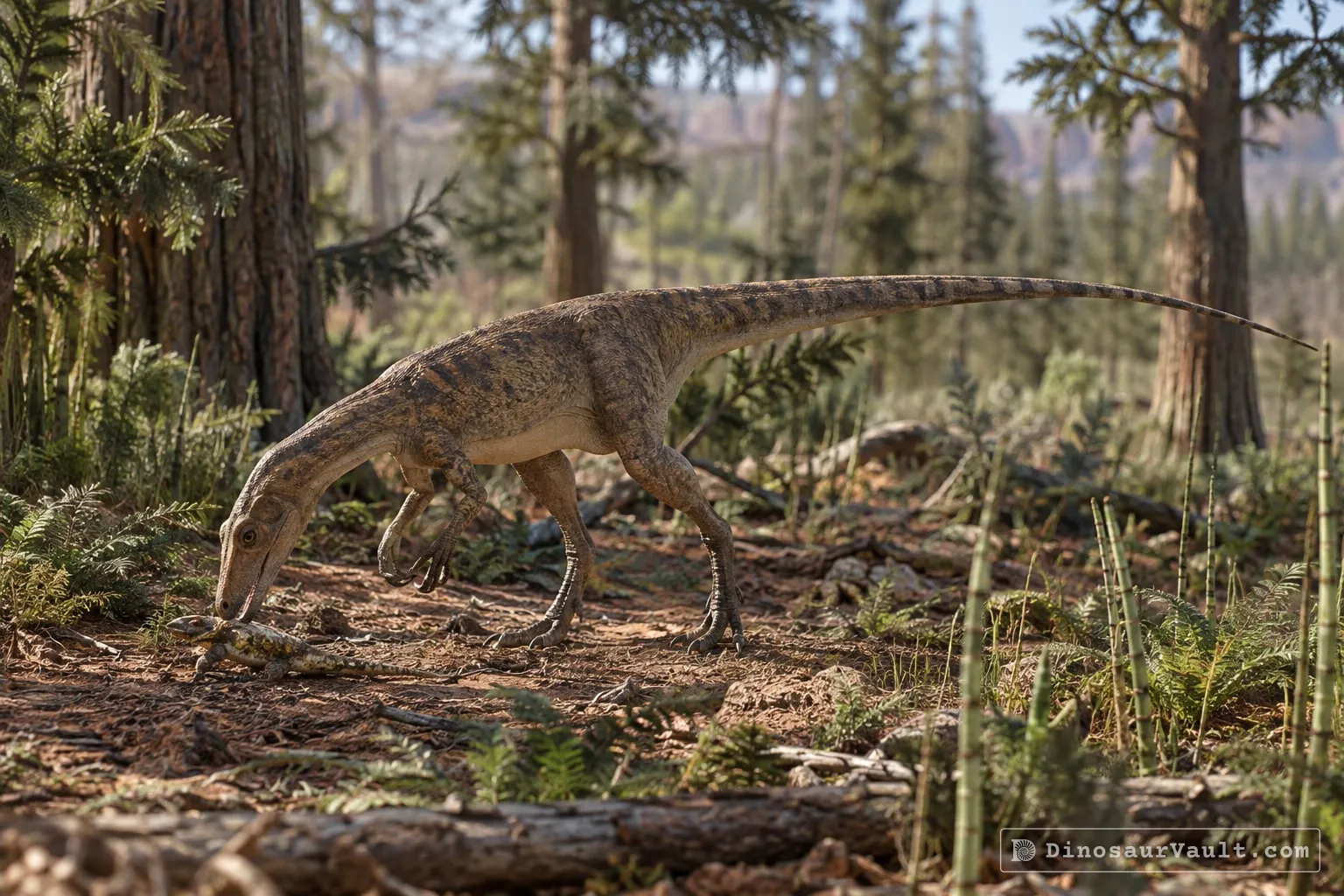
Eucoelophysis was a slender, four-legged plant eater from the silesaurids, close cousins of dinosaurs or perhaps the earliest ornithischians. It is known from leg and hip bones.
Its world
It lived in the Late Triassic, in what is now New Mexico. It comes from the Chinle Formation, where it lived beside the early theropod Coelophysis.
How it was found
Sullivan and Lucas named Eucoelophysis in 1999. They first thought it was a relative of Coelophysis, which explains its name, but later study showed it was a silesaurid.
Field gallery
More views of Eucoelophysis
Scenes reconstructed from the available fossil evidence.
Lived alongside
Found in the same rock formations
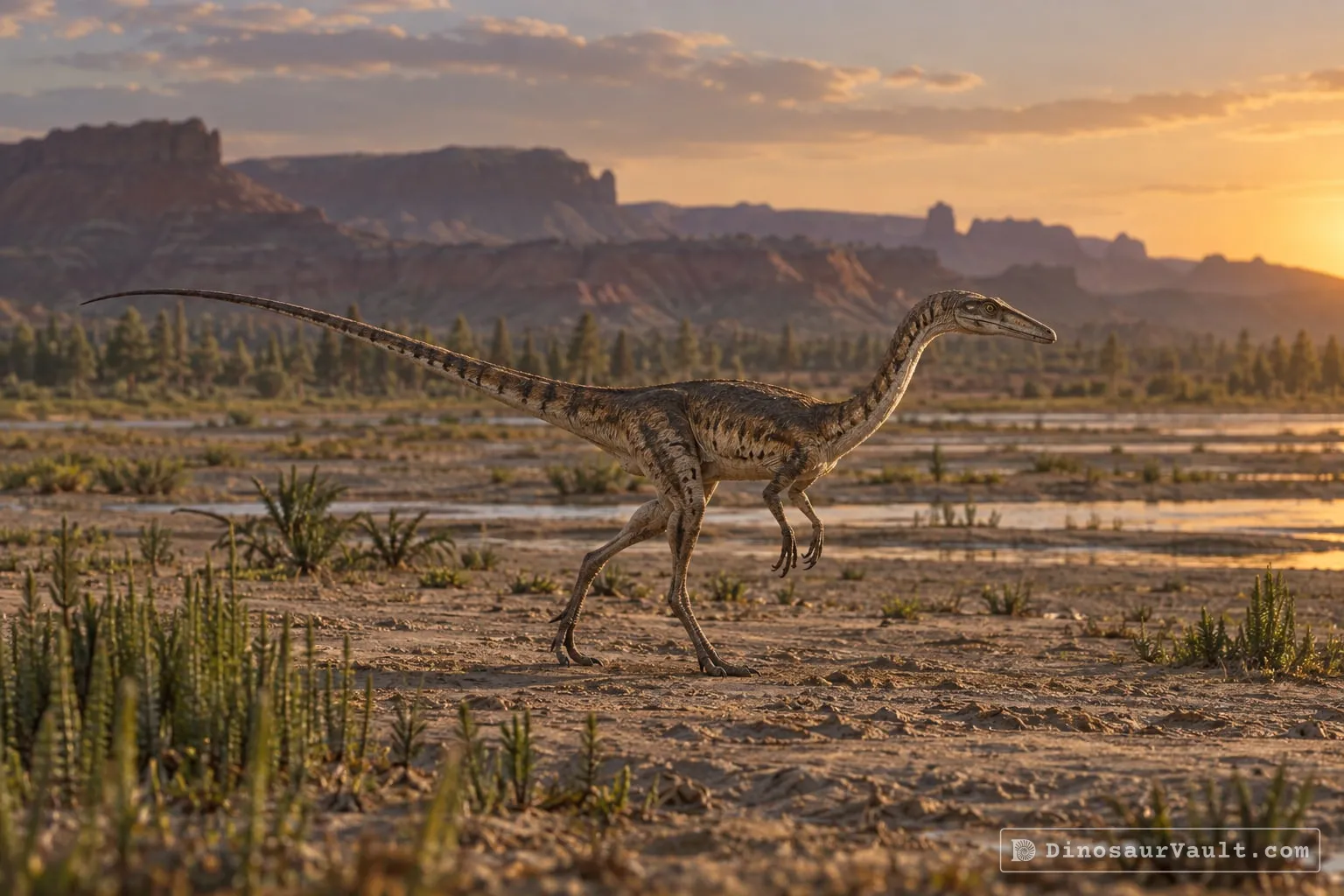
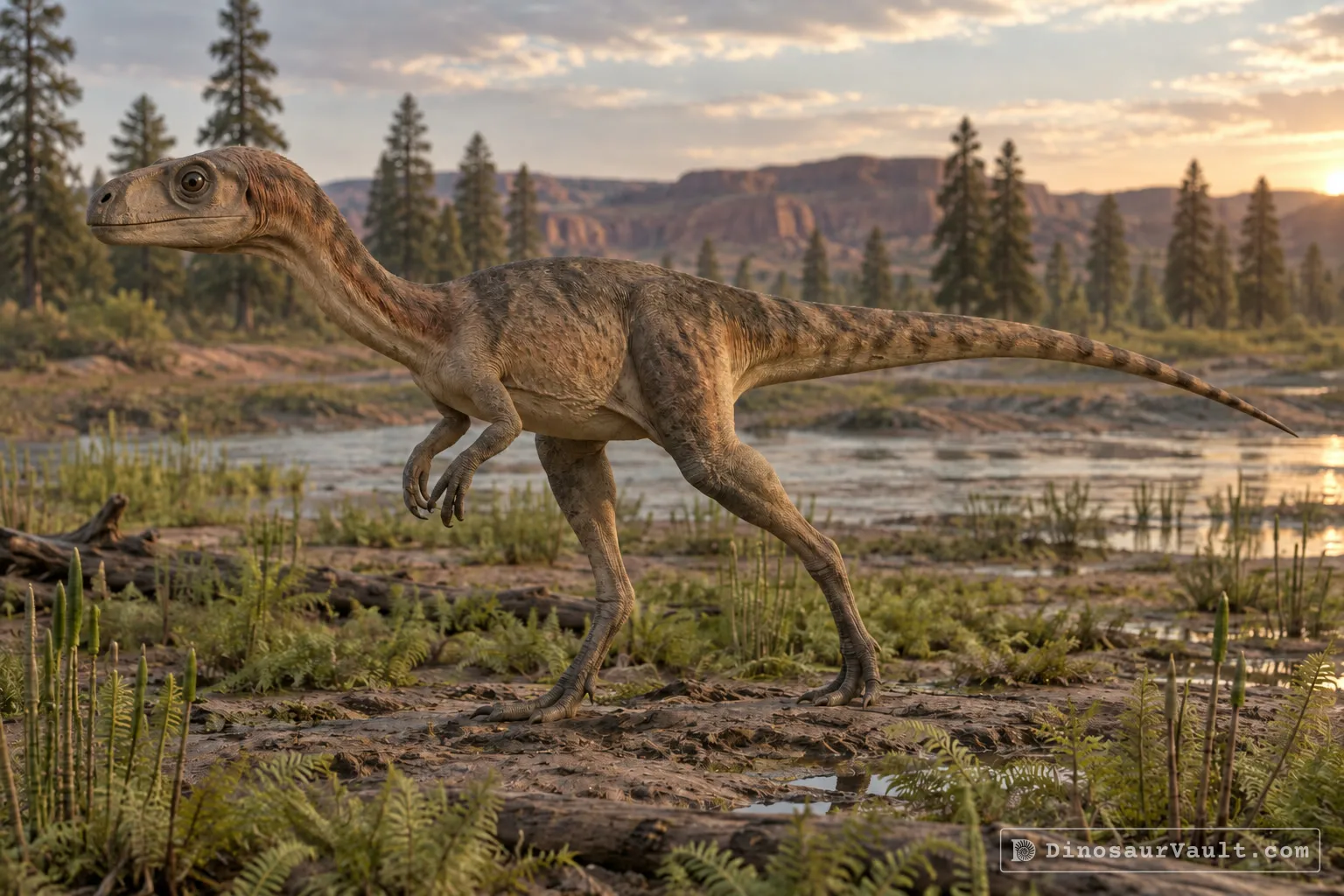
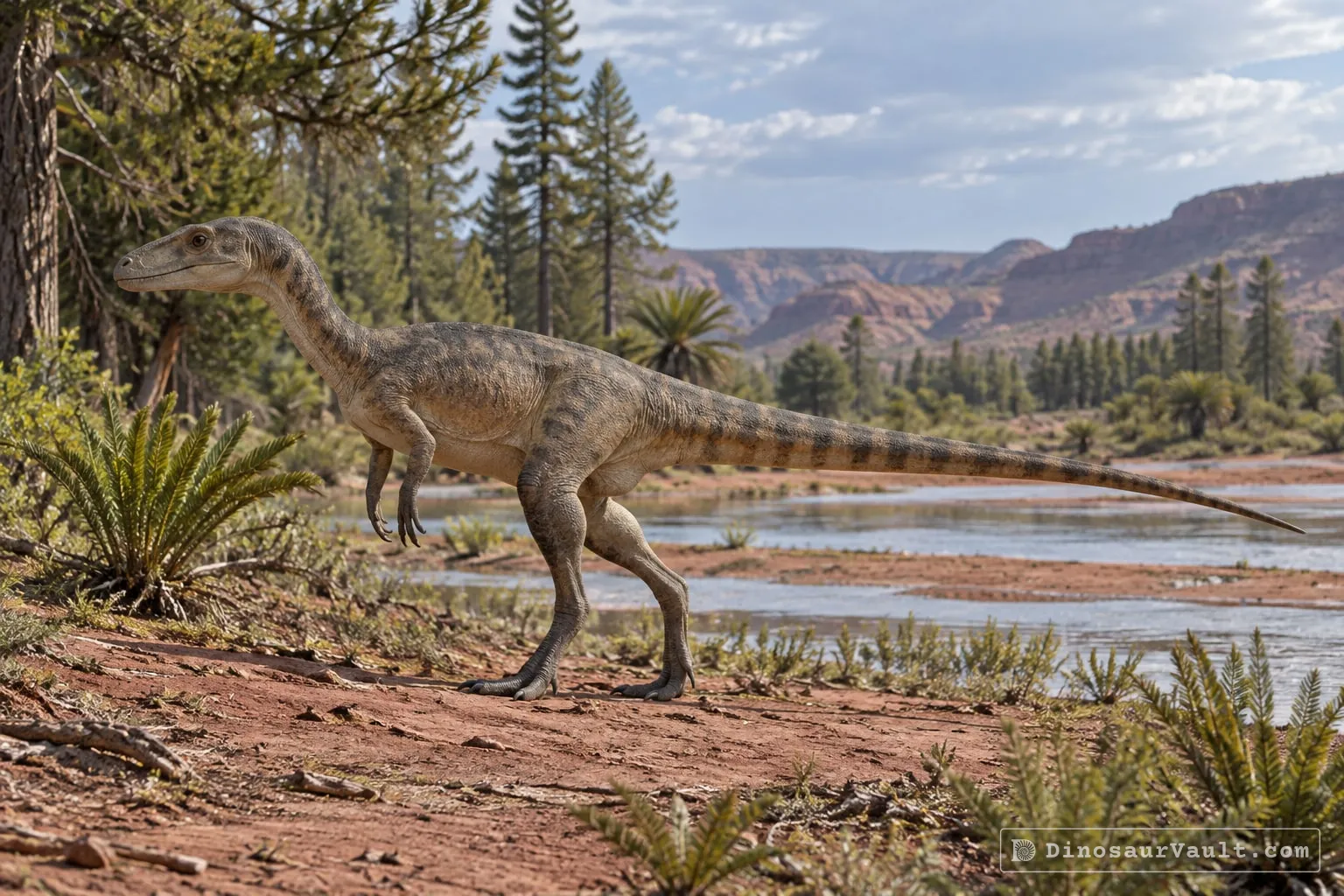
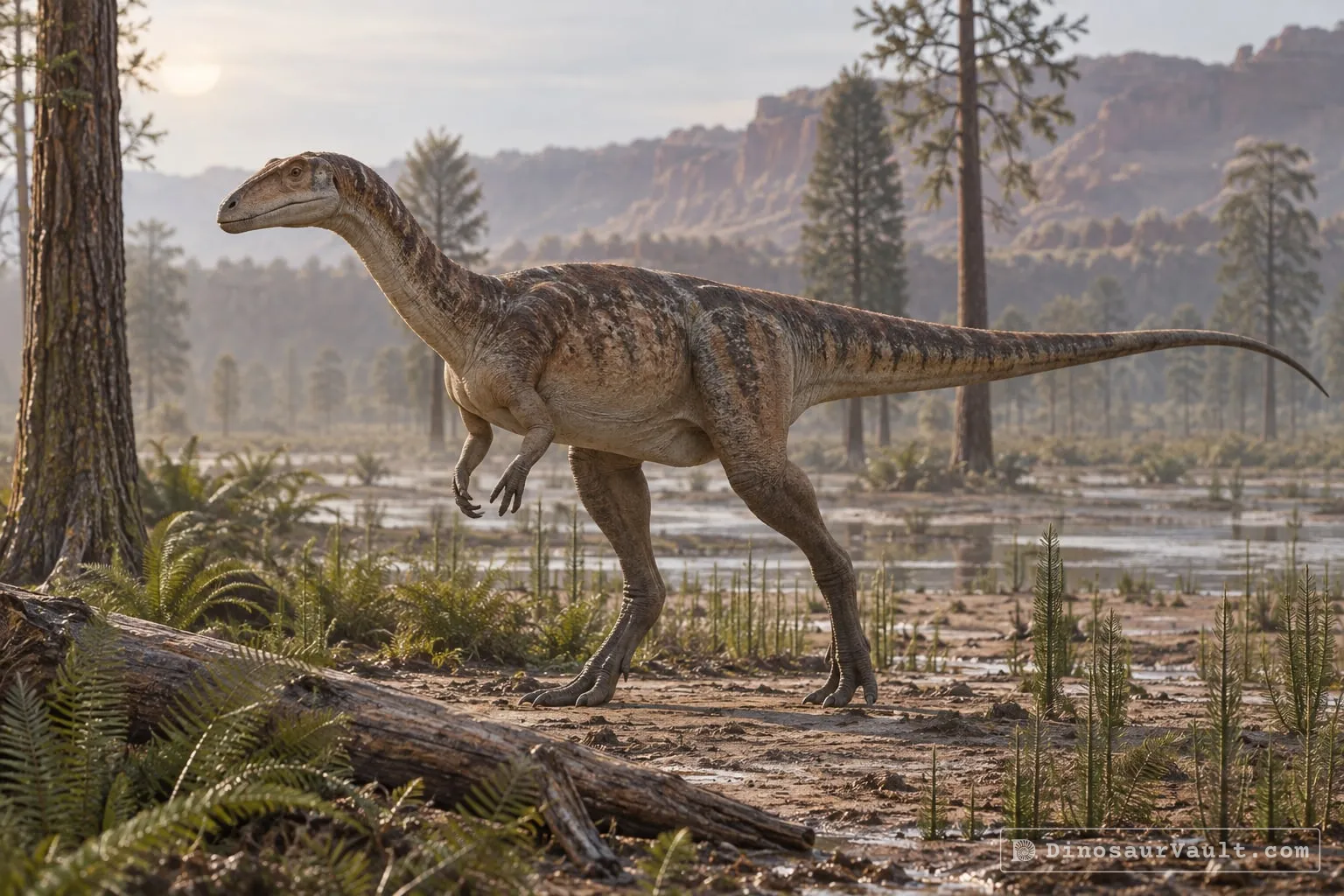
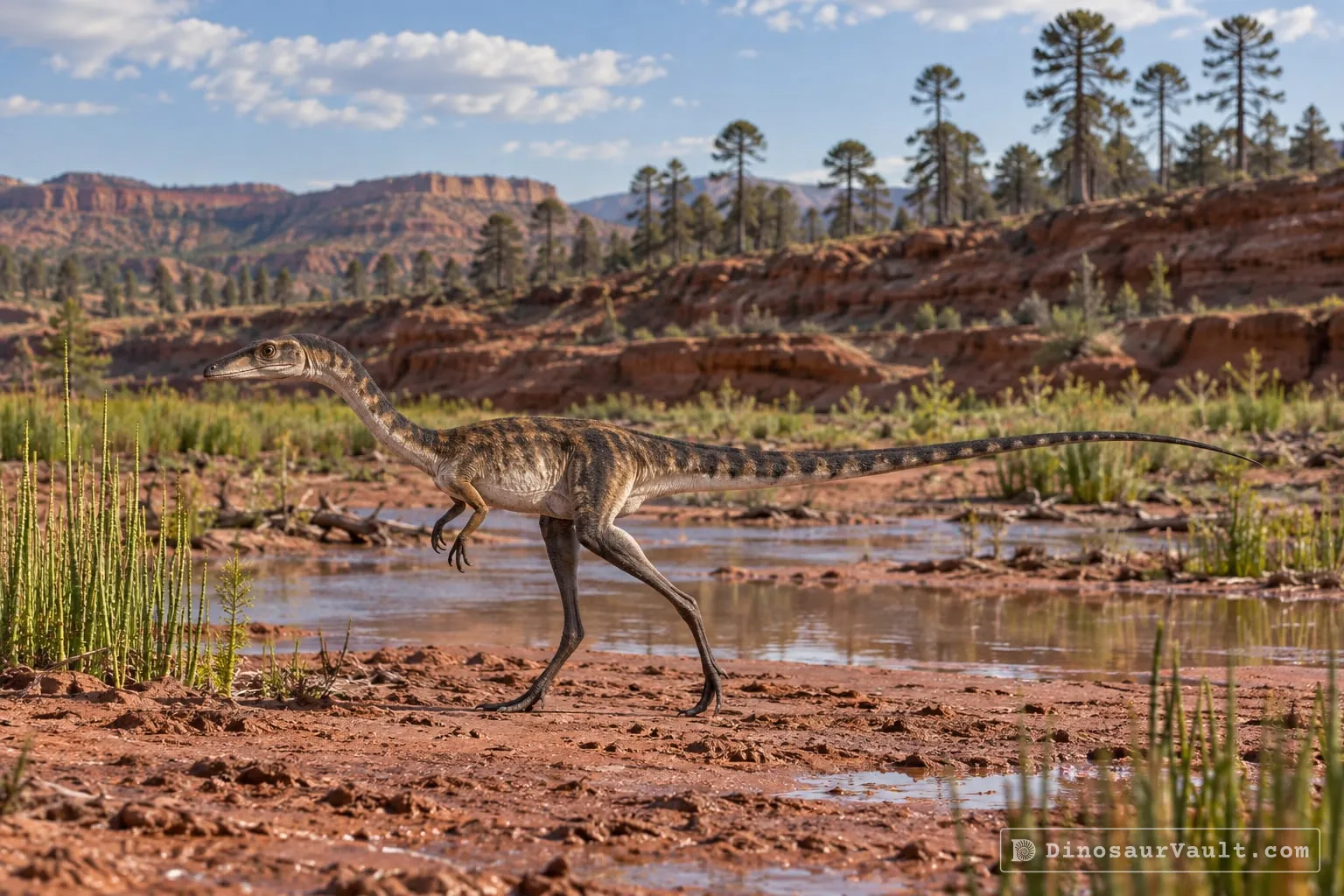
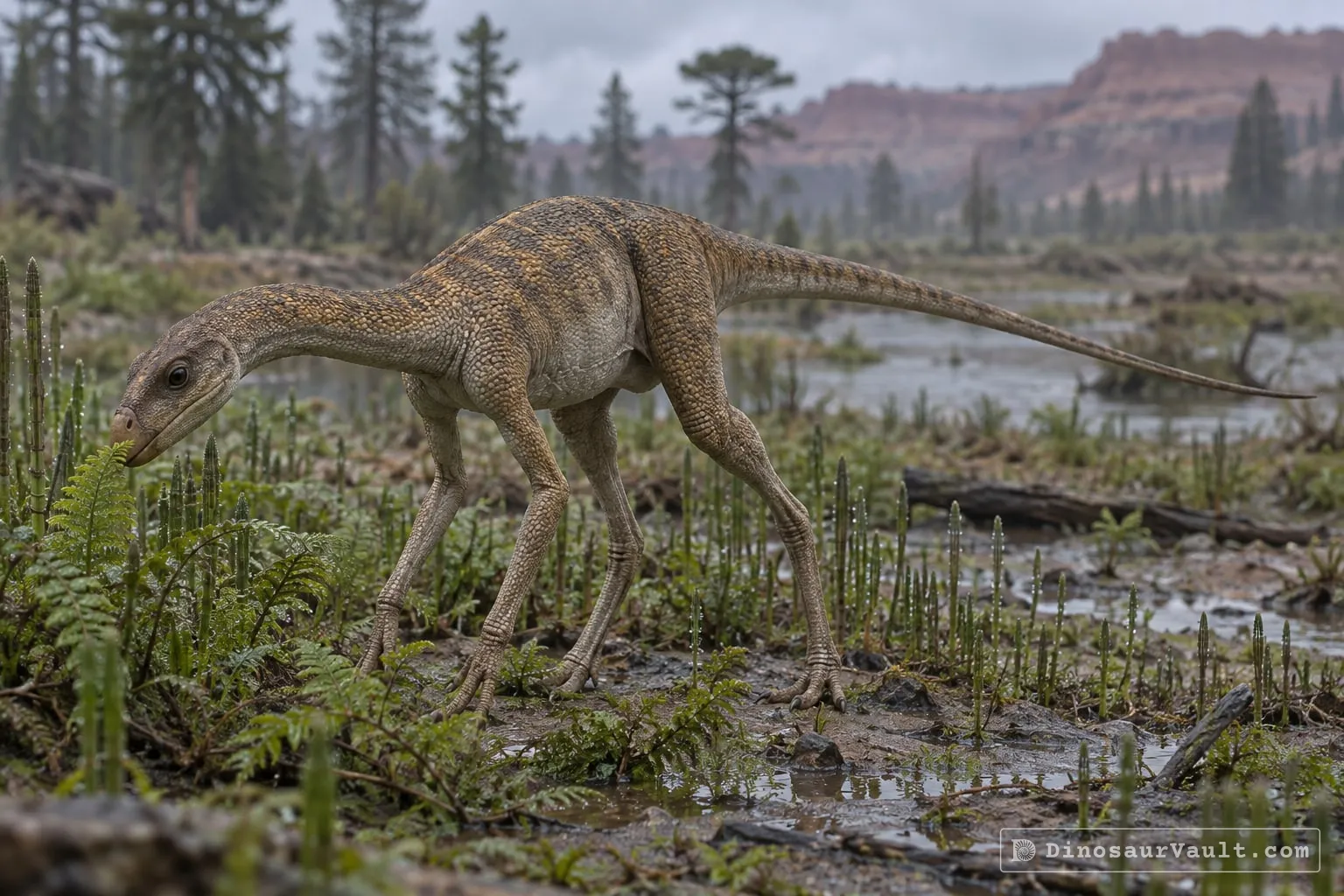
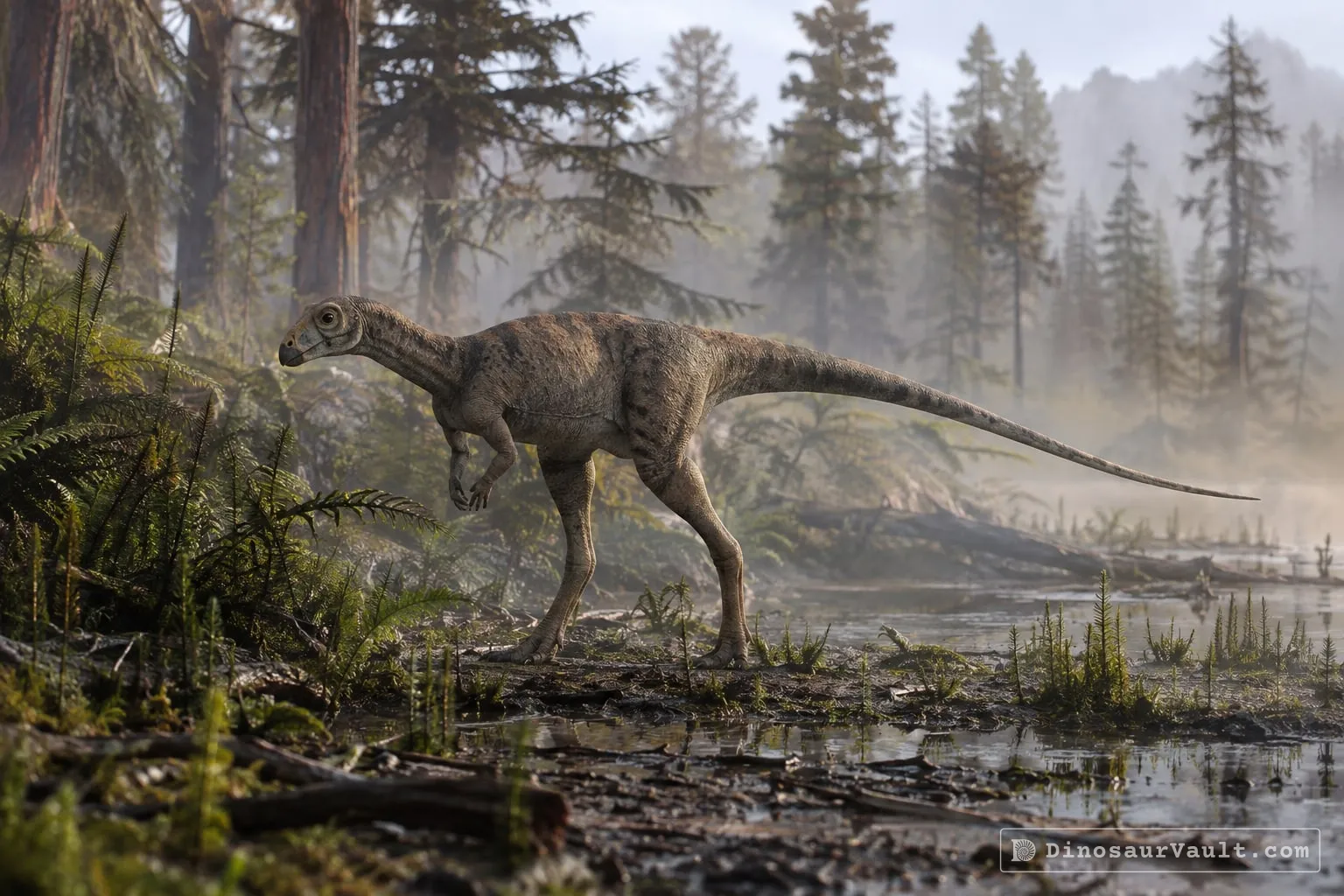


A rock formation can hold fossils laid down millions of years apart, so not every animal here met Eucoelophysis.
The evidence
The science behind Eucoelophysis
Which parts of the picture come from its own bones, and which come from its relatives.
From its own fossils
- The original specimen preserves hindlimb and foot bones, including a shinbone with a distinctive flat surface along its outer side.
- Additional hip and hindlimb bones have been assigned to Eucoelophysis by comparing their shapes with the original specimen.
- Referred jaw material carries leaf-shaped teeth that fused to the jaw as they developed.
Borrowed from relatives
- The complete body outline and four-legged stance draw on better-known silesaurids such as Silesaurus.
Still unknown
- Its skin covering and color.
- Whether silesaurids were close dinosaur cousins or early members of the plant-eating dinosaur branch.
- Its growth from hatchling to adult.
Discovery timeline
- 1999Named itSullivan & Lucas
- 2007Family treeNesbitt, Irmis & Parker
- 2007Same rocksIrmis et al.
- 2025New findBreeden et al.
Key papers
The research behind what we know of Eucoelophysis
Named it
Named Eucoelophysis from fragmentary bones in New Mexico, initially interpreting it as a theropod related to Coelophysis.
Eucoelophysis baldwinia new theropod dinosaur from the Upper Triassic of New Mexico, and the status of the original types ofCoelophysis. Journal of Vertebrate Paleontology 19: 81-90
Read the paper : Eucoelophysis baldwinia new theropod dinosaur from the Upper Triassic of New Mexico, and the status of the original types ofCoelophysis (opens in a new tab)Family tree
Reexamined the original bones and placed Eucoelophysis near Silesaurus, separating it from the theropods.
A critical re‐evaluation of the Late Triassic dinosaur taxa of North America. Journal of Systematic Palaeontology 5: 209-243
Read the paper : A critical re‐evaluation of the Late Triassic dinosaur taxa of North America (opens in a new tab)Same rocks
Found early dinosaurs alongside their close relatives in the Chinle Formation, showing that dinosaurs took over gradually.
A Late Triassic Dinosauromorph Assemblage from New Mexico and the Rise of Dinosaurs. Science 317: 358-361
Read the paper : A Late Triassic Dinosauromorph Assemblage from New Mexico and the Rise of Dinosaurs (opens in a new tab)New find
Assigned additional hip, leg and skull material to Eucoelophysis, including jaws with leaf-shaped teeth.
New specimens of Eucoelophysis baldwini from the Upper Triassic Chinle Formation, northern New Mexico, U.S.A., and their implications for the evolution of Silesauridae (Dinosauriformes). Journal of Vertebrate Paleontology 45
Read the paper : New specimens of Eucoelophysis baldwini from the Upper Triassic Chinle Formation, northern New Mexico, U.S.A., and their implications for the evolution of Silesauridae (Dinosauriformes) (opens in a new tab)
Close relatives
Other members of Silesauridae


Sources: Wikidata