Bagualosaurus
- Lived
- 237 to 227 million years ago, Late Triassic
- Found in
- Brazil
- Named by
- Pretto et al. 2019
Where its fossils were found
The evidence
Today

230 million years ago
Habitat
It lived on the river plains of the Santa Maria Formation in Brazil. Other dinosaurs from these rocks include Buriolestes, Saturnalia and Staurikosaurus.
Field notes
About Bagualosaurus
What it was like
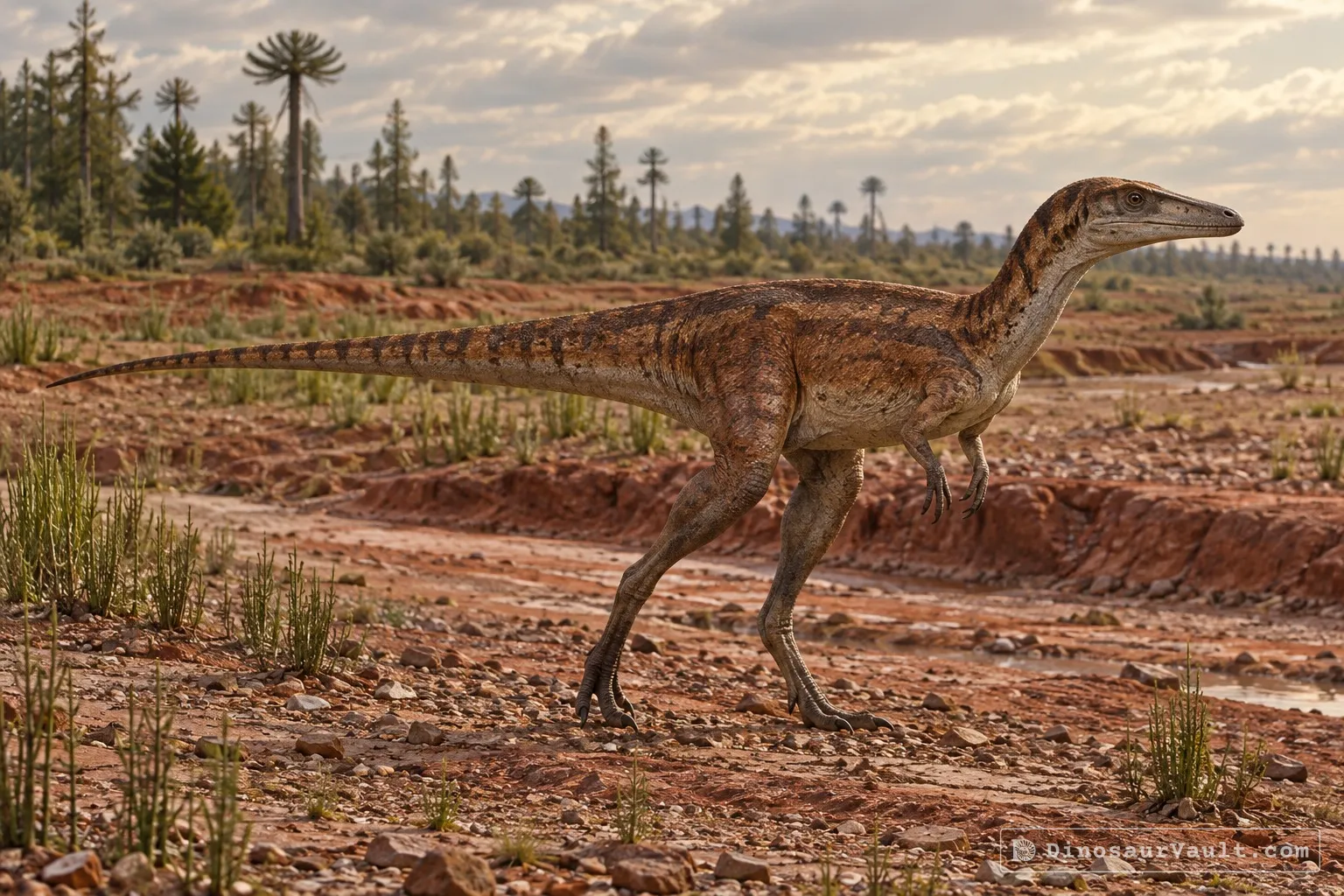
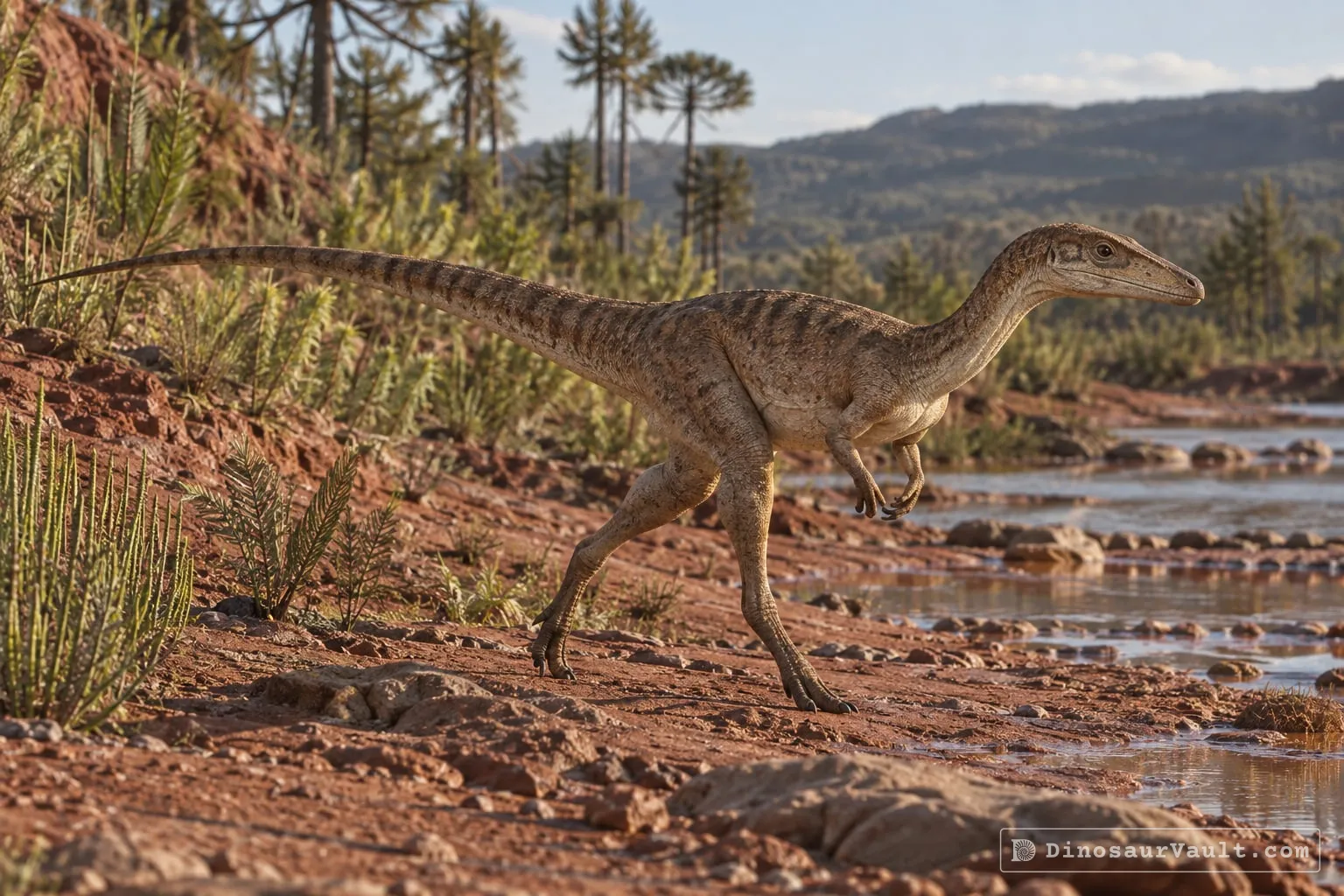
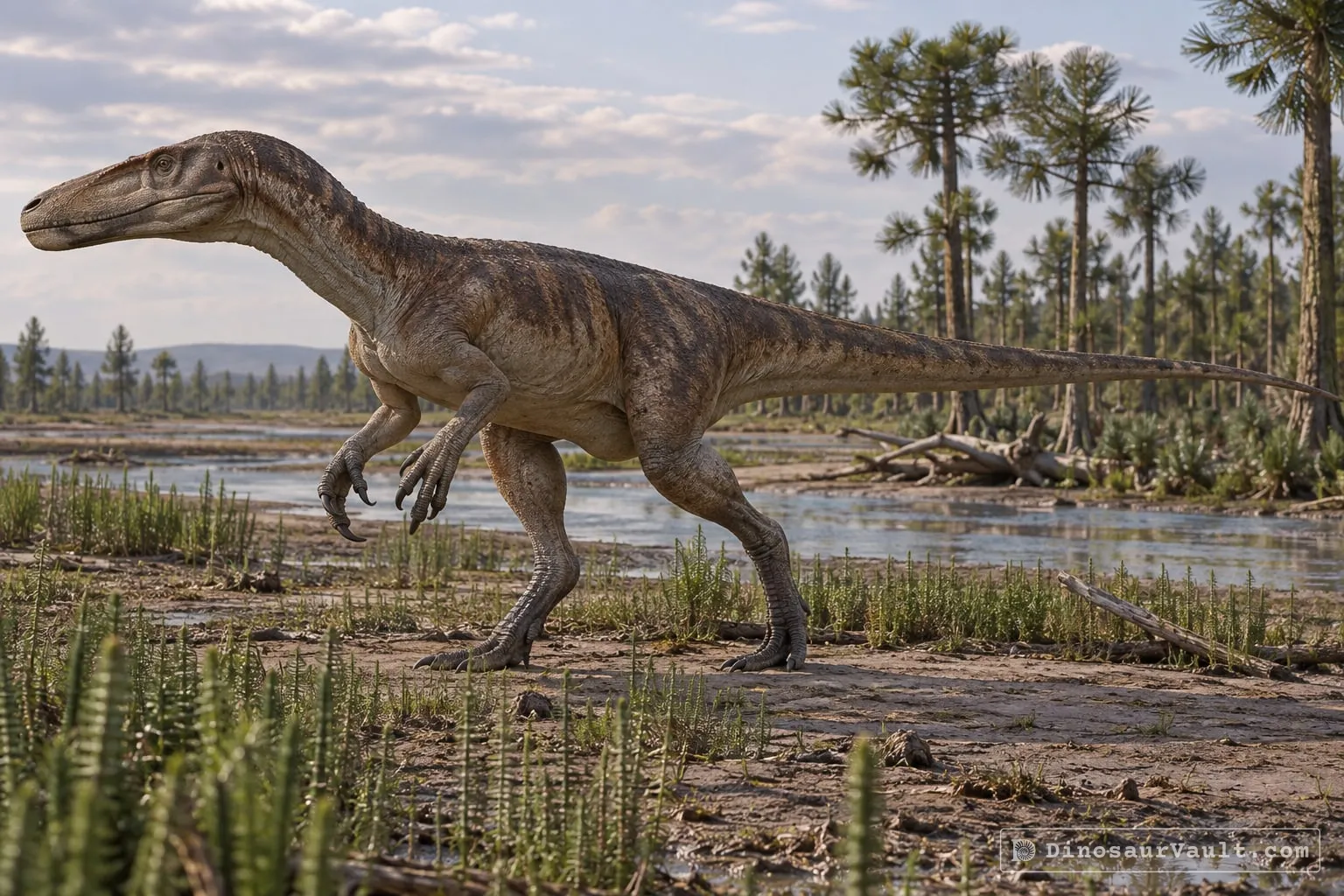
Bagualosaurus was an early sauropodomorph, a small plant eater that walked on two legs. It was heavier than its relatives of the same age, and its teeth suggest a diet of plants.
Its world
It lived in the Late Triassic, in what is now Brazil. It comes from the Santa Maria Formation, home to some of the oldest dinosaurs known, including Staurikosaurus, Buriolestes and Saturnalia.
How it was found
Pretto and colleagues named Bagualosaurus in 2019.
Field gallery
More views of Bagualosaurus
Scenes reconstructed from the available fossil evidence.
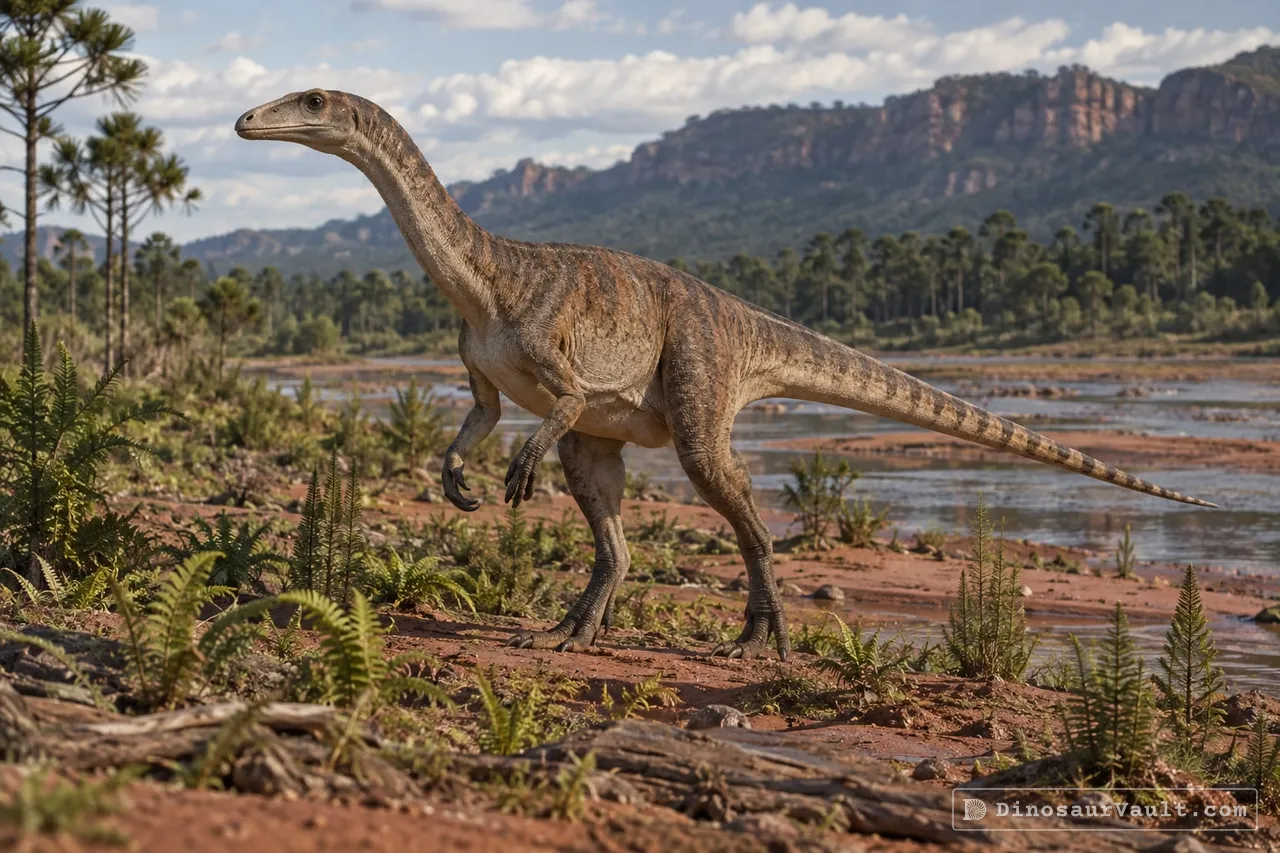
1 of 3
Lived alongside
Found in the same rock formations
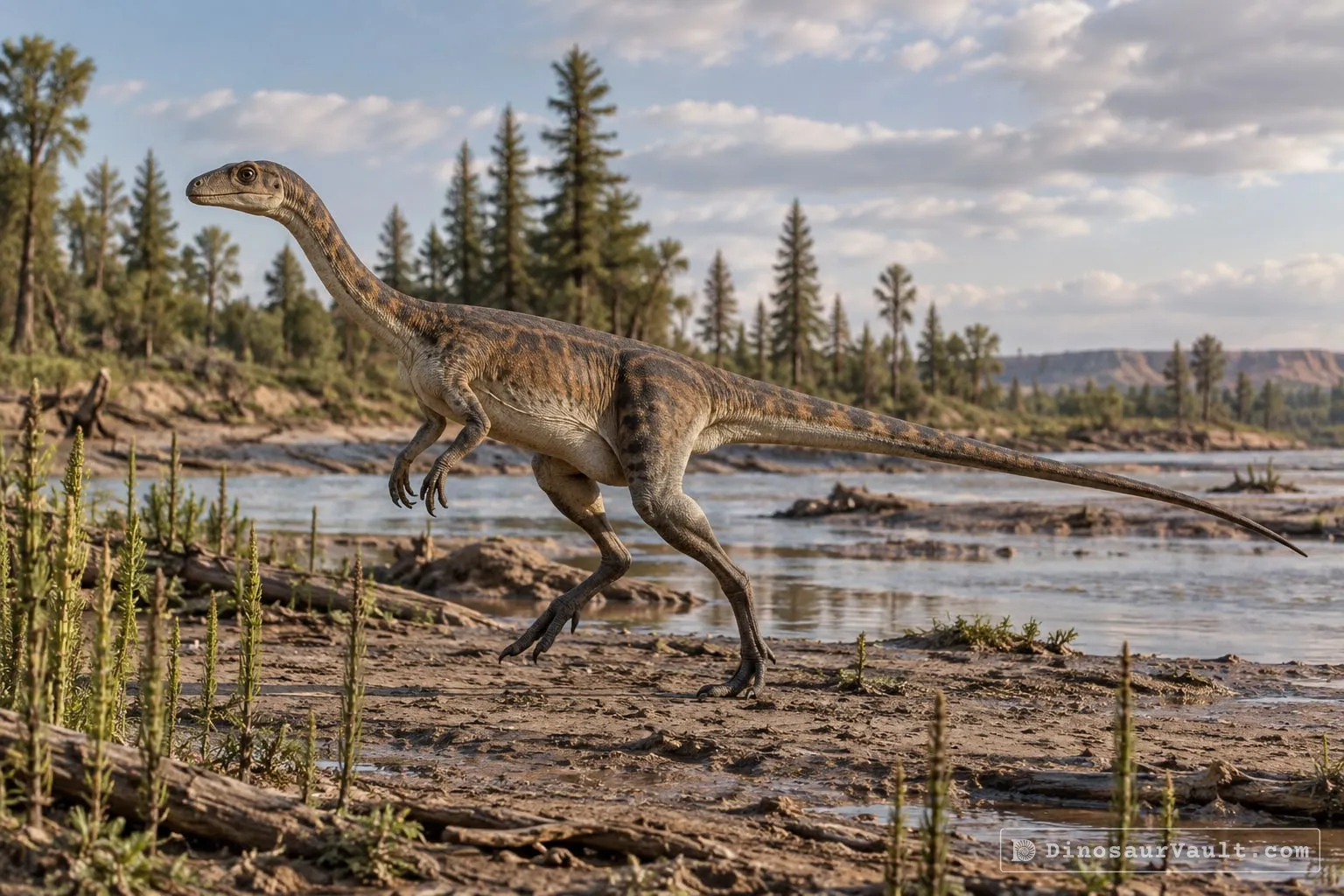
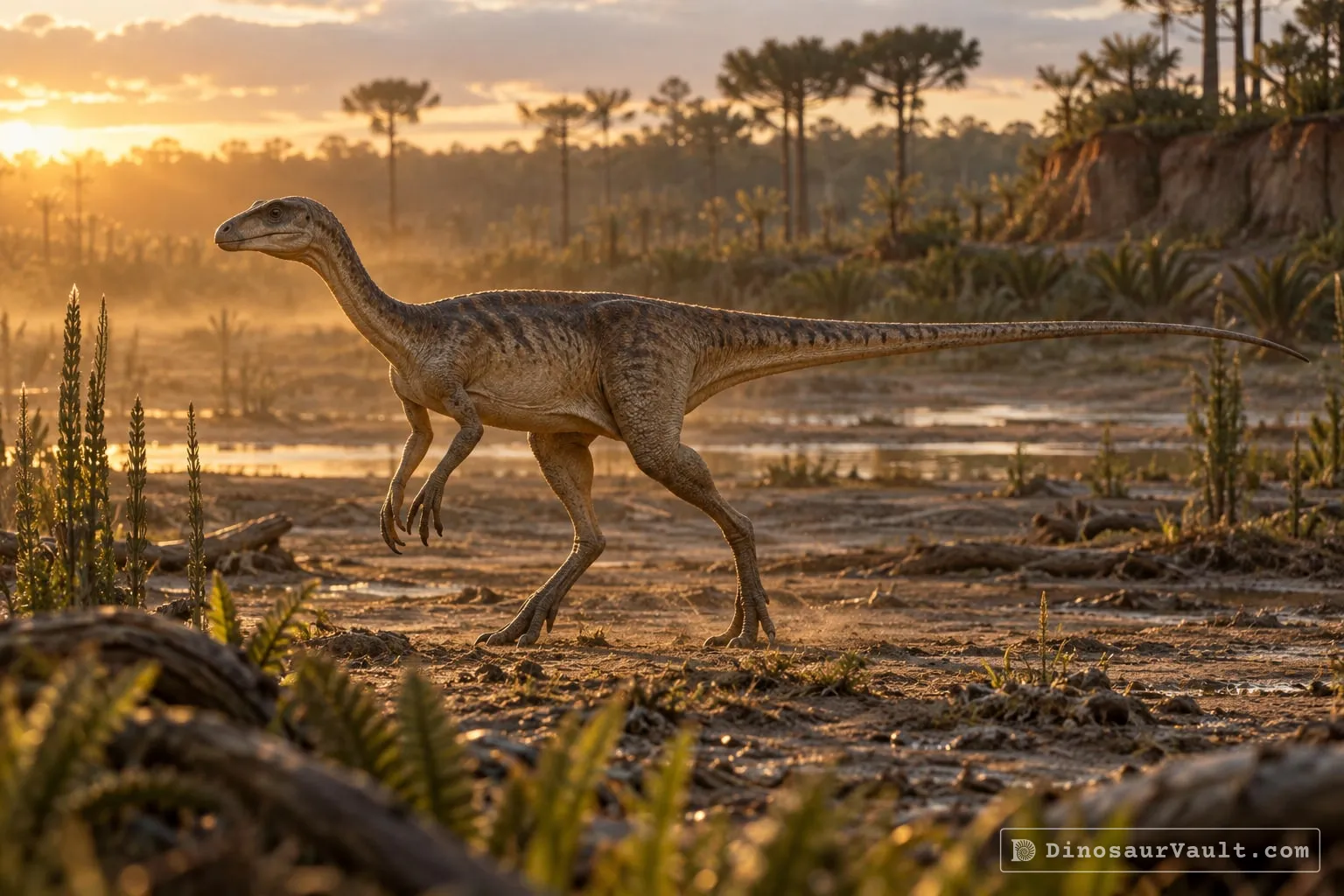
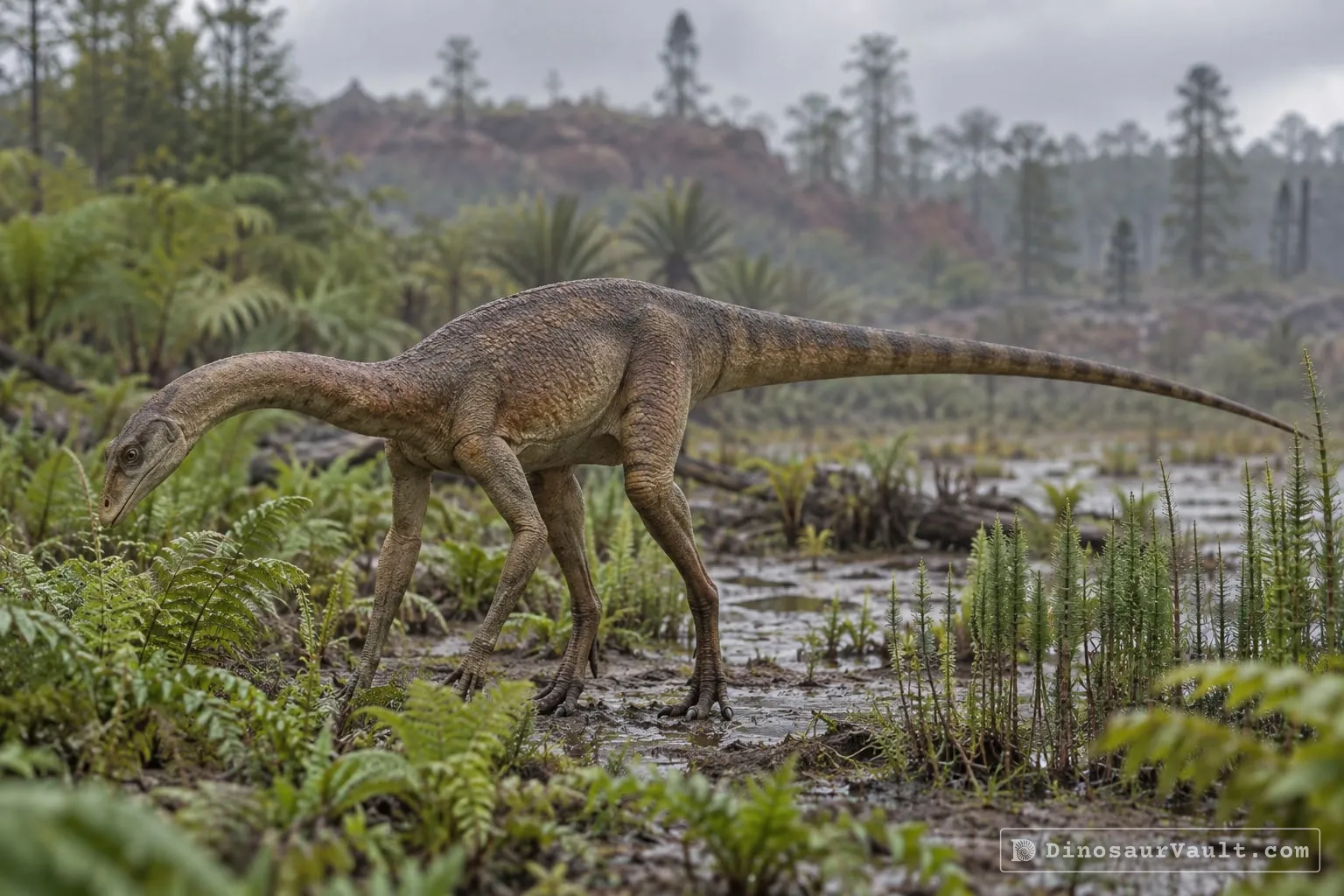


A rock formation can hold fossils laid down millions of years apart, so not every animal here met Bagualosaurus.
The evidence
The science behind Bagualosaurus
Which parts of the picture come from its own bones, and which come from its relatives.
From its own fossils
- A partial skeleton preserves the jaws, backbone, hips and much of the hind legs.
- The skull was short and slender, with large eye sockets and teeth along the front of the jaws.
- Its leaf-shaped teeth had coarse serrations, a shape suited to eating plants.
Borrowed from relatives
- The missing neck, arms and upper skull are restored with help from early sauropodomorphs such as Eoraptor.
- Eoraptor provides a model for grasping hands with an inward-pointing thumb claw.
Still unknown
- Its skin texture and color.
- The full shape of its neck and hands.
- Which plants it ate.
Discovery timeline
- 2012Close relativeSereno, Martínez & Alcober
- 2019Named itPretto, Langer & Schultz
- 2026SkullTerras et al.
Key papers
The research behind what we know of Bagualosaurus
Close relative
Described the skeleton of Eoraptor, including its grasping hands and inward-pointing thumb claw, useful comparisons for missing parts of Bagualosaurus.
Osteology ofEoraptor lunensis(Dinosauria, Sauropodomorpha). Journal of Vertebrate Paleontology 32: 83-179
Read the paper : Osteology ofEoraptor lunensis(Dinosauria, Sauropodomorpha) (opens in a new tab)Named it
Described a plant eater whose small head and larger body help trace the shift from the earliest sauropodomorphs toward later forms.
A new dinosaur (Saurischia: Sauropodomorpha) from the Late Triassic of Brazil provides insights on the evolution of sauropodomorph body plan. Zoological Journal of the Linnean Society 185: 388-416
No link available
Skull
Compared jaw openings and tooth proportions in early reptiles, including Bagualosaurus, and supported lips covering the teeth.
Inferred presence of extraoral tissues in Triassic archosauromorphs and the evolutionary implications for the clade Sauropsida. Palaeontology 69
Read the paper : Inferred presence of extraoral tissues in Triassic archosauromorphs and the evolutionary implications for the clade Sauropsida (opens in a new tab)
Sources: Wikidata