Gnathovorax
"jaw hungry"
- Lived
- 234 to 227 million years ago, Late Triassic
- Group
- Early dinosaurs, Herrerasauridae
- Found in
- Brazil
- Named by
- Pacheco et al. 2019
Where its fossils were found
The evidence
Today

230 million years ago
Habitat
It lived in the lowlands of what is now southern Brazil. Other early dinosaurs from the Santa Maria Formation include Staurikosaurus, Buriolestes and Saturnalia.
Field notes
About Gnathovorax
What it was like
Gnathovorax was an early meat eater, a relative of Herrerasaurus. It had a big head with large, curved teeth, strong arms with sharp claws, and long legs for running.
Its skeleton is one of the best preserved of its family, including a complete skull, and scans of its braincase show it had good eyesight and balance.
Its world
It lived about 234 to 227 million years ago, in the Late Triassic, in what is now southern Brazil. Its skeleton comes from the Santa Maria Formation, where it was a top hunter among the early dinosaurs Staurikosaurus, Buriolestes and Saturnalia.
How it was found
Pacheco and colleagues named Gnathovorax in 2019, from a single, nearly complete skeleton.
Field gallery
More views of Gnathovorax
Scenes reconstructed from the available fossil evidence.
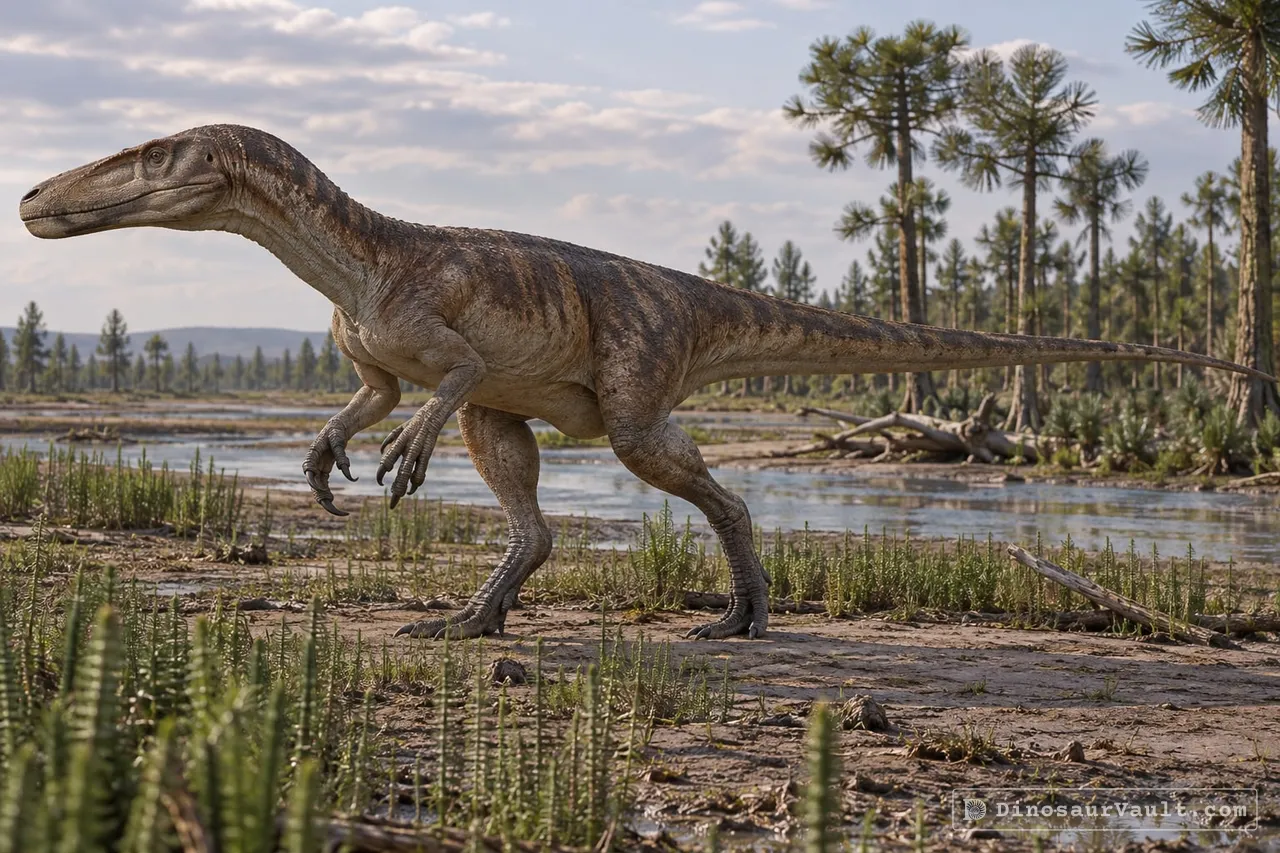
1 of 3
Lived alongside
Found in the same rock formations
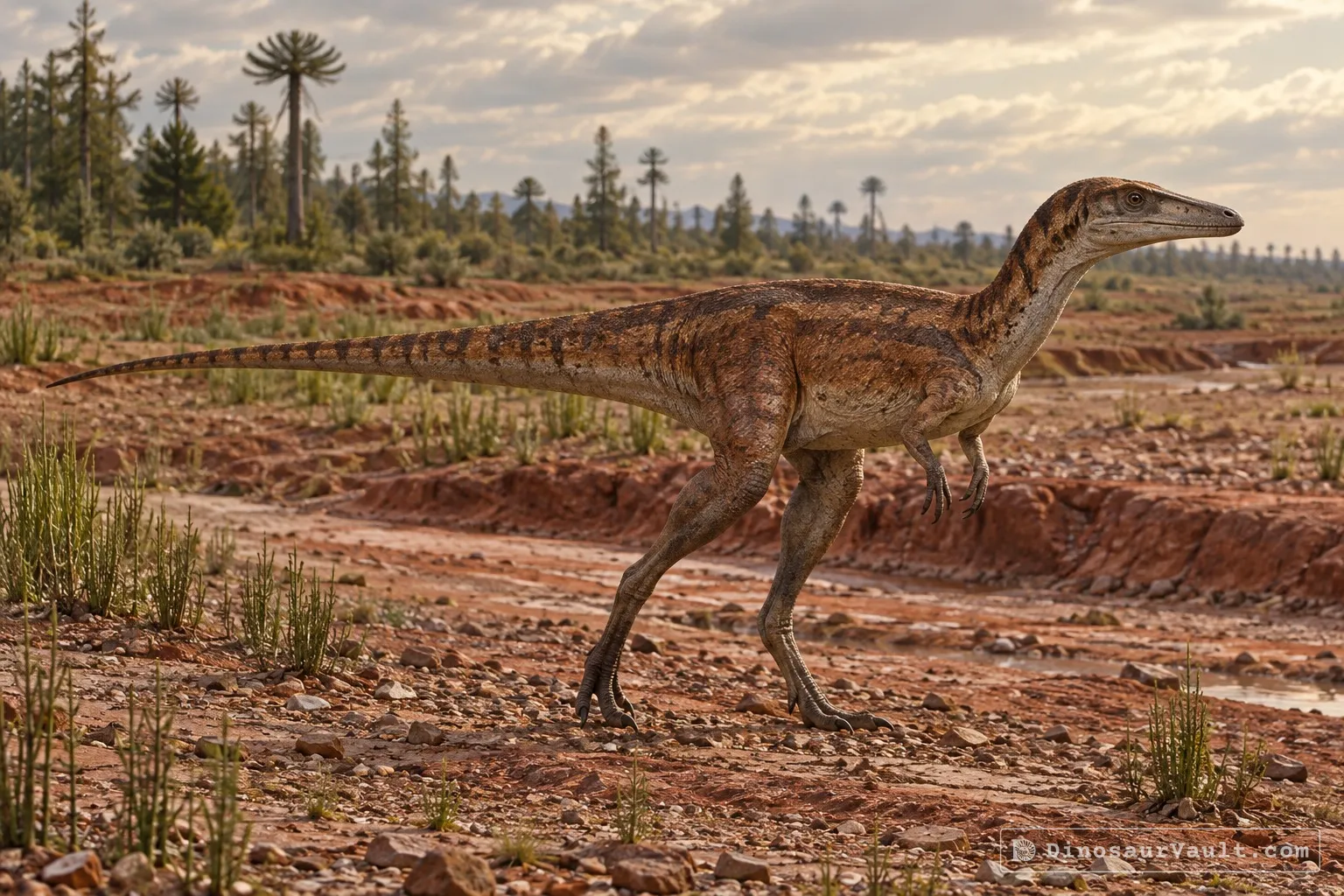
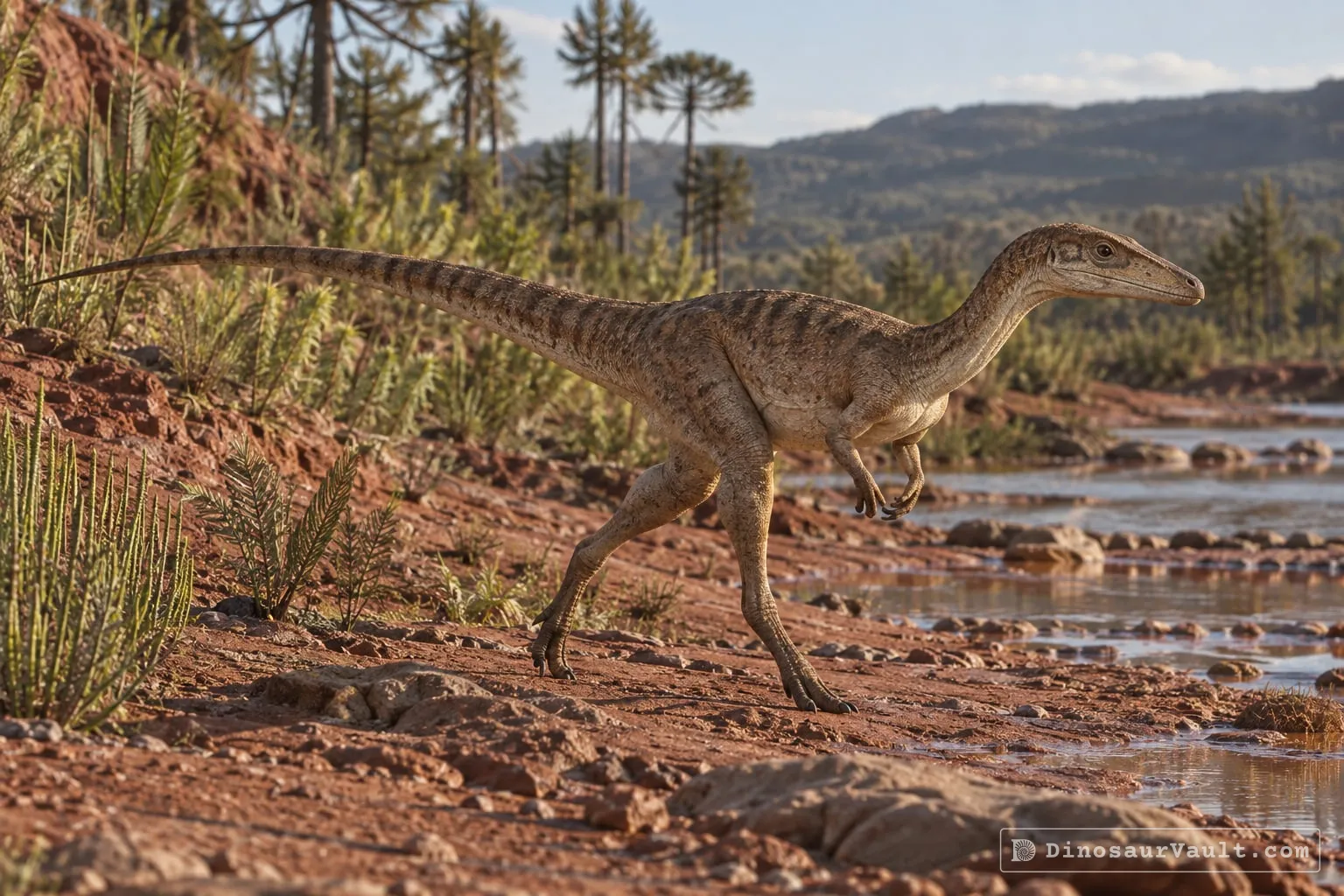
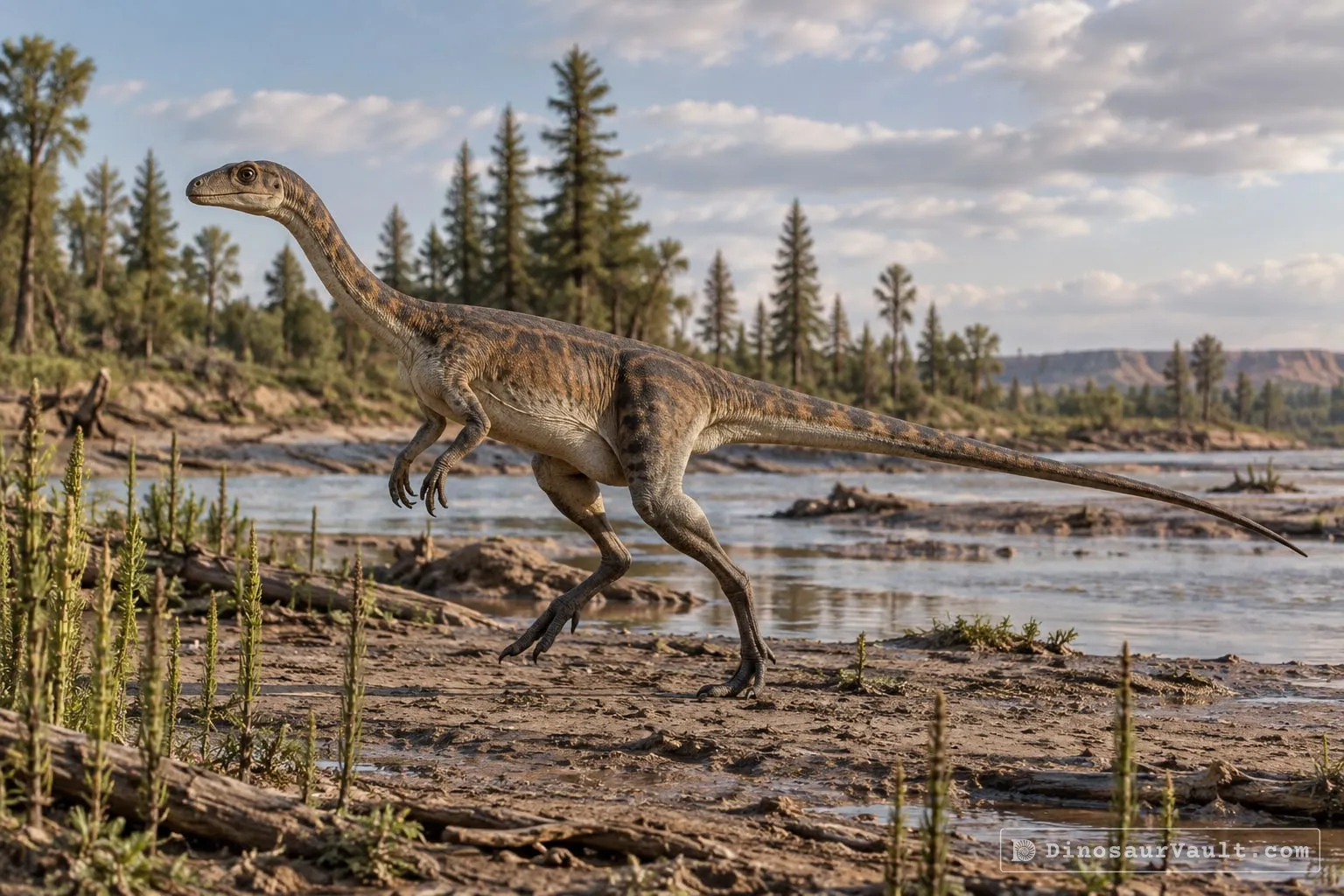
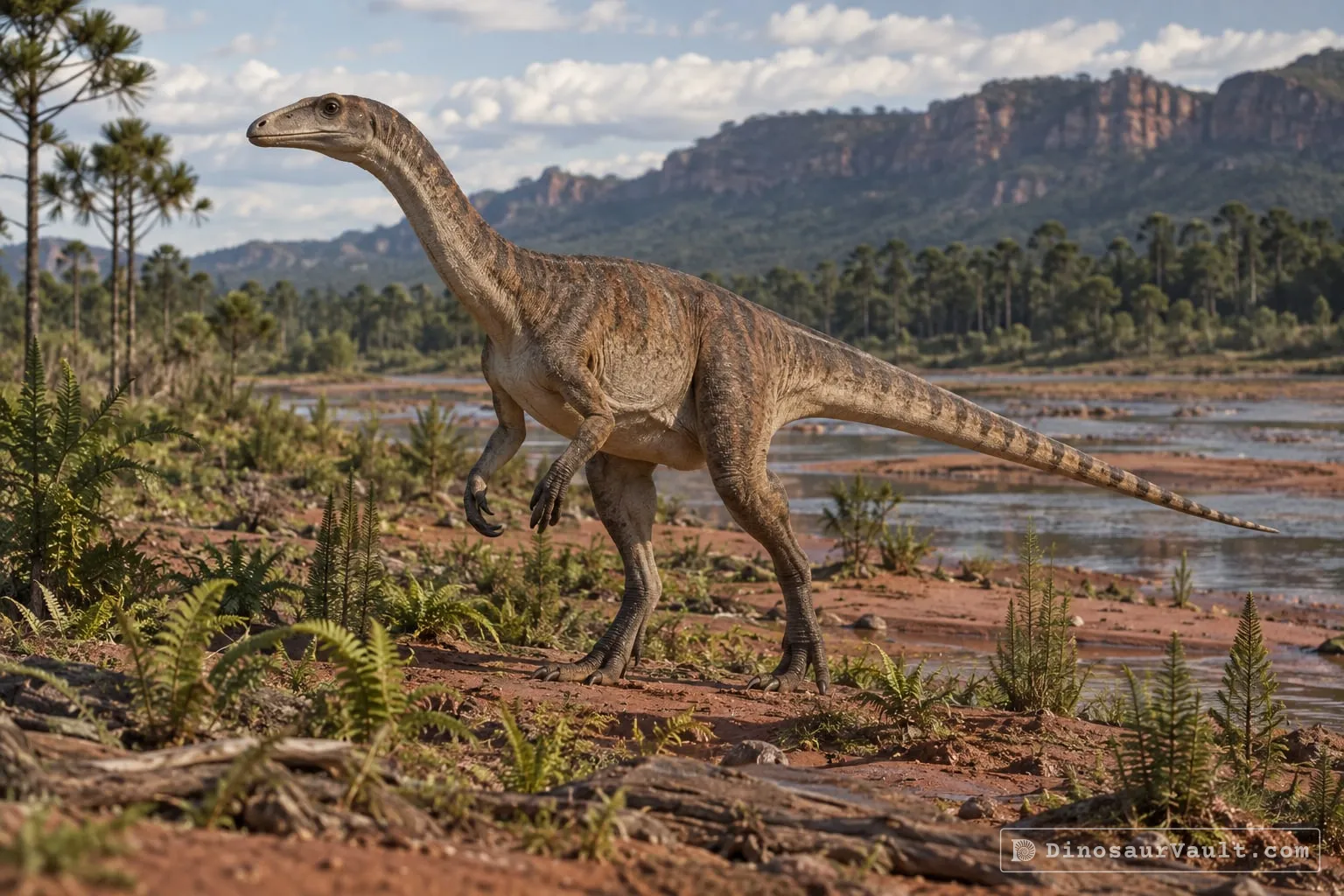
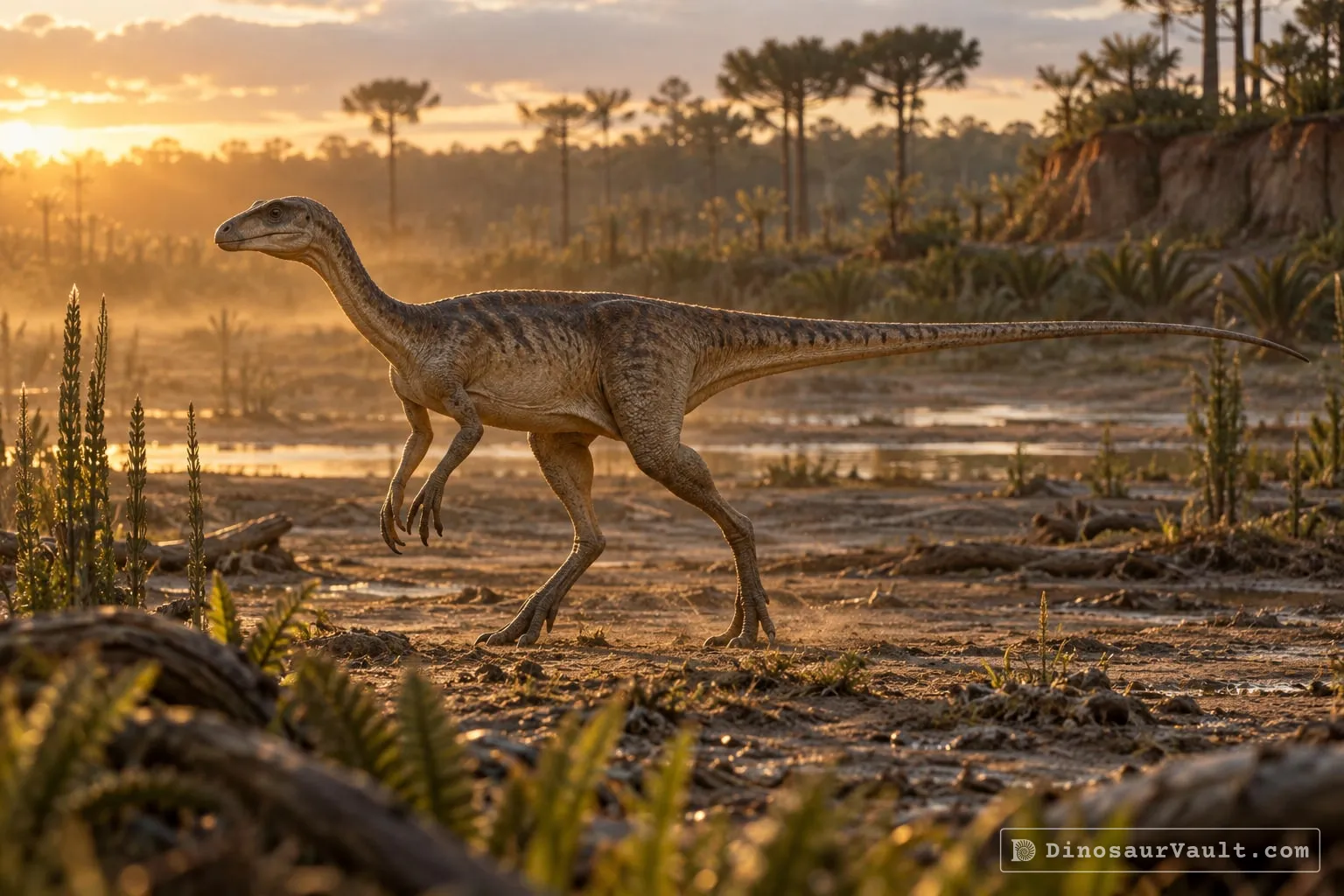


A rock formation can hold fossils laid down millions of years apart, so not every animal here met Gnathovorax.
The evidence
The science behind Gnathovorax
Which parts of the picture come from its own bones, and which come from its relatives.
From its own fossils
- A nearly complete skeleton preserves the skull, backbone, hands and feet.
- Curved teeth and sharp claws suit a meat-eating animal.
- Scans of its neck bones show internal spaces that were not filled by invading air sacs.
Borrowed from relatives
- Almost the whole body is known from its own bones, so little skeletal anatomy needs to be borrowed from Herrerasaurus or other relatives.
Still unknown
- Its skin covering and color.
- Whether it hunted alone or in groups.
- How its body changed as it grew.
Discovery timeline
- 2019Named itPacheco et al.
- 2020Same rocksMüller et al.
- 2022Full descriptionAureliano et al.
Key papers
The research behind what we know of Gnathovorax
Named it
Described a nearly complete early predator and used its teeth and braincase to explore how the first predatory dinosaurs lived.
Gnathovorax cabreirai: a new early dinosaur and the origin and initial radiation of predatory dinosaurs. PeerJ 7: e7963
Read the paper : Gnathovorax cabreirai: a new early dinosaur and the origin and initial radiation of predatory dinosaurs (opens in a new tab)Same rocks
Reconstructed the brain cavity of Buriolestes, another early dinosaur from the same formation, and linked its sensory anatomy to tracking moving prey.
The endocranial anatomy of Buriolestes schultzi (Dinosauria: Saurischia) and the early evolution of brain tissues in sauropodomorph dinosaurs. Journal of Anatomy 238: 809-827
Read the paper : The endocranial anatomy of Buriolestes schultzi (Dinosauria: Saurischia) and the early evolution of brain tissues in sauropodomorph dinosaurs (opens in a new tab)Full description
Scanned backbone bones of Gnathovorax, Buriolestes and Pampadromaeus and found no internal chambers formed by invading air sacs.
The absence of an invasive air sac system in the earliest dinosaurs suggests multiple origins of vertebral pneumaticity. Scientific Reports 12
Read the paper : The absence of an invasive air sac system in the earliest dinosaurs suggests multiple origins of vertebral pneumaticity (opens in a new tab)
Close relatives
Other members of Herrerasauridae


Sources: Wikidata