Staurikosaurus
STOR-ik-oh-SORE-us
"Southern Cross lizard"
Type species Staurikosaurus pricei
- Lived
- 237 to 227 million years ago, Late Triassic
- Length
- about 2 m (7 ft)
- Group
- Early dinosaurs, Herrerasauridae
- Found in
- Brazil
- Named by
- Colbert 1970
Size comparison
To scale

Scale in metersOutline: typical early dinosaur shape
Where its fossils were found
The evidence
Today

230 million years ago
Habitat
It lived on river floodplains in what is now Brazil. Other dinosaurs from the Santa Maria rocks include Saturnalia, Gnathovorax and Buriolestes.
Field notes
About Staurikosaurus
What it was like
Staurikosaurus was one of the earliest dinosaurs, a slim two-legged predator about 2 meters (7 feet) long. It belonged to the herrerasaurids, a family of early hunters with sharp, curved teeth and a long tail for balance.
Its world
It lived in the Late Triassic in what is now Brazil. Its bones come from the Santa Maria Formation, one of the richest sources of early dinosaurs. Other early dinosaurs from these rocks include the small plant eater Saturnalia and the predator Gnathovorax.
How it was found
Colbert named Staurikosaurus in 1970. The type species is Staurikosaurus pricei. Its name comes from a star pattern seen only from the Southern Hemisphere, and it was one of the first Triassic dinosaurs described from South America.
Field gallery
More views of Staurikosaurus
Scenes reconstructed from the available fossil evidence.
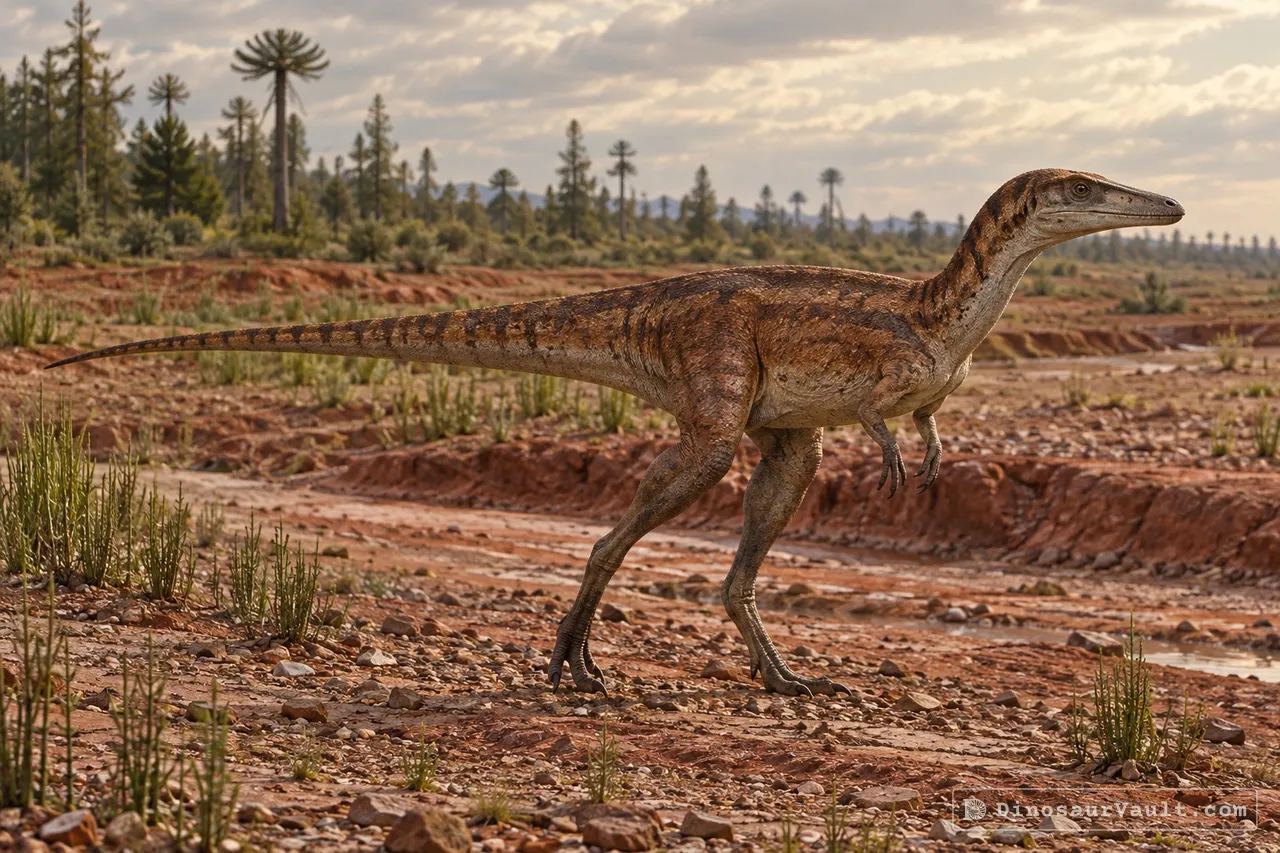
1 of 3
Lived alongside
Found in the same rock formations
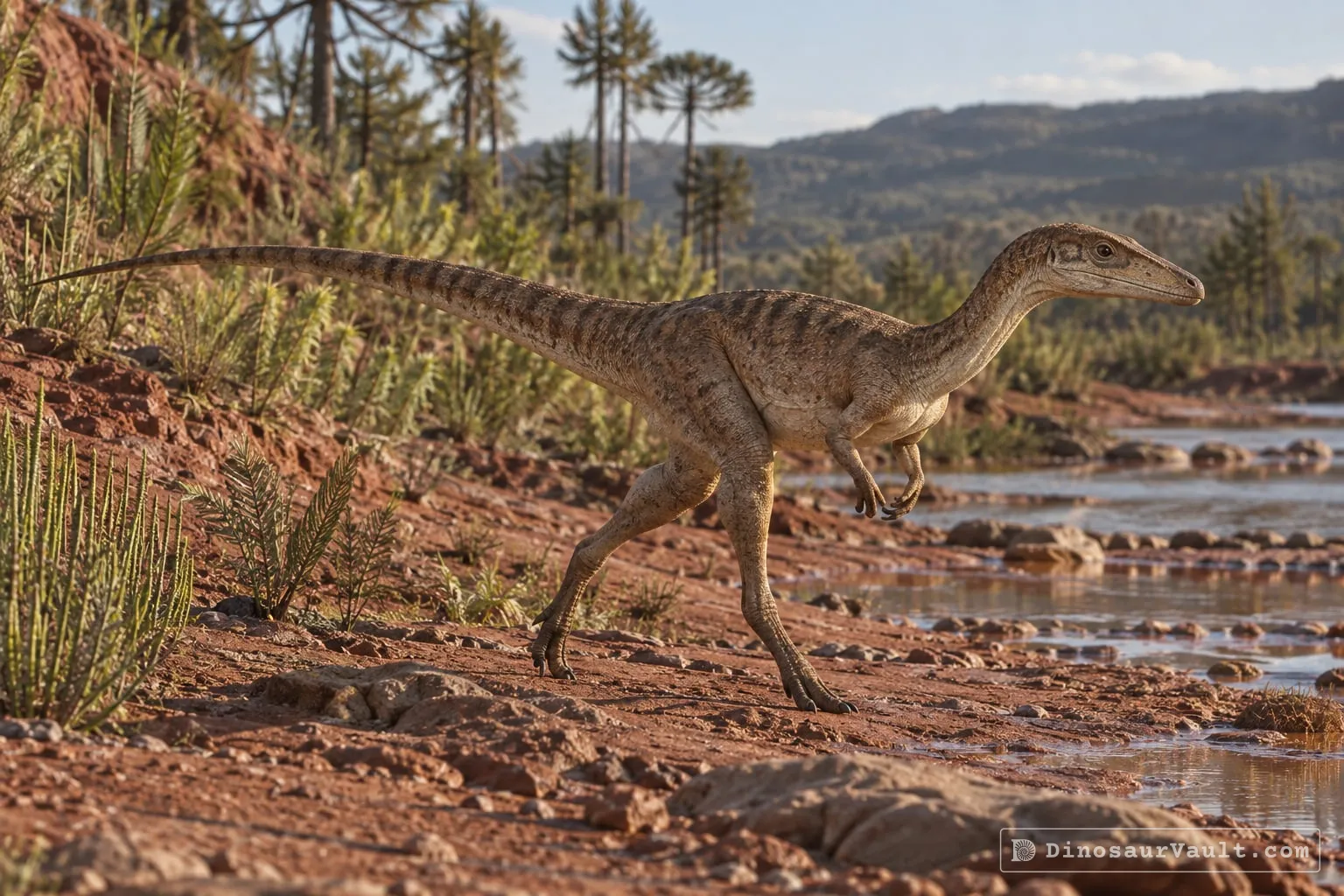
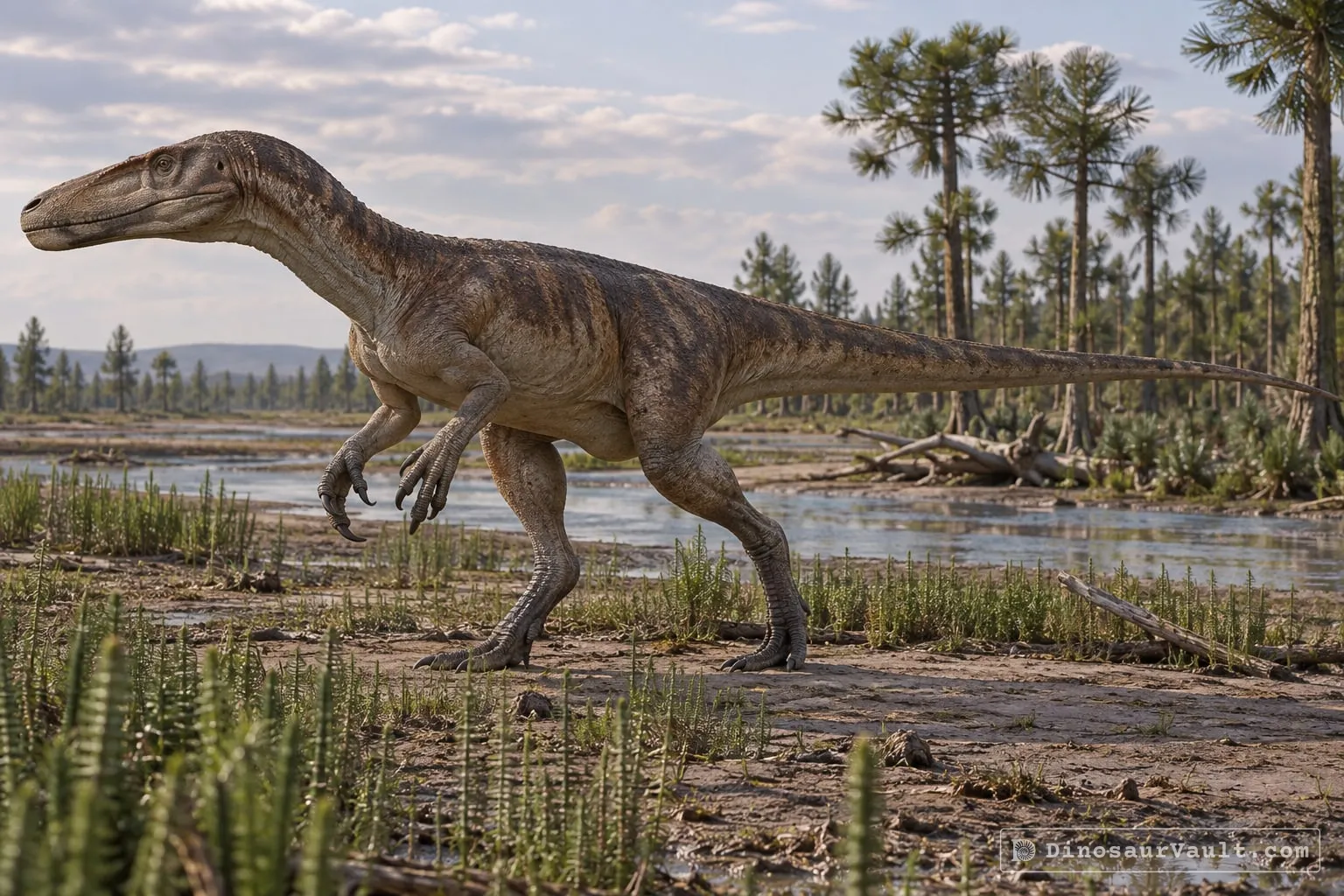
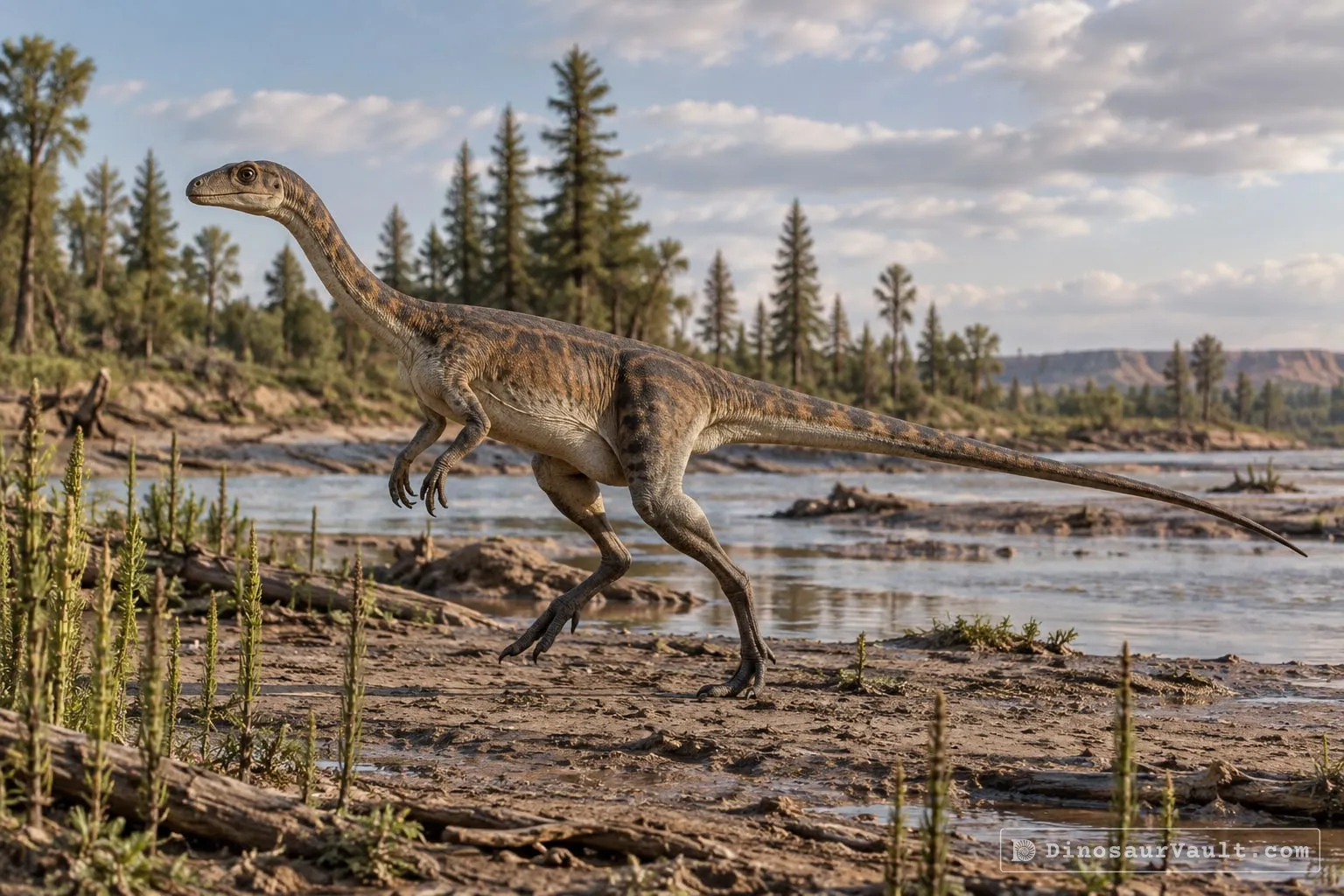
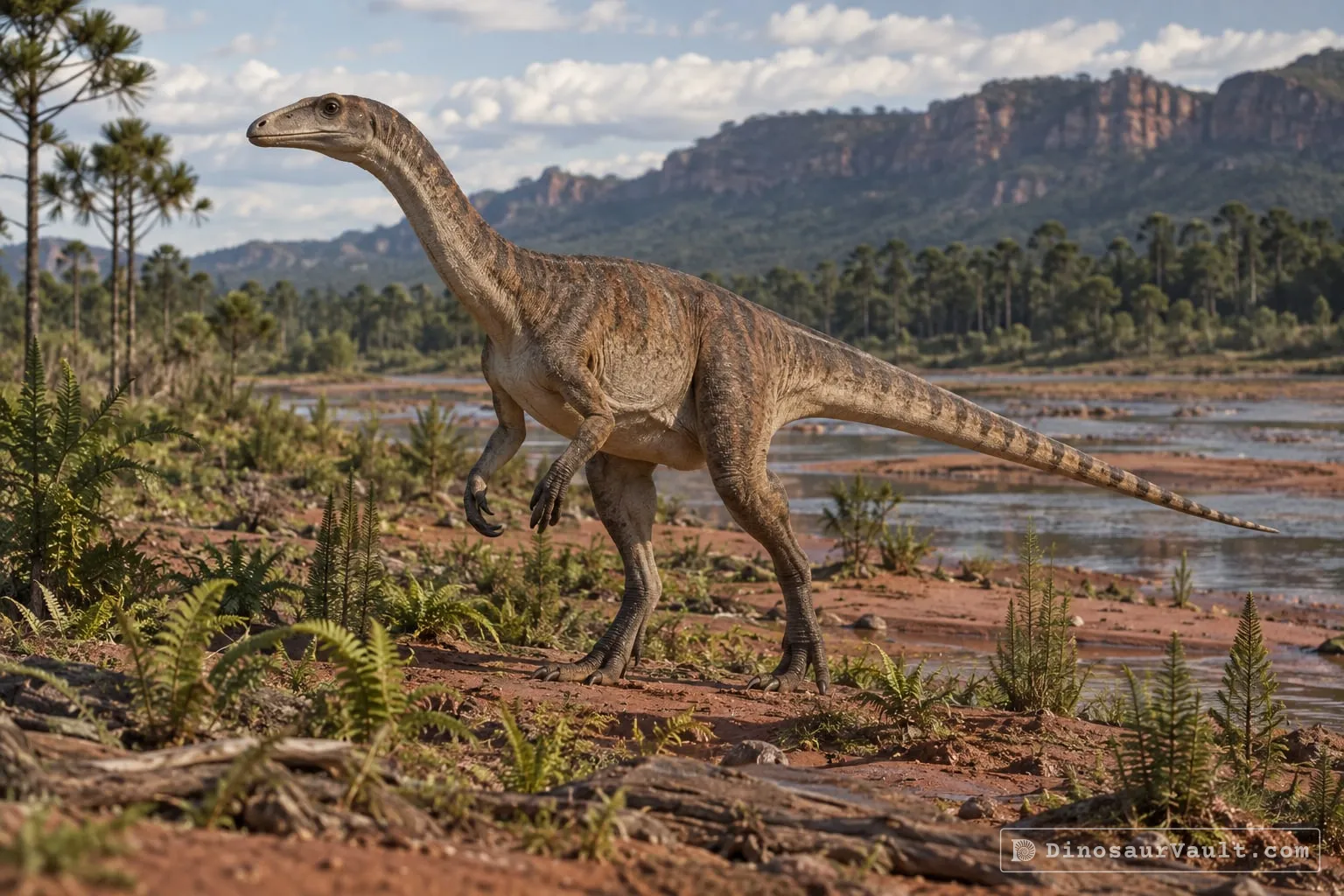
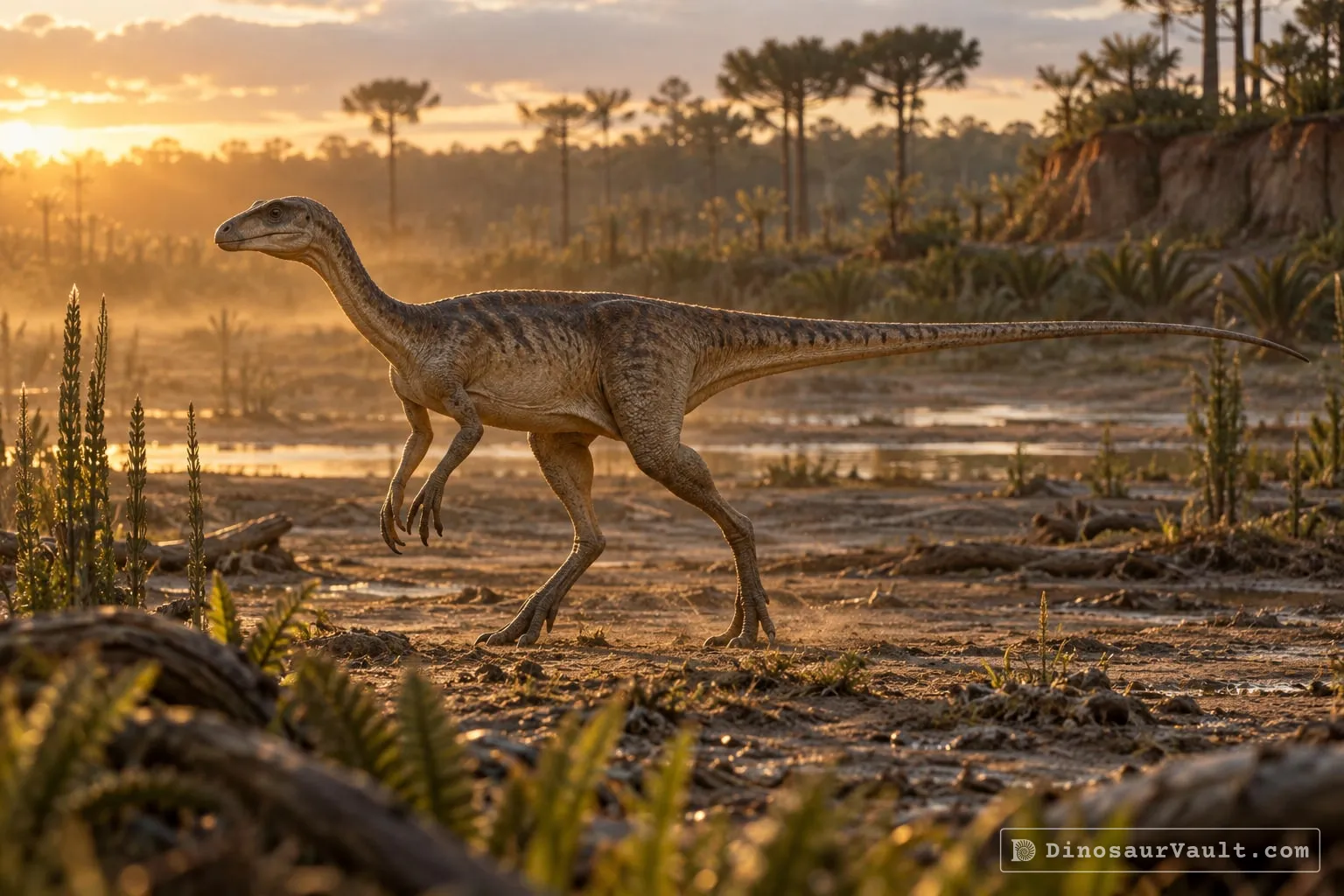
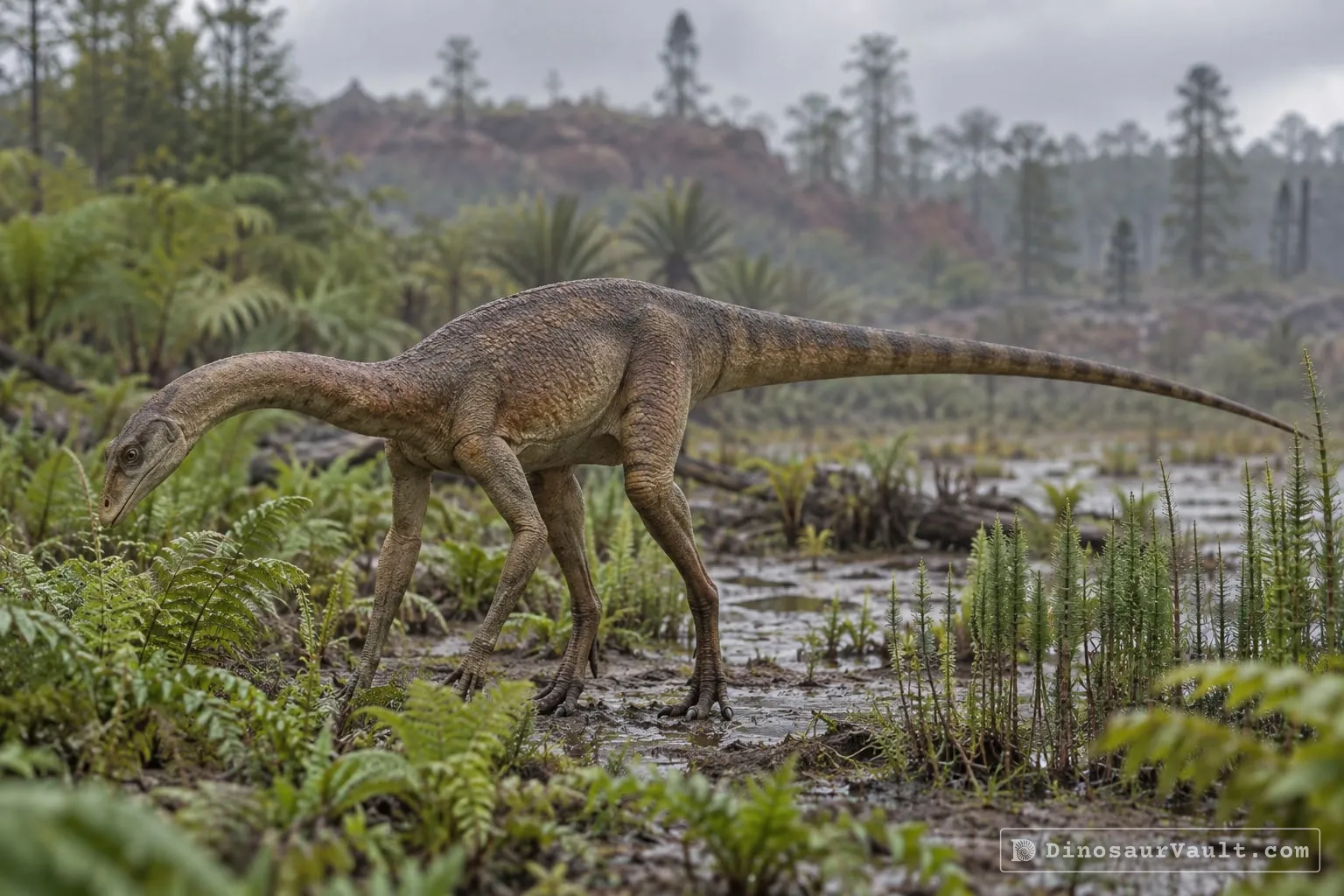


A rock formation can hold fossils laid down millions of years apart, so not every animal here met Staurikosaurus.
The evidence
The science behind Staurikosaurus
Which parts of the picture come from its own bones, and which come from its relatives.
From its own fossils
- The original skeleton preserves lower jaws and parts of the backbone, pelvis and hind legs.
- Sharp, curved teeth in the lower jaws fit a meat-eating diet.
- The pelvis and hind legs show the light build of an early two-legged dinosaur.
Borrowed from relatives
- Herrerasaurus guides the missing upper skull and forelimbs.
Still unknown
- Its complete upper skull shape.
- Its hand structure and finger count.
- Its skin covering and color.
Discovery timeline
- 1970Named itColbert
- 2009Full descriptionDE SOUZA BITTENCOURT & KELLNER
- 2011PostureGrillo & Azevedo
Key papers
The research behind what we know of Staurikosaurus
Named it
Named Staurikosaurus from an incomplete skeleton with lower jaws, a backbone, hips and hind legs.
A saurischian dinosaur from the Triassic of Brazil. American Museum Novitates 2405: 1-39
No link available
Full description
Reexamined the skeleton and supported a close relationship with Herrerasaurus.
The anatomy and phylogenetic position of the Triassic dinosaur Staurikosaurus pricei Colbert, 1970. Zootaxa 2079
Read the paper : The anatomy and phylogenetic position of the Triassic dinosaur Staurikosaurus pricei Colbert, 1970 (opens in a new tab)Posture
Used muscle attachment marks on the hips and hind legs to reconstruct the muscles that moved the legs.
Pelvic and hind limb musculature of Staurikosaurus pricei (Dinosauria: Saurischia). Anais da Academia Brasileira de Ciências 83: 73-98
Read the paper : Pelvic and hind limb musculature of Staurikosaurus pricei (Dinosauria: Saurischia) (opens in a new tab)
Close relatives
Other members of Herrerasauridae


Sources: Wikidata