Arcovenator
"Arc hunter"
- Lived
- 84 to 66 million years ago, Late Cretaceous
- Diet
- Carnivore
- Group
- Theropods, Abelisauridae
- Found in
- Spain and France
- Named by
- Tortosa et al. 2014
Where its fossils were found
The evidence
Today

75 million years ago
Habitat
River basins covered part of what is now southern France, then an island landscape. Dinosaurs from this region included Rhabdodon, Struthiosaurus and Ampelosaurus.
Field notes
About Arcovenator
What it was like
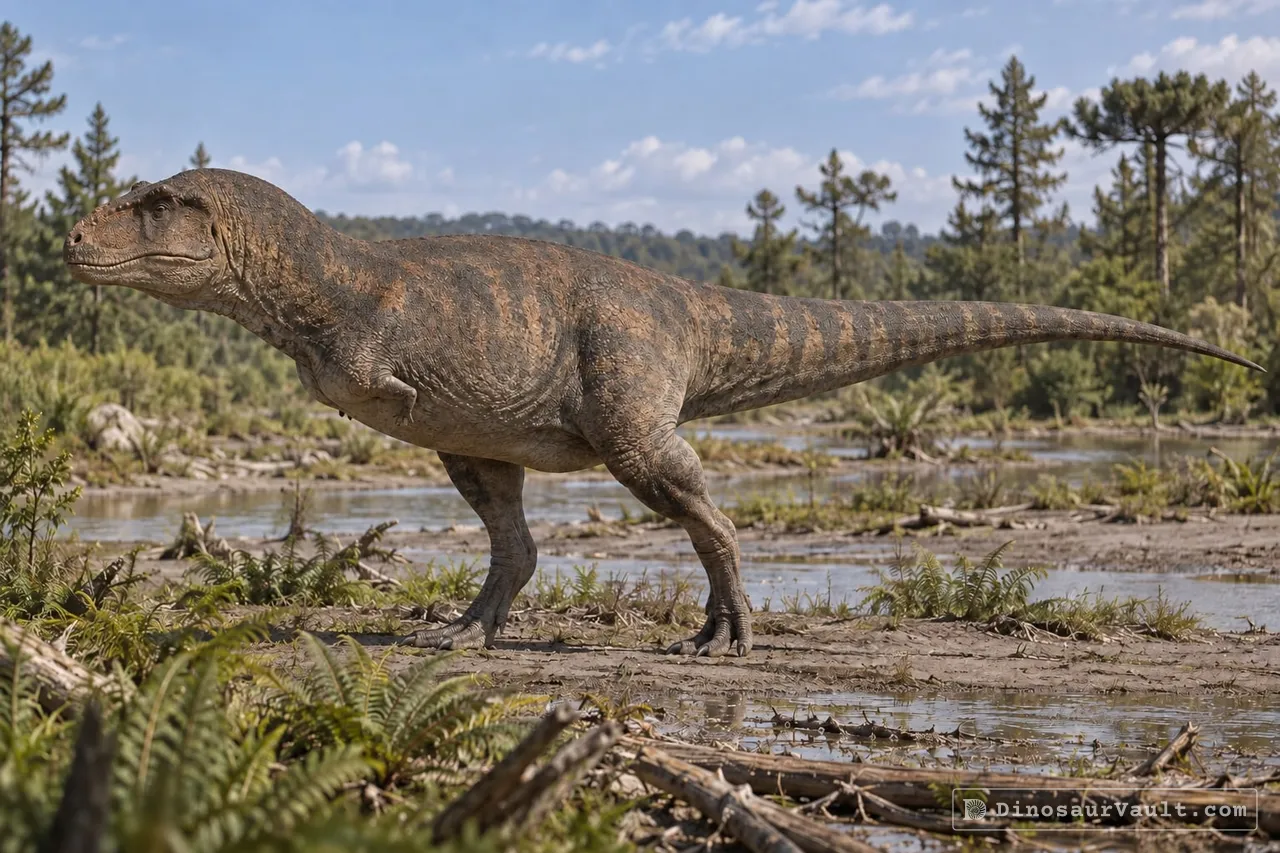
Arcovenator was an abelisaur, a two-legged hunter with a short, deep skull and tiny arms. It is known from part of a skull and skeleton, and was a medium-sized to large member of its family.
It was closely related to Majungasaurus from Madagascar and Rajasaurus from India, which suggests animals moved between Europe and the southern lands.
Its world
It lived in the Late Cretaceous in what is now southern France, with more finds reported from Spain. Its bones come from red clays near the river it was named after, where it shared the land with the plant eater Rhabdodon, the armored Struthiosaurus and the titanosaur Ampelosaurus.
How it was found
Tortosa and colleagues named Arcovenator in 2014.
Field gallery
More views of Arcovenator
Scenes reconstructed from the available fossil evidence.
Lived alongside
Found in the same rock formations


A rock formation can hold fossils laid down millions of years apart, so not every animal here met Arcovenator.
The evidence
The science behind Arcovenator
Which parts of the picture come from its own bones, and which come from its relatives.
From its own fossils
- A well-preserved braincase and nearby skull bones show a rough bony brow above the eye.
- Its known remains include teeth, tail vertebrae and lower leg bones.
Borrowed from relatives
- The missing snout and much of the body are restored using better-known abelisaurids such as Majungasaurus.
- Its tiny arms are inferred from relatives, rather than from arm bones of Arcovenator.
Still unknown
- The complete shape of its jaws and arms.
- Its skin covering and color.
- Whether it hunted alone or in groups.
Discovery timeline
- 2014Named itTortosa et al.
- 2025Close relativeMalafaia et al.
- 2025New findIsasmendi & Malafaia
Key papers
The research behind what we know of Arcovenator
Named it
A distinctive braincase established a new European abelisaurid with close similarities to relatives from India and Madagascar.
A new abelisaurid dinosaur from the Late Cretaceous of southern France: Palaeobiogeographical implications. Annales de Paléontologie 100: 63-86
Read the paper : A new abelisaurid dinosaur from the Late Cretaceous of southern France: Palaeobiogeographical implications (opens in a new tab)Close relative
Isolated teeth from Spain resemble those of Arcovenator, suggesting a closely related abelisaurid lived there too.
Theropod teeth from the Upper Cretaceous of central Spain: Assessing the paleobiogeographic history of European abelisaurids. Cretaceous Research 168: 106072
Read the paper : Theropod teeth from the Upper Cretaceous of central Spain: Assessing the paleobiogeographic history of European abelisaurids (opens in a new tab)New find
Reassigned a Spanish tooth to Arcovenator and attributed some vertebrae previously identified as Rhabdodon to a possible Arcovenator.
New Contributions to the Knowledge of Abelisauridae (Dinosauria, Theropoda) from the Upper Cretaceous Ibero-Armorican Landmass. Ameghiniana 62
Read the paper : New Contributions to the Knowledge of Abelisauridae (Dinosauria, Theropoda) from the Upper Cretaceous Ibero-Armorican Landmass (opens in a new tab)
Close relatives
Other members of Abelisauridae


Sources: Wikidata