Rhabdodon
"fluted tooth"
- Lived
- 84 to 66 million years ago, Late Cretaceous
- Diet
- Herbivore
- Length
- about 4 m (13 ft)
- Group
- Ornithopods, Rhabdodontidae
- Found in
- France and Spain
- Named by
- Matheron 1869
Size comparison
To scale

Scale in metersOutline: typical ornithopod shape
Where its fossils were found
The evidence
Today

75 million years ago
Also reported from Austria and Romania.
Habitat
It lived on river plains within the islands of Late Cretaceous Europe. Dinosaurs from the same regional rocks include Ampelosaurus, Struthiosaurus and Arcovenator.
Field notes
About Rhabdodon
What it was like
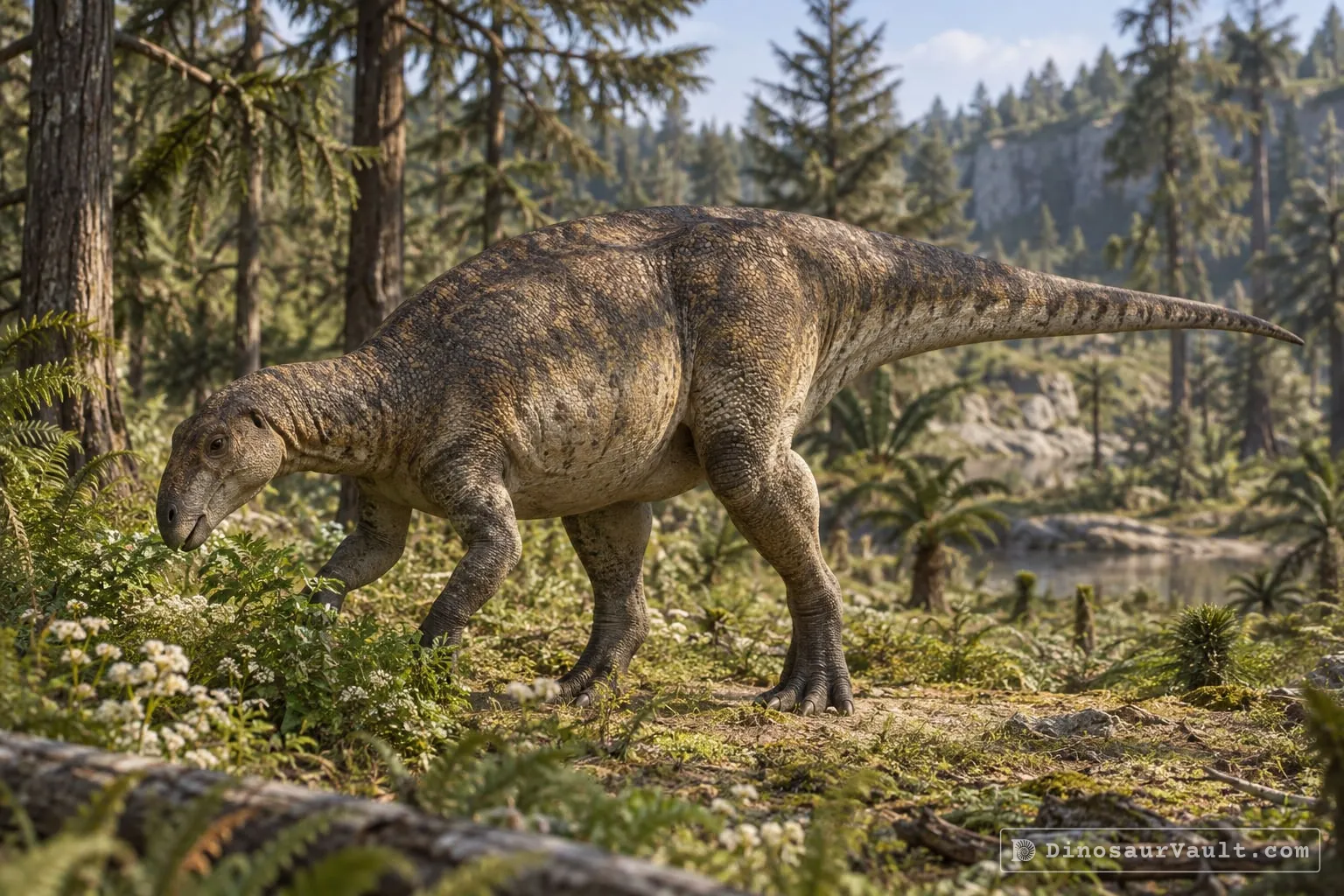
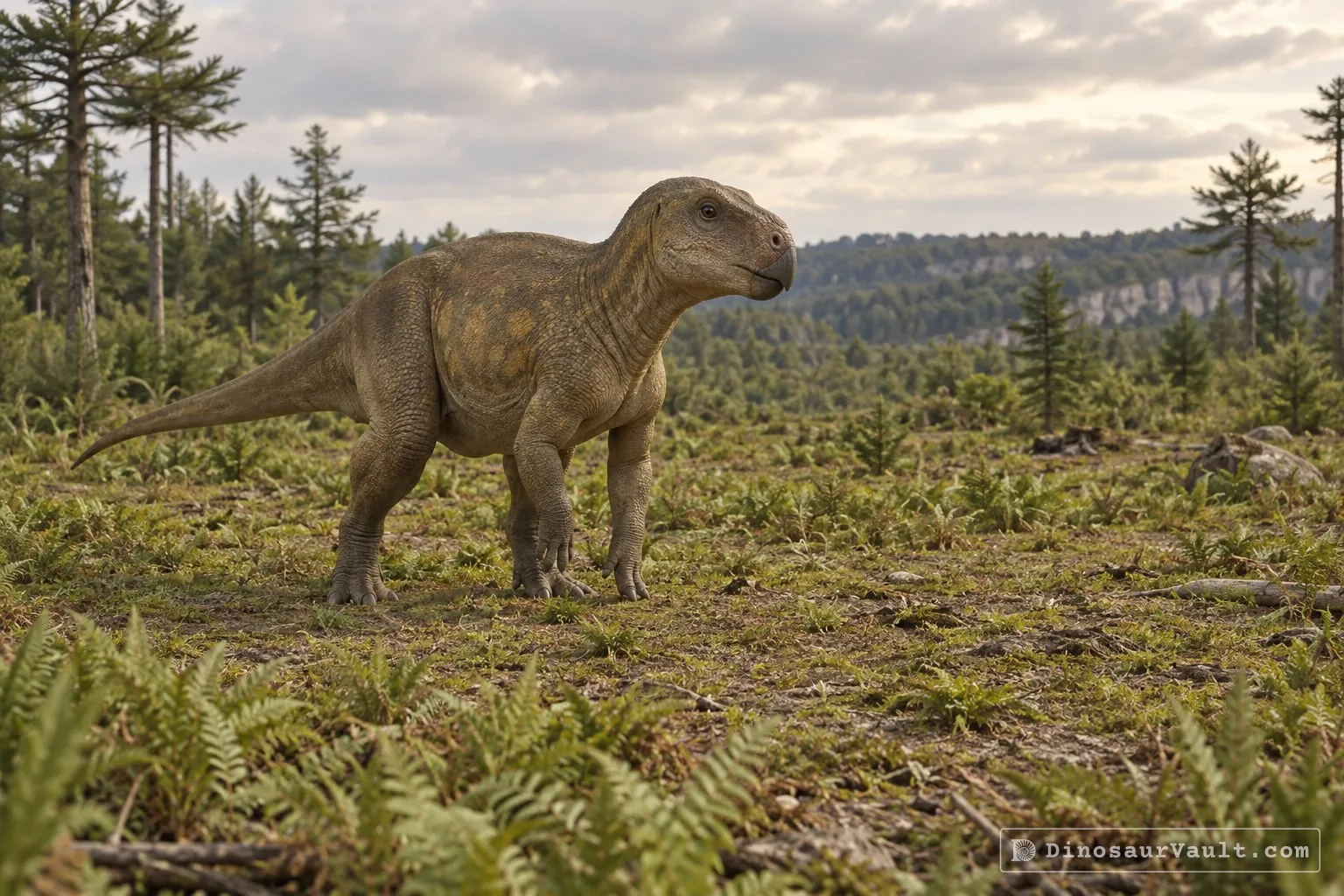
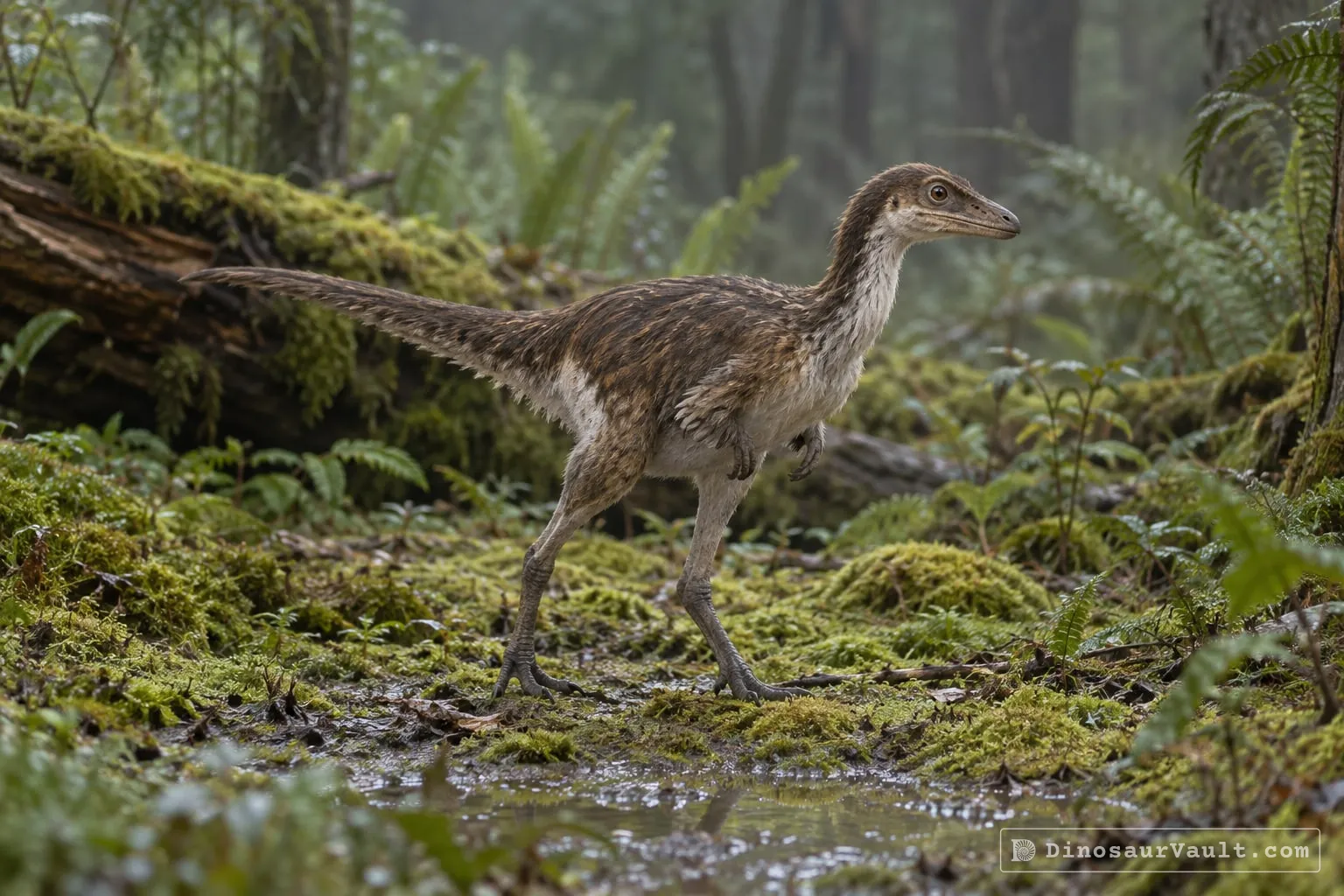
Rhabdodon was a plant eater about 4 meters (13 feet) long that walked on two legs. It had a sturdy body, a deep beak and ridged teeth for chewing tough plants.
Its world
It lived in the Late Cretaceous, on islands in what is now France and Spain. It shared that land with the sauropod Ampelosaurus, the armored Struthiosaurus and the abelisaur Arcovenator. It is one of the most common dinosaurs found in the latest Cretaceous rocks of southern France.
How it was found
Matheron named Rhabdodon in 1869. It is now known from dozens of finds, and it gives its name to the rhabdodontids, a family found only in Europe.
Field gallery
More views of Rhabdodon
Scenes reconstructed from the available fossil evidence.
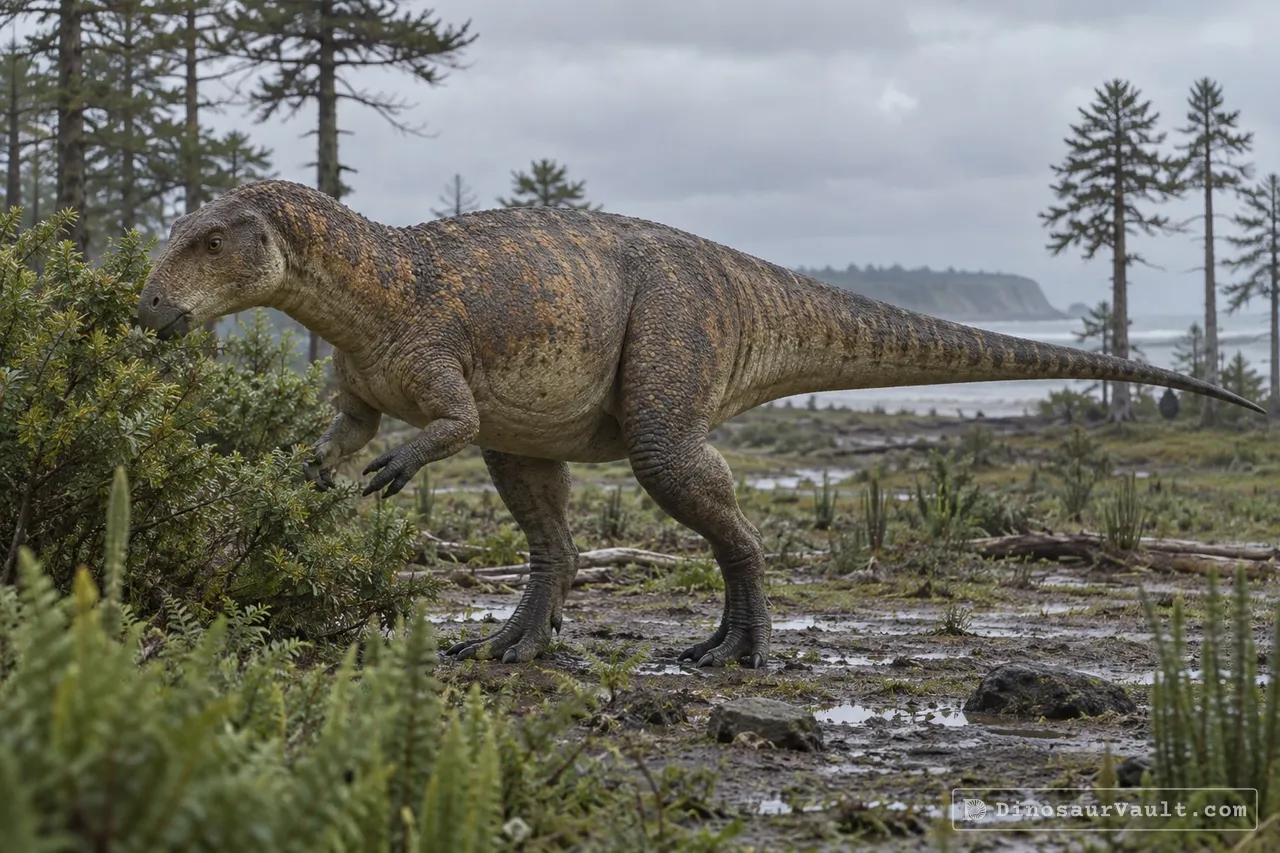
1 of 2
Lived alongside
Found in the same rock formations
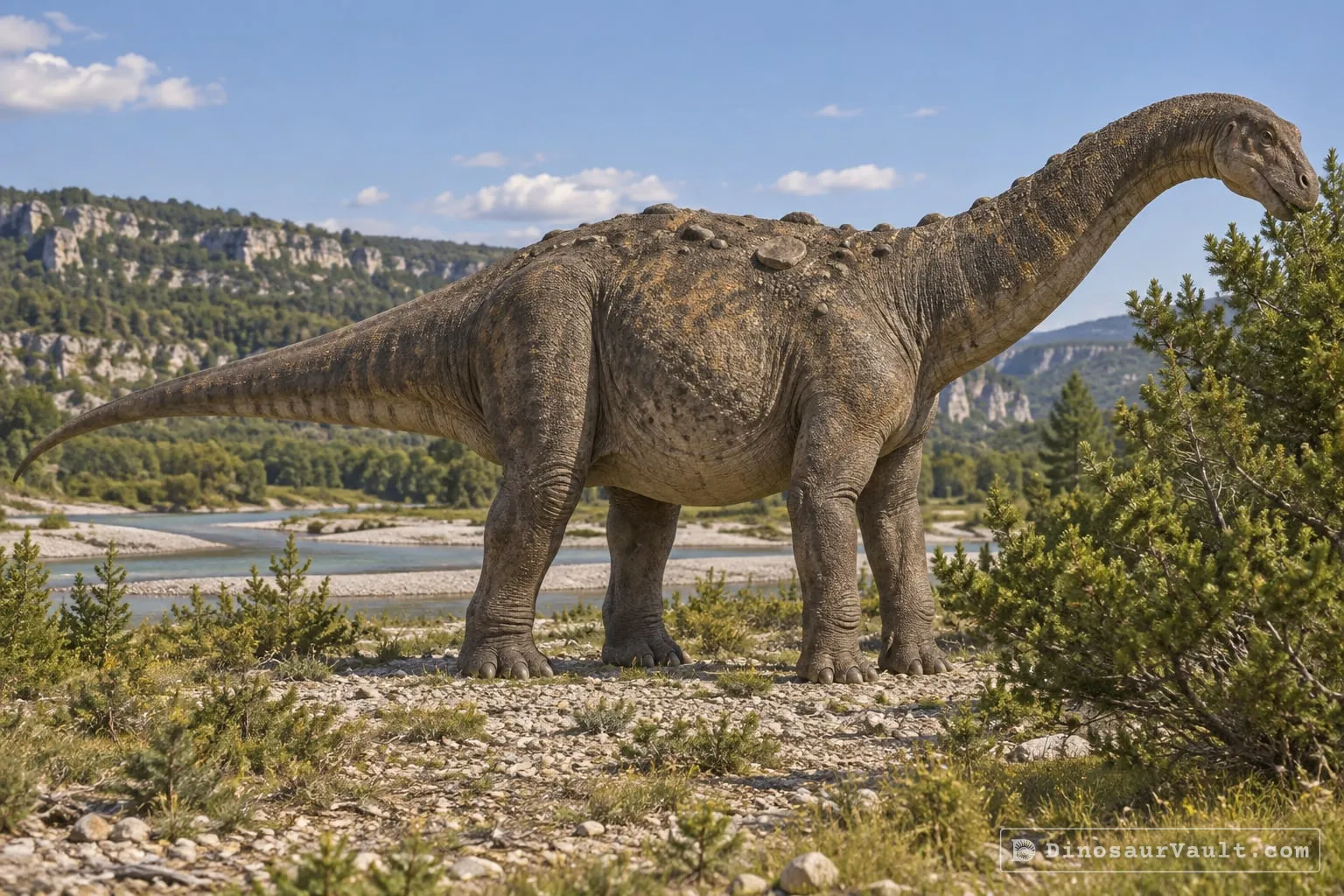
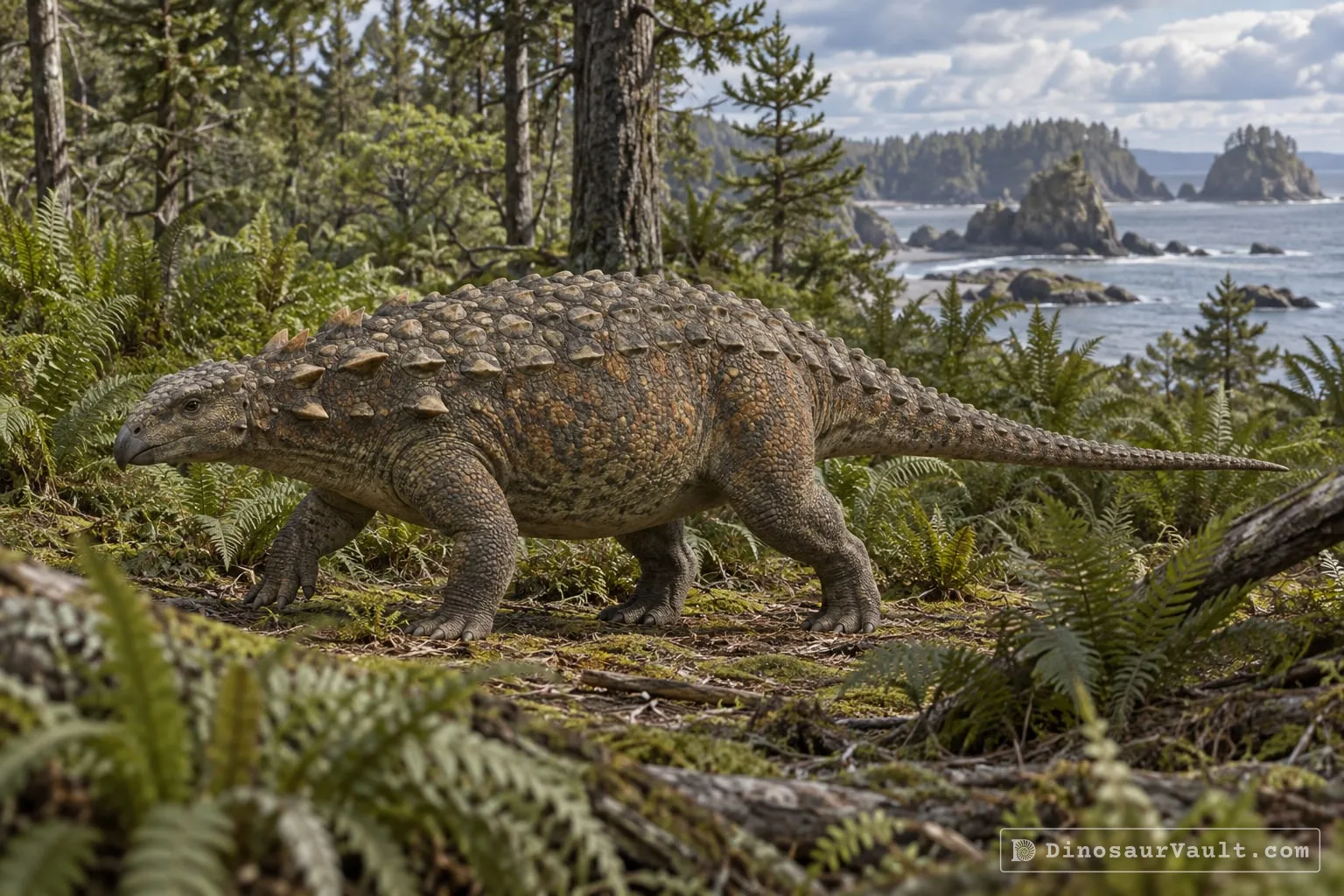
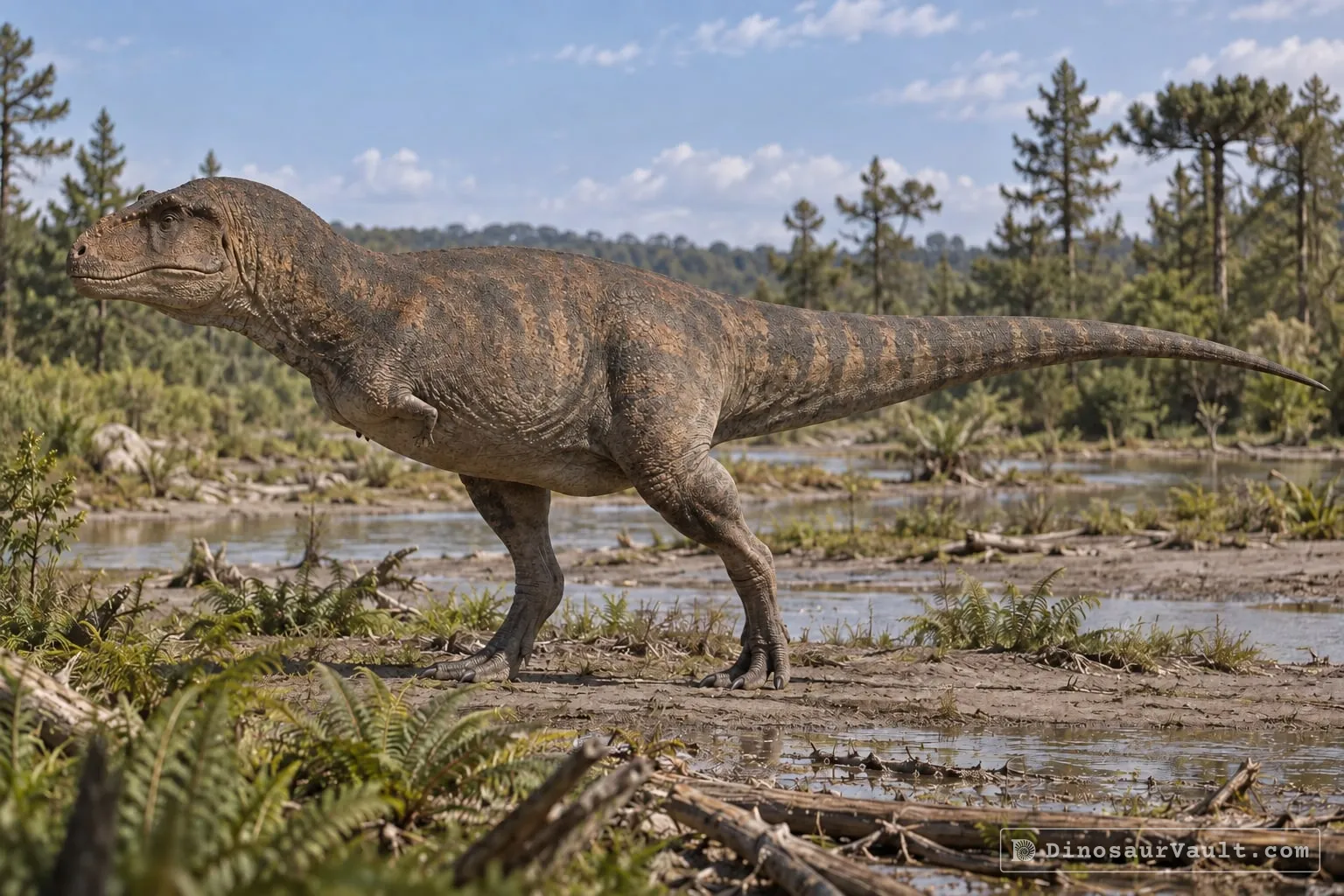
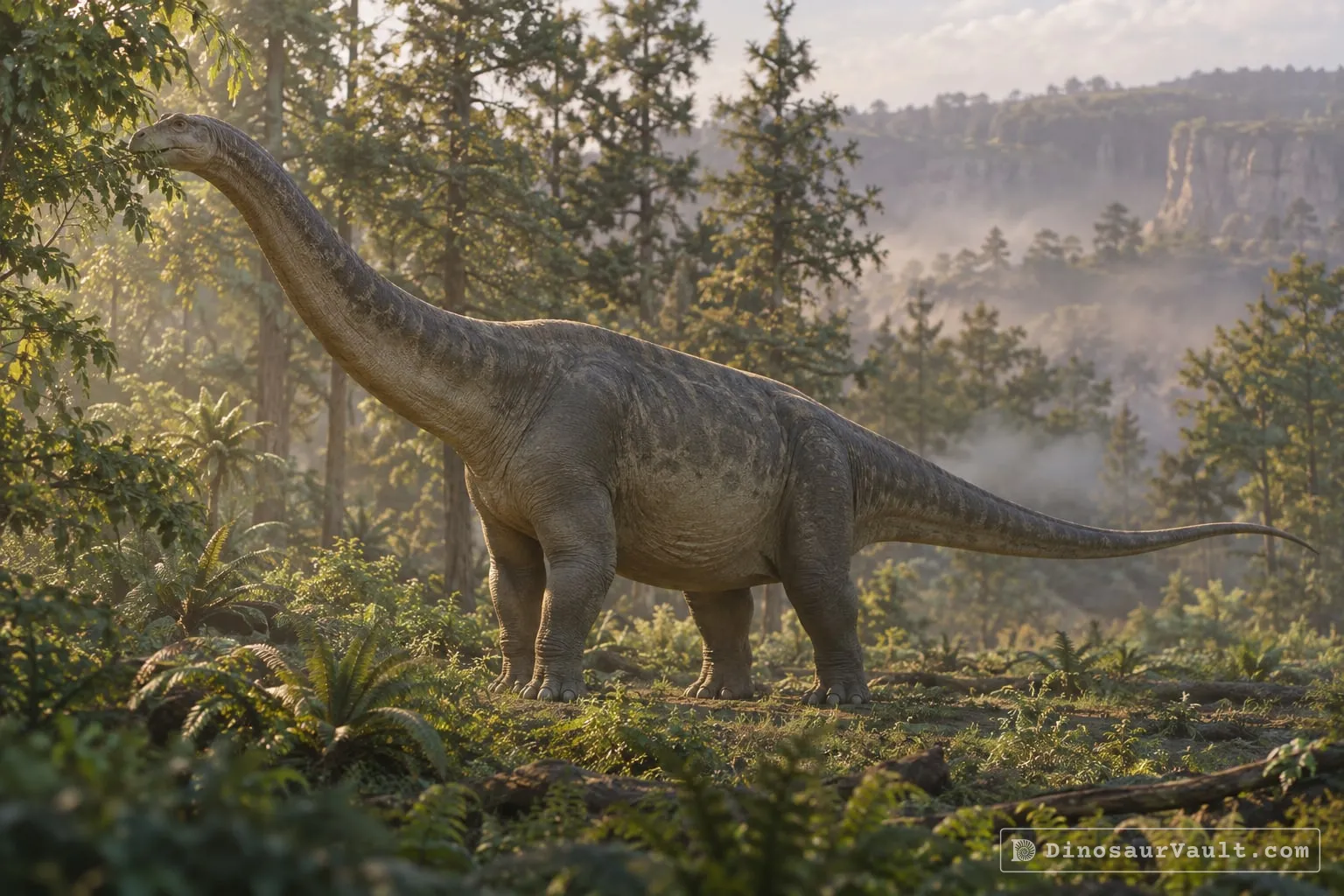
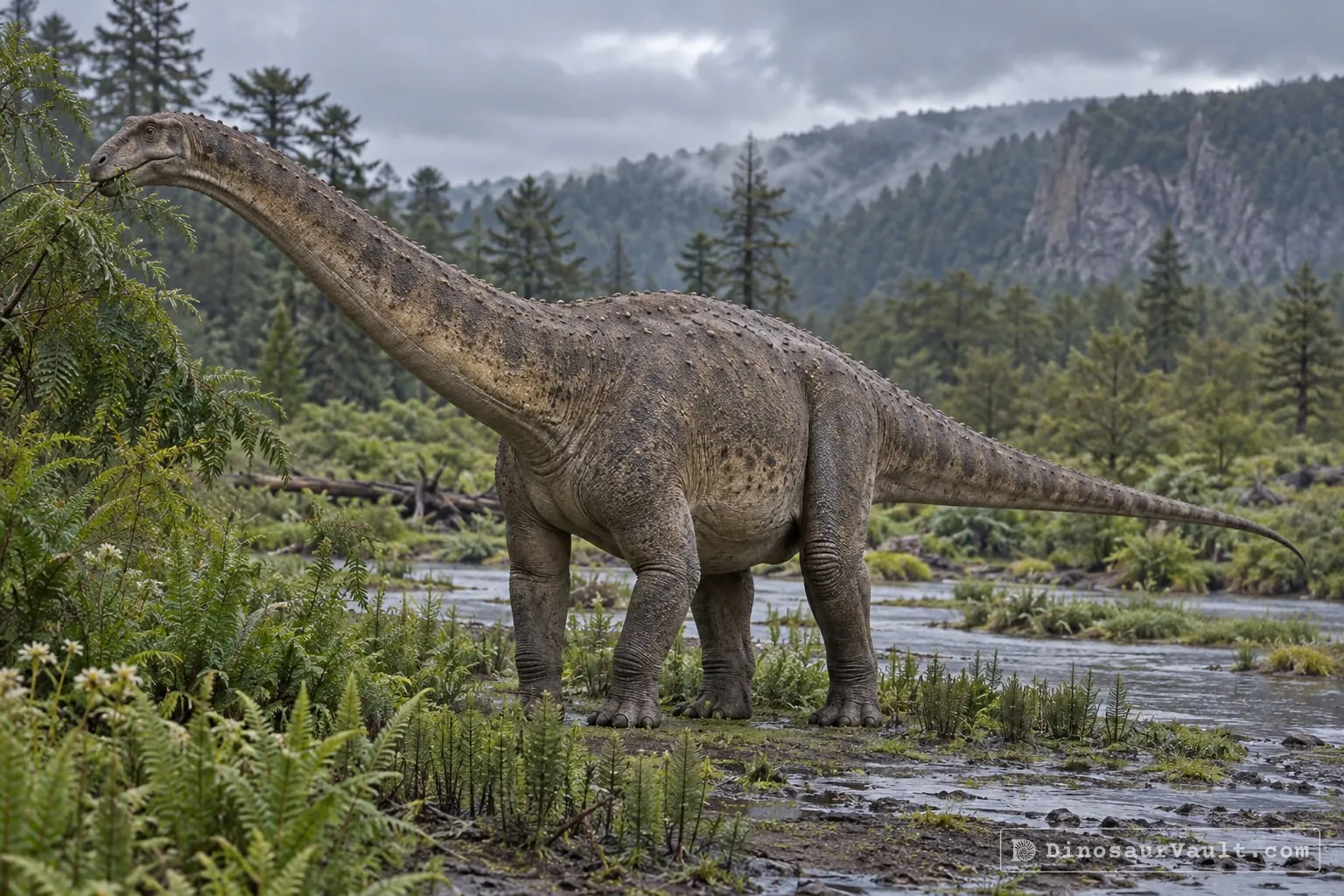


A rock formation can hold fossils laid down millions of years apart, so not every animal here met Rhabdodon.
The evidence
The science behind Rhabdodon
Which parts of the picture come from its own bones, and which come from its relatives.
From its own fossils
- The original material includes a partial lower jaw, other jaw fragments, backbone pieces and limb bones.
- The lower jaw has a shelf outside the tooth row where fleshy cheeks probably held food in the mouth.
- Its teeth have strong ridges that helped process plants.
Borrowed from relatives
- Missing parts of the face and forequarters can be inferred from early relatives such as Iani.
- Skin and the complete outlines of the hands and feet are inferred from other early iguanodontians.
Still unknown
- Its complete upper skull shape and exact hand anatomy.
- Which bones historically assigned to Rhabdodon truly belong to it.
- Its skin texture and color.
Often drawn wrong
- A broad duck bill copies later duck-billed dinosaurs rather than its early relatives.
- A prominent thumb spike copied from Iguanodon has no support in its original material.
Discovery timeline
- 1869Named itMatheron
- 2023Close relativeZanno et al.
- 2025Family treeCzepiński & Madzia
- 2026Family treeMaidment et al.
Key papers
The research behind what we know of Rhabdodon
Named it
Named Rhabdodon from teeth and bones found in southern France.
Notice sur les reptiles fossiles des dépôts fluvio-lacustres crétacés du bassin à lignite de Fuveau [Notice on the fossil reptiles from the Cretaceous fluvio-lacustrine deposits of the lignitic Fuveau Basin]. Mémoires de l'Académie des Sciences, Belles-Lettres, et Arts de Marseille 1868–1869:345-379.
No link available
Close relative
Named Iani from a partial skeleton, extending the record of early rhabdodontomorph relatives into North America.
An early-diverging iguanodontian (Dinosauria: Rhabdodontomorpha) from the Late Cretaceous of North America. PLOS ONE 18: e0286042
Read the paper : An early-diverging iguanodontian (Dinosauria: Rhabdodontomorpha) from the Late Cretaceous of North America (opens in a new tab)Family tree
Reexamined Rhabdodon and related plant eaters, separated the former species septimanicus as Obelignathus and compared their distinctive lower jaws.
Exploring the diversity and disparity of rhabdodontomorph ornithopods from the Late Cretaceous European archipelago. Scientific Reports 15
Read the paper : Exploring the diversity and disparity of rhabdodontomorph ornithopods from the Late Cretaceous European archipelago (opens in a new tab)Family tree
Reidentified some European fossils previously assigned to rhabdodontids as horned dinosaurs, changing how older finds are classified.
A hidden diversity of ceratopsian dinosaurs in Late Cretaceous Europe. Nature 651: 397-403
Read the paper : A hidden diversity of ceratopsian dinosaurs in Late Cretaceous Europe (opens in a new tab)
Sources: Wikidata