Acristavus
"crestless grandfather"
- Lived
- 84 to 72 million years ago, Late Cretaceous
- Diet
- Herbivore
- Group
- Ornithopods, Hadrosauridae
- Found in
- United States
- Named by
- Gates et al. 2011
Where its fossils were found
The evidence
Today

80 million years ago
Habitat
In Utah, river plains and swamps supported conifers. Its neighbors included Daspletosaurus in Montana and Lythronax in Utah.
Field notes
About Acristavus
What it was like
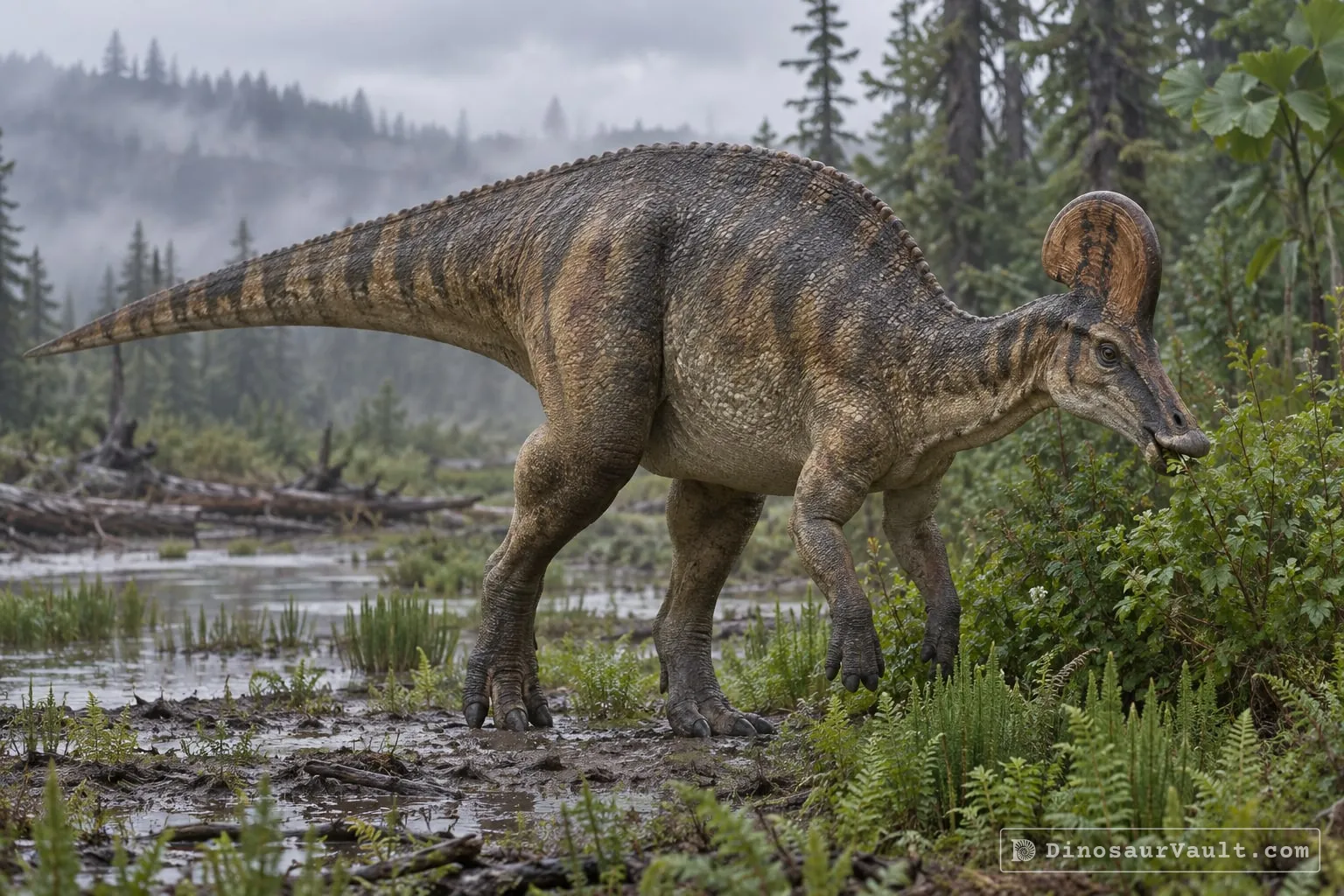
Acristavus was a duck-billed plant eater with no crest at all, unlike most of its relatives. It was related to Maiasaura and Brachylophosaurus, and it suggests that the early members of this group had plain heads.
Its world
It lived in the Late Cretaceous in what is now Montana and Utah. Its bones come from the Two Medicine and Wahweap formations. In Montana it shared the land with the tyrannosaur Daspletosaurus, and in Utah with the tyrannosaur Lythronax.
How it was found
Gates and colleagues named Acristavus in 2011. There are two recorded finds.
Field gallery
More views of Acristavus
Scenes reconstructed from the available fossil evidence.
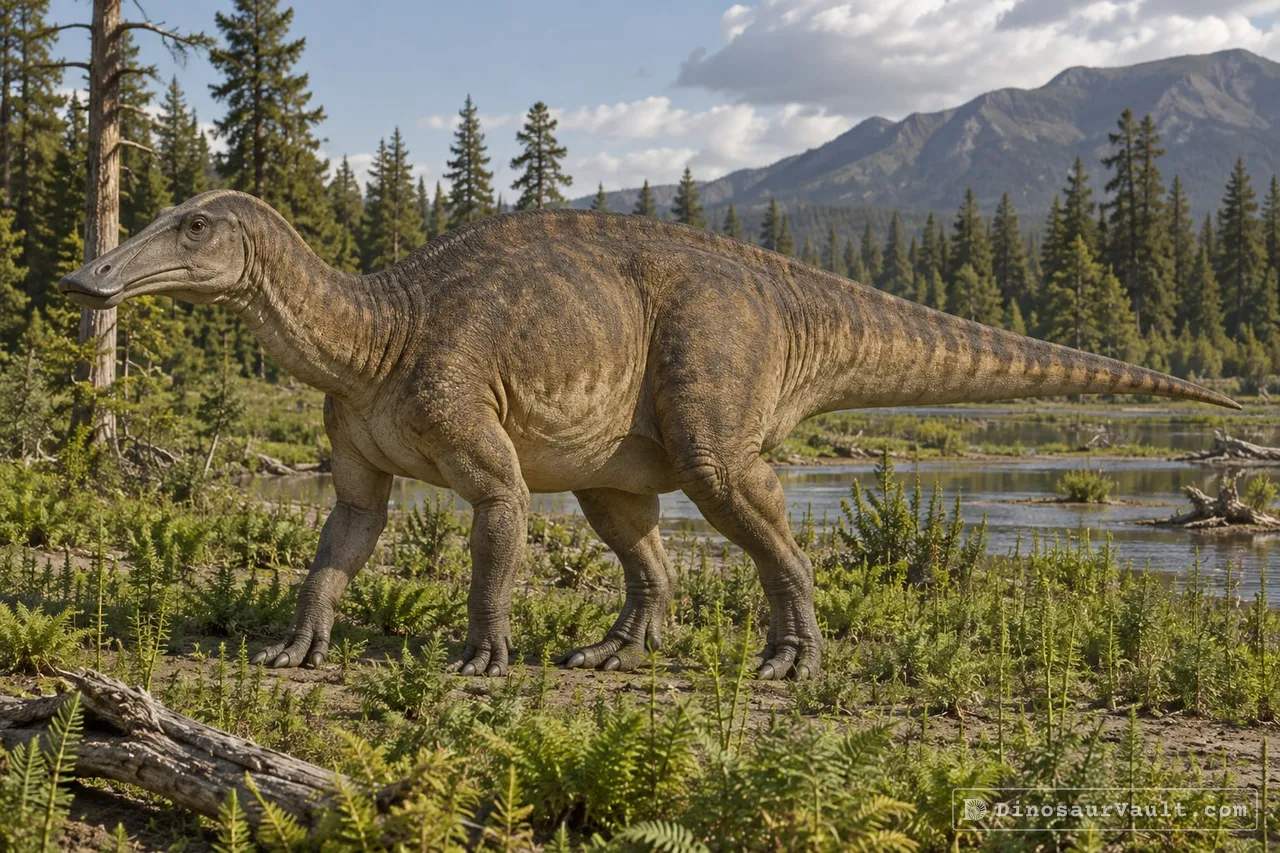
1 of 3
Lived alongside
Found in the same rock formations
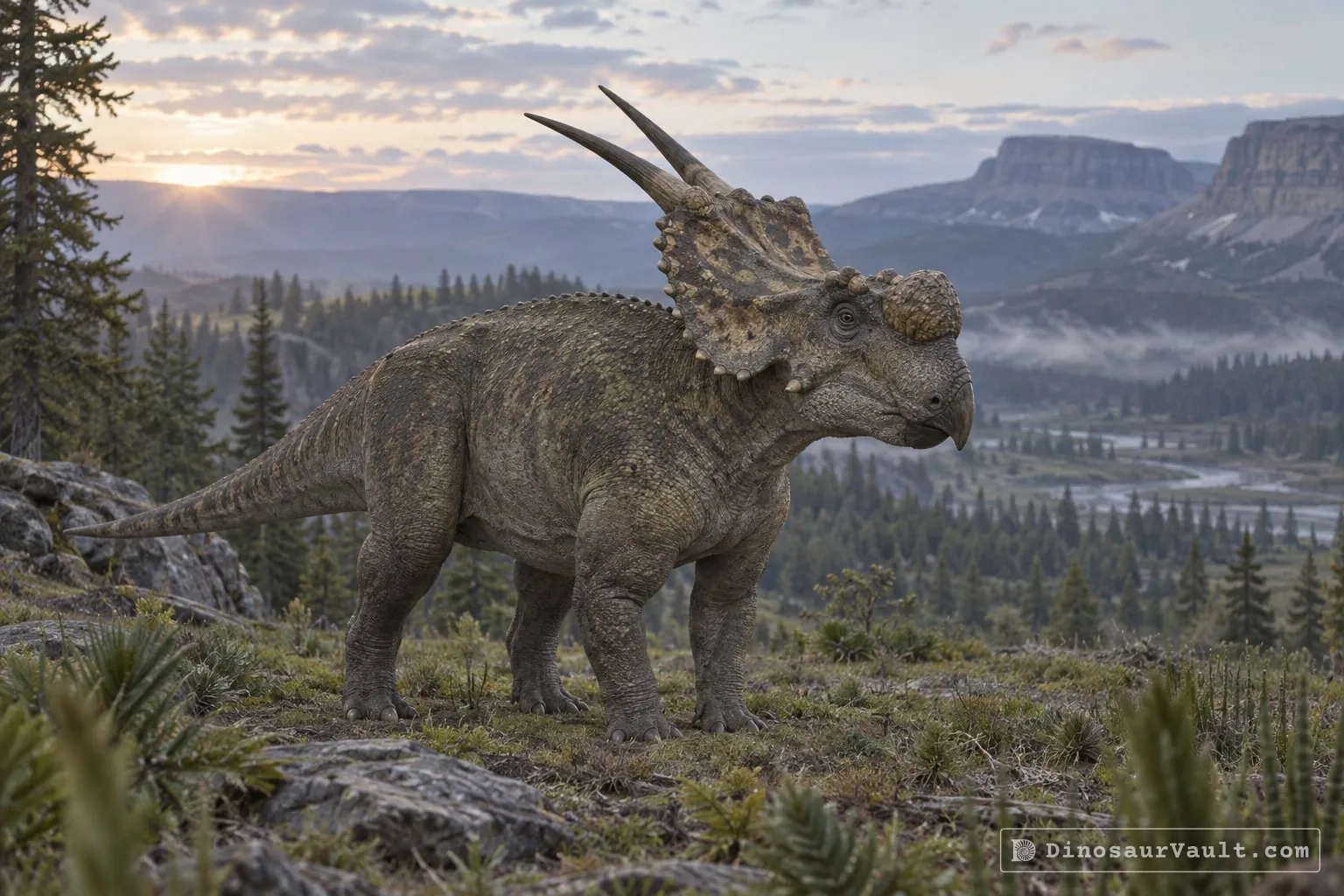
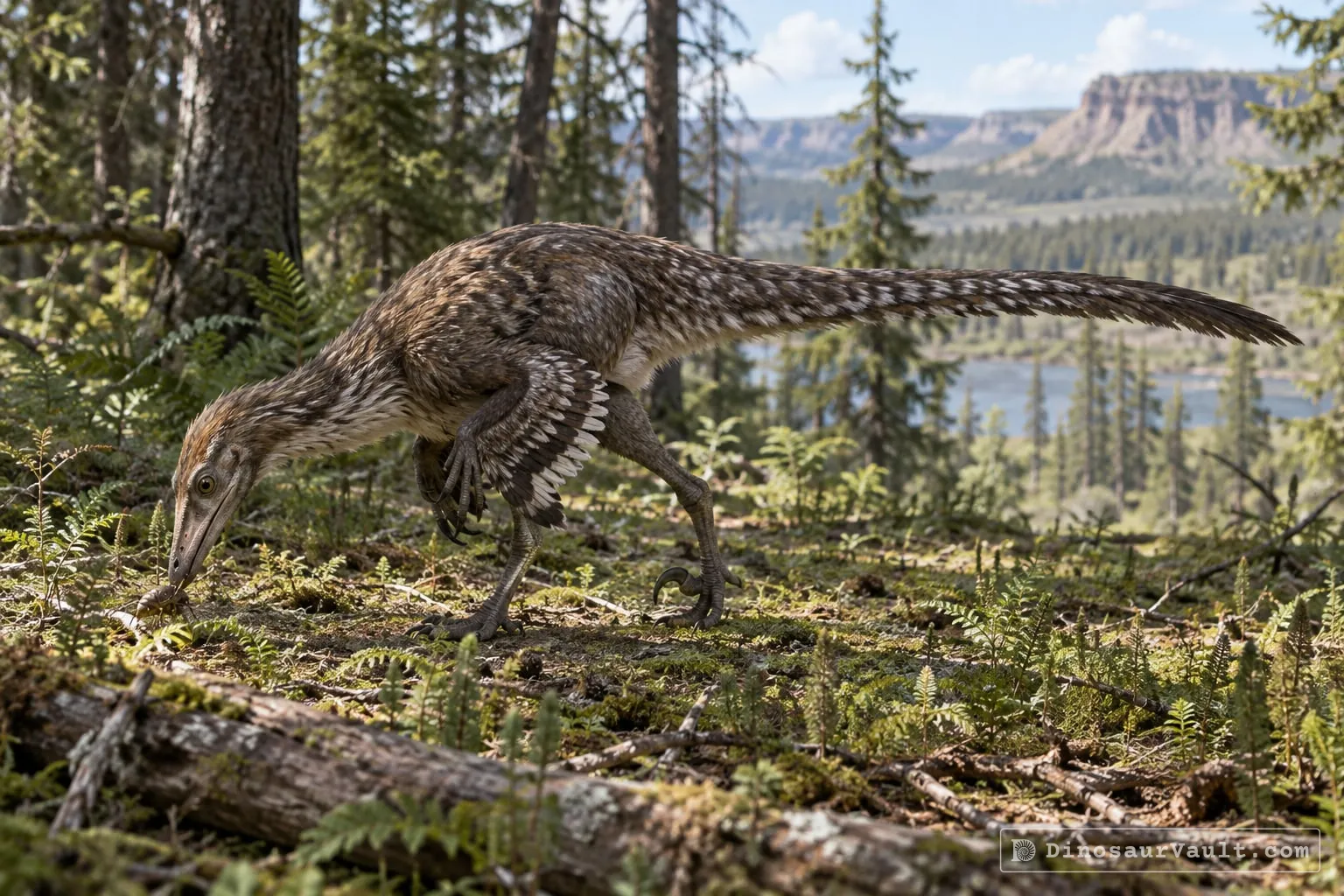
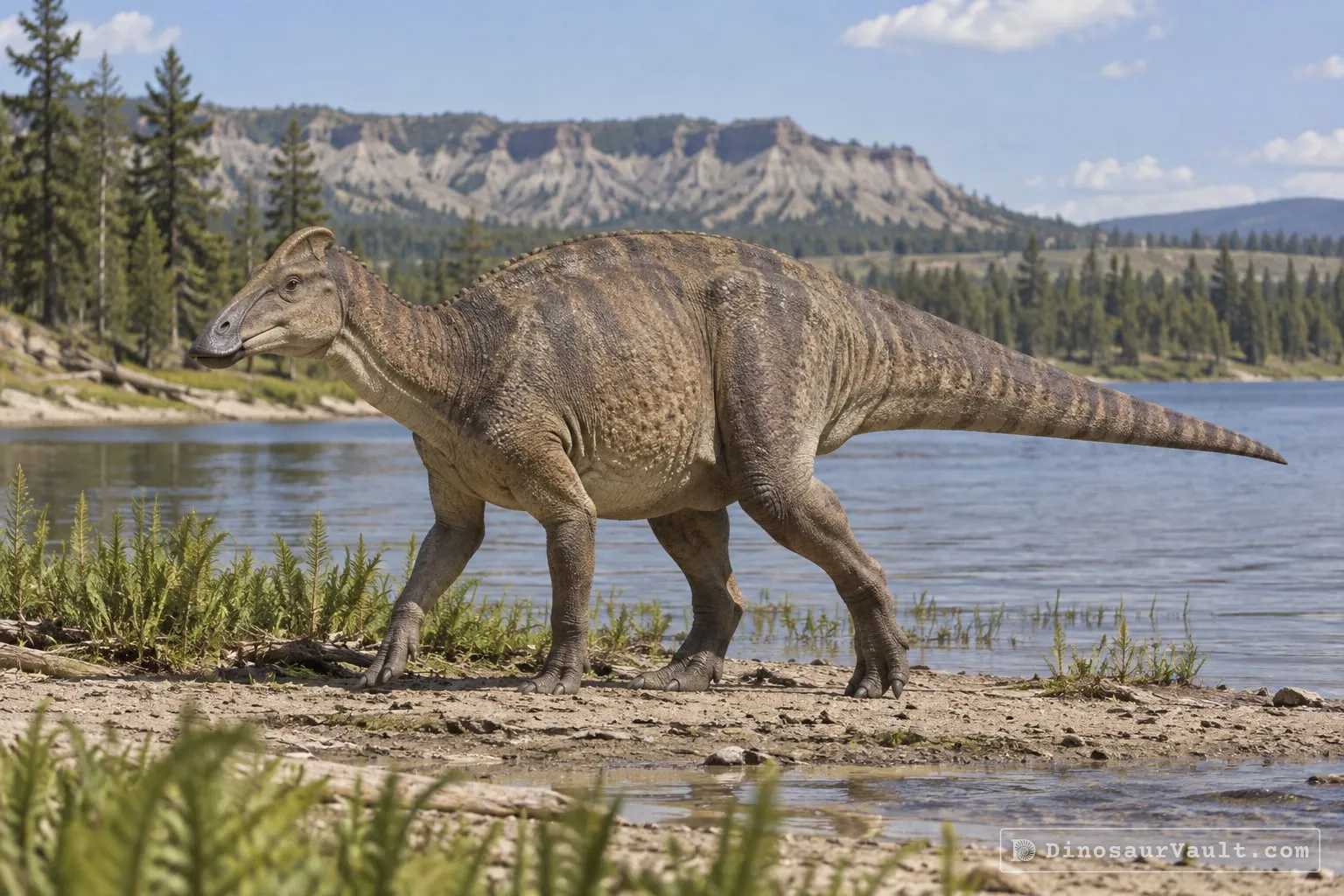
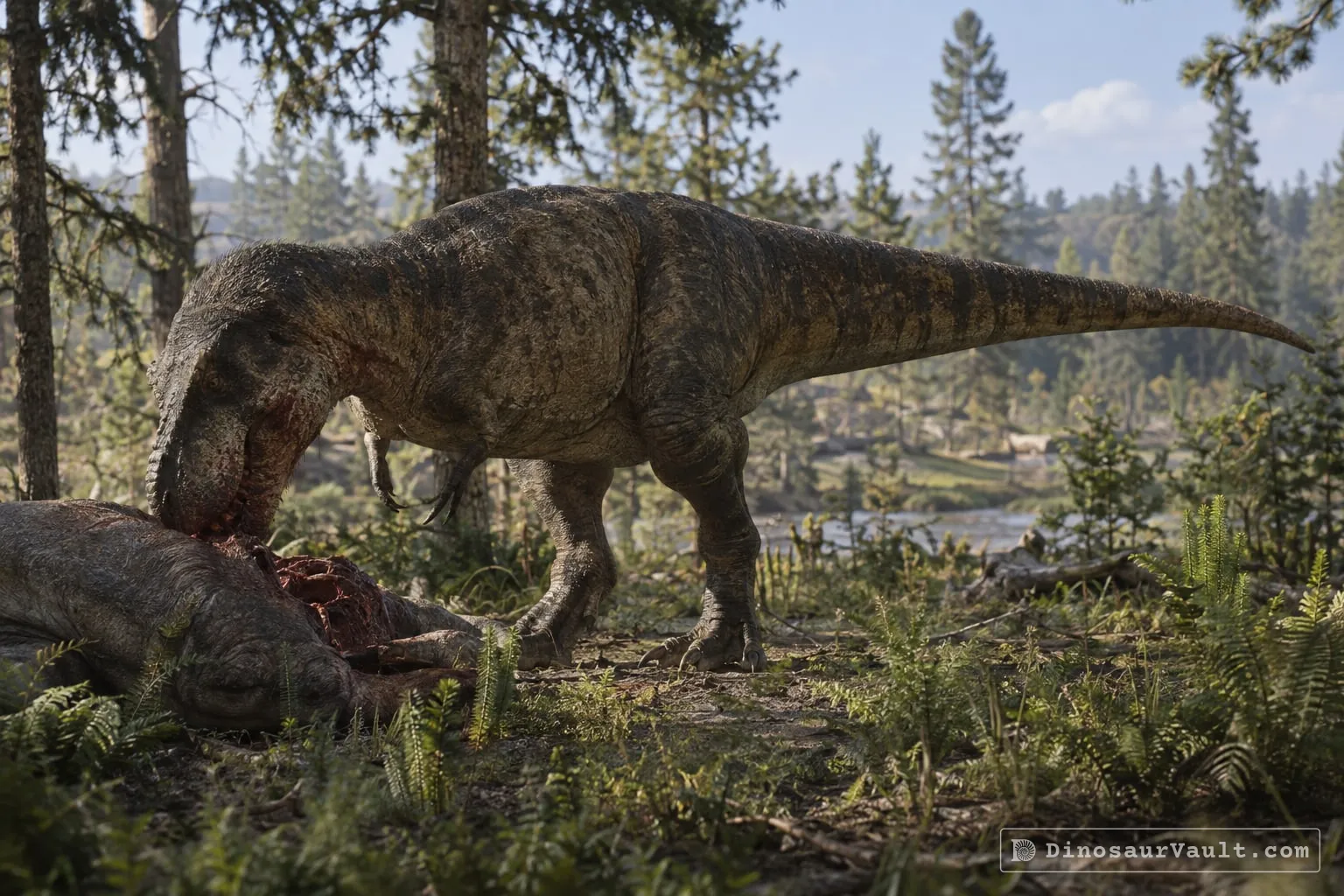
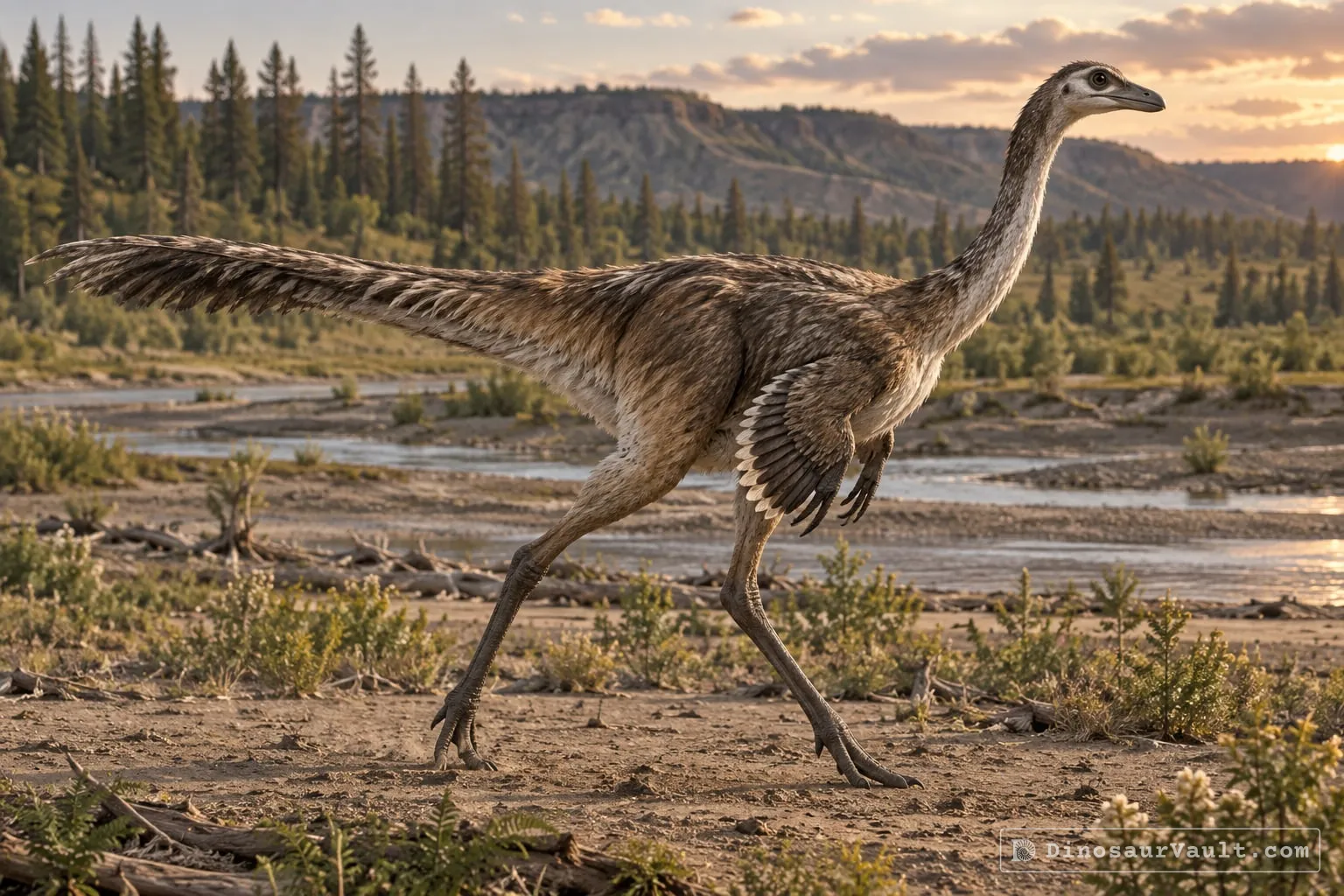
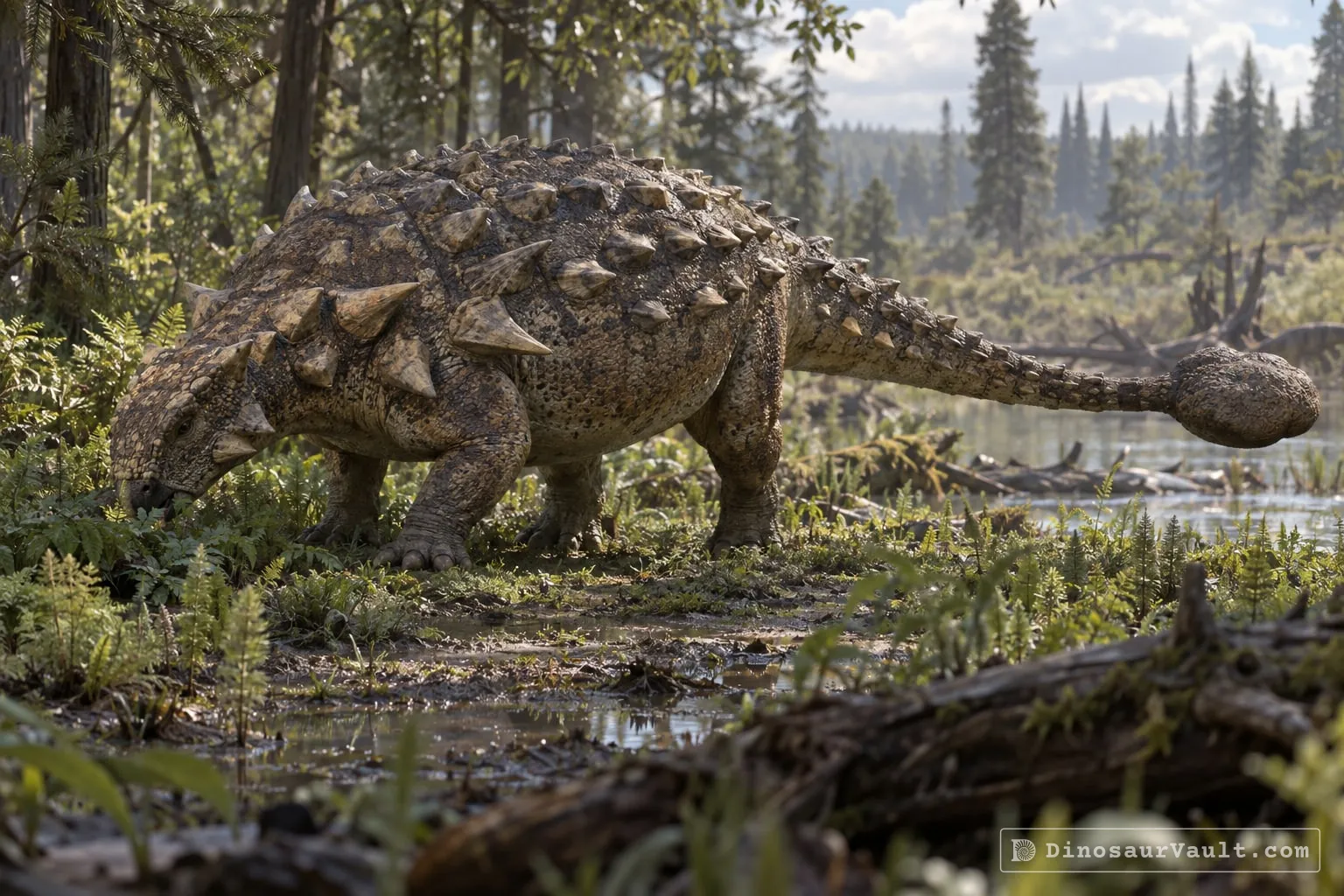
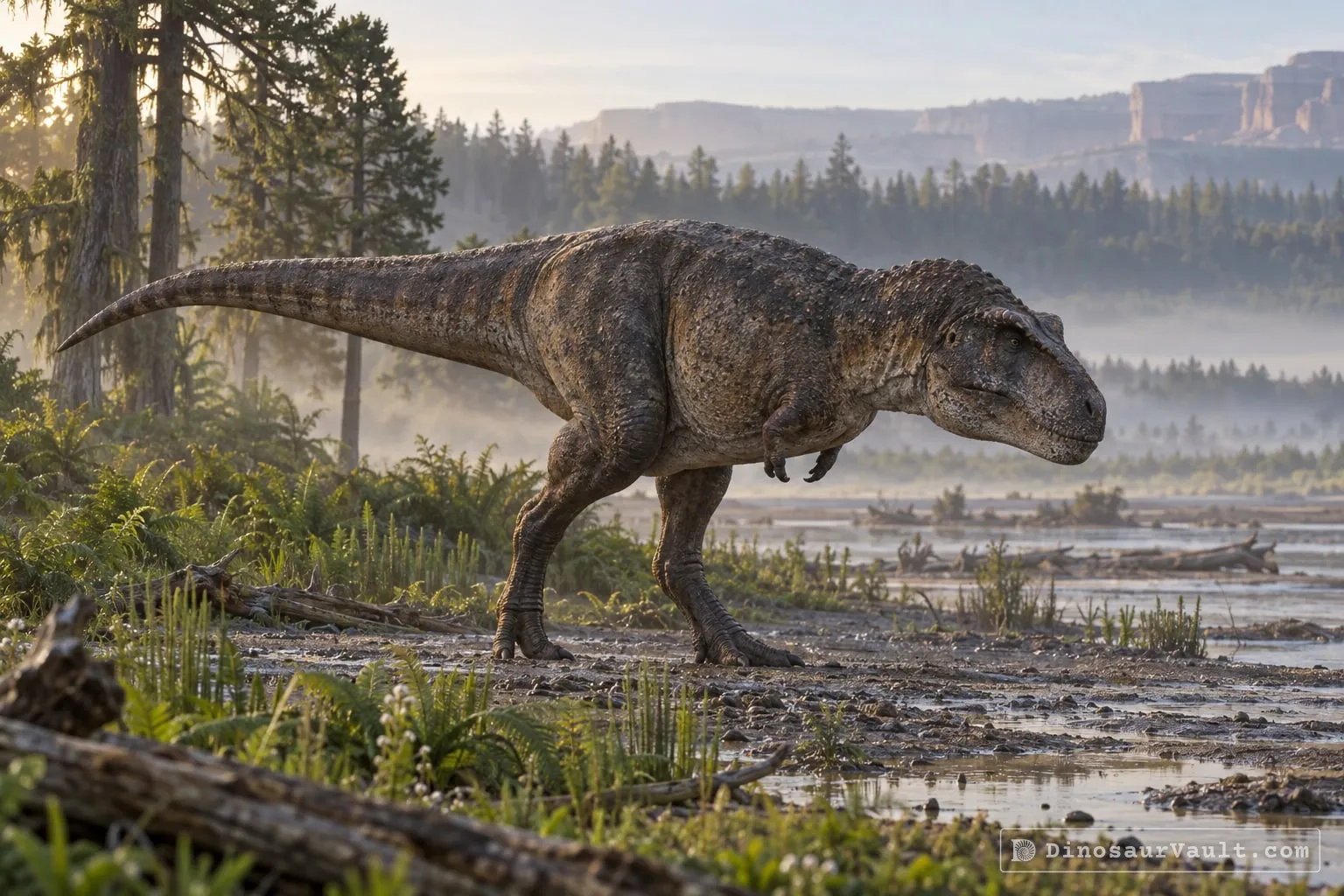


A rock formation can hold fossils laid down millions of years apart, so not every animal here met Acristavus.
The evidence
The science behind Acristavus
Which parts of the picture come from its own bones, and which come from its relatives.
From its own fossils
- Skull bones from Montana and Utah show a duckbill without a bony head crest.
- Distinctive shapes in the forehead, the bone behind the eye and the lower jaw distinguish it from other duckbills.
Borrowed from relatives
- Missing body parts are restored from relatives such as Maiasaura and Brachylophosaurus.
- Its skull combines features found separately in Maiasaura and Brachylophosaurus.
Still unknown
- Its skin texture and color.
- Whether it was a direct ancestor of later crested relatives.
- Whether it nested in colonies like Maiasaura.
Discovery timeline
- 2011Named itGates et al.
- 2015Family treeFreedman Fowler & Horner
- 2021Family treeMcDonald et al.
Key papers
The research behind what we know of Acristavus
Named it
Named a crestless duckbill from Montana and Utah and proposed that bony head crests developed independently in different duckbill groups.
New unadorned hadrosaurine hadrosaurid (Dinosauria, Ornithopoda) from the Campanian of North America. Journal of Vertebrate Paleontology 31: 798-811
Read the paper : New unadorned hadrosaurine hadrosaurid (Dinosauria, Ornithopoda) from the Campanian of North America (opens in a new tab)Family tree
Compared Acristavus with Probrachylophosaurus and Brachylophosaurus, proposing a lineage in which a bony head crest gradually enlarged.
A New Brachylophosaurin Hadrosaur (Dinosauria: Ornithischia) with an Intermediate Nasal Crest from the Campanian Judith River Formation of Northcentral Montana. PLOS ONE 10: e0141304
Read the paper : A New Brachylophosaurin Hadrosaur (Dinosauria: Ornithischia) with an Intermediate Nasal Crest from the Campanian Judith River Formation of Northcentral Montana (opens in a new tab)Family tree
Added Ornatops to the family tree and recovered Acristavus outside the group containing Maiasaura and the more strongly crested relatives.
A new brachylophosaurin (Dinosauria: Hadrosauridae) from the Upper Cretaceous Menefee Formation of New Mexico. PeerJ 9: e11084
Read the paper : A new brachylophosaurin (Dinosauria: Hadrosauridae) from the Upper Cretaceous Menefee Formation of New Mexico (opens in a new tab)
Close relatives
Other members of Hadrosauridae


Sources: Wikidata