Lythronax
LYE-thro-naks
"gore king"
Type species Lythronax argestes
- Lived
- 84 to 72 million years ago, Late Cretaceous
- Diet
- Carnivore
- Length
- about 8 m (26 ft)
- Group
- Theropods, Tyrannosauridae
- Found in
- United States
- Named by
- Loewen et al. 2013
Size comparison
To scale
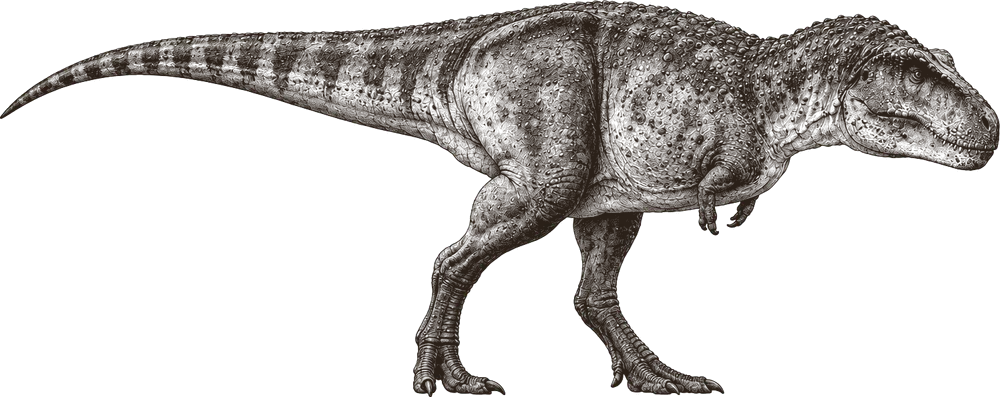


Scale in meters
Where its fossils were found
The evidence
Today

80 million years ago
Habitat
Rivers crossed the lowlands of Laramidia beside the Western Interior Seaway. Dinosaurs from the Wahweap Formation include Diabloceratops, Acristavus and Adelolophus.
Field notes
About Lythronax
What it was like
Lythronax was a heavily built tyrannosaurid, growing to around 8 meters (26 feet) long. Like its famous relative Tyrannosaurus, it had a broad rear skull and forward-facing eyes, giving it good depth perception for judging distance to prey.
Its forelimbs were small with two fingers, and its hindlimbs were powerful, the same basic build shared by all tyrannosaurids. The shape of its skull, wide at the back and narrow toward the snout, is one of the features that lets paleontologists tell it apart from its relatives.
Its world
Lythronax lived from about 84 to 72 million years ago, in the Late Cretaceous, in what is now Utah. Its remains come from the Wahweap Formation.
It shared its world with the horned Diabloceratops, the hadrosaur Acristavus, and other plant eaters such as Adelolophus and Machairoceratops, on the western landmass of Laramidia, separated from the rest of North America by the Western Interior Seaway.
How it was found
Loewen and colleagues named Lythronax in 2013, giving it the species name Lythronax argestes. It is among the oldest known tyrannosaurids, older than close relatives such as Tyrannosaurus, Tarbosaurus, Albertosaurus, and Daspletosaurus, making it important for understanding how the family's distinctive skull shape developed.
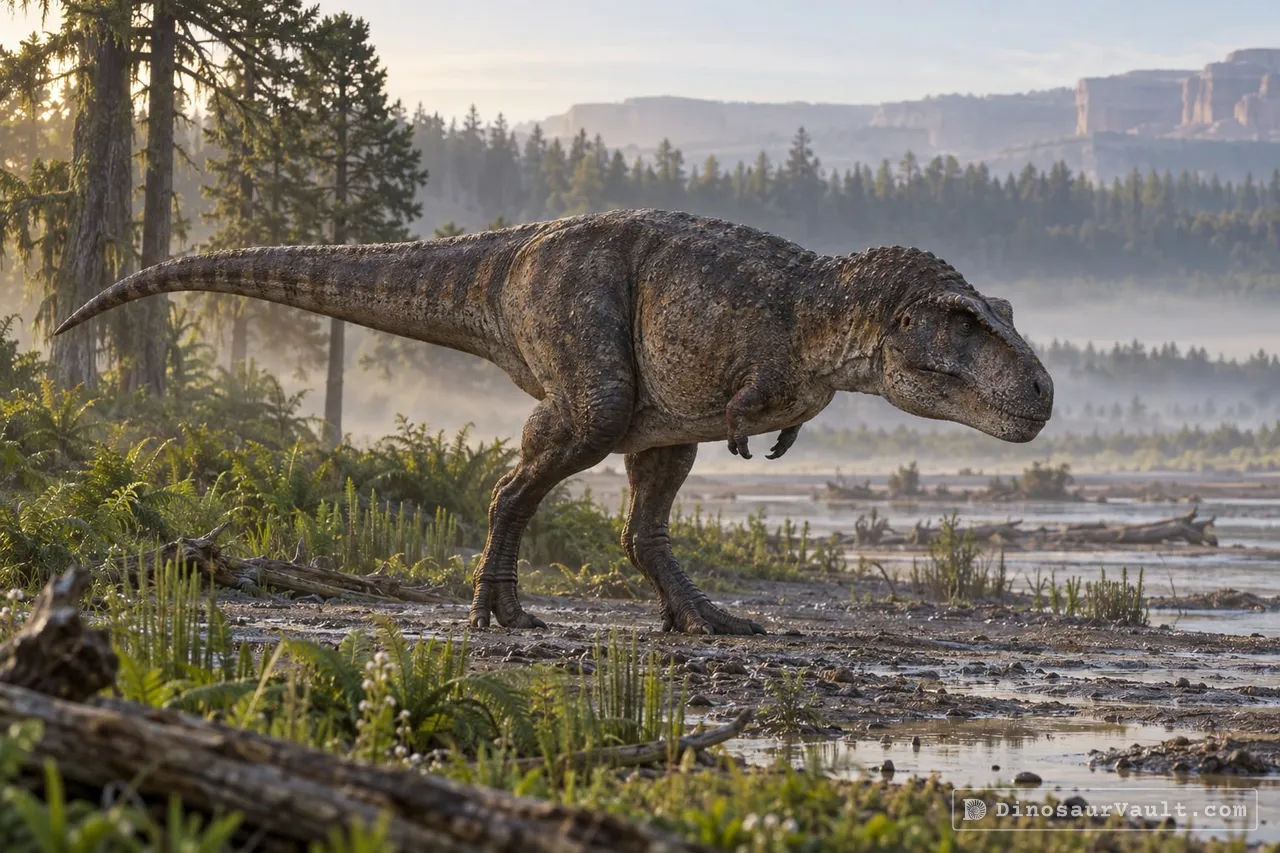
Field gallery
More views of Lythronax
Scenes reconstructed from the available fossil evidence.
1 of 7
Lived alongside
Found in the same rock formations


A rock formation can hold fossils laid down millions of years apart, so not every animal here met Lythronax.
The evidence
The science behind Lythronax
Which parts of the picture come from its own bones, and which come from its relatives.
From its own fossils
- Parts of the skull show a broad rear end and eyes directed forward.
- The partial skeleton includes hip and hindlimb bones.
Borrowed from relatives
- Short arms with two fingers are inferred from tyrannosaurids such as Tyrannosaurus.
- Scaly skin follows preserved skin in Tyrannosaurus, Tarbosaurus and other tyrannosaurids.
- Lips over the teeth follow comparisons with other large theropods.
Still unknown
- The proportions of its complete body.
- Its own skin covering and color.
- How its appearance changed as it grew.
Discovery timeline
- 2013Named itLoewen et al.
- 2017SkinBell et al.
- 2023Close relativeCullen et al.
Key papers
The research behind what we know of Lythronax
Named it
Described the broad skull of Lythronax and linked tyrannosaur evolution to changing seas that divided dinosaur habitats.
Tyrant Dinosaur Evolution Tracks the Rise and Fall of Late Cretaceous Oceans. PLoS ONE 8: e79420
Read the paper : Tyrant Dinosaur Evolution Tracks the Rise and Fall of Late Cretaceous Oceans (opens in a new tab)Skin
Documented scaly skin in Tyrannosaurus and other large tyrannosaurids, providing comparisons for the covering of Lythronax.
Tyrannosauroid integument reveals conflicting patterns of gigantism and feather evolution. Biology Letters 13: 20170092
Read the paper : Tyrannosauroid integument reveals conflicting patterns of gigantism and feather evolution (opens in a new tab)Close relative
Tooth wear and comparisons with living reptiles supported lips covering the teeth of large theropods, including tyrannosaurids.
Theropod dinosaur facial reconstruction and the importance of soft tissues in paleobiology. Science 379: 1348-1352
Read the paper : Theropod dinosaur facial reconstruction and the importance of soft tissues in paleobiology (opens in a new tab)
Close relatives
Other members of Tyrannosauridae


Sources: Wikidata