Wulagasaurus
"Wulaga lizard"
Type species Wulagasaurus dongi
- Lived
- 72 to 66 million years ago, Late Cretaceous
- Diet
- Herbivore
- Group
- Ornithopods, Hadrosauridae
- Found in
- China
- Named by
- Godefroit et al. 2008
Where its fossils were found
The evidence
Today

70 million years ago
Habitat
Rivers carried coarse sand across a lowland in northeastern China, where debris flows buried dinosaur bones. Sahaliyania shared this landscape; Charonosaurus and Amurosaurus lived in the wider region.
Field notes
About Wulagasaurus
What it was like
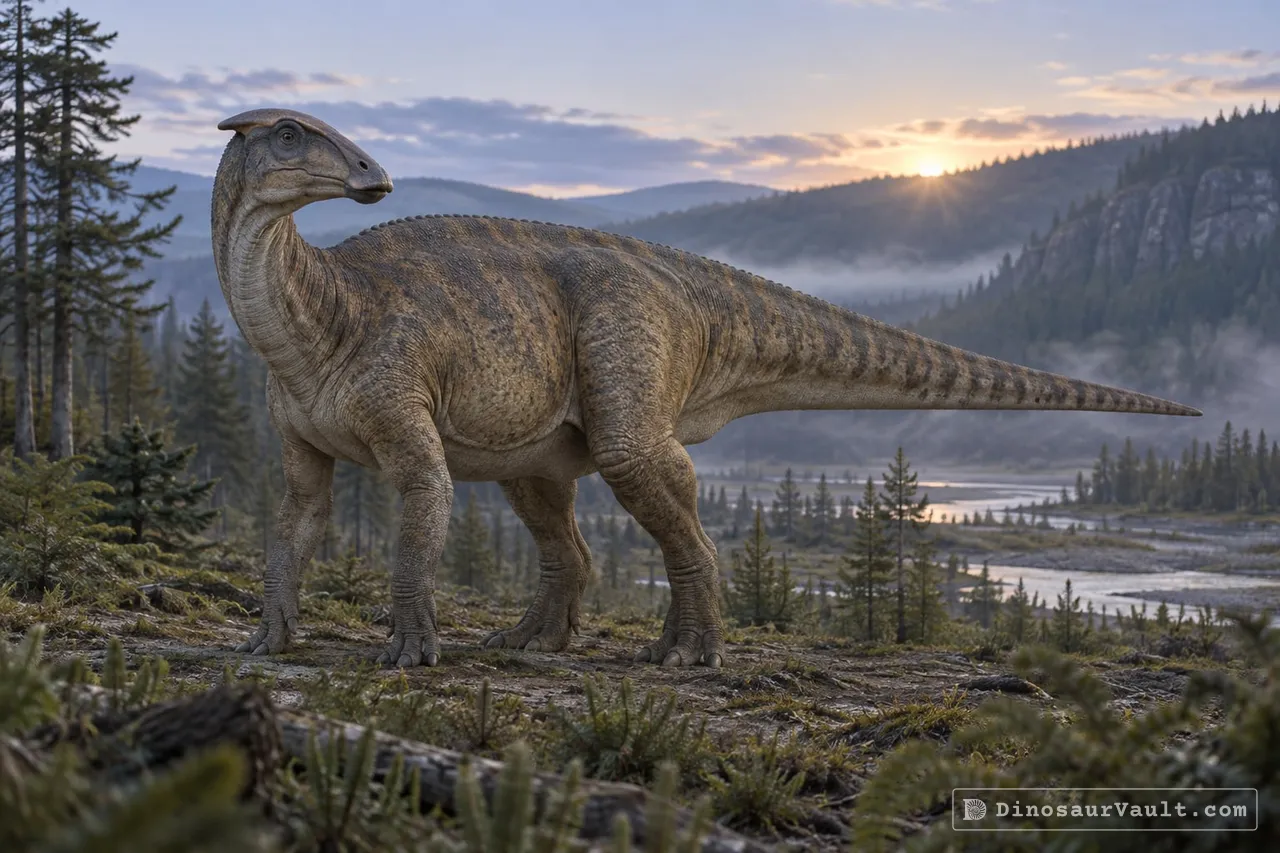
Wulagasaurus was a duck-billed plant eater without a hollow crest. It is known from parts of the skull, arms and hips.
It is an early member of the branch of hadrosaurs that includes Edmontosaurus and Saurolophus.
Its world
It lived about 72 to 66 million years ago, at the very end of the Late Cretaceous, in what is now northeastern China. Its bones come from the Yuliangzi Formation, where it shared the land with the crested hadrosaurs Charonosaurus and Amurosaurus.
How it was found
Godefroit and colleagues named Wulagasaurus in 2008. Its bones were found in a bone bed where most of the remains belong to crested hadrosaurs.
Field gallery
More views of Wulagasaurus
Scenes reconstructed from the available fossil evidence.
Lived alongside
Found in the same rock formations
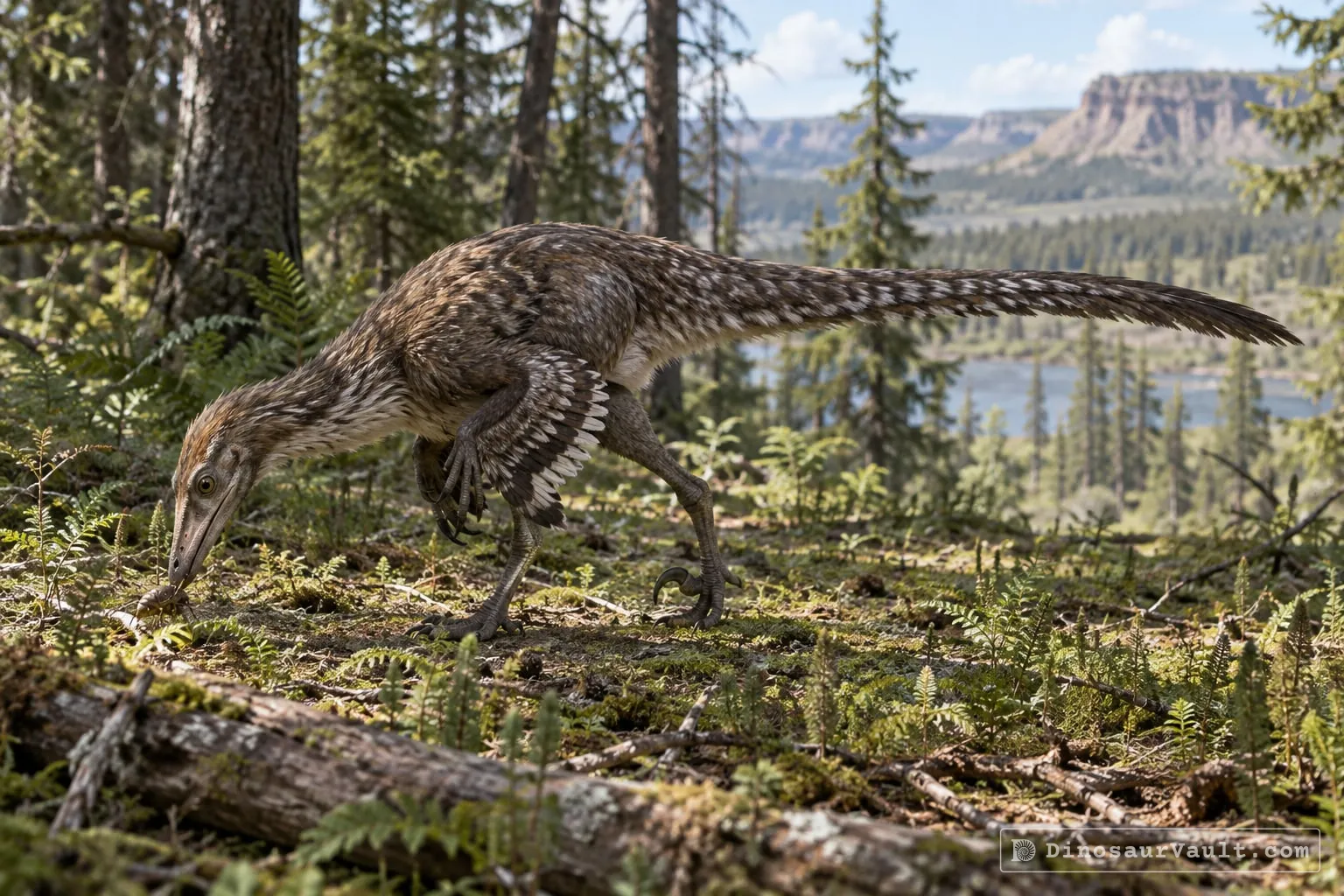
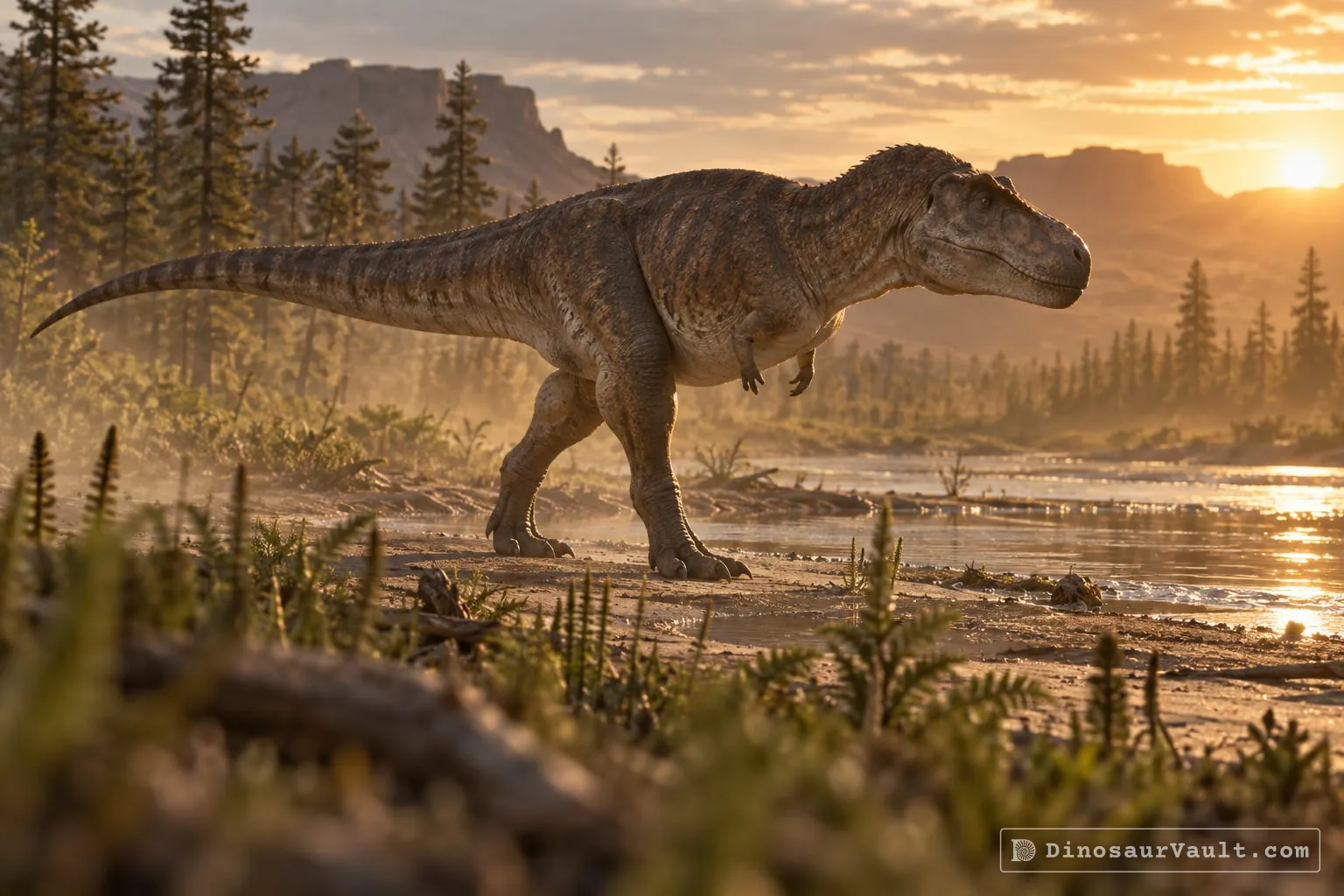
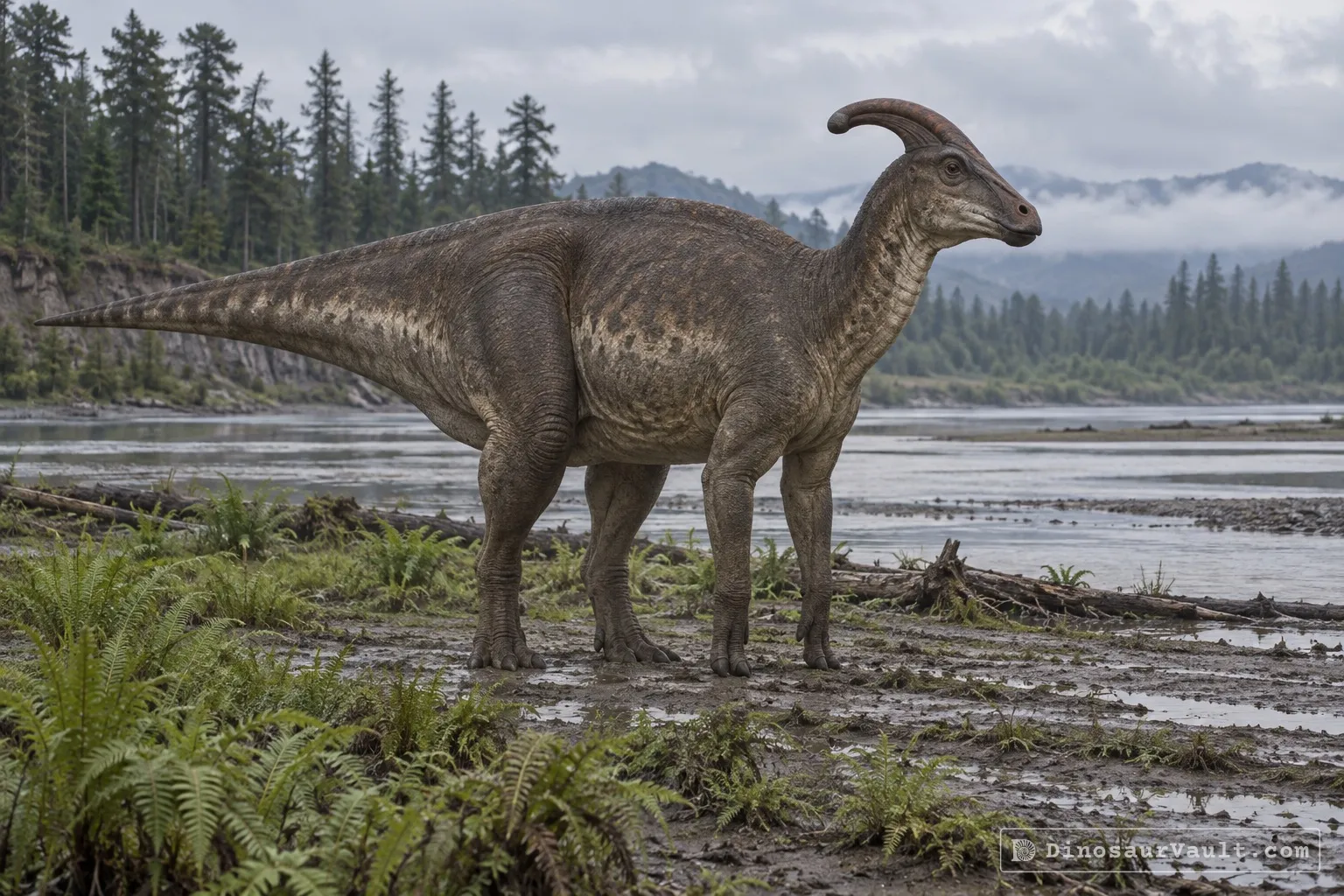
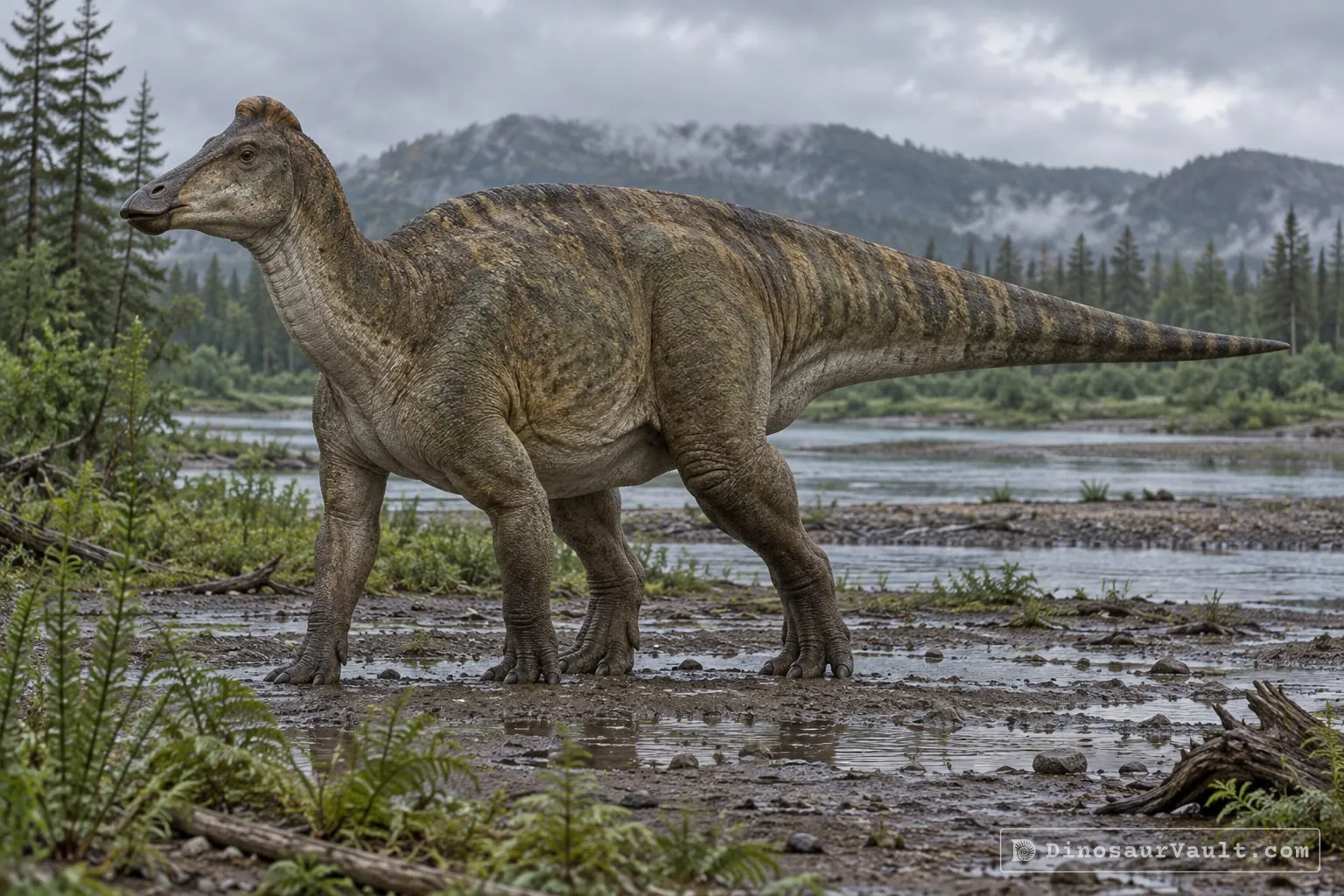
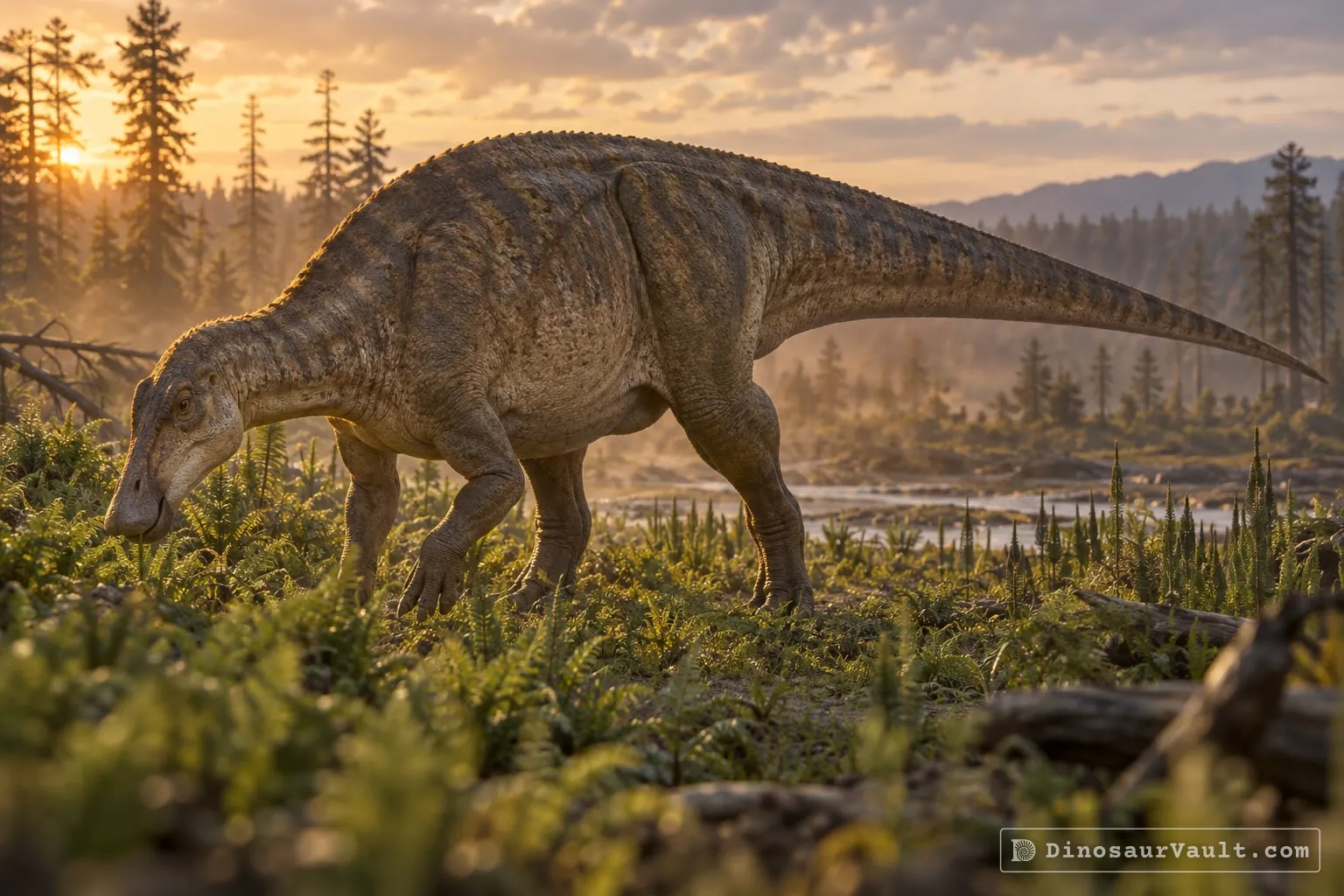


A rock formation can hold fossils laid down millions of years apart, so not every animal here met Wulagasaurus.
The evidence
The science behind Wulagasaurus
Which parts of the picture come from its own bones, and which come from its relatives.
From its own fossils
- The type specimen is a long, slender lower jaw; separate cheek, arm and hip bones have also been assigned to Wulagasaurus.
- A later study reassigned the originally included braincases, upper jaws and shoulder blades to crested duckbills.
- One study placed Wulagasaurus near Brachylophosaurus and Maiasaura.
Borrowed from relatives
- Its missing hands and feet are restored after Edmontosaurus and Maiasaura.
- Its missing upper face is restored after Acristavus.
Still unknown
- The full outline of its head and body.
- Its skin color.
- Its exact position within the duckbill family tree.
Discovery timeline
- 2008Named itGodefroit et al.
- 2010Family treePRIETO-MÁRQUEZ
- 2012Family treeGodefroit, Bolotsky & Lauters
Key papers
The research behind what we know of Wulagasaurus
Named it
Distinguished Wulagasaurus from a crested duckbill in a mixed bonebed, using differences in the jaw and arm bones.
New Hadrosaurid Dinosaurs from the Uppermost Cretaceous of Northeastern China. Acta Palaeontologica Polonica 53: 47-74
Read the paper : New Hadrosaurid Dinosaurs from the Uppermost Cretaceous of Northeastern China (opens in a new tab)Family tree
Placed Wulagasaurus within the duckbill family tree using a broad comparison of skull and skeleton features.
Global phylogeny of Hadrosauridae (Dinosauria: Ornithopoda) using parsimony and Bayesian methods. Zoological Journal of the Linnean Society 159: 435-502
Read the paper : Global phylogeny of Hadrosauridae (Dinosauria: Ornithopoda) using parsimony and Bayesian methods (opens in a new tab)Family tree
Compared a newly named duckbill with Wulagasaurus and other regional relatives, finding different family-tree arrangements when fragmentary animals were included.
A New Saurolophine Dinosaur from the Latest Cretaceous of Far Eastern Russia. PLoS ONE 7: e36849
Read the paper : A New Saurolophine Dinosaur from the Latest Cretaceous of Far Eastern Russia (opens in a new tab)
Close relatives
Other members of Hadrosauridae


Sources: Wikidata