Cetiosaurus
SEE-tee-oh-SORE-us
"whale lizard"
- Lived
- 171 to 165 million years ago, Middle Jurassic
- Diet
- Herbivore
- Length
- about 18 m (59 ft)
- Group
- Sauropods
- Found in
- United Kingdom and Morocco
- Named by
- Owen 1841
Size comparison
To scale


Scale in metersOutline: typical sauropod shape
Where its fossils were found
The evidence
Today

170 million years ago
Also reported from France.
Habitat
Its Middle Jurassic home in England included low-lying land near shallow seas. Other dinosaurs in the region included Megalosaurus and Proceratosaurus.
Field notes
About Cetiosaurus
What it was like
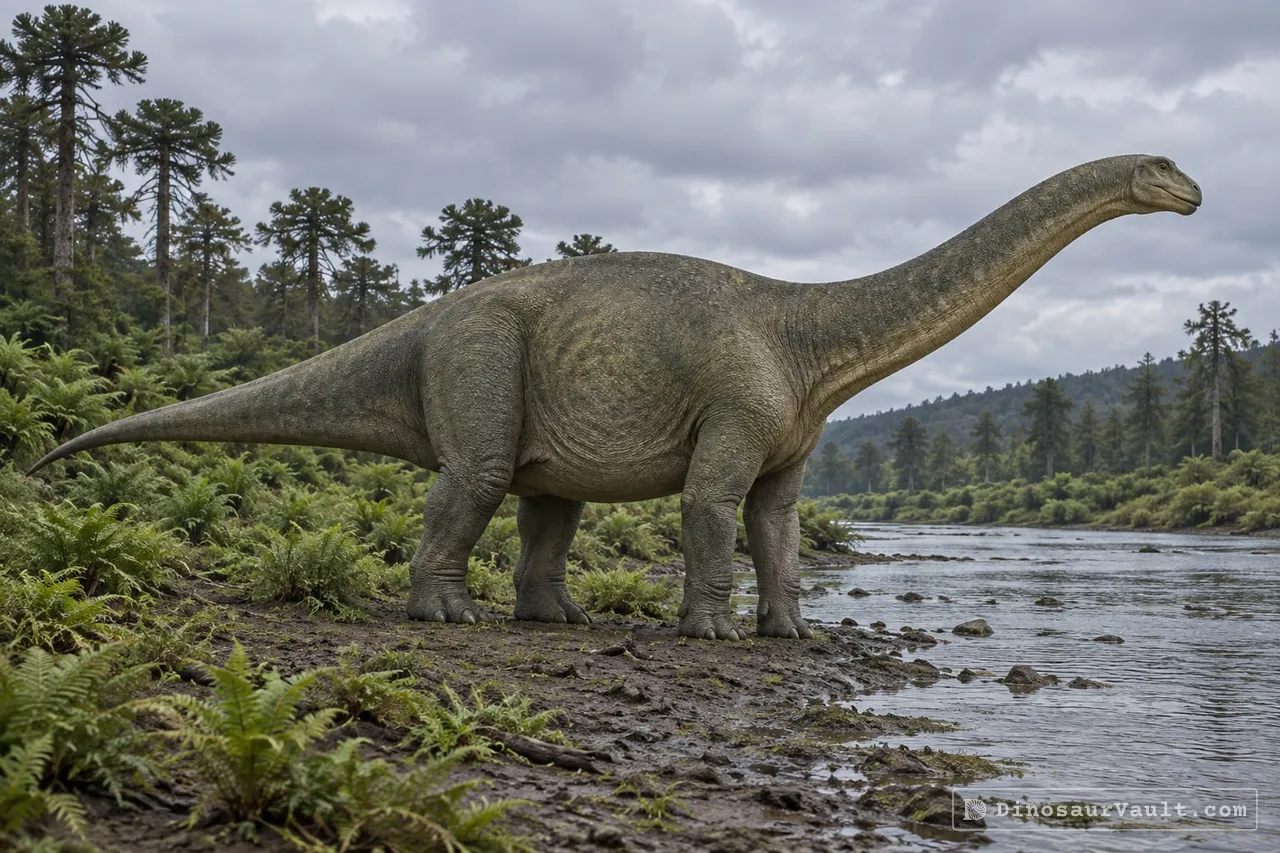
Cetiosaurus was an early long-necked plant eater, about 18 meters (59 feet) long. It walked on four legs, had a long neck and tail, and its back bones were solid rather than hollowed out like those of later sauropods.
Its world
Most of its fossils come from the Middle Jurassic of England, in rocks such as the Forest Marble and the Chipping Norton Limestone, where it lived beside the meat eater Megalosaurus. Other finds come from Morocco and France.
Some bones once linked to the genus are much younger and probably belong to other animals.
How it was found
Owen named Cetiosaurus in 1841. He thought its huge bones came from a sea creature, hence the name. It was the first sauropod ever named, and over the years many species were added to it; most have since been moved or dropped.
Field gallery
More views of Cetiosaurus
Scenes reconstructed from the available fossil evidence.
Lived alongside
Found in the same rock formations


A rock formation can hold fossils laid down millions of years apart, so not every animal here met Cetiosaurus.
The evidence
The science behind Cetiosaurus
Which parts of the picture come from its own bones, and which come from its relatives.
From its own fossils
- Extensive skeletons preserve back and tail bones, the pelvis and large limb bones.
- A referred skeleton preserves a nearly complete series of neck bones.
- Upright hand bones form a curved supporting column beneath each front leg.
Borrowed from relatives
- Shunosaurus guides the reconstruction of the missing complete head, with a relatively light skull and tapering snout.
- Skin and fleshy foot pads are restored by comparison with other sauropods.
Still unknown
- The complete shape of its face.
- Its skin texture and color.
- The ages of the animals represented by its smaller skeletons.
Often drawn wrong
- Despite its name, it was a land animal with upright, weight-bearing limbs.
Discovery timeline
- 1841Named itOwen
- 2002New findUpchurch & Martin
- 2003Full descriptionUpchurch & Martin
Key papers
The research behind what we know of Cetiosaurus
Named it
Named Cetiosaurus from huge bones that were initially interpreted as belonging to an aquatic reptile.
Description of a portion of the skeleton of the Cetiosaurus, a gigantic extinct saurian reptile occurring in the Oolitic formations of different portions of England. Proceedings of the Geological Society of London 3, part 2: 457-462
No link available
New find
Described a skeleton with a nearly complete neck and compared Cetiosaurus with other early sauropods.
The Rutland Cetiosaurus: the anatomy and relationships of a Middle Jurassic British sauropod dinosaur. Palaeontology 45: 1049-1074
Read the paper : The Rutland Cetiosaurus: the anatomy and relationships of a Middle Jurassic British sauropod dinosaur (opens in a new tab)Full description
Restudied the main skeletons, clarified which bones belong to Cetiosaurus and described its limbs, backbone and supporting hands.
The anatomy and taxonomy ofCetiosaurus(Saurischia, Sauropoda) from the Middle Jurassic of England. Journal of Vertebrate Paleontology 23: 208-231
Read the paper : The anatomy and taxonomy ofCetiosaurus(Saurischia, Sauropoda) from the Middle Jurassic of England (opens in a new tab)
Close relatives
Other members of Gravisauria


Sources: Wikidata