Traukutitan
"Trauku titan"
Type species Traukutitan eocaudata
- Lived
- 86 to 84 million years ago, Late Cretaceous
- Diet
- Herbivore
- Group
- Sauropods
- Found in
- Argentina
- Named by
- Juárez Valieri and Calvo 2011
Where its fossils were found
The evidence
Today

80 million years ago
Habitat
Its world included river channels and dry, sandy ground. Bonitasaura, Alvarezsaurus and Velocisaurus lived in the same formation.
Field notes
About Traukutitan
What it was like
Traukutitan was a large titanosaur, a long-necked, four-legged plant eater. It is known from two thigh bones and some tail bones.
Its describers tentatively linked it to the giant Futalognkosaurus and Mendozasaurus, but its closest relatives remain uncertain.
Its world
It lived about 86 to 84 million years ago, in the Late Cretaceous, in what is now Argentina. Its bones come from the Bajo de la Carpa Formation, where it shared the land with the titanosaur Bonitasaura and the small hunters Alvarezsaurus and Velocisaurus.
How it was found
Juárez Valieri and Calvo named Traukutitan in 2011, from a single find.
Field gallery
More views of Traukutitan
Scenes reconstructed from the available fossil evidence.
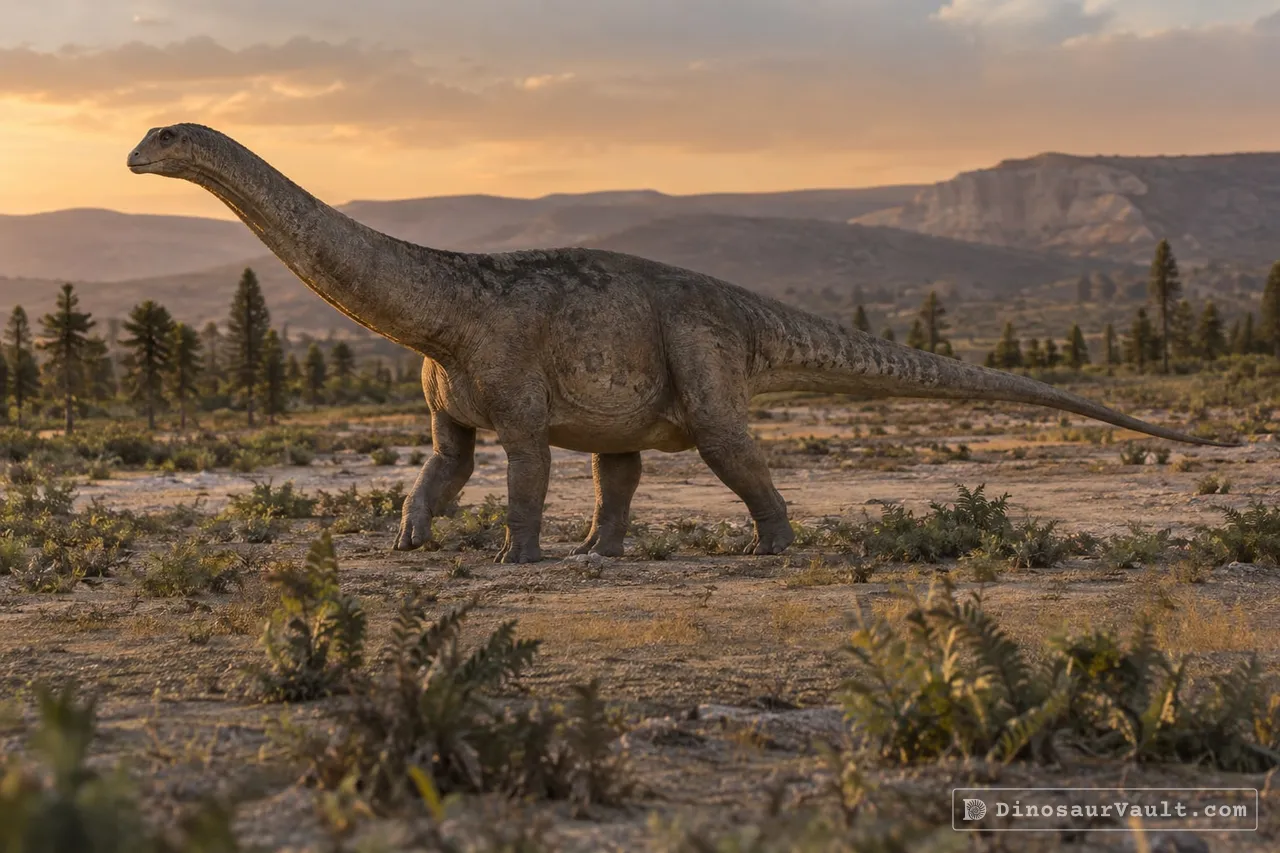
1 of 3
Lived alongside
Found in the same rock formations
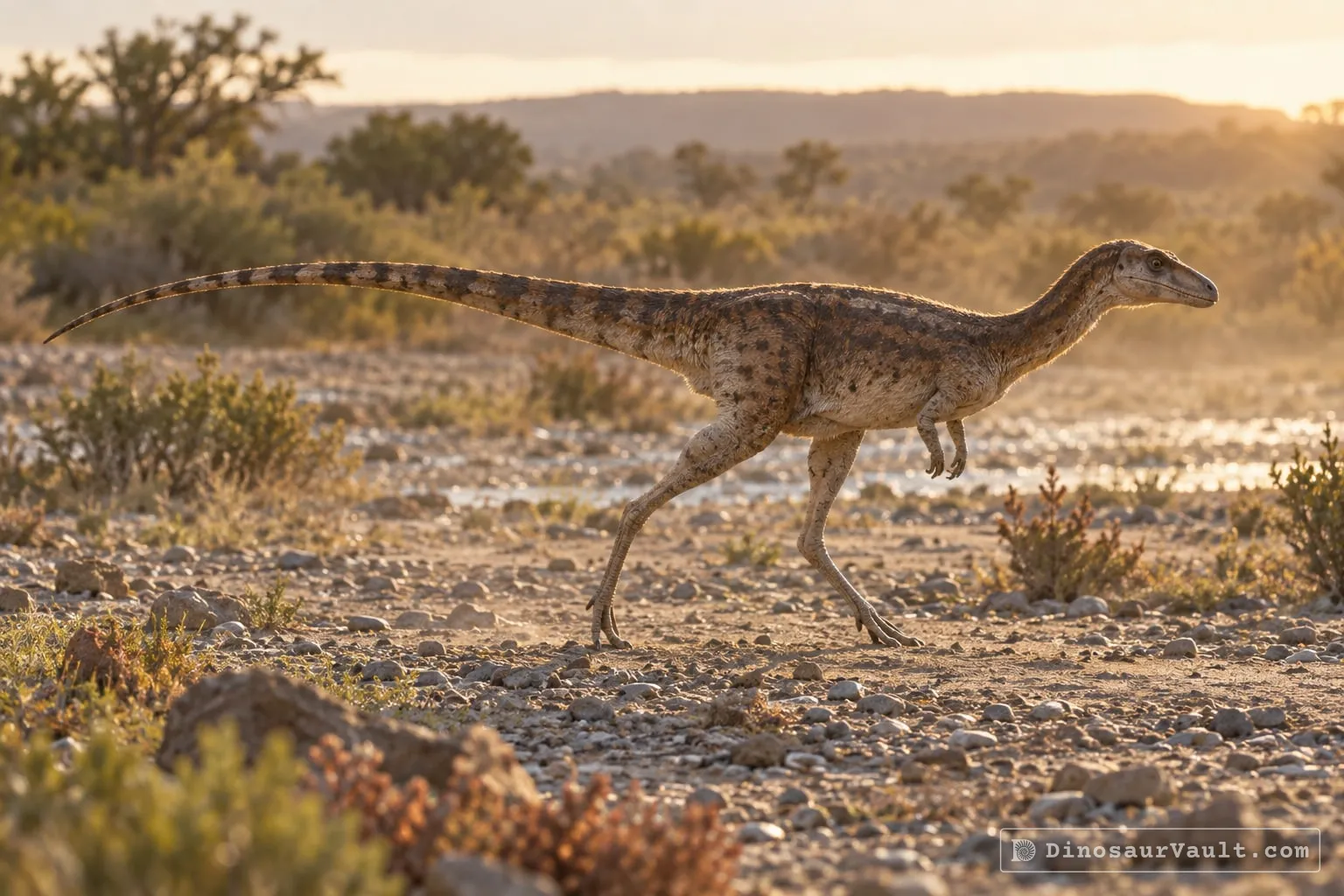
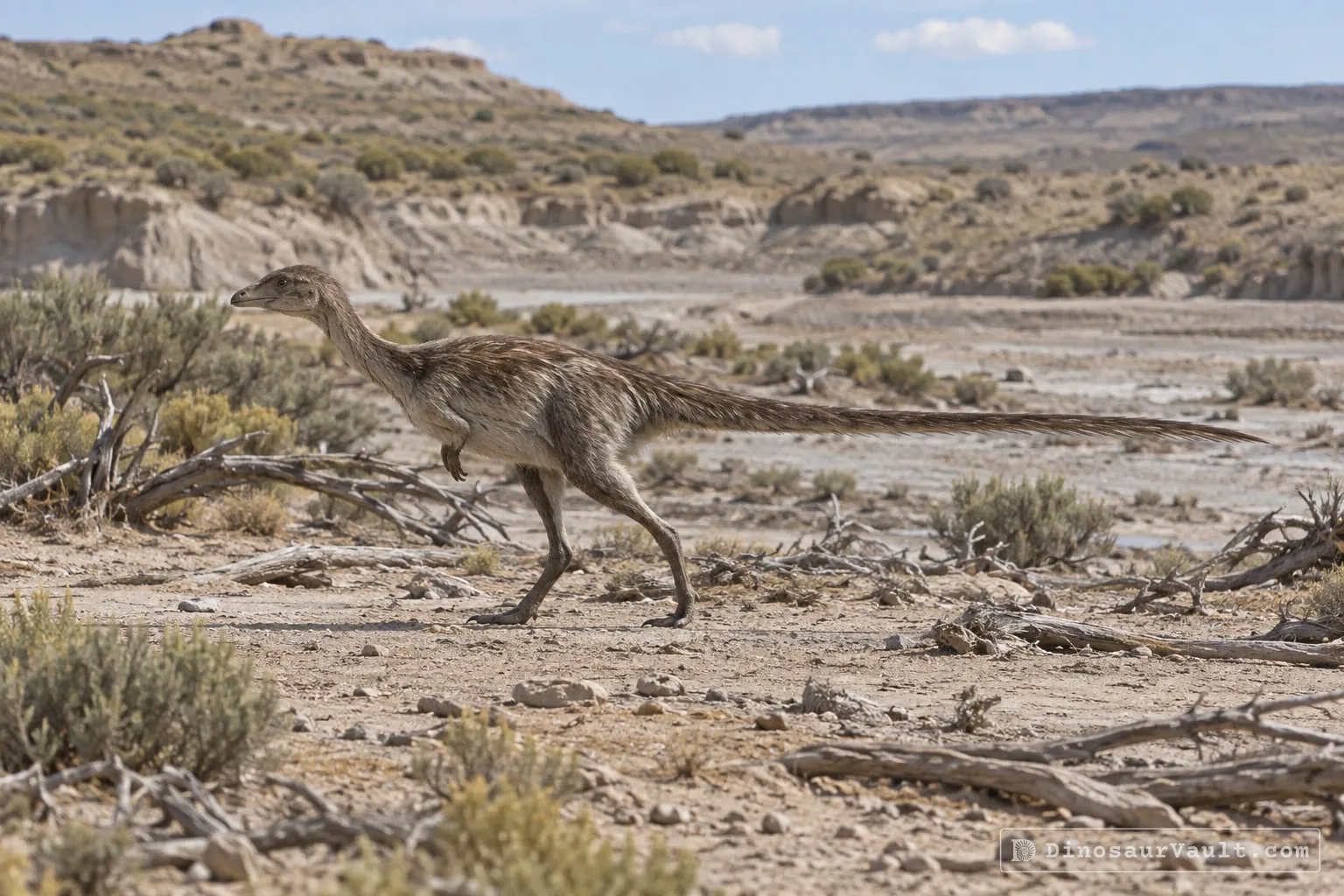
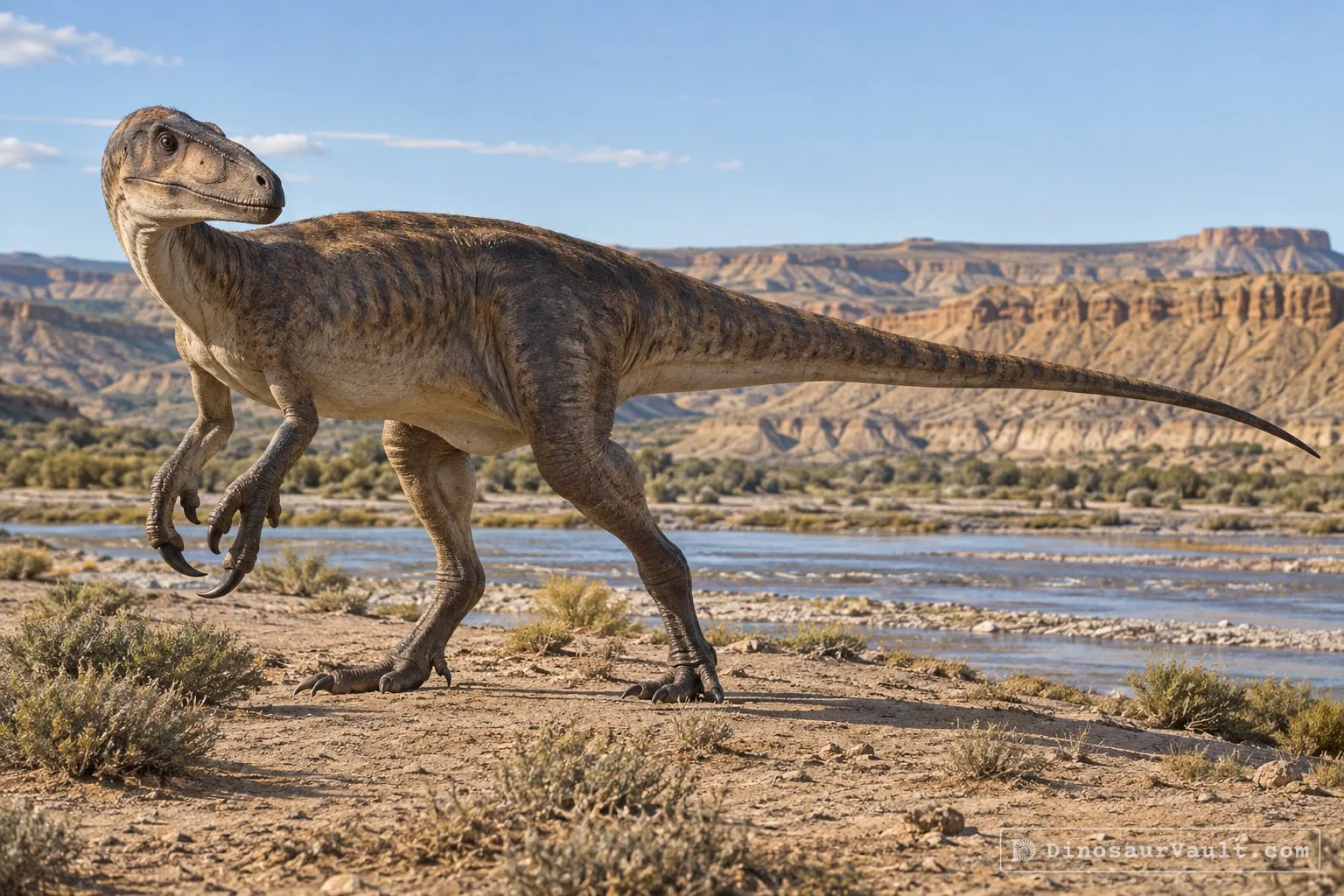
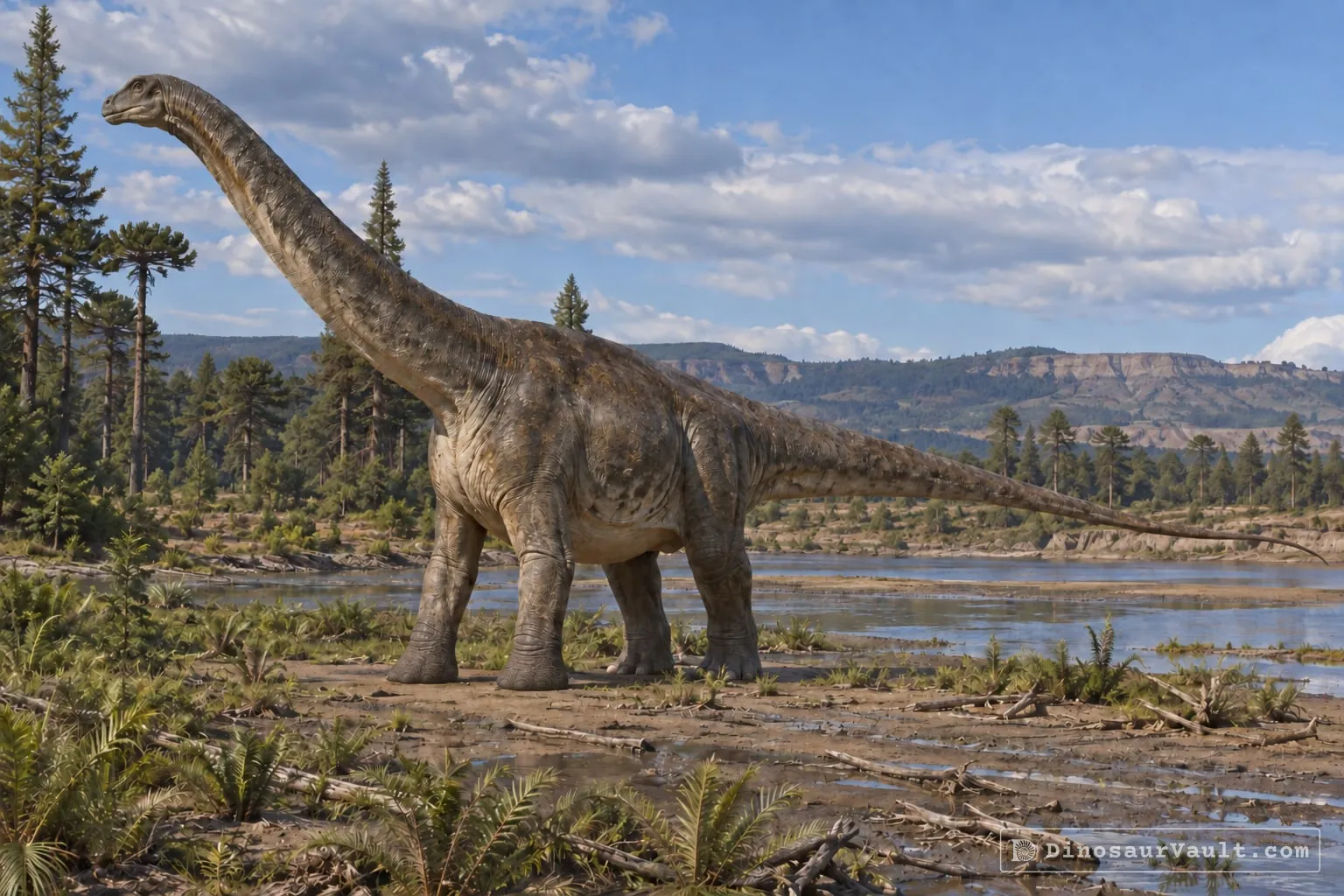
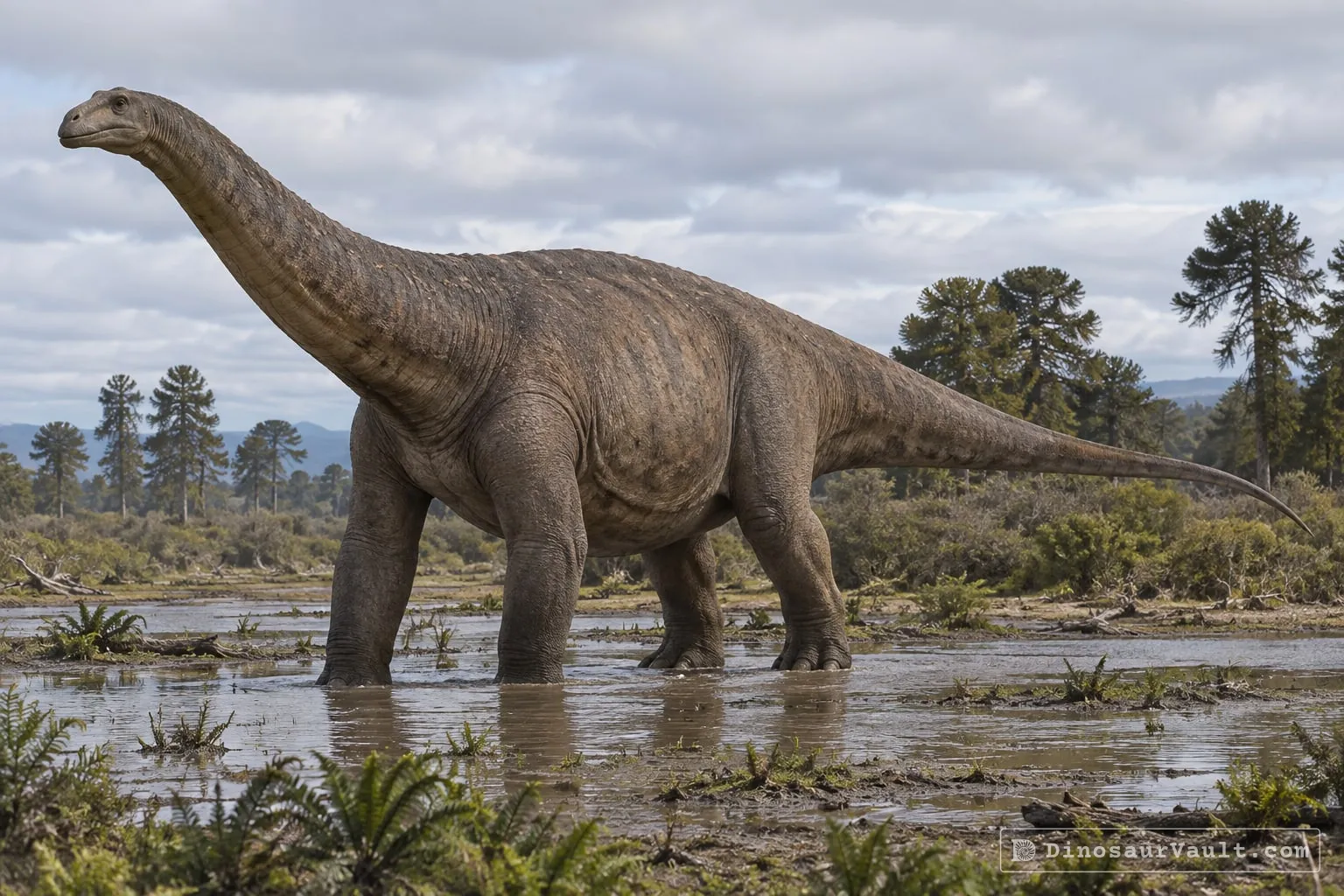
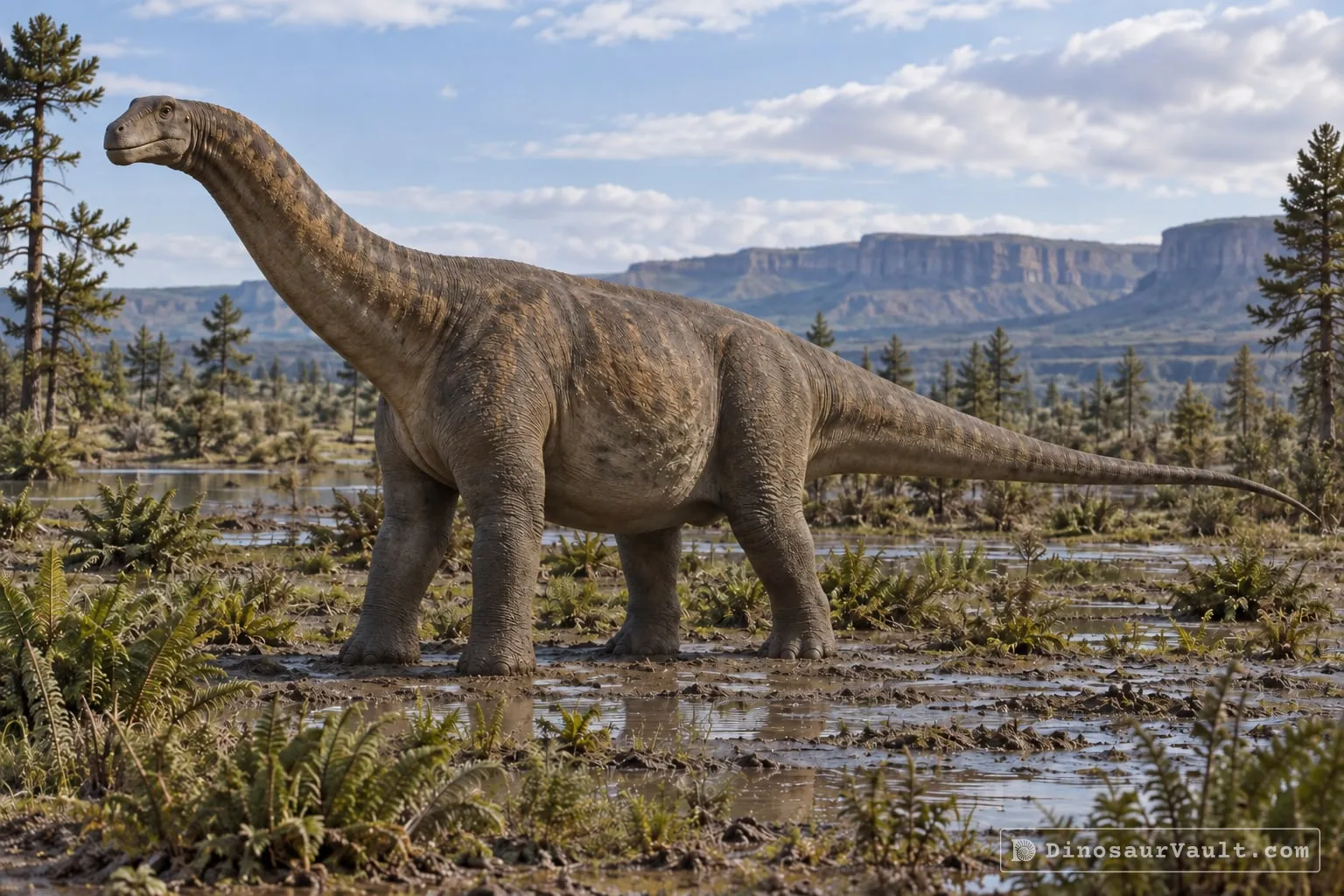
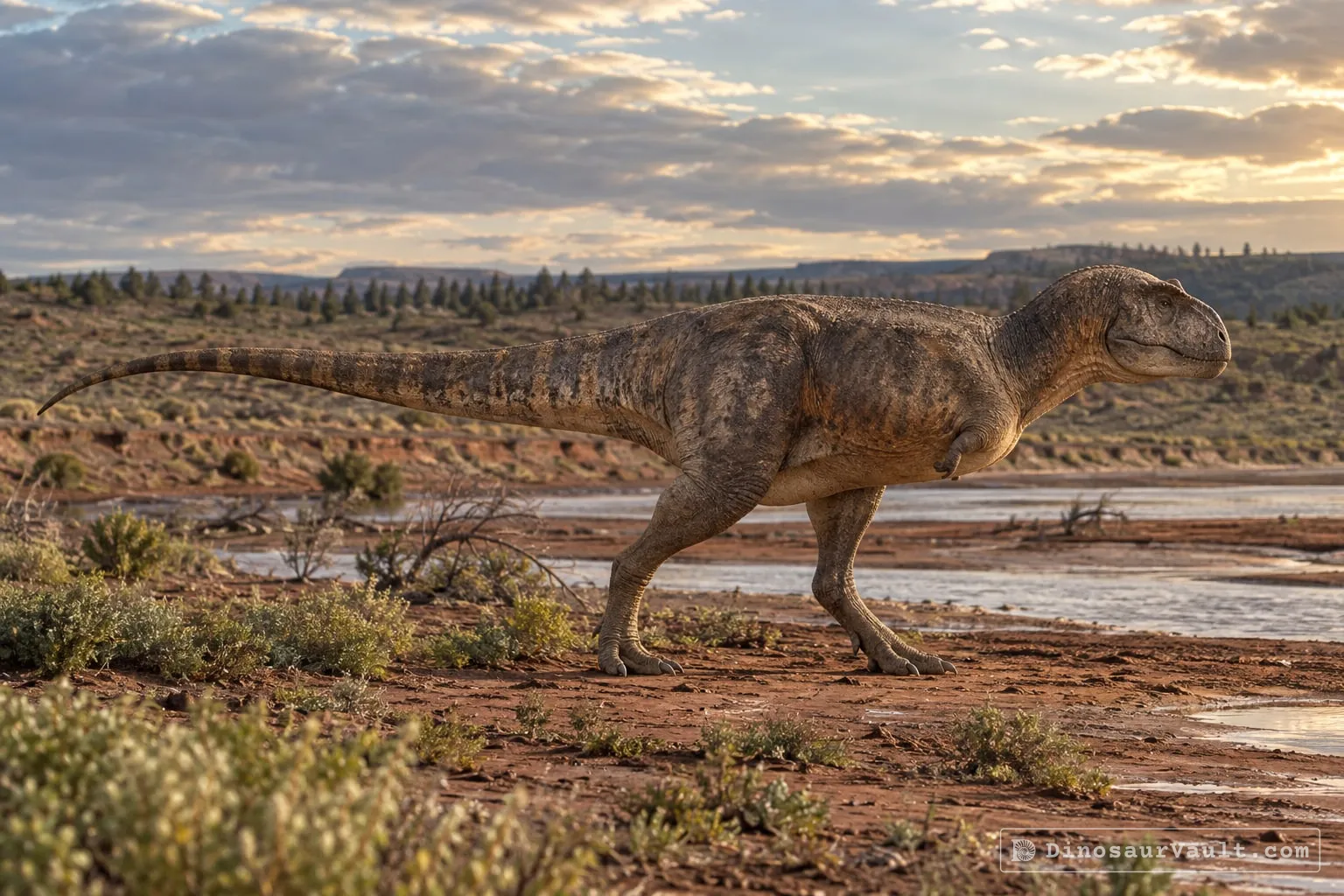
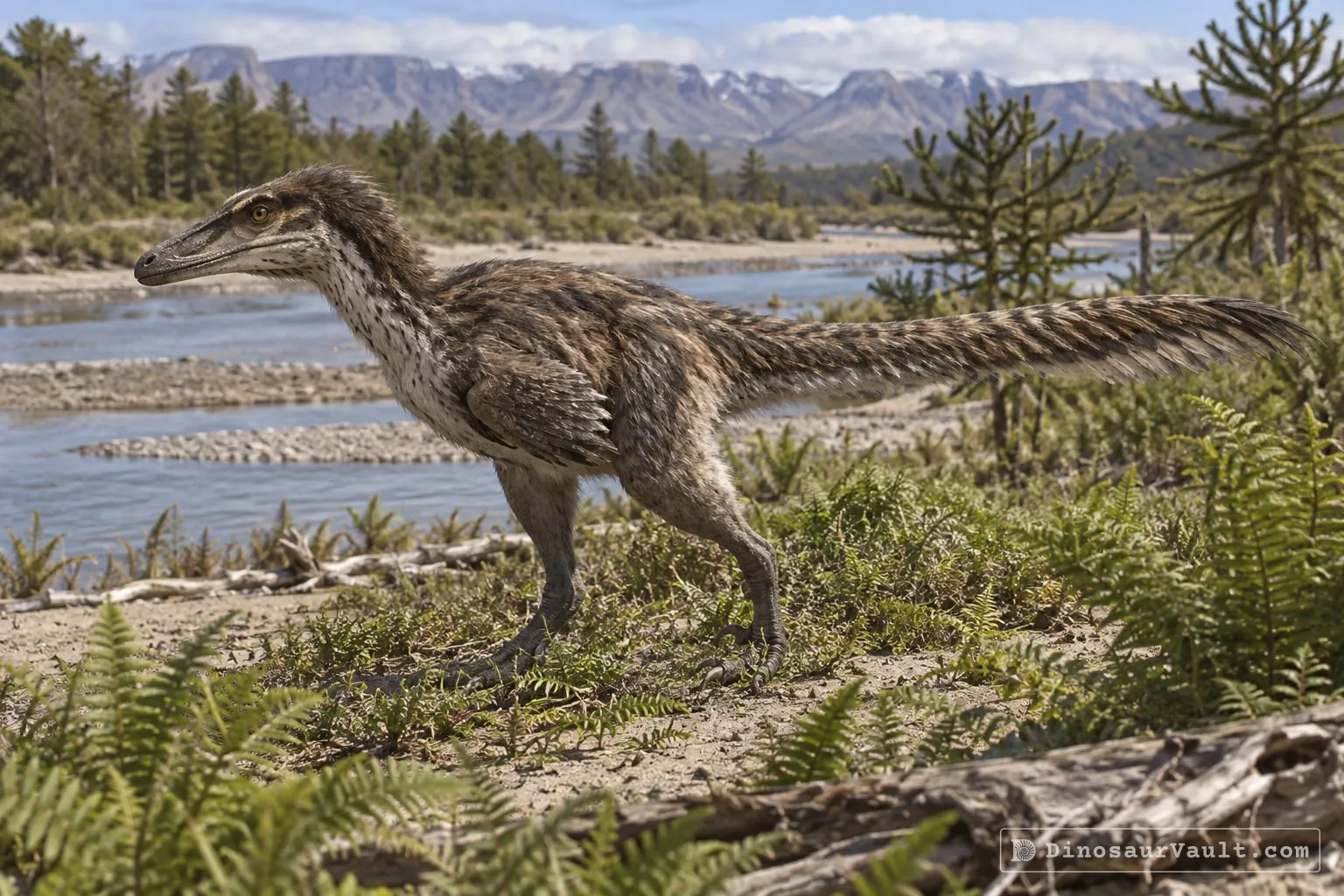


A rock formation can hold fossils laid down millions of years apart, so not every animal here met Traukutitan.
The evidence
The science behind Traukutitan
Which parts of the picture come from its own bones, and which come from its relatives.
From its own fossils
- The type specimen, found partly articulated, is both thigh bones and a series of vertebrae from the front and middle of the tail. A partial hip bone reported with it can no longer be found in the collection.
- The front tail bones are tall, with a strong ball-and-socket joint, while some middle tail bones are short and broad with flat back surfaces.
- Each thigh bone has a bulge on its outer side near the top. A later study found the thigh bones neither especially stout nor especially slender for a titanosaur.
Borrowed from relatives
- The missing head is restored by comparison with the titanosaur Tapuiasaurus.
- The neck, trunk, shoulders, arms and hips follow the titanosaur Mnyamawamtuka.
Still unknown
- Its head, neck, front limbs, lower legs, feet and tail tip, which are missing from the known skeleton.
- Its closest relatives. Its describers linked it to Mendozasaurus and Futalognkosaurus only tentatively.
- Its total length and weight, and its skin color and pattern.
Discovery timeline
- 2011Named itValieri & Calvo
- 2013Same rocksFernández et al.
- 2018Close relativeGonzàlez Riga et al.
Key papers
The research behind what we know of Traukutitan
Named it
Named Traukutitan from thigh and tail bones, tentatively linking it to Mendozasaurus and Futalognkosaurus through features of the tail.
Revision of MUCPv 204, a Senonian basal titanosaur from northern Patagonia. Dinosaurios y Paleontología desde América Latina. Anales del III Congreso Latinoamericano de Paleontología. Editorial de la Universidad Nacional de Cuyo, Neuquén.
No link available
Same rocks
Found a bird nesting colony among sand dunes near a temporary watercourse in the same formation as Traukutitan.
A Large Accumulation of Avian Eggs from the Late Cretaceous of Patagonia (Argentina) Reveals a Novel Nesting Strategy in Mesozoic Birds. PLoS ONE 8: e61030
Read the paper : A Large Accumulation of Avian Eggs from the Late Cretaceous of Patagonia (Argentina) Reveals a Novel Nesting Strategy in Mesozoic Birds (opens in a new tab)Close relative
Described the skeleton of Mendozasaurus and placed it in a group with Futalognkosaurus and other giant titanosaurs.
Osteology of the Late Cretaceous Argentinean sauropod dinosaur Mendozasaurus neguyelap: implications for basal titanosaur relationships. Zoological Journal of the Linnean Society 184: 136-181
Read the paper : Osteology of the Late Cretaceous Argentinean sauropod dinosaur Mendozasaurus neguyelap: implications for basal titanosaur relationships (opens in a new tab)
Close relatives
Other members of Lognkosauria


Sources: Wikidata