Sacisaurus
- Lived
- 227 to 206 million years ago, Late Triassic
- Diet
- Herbivore
- Group
- Early ornithischians, Silesauridae
- Found in
- Brazil
- Named by
- Ferigolo and Langer 2007
Where its fossils were found
The evidence
Today

220 million years ago
Habitat
River channels and floodplains in what is now Brazil. Guaibasaurus, Unaysaurus and Macrocollum also come from the Caturrita Formation.
Field notes
About Sacisaurus
What it was like
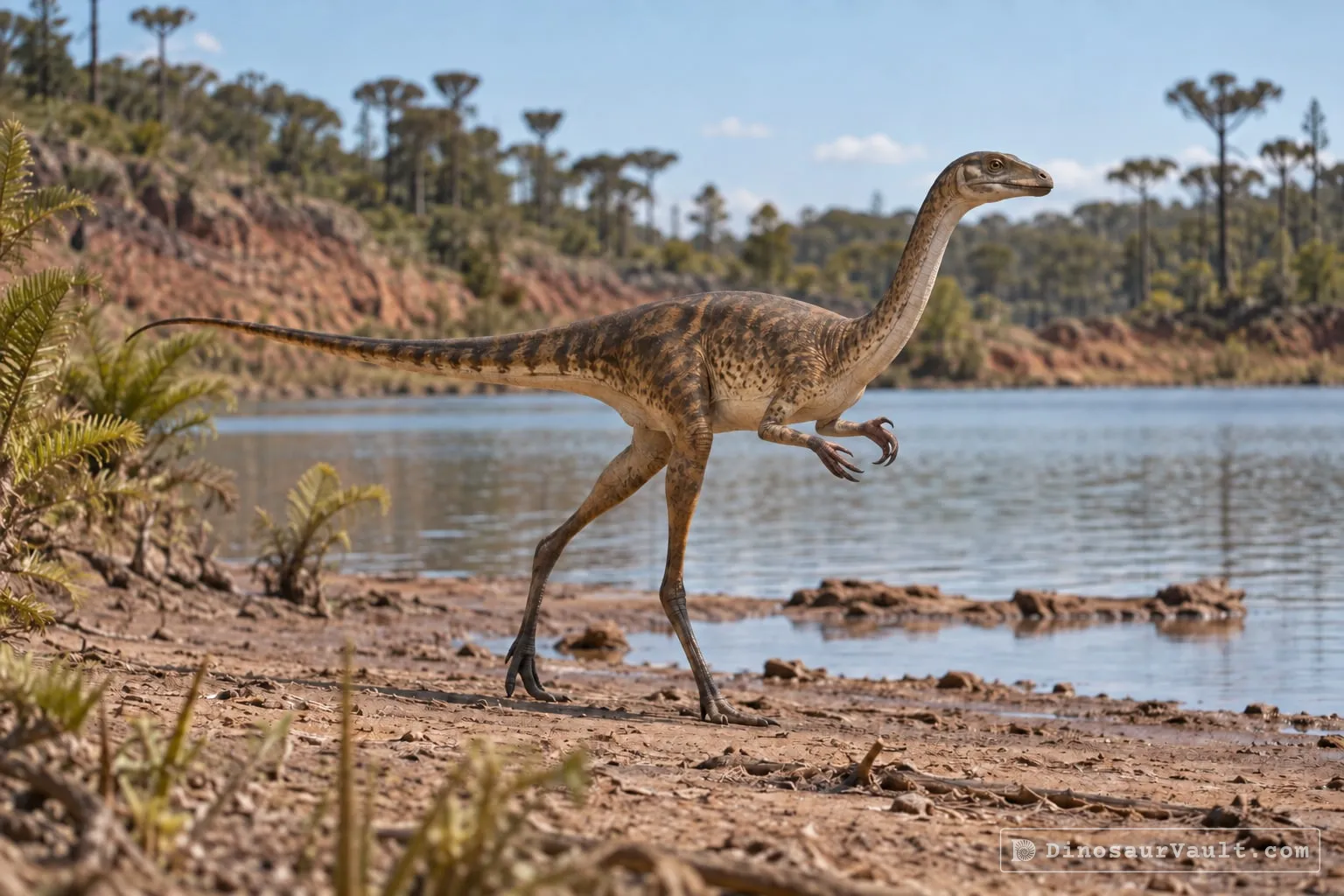
Sacisaurus was a slender, four-legged plant eater from the silesaurids, close cousins of dinosaurs or perhaps the earliest ornithischians. Its lower jaws ended in a toothless tip, which may have held a beak.
Its world
It lived in the Late Triassic, in what is now Brazil. It comes from the Caturrita Formation, where it shared the land with the early sauropodomorphs Guaibasaurus, Unaysaurus and Macrocollum.
How it was found
Ferigolo and Langer named Sacisaurus in 2007. Its name comes from a one-legged figure of local folklore, because only right legs were found.
Field gallery
More views of Sacisaurus
Scenes reconstructed from the available fossil evidence.
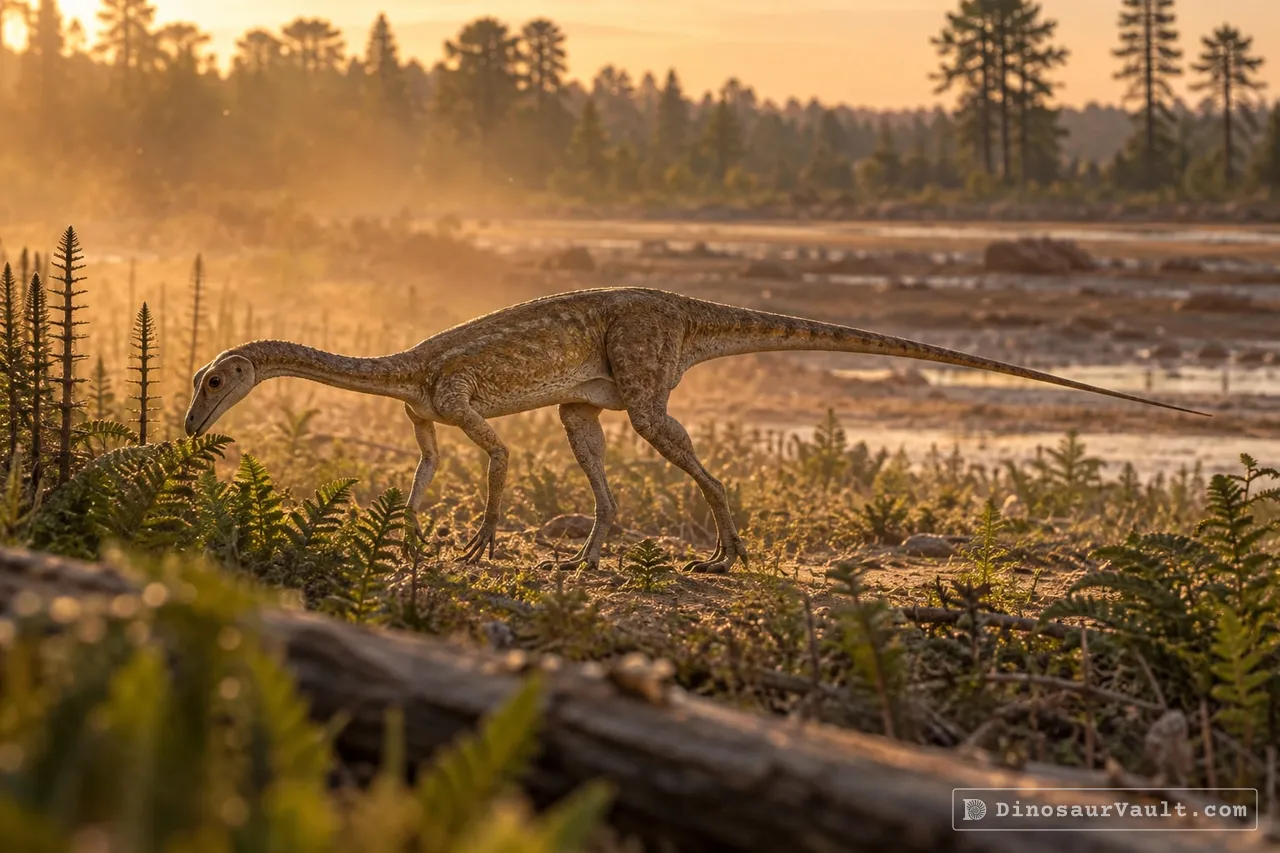
1 of 3
Lived alongside
Found in the same rock formations
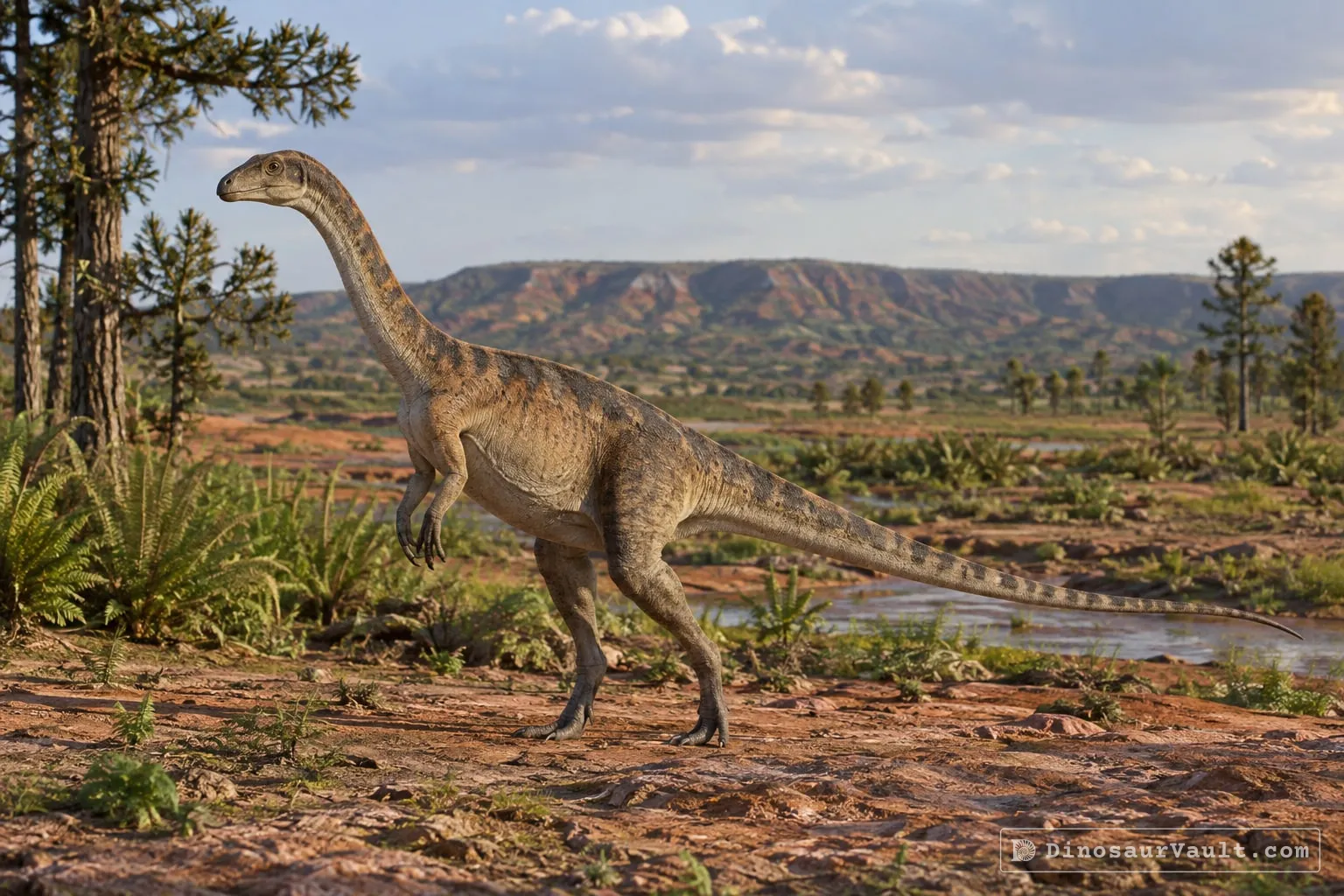
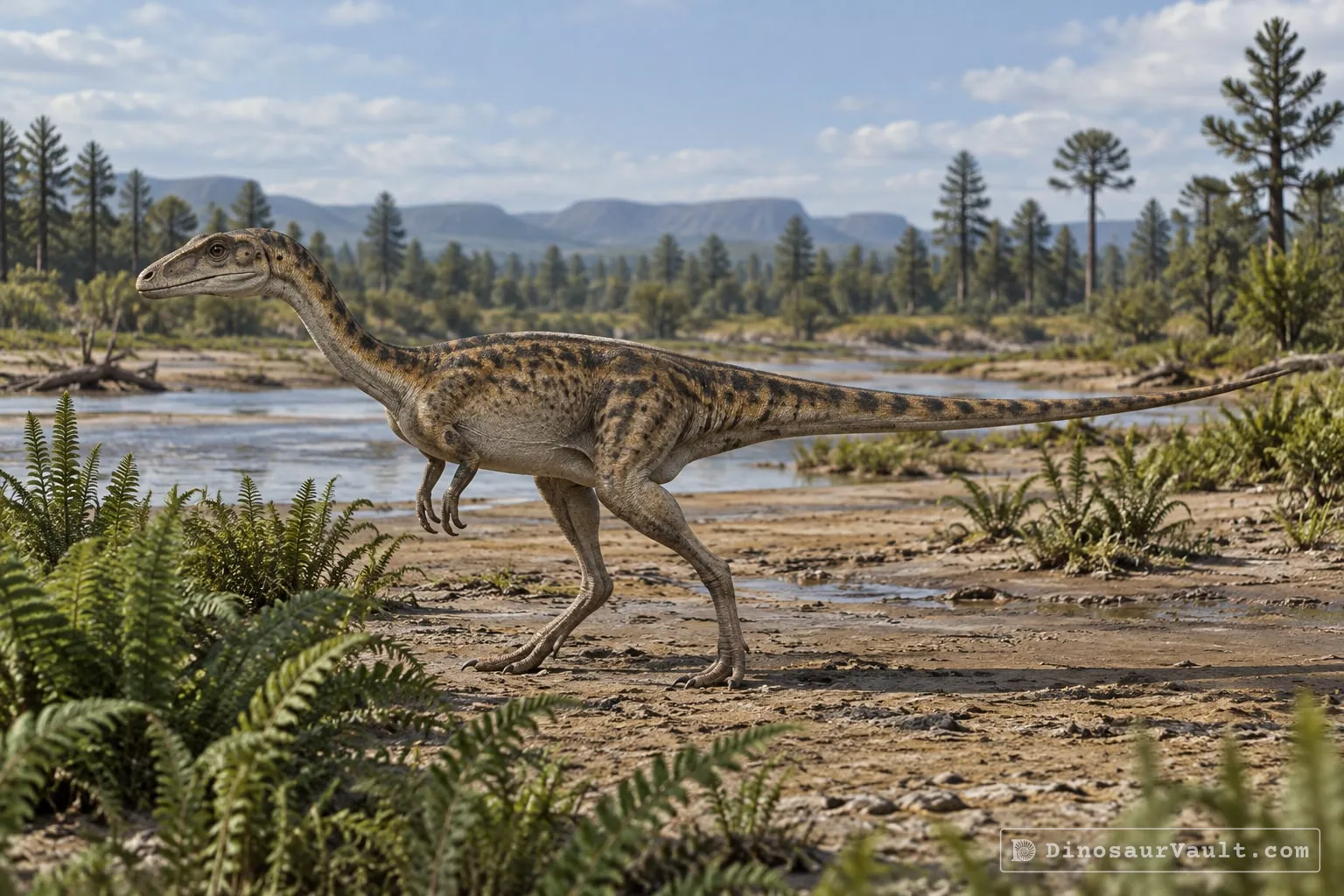
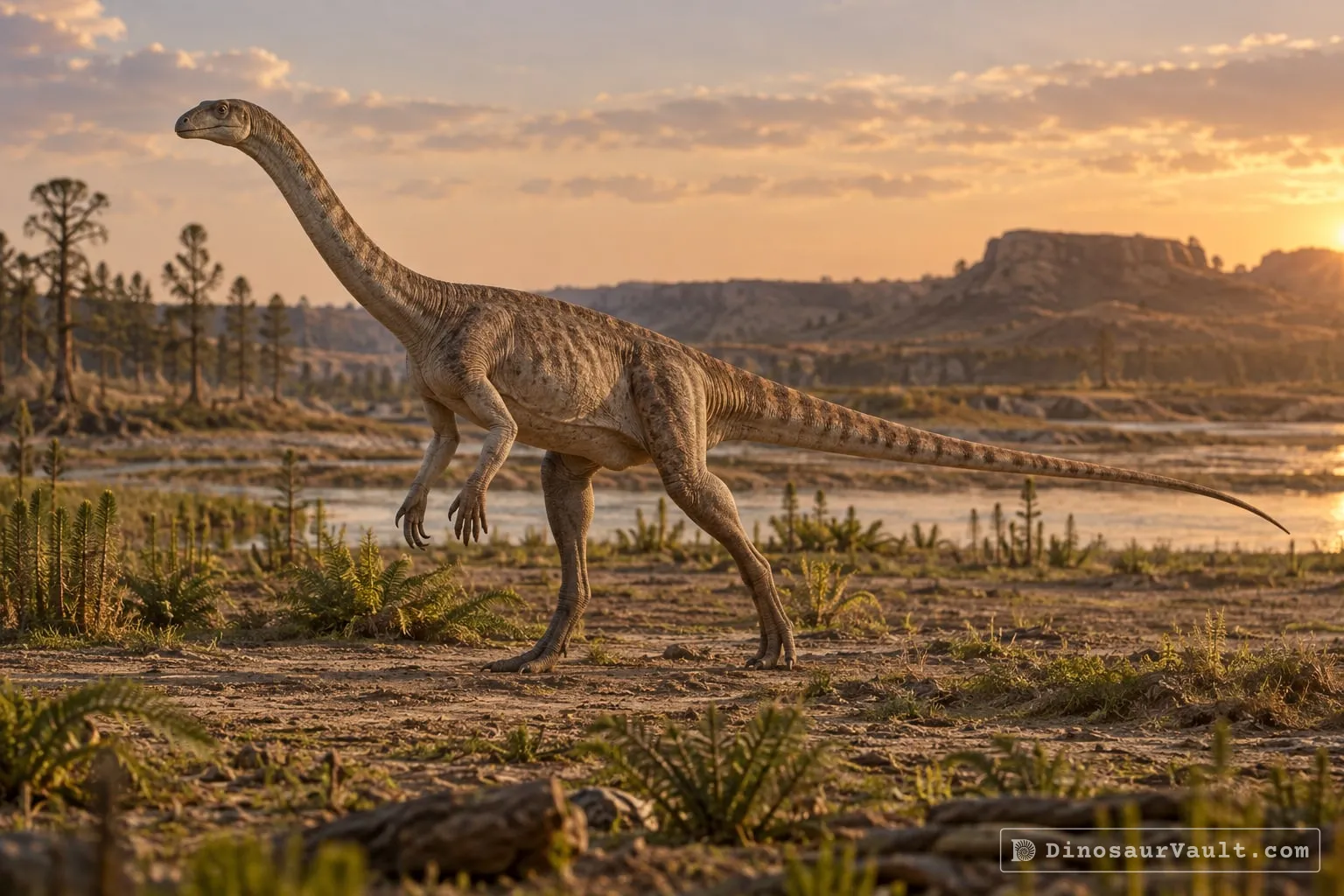


A rock formation can hold fossils laid down millions of years apart, so not every animal here met Sacisaurus.
The evidence
The science behind Sacisaurus
Which parts of the picture come from its own bones, and which come from its relatives.
From its own fossils
- The type lower jaw and jaws referred to Sacisaurus have a nearly straight, pointed, toothless tip that may have supported a beak.
- Its teeth have coarse serrations along their edges. Isolated claws tentatively assigned to Sacisaurus include a possible hand claw and possible foot claws.
- Thin sections of limb bones show fast growth followed by slower growth in larger individuals.
Borrowed from relatives
- Silesaurus provides comparisons for missing parts of the upper snout, skull roof and neck.
Still unknown
- Its skin covering, color and the exact plants it ate.
- Whether its toothless jaw tip corresponds to the separate beak bone of later bird-hipped dinosaurs.
- Whether silesaurids were outside the dinosaur family tree or early members of the bird-hipped branch.
Discovery timeline
- 2007Named itFerigolo & Langer
- 2013Full descriptionLanger & Ferigolo
- 2018Same rocksMarsola et al.
- 2019Growing upVEIGA et al.
- 2025Family treeTolchard, Perkins & Nesbitt
Key papers
The research behind what we know of Sacisaurus
Named it
Named Sacisaurus and described the toothless tip of its lower jaw, comparing it with the beak bone of bird-hipped dinosaurs.
A Late Triassic dinosauriform from south Brazil and the origin of the ornithischian predentary bone. Historical Biology 19: 23-33
Read the paper : A Late Triassic dinosauriform from south Brazil and the origin of the ornithischian predentary bone (opens in a new tab)Full description
Described the skull and skeleton in detail and compared Sacisaurus with other silesaurids.
The Late Triassic dinosauromorph Sacisaurus agudoensis (Caturrita Formation; Rio Grande do Sul, Brazil): anatomy and affinities. Geological Society, London, Special Publications 379: 353-392
Read the paper : The Late Triassic dinosauromorph Sacisaurus agudoensis (Caturrita Formation; Rio Grande do Sul, Brazil): anatomy and affinities (opens in a new tab)Same rocks
Identified sauropodomorph and cynodont remains at the Sacisaurus site and placed its rocks within the Caturrita Formation.
New sauropodomorph and cynodont remains from the Late Triassic Sacisaurus site in southern Brazil and its stratigraphic position in the Norian Caturrita Formation. Acta Palaeontologica Polonica 63
Read the paper : New sauropodomorph and cynodont remains from the Late Triassic Sacisaurus site in southern Brazil and its stratigraphic position in the Norian Caturrita Formation (opens in a new tab)Growing up
Found rapidly formed tissue in limb bones, with a shift to slower growth in some individuals.
Osteohistology of the silesaurid Sacisaurus agudoensis from southern Brazil (Late Triassic) and implications for growth in early dinosaurs. Anais da Academia Brasileira de Ciências 91
Read the paper : Osteohistology of the silesaurid Sacisaurus agudoensis from southern Brazil (Late Triassic) and implications for growth in early dinosaurs (opens in a new tab)Family tree
One analysis left Sacisaurus in an unresolved group with Silesaurus and other silesaurids near the base of the bird-hipped dinosaurs.
Silesaurid ( Archosauria: Dinosauriformes ) remains from the base of the Dockum Group ( Late Triassic: Otischalkian ) of Texas provide new insights to the North American record of dinosauriforms. The Anatomical Record 309: 293-313
Read the paper : Silesaurid ( Archosauria: Dinosauriformes ) remains from the base of the Dockum Group ( Late Triassic: Otischalkian ) of Texas provide new insights to the North American record of dinosauriforms (opens in a new tab)
Close relatives
Other members of Silesauridae


Sources: Wikidata