Macrocollum
"long neck"
- Lived
- 227 to 206 million years ago, Late Triassic
- Group
- Early sauropodomorphs, Unaysauridae
- Found in
- Brazil
- Named by
- Müller et al. 2018
Where its fossils were found
The evidence
Today

220 million years ago
Habitat
Rivers laid down the sandy deposits where Macrocollum was buried in southern Brazil. Other dinosaurs from the Caturrita Formation included Unaysaurus, Guaibasaurus and Sacisaurus.
Field notes
About Macrocollum
What it was like
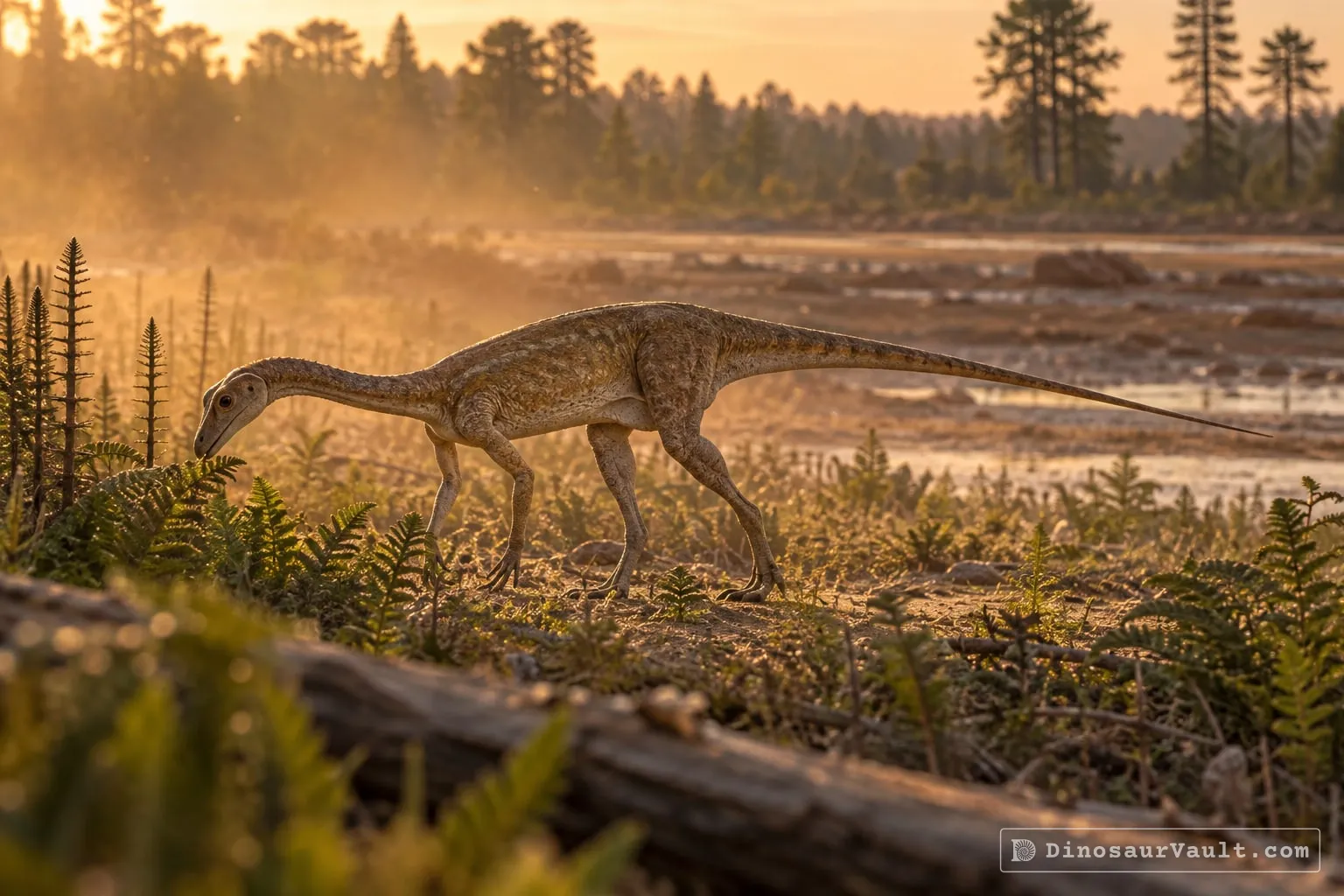
Macrocollum was a plant eater from the long-necked line that later produced the giant sauropods. It walked on its hind legs and had a neck much longer than those of most of its early relatives, which gave it its name.
It is one of the oldest dinosaurs known with a truly long neck.
Its world
It lived in the Late Triassic in what is now southern Brazil. Its bones come from the Caturrita Formation, where it shared the land with the plant eaters Unaysaurus and Guaibasaurus.
How it was found
Müller and colleagues named Macrocollum in 2018. Three skeletons were found together, which suggests these animals may have lived in groups.
Field gallery
More views of Macrocollum
Scenes reconstructed from the available fossil evidence.
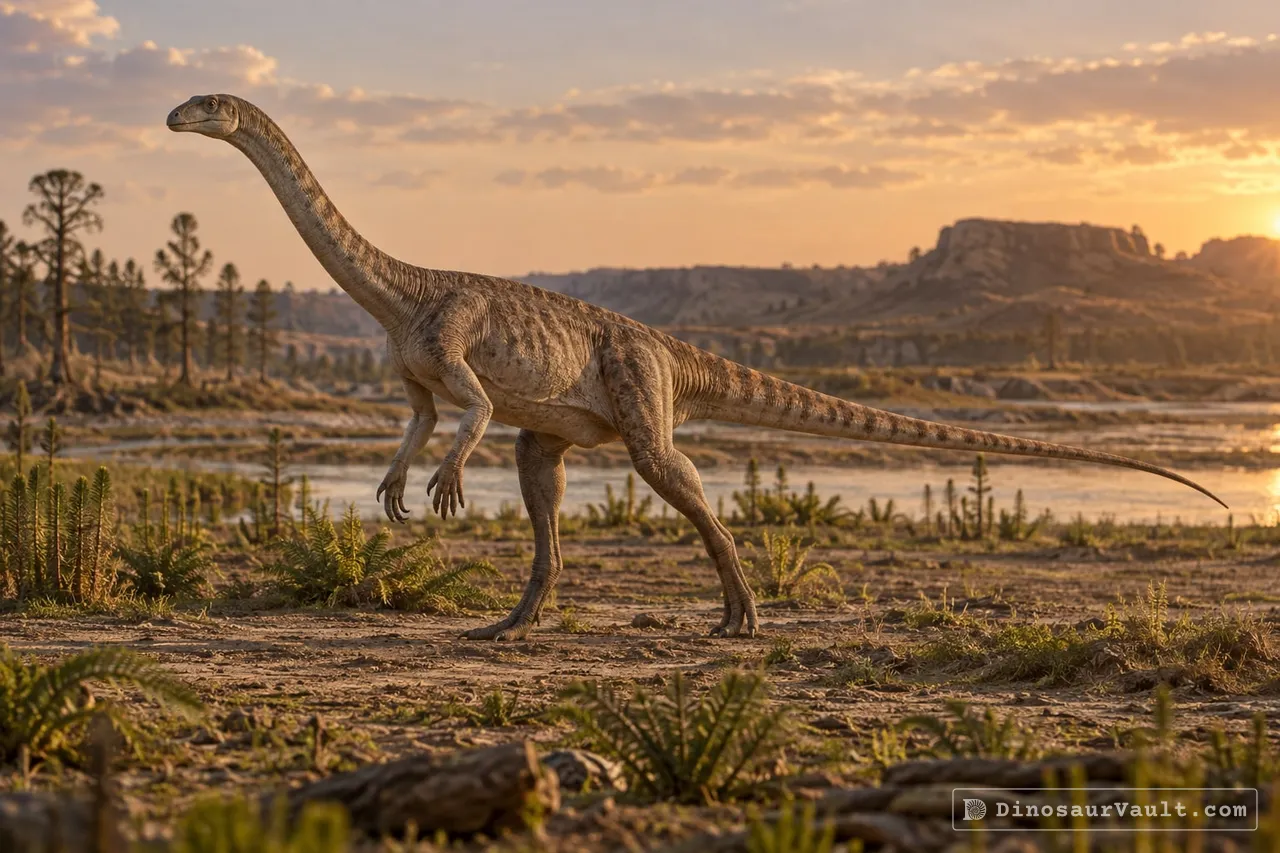
1 of 3
Lived alongside
Found in the same rock formations
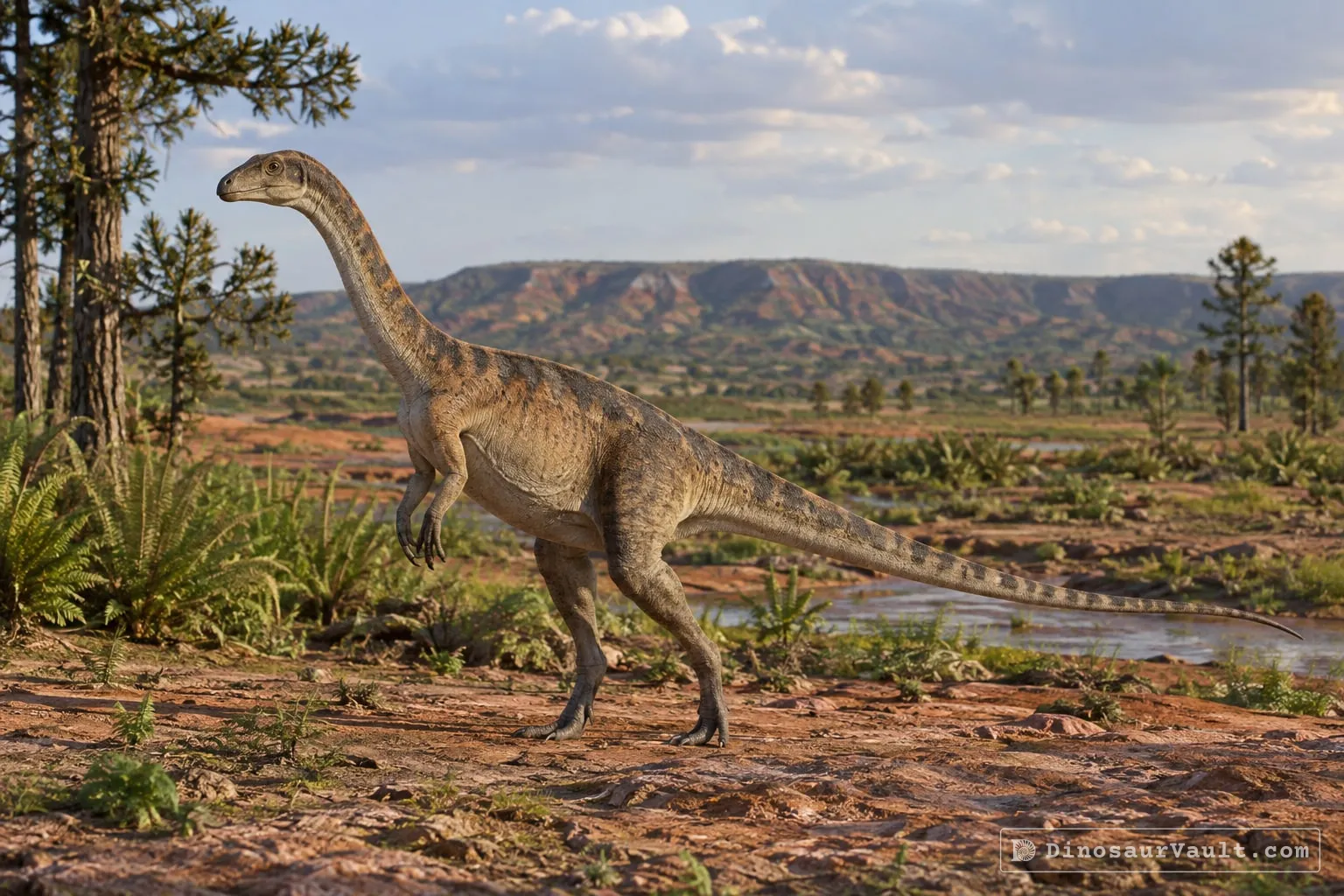
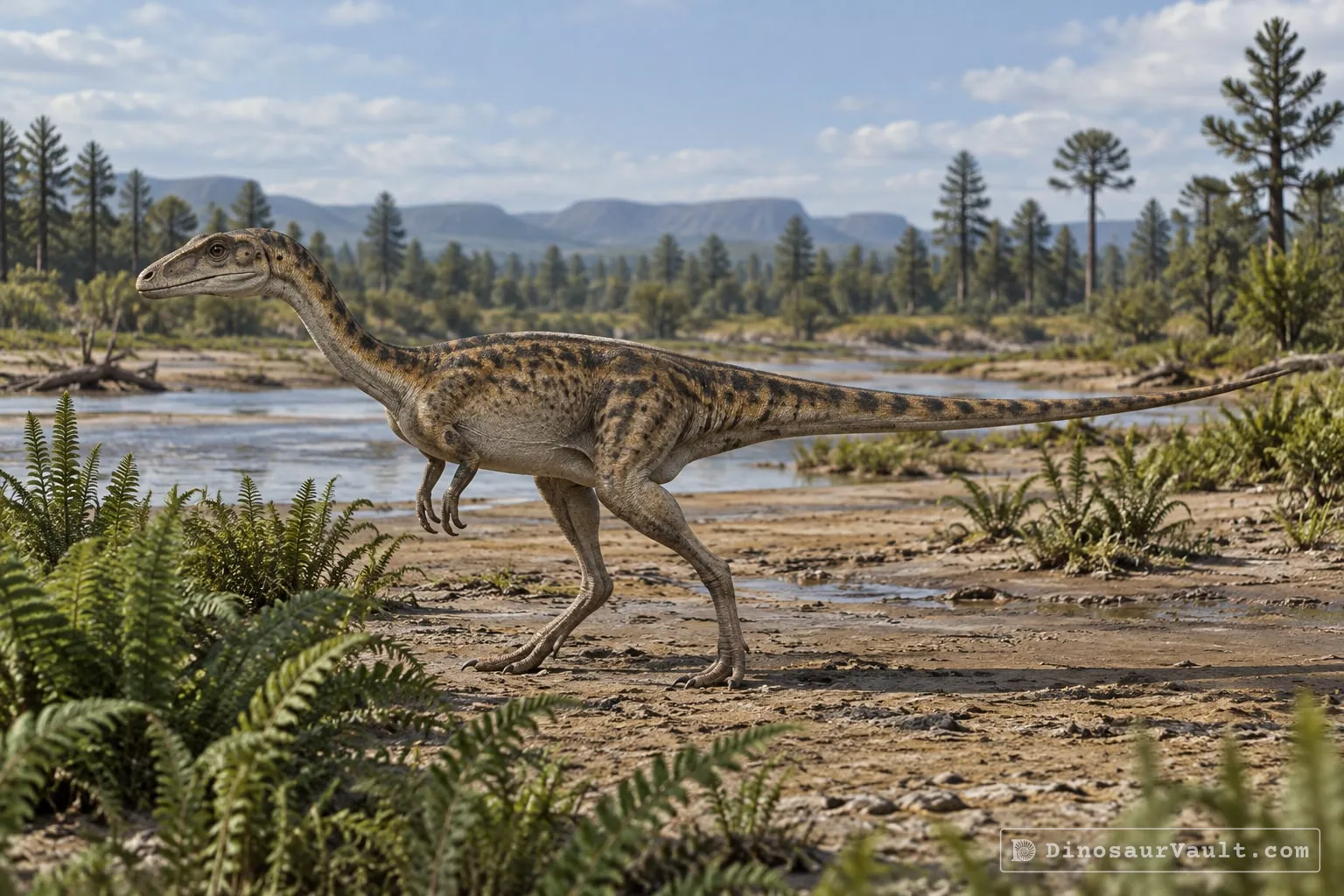
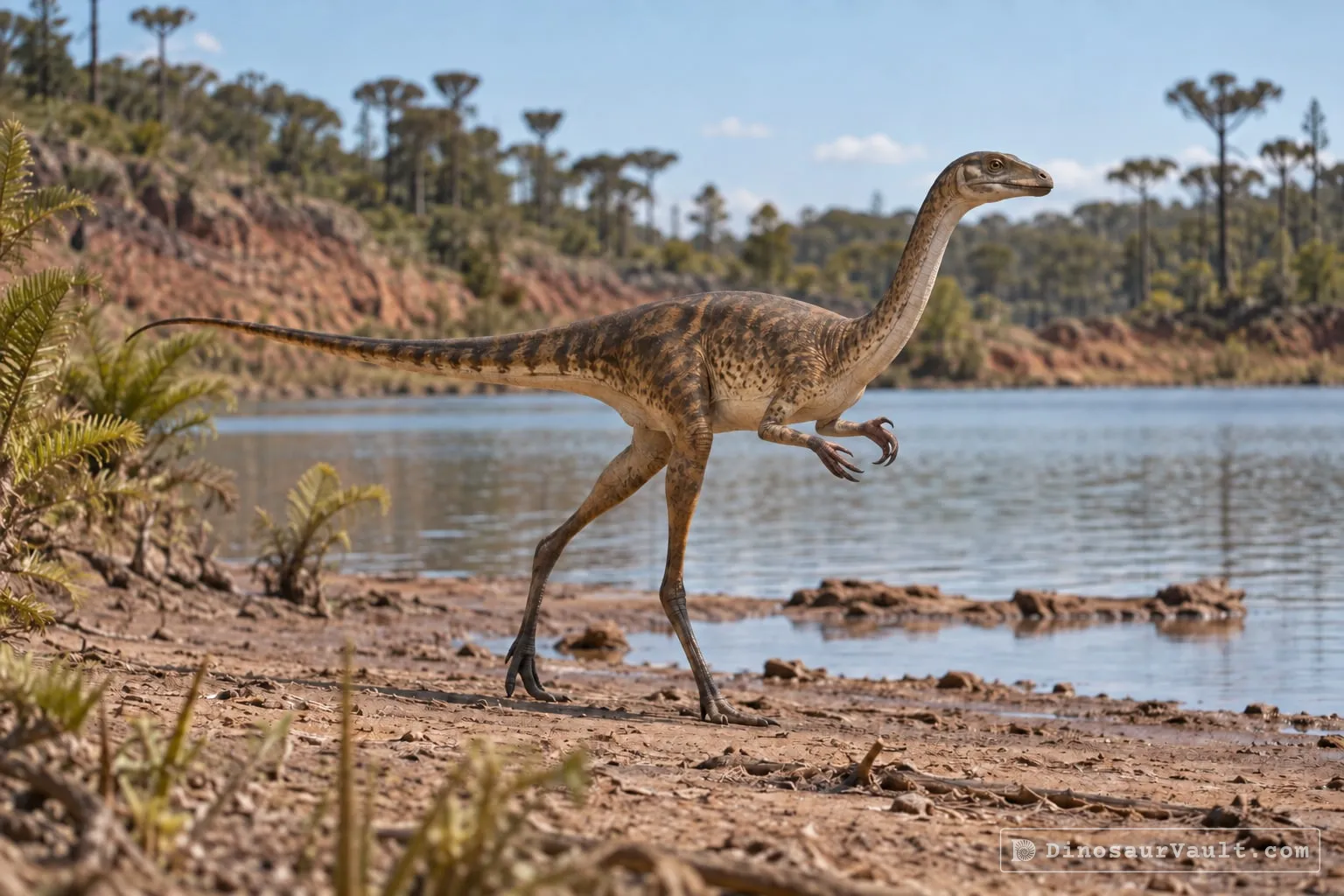


A rock formation can hold fossils laid down millions of years apart, so not every animal here met Macrocollum.
The evidence
The science behind Macrocollum
Which parts of the picture come from its own bones, and which come from its relatives.
From its own fossils
- Nearly complete skeletons preserve the small skull, long neck, limbs and tail.
- The long neck vertebrae and leaf-shaped teeth show adaptations for reaching and eating plants.
- Air spaces inside the upper parts of some neck and back vertebrae show that air sacs extended into the bones.
Borrowed from relatives
- Almost the whole skeleton is known from its own bones, so little of its body shape needs to be borrowed from Unaysaurus or other relatives.
- Skin and other soft parts follow comparisons with other early sauropodomorphs.
Still unknown
- Its color and skin covering.
- Whether it lived in lasting herds.
- Which plants it ate.
Discovery timeline
- 2018Named itMüller, Langer & Dias-da-Silva
- 2019SkullMüller
- 2023Full descriptionAureliano et al.
- 2025RedescriptionBeeston et al.
Key papers
The research behind what we know of Macrocollum
Named it
Described the long-necked skeletons and suggested that their burial together could reflect group living.
An exceptionally preserved association of complete dinosaur skeletons reveals the oldest long-necked sauropodomorphs. Biology Letters 14: 20180633
Read the paper : An exceptionally preserved association of complete dinosaur skeletons reveals the oldest long-necked sauropodomorphs (opens in a new tab)Skull
Described the skull and lower jaw in detail and tested where Macrocollum fits among early sauropodomorphs.
Craniomandibular osteology ofMacrocollum itaquii(Dinosauria: Sauropodomorpha) from the Late Triassic of southern Brazil. Journal of Systematic Palaeontology 18: 805-841
Read the paper : Craniomandibular osteology ofMacrocollum itaquii(Dinosauria: Sauropodomorpha) from the Late Triassic of southern Brazil (opens in a new tab)Full description
Used scans of Macrocollum vertebrae to identify internal air spaces associated with a bird-like air sac system.
The origin of an invasive air sac system in sauropodomorph dinosaurs. The Anatomical Record 307: 1084-1092
Read the paper : The origin of an invasive air sac system in sauropodomorph dinosaurs (opens in a new tab)Redescription
Reexamined scans and located clear air spaces in the upper arches of Macrocollum vertebrae, while rejecting some earlier interpretations of their internal structure.
New information on Late Triassic sauropodomorph dinosaurs provides support for the independent acquisition of postcranial skeletal pneumaticity in avemetatarsalian lineages. Journal of Anatomy 248: 541-578
Read the paper : New information on Late Triassic sauropodomorph dinosaurs provides support for the independent acquisition of postcranial skeletal pneumaticity in avemetatarsalian lineages (opens in a new tab)
Close relatives
Other members of Unaysauridae

Sources: Wikidata