Asilisaurus
ah-SEE-lee-SORE-us
"ancestor lizard"
- Lived
- 247 to 242 million years ago, Middle Triassic
- Diet
- Herbivore
- Group
- Early ornithischians, Silesauridae
- Found in
- Tanzania
- Named by
- Nesbitt et al. 2010
Where its fossils were found
The evidence
Today

245 million years ago
Habitat
River floodplains in what is now Tanzania. Teleocrater and Nyasasaurus are also known from the Manda Beds.
Field notes
About Asilisaurus
What it was like
Asilisaurus was a slender four-legged animal about the size of a large dog. It belonged to the silesaurids, close cousins of dinosaurs or perhaps the earliest ornithischians. Its jaws had a toothless tip, and it probably ate plants.
Its world
It lived in the Middle Triassic, in what is now Tanzania. It comes from the Manda Beds, where the possible early dinosaur Nyasasaurus has also been found. It shows that the dinosaur line had already split into several branches this early.
How it was found
Nesbitt and colleagues named Asilisaurus in 2010, from bones of several animals. Its name comes from a local word for ancestor.
Field gallery
More views of Asilisaurus
Scenes reconstructed from the available fossil evidence.
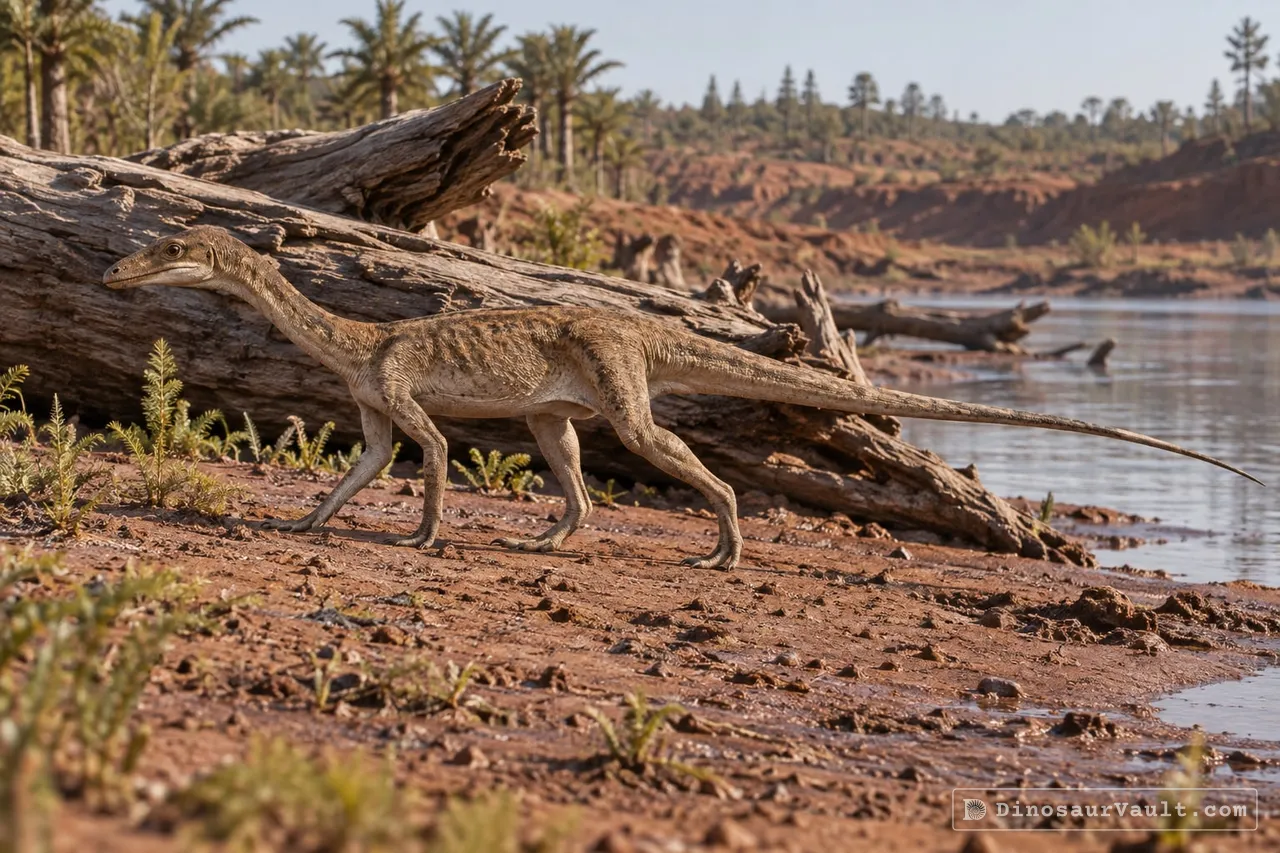
1 of 3
Lived alongside
Found in the same rock formations

A rock formation can hold fossils laid down millions of years apart, so not every animal here met Asilisaurus.
The evidence
The science behind Asilisaurus
Which parts of the picture come from its own bones, and which come from its relatives.
From its own fossils
- Many separate bones and an associated skeleton preserve much of the skull, limbs, hips and tail.
- The short skull has toothless tips on both the upper and lower jaws.
- Its feet were short, with well-developed inner and outer toes.
Borrowed from relatives
- Missing skull parts are restored using Silesaurus, Sacisaurus and early dinosaurs such as Coelophysis.
Still unknown
- Whether silesaurids were close cousins of dinosaurs or early members of the plant-eating dinosaur branch.
- Its color and skin pattern.
- Which foods made up most of its diet.
Discovery timeline
- 2010Named itNesbitt et al.
- 2016Growing upGriffin & Nesbitt
- 2019Full descriptionNesbitt, Langer & Ezcurra
Key papers
The research behind what we know of Asilisaurus
Named it
Described a four-legged silesaurid with a beak-like jaw, showing that close dinosaur relatives had already diversified in the Middle Triassic.
Ecologically distinct dinosaurian sister group shows early diversification of Ornithodira. Nature 464: 95-98
Read the paper : Ecologically distinct dinosaurian sister group shows early diversification of Ornithodira (opens in a new tab)Growing up
Found variation in the order that thigh-bone muscle scars developed, making size a poor guide to skeletal maturity.
The femoral ontogeny and long bone histology of the Middle Triassic (?late Anisian) dinosauriform Asilisaurus kongwe and implications for the growth of early dinosaurs. Journal of Vertebrate Paleontology 36
Read the paper : The femoral ontogeny and long bone histology of the Middle Triassic (?late Anisian) dinosauriform Asilisaurus kongwe and implications for the growth of early dinosaurs (opens in a new tab)Full description
Described the skull and skeleton in detail, including the toothless jaw tips, short feet and crocodile-like ankle.
The Anatomy of Asilisaurus kongwe, a Dinosauriform from the Lifua Member of the Manda Beds (~Middle Triassic) of Africa. The Anatomical Record 303: 813-873
Read the paper : The Anatomy of Asilisaurus kongwe, a Dinosauriform from the Lifua Member of the Manda Beds (~Middle Triassic) of Africa (opens in a new tab)
Close relatives
Other members of Silesauridae


Sources: Wikidata