Guaibasaurus
- Lived
- 227 to 206 million years ago, Late Triassic
- Length
- about 1.8 m (6 ft)
- Group
- Early sauropodomorphs, Guaibasauridae
- Found in
- Brazil
- Named by
- Bonaparte et al. 1999
Size comparison
To scale

Scale in metersOutline: typical early sauropodomorph shape
Where its fossils were found
The evidence
Today

220 million years ago
Habitat
River plains in what is now Brazil were home to Unaysaurus, Macrocollum and Sacisaurus.
Field notes
About Guaibasaurus
What it was like
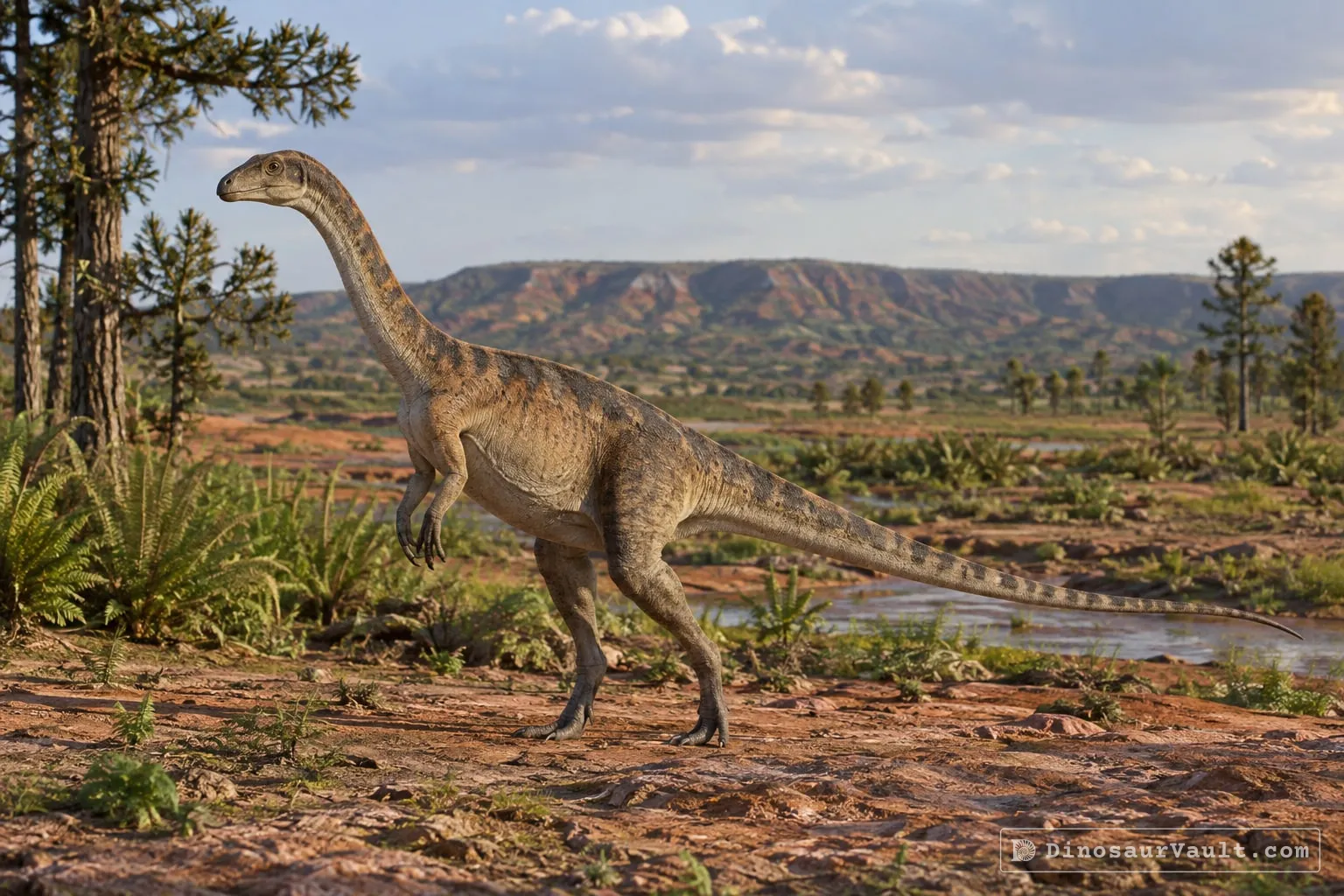
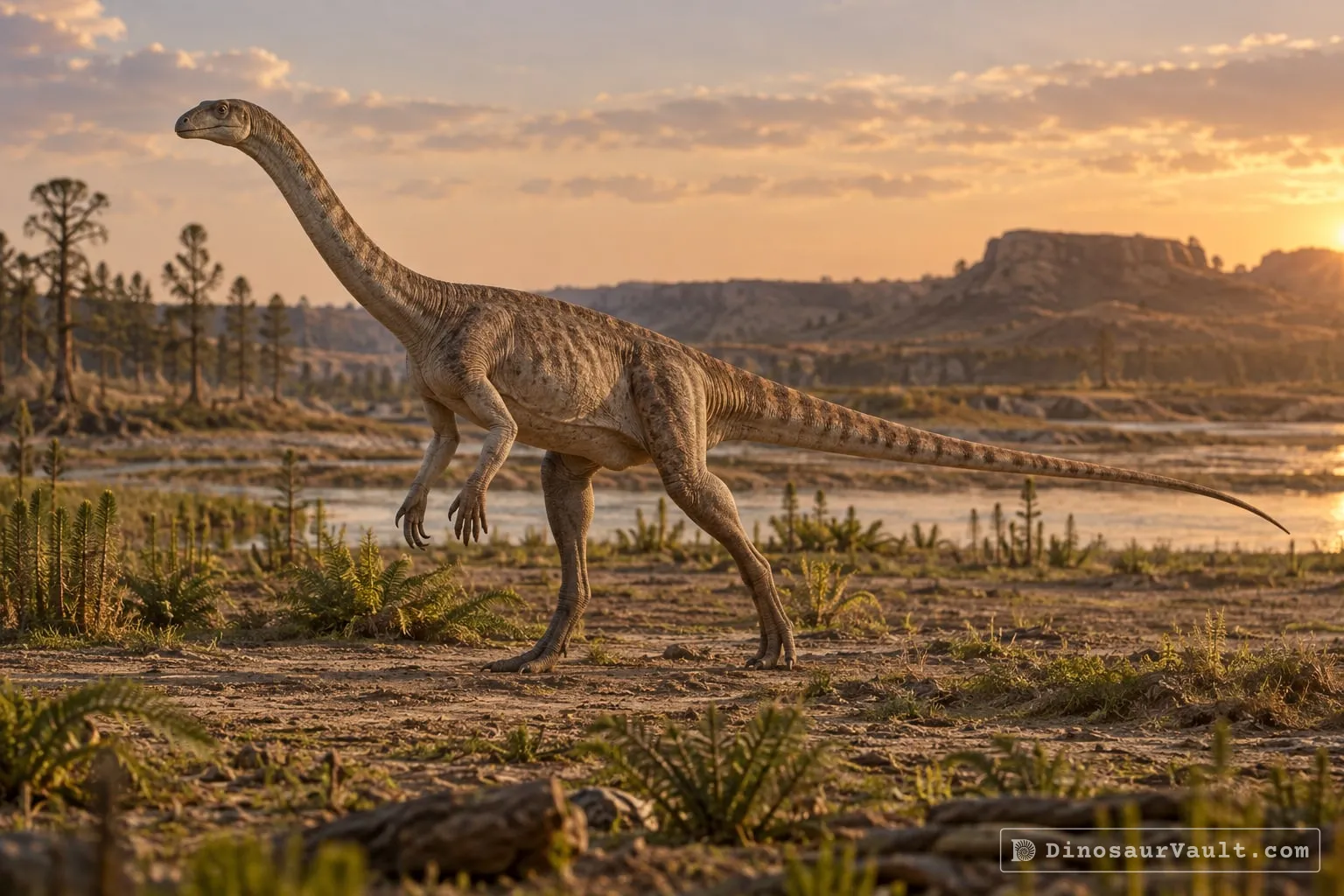
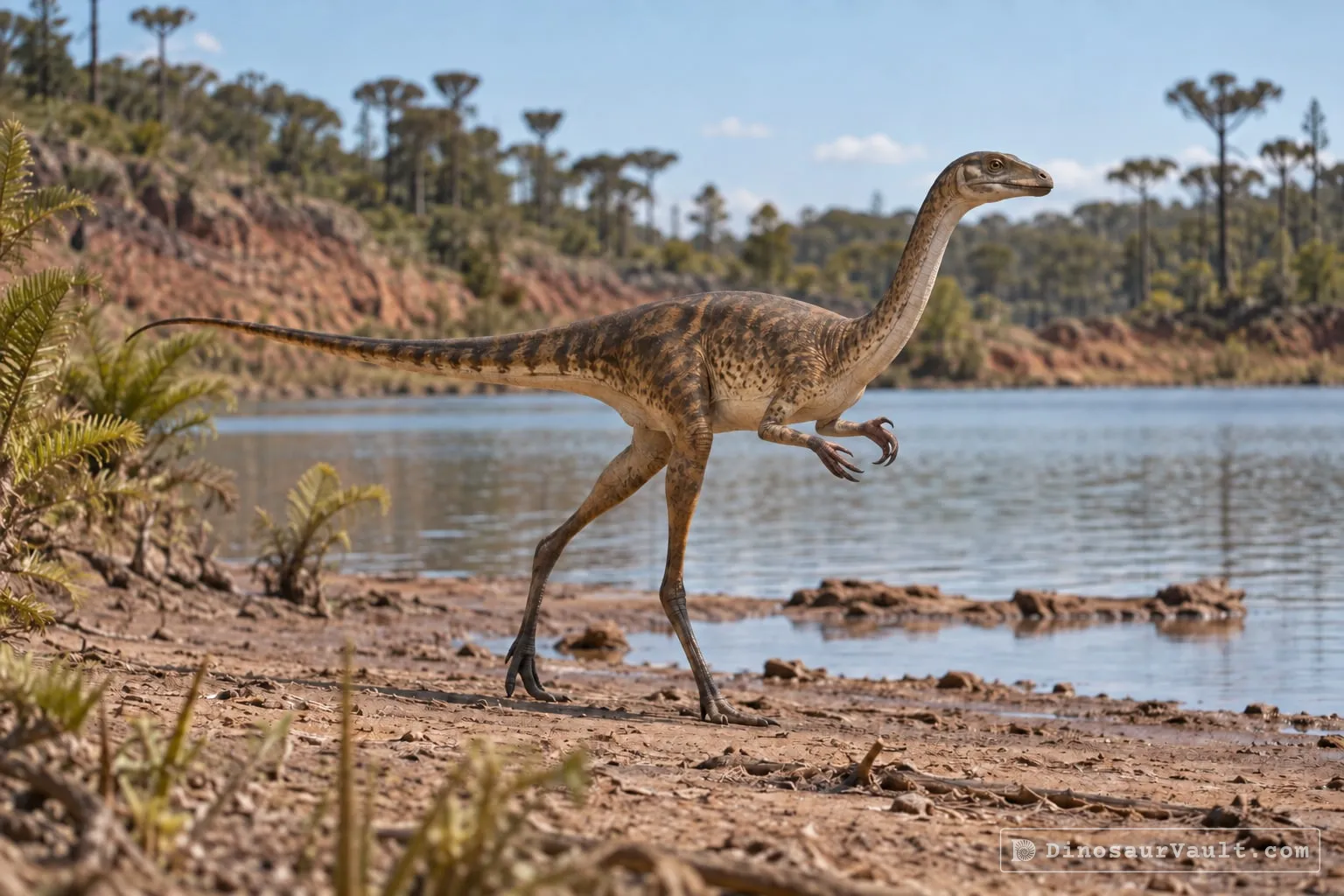
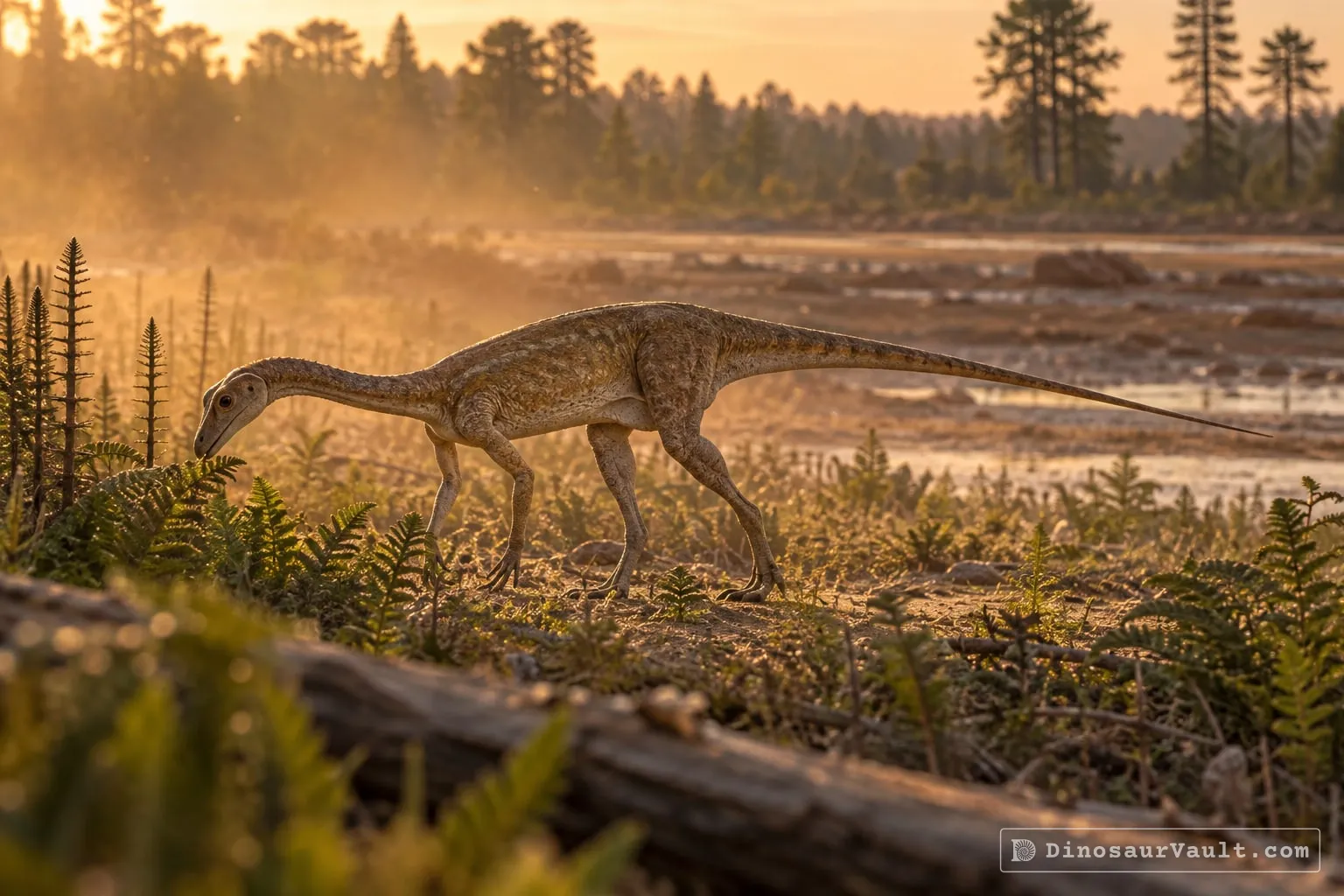
Guaibasaurus was a small, early dinosaur about 1.8 meters (6 feet) long that ran on its hind legs. Most scientists place it near the start of the line that led to the long-necked sauropods.
Its world
It lived in the Late Triassic, in what is now Brazil. It comes from the Caturrita Formation, where it shared the land with the plant eaters Unaysaurus and Macrocollum.
How it was found
Bonaparte and colleagues named Guaibasaurus in 1999.
Field gallery
More views of Guaibasaurus
Scenes reconstructed from the available fossil evidence.
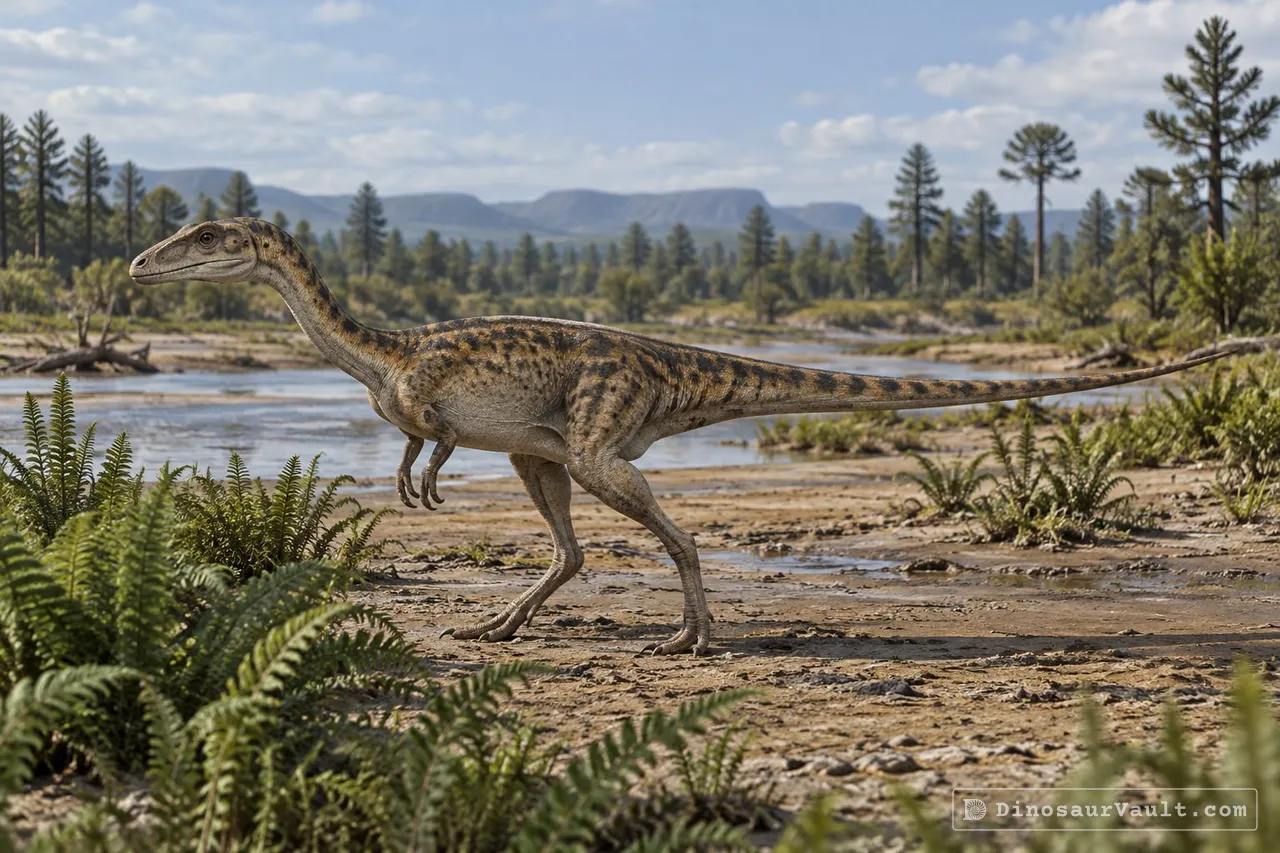
1 of 3
Lived alongside
Found in the same rock formations


A rock formation can hold fossils laid down millions of years apart, so not every animal here met Guaibasaurus.
The evidence
The science behind Guaibasaurus
Which parts of the picture come from its own bones, and which come from its relatives.
From its own fossils
- Partial skeletons preserve the backbone, hips, arms and hind legs of a dinosaur that walked on its hind feet.
- Its largest hand claw was on the second finger, rather than the thumb.
- A skeleton with folded limbs has been interpreted as an animal resting in a bird-like pose.
Borrowed from relatives
- The missing head and neck can be restored by comparison with early dinosaurs such as Eoraptor.
Still unknown
- The shape of its skull and teeth.
- Its skin covering and color.
- Whether it belongs among early sauropodomorphs or early theropods.
Discovery timeline
- 1999Named itBonaparte, Ferigolo & Ribeiro
- 2010Full descriptionLanger, Bittencourt & Schultz
- 2012PostureAgnolin & Martinelli
Key papers
The research behind what we know of Guaibasaurus
Named it
Named Guaibasaurus from partial skeletons in Brazil, adding a small, upright dinosaur to the Late Triassic fauna.
A new early Late Triassic saurischian dinosaur from Rio Grande do Sol state, Brazil. Proceedings of the Second Gondwanan Dinosaur Symposium, National Science Museum Monographs 15: 89-109
No link available
Full description
Reexamined the known skeletons and described the hands, feet and other bones in detail, favoring an early theropod relationship.
A reassessment of the basal dinosaur Guaibasaurus candelariensis, from the Late Triassic Caturrita Formation of south Brazil. Earth and Environmental Science Transactions of the Royal Society of Edinburgh 101: 301-332
Read the paper : A reassessment of the basal dinosaur Guaibasaurus candelariensis, from the Late Triassic Caturrita Formation of south Brazil (opens in a new tab)Posture
Interpreted the folded limbs and curved neck of a Guaibasaurus skeleton as a resting pose like that of a bird.
Guaibasaurus candelariensis (Dinosauria, Saurischia) and the early origin of avian-like resting posture. Alcheringa: An Australasian Journal of Palaeontology 36: 263-267
Read the paper : Guaibasaurus candelariensis (Dinosauria, Saurischia) and the early origin of avian-like resting posture (opens in a new tab)
Close relatives
Other members of Guaibasauridae

Sources: Wikidata