Nhandumirim
"small rhea"
Type species Nhandumirim waldsangae
- Lived
- 227 to 206 million years ago, Late Triassic
- Group
- Early dinosaurs
- Found in
- Brazil
- Named by
- Marsola et al. 2019
Where its fossils were found
The evidence
Today

220 million years ago
Habitat
Floodplains crossed by rivers in southern Brazil. Saturnalia and Staurikosaurus also lived in the region.
Field notes
About Nhandumirim
What it was like
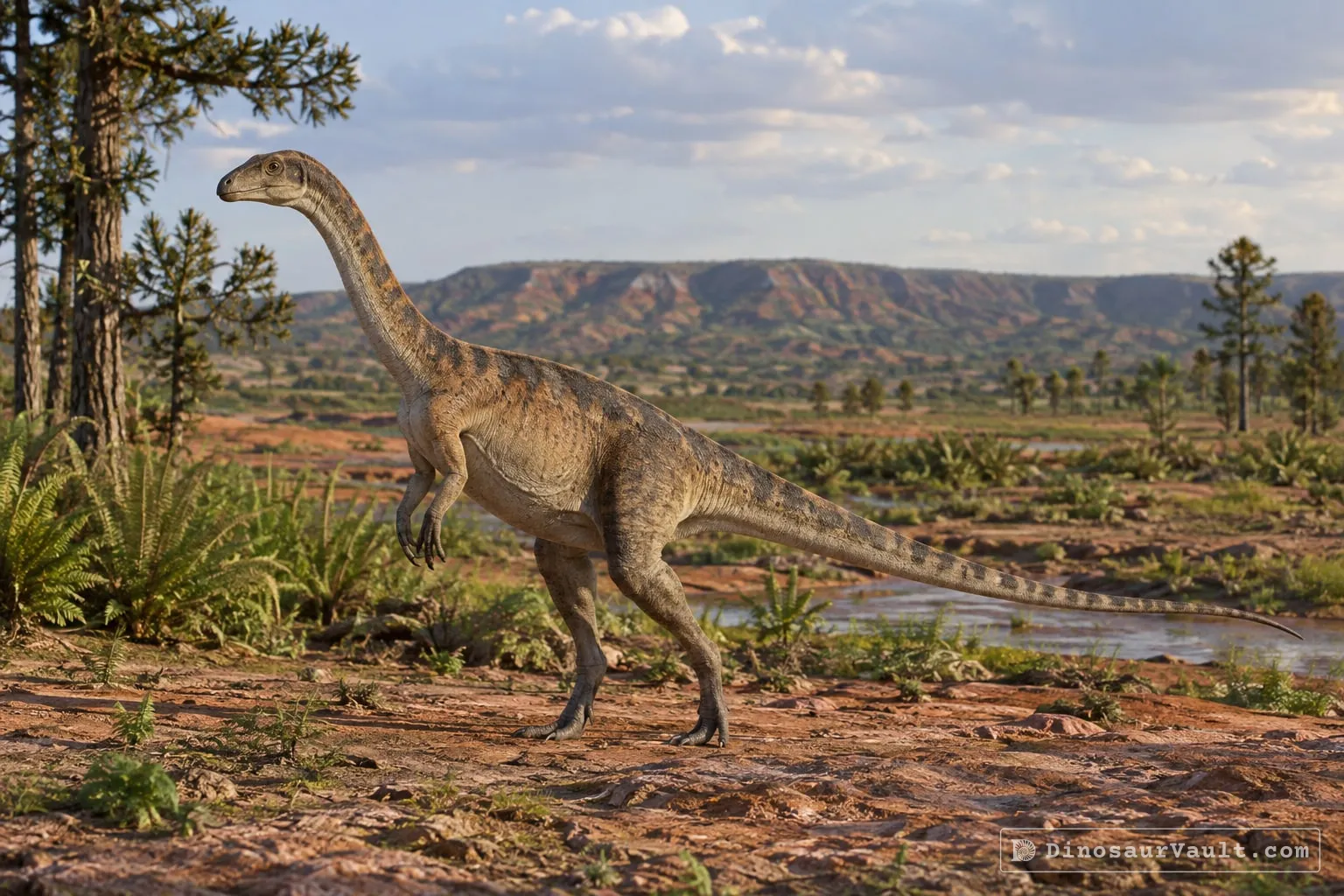
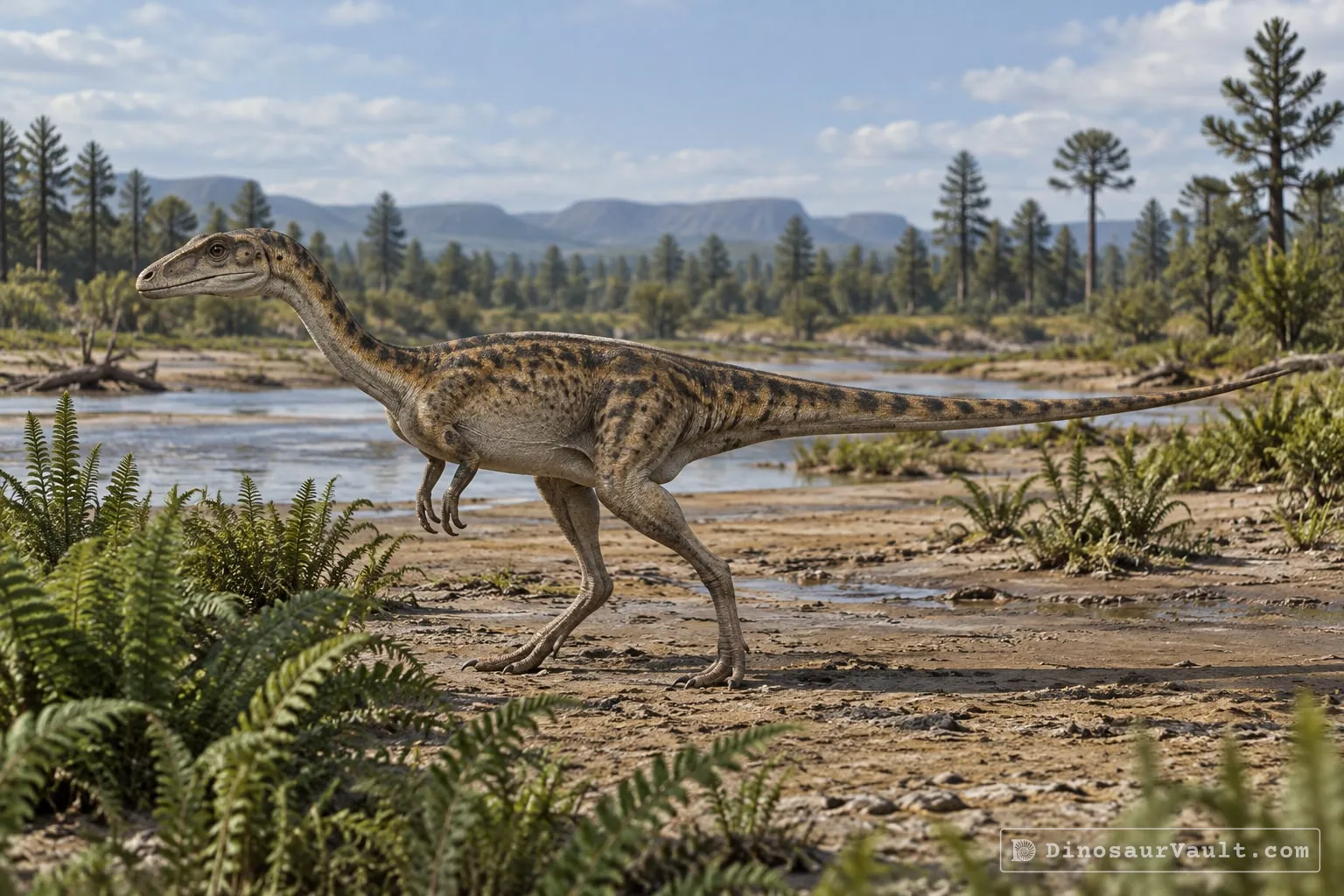
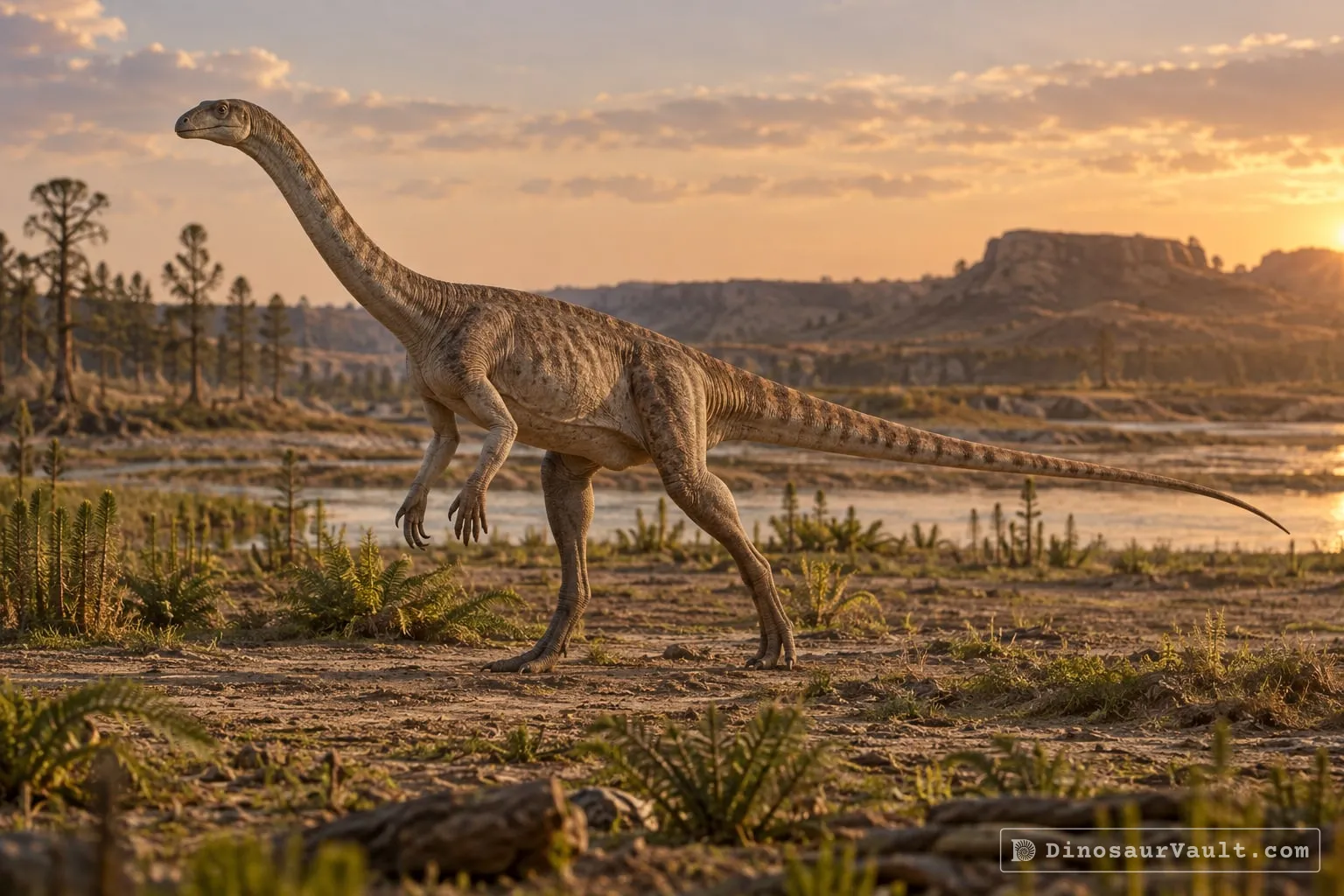
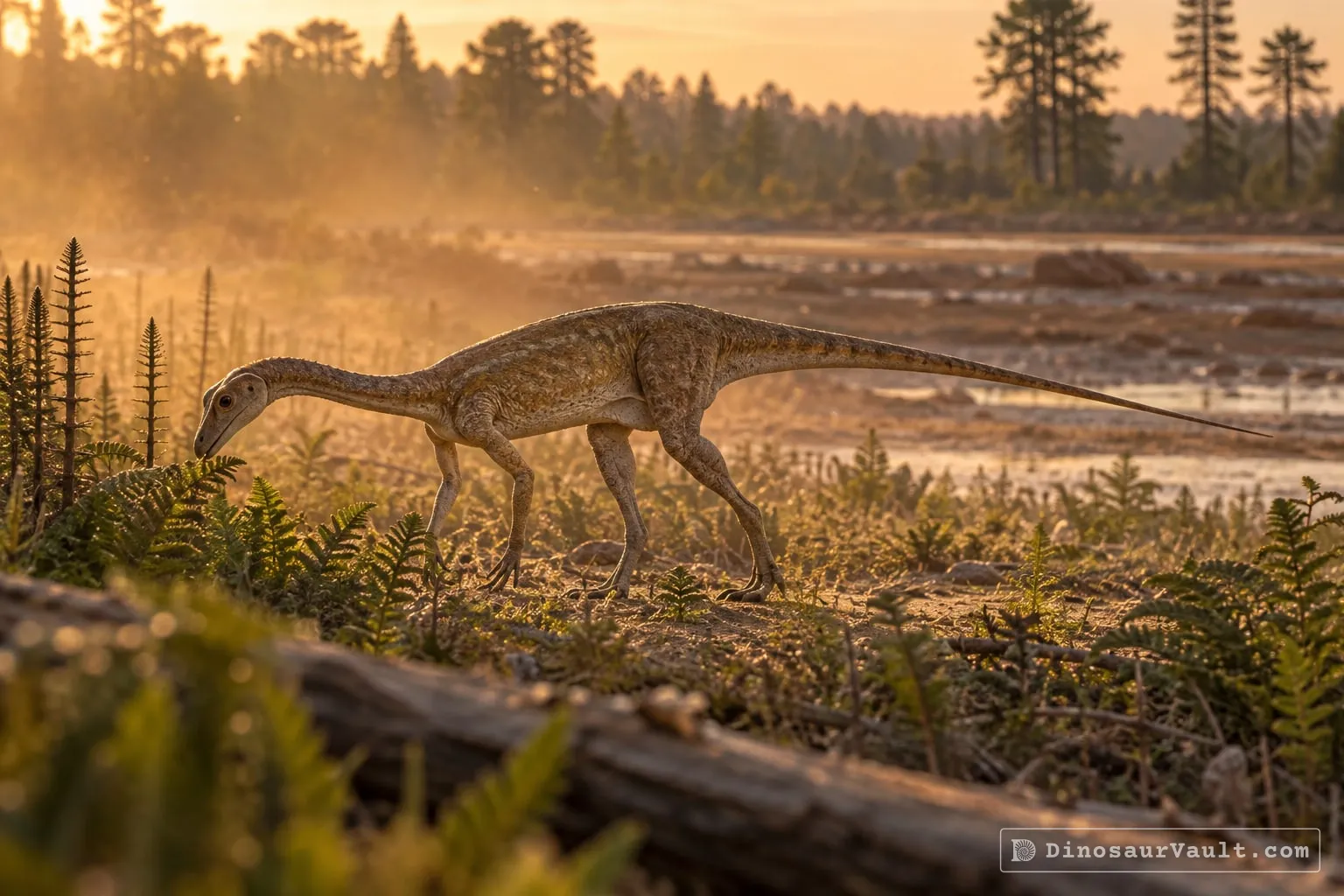
Nhandumirim was a small, early two-legged dinosaur, known from part of the skeleton of a young animal. Its first describers thought it was an early theropod, but other studies place it with the early relatives of the long-necked sauropods.
Its world
It lived in the Late Triassic in what is now southern Brazil. Its bones come from the Caturrita Formation, where it shared the land with the plant eaters Unaysaurus, Guaibasaurus and Macrocollum.
How it was found
Marsola and colleagues named Nhandumirim in 2019, from a single find.
Field gallery
More views of Nhandumirim
Scenes reconstructed from the available fossil evidence.
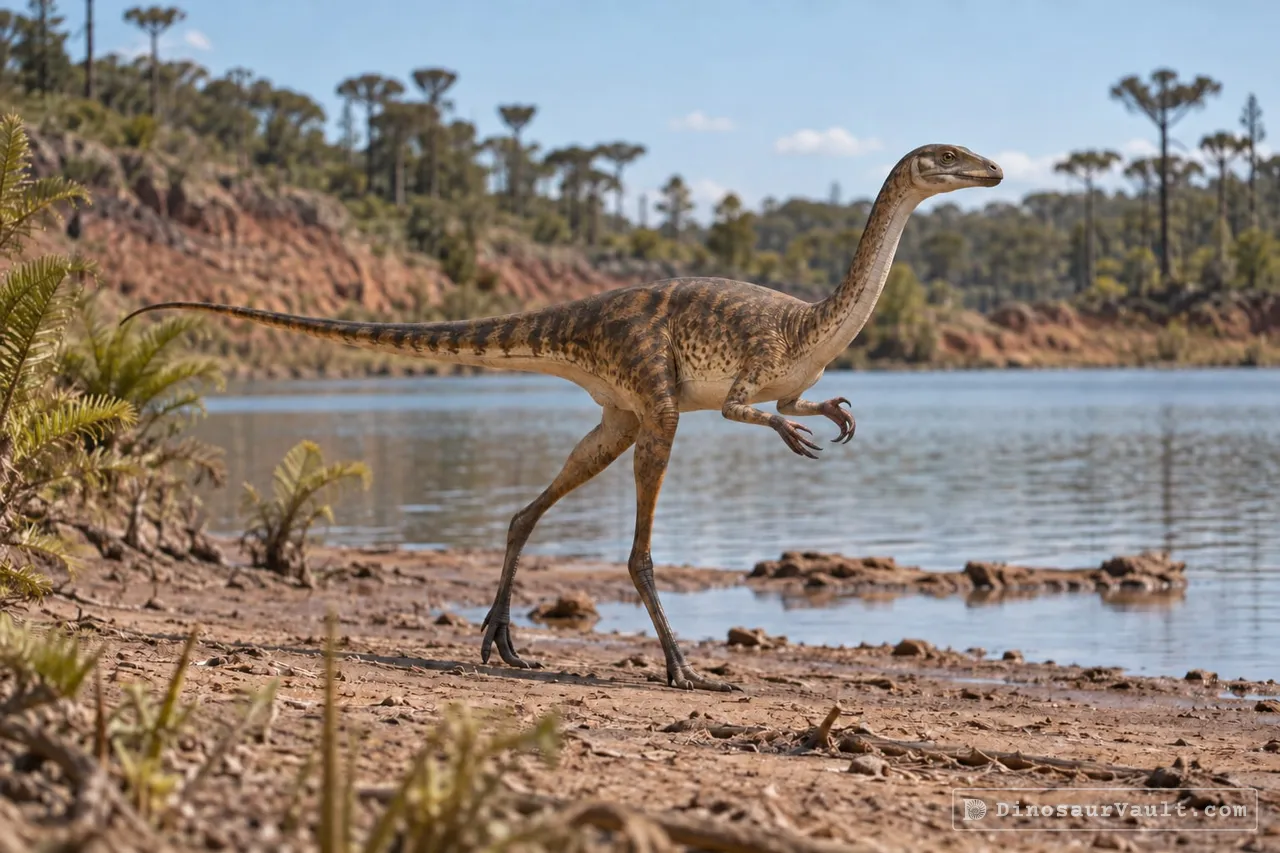
1 of 3
Lived alongside
Found in the same rock formations


A rock formation can hold fossils laid down millions of years apart, so not every animal here met Nhandumirim.
The evidence
The science behind Nhandumirim
Which parts of the picture come from its own bones, and which come from its relatives.
From its own fossils
- A partial skeleton with back, hip and tail vertebrae, a hip bone and much of a hind leg, including a slender, bowed thighbone.
- Some tail vertebrae have a sharp ridge along their underside.
Borrowed from relatives
- The missing head, arms and much of the body can be restored by comparison with early sauropod relatives such as Saturnalia.
- Later family trees place it near Saturnalia and Chromogisaurus, among the earliest branches of the sauropod lineage.
Still unknown
- The shape of its skull and teeth.
- Whether its distinctive thighbone is a sign of youth: its describers argued growth does not explain the differences, while a later study thinks the features are juvenile and might have grown into the adult shape seen in Saturnalia.
- Its adult size and proportions.
Discovery timeline
- 2019Named itMarsola et al.
- 2019Family treePacheco et al.
- 2021Family treeNovas et al.
Key papers
The research behind what we know of Nhandumirim
Named it
Described a partial skeleton of a young dinosaur and first proposed a place among the earliest theropods.
A new dinosaur with theropod affinities from the Late Triassic Santa Maria Formation, south Brazil. Journal of Vertebrate Paleontology 38: e1531878
No link available
Family tree
A revised family tree placed Nhandumirim among early sauropod relatives rather than theropods.
Gnathovorax cabreirai: a new early dinosaur and the origin and initial radiation of predatory dinosaurs. PeerJ 7: e7963
Read the paper : Gnathovorax cabreirai: a new early dinosaur and the origin and initial radiation of predatory dinosaurs (opens in a new tab)Family tree
Reviewed the earliest South American dinosaurs and assessed how Nhandumirim's young age affects comparisons of its bones.
Review of the fossil record of early dinosaurs from South America, and its phylogenetic implications. Journal of South American Earth Sciences 110: 103341
Read the paper : Review of the fossil record of early dinosaurs from South America, and its phylogenetic implications (opens in a new tab)
Close relatives
Other members of Saurischia


Sources: Wikidata