Rocasaurus
"Roca lizard"
- Lived
- 72 to 66 million years ago, Late Cretaceous
- Diet
- Herbivore
- Group
- Sauropods, Saltasauridae
- Found in
- Argentina
- Named by
- Salgado and Azpilicueta 2000
Where its fossils were found
The evidence
Today

70 million years ago
Habitat
Rocasaurus lived in what is now Argentina, where the Allen Formation preserves a rich community of plant eaters. Other dinosaurs from these rocks include Aeolosaurus, Austroraptor and Patagopelta.
Field notes
About Rocasaurus
What it was like
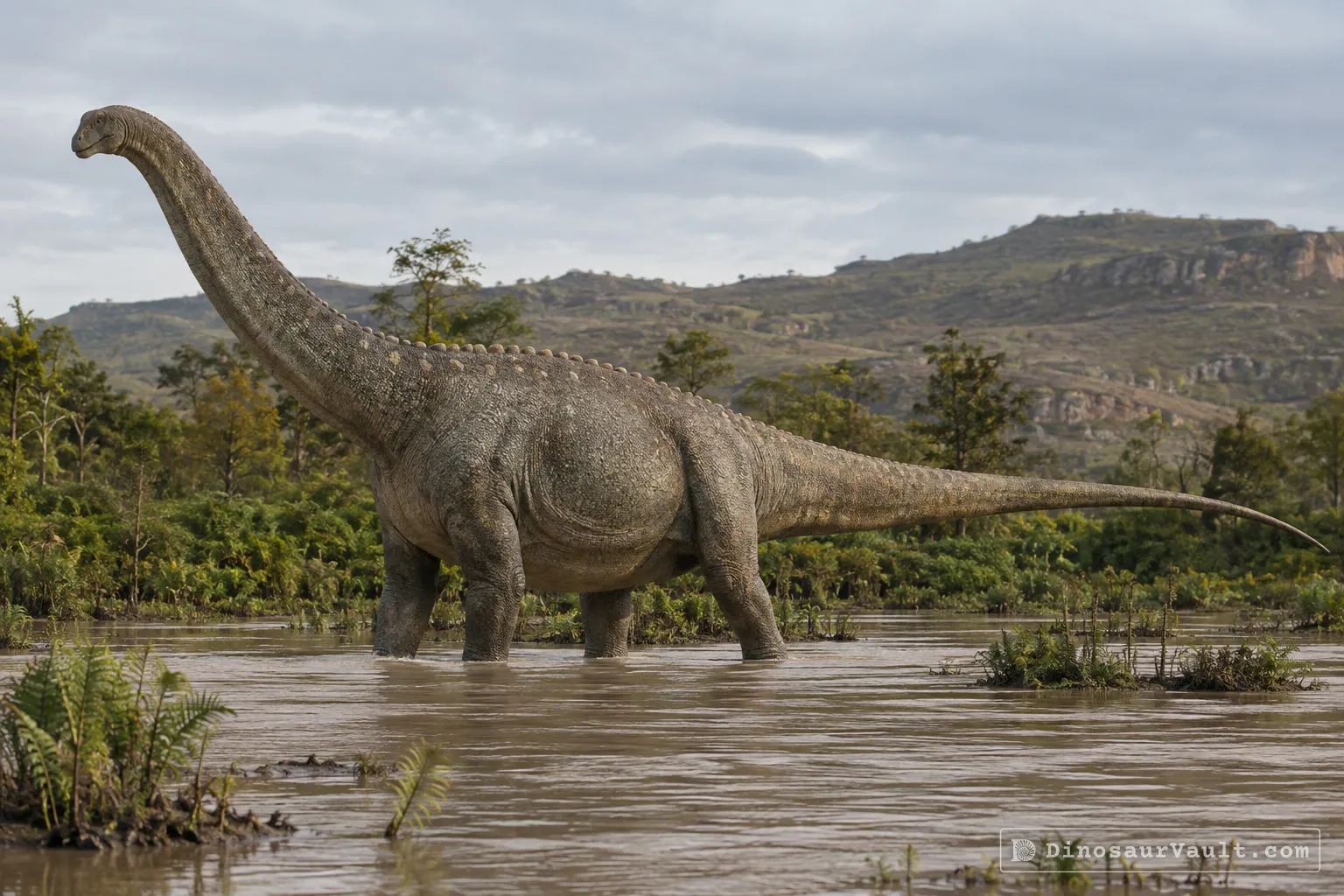
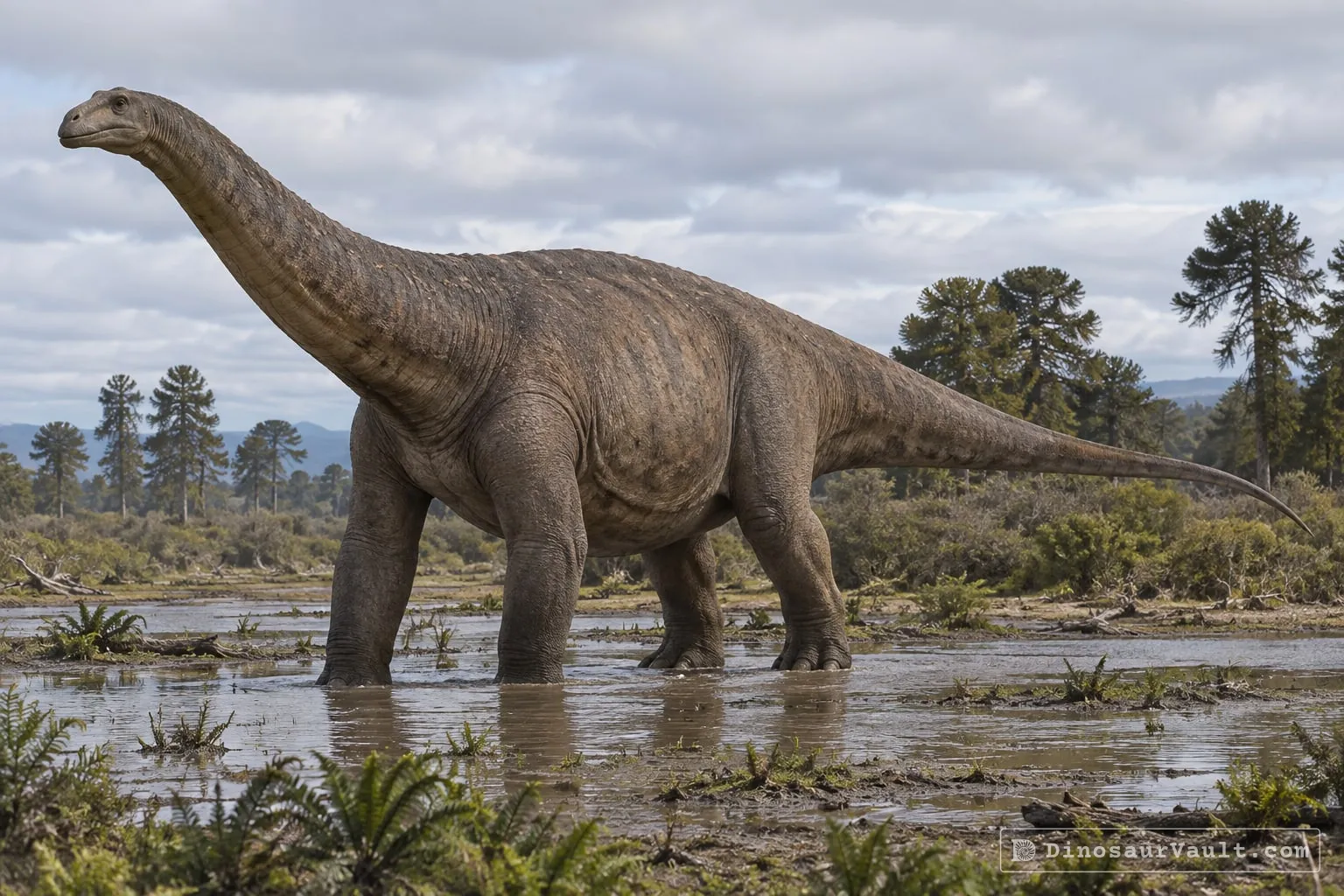
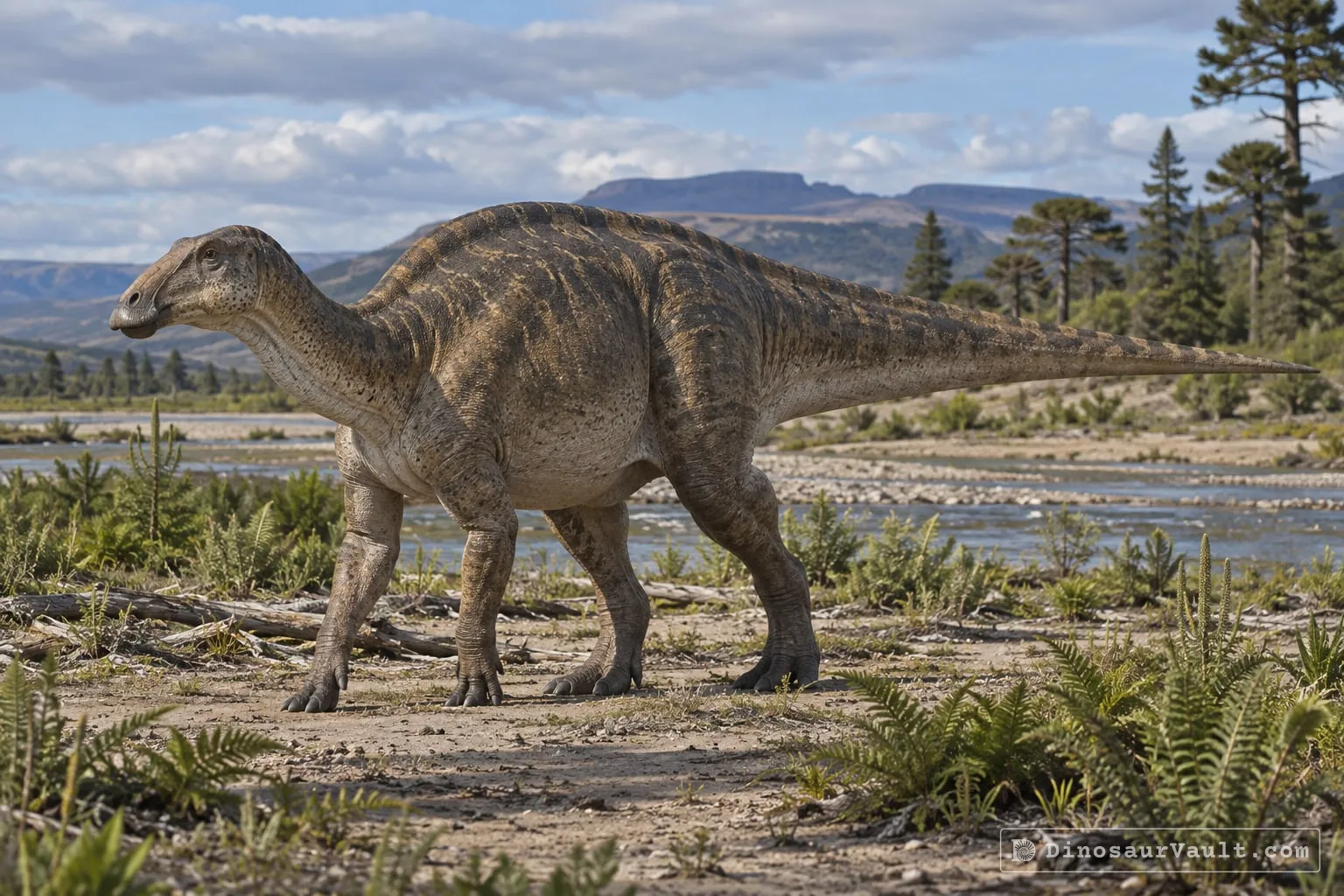
Rocasaurus was a small titanosaur, a long-necked plant eater related to Saltasaurus. It is known from bones of the backbone, hips and legs.
Its world
It lived about 72 to 66 million years ago, at the end of the Late Cretaceous, in what is now Argentina. Its bones come from the Allen Formation, where it shared the land with the raptor Austroraptor, the titanosaur Aeolosaurus and the armored Patagopelta.
How it was found
Salgado and Azpilicueta named it in 2000. It is named after a nearby town.
Field gallery
More views of Rocasaurus
Scenes reconstructed from the available fossil evidence.
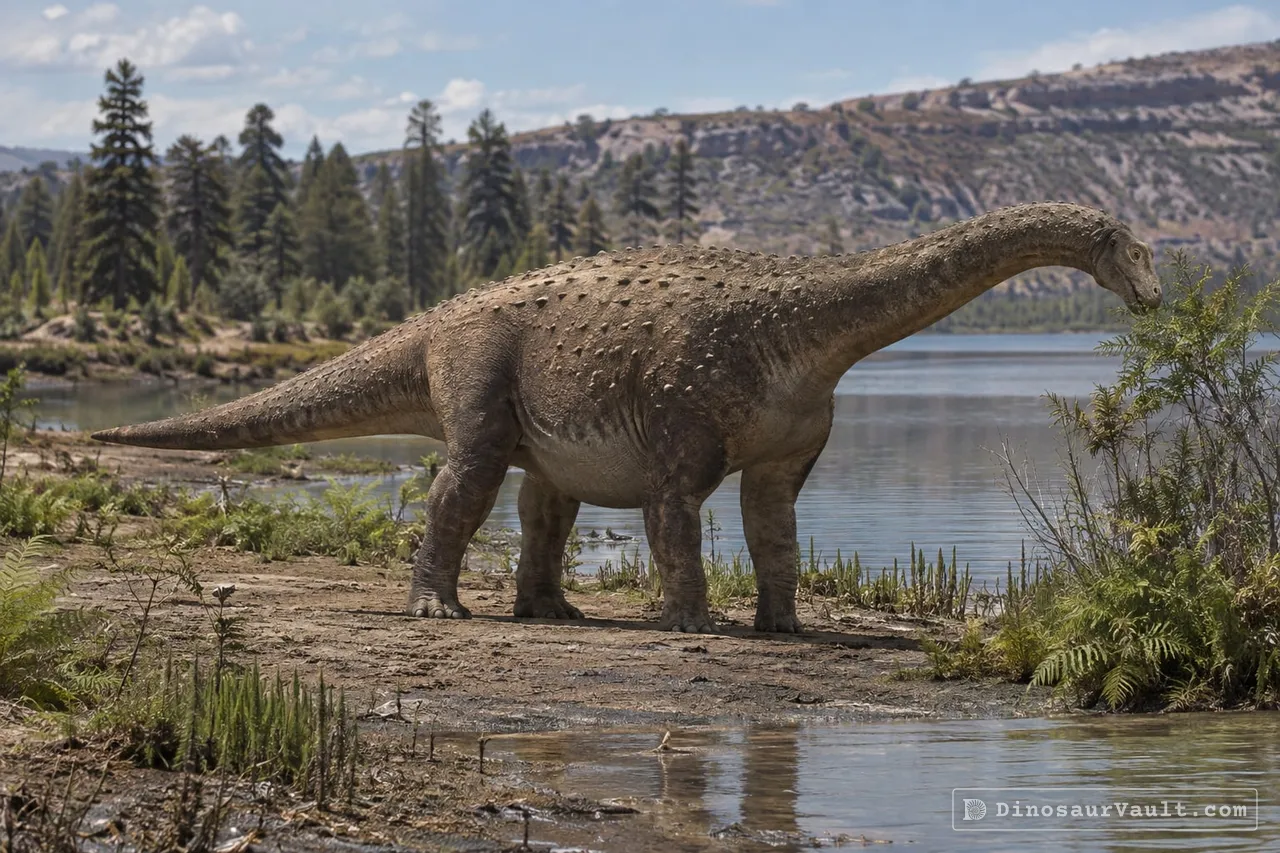
1 of 3
Lived alongside
Found in the same rock formations
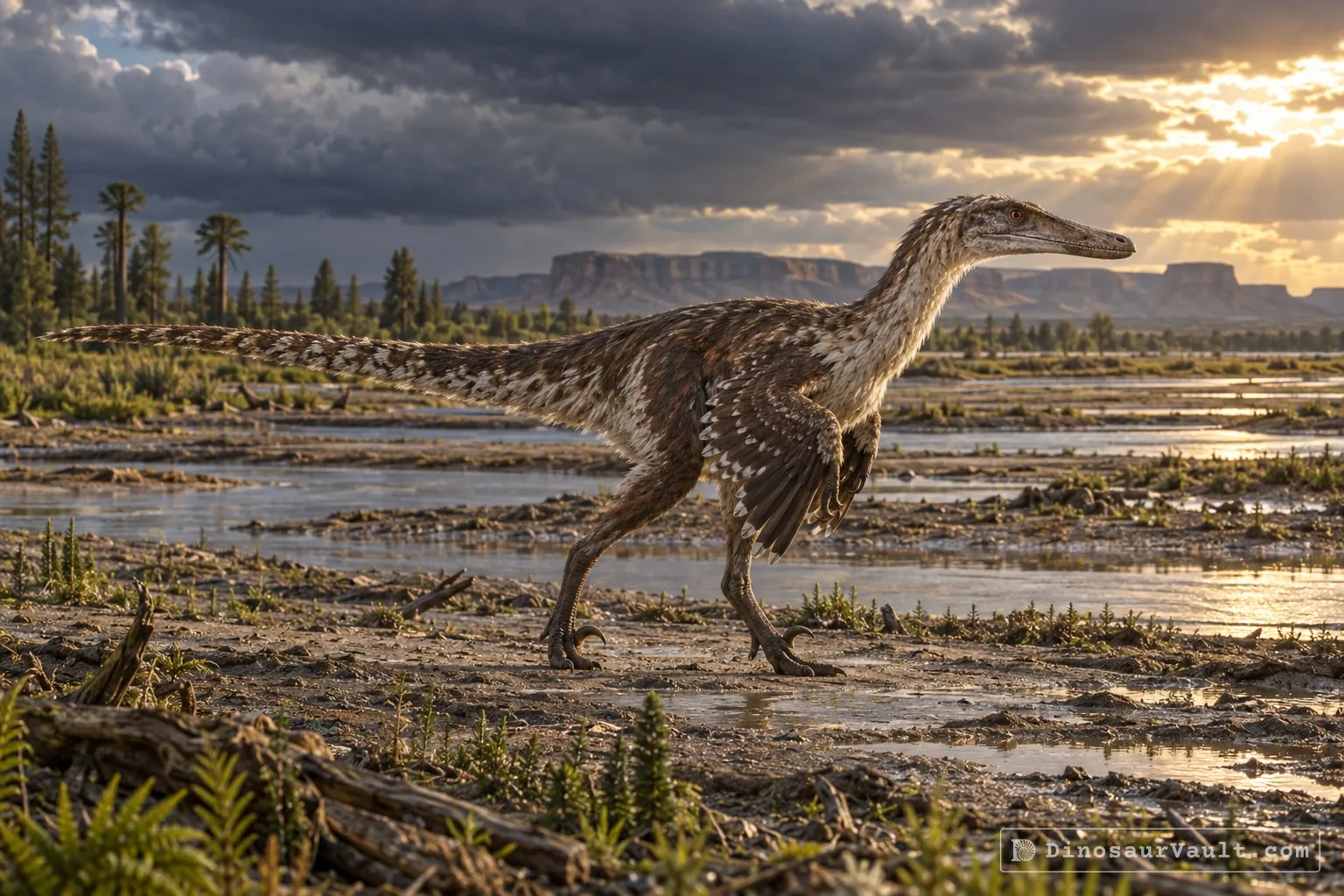
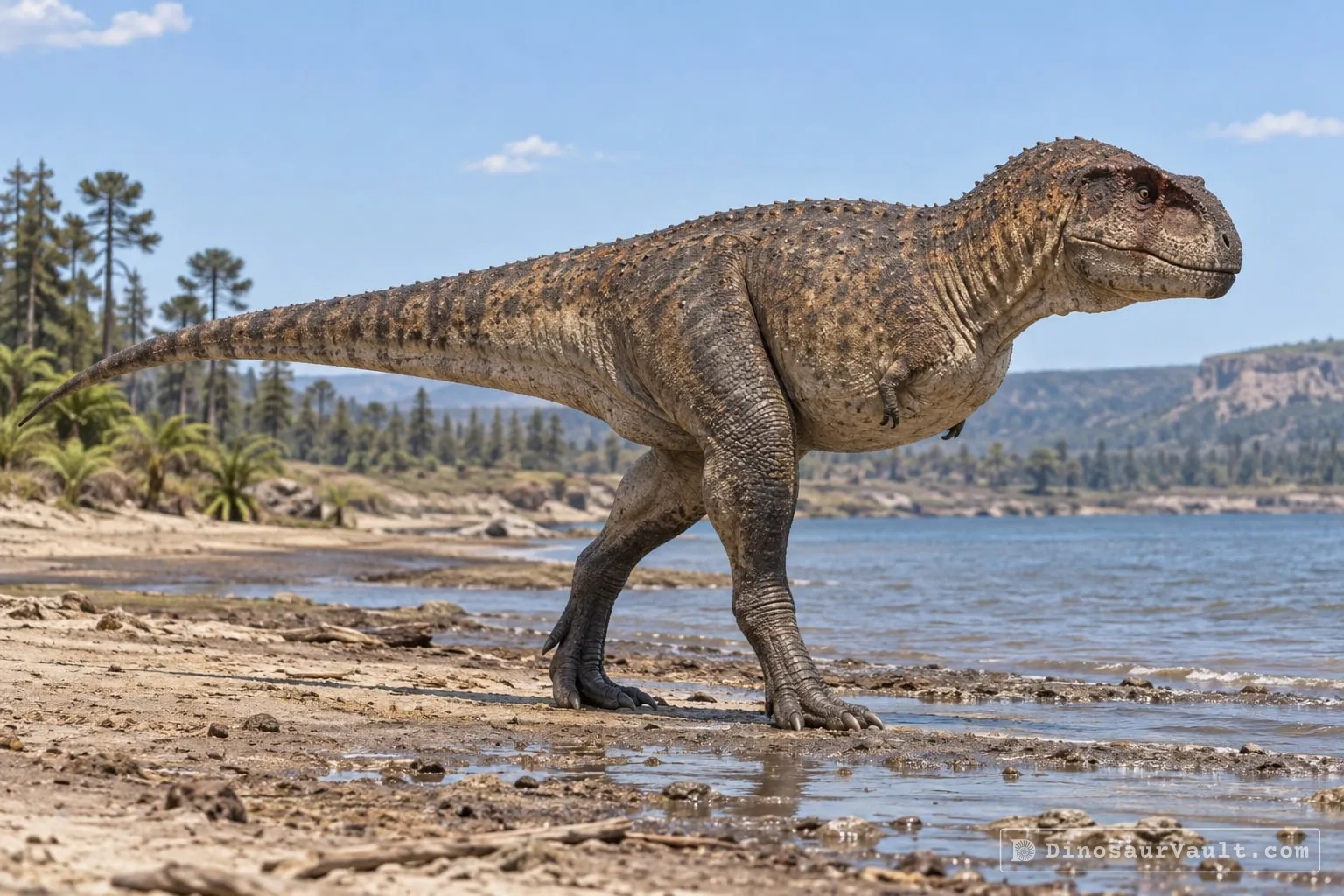
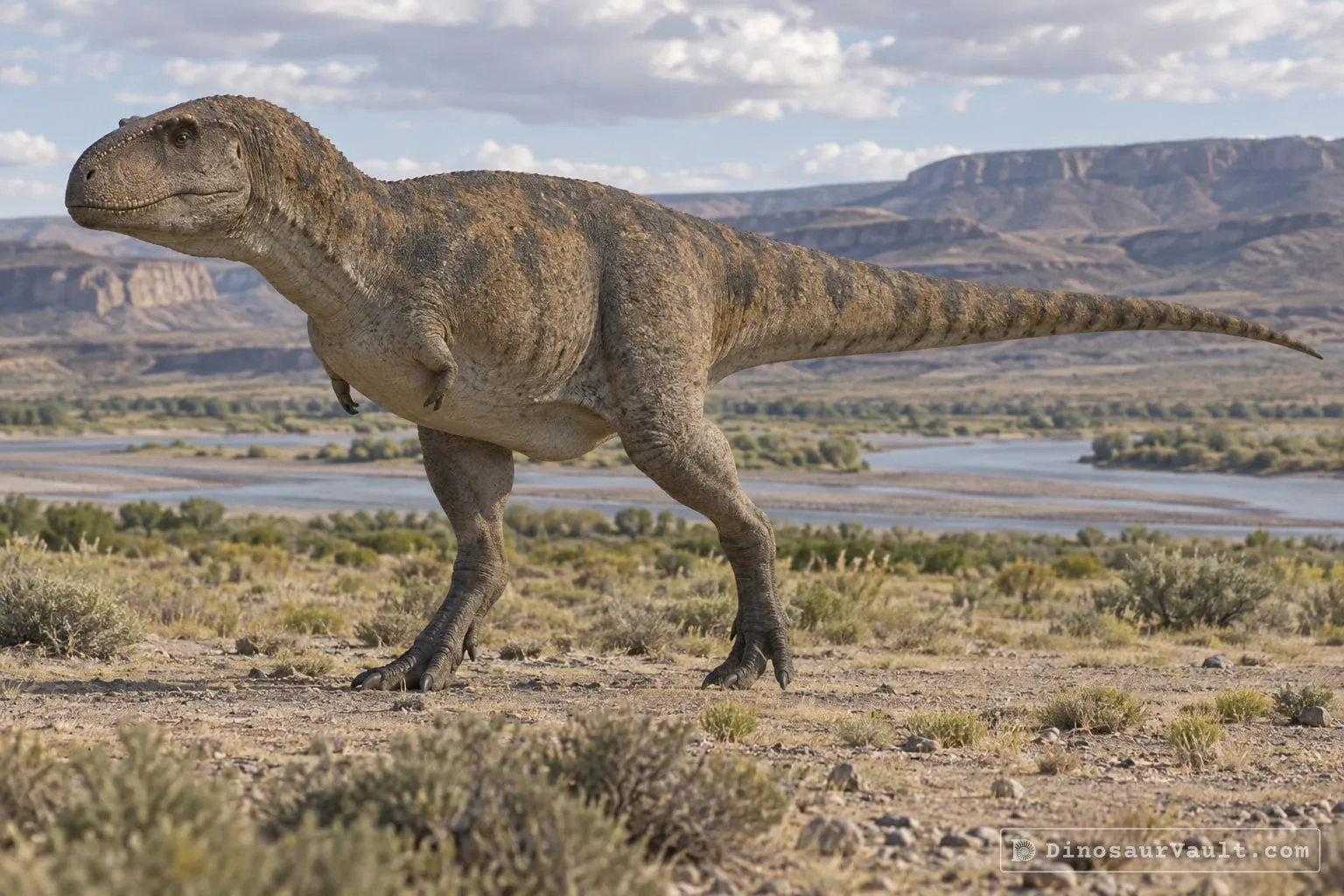
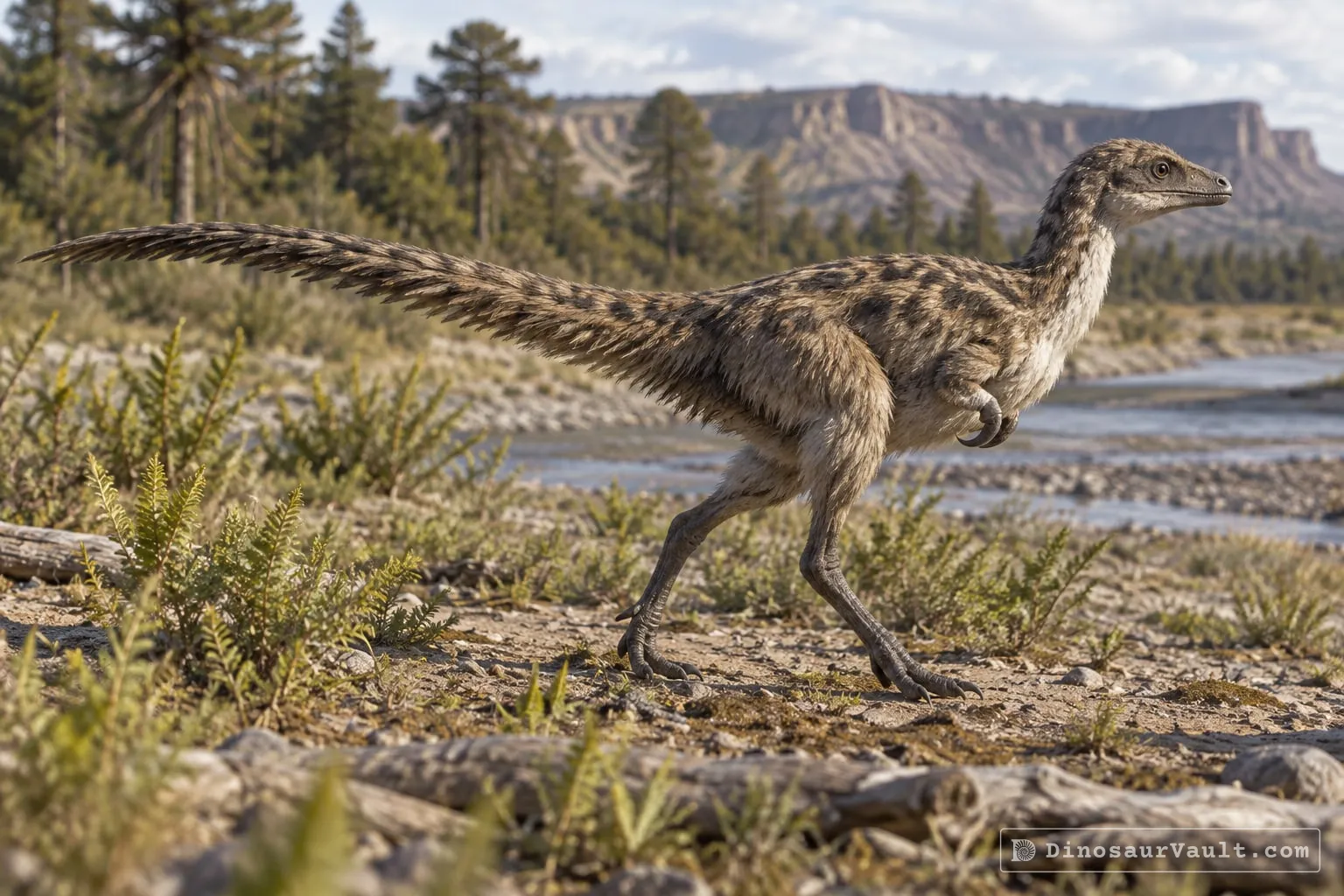
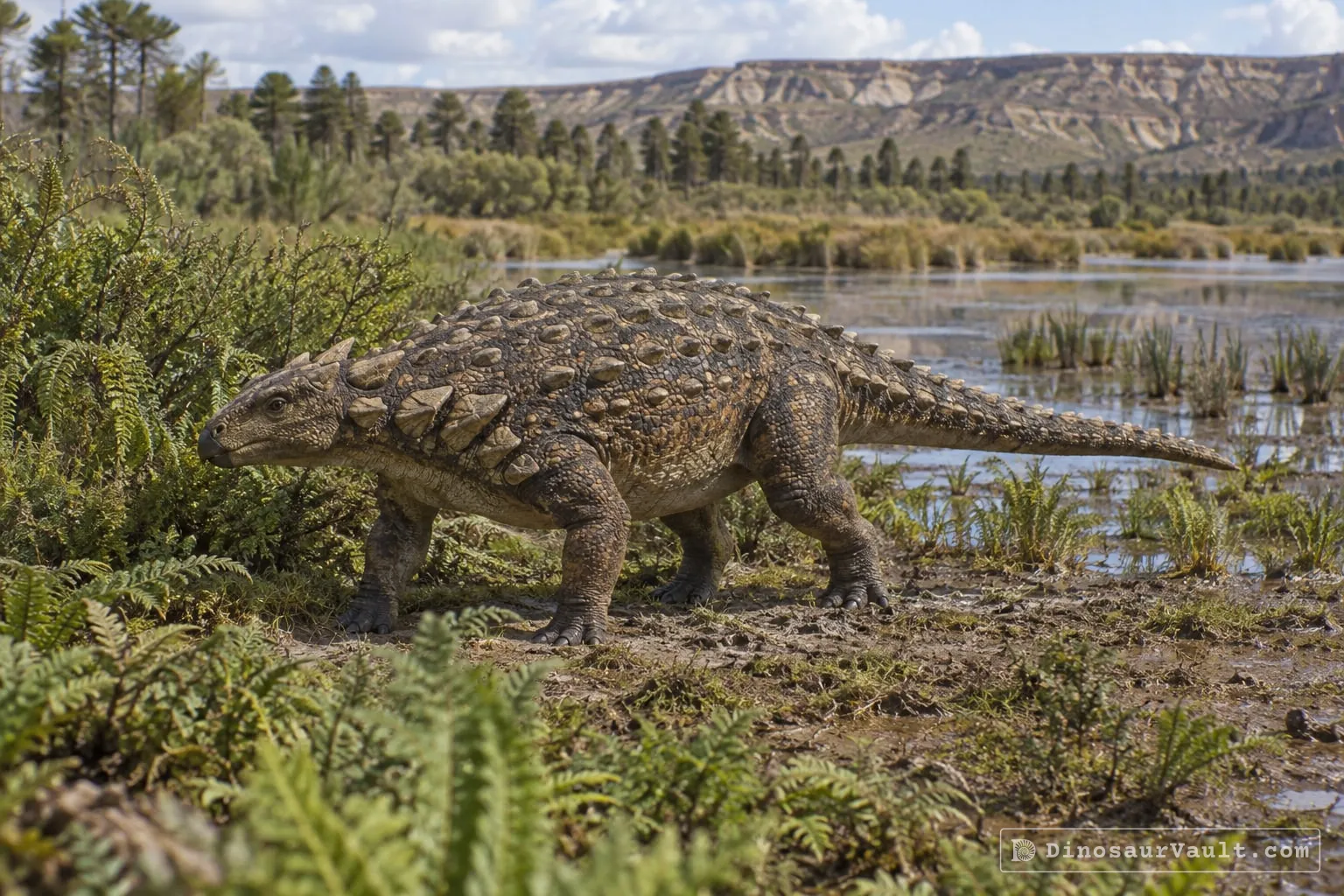


A rock formation can hold fossils laid down millions of years apart, so not every animal here met Rocasaurus.
The evidence
The science behind Rocasaurus
Which parts of the picture come from its own bones, and which come from its relatives.
From its own fossils
- The original partial skeleton includes neck, back and tail vertebrae, hip bones and a straight, moderately stout thigh bone.
- Its tail vertebrae contain internal air spaces, extending far along the tail.
- Deep hollows beneath the tail vertebrae are divided by a thin lengthwise wall of bone, a feature used to identify more of its tail bones from the same rocks.
Borrowed from relatives
- The missing arms and lower legs are restored by comparison with Saltasaurus and Neuquensaurus.
- The missing skull is restored by comparison with Tapuiasaurus, a titanosaur known from a well-preserved skull.
Still unknown
- Its skull, arms, lower legs, hands and feet, and its adult body proportions.
- Whether it carried the same arrangement of bony skin armor as Saltasaurus.
- Its color and exact diet.
Discovery timeline
- 2000Named itSalgado & Azpilicueta
- 2011RedescriptionGarcia & Salgado
- 2012Full descriptionCerda, Salgado & Powell
- 2025New findFernández, Windholz & Zurriaguz
- 2026Inside the bonesFernández, Zurriaguz & Windholz
Key papers
The research behind what we know of Rocasaurus
Named it
Named a small titanosaur from backbone, hip and leg bones, with distinctive hollows beneath its tail vertebrae.
Un nuevo saltasaurino (Sauropoda, Titanosauridae) de la provincia de Río Negro (Formación Allen, Cretácico Superior), Patagonia, Argentina [A new saltasaurine (Sauropoda, Titanosauridae) from Río Negro province (Allen Formation, Upper Cretaceous), Patagonia, Argentina. Ameghiniana 37: 259-264
No link available
Redescription
Redescribed Rocasaurus, added neck and tail vertebrae, and recognized a rich community of titanosaurs in the same rocks.
The titanosaur sauropods from the Allen Formation (late Campanian-early Maastrichtian) of Salitral Moreno (Patagonia, Río Negro, Argentina). Acta Palaeontologica Polonica
Read the paper : The titanosaur sauropods from the Allen Formation (late Campanian-early Maastrichtian) of Salitral Moreno (Patagonia, Río Negro, Argentina) (opens in a new tab)Full description
Found extensive air spaces within the skeletons of Rocasaurus and related titanosaurs, reaching far along their tails.
Extreme postcranial pneumaticity in sauropod dinosaurs from South America. Paläontologische Zeitschrift 86: 441-449
Read the paper : Extreme postcranial pneumaticity in sauropod dinosaurs from South America (opens in a new tab)New find
Identified more tail vertebrae as Rocasaurus by their divided hollows, and studied the bone tissue around the air spaces inside them.
Palaeohistological characterisation of the caudal pneumaticity of Rocasaurus muniozi (Sauropoda: Titanosauria). Historical Biology 38: 482-494
Read the paper : Palaeohistological characterisation of the caudal pneumaticity of Rocasaurus muniozi (Sauropoda: Titanosauria) (opens in a new tab)Inside the bones
Measured the volume of air space inside tail vertebrae of Rocasaurus, a fuller measure than comparing single cross sections.
Assessing pneumaticity in fossil vertebrae: A volumetric approach to air space proportion in Rocasaurus muniozi. Cretaceous Research 185: 106386
Read the paper : Assessing pneumaticity in fossil vertebrae: A volumetric approach to air space proportion in Rocasaurus muniozi (opens in a new tab)
Close relatives
Other members of Saltasauridae


Sources: Wikidata