Bonatitan
"Bona's titan"
- Lived
- 72 to 66 million years ago, Late Cretaceous
- Diet
- Herbivore
- Group
- Sauropods, Saltasauridae
- Found in
- Argentina
- Named by
- Martinelli and Forasiepi 2004
Where its fossils were found
The evidence
Today

70 million years ago
Habitat
The Allen Formation records a lowland with freshwater habitats and occasional marine influence. Austroraptor, Aeolosaurus and Patagopelta lived in the same wider region.
Field notes
About Bonatitan
What it was like
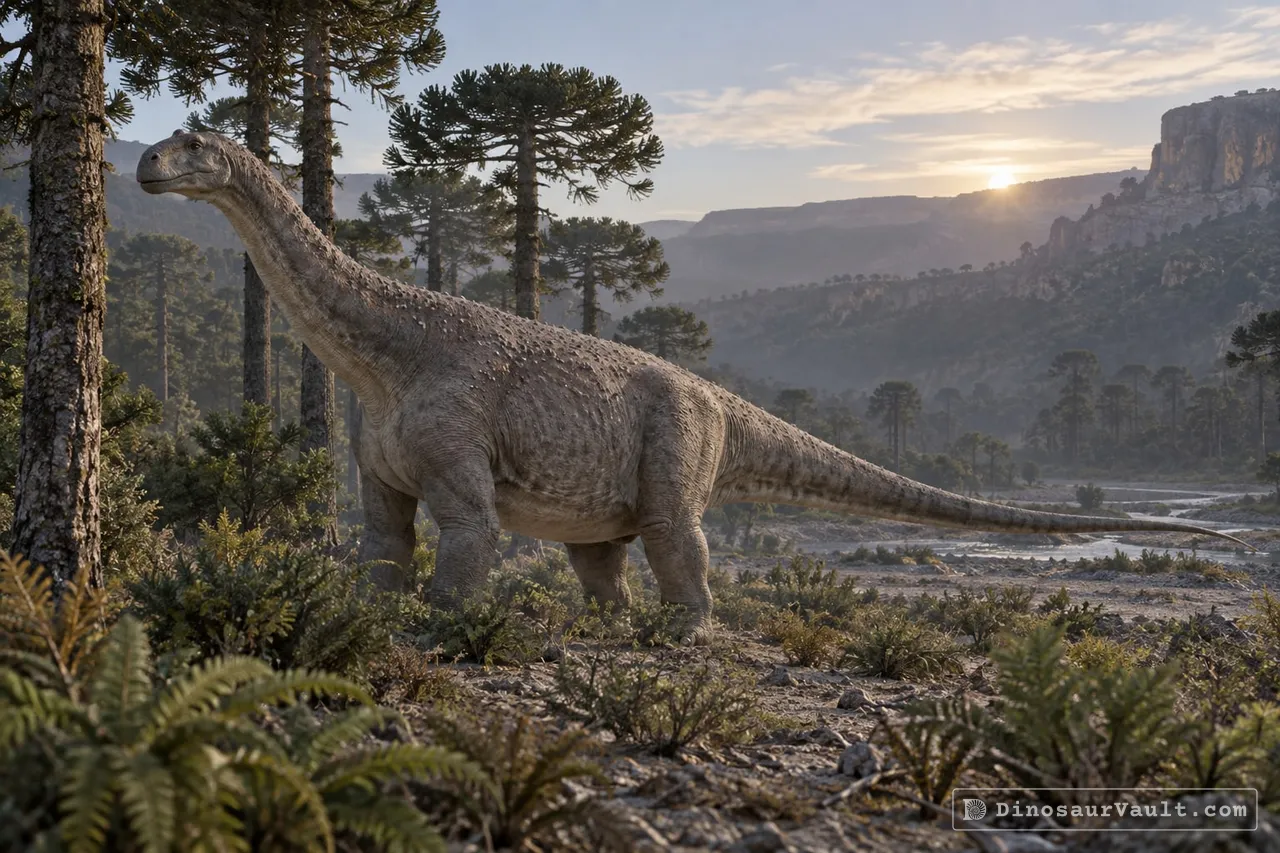
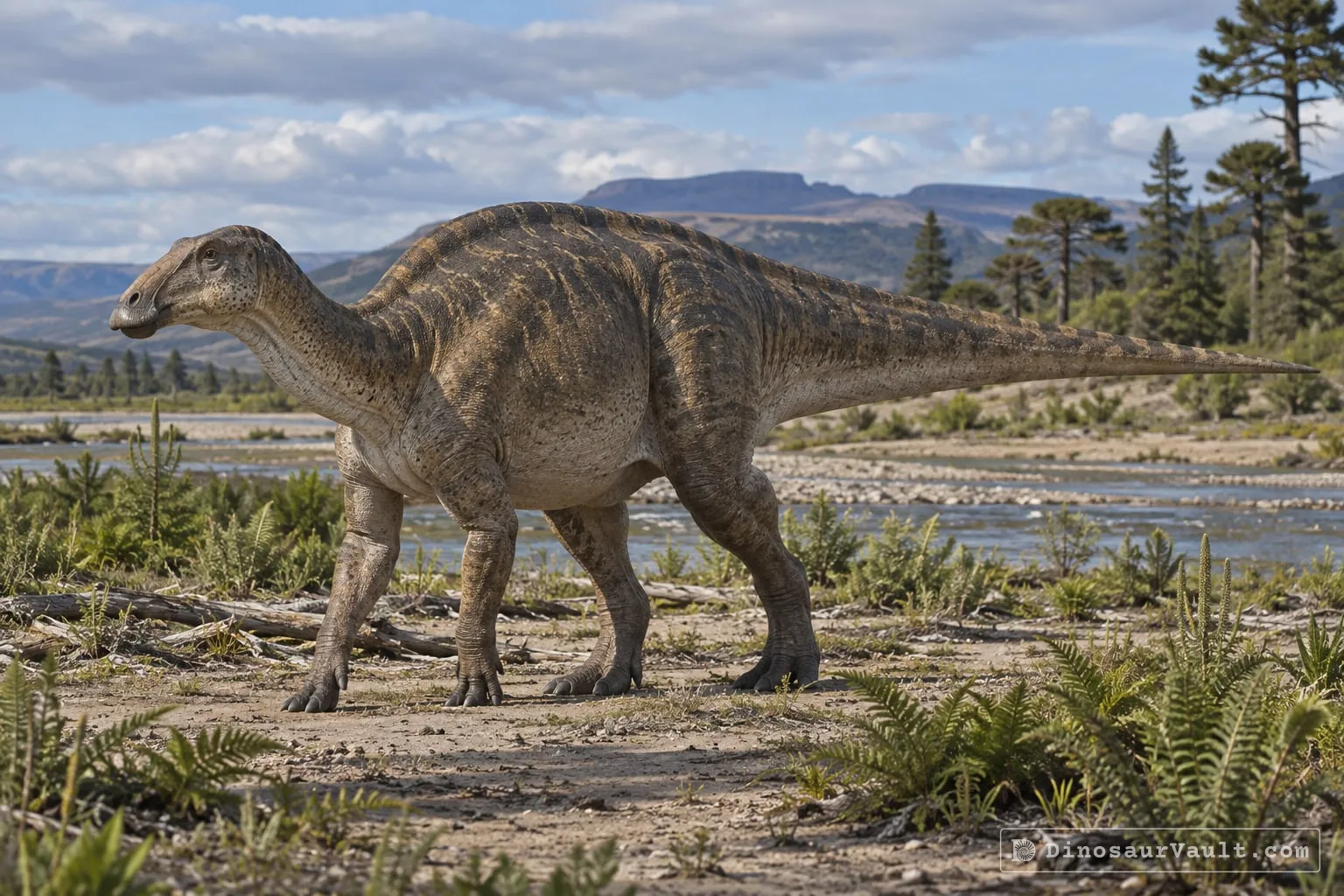
Bonatitan was a small titanosaur, a long-necked plant eater. Its name is based on a braincase, with backbone and limb bones from other animals referred to it.
Its world
It lived about 72 to 66 million years ago, at the end of the Late Cretaceous, in what is now Argentina. Its bones come from the Allen Formation, where it shared the land with the raptor Austroraptor, the titanosaur Aeolosaurus and the armored Patagopelta.
How it was found
Martinelli and Forasiepi named Bonatitan in 2004. The name honors a leading Argentine paleontologist.
Field gallery
More views of Bonatitan
Scenes reconstructed from the available fossil evidence.
Lived alongside
Found in the same rock formations
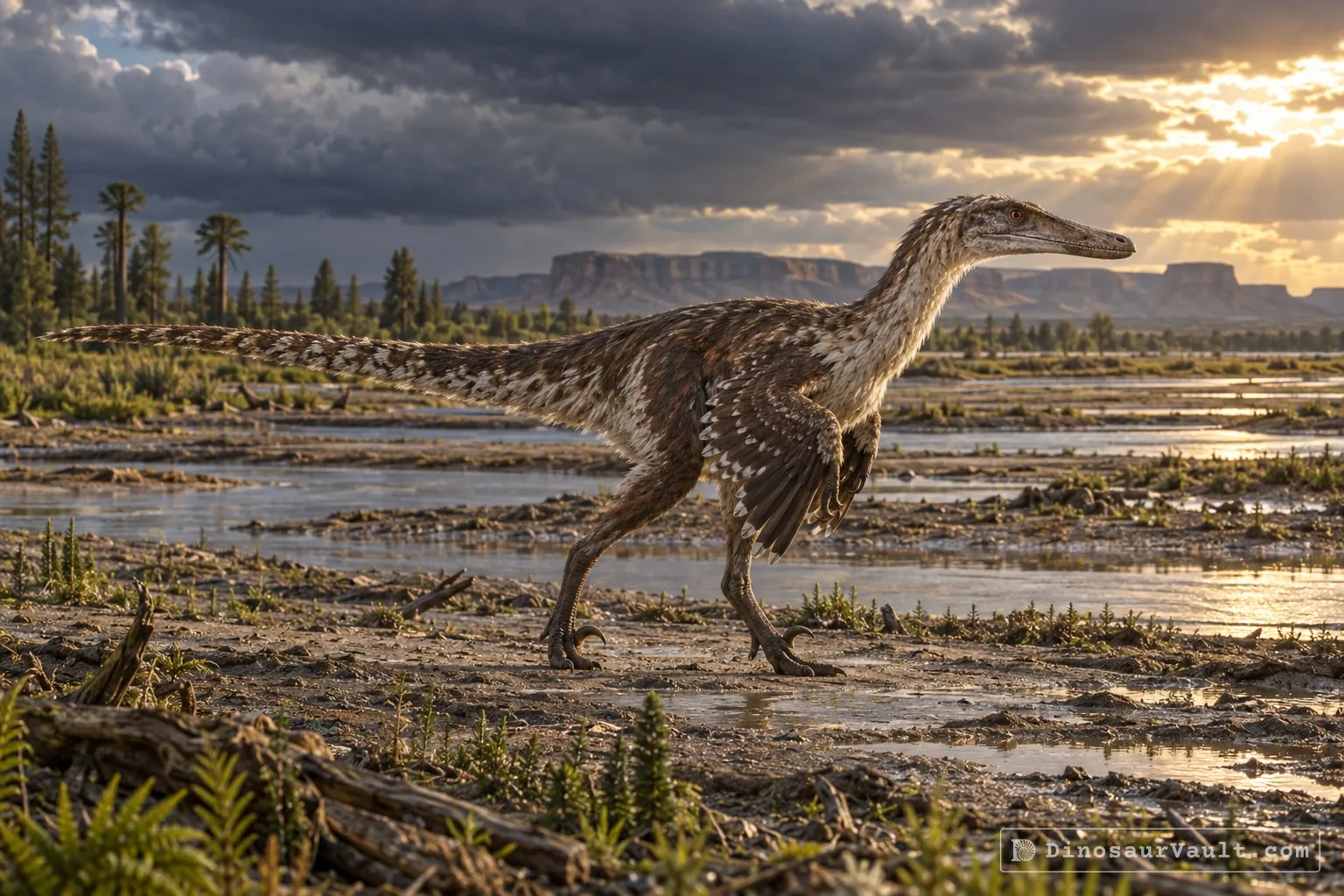
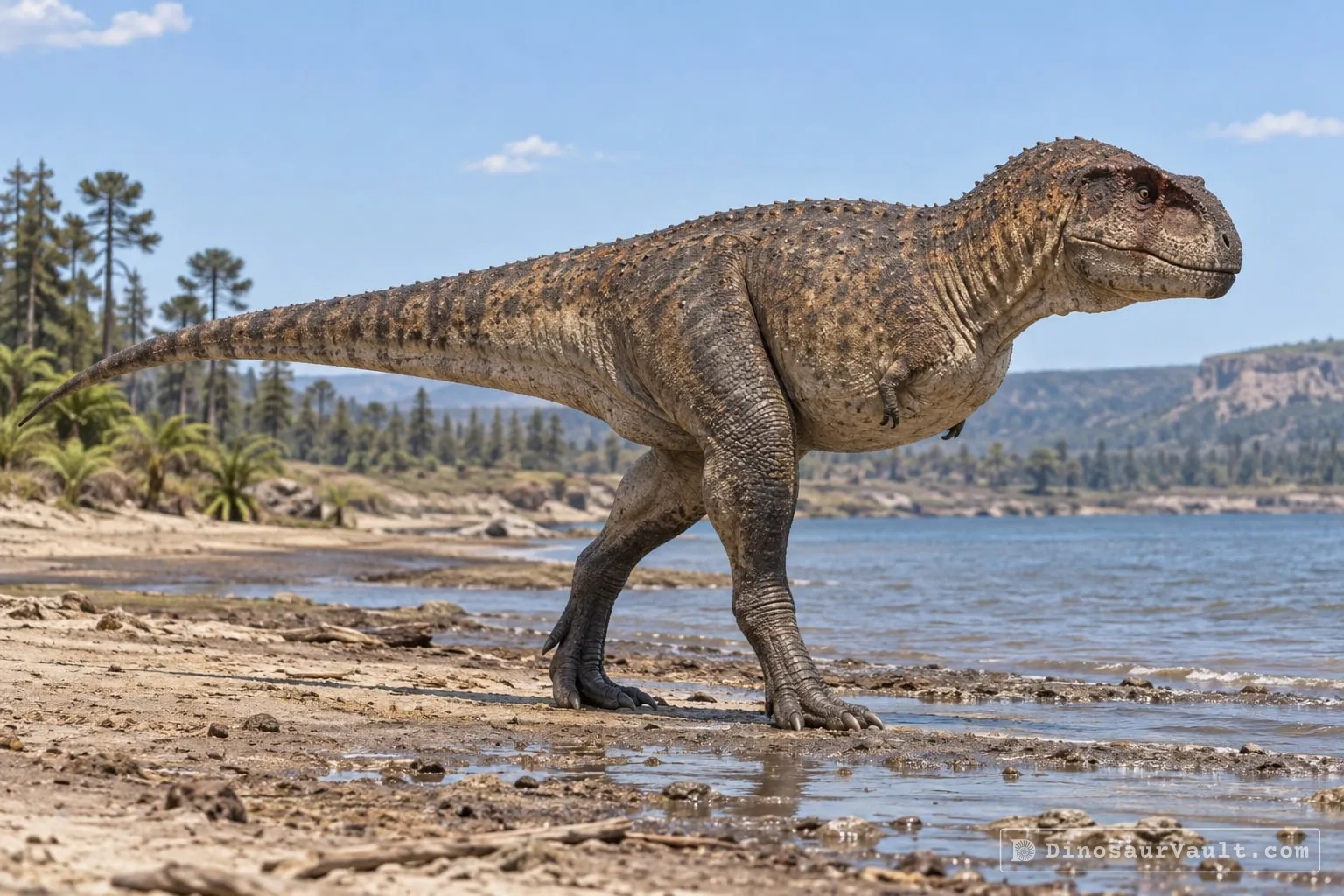
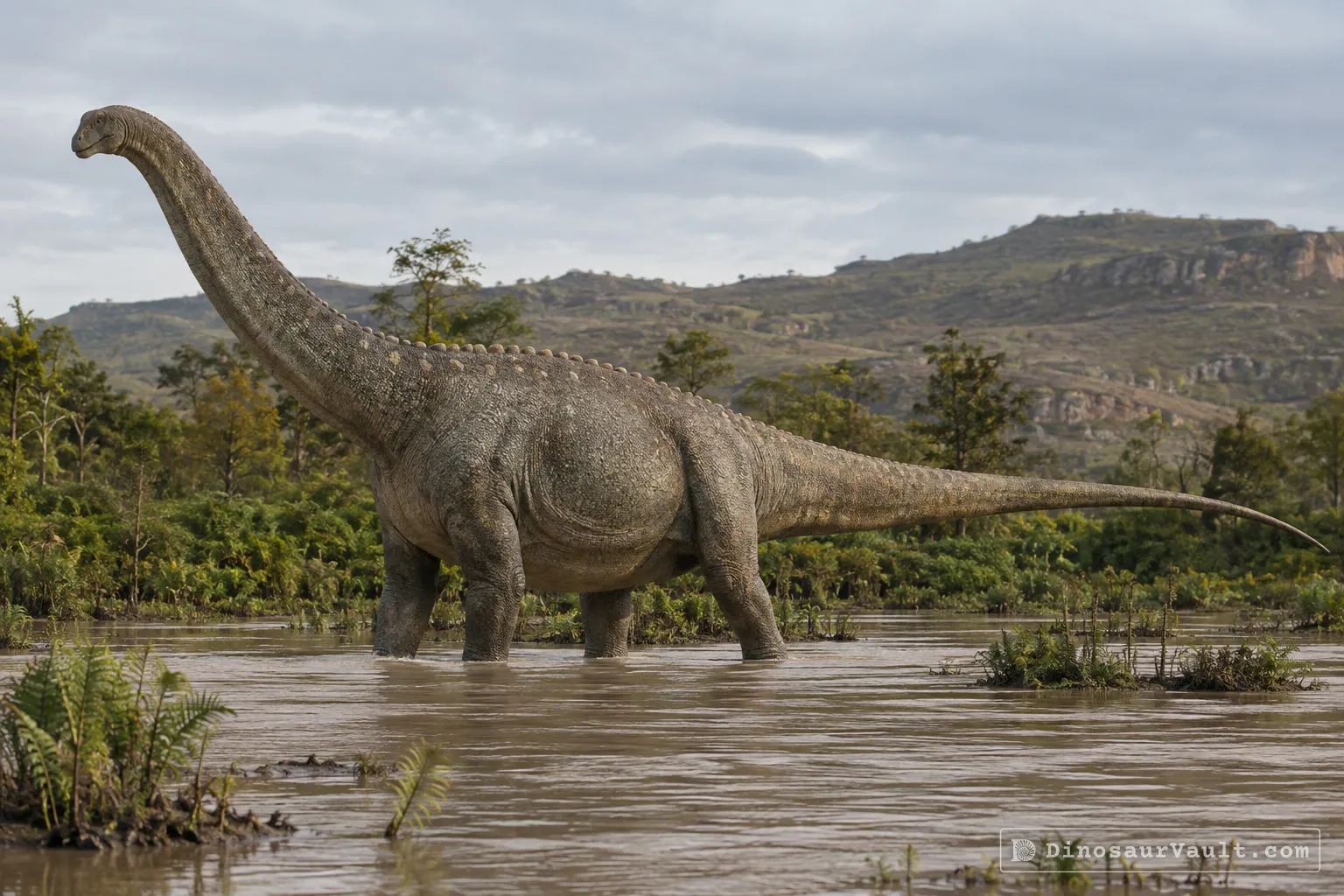
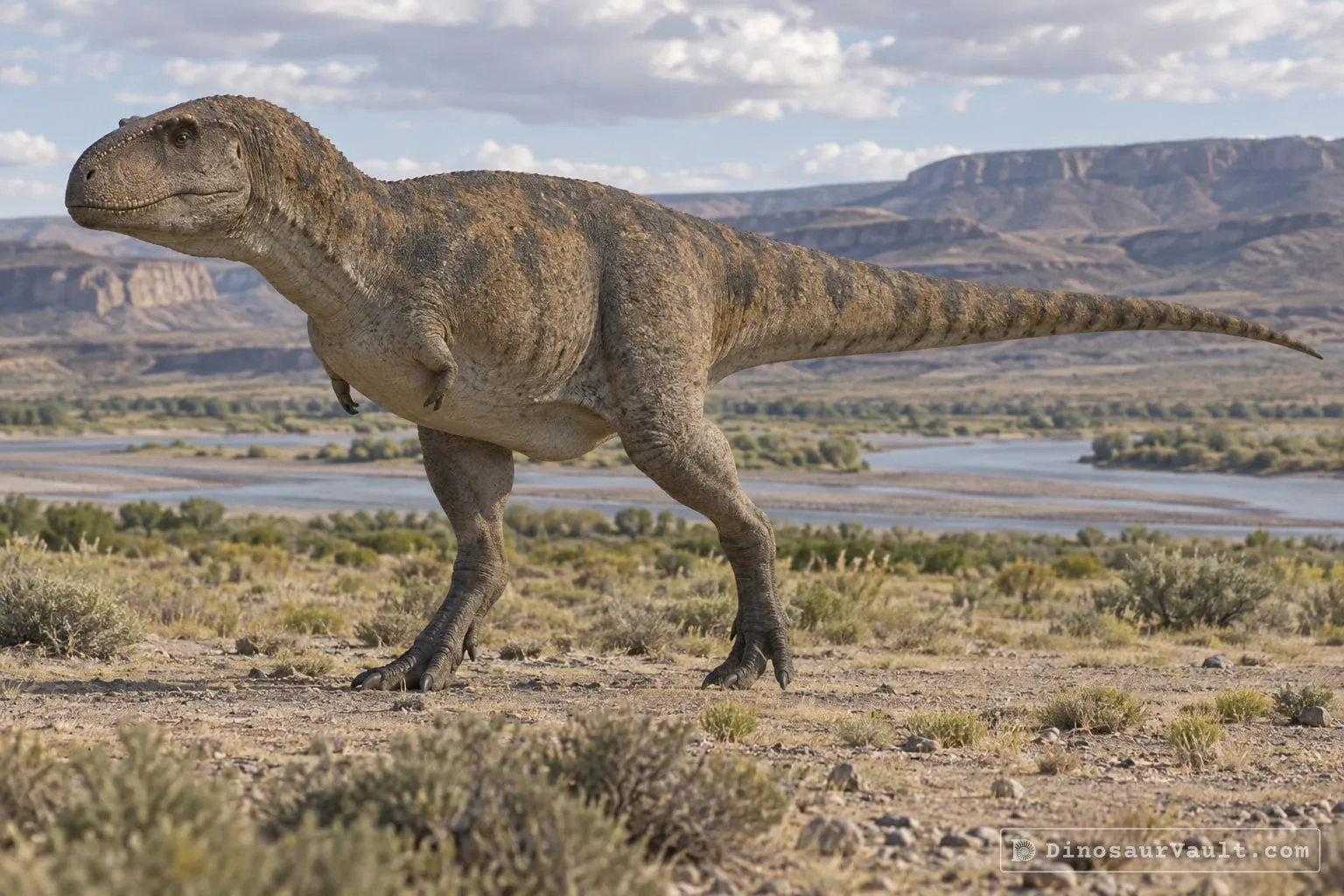
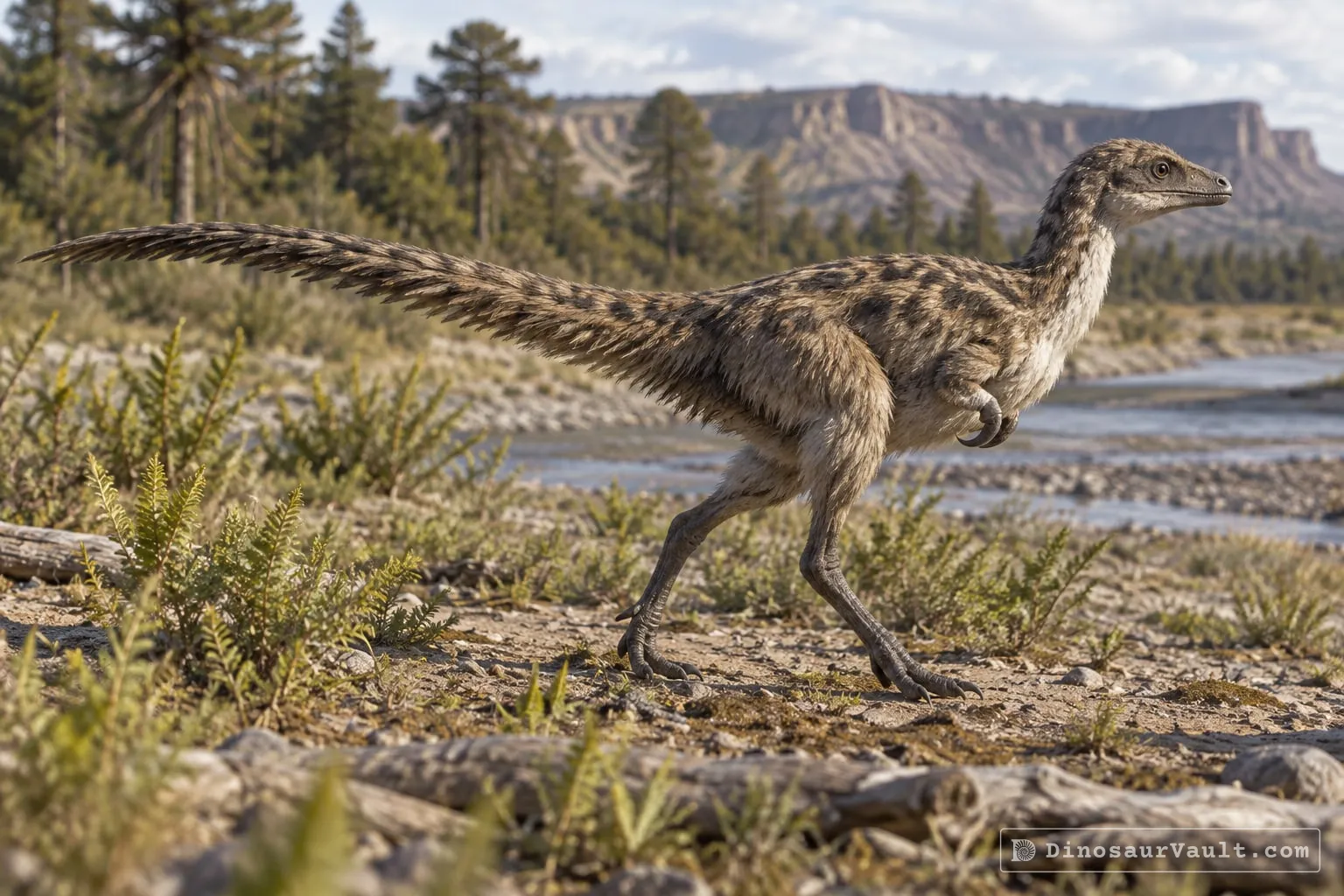
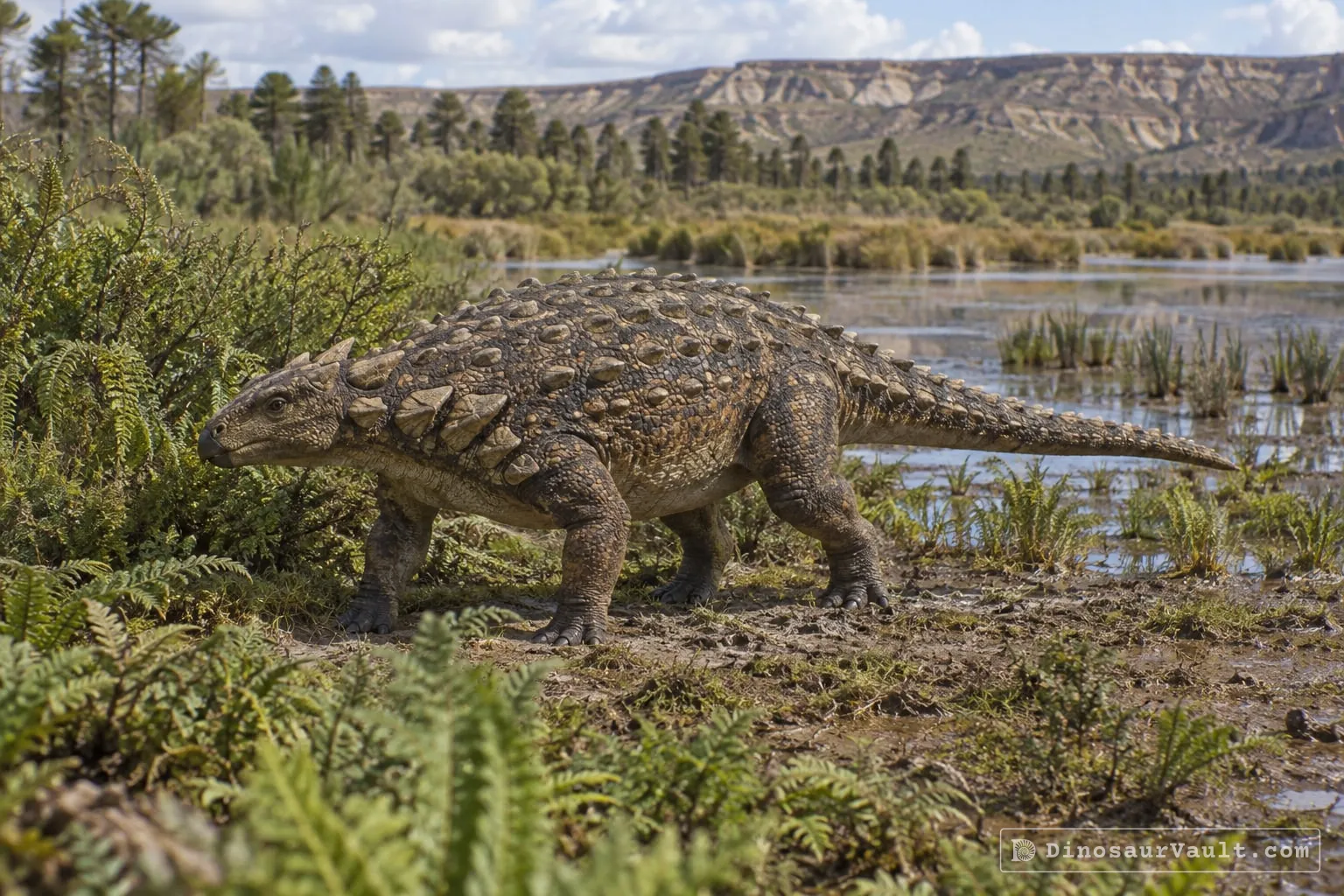
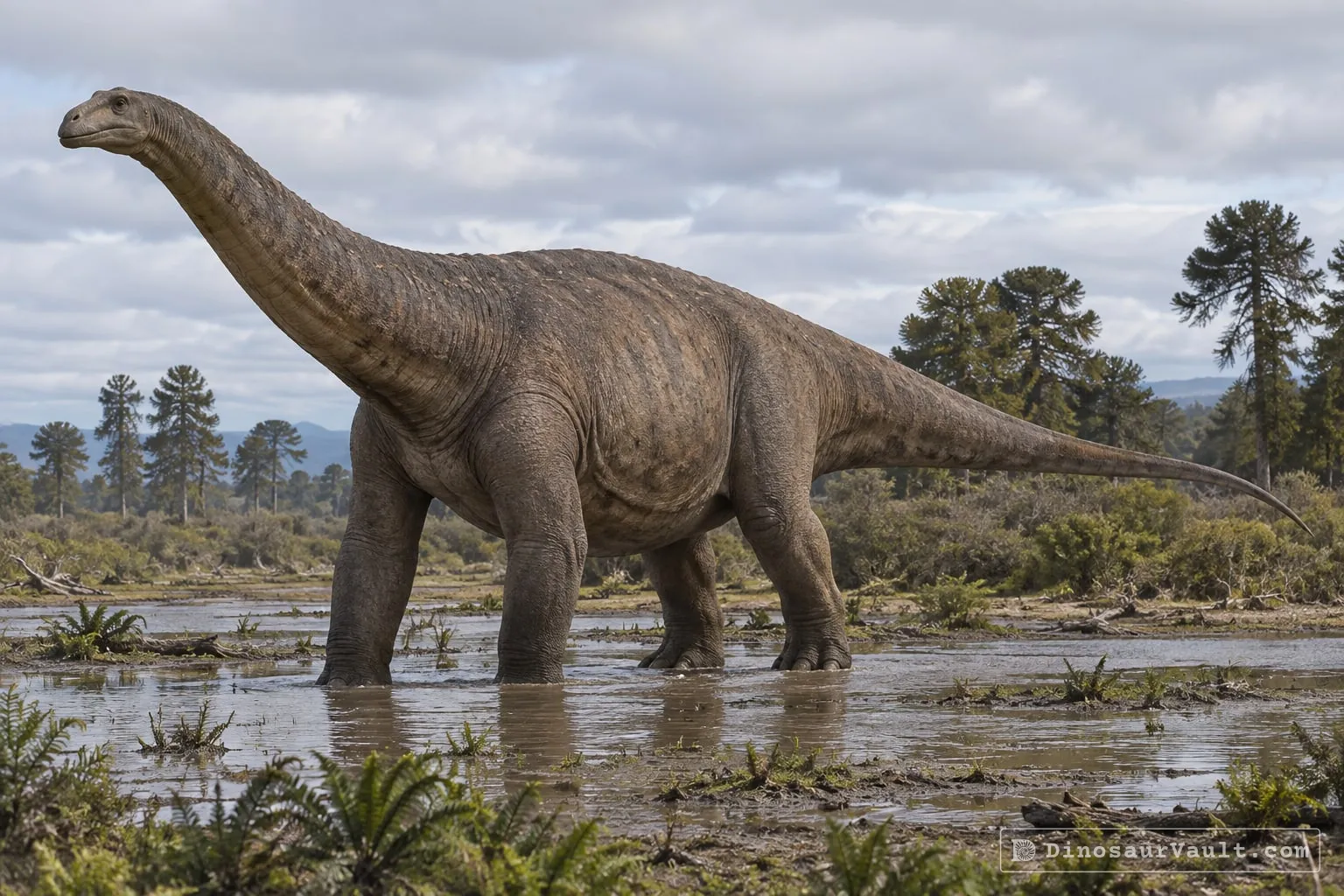


A rock formation can hold fossils laid down millions of years apart, so not every animal here met Bonatitan.
The evidence
The science behind Bonatitan
Which parts of the picture come from its own bones, and which come from its relatives.
From its own fossils
- The name-bearing specimen is a braincase; backbone and limb bones from other animals have been referred to Bonatitan.
- Small paired pits mark the forehead bones of the braincase, and a ridge runs along a hand bone referred to Bonatitan.
- Scans of a braincase reveal the shape of its brain cavity and inner ear.
Borrowed from relatives
- Its missing front of the skull is restored after Tapuiasaurus.
- Its missing neck, trunk, hands and feet are restored after Mendozasaurus.
Still unknown
- Its complete skull shape and body proportions.
- Its skin texture and color.
- Whether differences among the referred animals reflect growth, sex or separate species.
Discovery timeline
- 2004Named itMartinelli & Forasiepi
- 2012SkullCarabajal
- 2014RedescriptionSalgado, Gallina & Paulina Carabajal
Key papers
The research behind what we know of Bonatitan
Named it
Named Bonatitan from skull and skeleton fragments within a diverse collection of vertebrates from the Allen Formation.
Late Cretaceous vertebrates from bajo de Santa Rosa (Allen Formation), Río Negro province, Argentina, with the description of a new sauropod dinosaur (Titanosauridae). Revista del Museo Argentino de Ciencias Naturales 6: 257-265
Read the paper : Late Cretaceous vertebrates from bajo de Santa Rosa (Allen Formation), Río Negro province, Argentina, with the description of a new sauropod dinosaur (Titanosauridae) (opens in a new tab)Skull
Used scans to reconstruct the brain cavity and inner ear of Bonatitan and compare them with other sauropods.
Neuroanatomy of Titanosaurid Dinosaurs From the Upper Cretaceous of Patagonia, With Comments on Endocranial Variability Within Sauropoda. The Anatomical Record 295: 2141-2156
Read the paper : Neuroanatomy of Titanosaurid Dinosaurs From the Upper Cretaceous of Patagonia, With Comments on Endocranial Variability Within Sauropoda (opens in a new tab)Redescription
Reassigned the bones among several individuals, revised the defining features and selected a braincase as the name-bearing specimen.
Redescription ofBonatitan reigi(Sauropoda: Titanosauria), from the Campanian–Maastrichtian of the Río Negro Province (Argentina). Historical Biology 27: 525-548
Read the paper : Redescription ofBonatitan reigi(Sauropoda: Titanosauria), from the Campanian–Maastrichtian of the Río Negro Province (Argentina) (opens in a new tab)
Close relatives
Other members of Saltasauridae


Sources: Wikidata