Regaliceratops
"royal horned face"
Type species Regaliceratops peterhewsi
- Lived
- 72 to 66 million years ago, Late Cretaceous
- Diet
- Herbivore
- Length
- about 5 m (16 ft)
- Group
- Ceratopsians, Ceratopsidae
- Found in
- Canada
- Named by
- Brown and Henderson 2015
Size comparison
To scale


Scale in metersOutline: typical ceratopsian shape
Where its fossils were found
The evidence
Today

70 million years ago
Habitat
Wet lowlands with rivers in what is now Alberta. Dinosaurs from the same rocks include Edmontosaurus, Pachyrhinosaurus and Montanoceratops.
Field notes
About Regaliceratops
What it was like
Regaliceratops was a horned dinosaur about 5 meters (16 feet) long, with a skull like no other of its family. Its frill was lined with big, flat, pentagon-shaped plates that stood around its head like a crown, which gave the genus its name.
Its horns were unusual too. The horns over its eyes were very short, and the horn on its nose was tall, a pattern seen in the other main branch of horned dinosaurs. It shows that similar head shapes appeared more than once.
Its world
It lived about 72 to 66 million years ago, in the Late Cretaceous, in what is now Alberta, Canada. Its skull comes from rocks in the south of the province, where it shared the land with Edmontosaurus, Pachyrhinosaurus and the horned Anchiceratops.
How it was found
Brown and Henderson named Regaliceratops in 2015, from a single, nearly complete skull.
Field gallery
More views of Regaliceratops
Scenes reconstructed from the available fossil evidence.
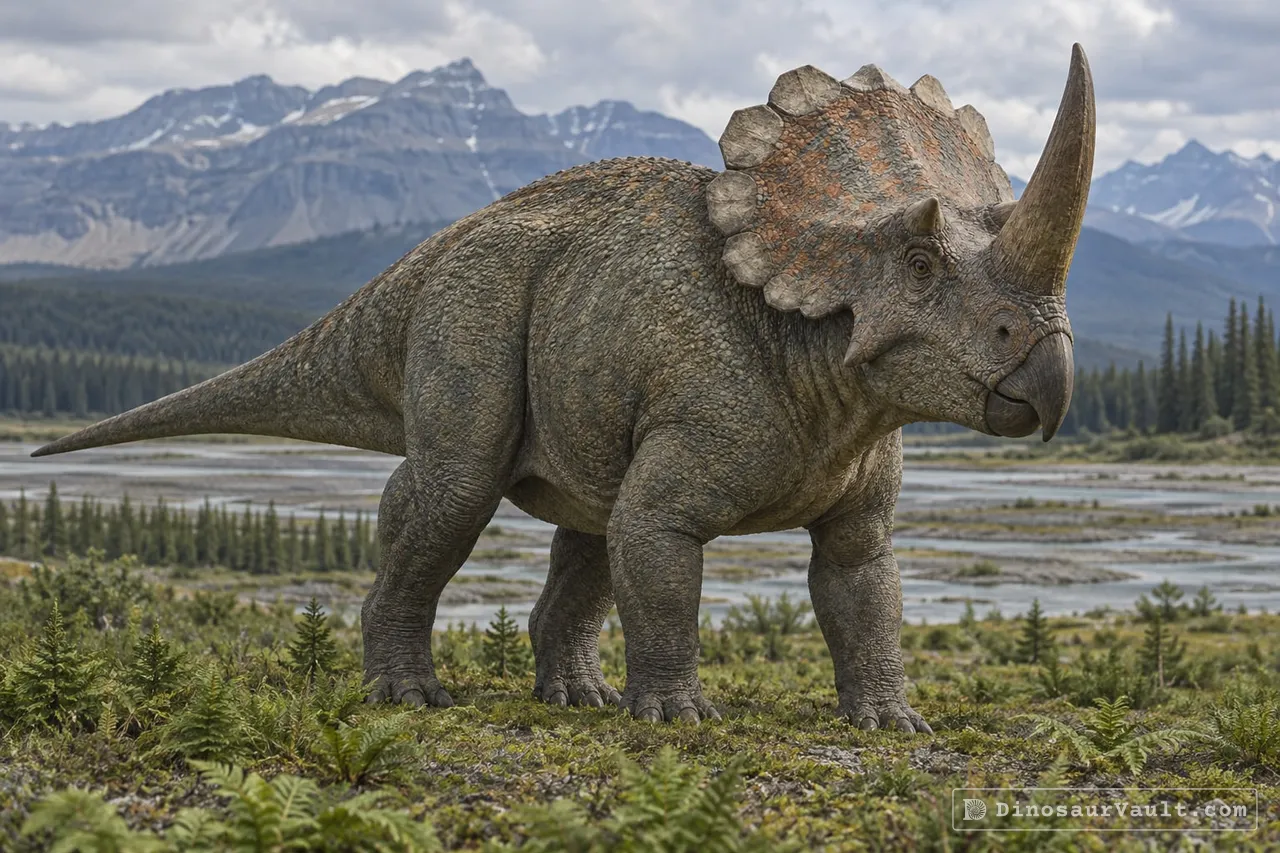
1 of 3
Lived alongside
Found in the same rock formations
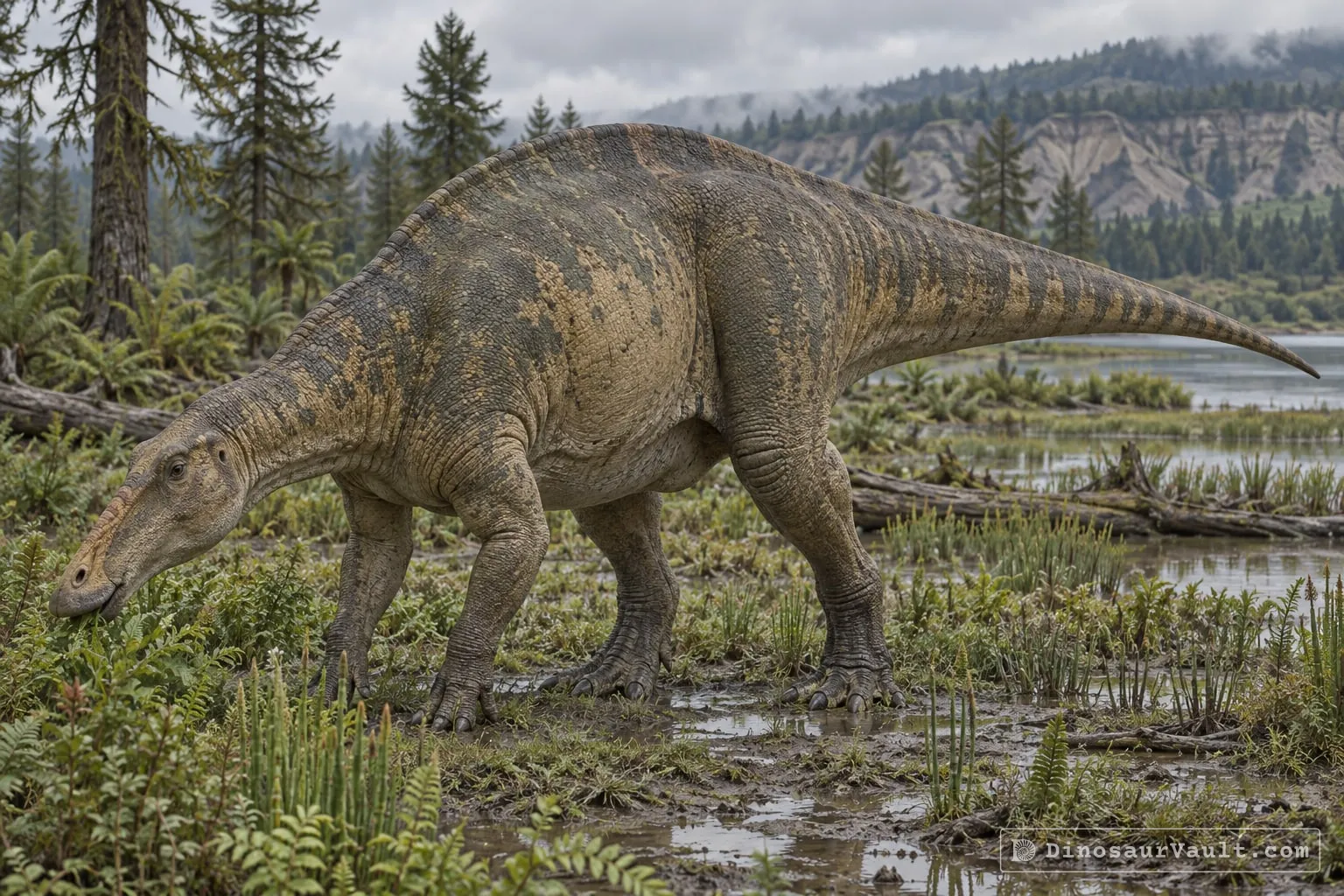
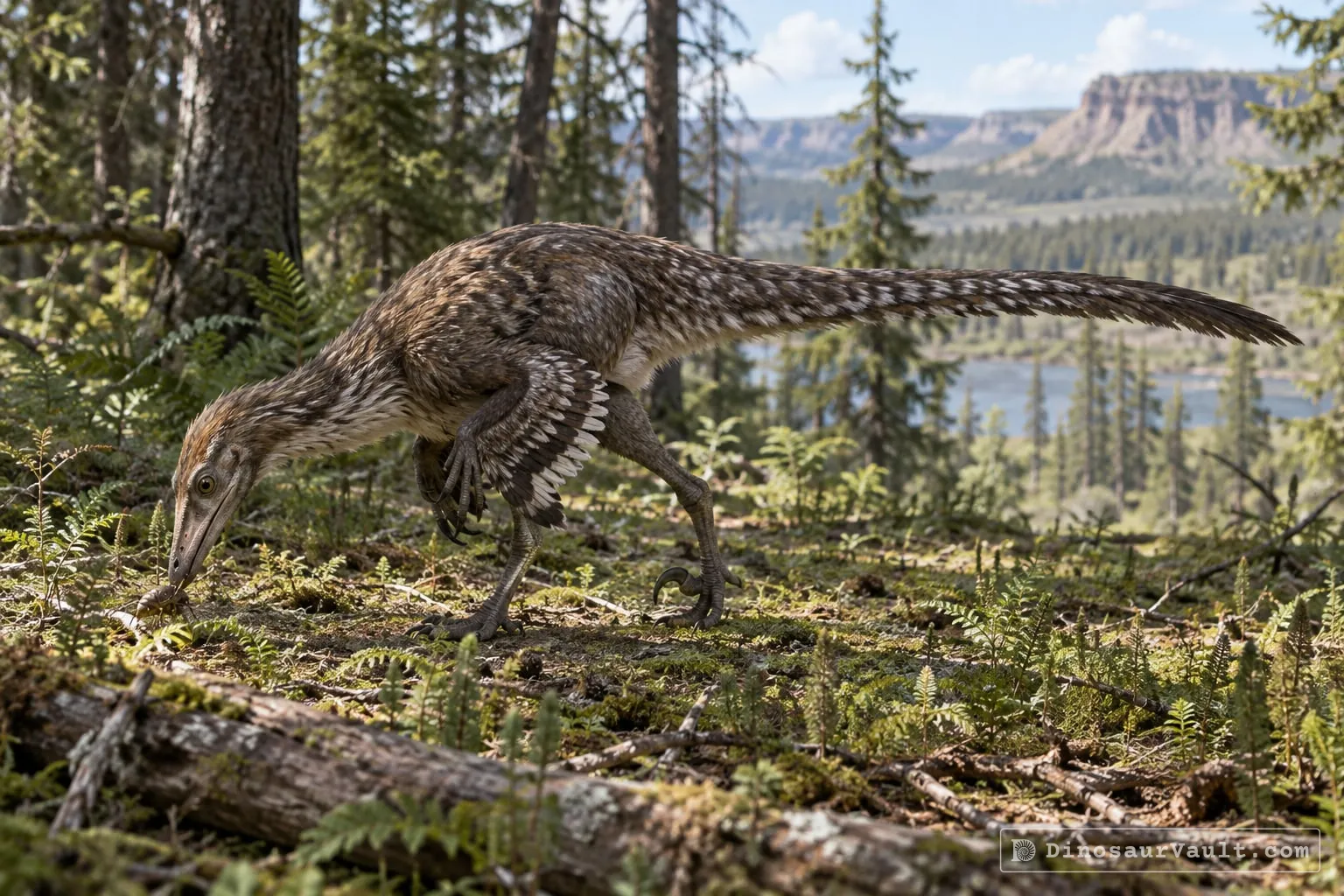
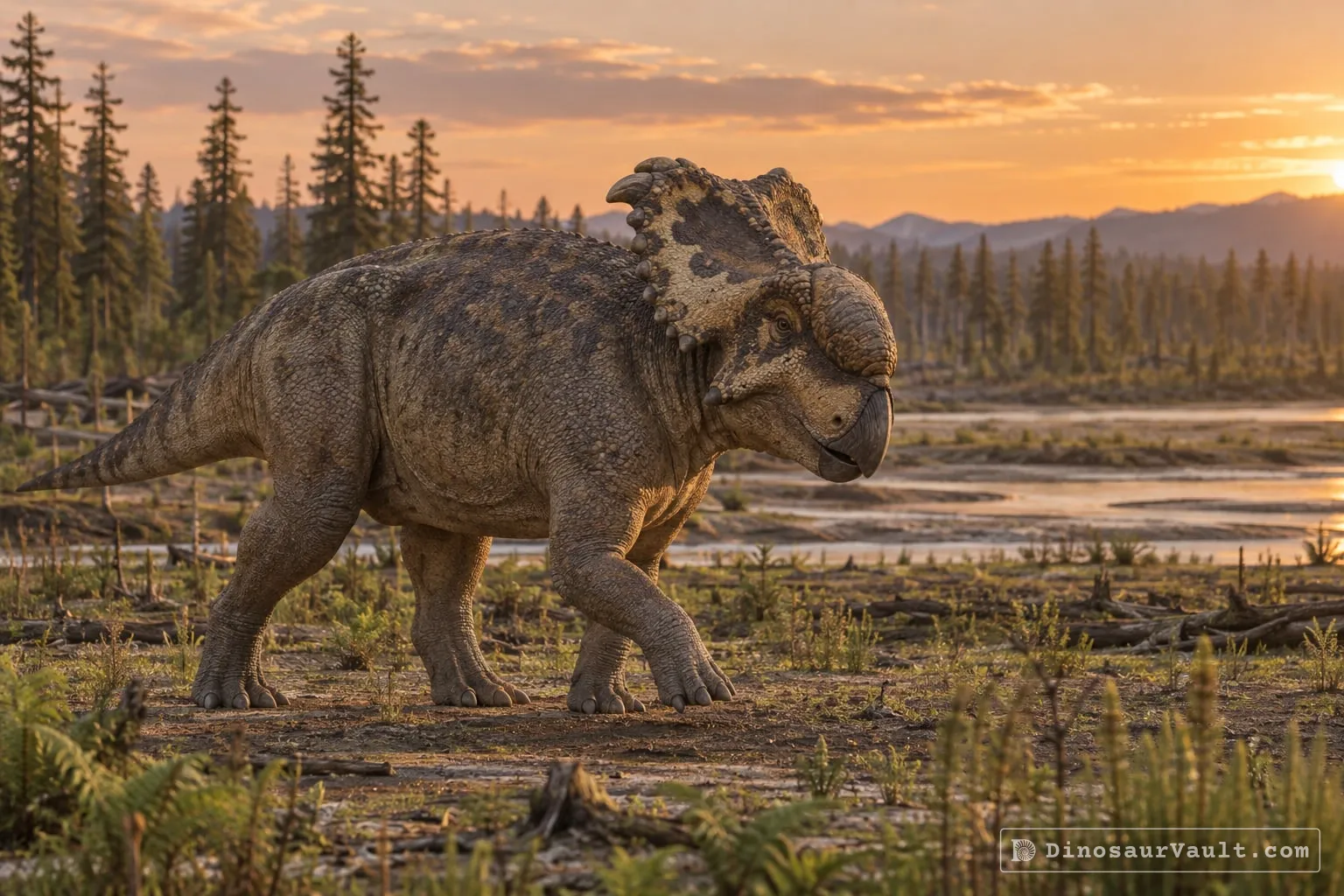
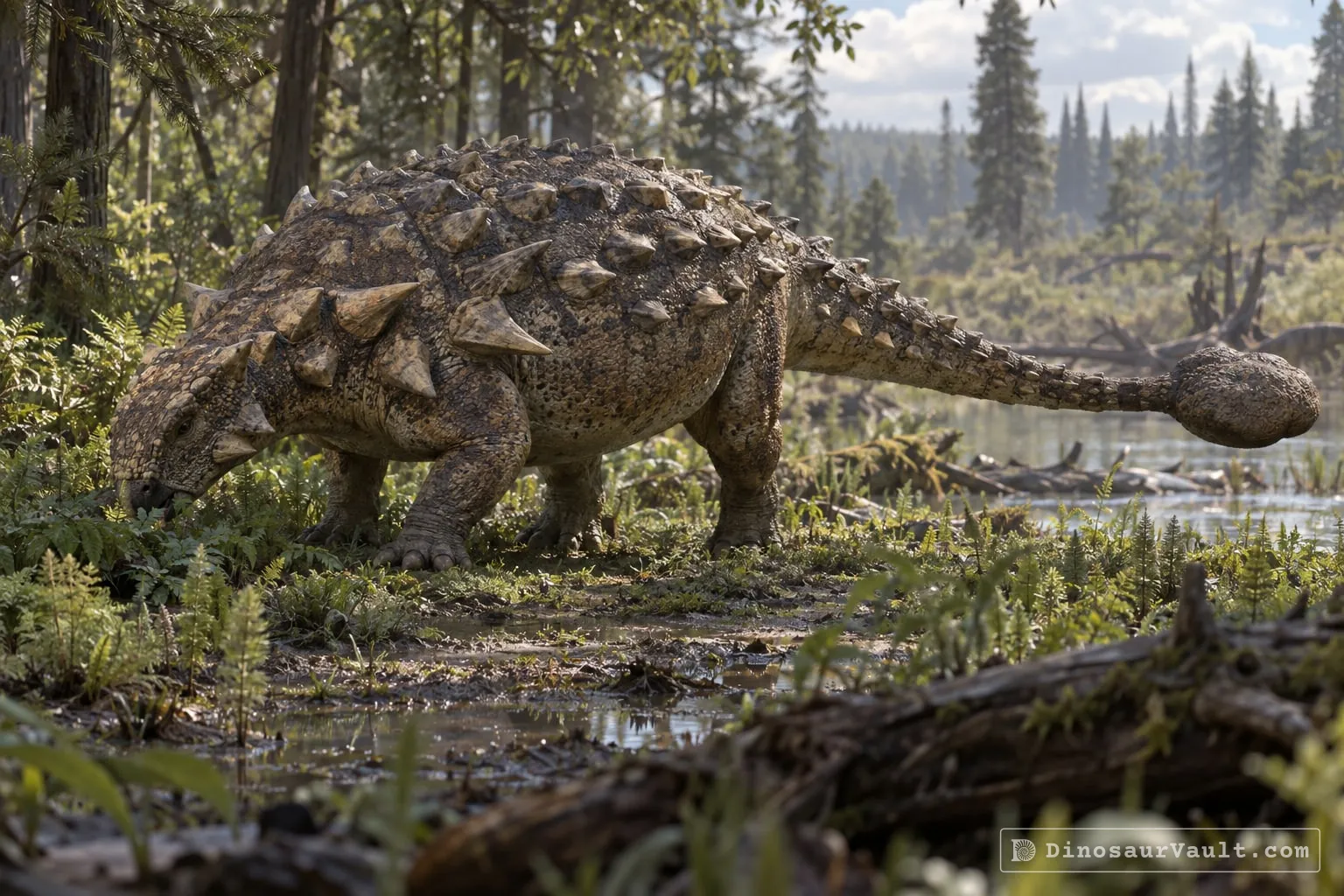
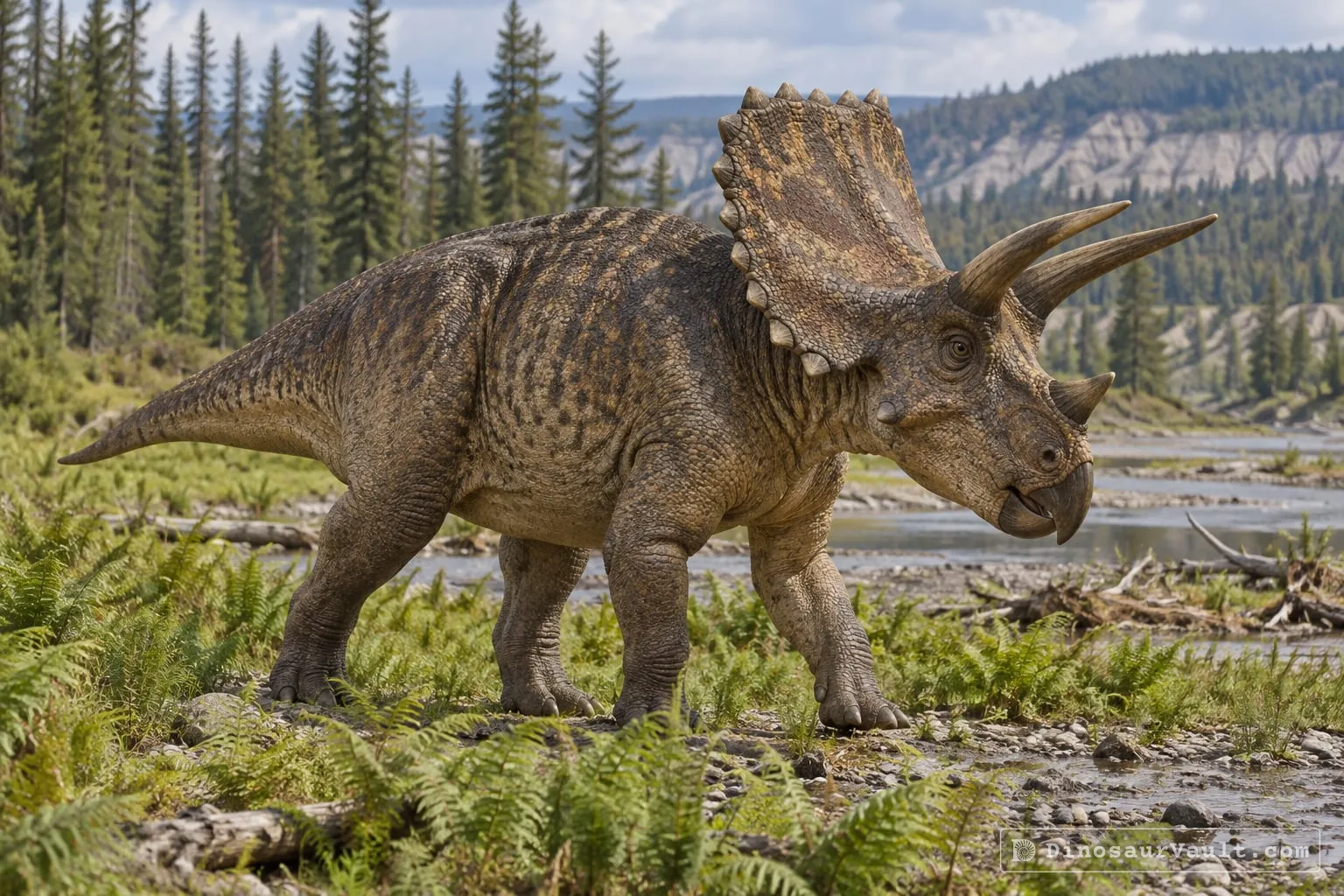
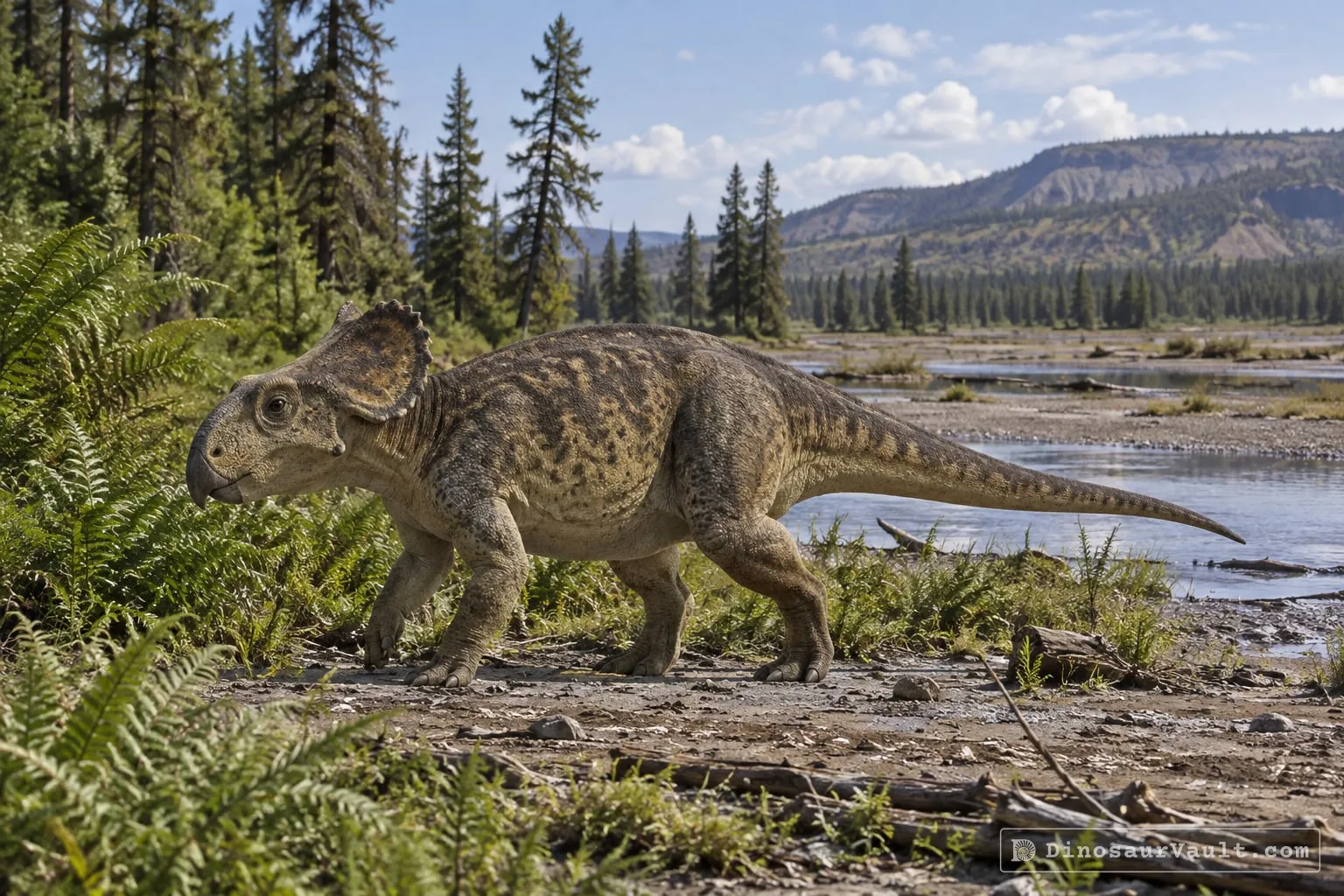


A rock formation can hold fossils laid down millions of years apart, so not every animal here met Regaliceratops.
The evidence
The science behind Regaliceratops
Which parts of the picture come from its own bones, and which come from its relatives.
From its own fossils
- A nearly complete skull preserves a tall nose horn and short horns over the eyes.
- Large, flat plates around the frill form a crown-like border.
- The known skull belongs to an adult and lacks the lower jaw.
Borrowed from relatives
- The body, legs and tail are restored from horned relatives such as Triceratops and Anchiceratops.
Still unknown
- Its skin color and pattern.
- How its horns and frill changed as it grew.
- Whether it used its horns mainly for display, fighting or both.
Discovery timeline
- 2009Close relativeFarke, Wolff & Tanke
- 2015Named itBrown & Henderson
- 2016Family treeMallon et al.
Key papers
The research behind what we know of Regaliceratops
Close relative
Compared skull injuries in Triceratops and Centrosaurus, finding patterns consistent with different uses of their horns in combat.
Evidence of Combat in Triceratops. PLoS ONE 4: e4252
Read the paper : Evidence of Combat in Triceratops (opens in a new tab)Named it
Named a horned dinosaur whose tall nose horn, short brow horns and frill ornaments resemble features that evolved in another branch of the family.
A New Horned Dinosaur Reveals Convergent Evolution in Cranial Ornamentation in Ceratopsidae. Current Biology 25: 1641-1648
Read the paper : A New Horned Dinosaur Reveals Convergent Evolution in Cranial Ornamentation in Ceratopsidae (opens in a new tab)Family tree
Compared horned dinosaur frills and tested alternative family trees, including the relationships of Regaliceratops.
Spiclypeus shipporum gen. et sp. nov., a Boldly Audacious New Chasmosaurine Ceratopsid (Dinosauria: Ornithischia) from the Judith River Formation (Upper Cretaceous: Campanian) of Montana, USA. PLOS ONE 11: e0154218
Read the paper : Spiclypeus shipporum gen. et sp. nov., a Boldly Audacious New Chasmosaurine Ceratopsid (Dinosauria: Ornithischia) from the Judith River Formation (Upper Cretaceous: Campanian) of Montana, USA (opens in a new tab)
Close relatives
Other members of Ceratopsidae


Sources: Wikidata