Narambuenatitan
Type species Narambuenatitan palomoi
- Lived
- 84 to 72 million years ago, Late Cretaceous
- Diet
- Herbivore
- Group
- Sauropods
- Found in
- Argentina
- Named by
- Filippi et al. 2011
Where its fossils were found
The evidence
Today

80 million years ago
Habitat
A muddy floodplain in Argentina, with river channels, ponds and swamps. Wood and plant debris lay beside its bones; neighbors included Aucasaurus, Gasparinisaura and Neuquensaurus.
Field notes
About Narambuenatitan
What it was like
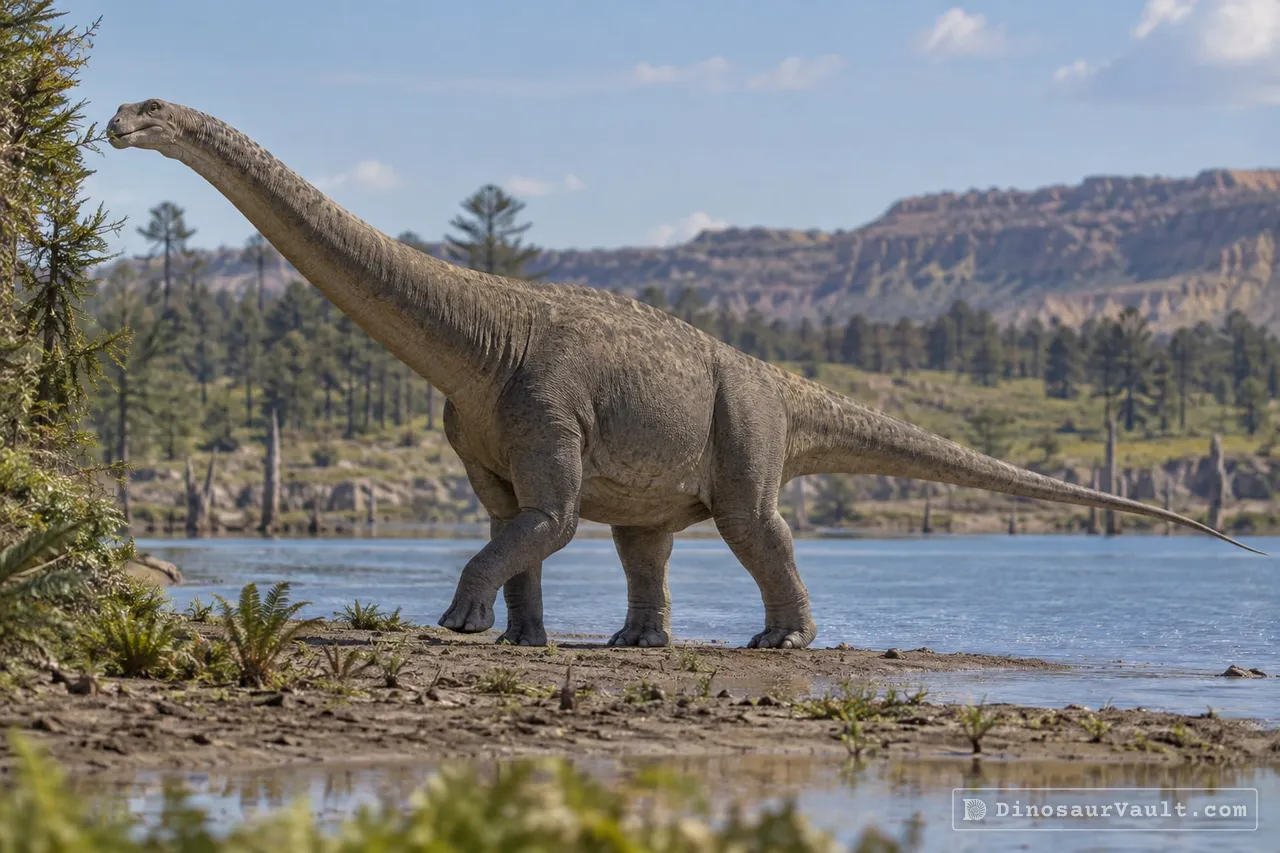
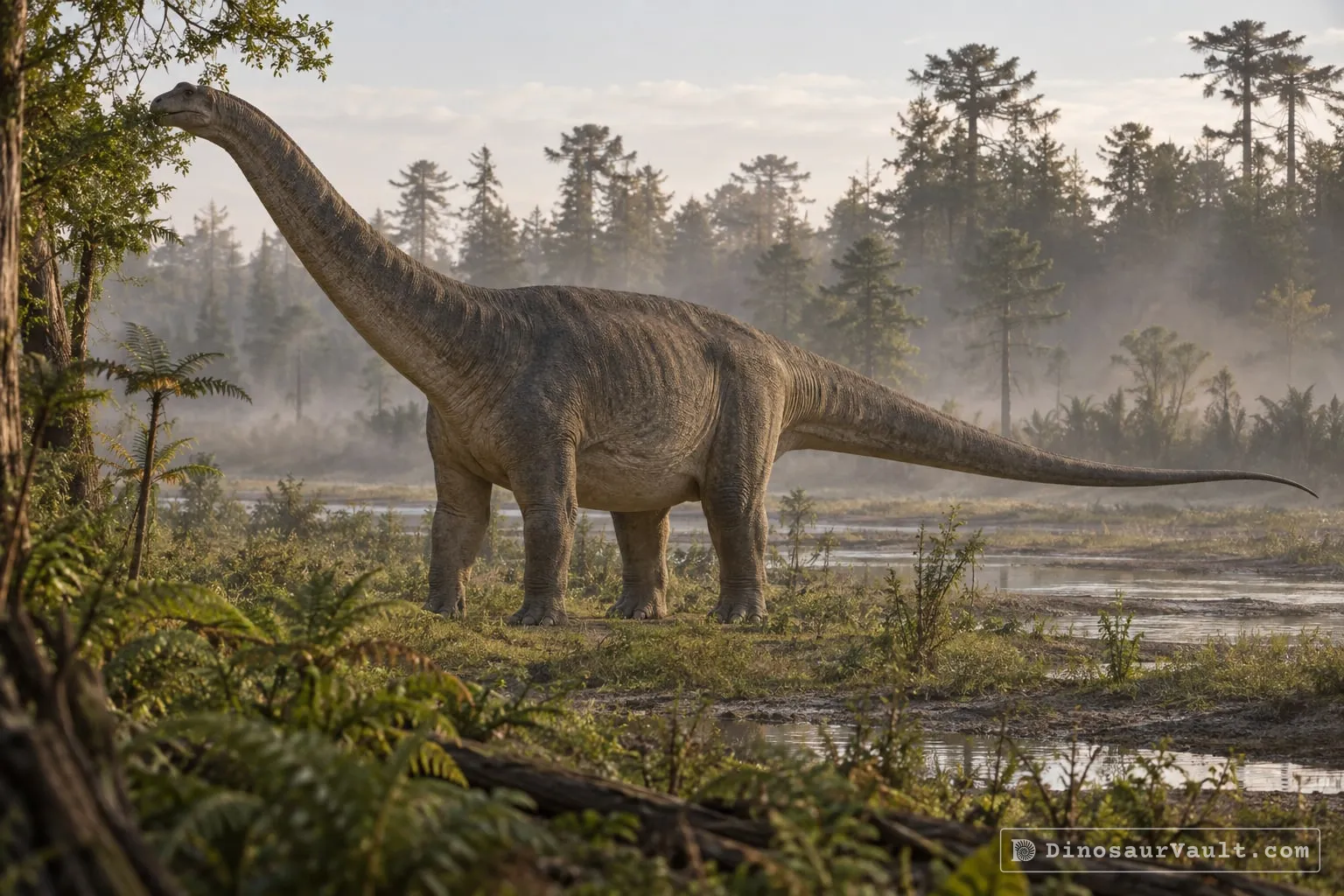
Narambuenatitan was a titanosaur, a long-necked plant eater of modest size. It is known from a partial skeleton, including parts of the skull.
Its world
It lived in the Late Cretaceous in what is now Argentina. Its bones come from the Anacleto Formation, where it shared the land with the abelisaurid Aucasaurus, the predator Aerosteon and the small plant eater Gasparinisaura.
How it was found
Filippi and colleagues named it in 2011. The type species is Narambuenatitan palomoi.
Field gallery
More views of Narambuenatitan
Scenes reconstructed from the available fossil evidence.
1 of 2
Lived alongside
Found in the same rock formations
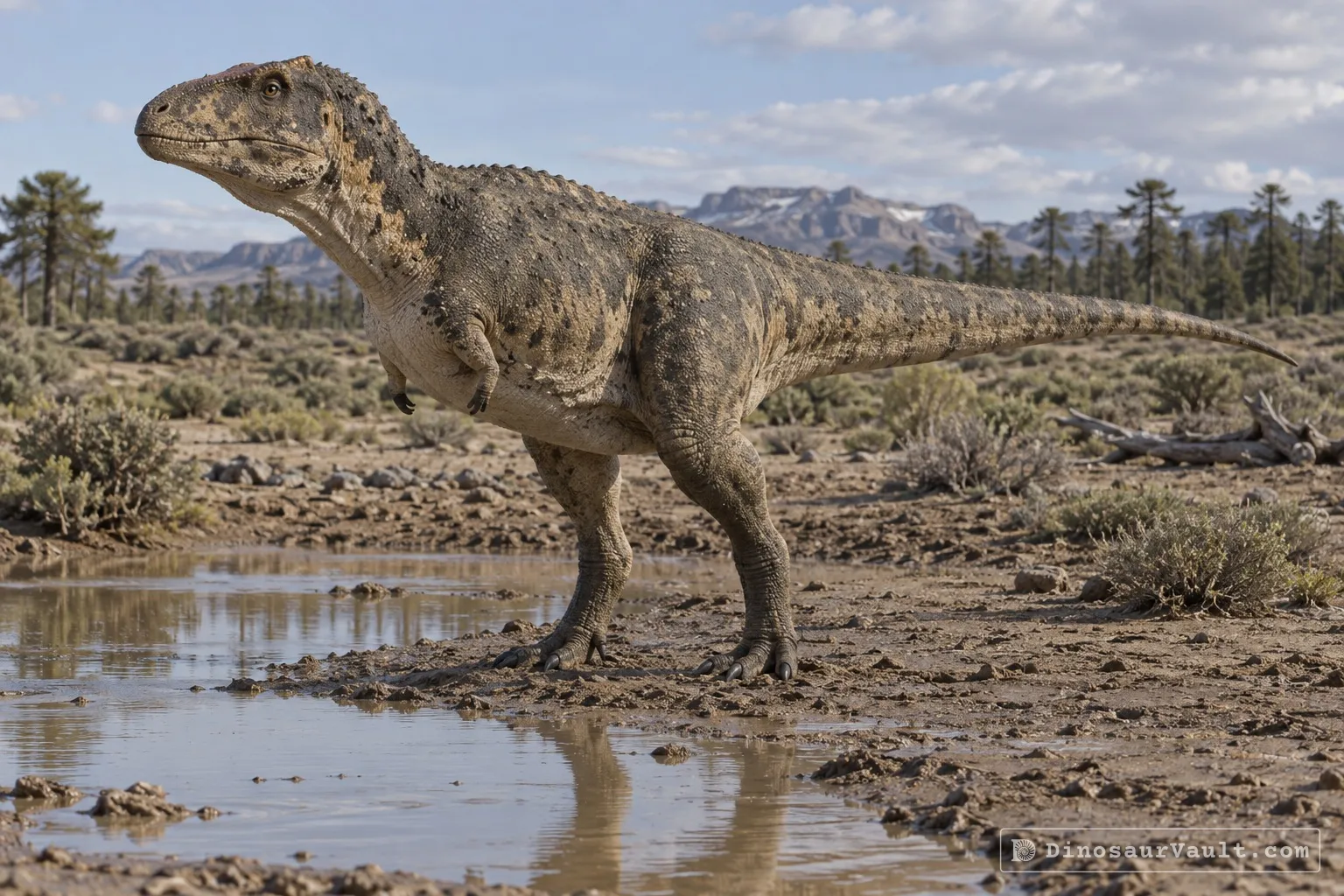
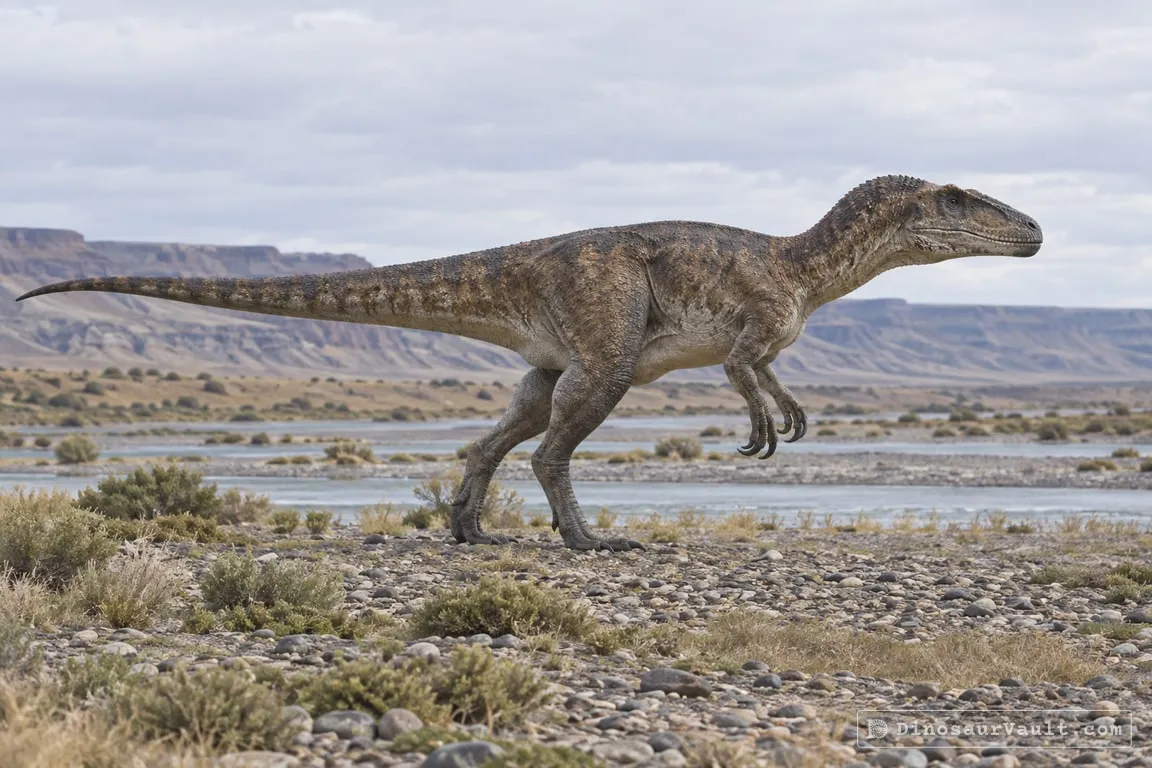
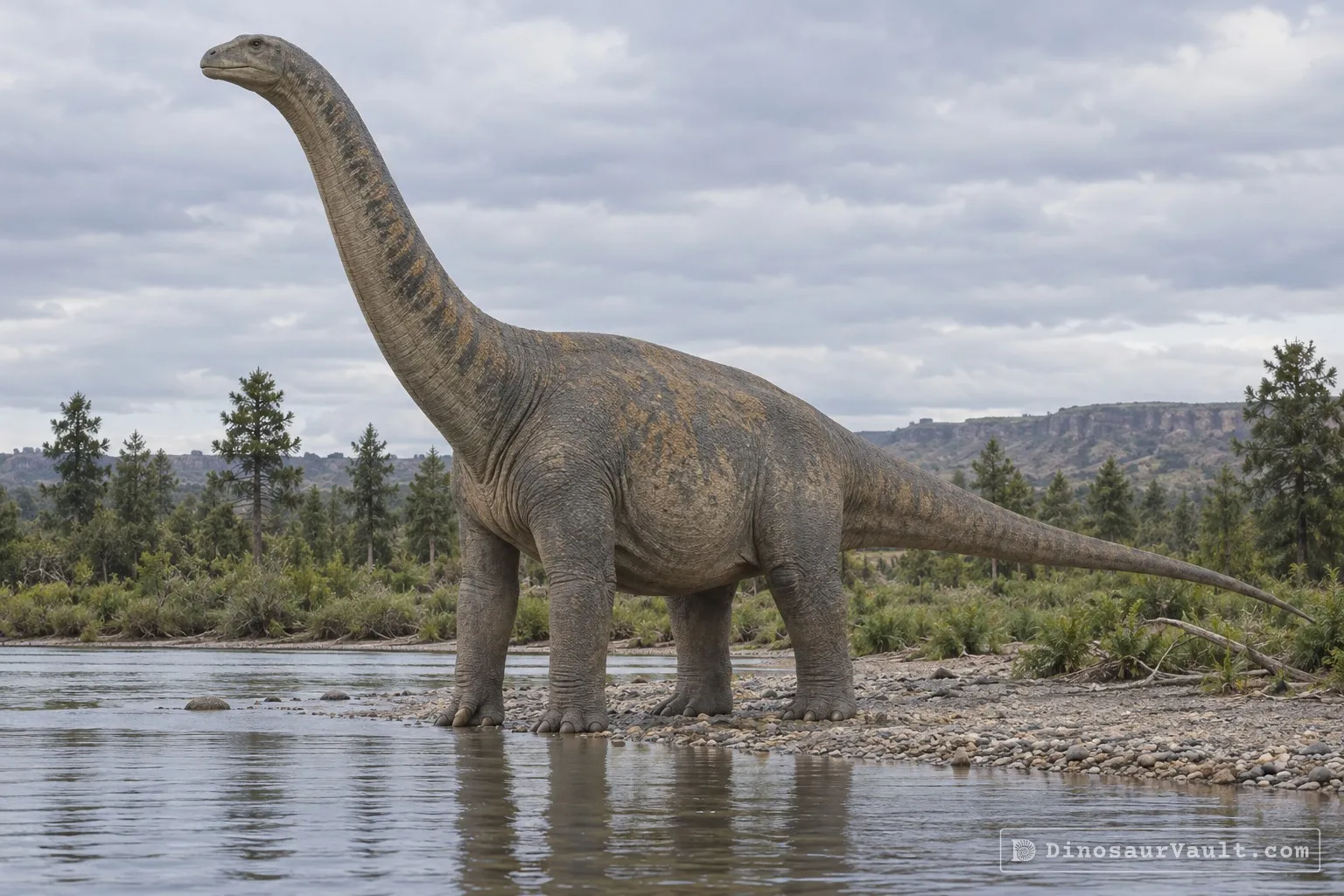
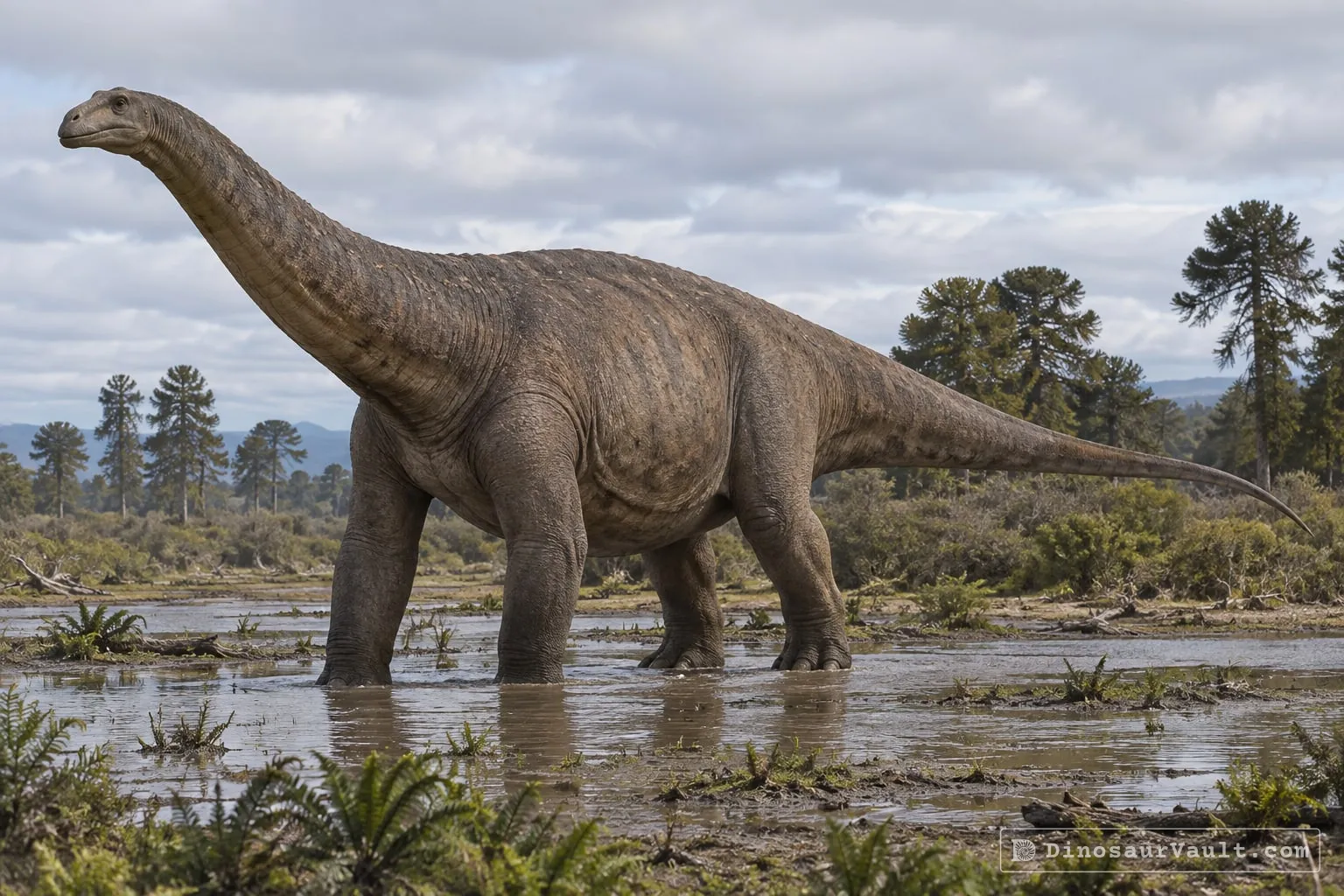
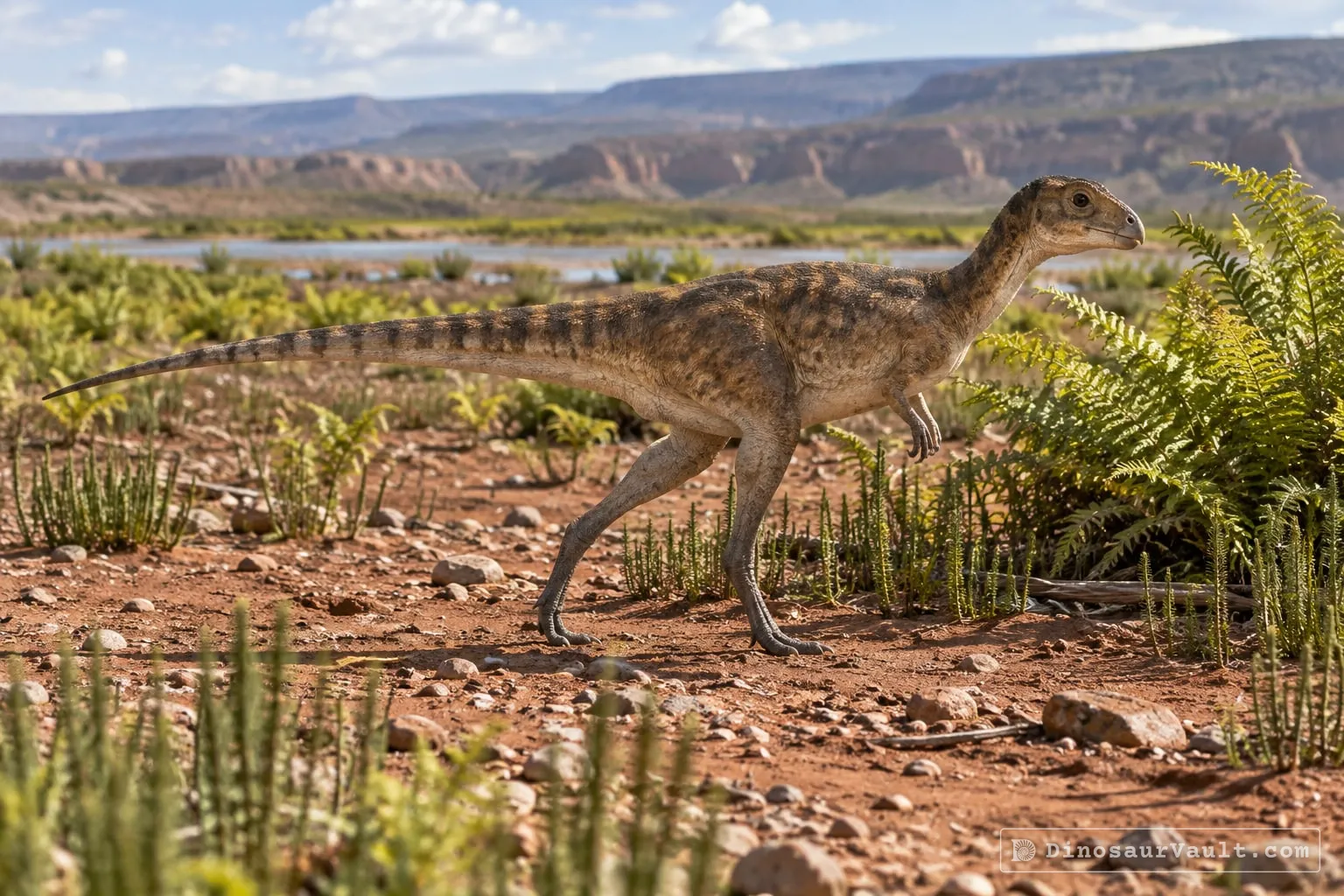
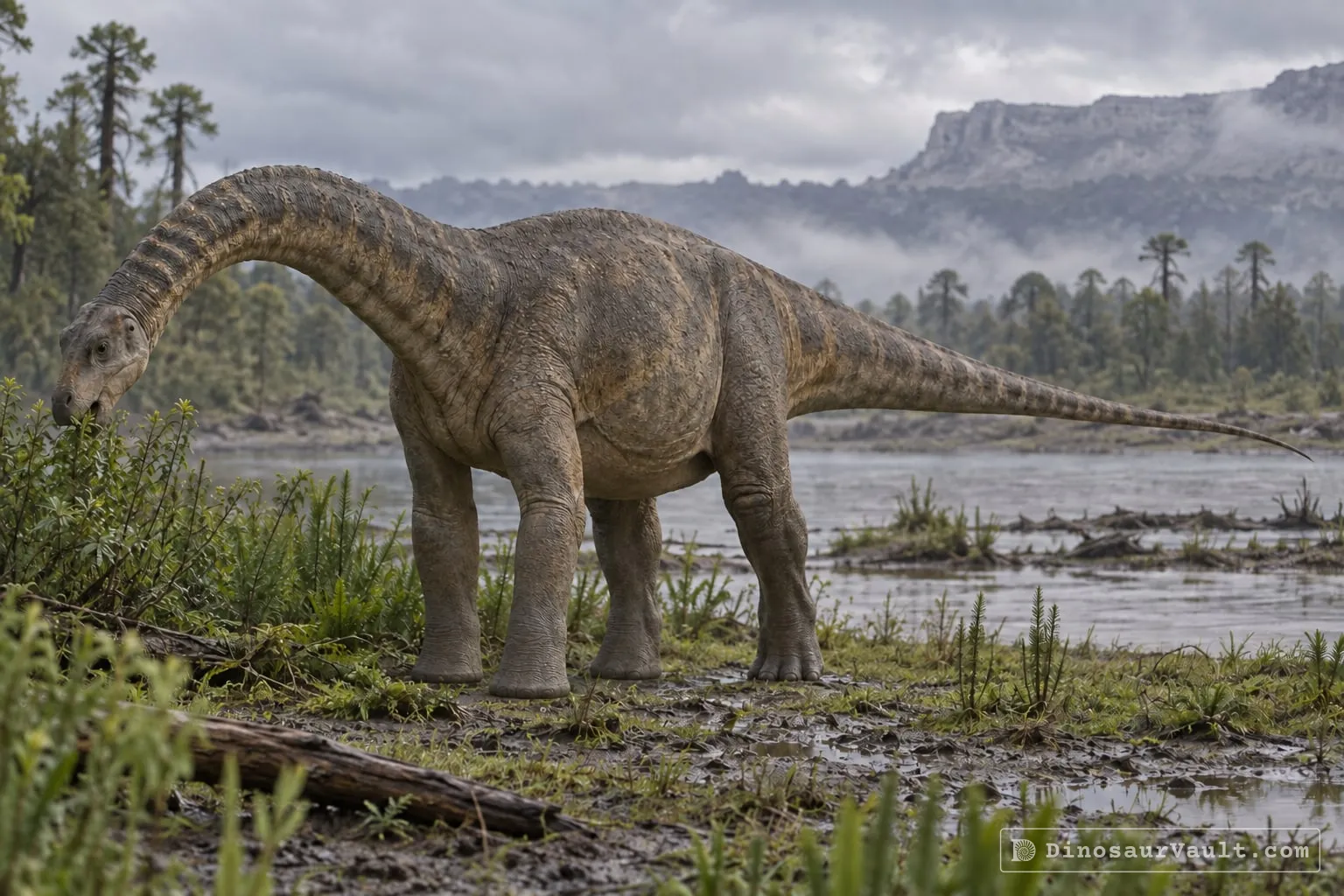
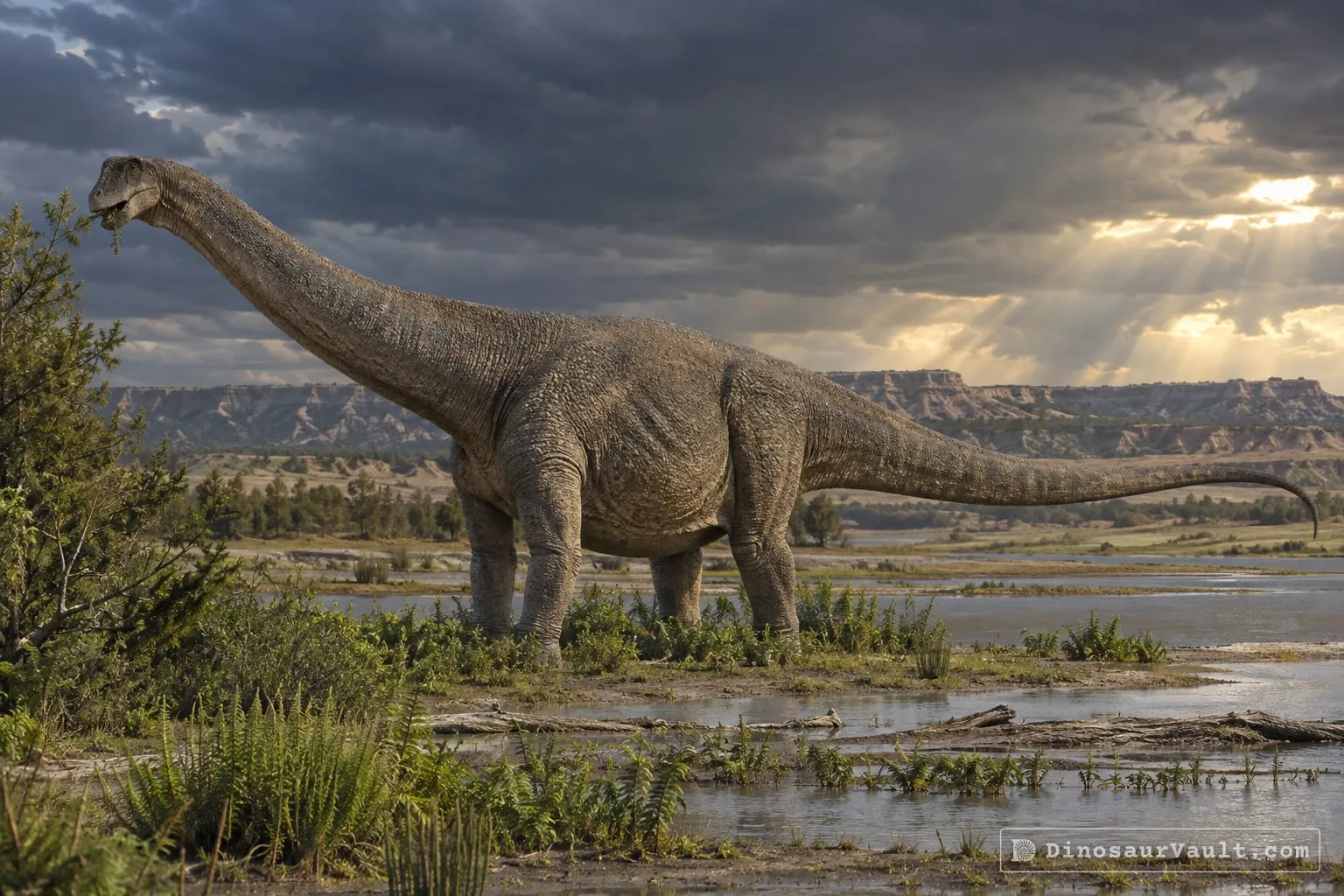


A rock formation can hold fossils laid down millions of years apart, so not every animal here met Narambuenatitan.
The evidence
The science behind Narambuenatitan
Which parts of the picture come from its own bones, and which come from its relatives.
From its own fossils
- A partial skeleton includes upper jaw bones, a braincase, vertebrae, ribs and parts of the limbs and pelvis.
- Replacement teeth remain inside the upper jaw.
- Scans of its braincase reveal long, slender balance canals in the inner ear.
Borrowed from relatives
- The missing neck and body outline are restored using other titanosaurs, including Epachthosaurus and Rapetosaurus.
- Sarmientosaurus provides a more complete skull for comparing the missing parts of its head.
Still unknown
- Its skin texture and color.
- Its full neck length.
- Its precise place within the titanosaur family tree.
Discovery timeline
- 2011Named itFilippi, García & Garrido
- 2016Close relativeMartínez et al.
Key papers
The research behind what we know of Narambuenatitan
Named it
Described a partial skeleton with distinctive skull and backbone features and identified the animal as a subadult titanosaur.
A New Titanosaur Sauropod Dinosaur from the Upper Cretaceous of North Patagonia, Argentina. Acta Palaeontologica Polonica 56: 505-520
Read the paper : A New Titanosaur Sauropod Dinosaur from the Upper Cretaceous of North Patagonia, Argentina (opens in a new tab)Close relative
Described the complete skull of Sarmientosaurus and compared its anatomy with other titanosaurs, including Narambuenatitan.
A Basal Lithostrotian Titanosaur (Dinosauria: Sauropoda) with a Complete Skull: Implications for the Evolution and Paleobiology of Titanosauria. PLOS ONE 11: e0151661
Read the paper : A Basal Lithostrotian Titanosaur (Dinosauria: Sauropoda) with a Complete Skull: Implications for the Evolution and Paleobiology of Titanosauria (opens in a new tab)
Close relatives
Other members of Titanosauria


Sources: Wikidata