Judiceratops
JOO-dee-SERR-a-tops
"Judith River horned face"
Type species Judiceratops tigris
- Lived
- 84 to 72 million years ago, Late Cretaceous
- Diet
- Herbivore
- Group
- Ceratopsians, Ceratopsidae
- Found in
- United States
- Named by
- Longrich 2013
Where its fossils were found
The evidence
Today

80 million years ago
Habitat
It lived on river floodplains in Montana, in the landscape preserved by the Judith River Formation. Other dinosaurs from these rocks include Daspletosaurus, Corythosaurus and Dromaeosaurus.
Field notes
About Judiceratops
What it was like
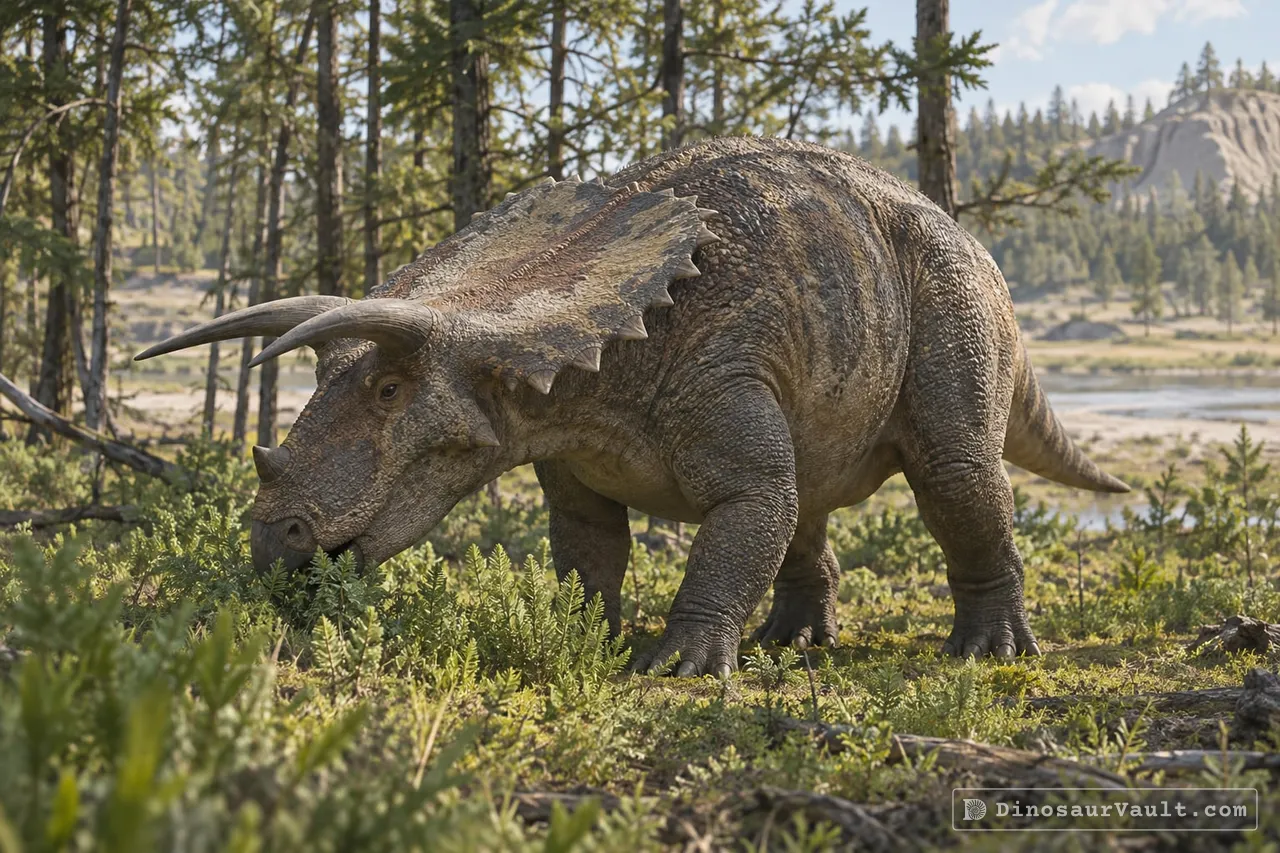
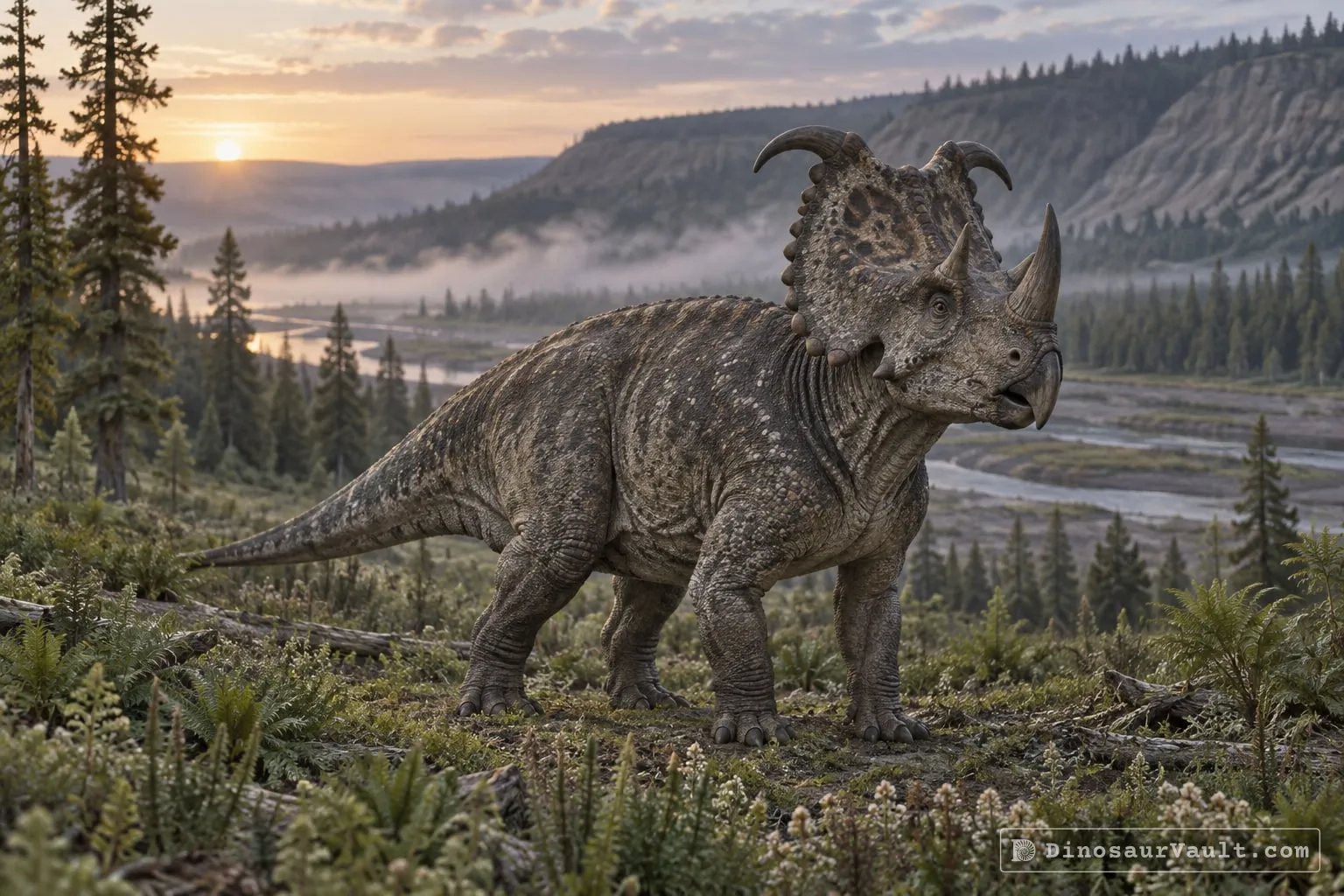
Judiceratops was a horned plant eater with two brow horns and a broad frill edged with large, flattened points. It is one of the oldest known chasmosaurines, the group that later included Triceratops.
Its world
It lived in the Late Cretaceous in what is now Montana. Its bones come from the Judith River Formation, a land of rivers and floodplains shared with the tyrannosaur Daspletosaurus and the small hunter Troodon.
How it was found
Longrich named it in 2013 from pieces of a skull. The type species is Judiceratops tigris.
Field gallery
More views of Judiceratops
Scenes reconstructed from the available fossil evidence.
Lived alongside
Found in the same rock formations
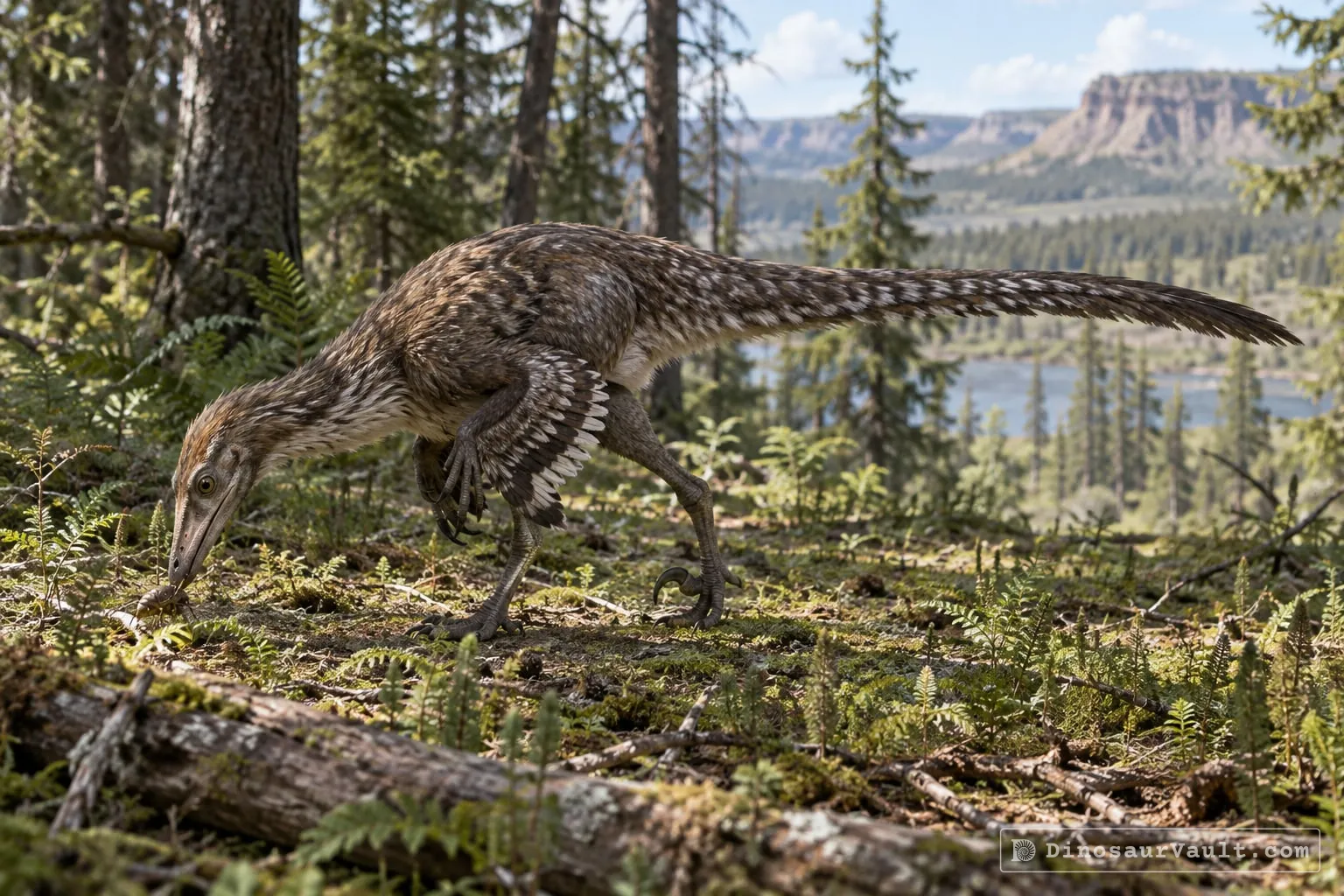
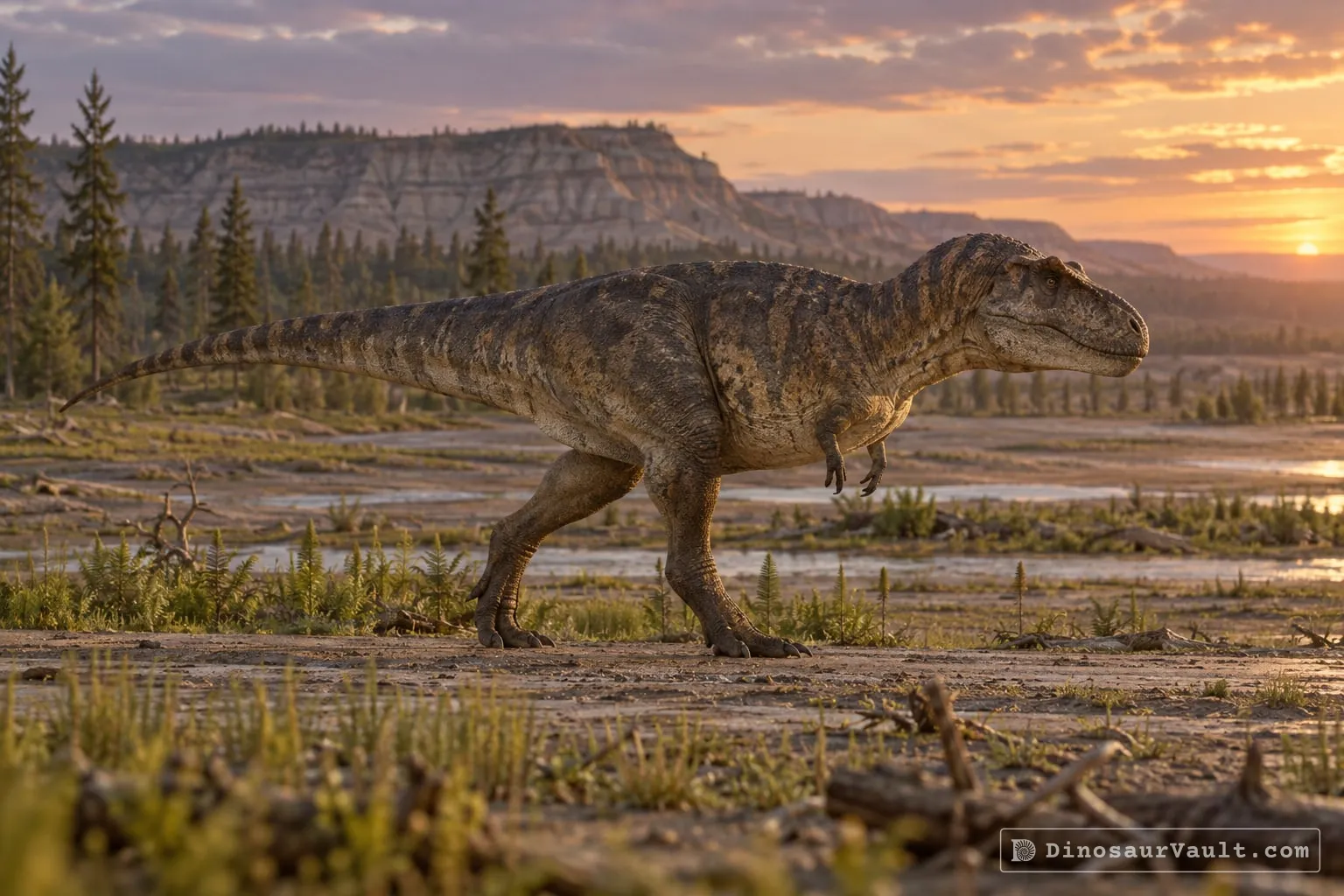
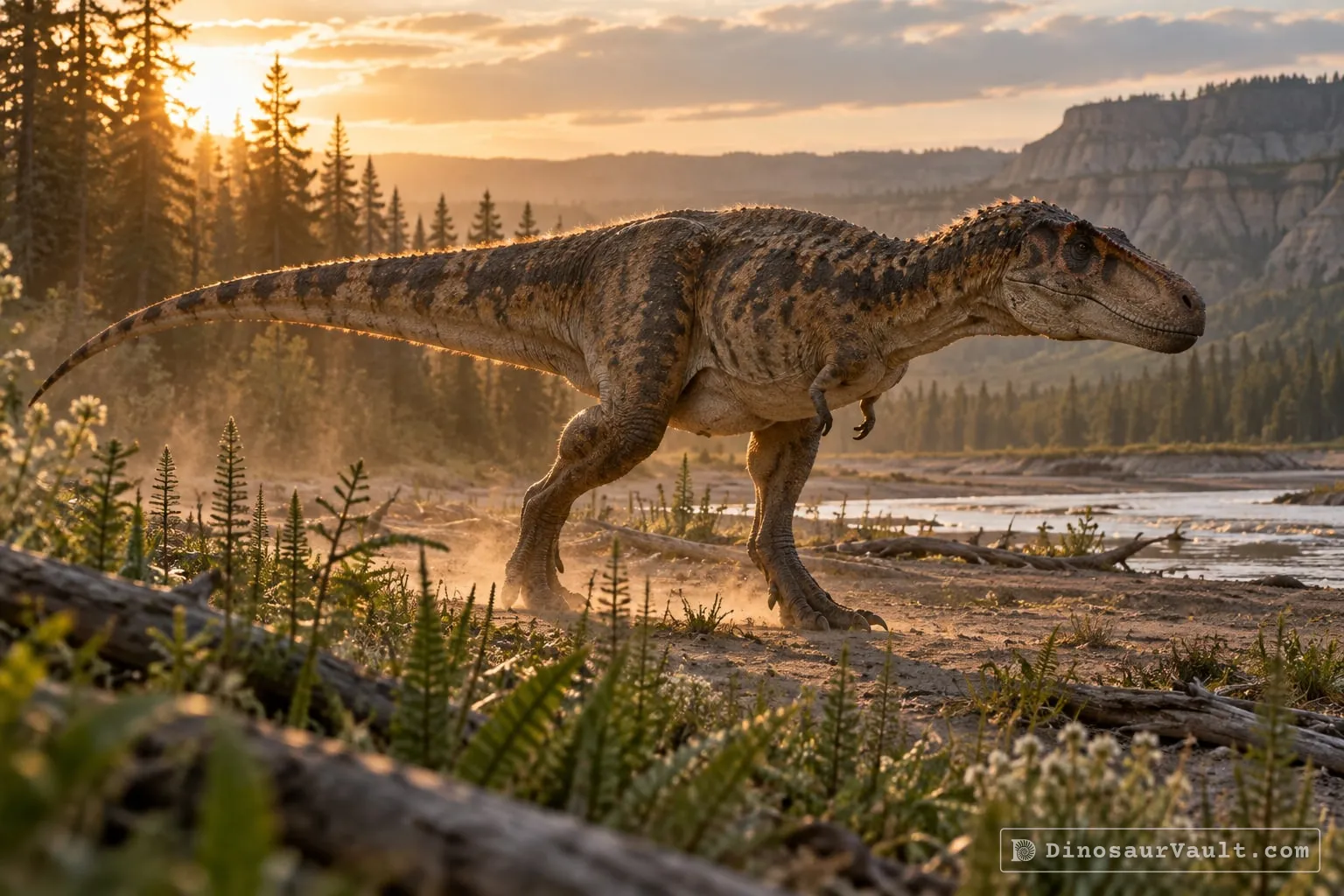
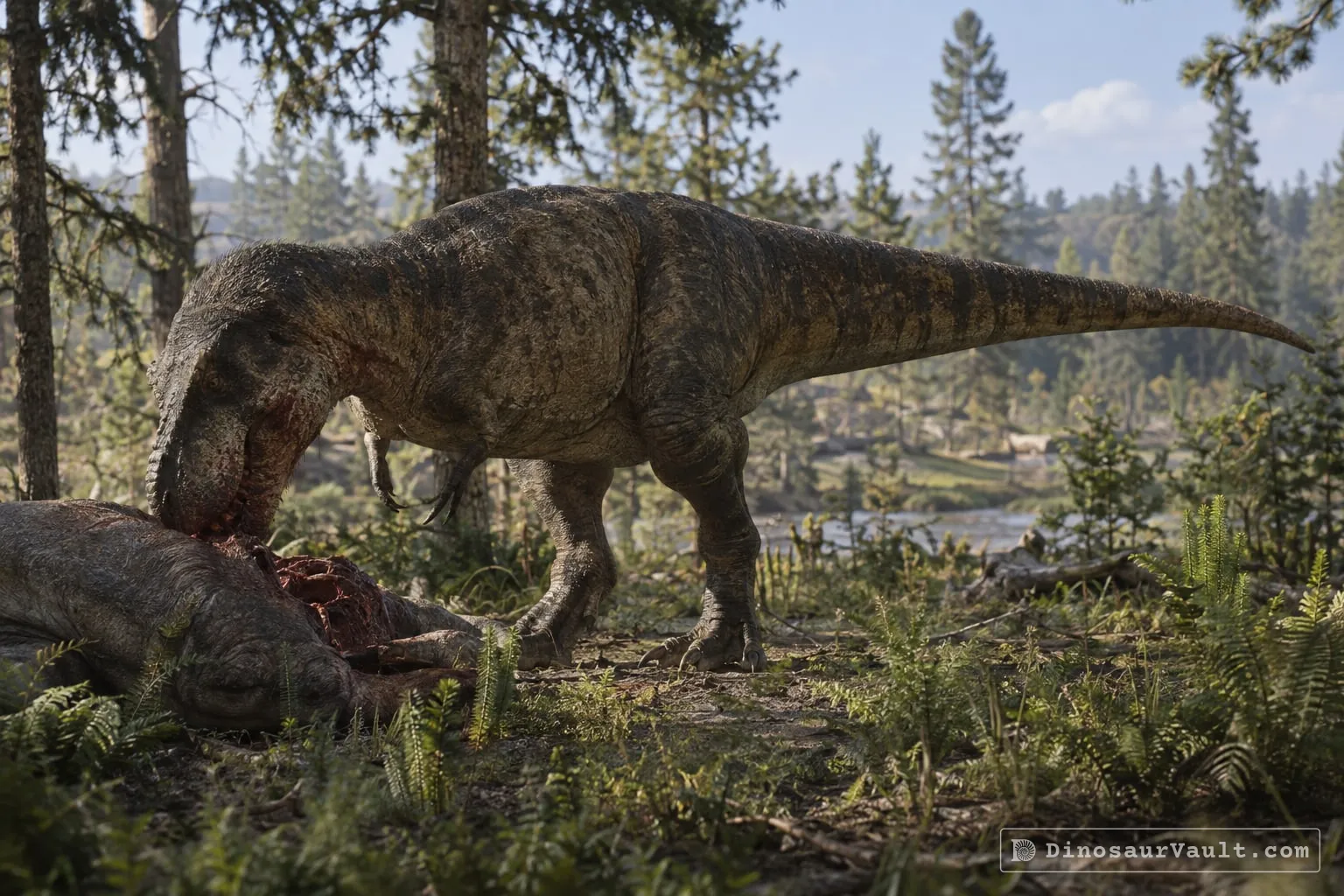
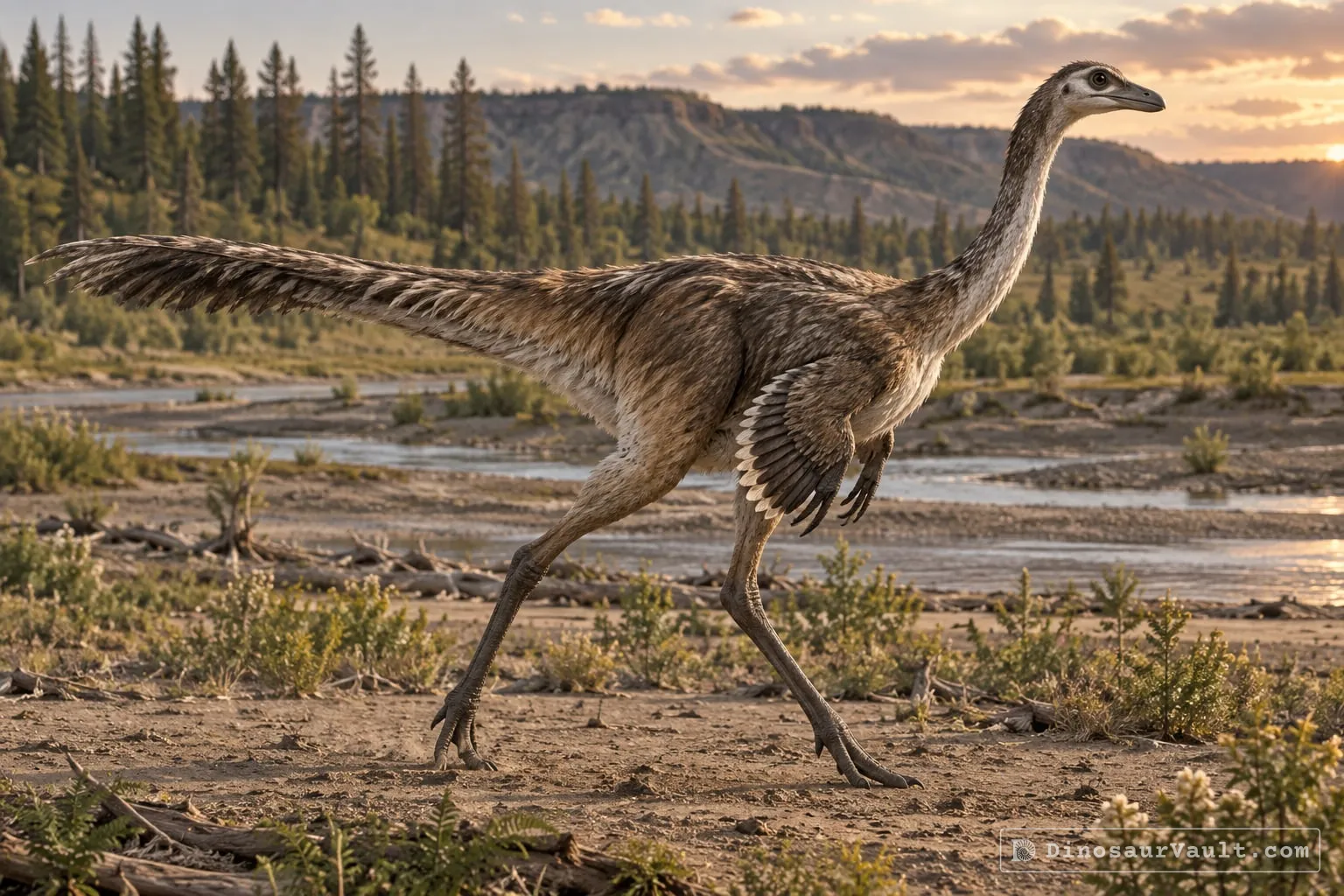
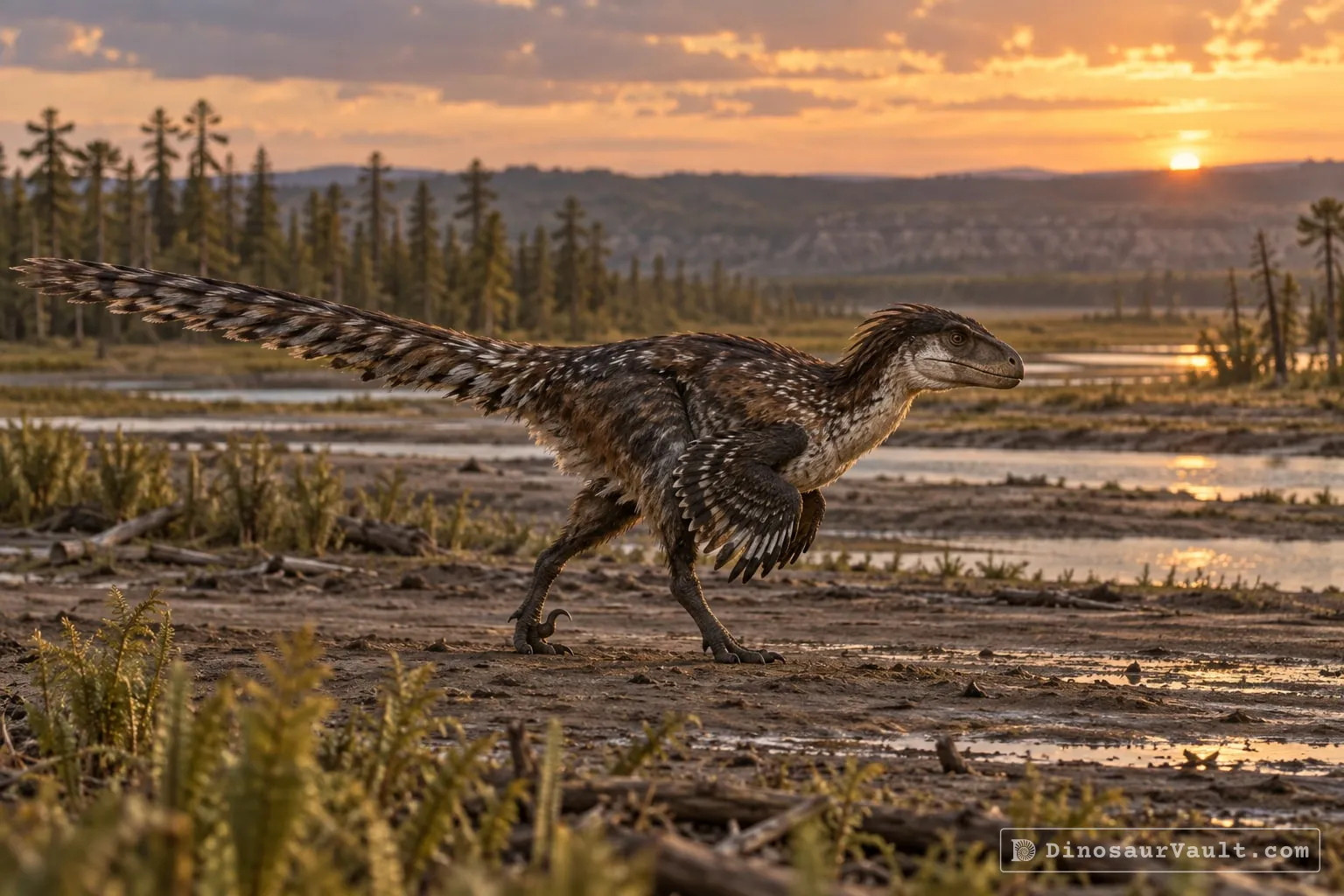
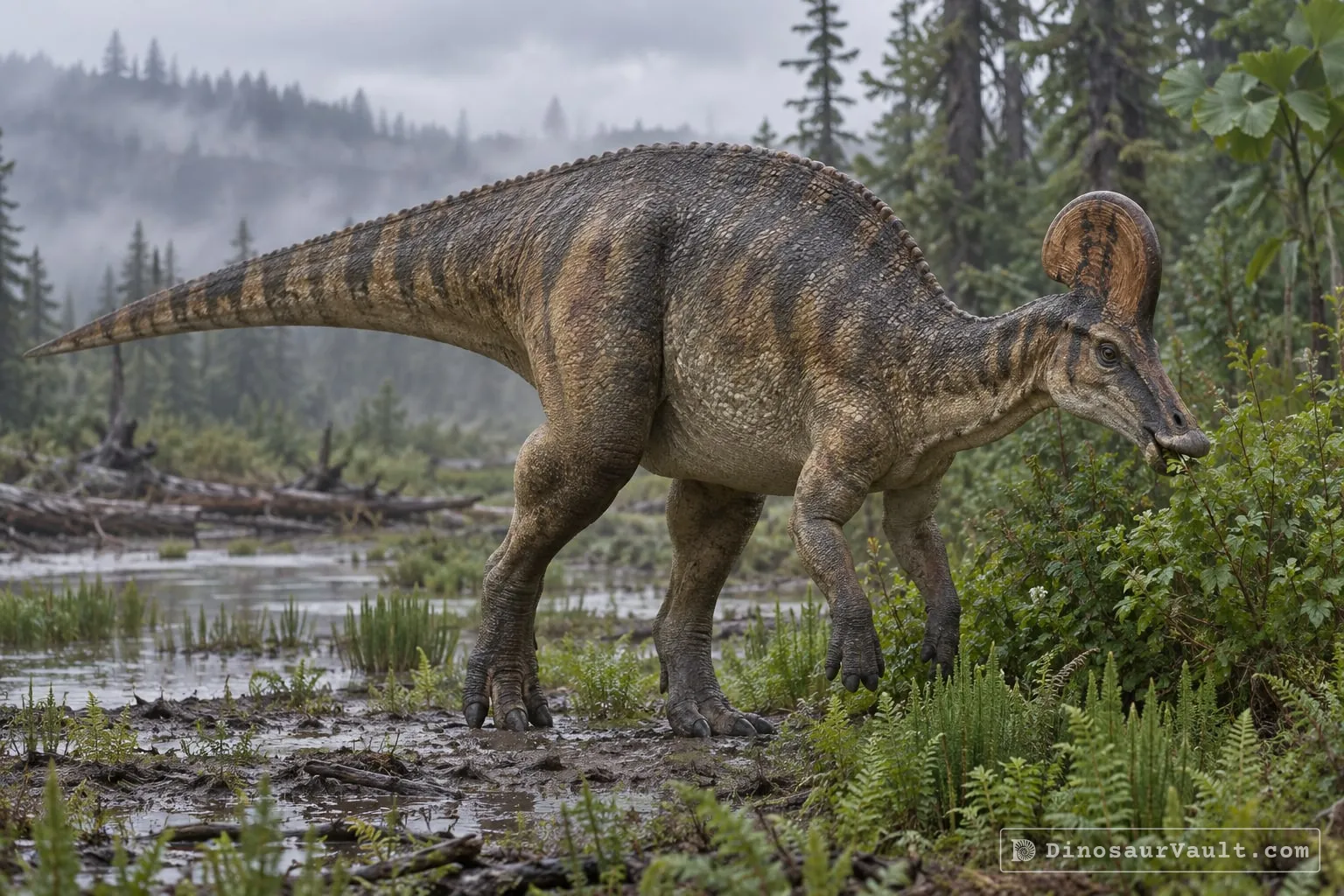


A rock formation can hold fossils laid down millions of years apart, so not every animal here met Judiceratops.
The evidence
The science behind Judiceratops
Which parts of the picture come from its own bones, and which come from its relatives.
From its own fossils
- The type skull preserves elongated brow horns and parts of the bony frill.
- Frill pieces assigned to Judiceratops have large points along the front of the sides and low, broad points at the rear.
Borrowed from relatives
- Its snout, nose horn and body are unknown, so a restoration has to borrow them from other chasmosaurines.
Still unknown
- The shape of its snout and nose horn, its full body size and its color.
- Whether the type skull defines a distinct species and whether the referred frill pieces belong with it. In one later study most authors doubted the type diagnosis, while its namer disagrees.
- Which chasmosaurines are its closest relatives.
Discovery timeline
- 2013Named itLongrich
- 2015RedescriptionCampbell
- 2016Fossil sitesRogers et al.
- 2024Same rocksLoewen et al.
Key papers
The research behind what we know of Judiceratops
Named it
Named Judiceratops from skull fragments with a distinctive combination of brow horns and frill features, placing it among the earliest known chasmosaurines.
Judiceratops tigris , a New Horned Dinosaur from the Middle Campanian Judith River Formation of Montana. Bulletin of the Peabody Museum of Natural History 54: 51-65
Read the paper : Judiceratops tigris , a New Horned Dinosaur from the Middle Campanian Judith River Formation of Montana (opens in a new tab)Redescription
Revised the brow horns and frill, retaining Judiceratops as a distinct chasmosaurine with small points along the rear of its frill.
A reassessment of the horned dinosaur Judiceratops tigris (Ornithischia: Ceratopsidae) from the Upper Cretaceous (Campanian) of Montana, USA. Canadian Journal of Earth Sciences 52: 85-95
Read the paper : A reassessment of the horned dinosaur Judiceratops tigris (Ornithischia: Ceratopsidae) from the Upper Cretaceous (Campanian) of Montana, USA (opens in a new tab)Fossil sites
Revised the rock layers and ages of the Judith River Formation, improving the timeline for its dinosaur fossils.
Age, Correlation, and Lithostratigraphic Revision of the Upper Cretaceous (Campanian) Judith River Formation in Its Type Area (North-Central Montana), with a Comparison of Low- and High-Accommodation Alluvial Records. The Journal of Geology 124: 99-135
Read the paper : Age, Correlation, and Lithostratigraphic Revision of the Upper Cretaceous (Campanian) Judith River Formation in Its Type Area (North-Central Montana), with a Comparison of Low- and High-Accommodation Alluvial Records (opens in a new tab)Same rocks
Recorded disagreement among the authors over whether the Judiceratops type skull is diagnostic and called for further study.
Lokiceratops rangiformis gen. et sp. nov. (Ceratopsidae: Centrosaurinae) from the Campanian Judith River Formation of Montana reveals rapid regional radiations and extreme endemism within centrosaurine dinosaurs. PeerJ 12: e17224
Read the paper : Lokiceratops rangiformis gen. et sp. nov. (Ceratopsidae: Centrosaurinae) from the Campanian Judith River Formation of Montana reveals rapid regional radiations and extreme endemism within centrosaurine dinosaurs (opens in a new tab)
Close relatives
Other members of Ceratopsidae


Sources: Wikidata