Caieiria
"from Caieira"
Type species Caieiria allocaudata
- Lived
- 72 to 66 million years ago, Late Cretaceous
- Diet
- Herbivore
- Group
- Sauropods
- Found in
- Brazil
- Named by
- Silva Junior et al. 2022
Where its fossils were found
The evidence
Today

70 million years ago
Habitat
Branching rivers spread sand across a plain with a fairly dry climate in what is now Brazil. Other dinosaurs from the Serra da Galga Formation include Baurutitan, Uberabatitan and Ypupiara.
Field notes
About Caieiria
What it was like
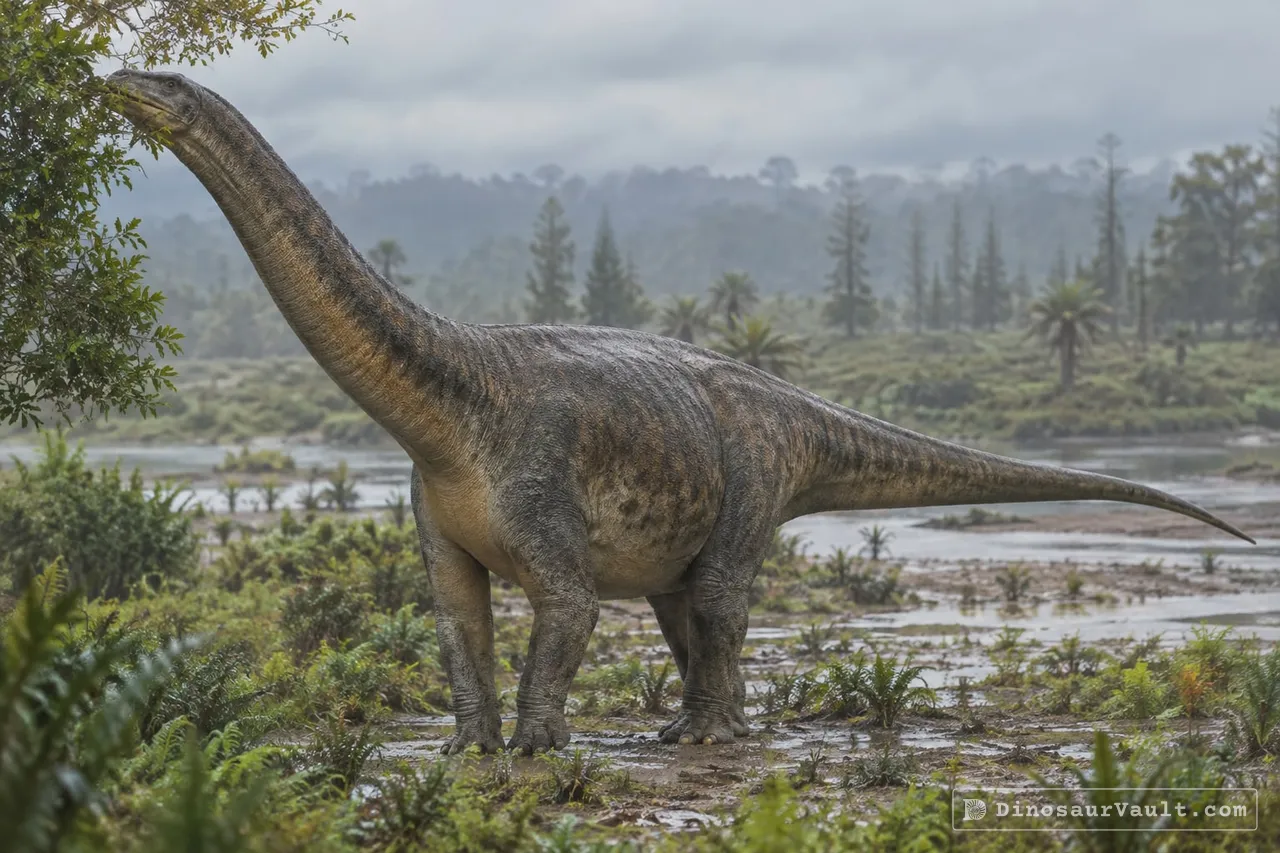
Caieiria was a titanosaur, a long-necked, four-legged plant eater, known from tail bones. Its tail bones have an unusual shape, which its species name refers to.
Its world
It lived about 72 to 66 million years ago, at the end of the Late Cretaceous, in what is now southeastern Brazil. Its bones come from the Serra da Galga Formation, where it shared the land with the titanosaurs Baurutitan, Uberabatitan and Aeolosaurus and the raptor Ypupiara.
How it was found
Silva Junior and colleagues named Caieiria in 2022, from a single find.
Field gallery
More views of Caieiria
Scenes reconstructed from the available fossil evidence.
Lived alongside
Found in the same rock formations


A rock formation can hold fossils laid down millions of years apart, so not every animal here met Caieiria.
The evidence
The science behind Caieiria
Which parts of the picture come from its own bones, and which come from its relatives.
From its own fossils
- Caieiria is known from a series of tail vertebrae.
- The side branches of its tail vertebrae are unusually thick and deep, with deep hollows beneath the rear joint surfaces.
Borrowed from relatives
- Its long neck, trunk and weight-bearing legs are restored from better-known titanosaurs such as Uberabatitan and Baurutitan.
Still unknown
- The shape of its skull and neck.
- Its full body size.
- Its skin colors and whether it carried bony armor.
Discovery timeline
- 2008Same rocksSALGADO & DE SOUZA CARVALHO
- 2020Its worldSoares et al.
- 2022Named itSilva Junior et al.
Key papers
The research behind what we know of Caieiria
Same rocks
Described partial skeletons of Uberabatitan, a better-known titanosaur from the same regional rock sequence.
UBERABATITAN RIBEIROI, A NEW TITANOSAUR FROM THE MARÍLIA FORMATION (BAURU GROUP, UPPER CRETACEOUS), MINAS GERAIS, BRAZIL. Palaeontology 51: 881-901
Read the paper : UBERABATITAN RIBEIROI, A NEW TITANOSAUR FROM THE MARÍLIA FORMATION (BAURU GROUP, UPPER CRETACEOUS), MINAS GERAIS, BRAZIL (opens in a new tab)Its world
Identified branching river deposits formed in a fairly dry climate and established the Serra da Galga Formation as a separate rock unit.
Sedimentology of a distributive fluvial system: The Serra da Galga Formation, a new lithostratigraphic unit (Upper Cretaceous, Bauru Basin, Brazil). Geological Journal 56: 951-975
Read the paper : Sedimentology of a distributive fluvial system: The Serra da Galga Formation, a new lithostratigraphic unit (Upper Cretaceous, Bauru Basin, Brazil) (opens in a new tab)Named it
Recognized Caieiria as a separate genus by comparing its tail bones with newly discovered titanosaur bones.
New specimens of Baurutitan britoi and a taxonomic reassessment of the titanosaur dinosaur fauna (Sauropoda) from the Serra da Galga Formation (Late Cretaceous) of Brazil. PeerJ 10: e14333
Read the paper : New specimens of Baurutitan britoi and a taxonomic reassessment of the titanosaur dinosaur fauna (Sauropoda) from the Serra da Galga Formation (Late Cretaceous) of Brazil (opens in a new tab)
Close relatives
Other members of Aeolosaurini


Sources: Wikidata