Yixianosaurus
"Yixian lizard"
Type species Yixianosaurus longimanus
- Lived
- 126 to 120 million years ago, Early Cretaceous
- Diet
- Carnivore
- Group
- Theropods
- Found in
- China
- Named by
- Xu and Wang 2003
Where its fossils were found
The evidence
Today

125 million years ago
Habitat
Lakes and forests in a region with active volcanoes. Psittacosaurus, Sinosauropteryx and Sinornithosaurus lived in the Yixian Formation landscape.
Field notes
About Yixianosaurus
What it was like
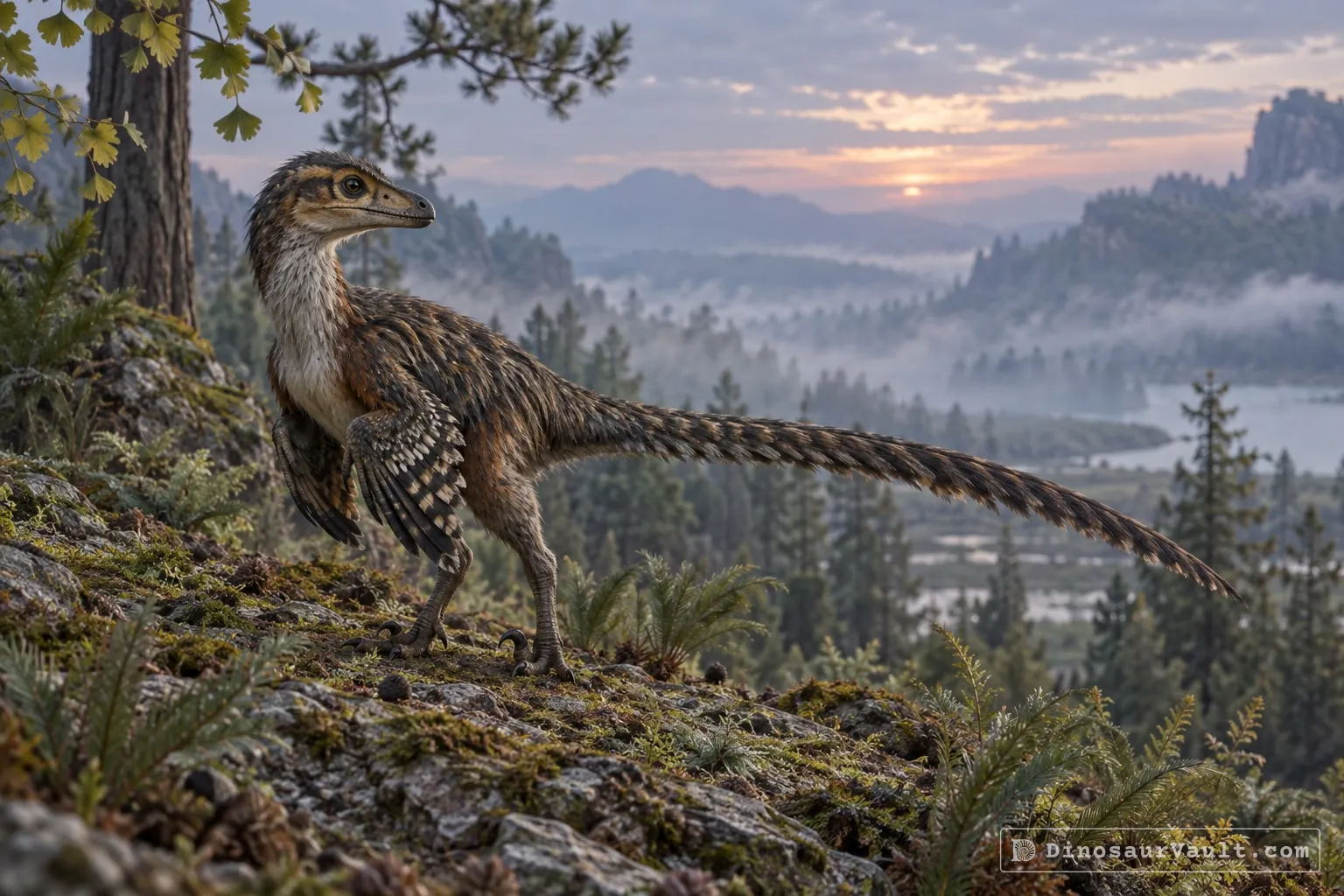
Yixianosaurus was a small feathered theropod known from its arms and hands. Its hands were long, with strong claws, which may have helped it climb or grab prey.
Its world
It lived in the Early Cretaceous, in what is now China. It comes from the Yixian Formation, where it shared the land with Yutyrannus, Sinosauropteryx and Psittacosaurus.
How it was found
Xu and Wang named Yixianosaurus in 2003. The type species is Yixianosaurus longimanus, meaning long hand.
Field gallery
More views of Yixianosaurus
Scenes reconstructed from the available fossil evidence.
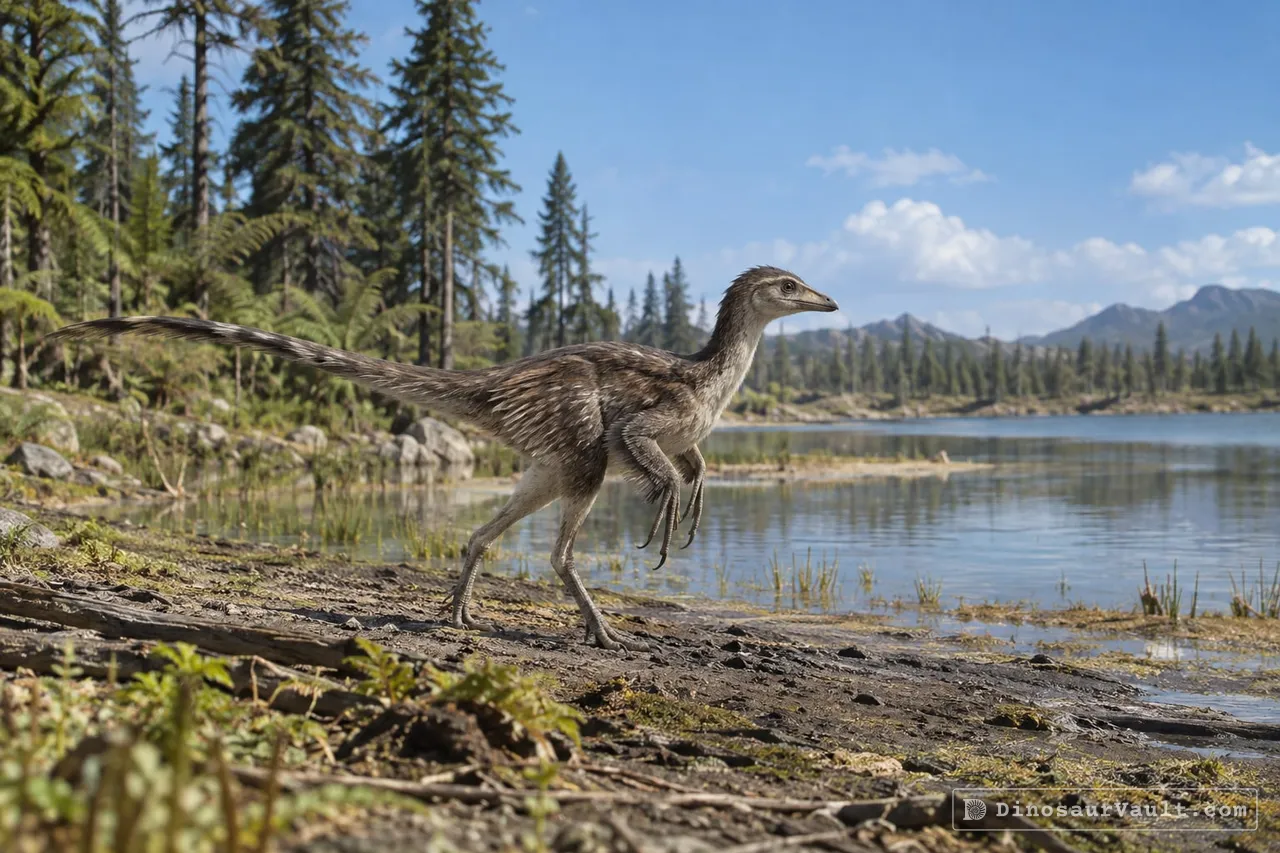
1 of 3
Lived alongside
Found in the same rock formations
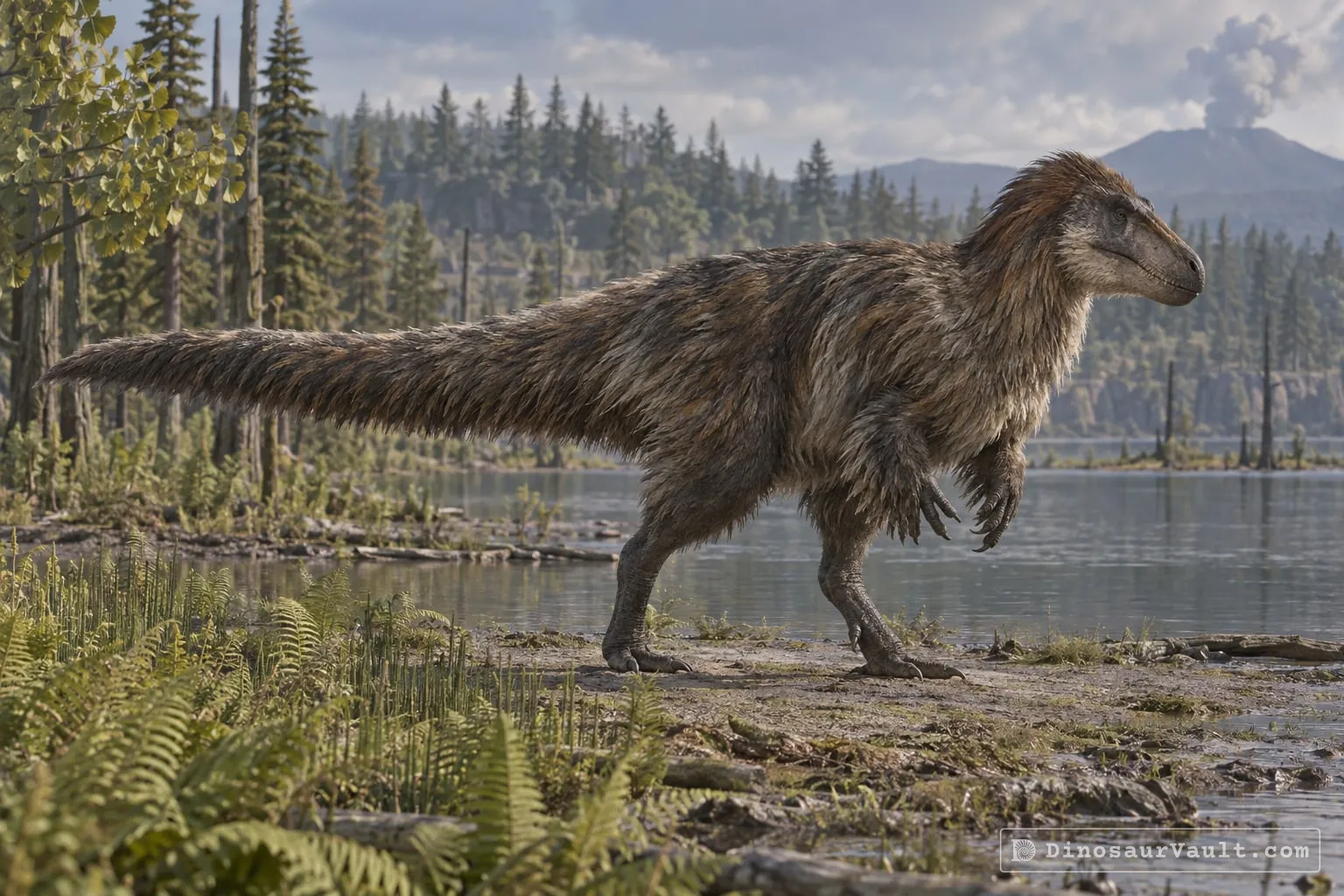
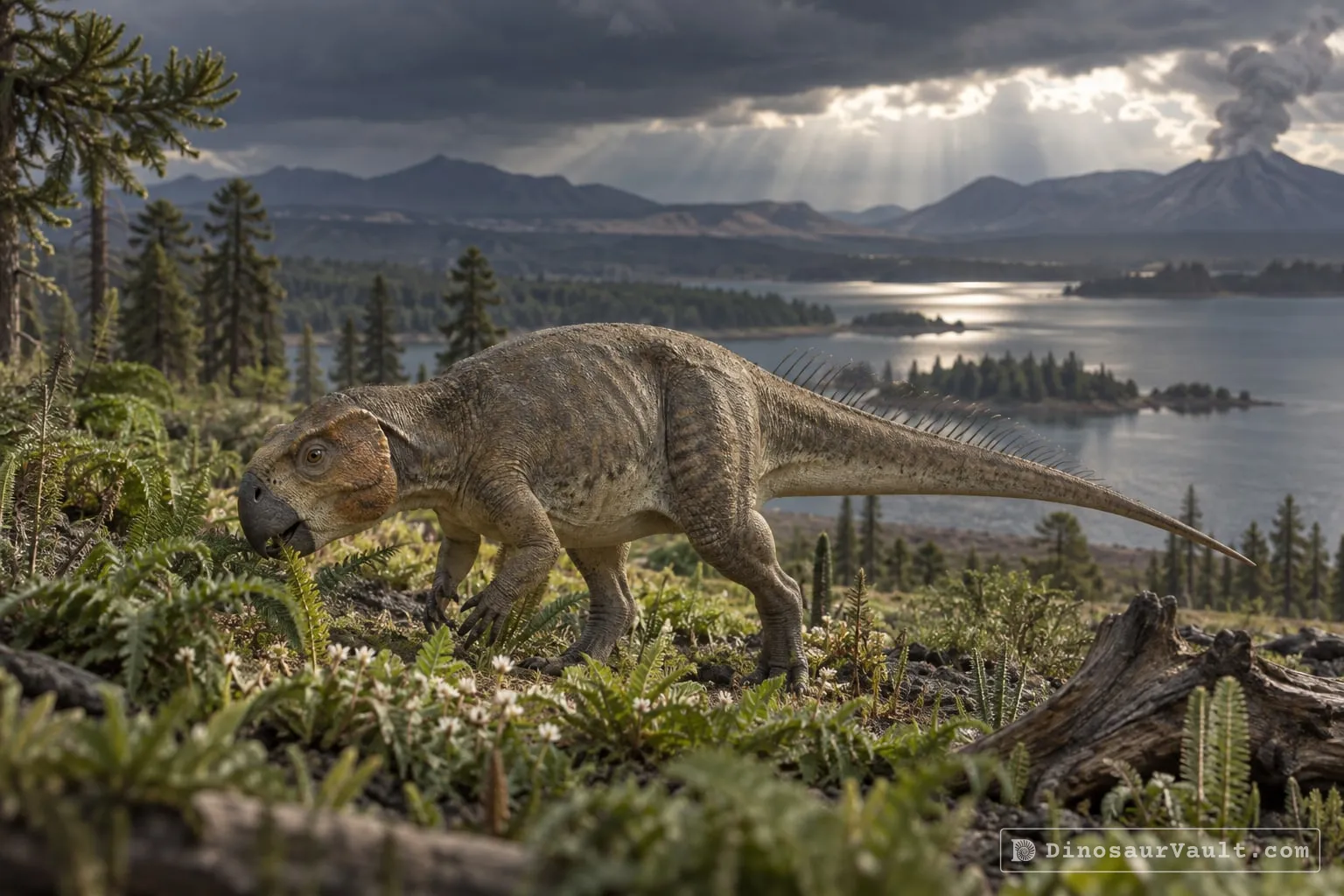
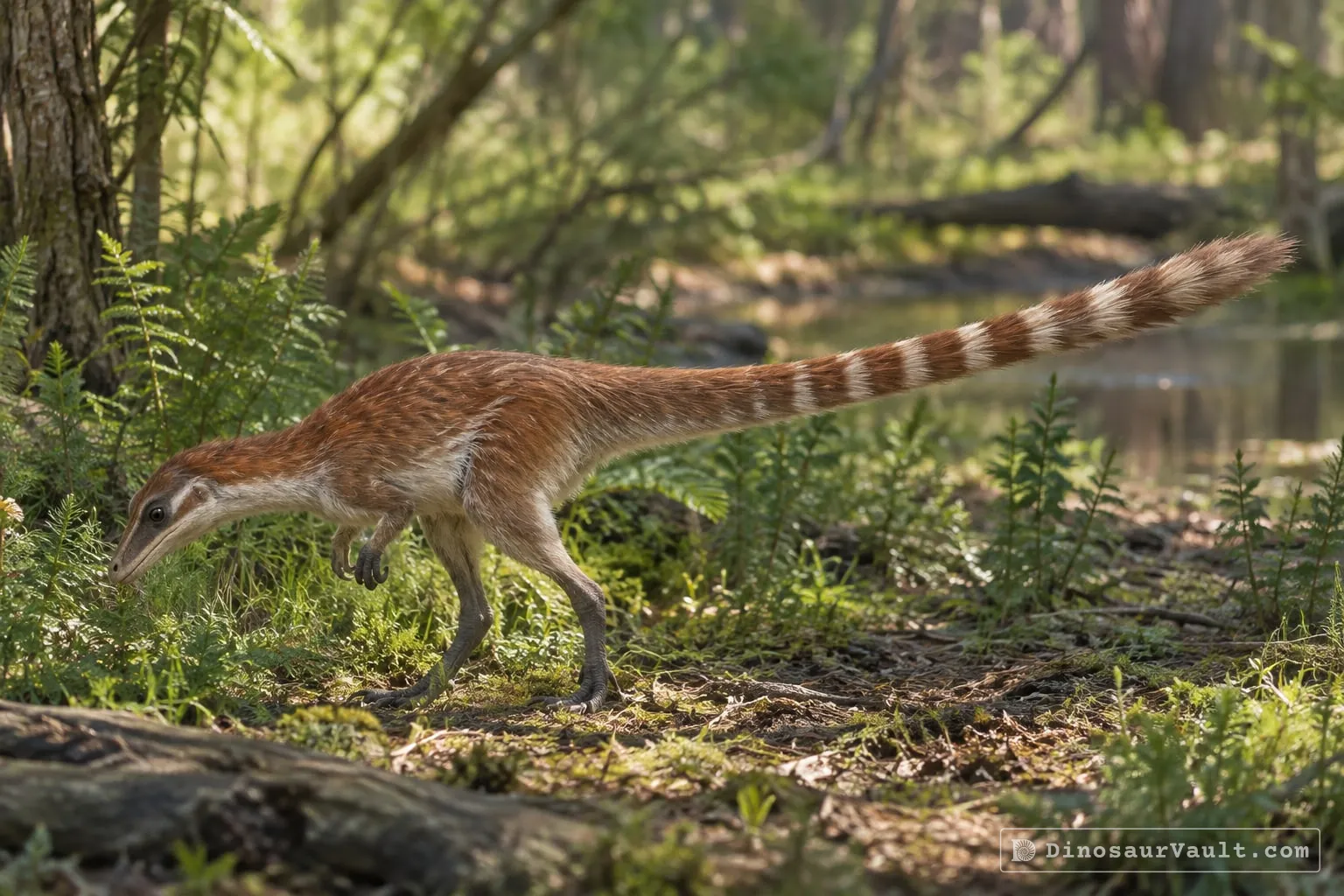
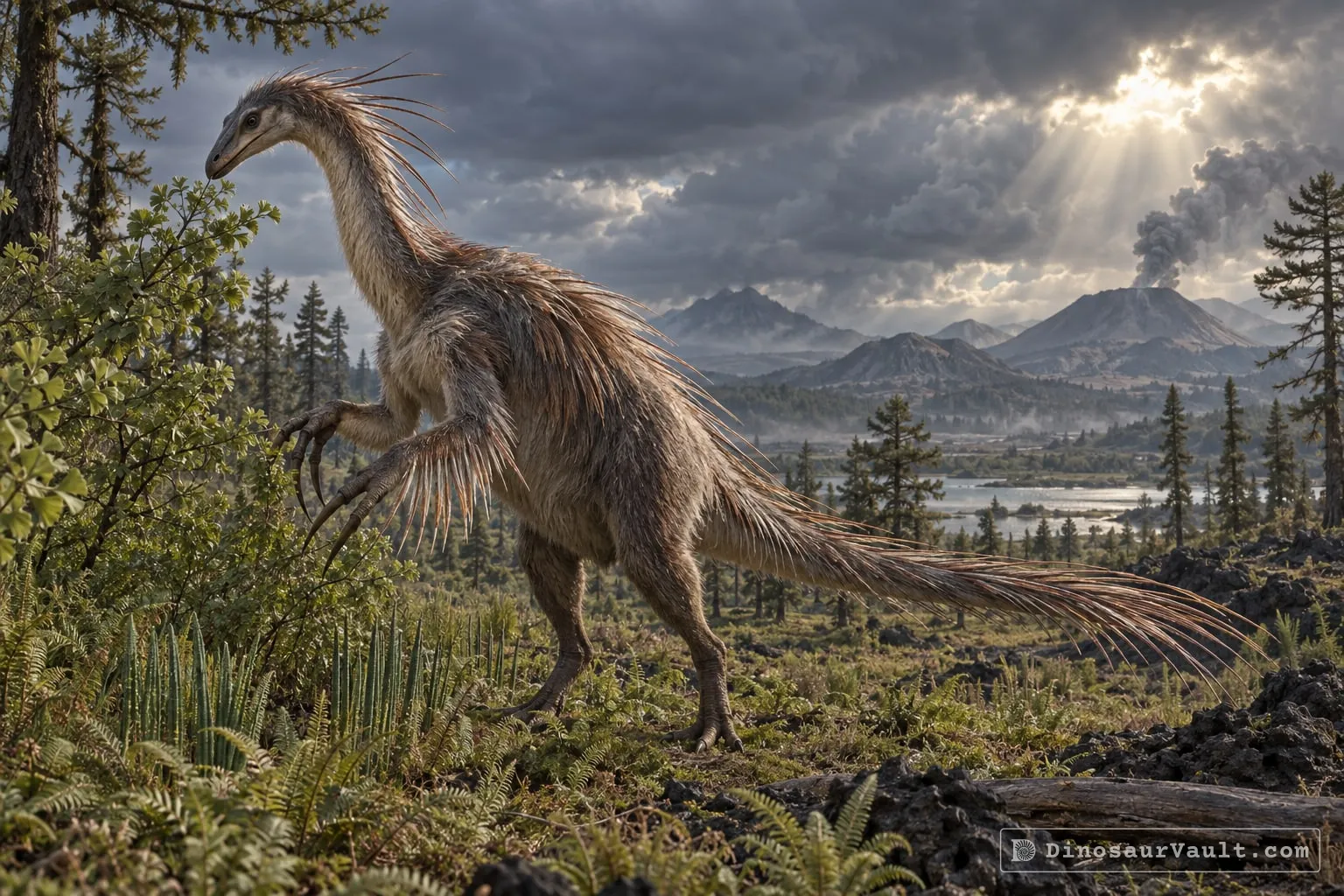
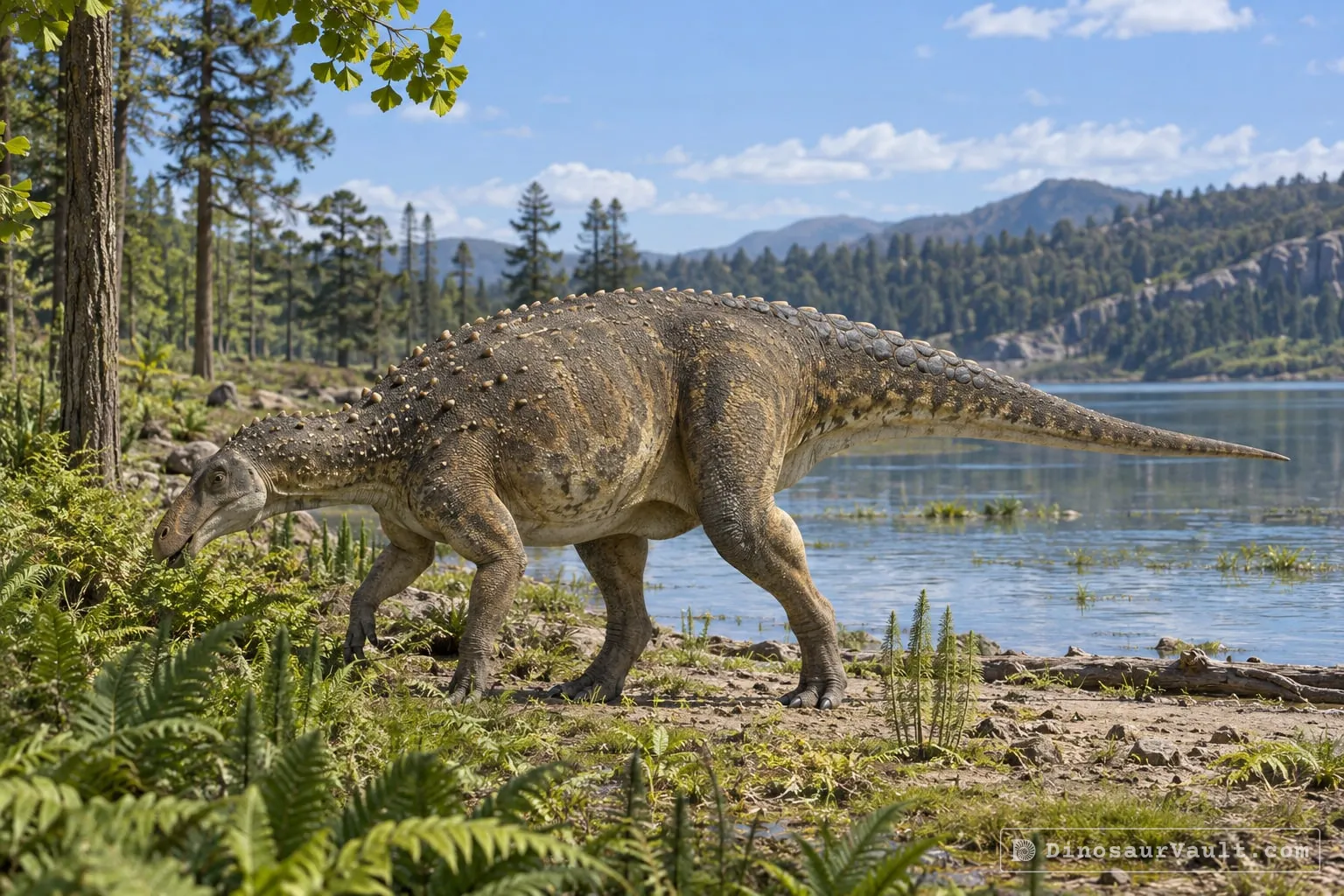
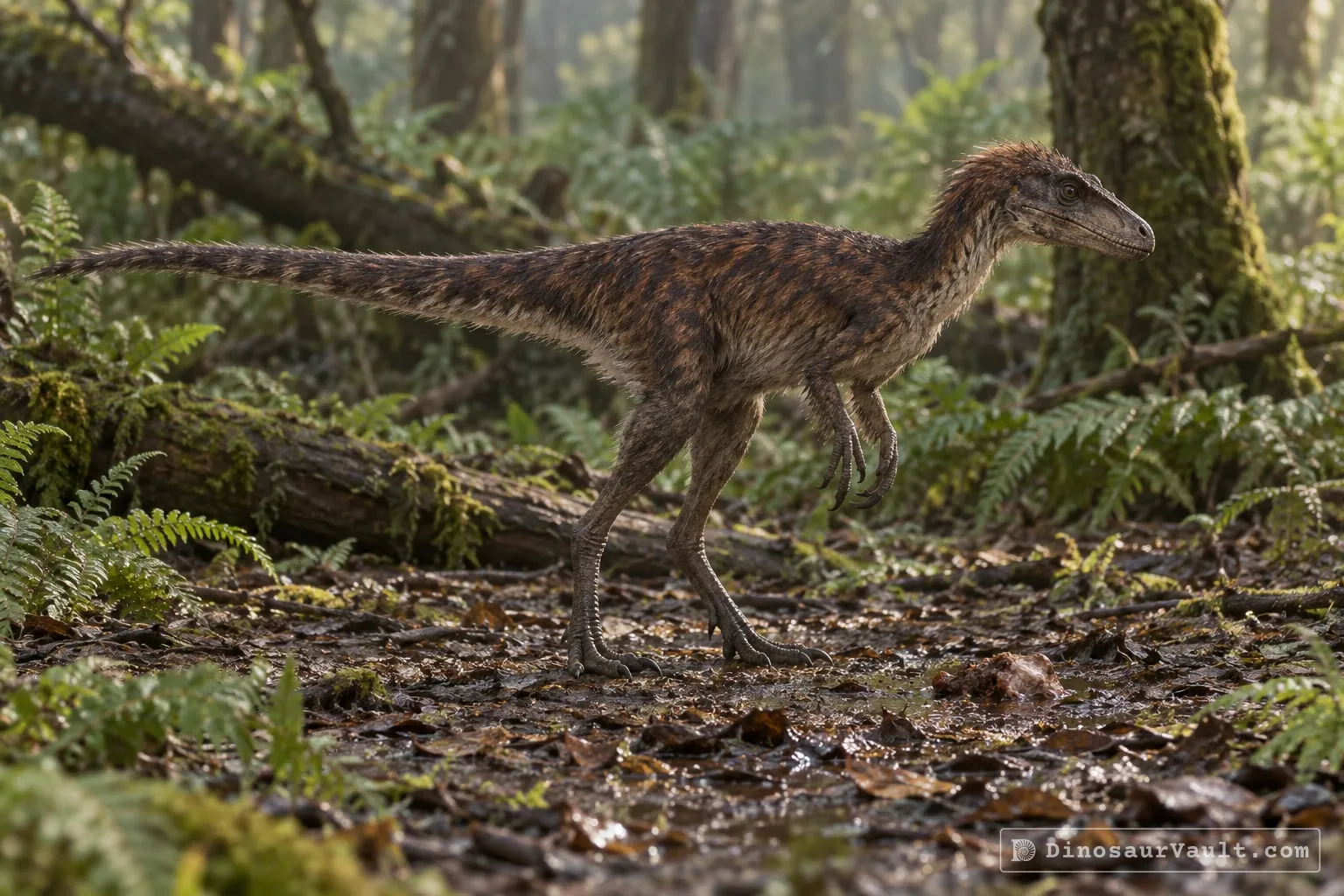
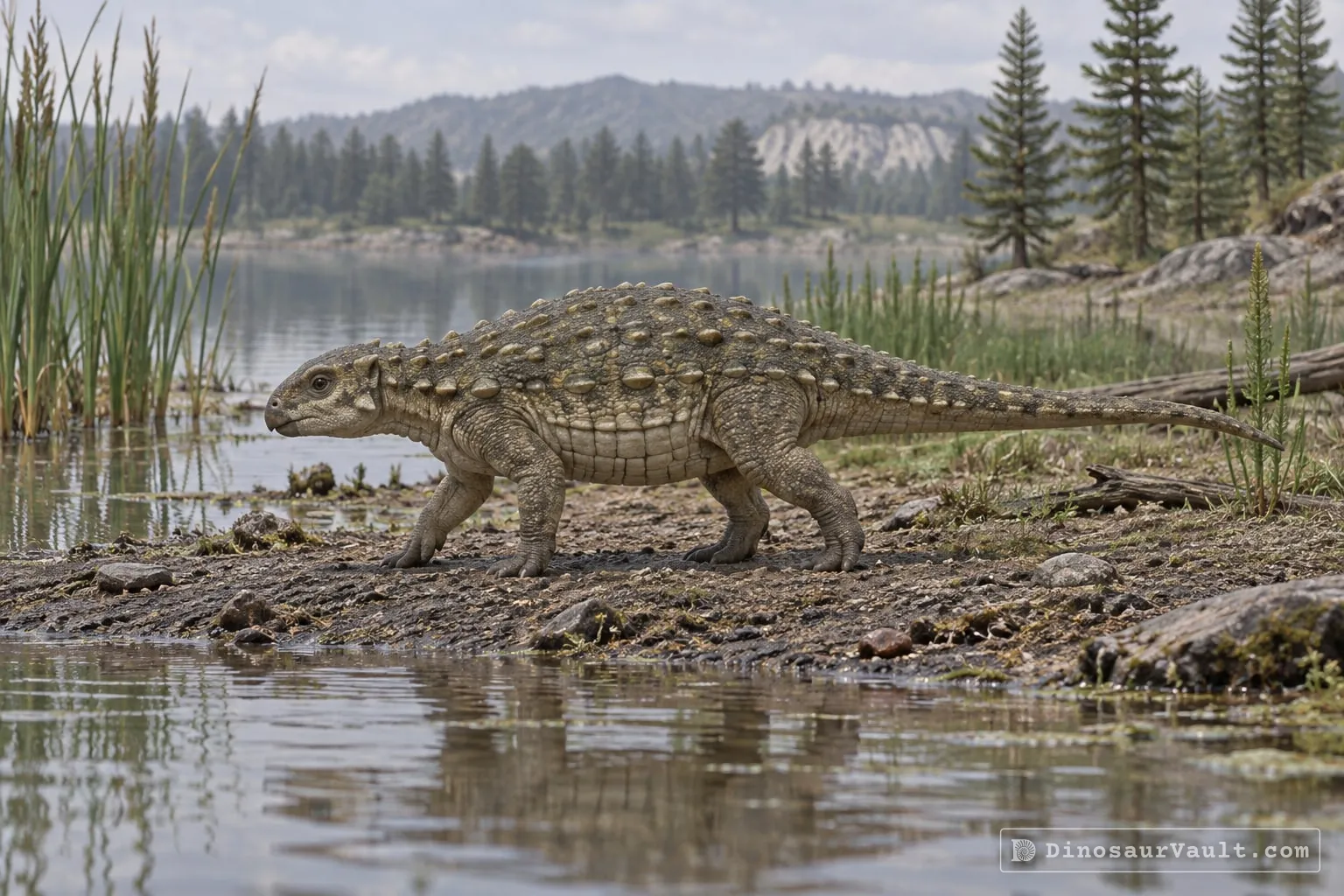


A rock formation can hold fossils laid down millions of years apart, so not every animal here met Yixianosaurus.
The evidence
The science behind Yixianosaurus
Which parts of the picture come from its own bones, and which come from its relatives.
From its own fossils
- The only specimen preserves the shoulder girdles, arms, hands and some ribs, with feather impressions. No skull, neck, hips, legs or full tail have been found.
- Its hands are long, with unusually long next-to-last finger bones, and its upper arm bones are robust.
- The hand claws have arched upper edges and sharp, tapering tips, and they differ in how strongly they curve. The feathers preserved with it were probably vaned.
Borrowed from relatives
- The missing head, neck, body, legs and tail are restored by comparison with Anchiornis, a small feathered relative known from more complete skeletons.
- The naming study compared its long hands with those of Epidendrosaurus, another small feathered dinosaur.
Still unknown
- Its place in the family tree. One study placed it near the base of the maniraptorans, while a later reexamination placed it among the early paravians, the group that includes birds and their closest relatives.
- How old the only known individual was when it died.
- How its feathers were arranged on its arms and body.
Discovery timeline
- 2003Named itXu & Wang
- 2014Same rocksJiang et al.
- 2017Close relativePei et al.
Key papers
The research behind what we know of Yixianosaurus
Named it
Named a feathered dinosaur from its shoulders and arms, with hands longer than its upper arms.
A new maniraptoran dinosaur from the Early Cretaceous Yixian Formation of western Liaoning. Vertebrata PalAsiatica 41: 195-202
No link available
Same rocks
Studied fossils from the same regional lake deposits and proposed that hot volcanic flows helped bury animals.
New evidence suggests pyroclastic flows are responsible for the remarkable preservation of the Jehol biota. Nature Communications 5
Read the paper : New evidence suggests pyroclastic flows are responsible for the remarkable preservation of the Jehol biota (opens in a new tab)Close relative
Described new skeletons of Anchiornis in detail, from the neck and back to the hips, legs, tail, feet and feathers.
New Specimens ofAnchiornis huxleyi(Theropoda: Paraves) from the Late Jurassic of Northeastern China. Bulletin of the American Museum of Natural History 411: 1-67
Read the paper : New Specimens ofAnchiornis huxleyi(Theropoda: Paraves) from the Late Jurassic of Northeastern China (opens in a new tab)
Close relatives
Other members of Maniraptora

Sources: Wikidata