Chinshakiangosaurus
Type species Chinshakiangosaurus chunghoensis
- Lived
- 201 to 200 million years ago, Early Jurassic
- Diet
- Herbivore
- Length
- about 11 m (36 ft)
- Group
- Sauropods
- Found in
- China
- Named by
- Yeh 1975
Size comparison
To scale


Scale in metersOutline: typical sauropod shape
Where its fossils were found
The evidence
Today

200 million years ago
Habitat
Rivers and lakes in what is now China left the sandstone, siltstone and mudstone of the Fengjiahe Formation. Other dinosaurs from these rocks include Yunnanosaurus, Yimenosaurus and Yuxisaurus.
Field notes
About Chinshakiangosaurus
What it was like
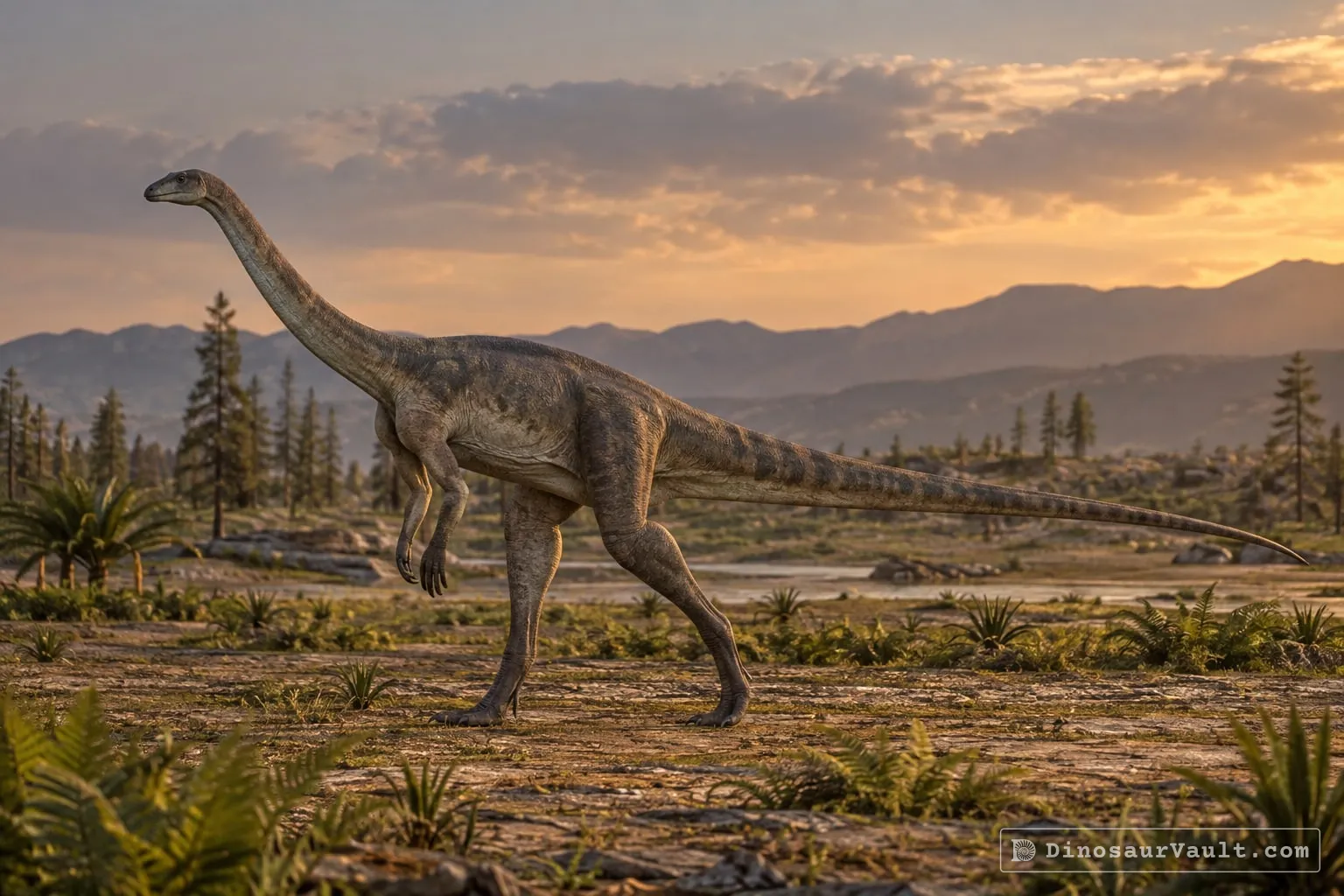
Chinshakiangosaurus was an early sauropod about 11 meters (36 feet) long. It is known from a lower jaw and part of the skeleton. The jaw suggests it may have had fleshy cheeks, which is unusual for a sauropod.
Its world
It lived in the Early Jurassic, in what is now China. It comes from the Fengjiahe Formation, where it shared the land with Yunnanosaurus and other early sauropodomorphs.
How it was found
Yeh named Chinshakiangosaurus in 1975. The type species is Chinshakiangosaurus chunghoensis.
Field gallery
More views of Chinshakiangosaurus
Scenes reconstructed from the available fossil evidence.
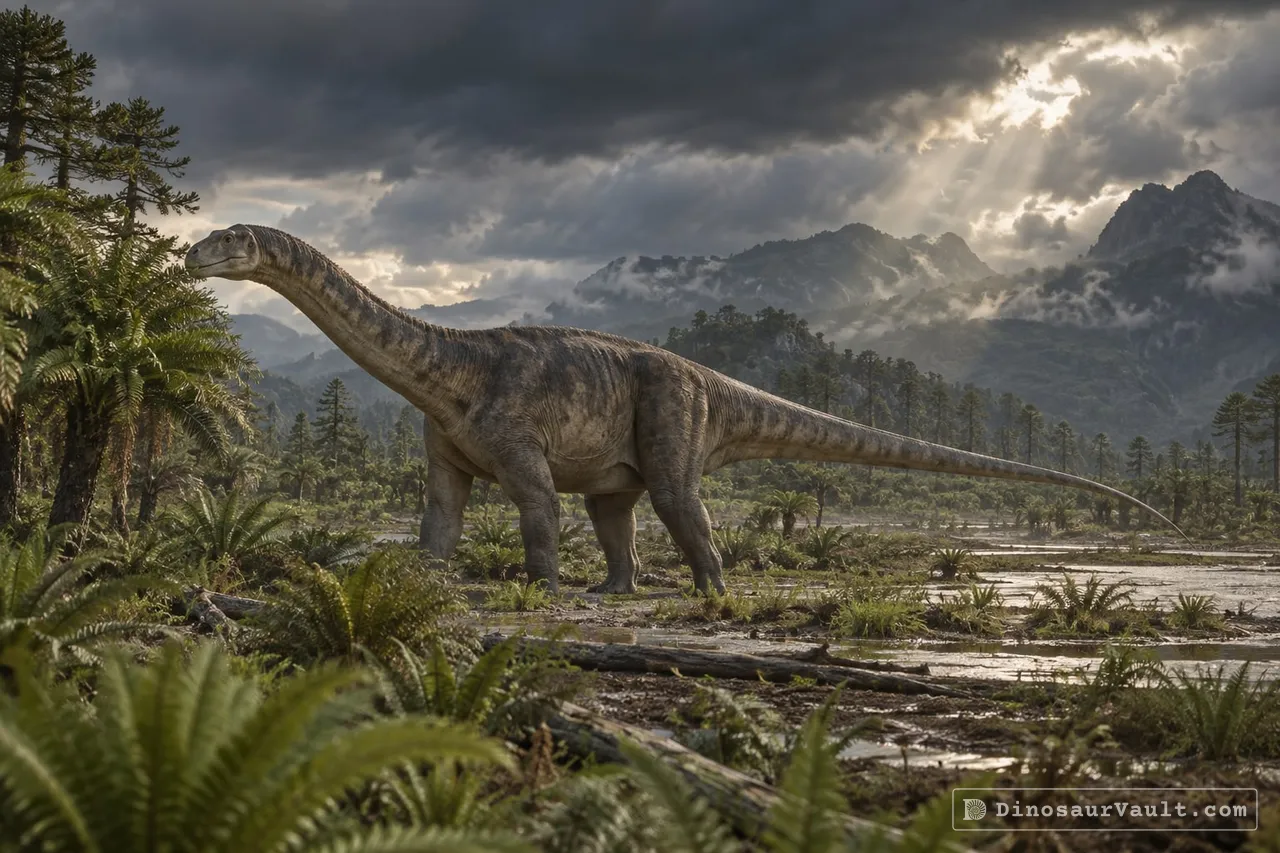
1 of 3
Lived alongside
Found in the same rock formations
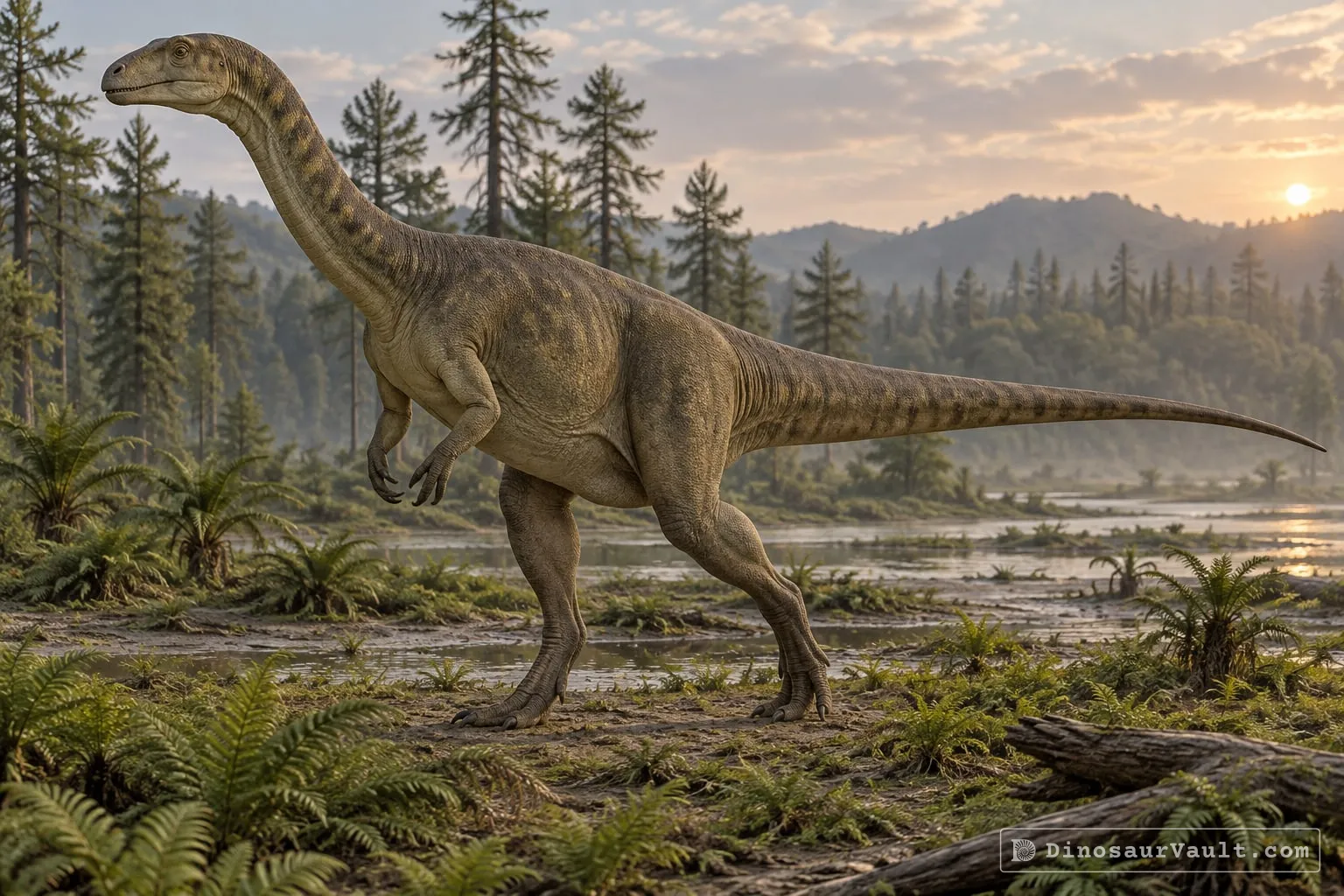
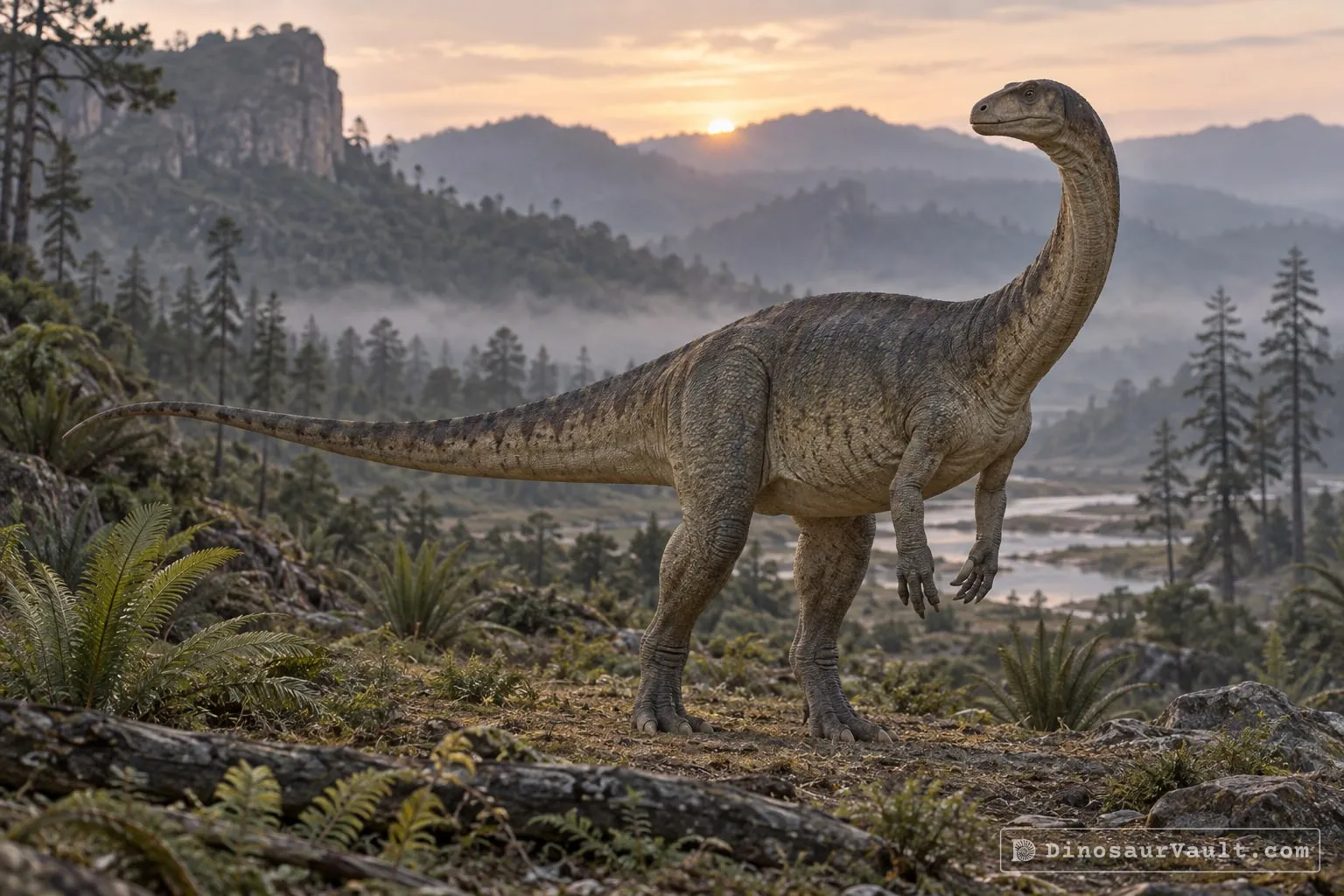
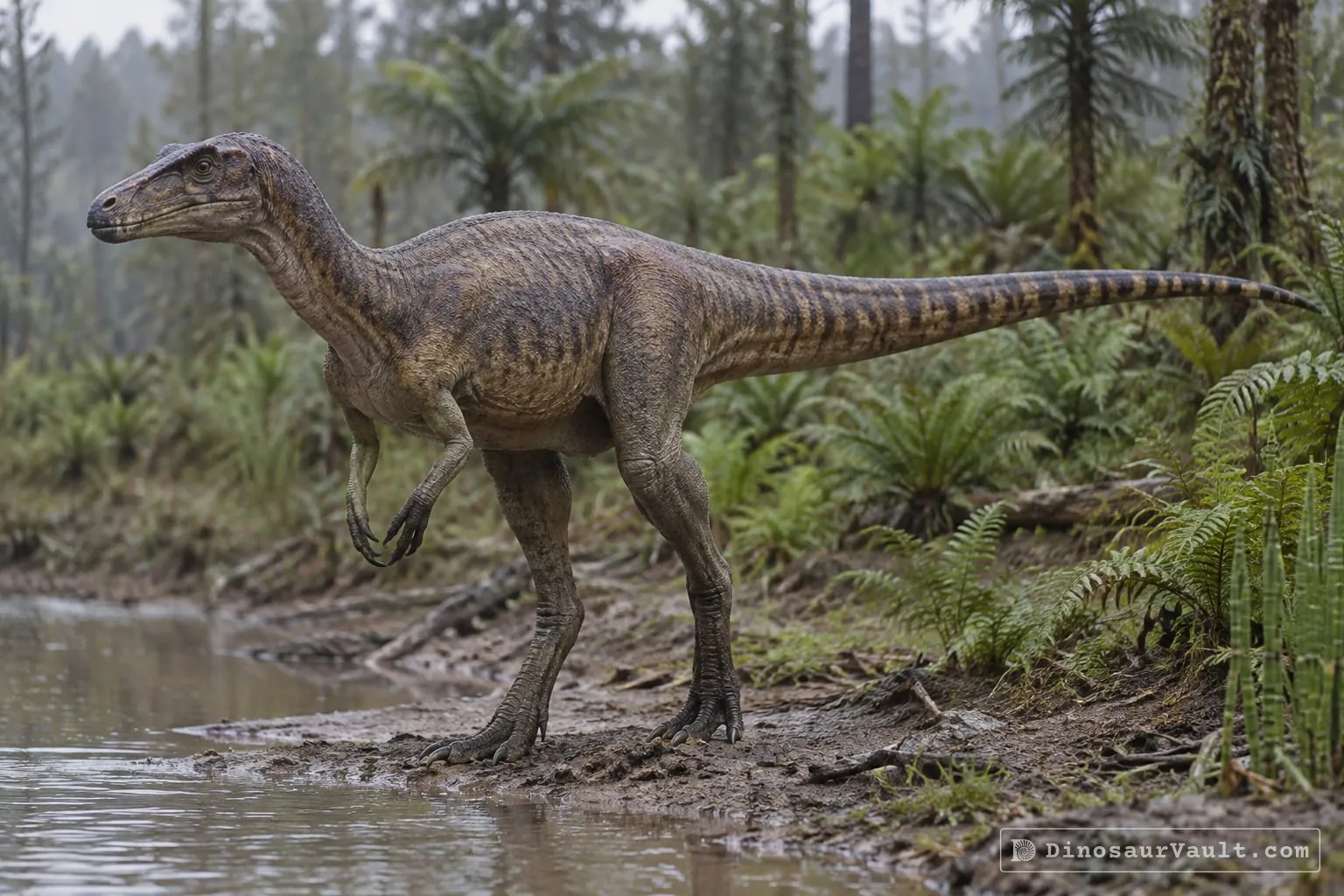


A rock formation can hold fossils laid down millions of years apart, so not every animal here met Chinshakiangosaurus.
The evidence
The science behind Chinshakiangosaurus
Which parts of the picture come from its own bones, and which come from its relatives.
From its own fossils
- A nearly complete left lower-jaw bone belongs to a partial skeleton with neck, back and tail vertebrae and parts of the shoulder, hips and hind limbs.
- The jaw is long, deepens toward the back and tapers to a blunt, rounded front with an almost straight lower edge and no distinct chin.
- A ridge along the outside of the jaw suggests it may have had fleshy cheeks, and a bony plate supports the tooth crowns along the outer edge.
Borrowed from relatives
- The missing upper skull, neck and shoulders are restored by comparison with Yizhousaurus, an early relative of the sauropods from China whose skull is known.
- Mirroring the left jaw suggests a broad, rounded lower jaw, unlike the narrow, pointed snout of Plateosaurus.
Still unknown
- The shape of its complete skull, and whether it really had fleshy cheeks. Some experts doubt that sauropods and their relatives had them.
- Its closest relatives. One later analysis dropped it as an unstable taxon to get a clearer family tree.
- Which plants it ate.
Discovery timeline
- 1975Named itYeh
- 2007How it fedUPCHURCH et al.
- 2015Family treeMcPhee et al.
- 2018Close relativeZhang et al.
Key papers
The research behind what we know of Chinshakiangosaurus
Named it
Introduced the name Chinshakiangosaurus for a partial skeleton from China.
Zhū luó xì [Jurassic system]. Yúnnán zhōngshēngdài hóng céng [Mesozoic Red Beds of Yunnan].
No link available
How it fed
Restudied the lower jaw, placed Chinshakiangosaurus among early sauropods and proposed that it retained fleshy cheeks.
A re-evaluation of Chinshakiangosaurus chunghoensis Ye vide Dong 1992 (Dinosauria, Sauropodomorpha): implications for cranial evolution in basal sauropod dinosaurs. Geological Magazine 144: 247-262
Read the paper : A re-evaluation of Chinshakiangosaurus chunghoensis Ye vide Dong 1992 (Dinosauria, Sauropodomorpha): implications for cranial evolution in basal sauropod dinosaurs (opens in a new tab)Family tree
Named Pulanesaura and compared early sauropod relationships, including Chinshakiangosaurus, while examining the shift toward feeding on all fours.
A new basal sauropod from the pre-Toarcian Jurassic of South Africa: evidence of niche-partitioning at the sauropodomorph–sauropod boundary? Scientific Reports 5
Read the paper : A new basal sauropod from the pre-Toarcian Jurassic of South Africa: evidence of niche-partitioning at the sauropodomorph–sauropod boundary? (opens in a new tab)Close relative
Described Yizhousaurus, a close relative of the sauropods from China, whose skull, neck and forelimbs offer a comparison for the missing parts of Chinshakiangosaurus.
A new sauropodiform dinosaur with a ‘sauropodan’ skull from the Lower Jurassic Lufeng Formation of Yunnan Province, China. Scientific Reports 8
Read the paper : A new sauropodiform dinosaur with a ‘sauropodan’ skull from the Lower Jurassic Lufeng Formation of Yunnan Province, China (opens in a new tab)
Close relatives
Other members of Sauropoda


Sources: Wikidata