Homalocephale
HOM-a-loh-SEF-a-lee
"even head"
- Lived
- 72 to 66 million years ago, Late Cretaceous
- Diet
- Herbivore
- Length
- about 1.5 m (5 ft)
- Group
- Pachycephalosaurs
- Found in
- Mongolia
- Named by
- Maryańska and Osmólska 1974
Size comparison
To scale

Scale in metersOutline: typical pachycephalosaur shape
Where its fossils were found
The evidence
Today

70 million years ago
Habitat
Rivers crossed the floodplains preserved in the Nemegt Formation. Tarbosaurus, Gallimimus and Saurolophus also lived there.
Field notes
About Homalocephale
What it was like
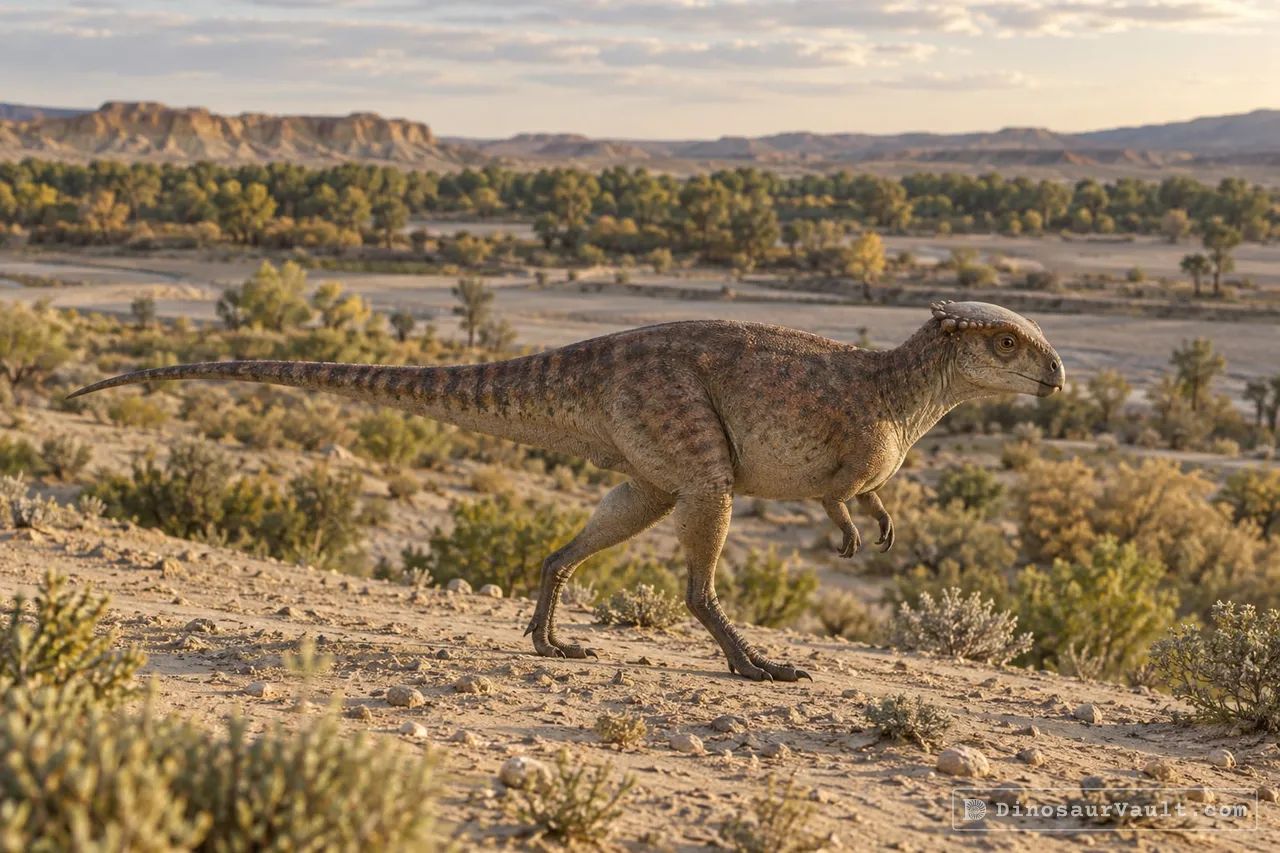
Homalocephale was a small bone-headed dinosaur, about 1.5 meters (5 feet) long. Unlike Pachycephalosaurus, it had a flat, thick skull roof rather than a tall dome, with small bumps around the edges. It walked on two legs and probably ate plants.
Its world
It lived about 72 to 66 million years ago, in the Late Cretaceous, in what is now Mongolia. Its bones come from the Nemegt Formation, a land of rivers where it lived alongside the huge predator Tarbosaurus and the ostrich-like Gallimimus.
How it was found
Maryańska and Osmólska named Homalocephale in 1974. Some scientists have suggested it is a young Prenocephale, with its flat head becoming domed as it grew, but others disagree.
Field gallery
More views of Homalocephale
Scenes reconstructed from the available fossil evidence.
Lived alongside
Found in the same rock formations
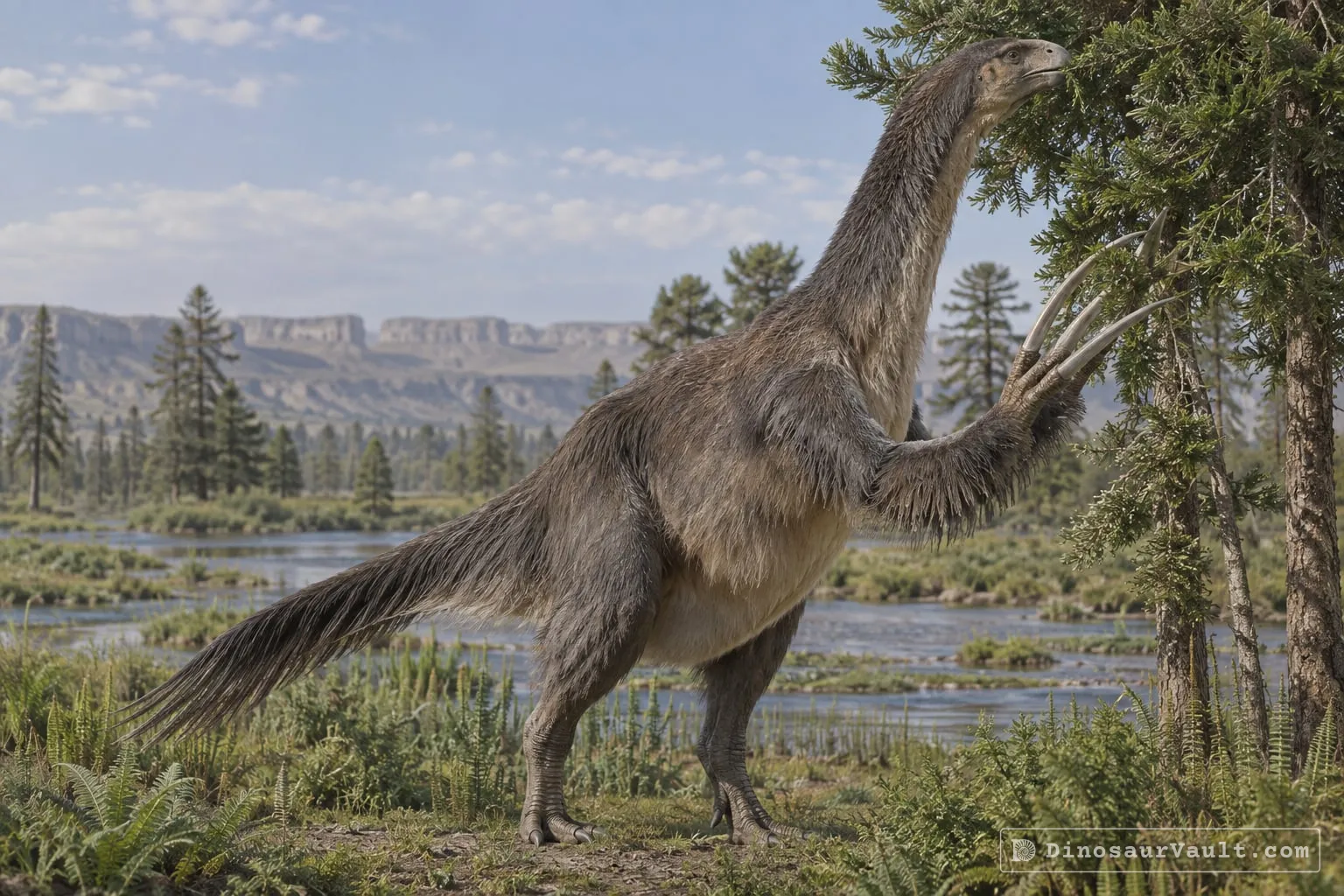
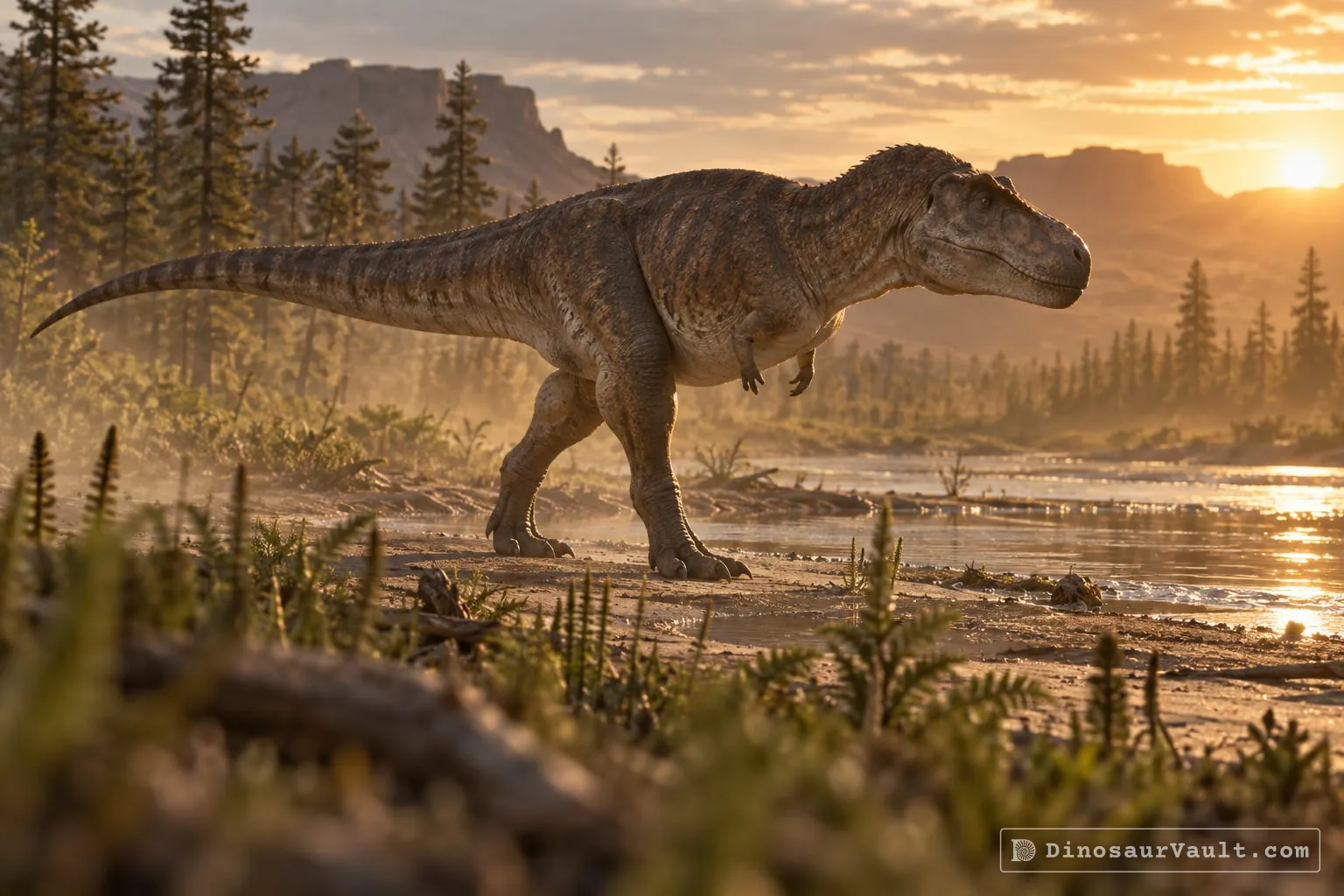
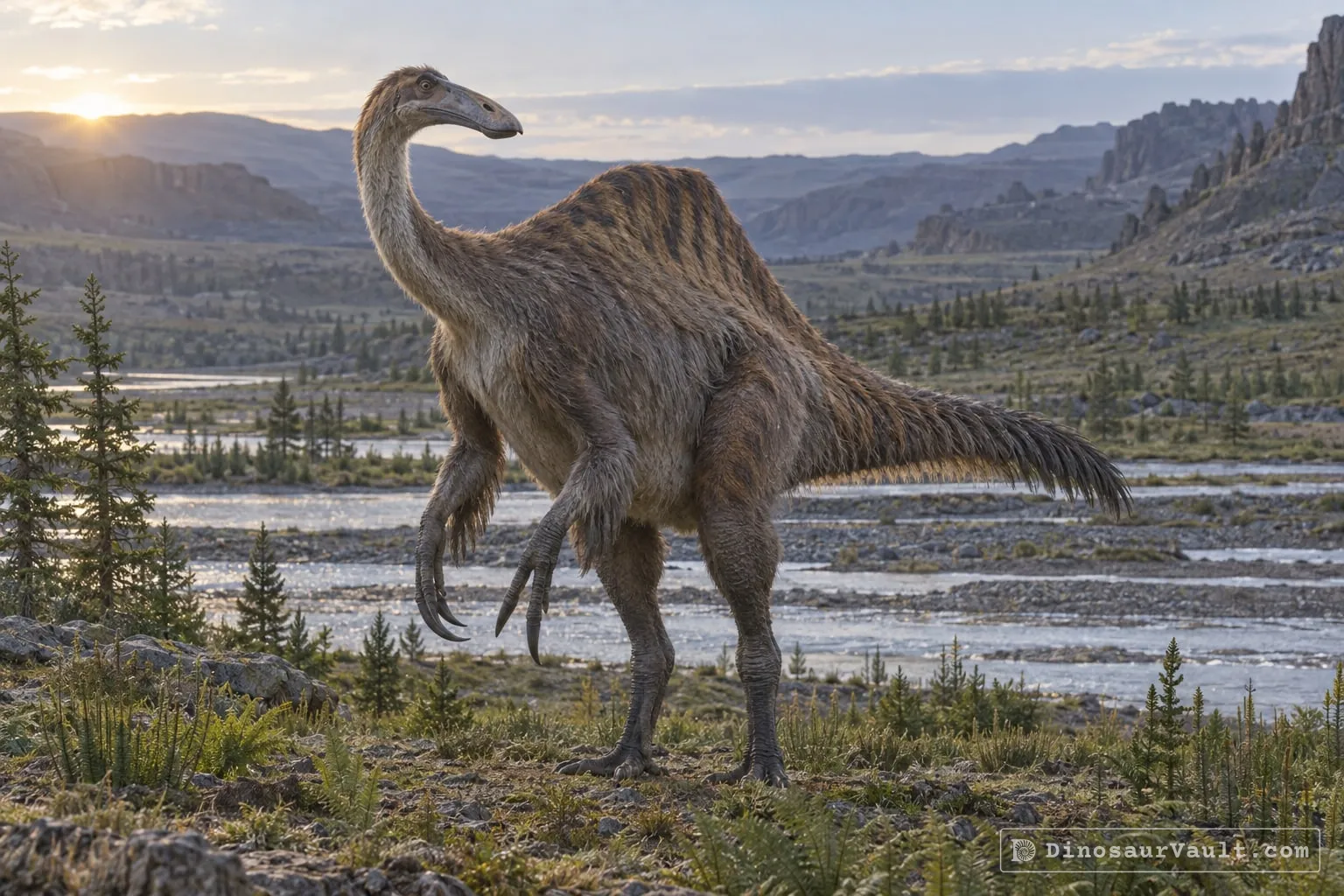
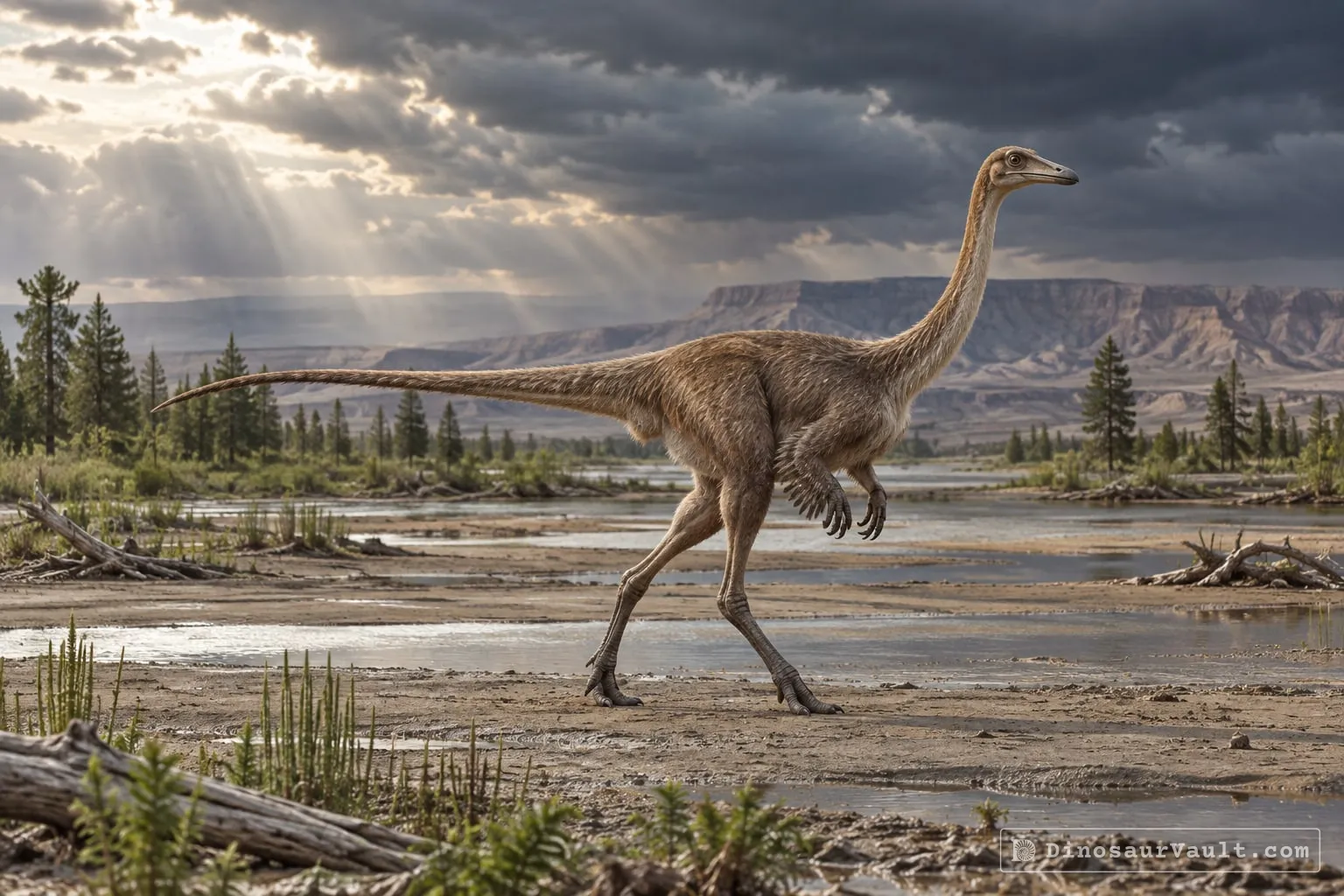
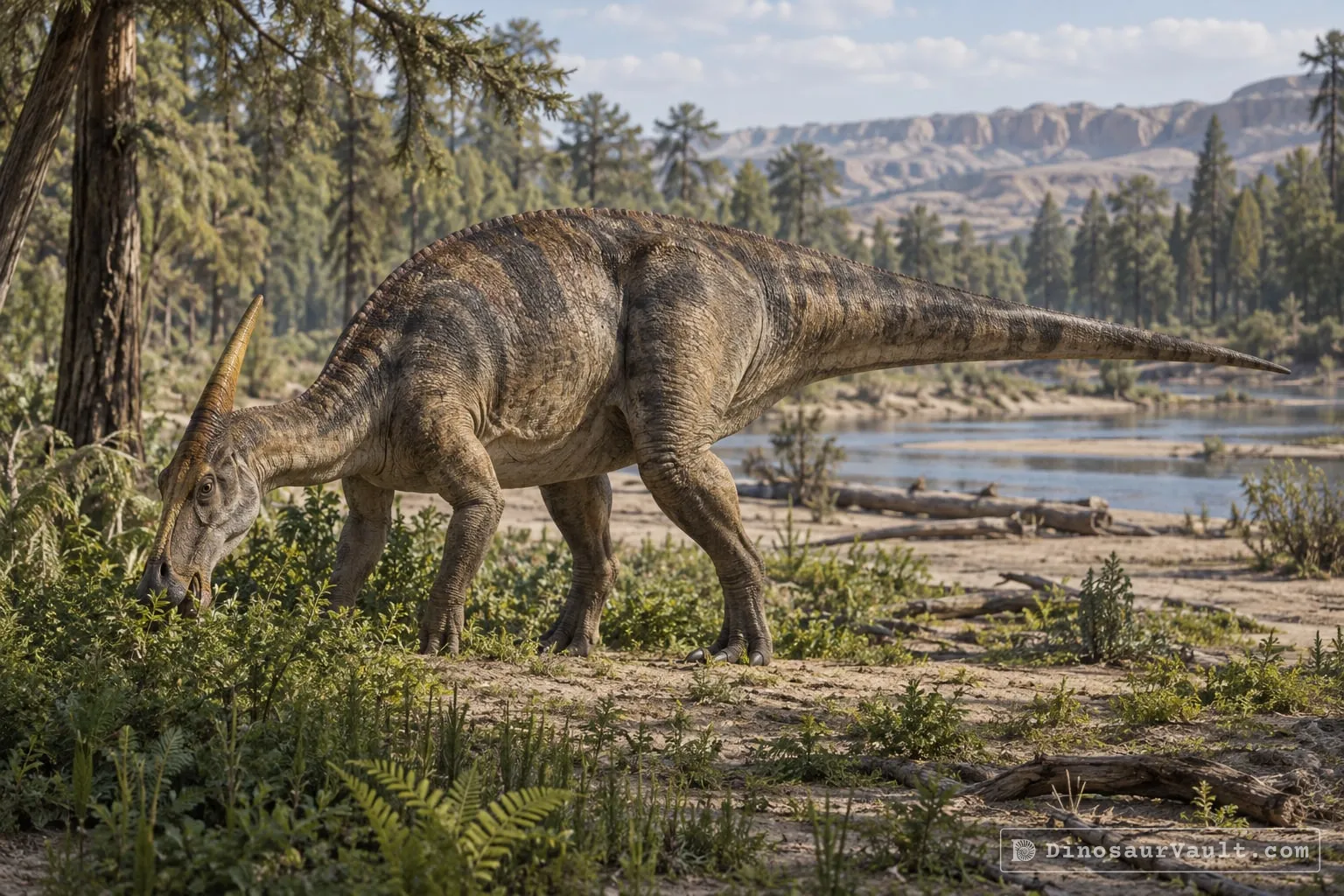
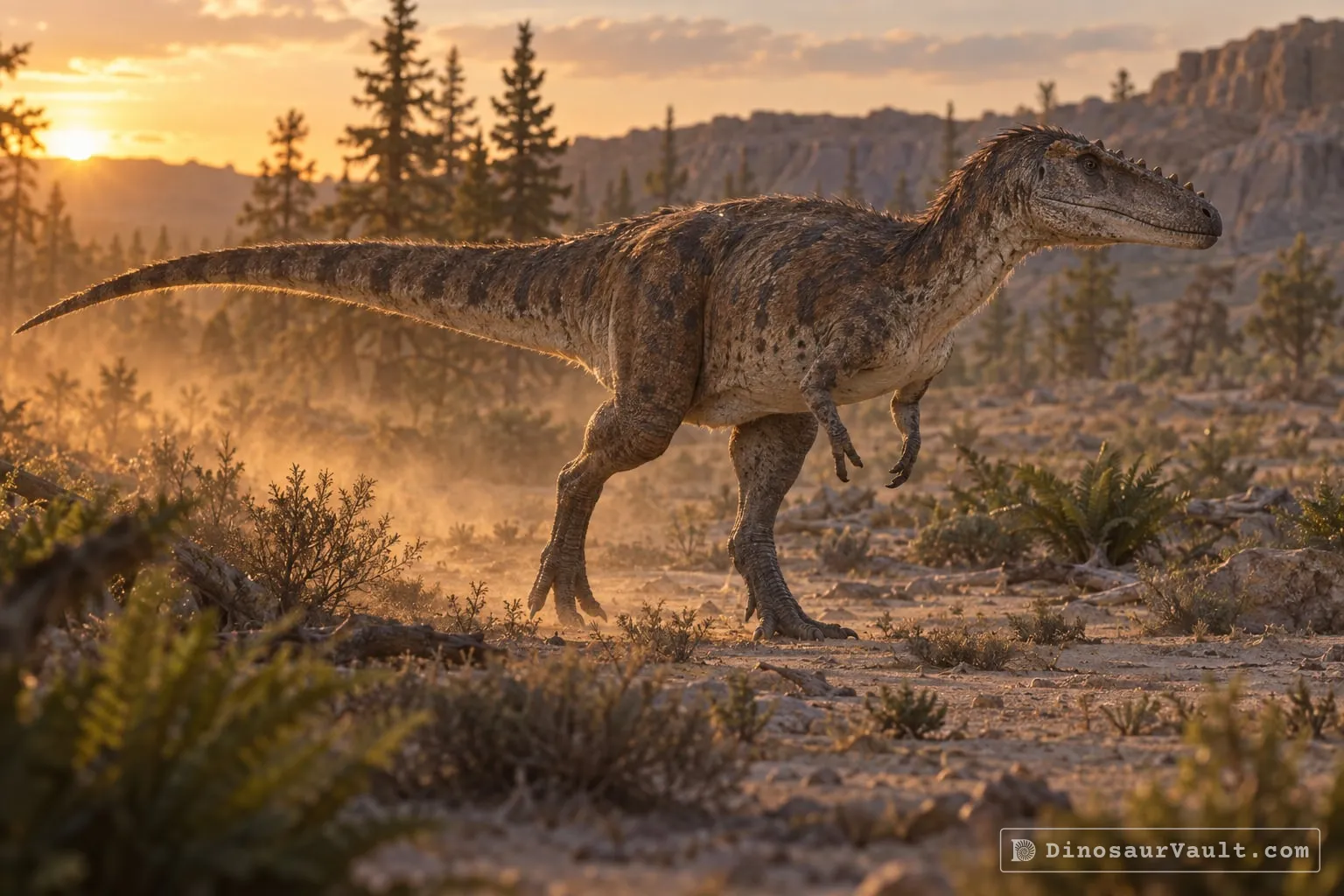
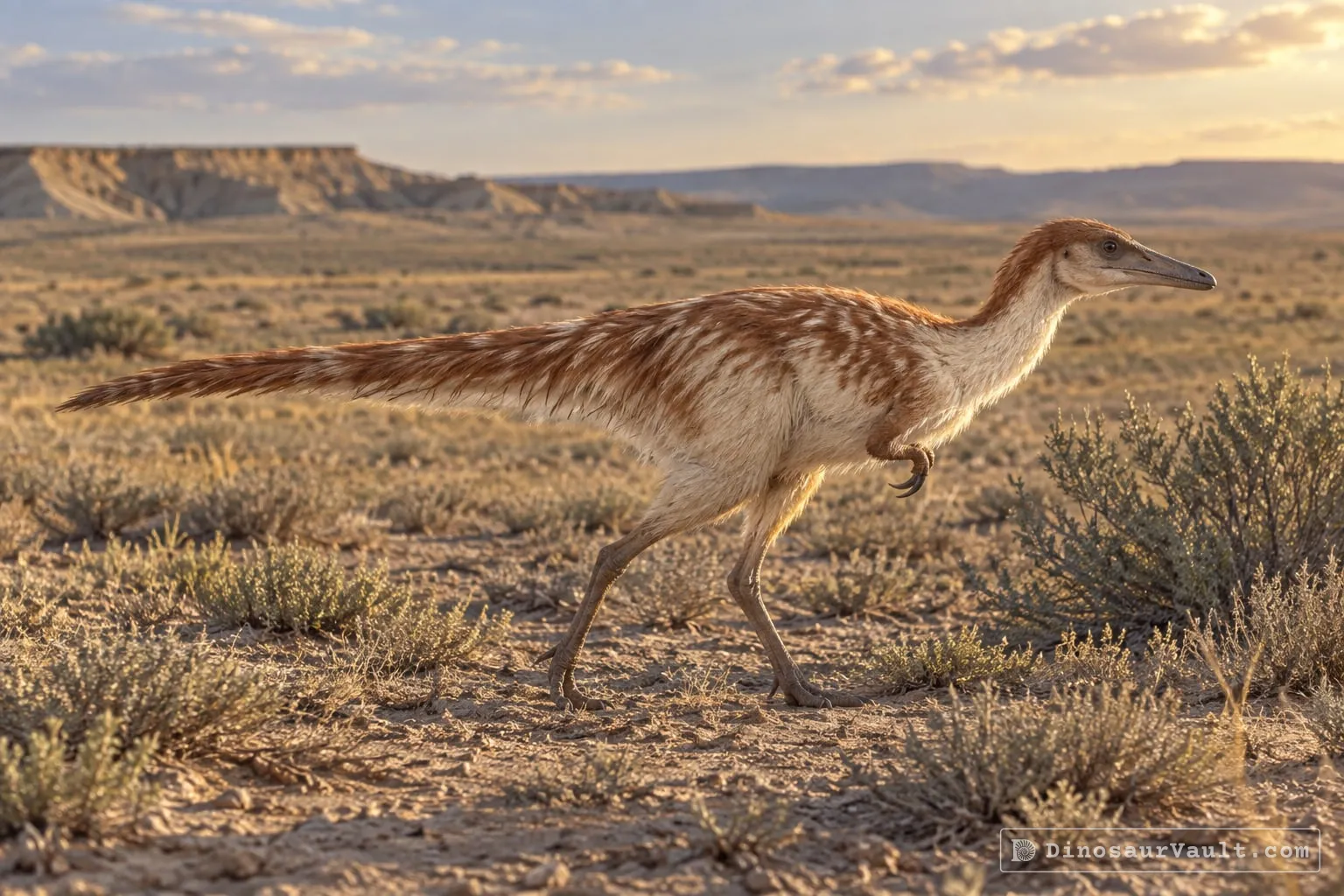
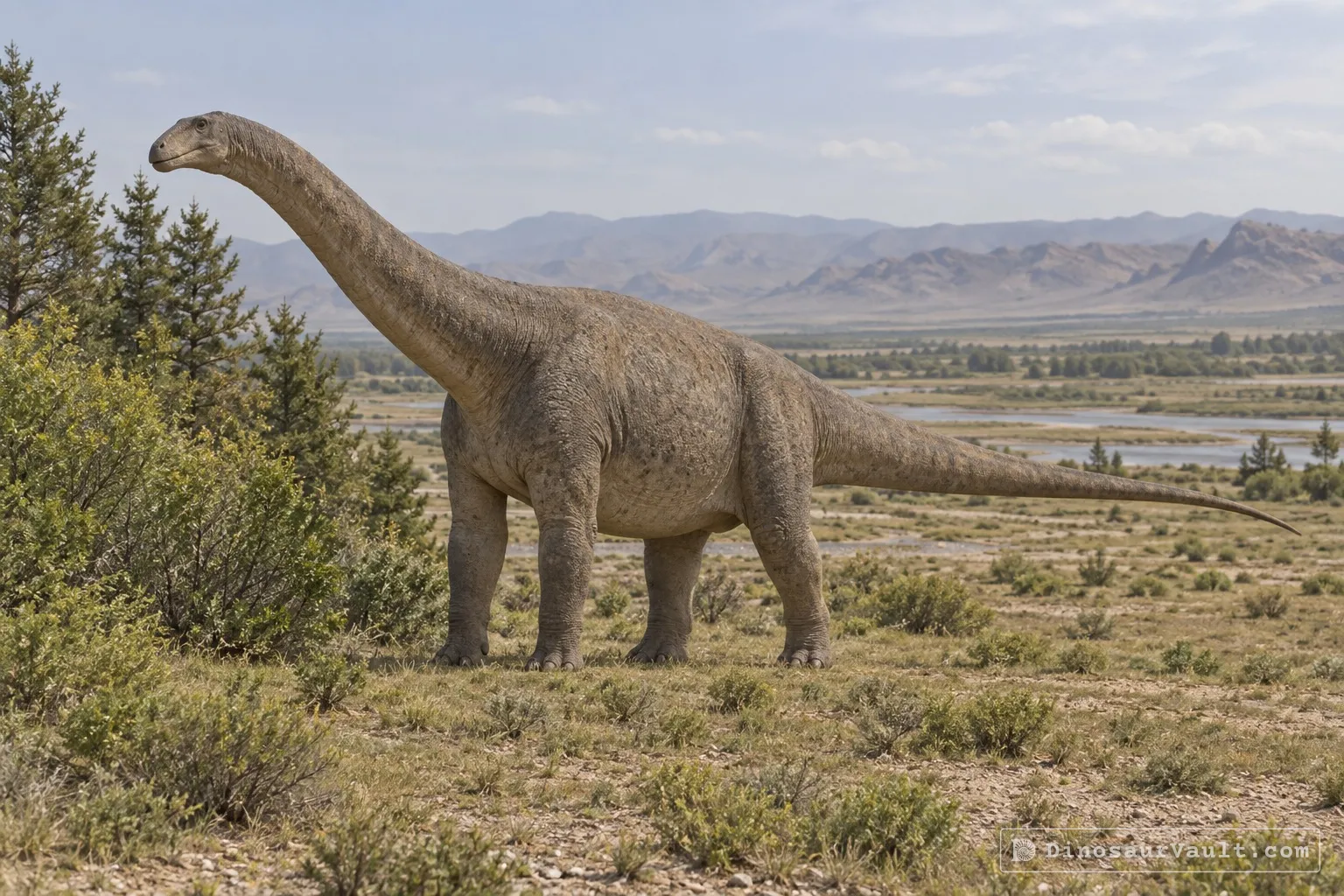


A rock formation can hold fossils laid down millions of years apart, so not every animal here met Homalocephale.
The evidence
The science behind Homalocephale
Which parts of the picture come from its own bones, and which come from its relatives.
From its own fossils
- The skull preserves a thick, flat rear roof with small bony bumps around its edges and a large, round eye socket.
- Much of the rear trunk, hips and tail is preserved, along with parts of the hind legs and feet.
- Slender bony rods formed an internal basket around the tail and may have helped stiffen it.
Borrowed from relatives
- Prenocephale helps restore the missing front of the skull.
- Stegoceras provides a comparison for the missing neck, front of the body and arms.
Still unknown
- Whether its flat skull would have developed a dome as it grew.
- Whether it was a distinct genus or a young Prenocephale.
- Its skin covering, color and feeding habits.
Often drawn wrong
- The known skull has a flat roof, rather than the tall dome often borrowed from other bone-headed dinosaurs.
- The tail's bony basket lay beneath the skin, rather than forming an exposed cage or armor.
- Its small skull bumps should not become a fence of huge horns.
Discovery timeline
- 1974Named itMaryańska & Osmólska
- 2011Growing upEvans et al.
- 2012PostureBrown & Russell
- 2018SkullsEvans et al.
Key papers
The research behind what we know of Homalocephale
Named it
Named Homalocephale from its flat skull and partial skeleton, describing its broad hips and unusual tail.
Pachycephalosauria, a new suborder of ornithischian dinosaurs. Palaeontologia Polonica 30: 45-102
No link available
Growing up
Found signs that the original skeleton was immature, while differences in skull bumps supported tentatively keeping Homalocephale separate from Prenocephale.
Cranial ornamentation and ontogenetic status ofHomalocephale calathocercos(Ornithischia: Pachycephalosauria) from the Nemegt Formation, Mongolia. Journal of Vertebrate Paleontology 31: 84-92
Read the paper : Cranial ornamentation and ontogenetic status ofHomalocephale calathocercos(Ornithischia: Pachycephalosauria) from the Nemegt Formation, Mongolia (opens in a new tab)Posture
Identified the tail basket as bony rods formed within connective tissue and proposed that they helped stiffen the tail.
Homology and Architecture of the Caudal Basket of Pachycephalosauria (Dinosauria: Ornithischia): The First Occurrence of Myorhabdoi in Tetrapoda. PLoS ONE 7: e30212
Read the paper : Homology and Architecture of the Caudal Basket of Pachycephalosauria (Dinosauria: Ornithischia): The First Occurrence of Myorhabdoi in Tetrapoda (opens in a new tab)Skulls
Compared Prenocephale skulls across sizes and found consistent bumps and domes, strengthening the case for separating it from Homalocephale.
Morphology and histology of new cranial specimens of Pachycephalosauridae (Dinosauria: Ornithischia) from the Nemegt Formation, Mongolia. Palaeogeography, Palaeoclimatology, Palaeoecology 494: 121-134
Read the paper : Morphology and histology of new cranial specimens of Pachycephalosauridae (Dinosauria: Ornithischia) from the Nemegt Formation, Mongolia (opens in a new tab)
Close relatives
Other members of Eupachycephalosauria


Sources: Wikidata