Comptonatus
Type species Comptonatus chasei
- Lived
- 126 to 121 million years ago, Early Cretaceous
- Diet
- Herbivore
- Group
- Ornithopods
- Found in
- United Kingdom
- Named by
- Lockwood et al. 2024
Where its fossils were found
The evidence
Today

125 million years ago
Habitat
It lived on a low river plain in England, with winding channels and lakes. Conifers grew in the region, alongside plant eaters such as Iguanodon and Hypsilophodon and the predator Neovenator.
Field notes
About Comptonatus
What it was like
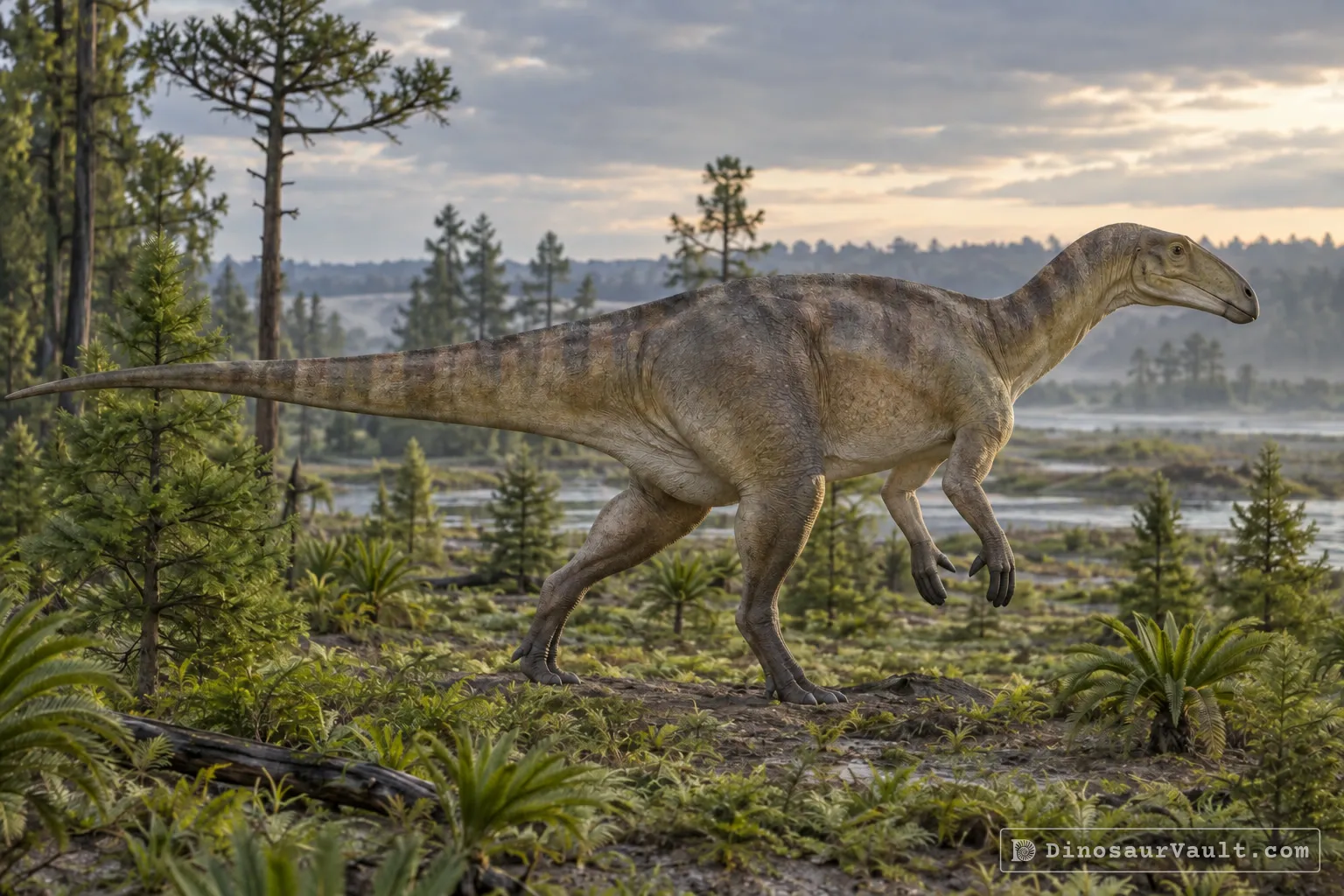
Comptonatus was a large plant eater related to Iguanodon. It is known from a partial skeleton.
Its world
It lived in the Early Cretaceous, in what is now England. It comes from the Wessex Formation, a river plain shared with Iguanodon, the spinosaur Baryonyx, the predator Neovenator and the small plant eater Hypsilophodon.
How it was found
Lockwood and colleagues named Comptonatus in 2024. The type species is Comptonatus chasei.
Field gallery
More views of Comptonatus
Scenes reconstructed from the available fossil evidence.
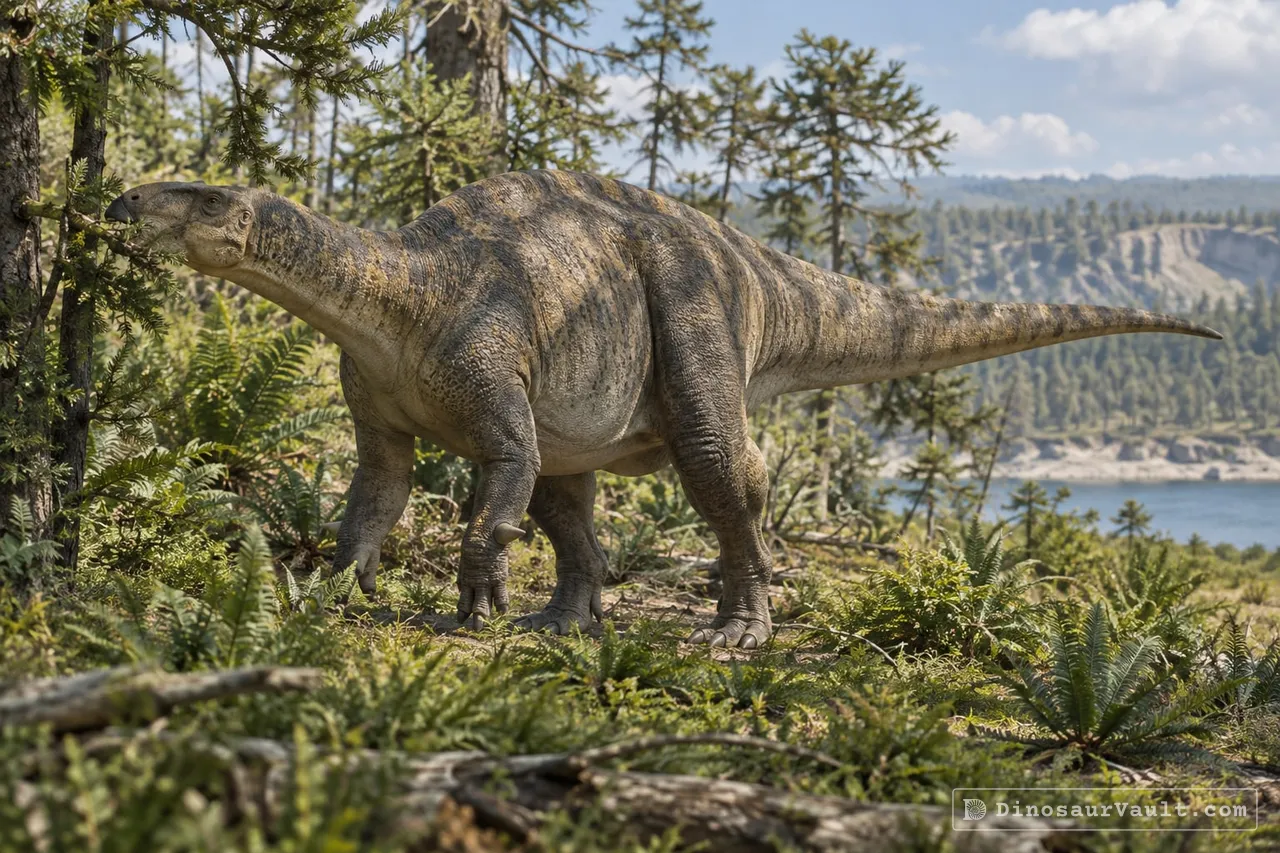
1 of 2
Lived alongside
Found in the same rock formations
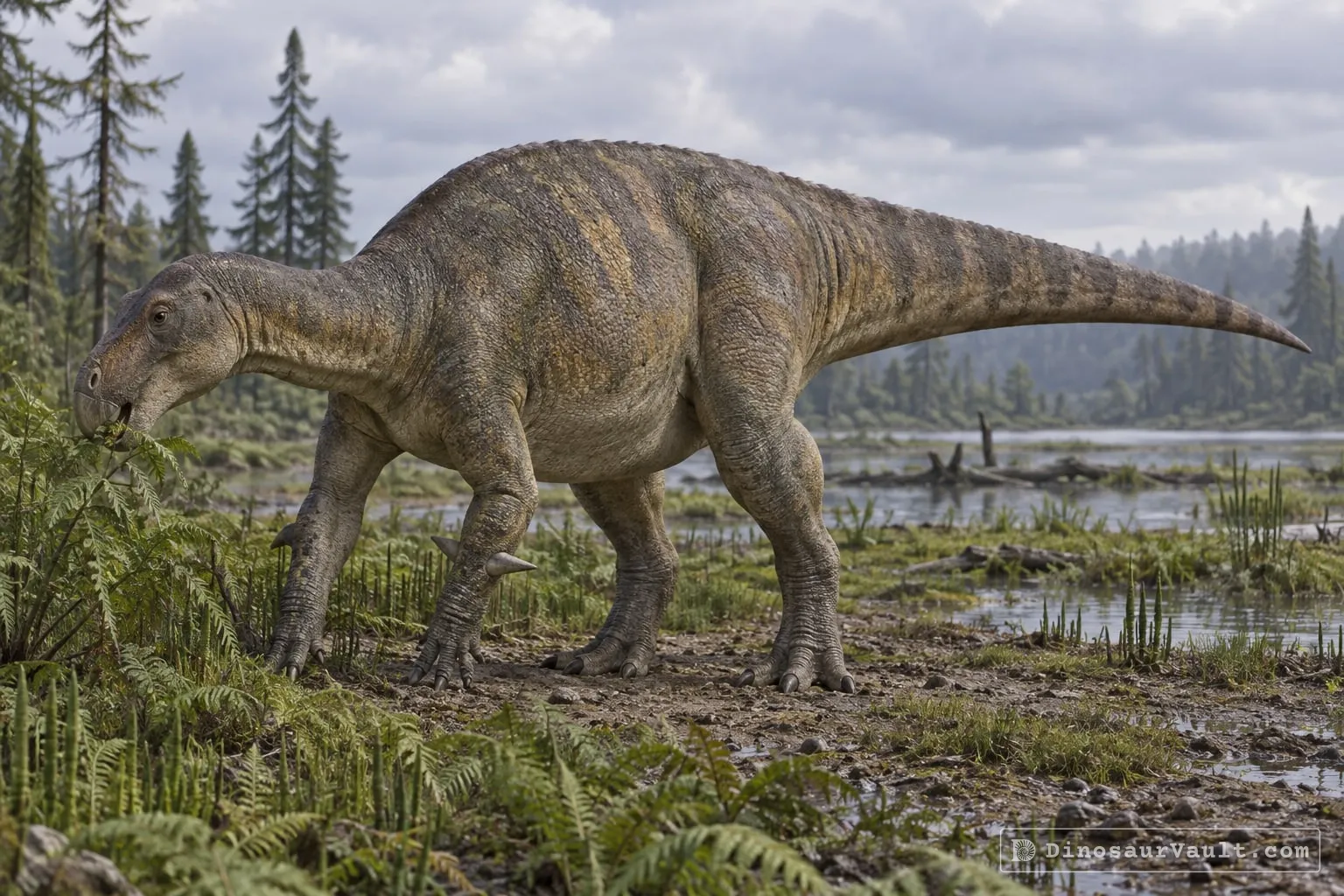
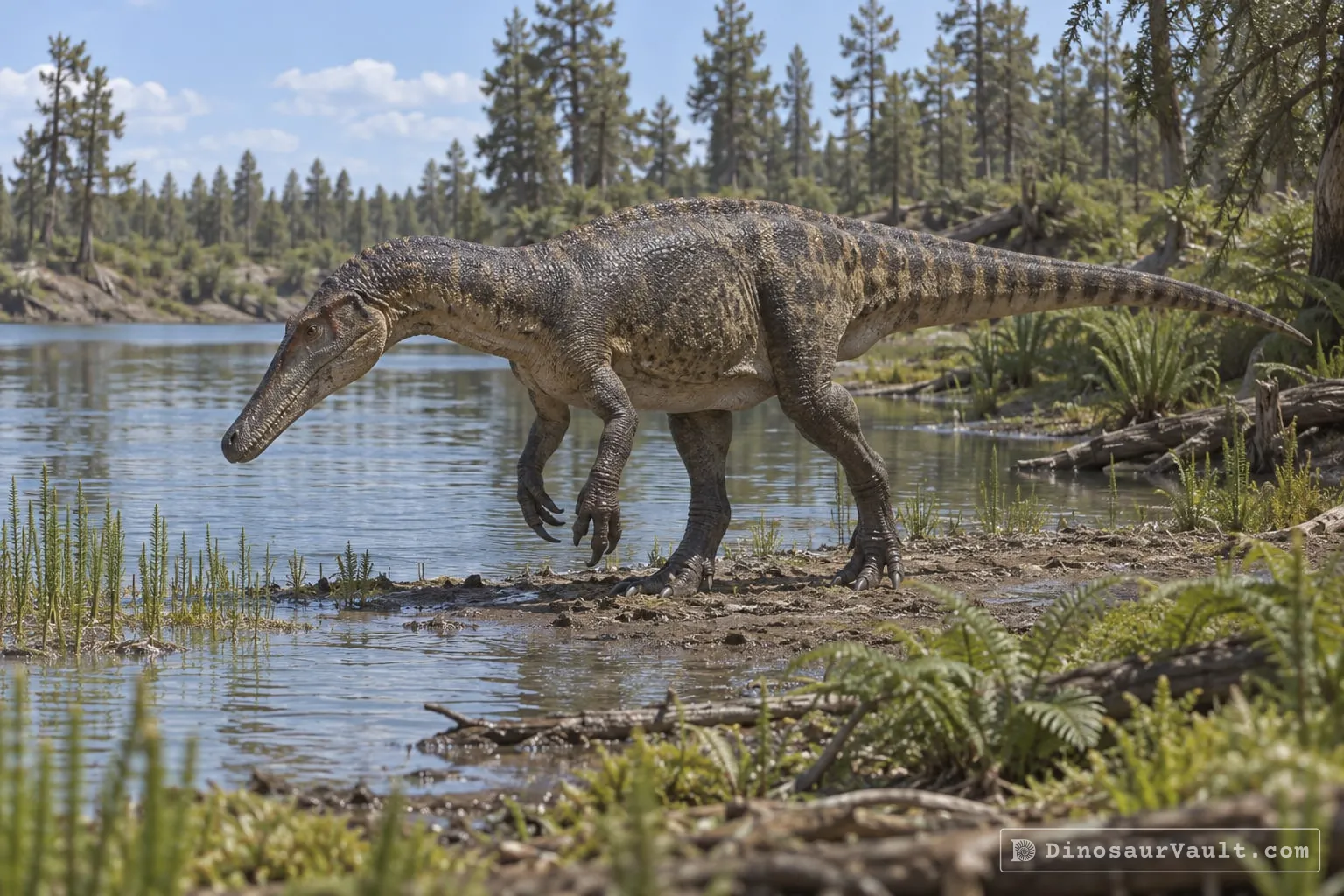
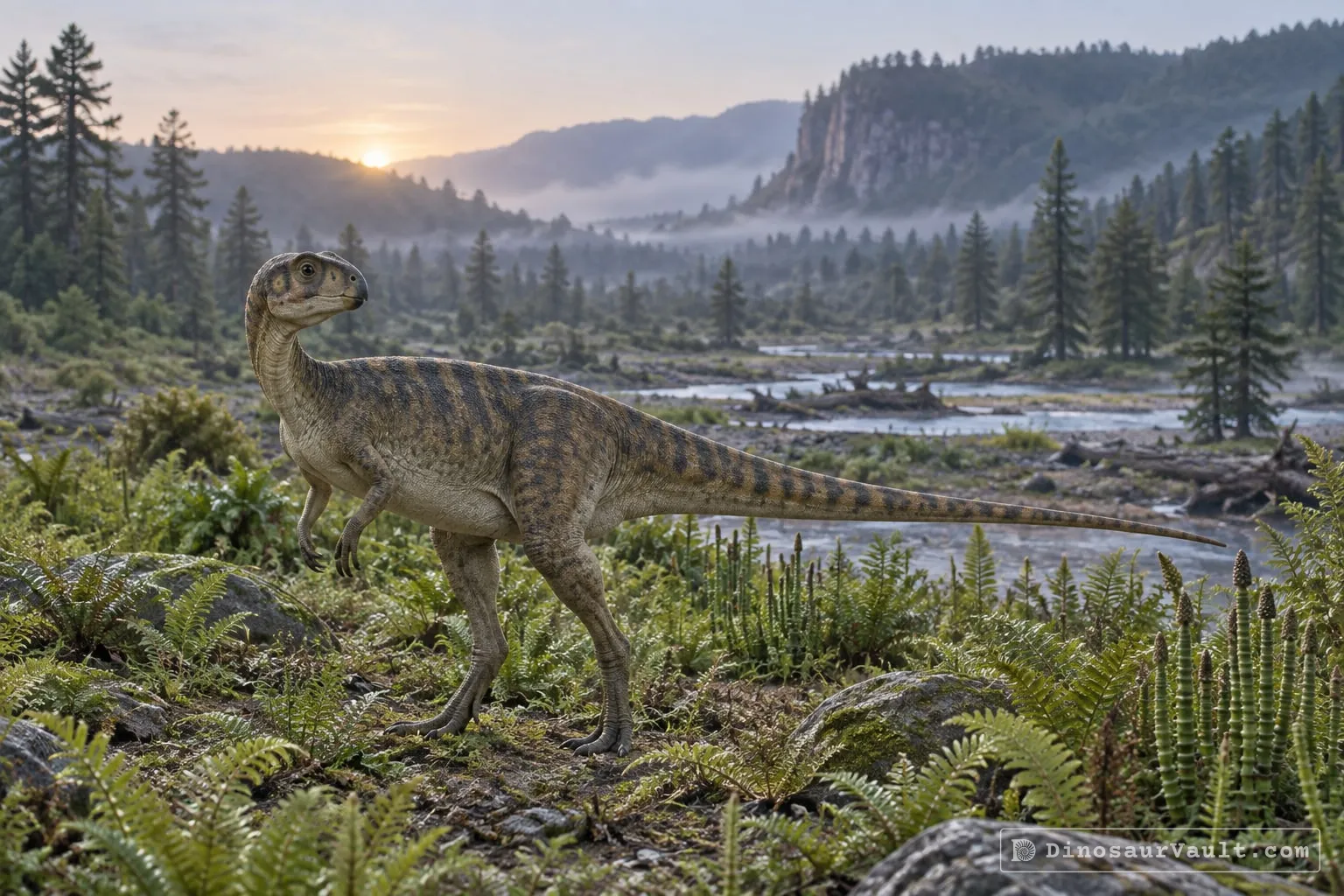
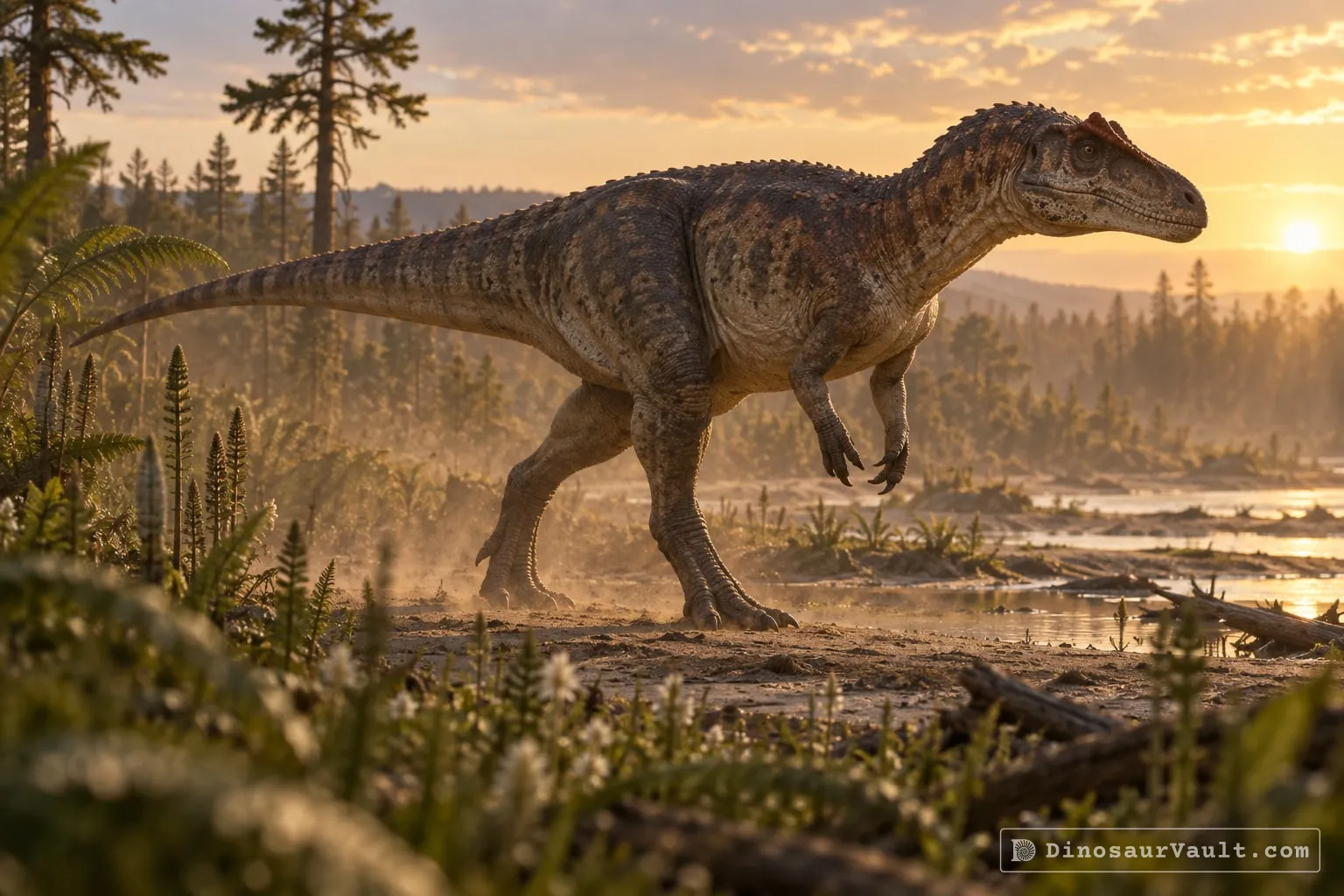
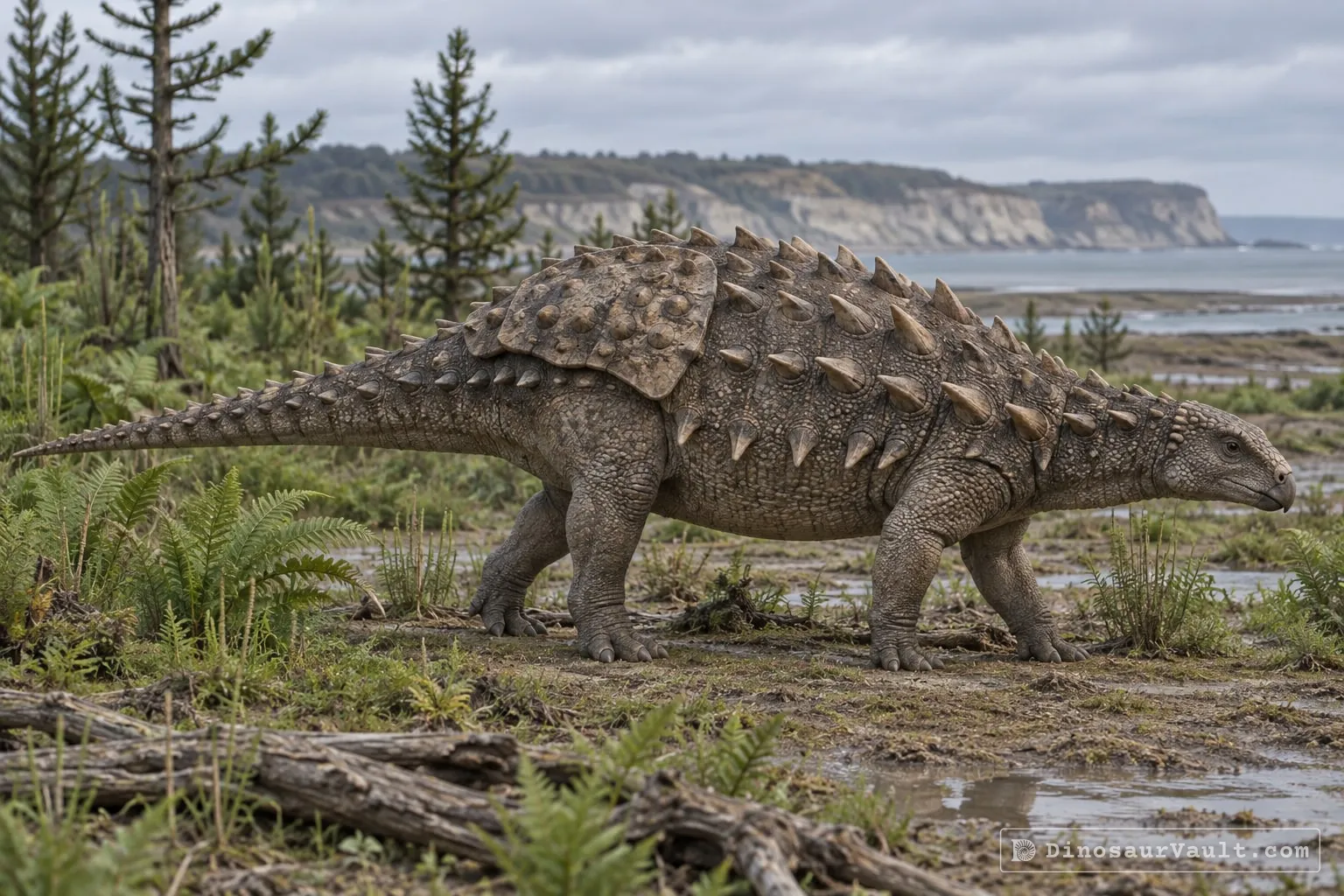
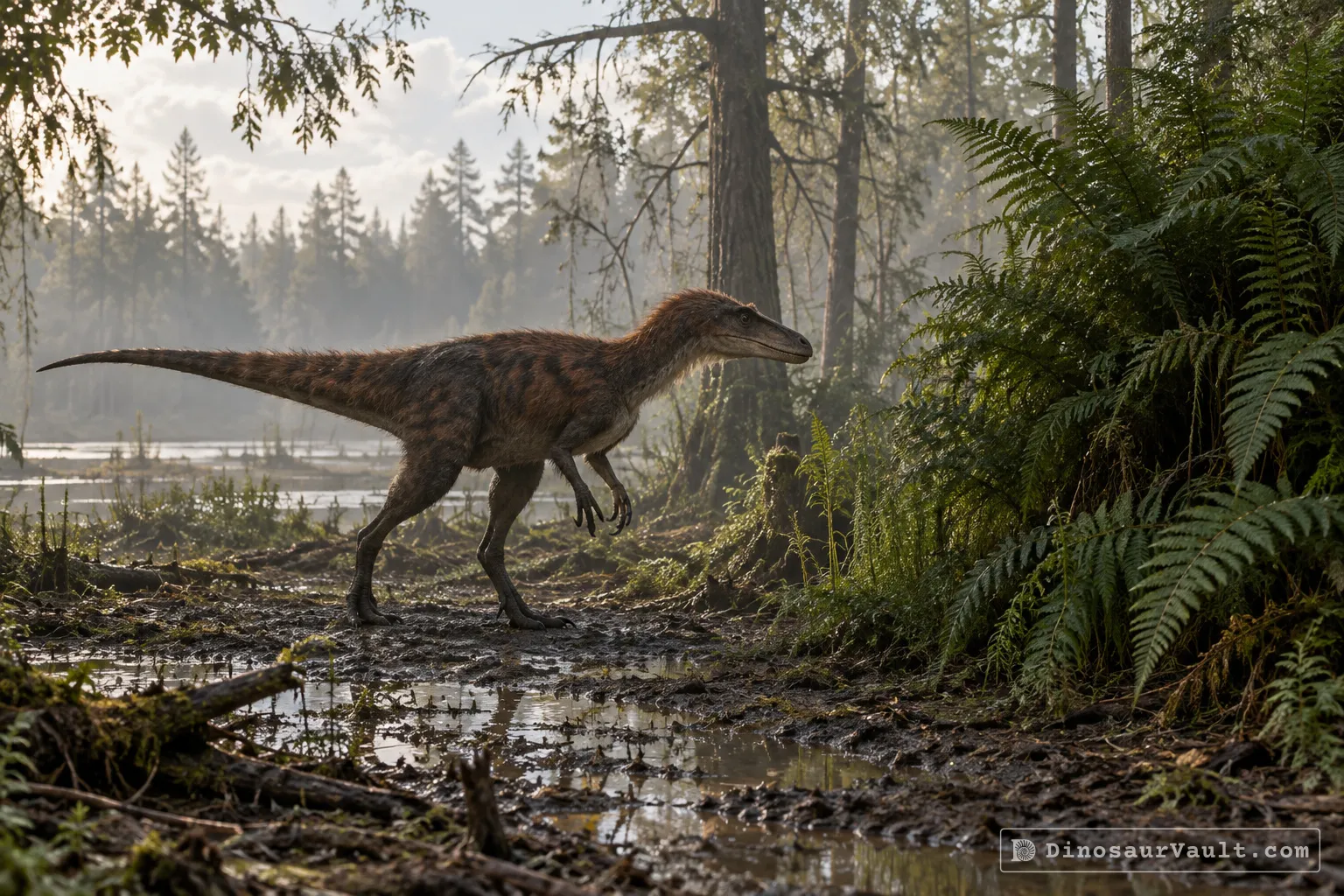
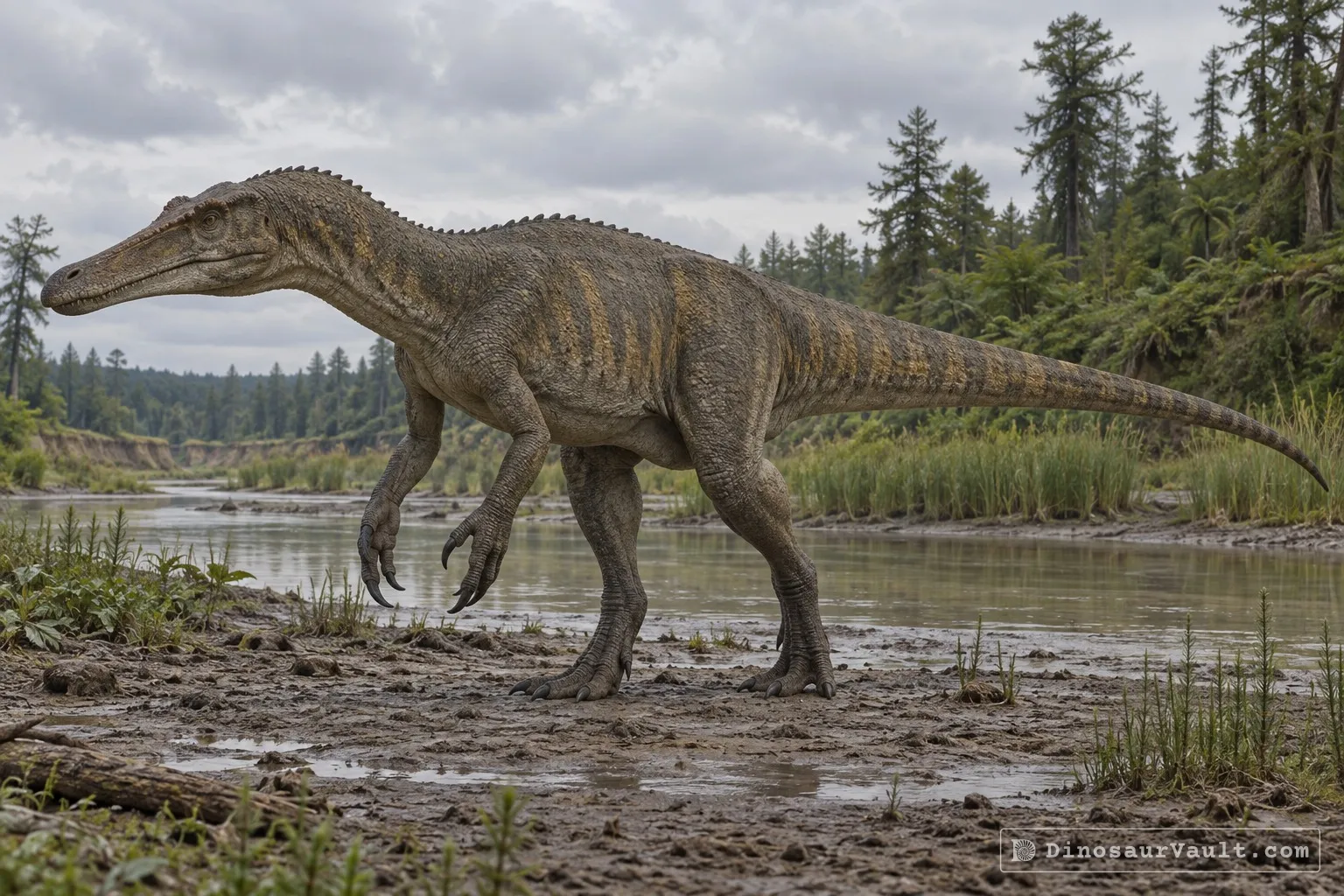


A rock formation can hold fossils laid down millions of years apart, so not every animal here met Comptonatus.
The evidence
The science behind Comptonatus
Which parts of the picture come from its own bones, and which come from its relatives.
From its own fossils
- The largely complete type skeleton preserves skull bones, teeth, the backbone and much of the limbs and hips. Its thumb claws are compressed and curved.
- The lower jaw has a straight bottom edge, and the teeth carry grooves along their main ridges.
- A broad, expanded blade projects from the front of the pelvis.
Borrowed from relatives
- Much of its body is known from its own bones. Iguanodon supplies comparisons for the missing beaked front of the skull and finger tips.
- Some hand bones were positioned using Mantellisaurus as a model.
Still unknown
- The shape of the missing front of its skull and its skin color and pattern.
- Why the front blade of its pelvis was so broad.
- Whether it cared for its young.
Discovery timeline
- 2010Its worldSweetman & Insole
- 2021Same rocksLockwood, Martill & Maidment
- 2024Named itLockwood, Martill & Maidment
Key papers
The research behind what we know of Comptonatus
Its world
Explained how local floods swept plants and animal remains into deposits on a low river plain.
The plant debris beds of the Early Cretaceous (Barremian) Wessex Formation of the Isle of Wight, southern England: their genesis and palaeontological significance. Palaeogeography, Palaeoclimatology, Palaeoecology 292: 409-424
Read the paper : The plant debris beds of the Early Cretaceous (Barremian) Wessex Formation of the Isle of Wight, southern England: their genesis and palaeontological significance (opens in a new tab)Same rocks
Named Brighstoneus and showed that the Wessex Formation held more kinds of large plant eaters than previously recognized.
A new hadrosauriform dinosaur from the Wessex Formation, Wealden Group (Early Cretaceous), of the Isle of Wight, southern England. Journal of Systematic Palaeontology 19: 847-888
Read the paper : A new hadrosauriform dinosaur from the Wessex Formation, Wealden Group (Early Cretaceous), of the Isle of Wight, southern England (opens in a new tab)Named it
Described a largely complete skeleton whose skull, teeth and broad hip blade distinguish it from other plant eaters in the Wessex Formation.
Comptonatus chasei , a new iguanodontian dinosaur from the Lower Cretaceous Wessex Formation of the Isle of Wight, southern England. Journal of Systematic Palaeontology 22
Read the paper : Comptonatus chasei , a new iguanodontian dinosaur from the Lower Cretaceous Wessex Formation of the Isle of Wight, southern England (opens in a new tab)
Close relatives
Other members of Hadrosauriformes


Sources: Wikidata