Brighstoneus
Type species Brighstoneus simmondsi
- Lived
- 126 to 121 million years ago, Early Cretaceous
- Diet
- Herbivore
- Group
- Ornithopods
- Found in
- United Kingdom
- Named by
- Lockwood et al. 2021
Where its fossils were found
The evidence
Today

125 million years ago
Habitat
A floodplain crossed by rivers in what is now England. Other dinosaurs in the Wessex Formation include Mantellisaurus, Baryonyx and Neovenator.
Field notes
About Brighstoneus
What it was like
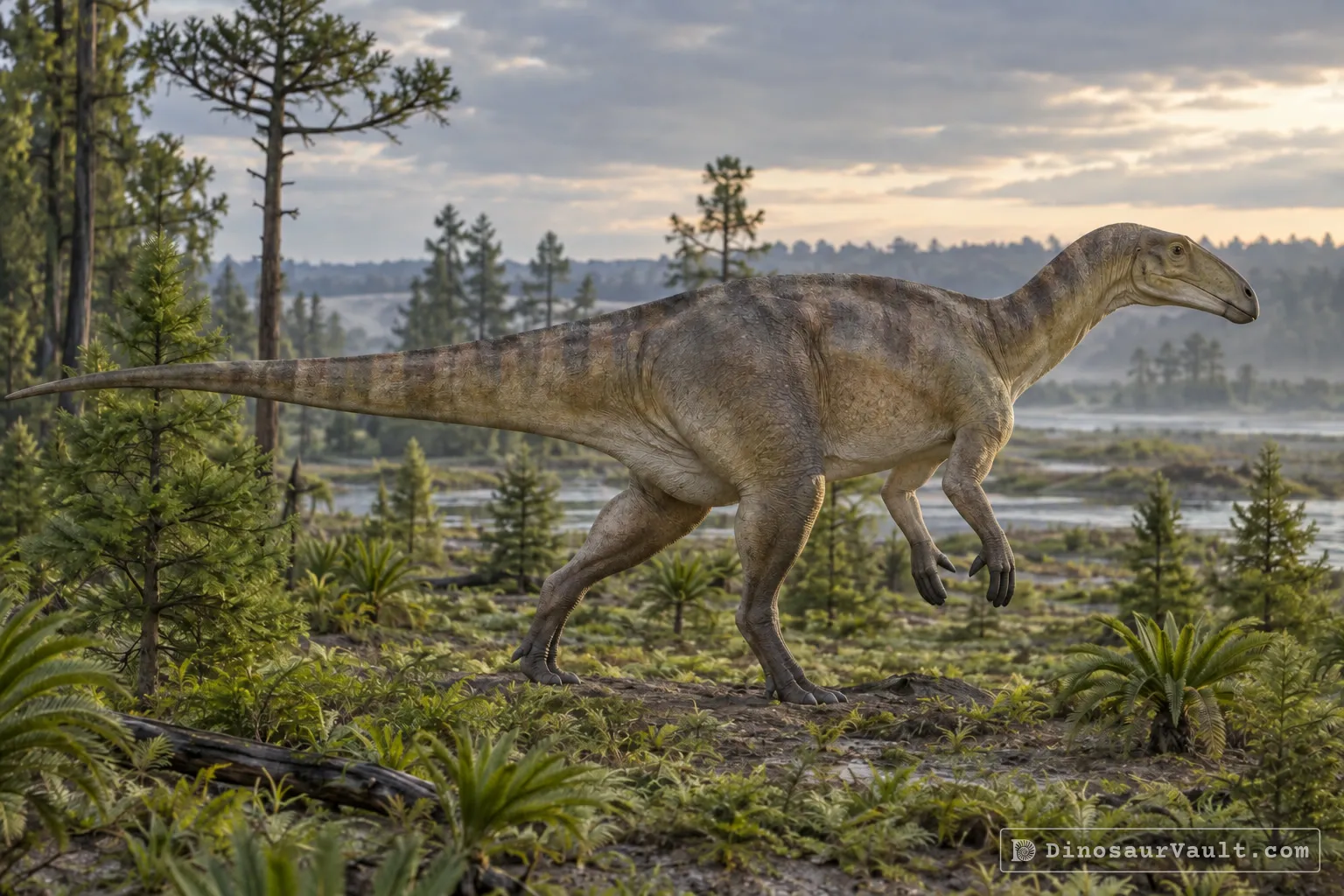
Brighstoneus was a plant eater related to Iguanodon, with a bulbous bump on its nose. It is known from a partial skeleton, including skull bones and teeth.
Its world
It lived about 126 to 121 million years ago, in the Early Cretaceous, in what is now England. Its bones come from the Wessex Formation, where it lived alongside the plant eater Mantellisaurus, the fish-eating Baryonyx and the predators Neovenator and Eotyrannus.
How it was found
Lockwood and colleagues named it in 2021. The type species is Brighstoneus simmondsi. Its bones had long been stored in a museum as another genus. It is named after a village near where it was found.
Field gallery
More views of Brighstoneus
Scenes reconstructed from the available fossil evidence.
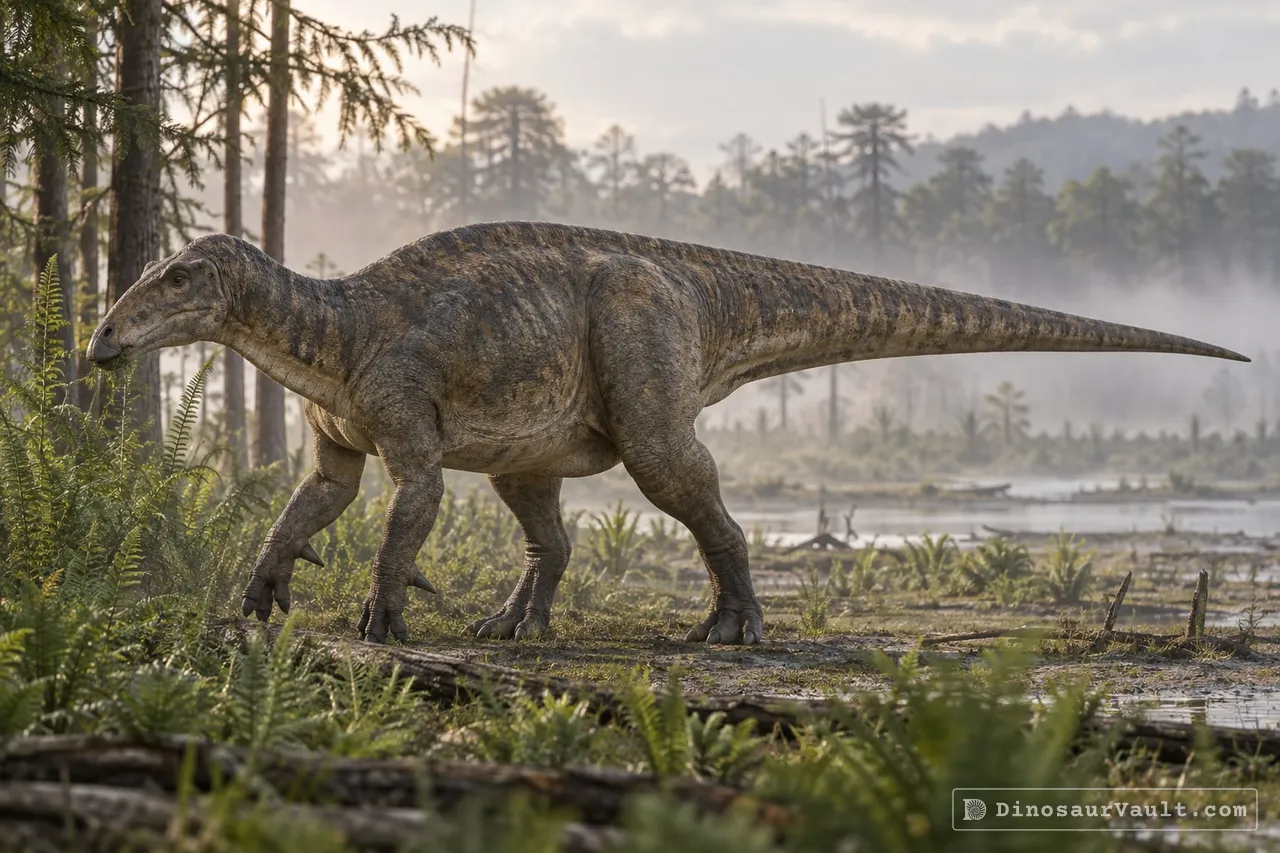
1 of 3
Lived alongside
Found in the same rock formations
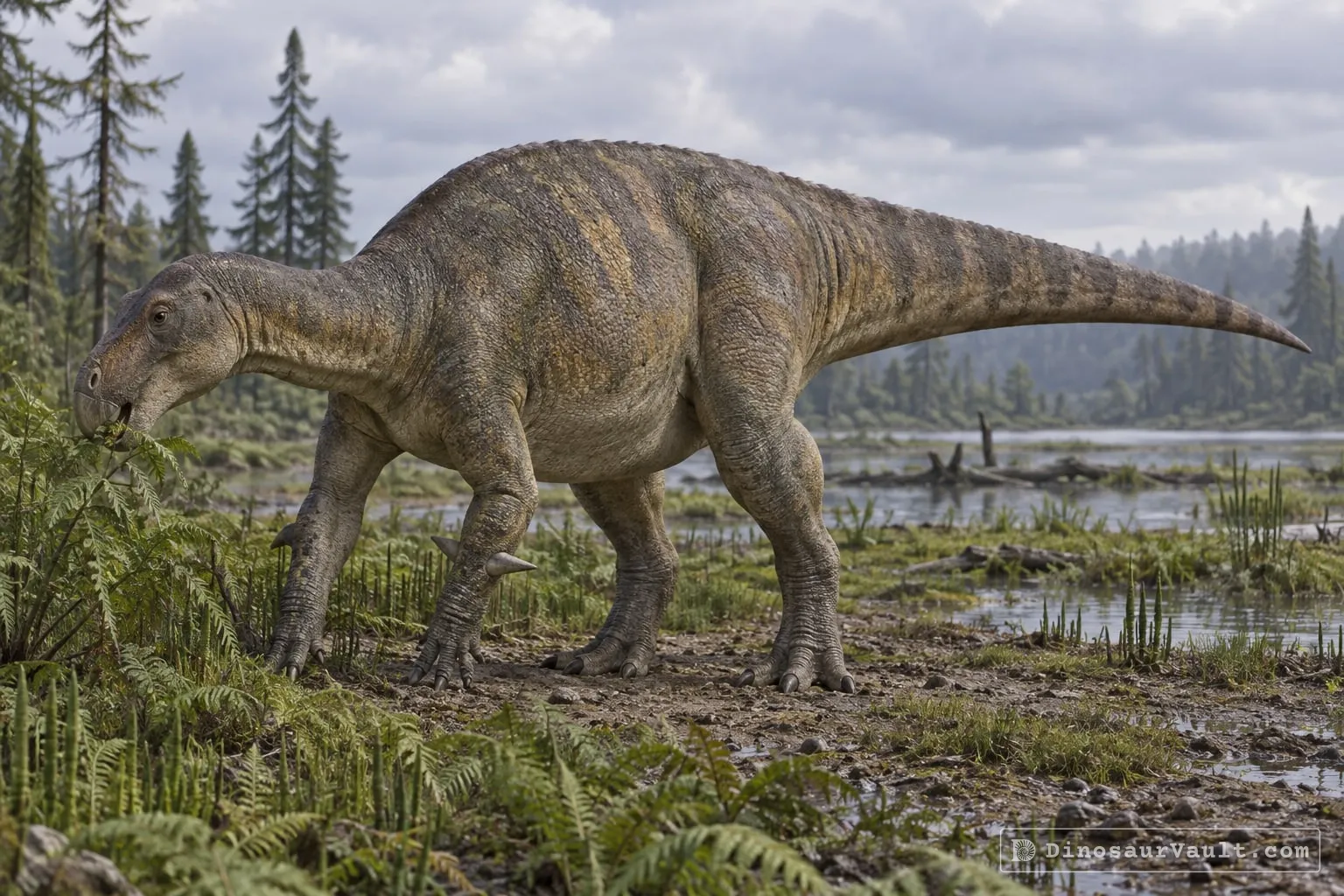
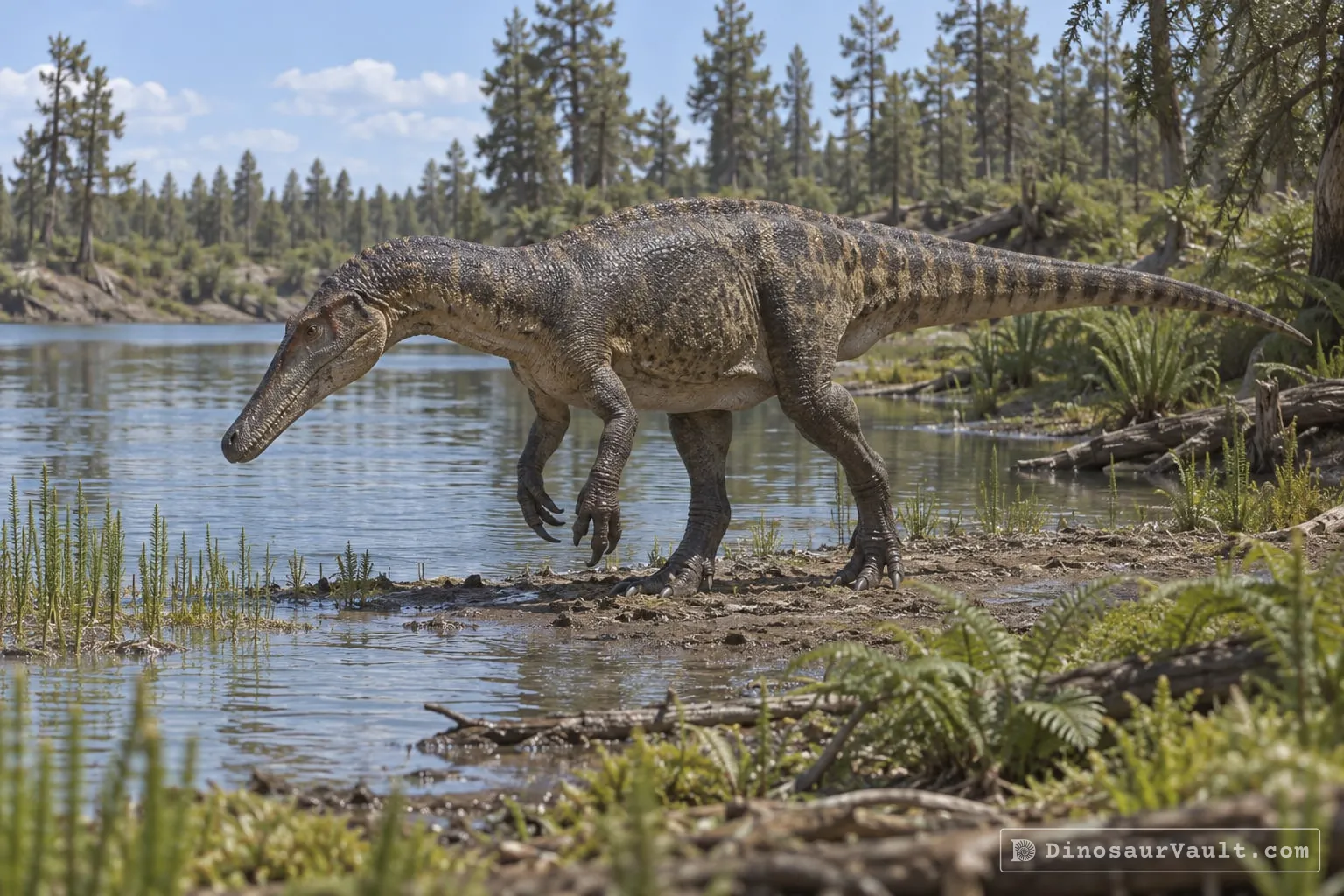
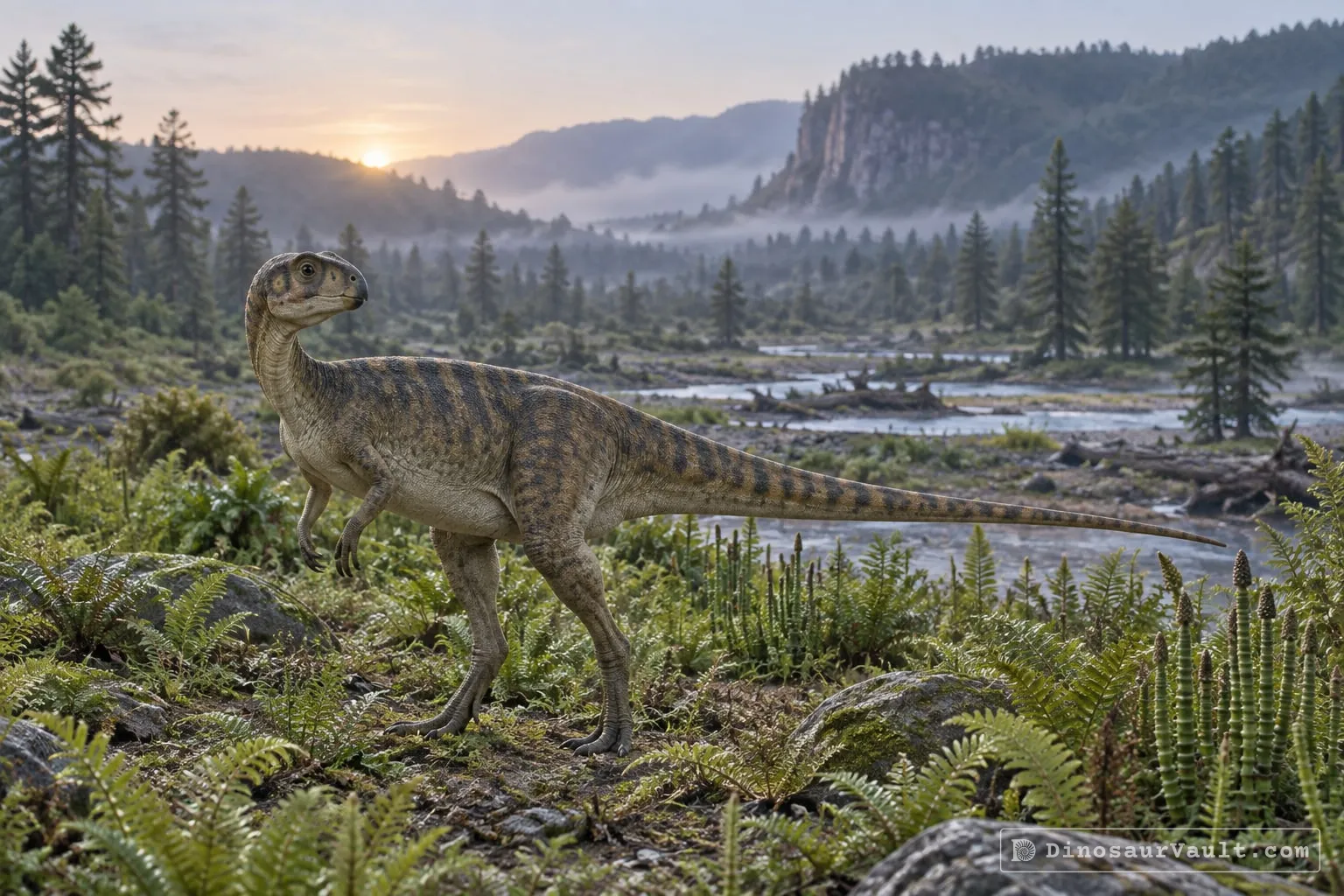
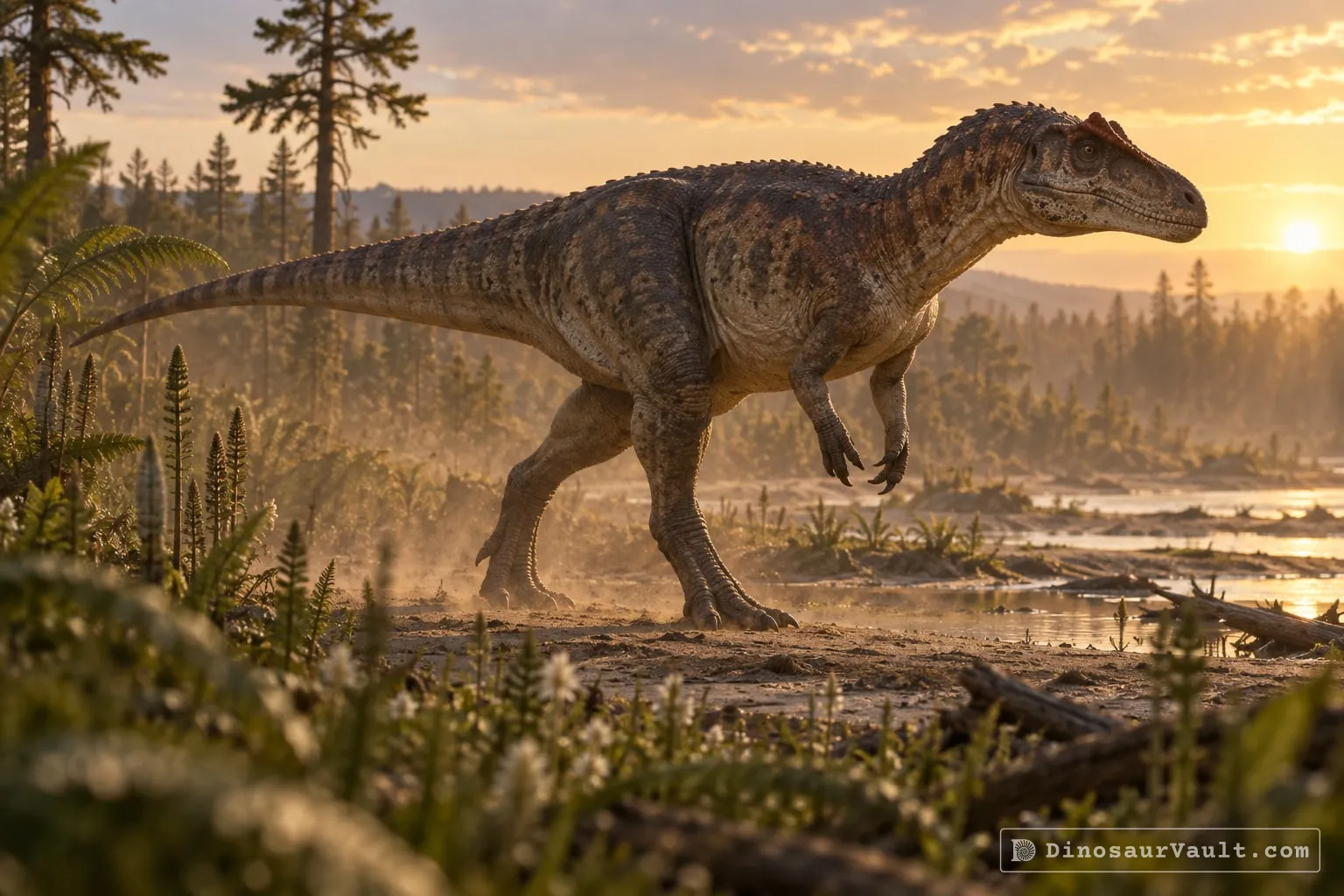
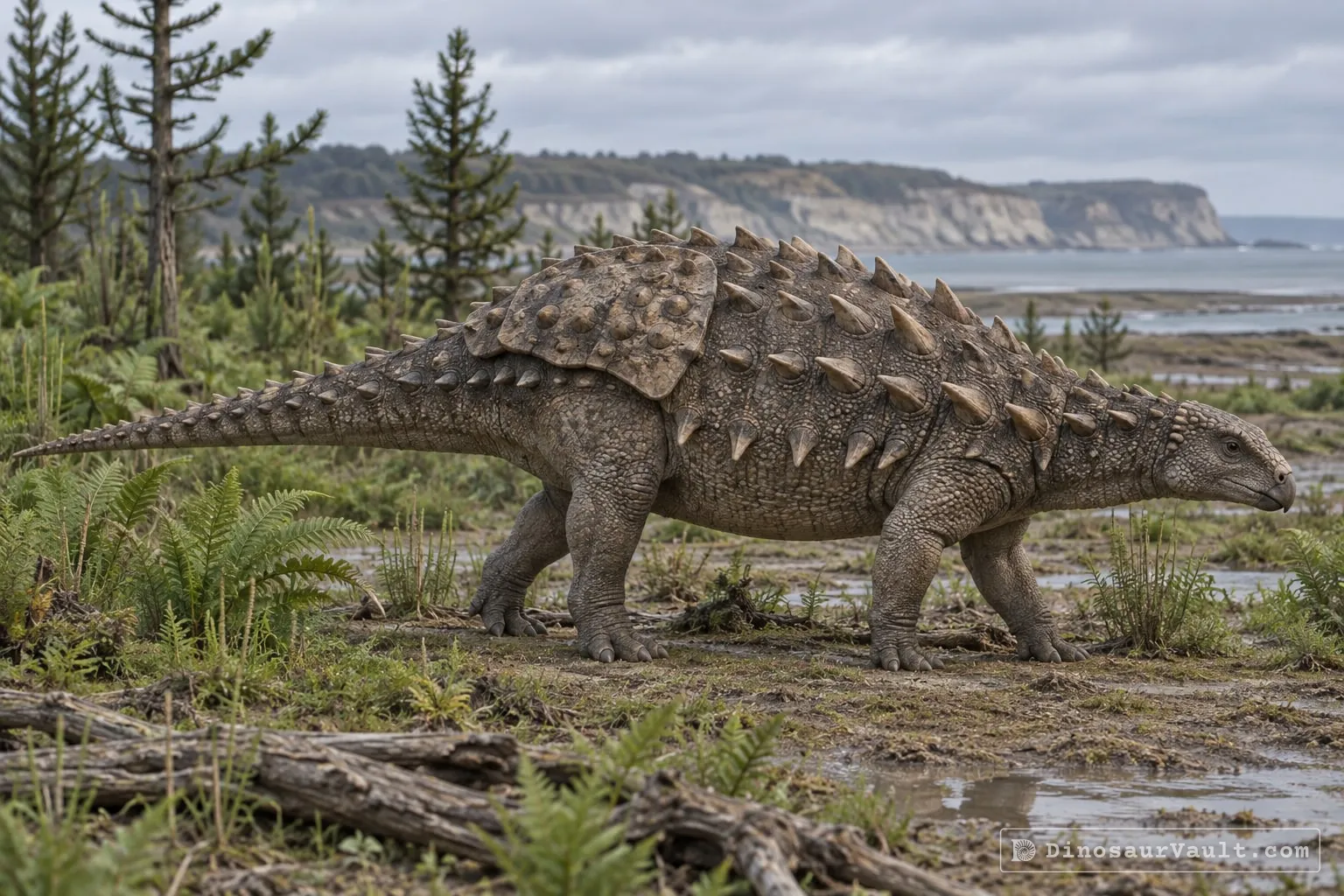
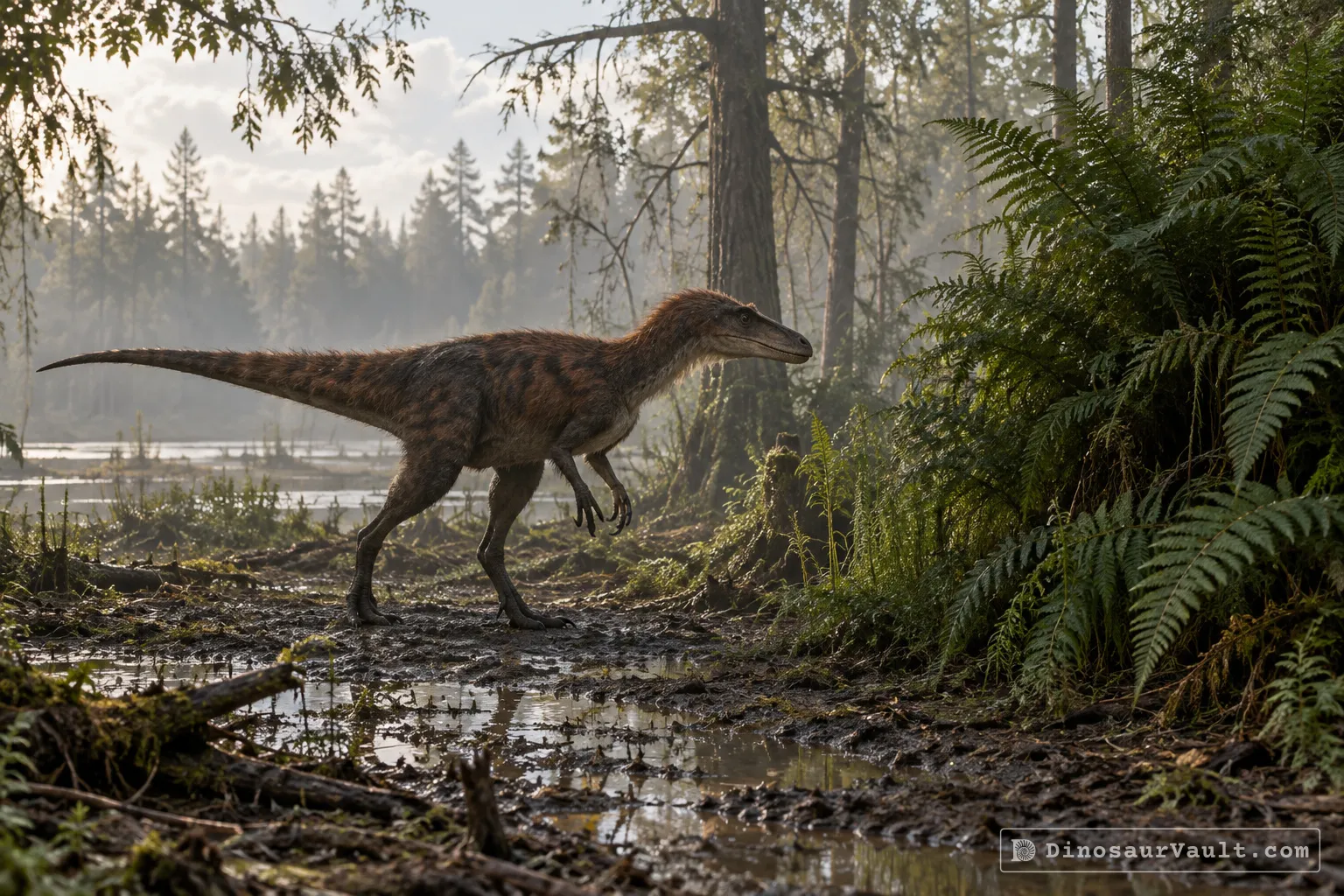
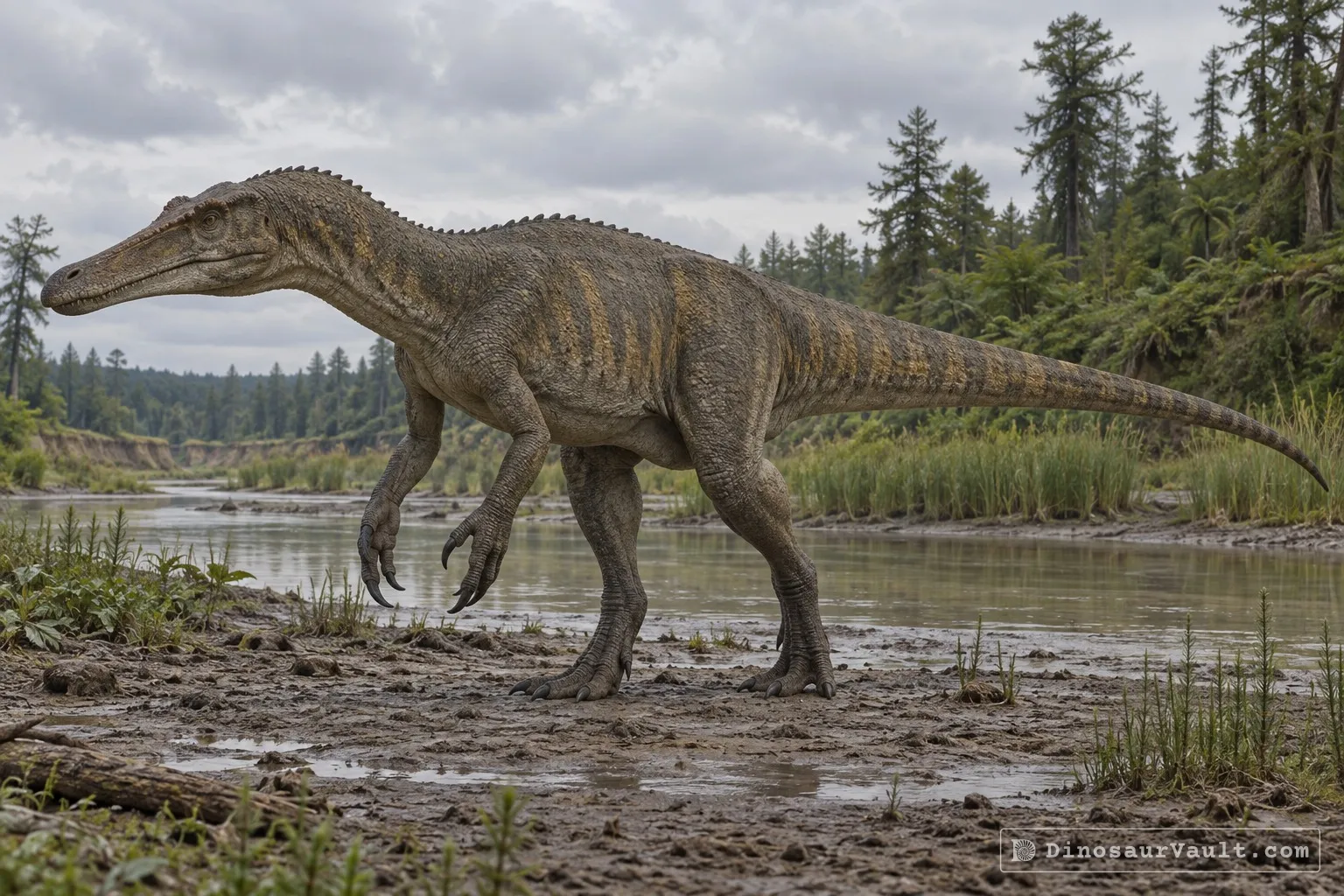


A rock formation can hold fossils laid down millions of years apart, so not every animal here met Brighstoneus.
The evidence
The science behind Brighstoneus
Which parts of the picture come from its own bones, and which come from its relatives.
From its own fossils
- A partial skeleton preserves skull bones, teeth, vertebrae and parts of the hips.
- The nasal bone forms a rounded bulge above the snout.
- Its upper teeth have a main ridge and smaller ridges on their inner faces.
Borrowed from relatives
- Missing limbs and parts of the tail can be restored by comparison with Iguanodon and Mantellisaurus.
Still unknown
- Its skin covering and color.
- Whether the bulge on its nose helped with display or making sounds.
- Its exact position among the relatives of duck-billed dinosaurs.
Discovery timeline
- 2021Named itLockwood, Martill & Maidment
- 2024Same rocksLockwood, Martill & Maidment
- 2025Family treeBertozzo et al.
Key papers
The research behind what we know of Brighstoneus
Named it
Identified a distinct plant eater through its rounded nose bulge and tooth ridges, adding to the variety of dinosaurs known from England.
A new hadrosauriform dinosaur from the Wessex Formation, Wealden Group (Early Cretaceous), of the Isle of Wight, southern England. Journal of Systematic Palaeontology 19: 847-888
Read the paper : A new hadrosauriform dinosaur from the Wessex Formation, Wealden Group (Early Cretaceous), of the Isle of Wight, southern England (opens in a new tab)Same rocks
Described a nearly complete Comptonatus skeleton and showed how its teeth, skull and hips differed from Brighstoneus and other local plant eaters.
Comptonatus chasei , a new iguanodontian dinosaur from the Lower Cretaceous Wessex Formation of the Isle of Wight, southern England. Journal of Systematic Palaeontology 22
Read the paper : Comptonatus chasei , a new iguanodontian dinosaur from the Lower Cretaceous Wessex Formation of the Isle of Wight, southern England (opens in a new tab)Family tree
Placed Brighstoneus, Comptonatus and Cariocecus together on an early branch of the duckbill family tree.
Cariocecus bocagei , a new basal hadrosauroid from the Lower Cretaceous of Portugal. Journal of Systematic Palaeontology 23
Read the paper : Cariocecus bocagei , a new basal hadrosauroid from the Lower Cretaceous of Portugal (opens in a new tab)
Close relatives
Other members of Hadrosauriformes


Sources: Wikidata