Epidendrosaurus
"on the tree lizard"
- Lived
- 165 to 162 million years ago, Middle Jurassic
- Diet
- Carnivore
- Group
- Theropods, Scansoriopterygidae
- Found in
- China
- Named by
- Zhang et al. 2002
Where its fossils were found
The evidence
Today

165 million years ago
Habitat
It probably lived among trees in Jurassic China. Its region was also home to Anchiornis, Epidexipteryx and Yi.
Field notes
About Epidendrosaurus
What it was like
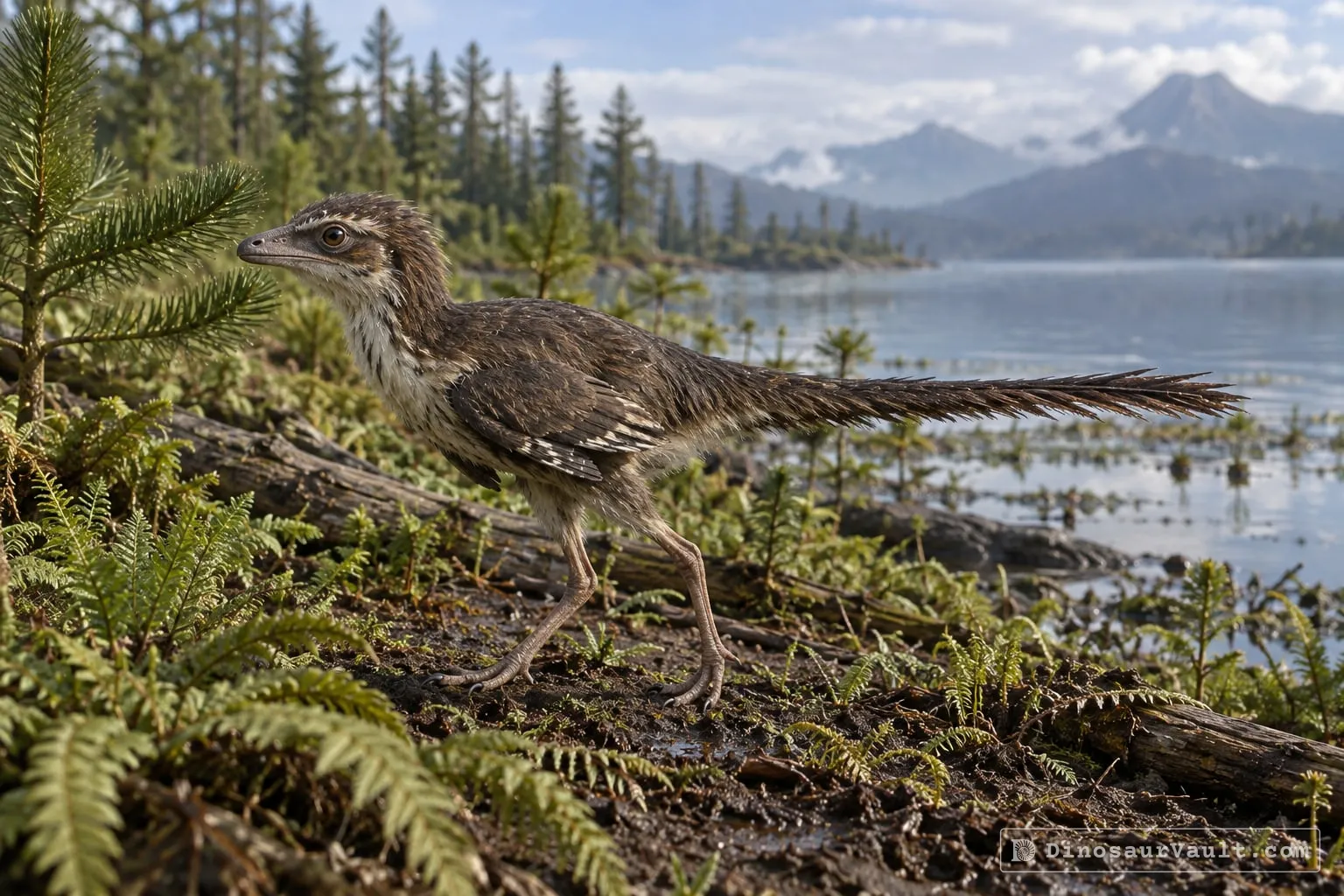
Epidendrosaurus was a tiny feathered dinosaur, known from a skeleton of a very young animal. Its third finger was very long, much longer than the others, and it may have helped it climb trees or hold up a wing of skin.
Many scientists think it is the same animal as Scansoriopteryx.
Its world
It lived in the Middle Jurassic in what is now northeastern China. Its skeleton comes from the Tiaojishan Formation, where it shared the land with Anchiornis, Epidexipteryx and Yi.
How it was found
Zhang and colleagues named Epidendrosaurus in 2002, from a single find.
Field gallery
More views of Epidendrosaurus
Scenes reconstructed from the available fossil evidence.
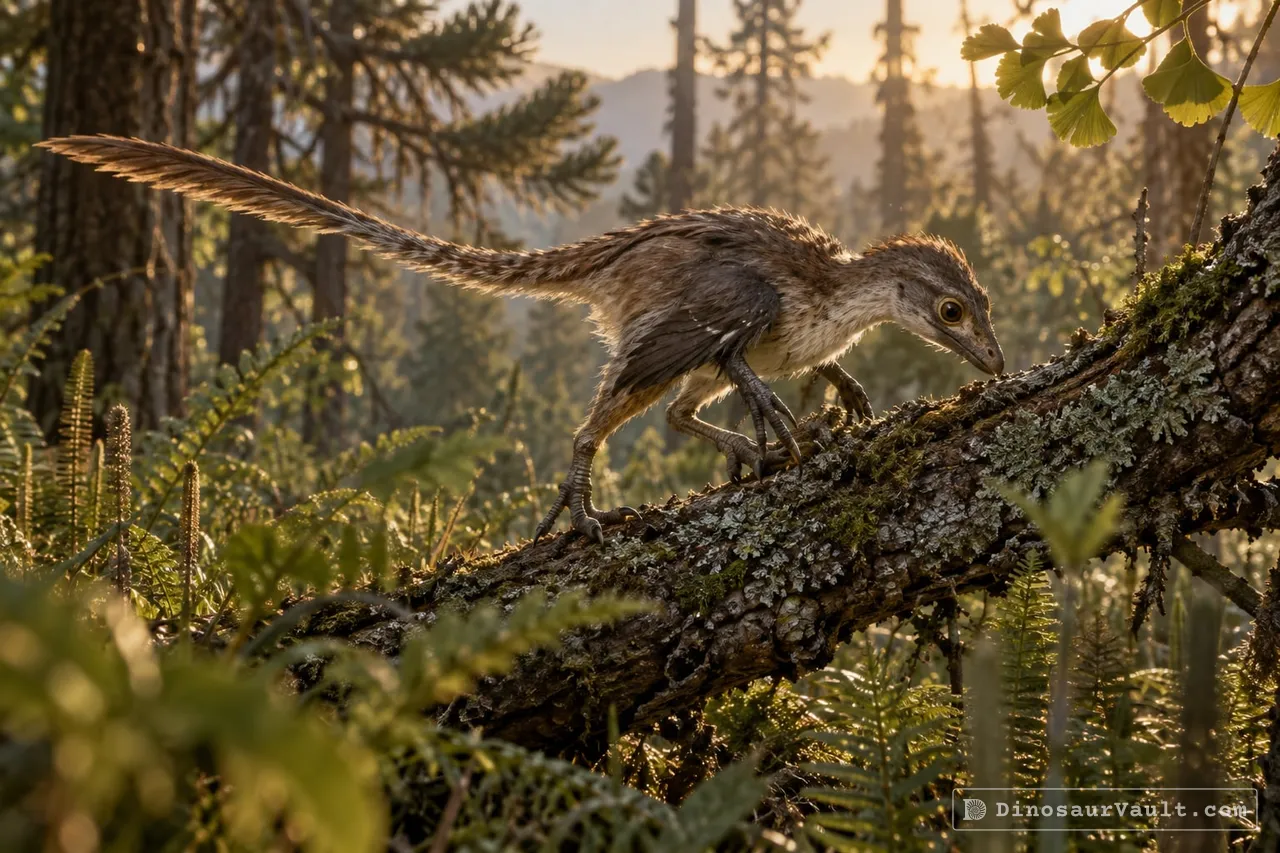
Lived alongside
Found in the same rock formations
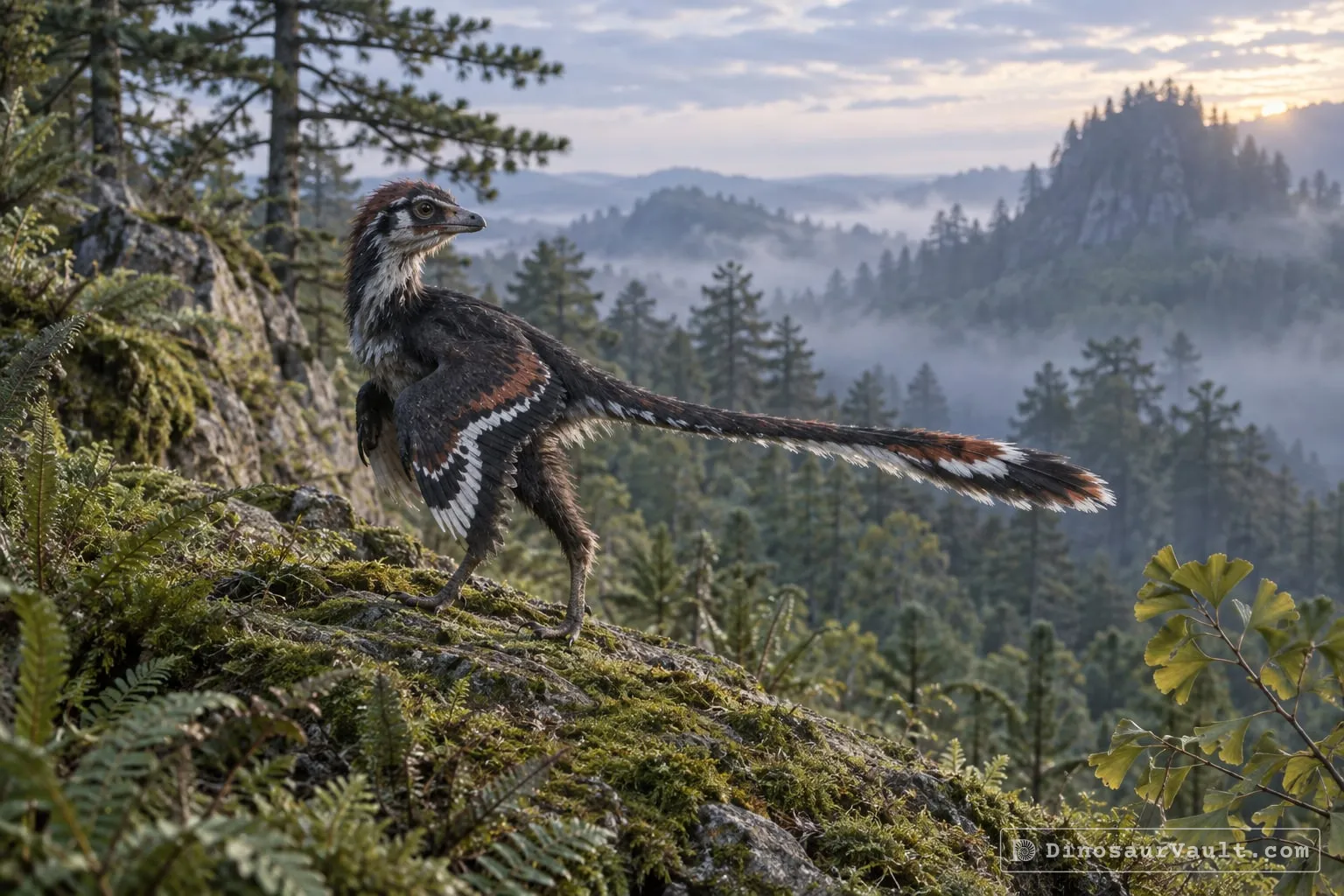
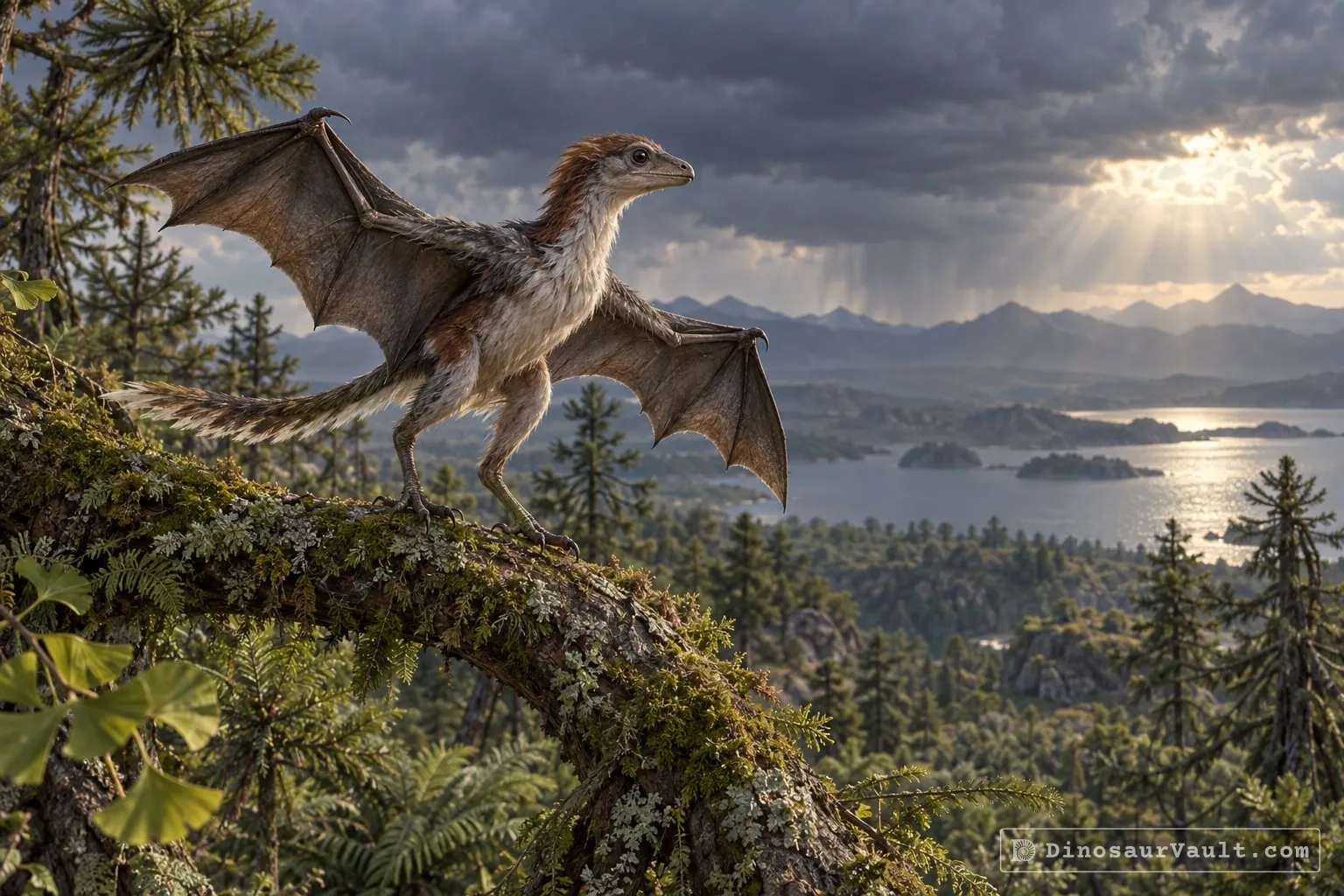
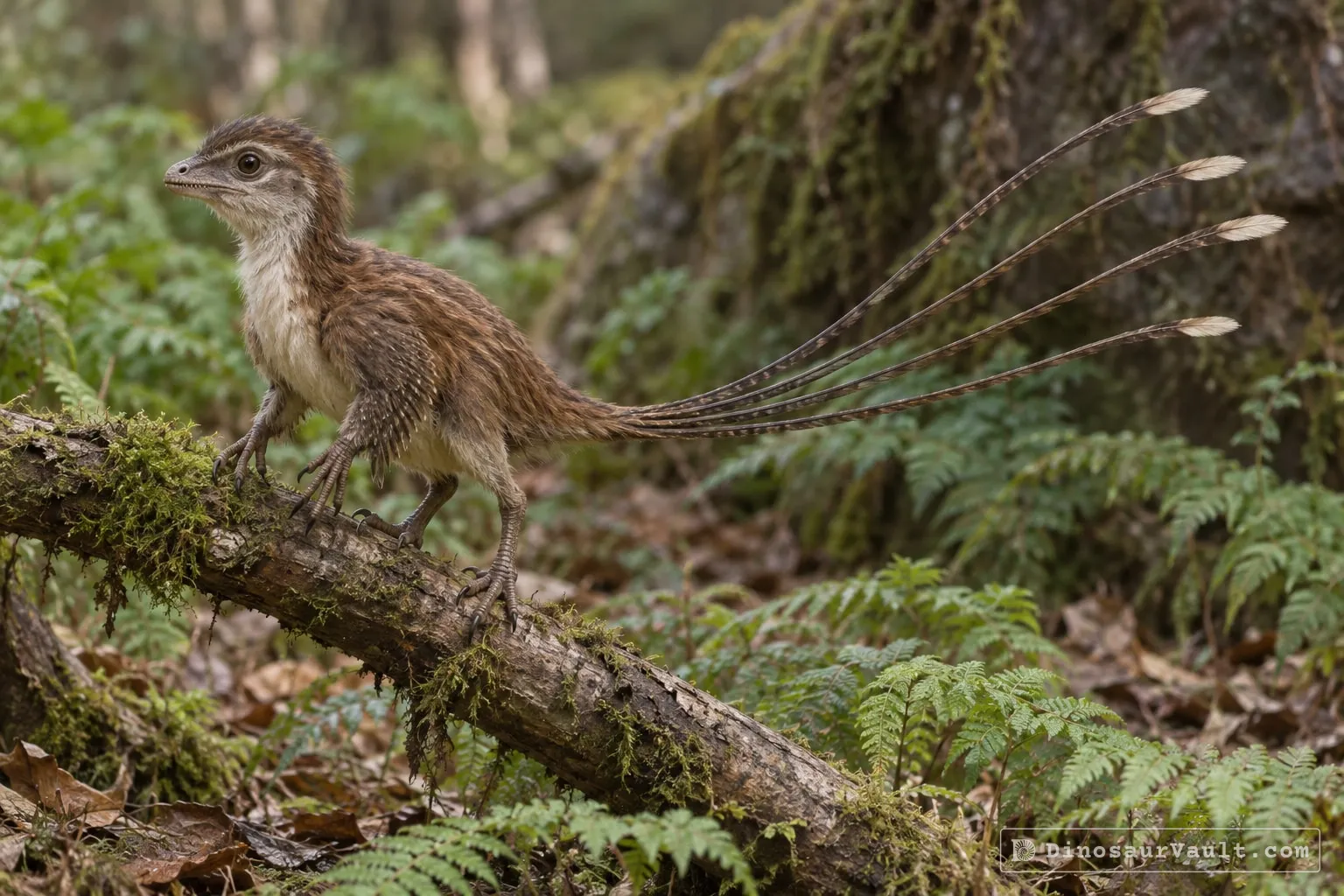
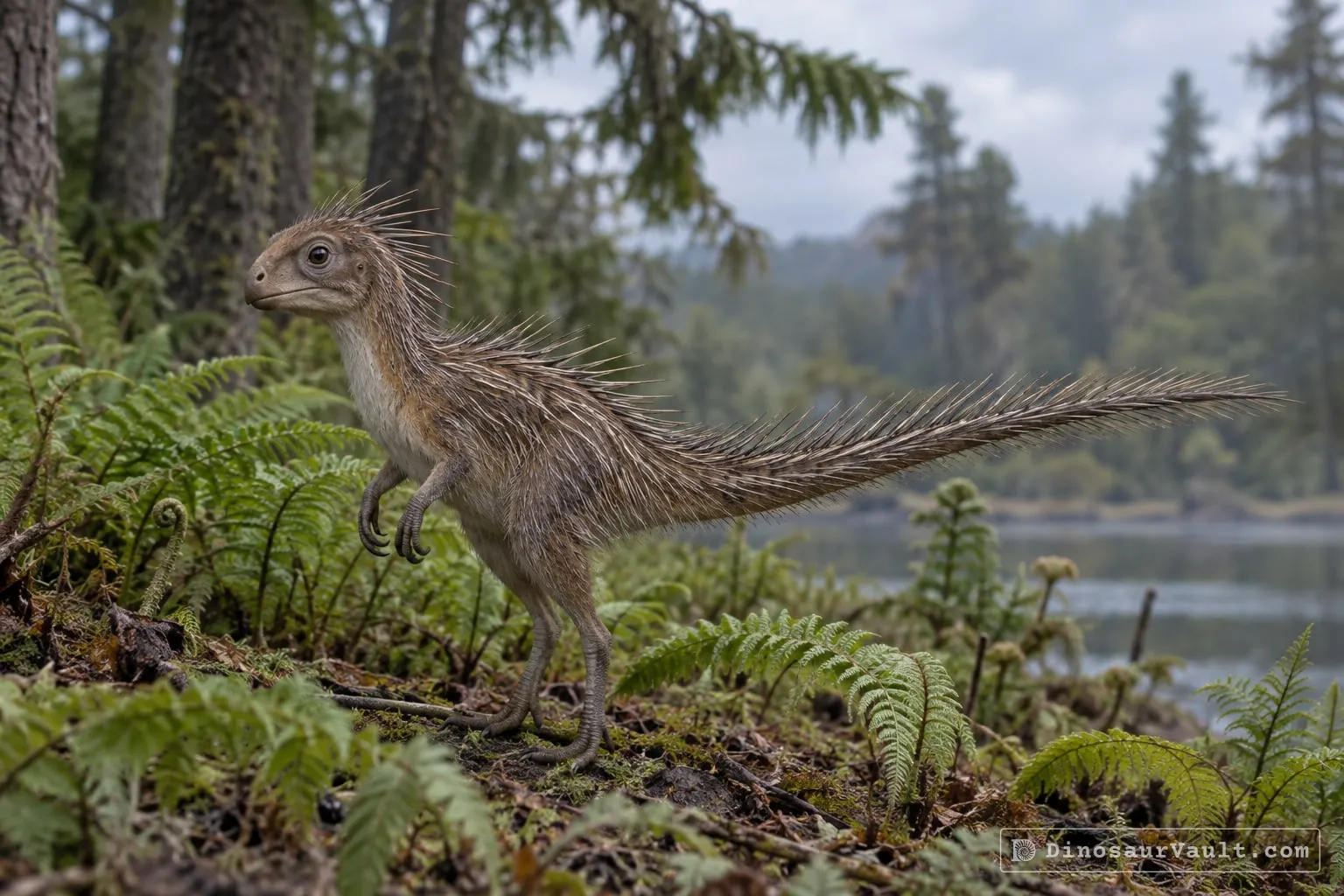
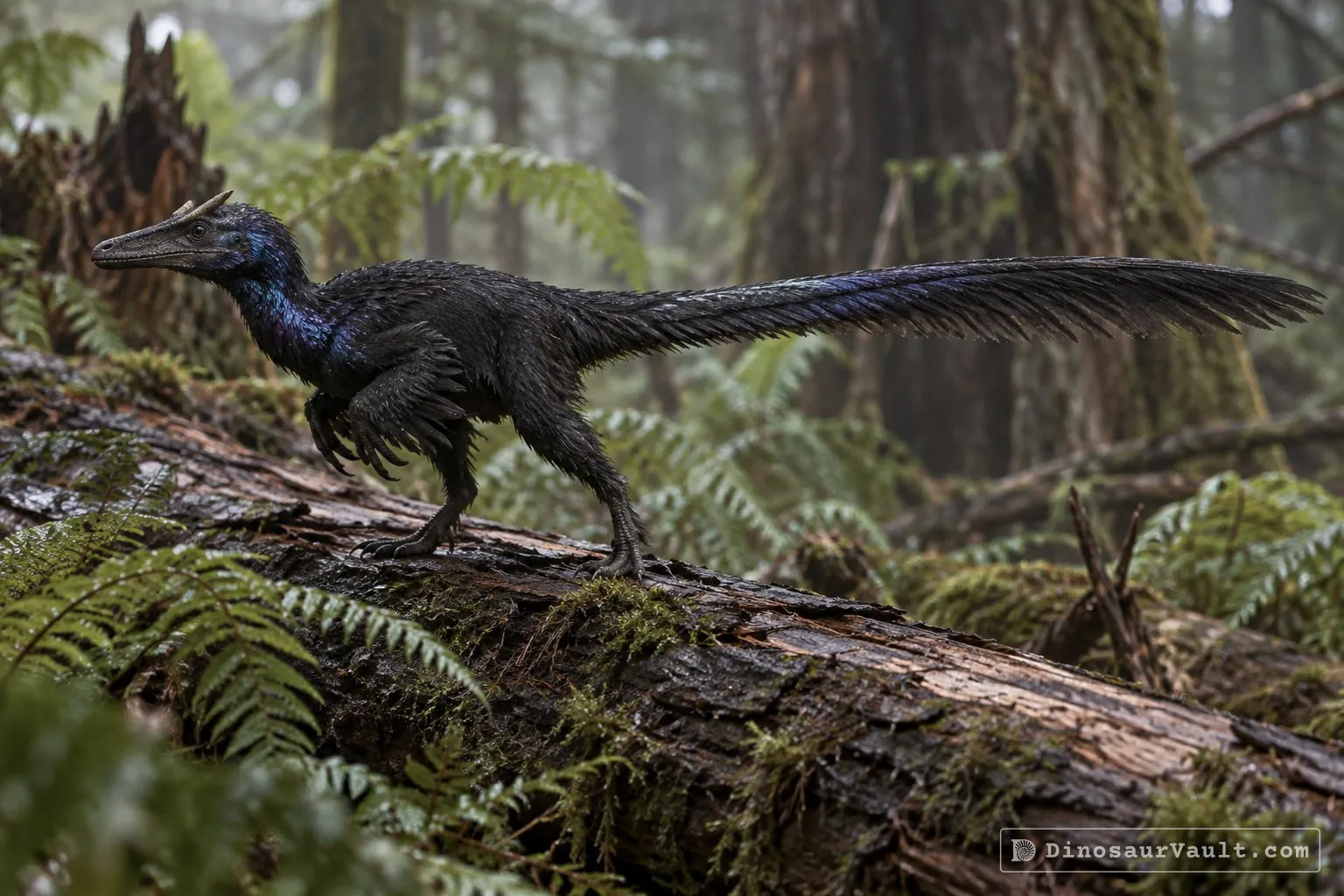
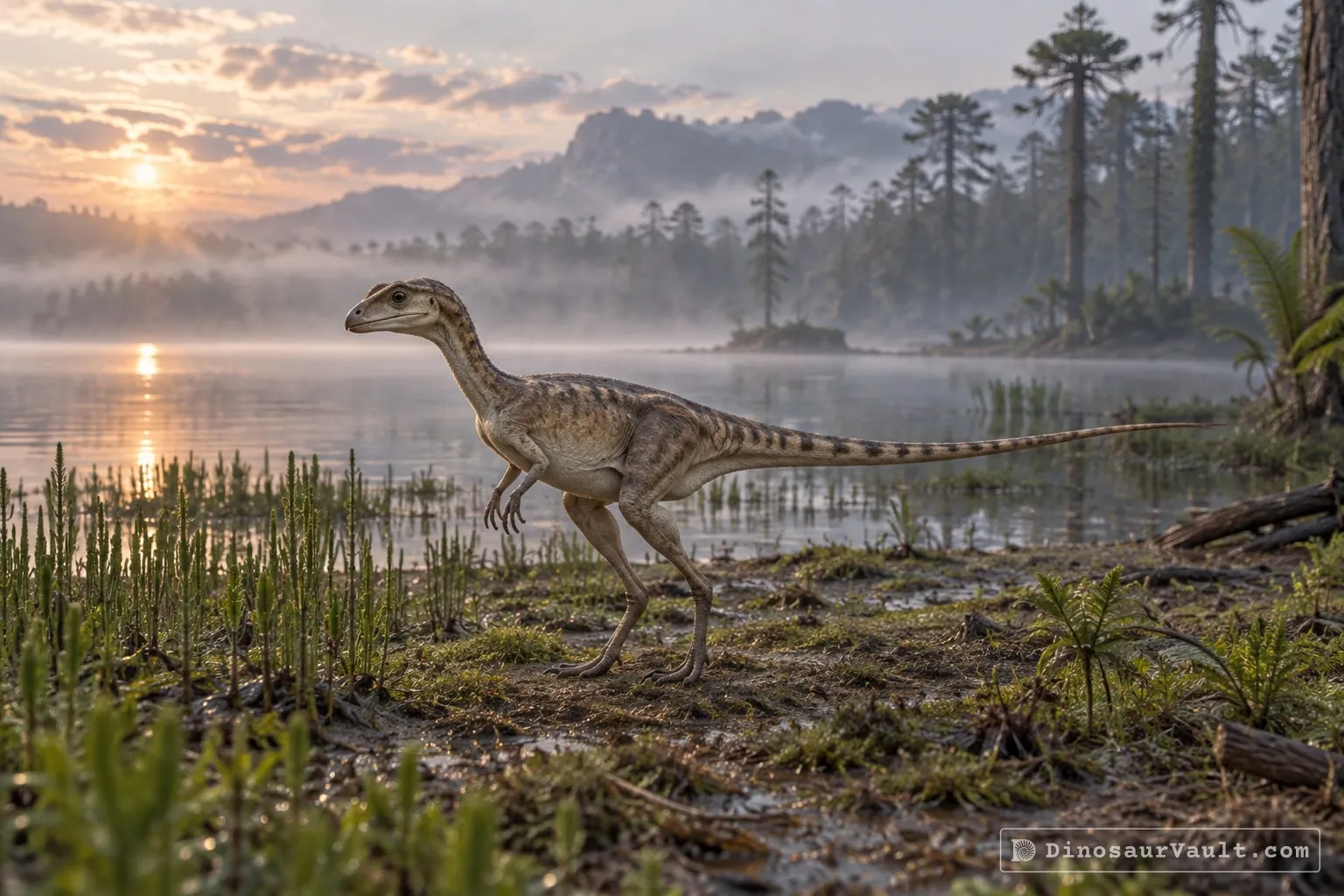
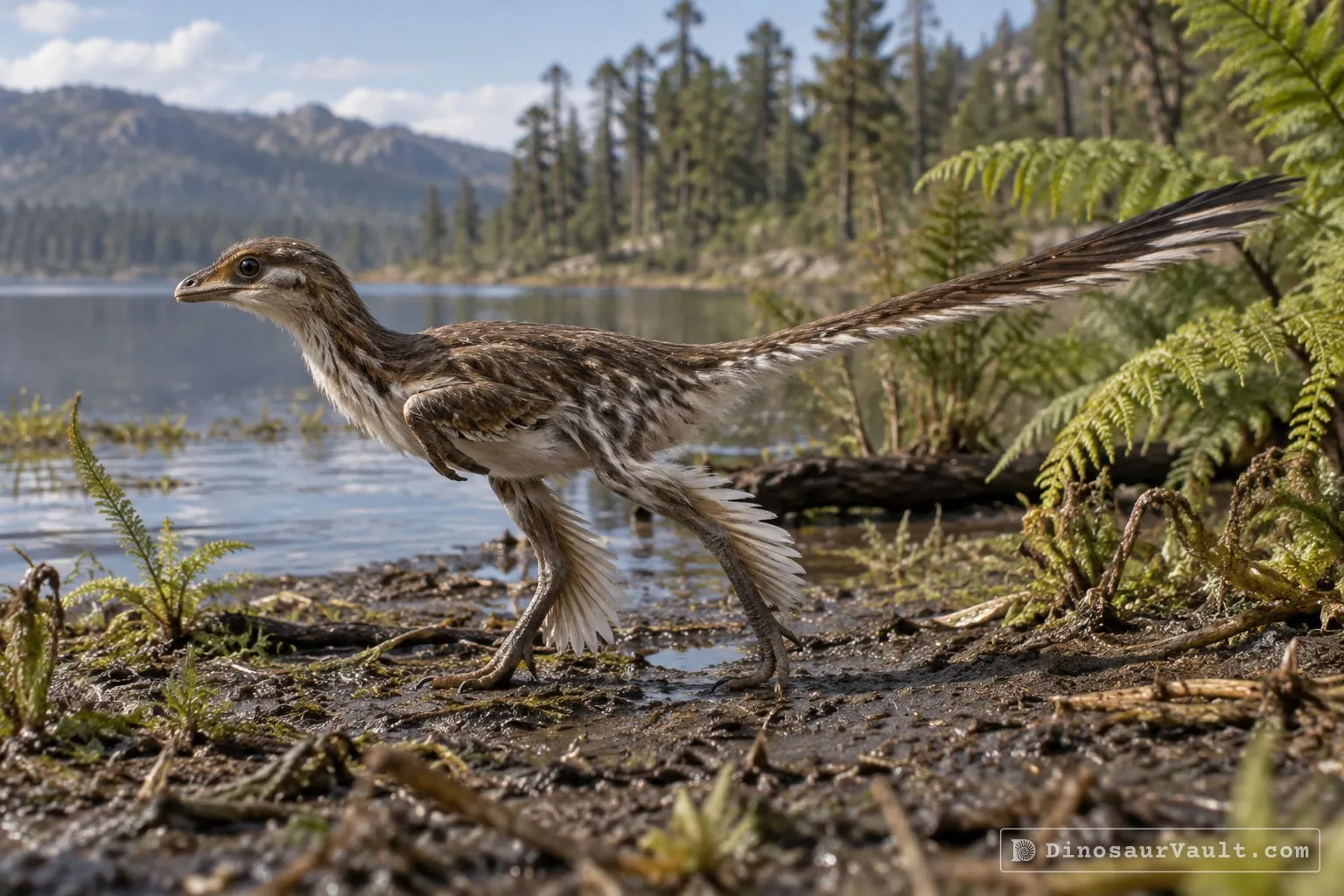


A rock formation can hold fossils laid down millions of years apart, so not every animal here met Epidendrosaurus.
The evidence
The science behind Epidendrosaurus
Which parts of the picture come from its own bones, and which come from its relatives.
From its own fossils
- The original skeleton belongs to a very young animal.
- Its third finger is much longer than the other fingers.
Borrowed from relatives
- Yi and Ambopteryx show that close relatives had skin membranes supported by long fingers and extra wrist bones.
Still unknown
- Its adult size and proportions.
- Whether it had a wing membrane like Yi and Ambopteryx.
- How it used its unusually long finger.
Discovery timeline
- 2002Named itZhang et al.
- 2015Close relativeXu et al.
- 2019Close relativeWang et al.
Key papers
The research behind what we know of Epidendrosaurus
Named it
Described a juvenile skeleton with an unusually long third finger and interpreted it as a tree-dwelling dinosaur.
A juvenile coelurosaurian theropod from China indicates arboreal habits. Naturwissenschaften 89: 394-398
Read the paper : A juvenile coelurosaurian theropod from China indicates arboreal habits (opens in a new tab)Close relative
Described Yi with feathers, an extra rod-shaped wrist bone and preserved patches of a wing membrane.
A bizarre Jurassic maniraptoran theropod with preserved evidence of membranous wings. Nature 521: 70-73
Read the paper : A bizarre Jurassic maniraptoran theropod with preserved evidence of membranous wings (opens in a new tab)Close relative
Described Ambopteryx, another close relative with membranous wings, showing a different wing design from that of birds.
A new Jurassic scansoriopterygid and the loss of membranous wings in theropod dinosaurs. Nature 569: 256-259
Read the paper : A new Jurassic scansoriopterygid and the loss of membranous wings in theropod dinosaurs (opens in a new tab)
Close relatives
Other members of Scansoriopterygidae


Sources: Wikidata