Saurophaganax
SORE-oh-FAG-an-ax
"lizard-eating lord"
Type species Saurophaganax maximus
- Lived
- 152 to 143 million years ago, Late Jurassic
- Diet
- Carnivore
- Group
- Theropods, Allosauridae
- Found in
- United States
- Named by
- Chure 1995
Where its fossils were found
The evidence
Today

150 million years ago
Habitat
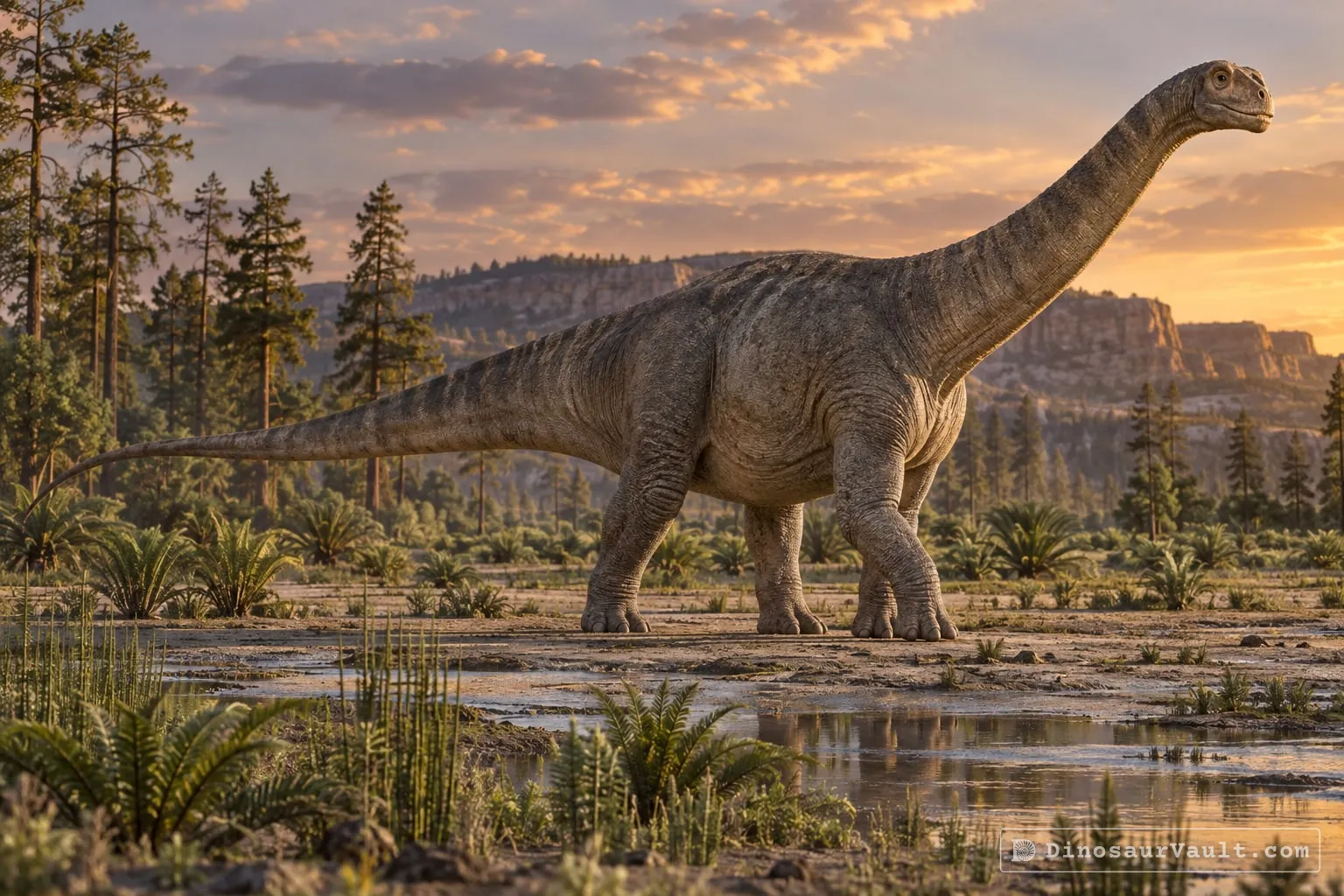
The Morrison Formation records river floodplains in Oklahoma, with conifer woodland and fern-covered ground. Allosaurus, Stegosaurus and Diplodocus lived in this region.
Field notes
About Saurophaganax
What it was like
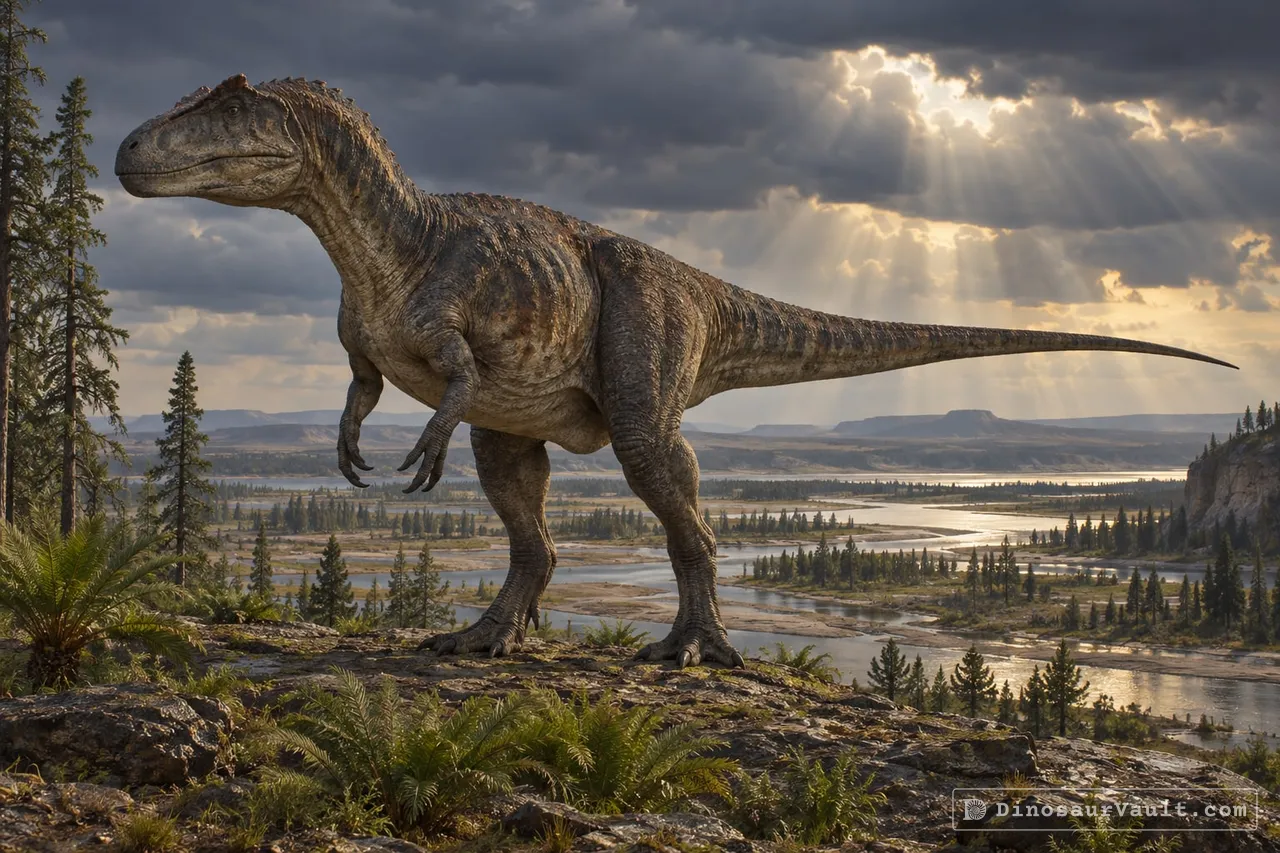
Saurophaganax is a disputed name based on bones from the Morrison Formation. A recent restudy found that the material combined remains of Allosaurus with sauropod bones, so it cannot support a body-length estimate for a separate giant predator.
The bone that defines the name could not be confidently identified as a theropod. Other predatory dinosaur bones formerly assigned to it have been described as a species of Allosaurus.
Its world
Saurophaganax lived from about 152 to 143 million years ago, spanning the Late Jurassic and Early Cretaceous, in what is now Oklahoma. Its fossils come from the Morrison Formation.
It shared this floodplain habitat with Allosaurus, the plated Stegosaurus, the long-necked sauropods Brachiosaurus, Brontosaurus, Diplodocus, Apatosaurus, and Camarasaurus, and the smaller predator Ceratosaurus.
How it was found
Chure named Saurophaganax maximus in 1995. Only two fossil finds are attributed to the genus, and because they overlap so much with Allosaurus in age and anatomy, it remains one of the more debated dinosaur names from the Morrison Formation.
Field gallery
More views of Saurophaganax
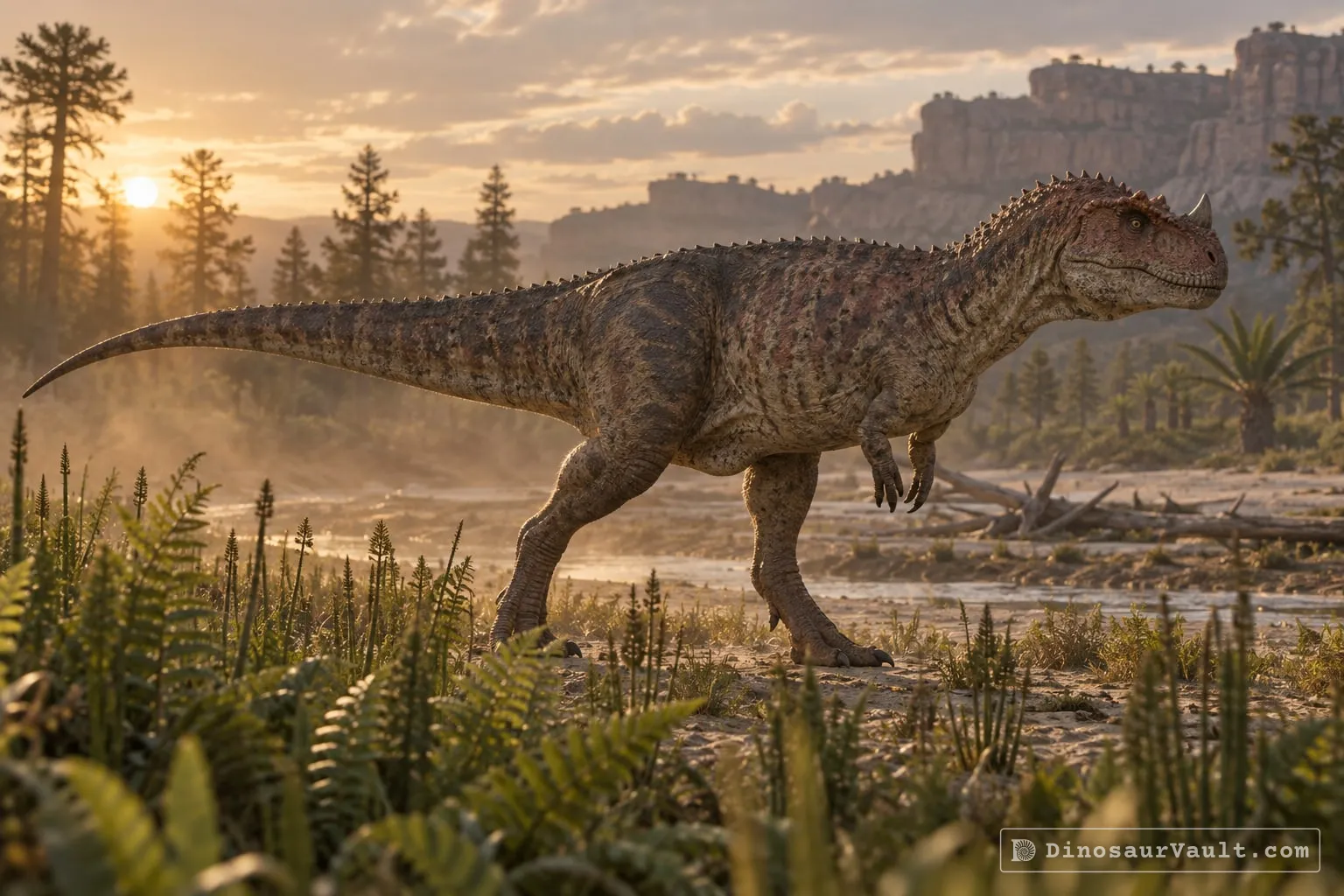
Scenes reconstructed from the available fossil evidence.
Lived alongside
Found in the same rock formations
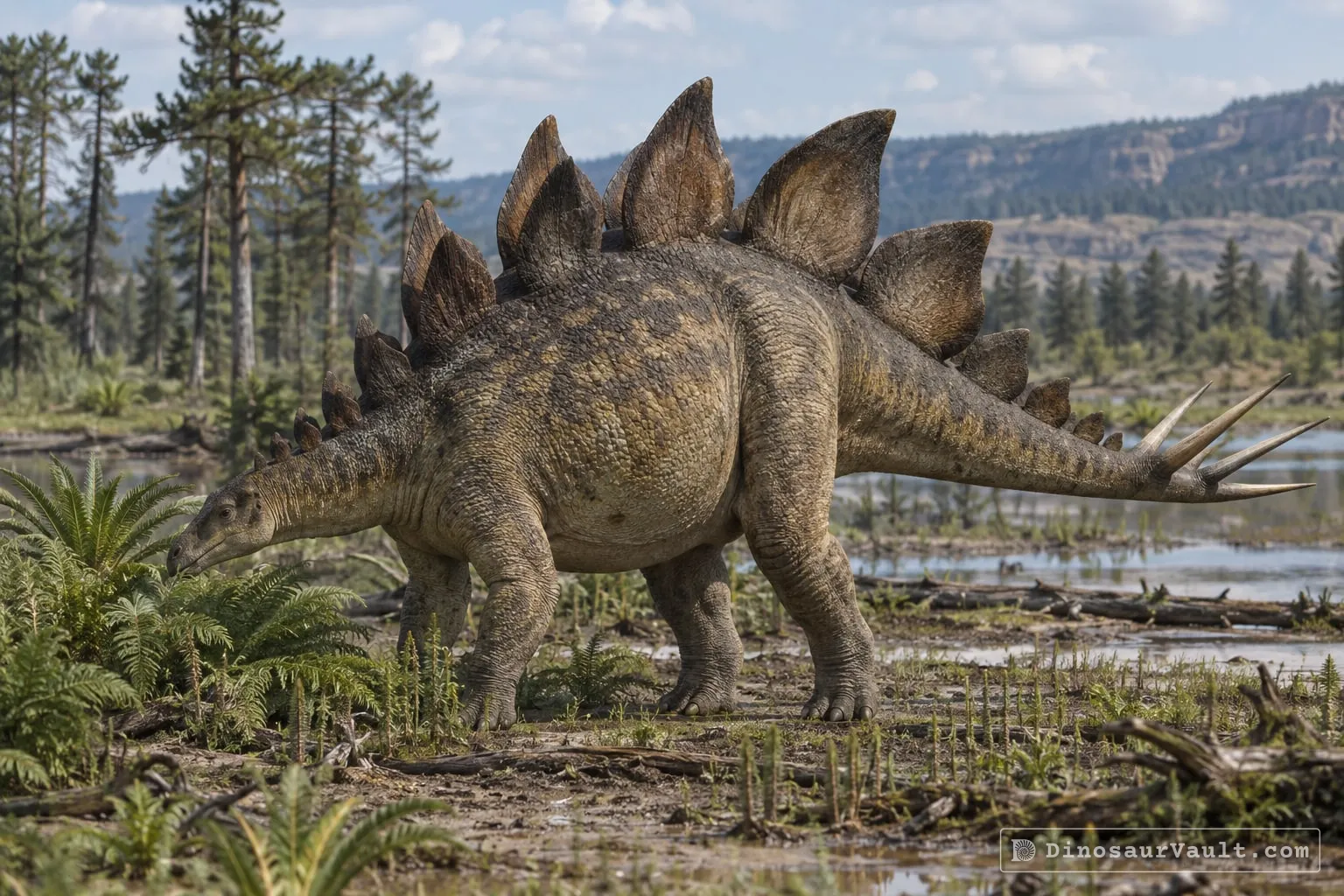
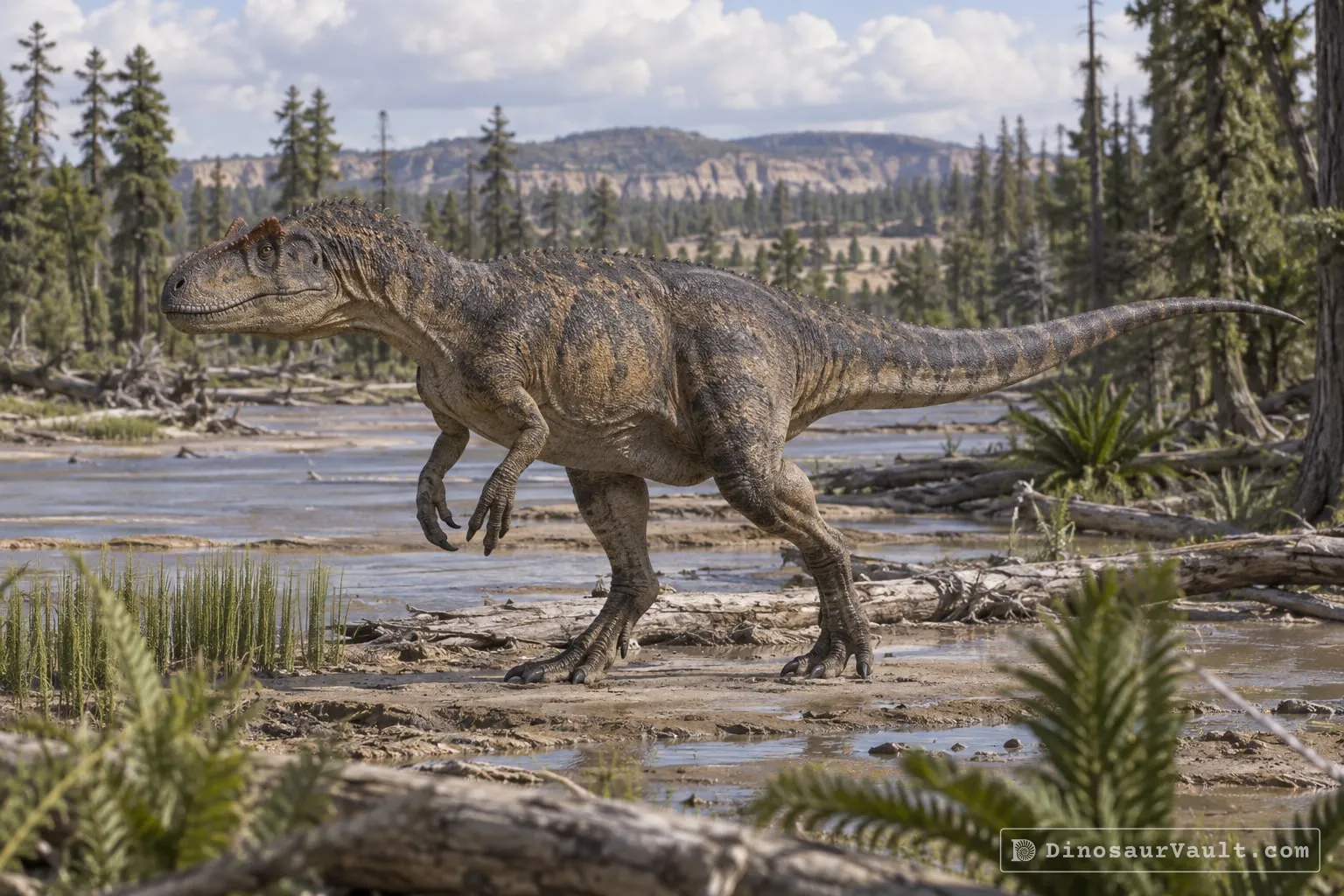
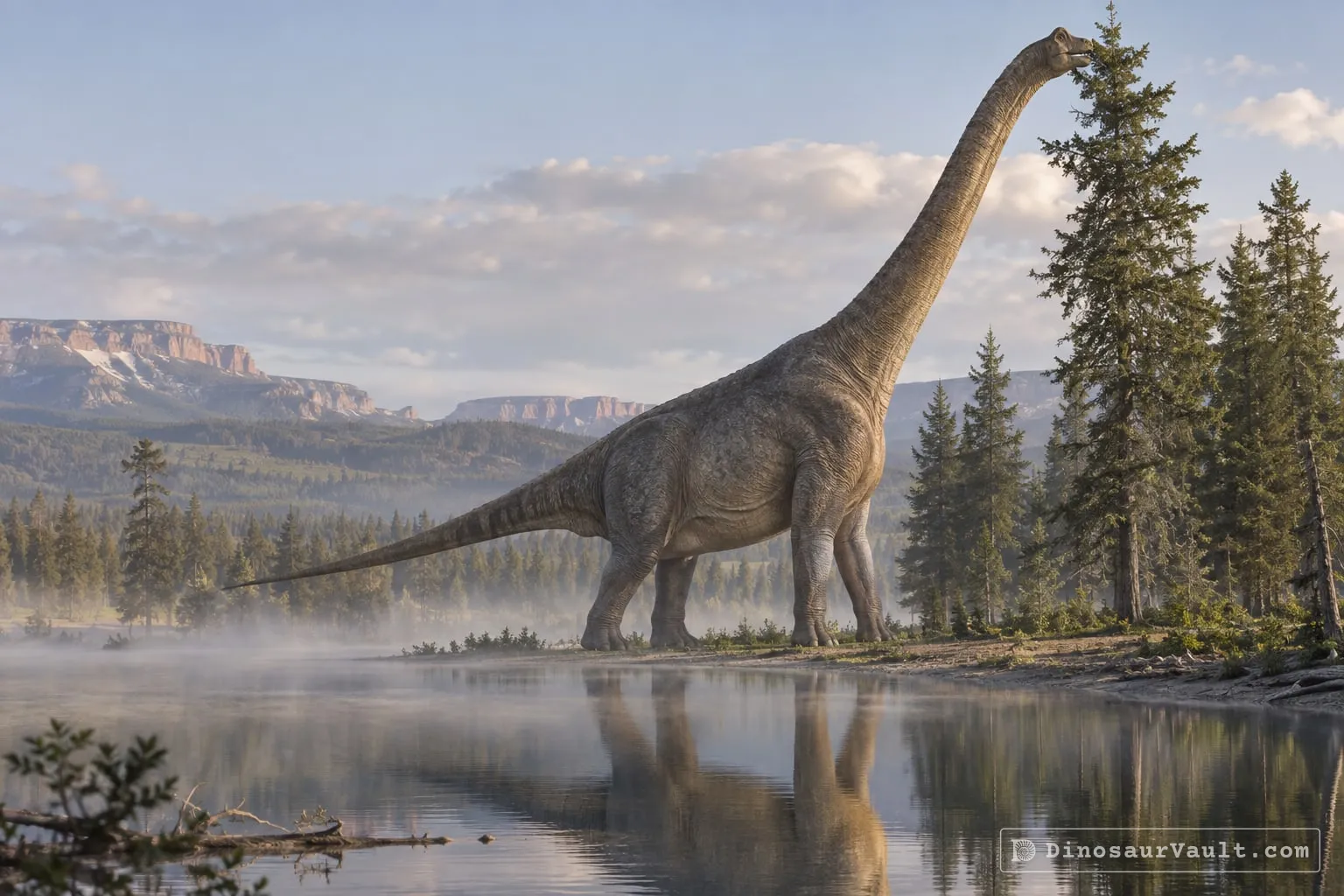
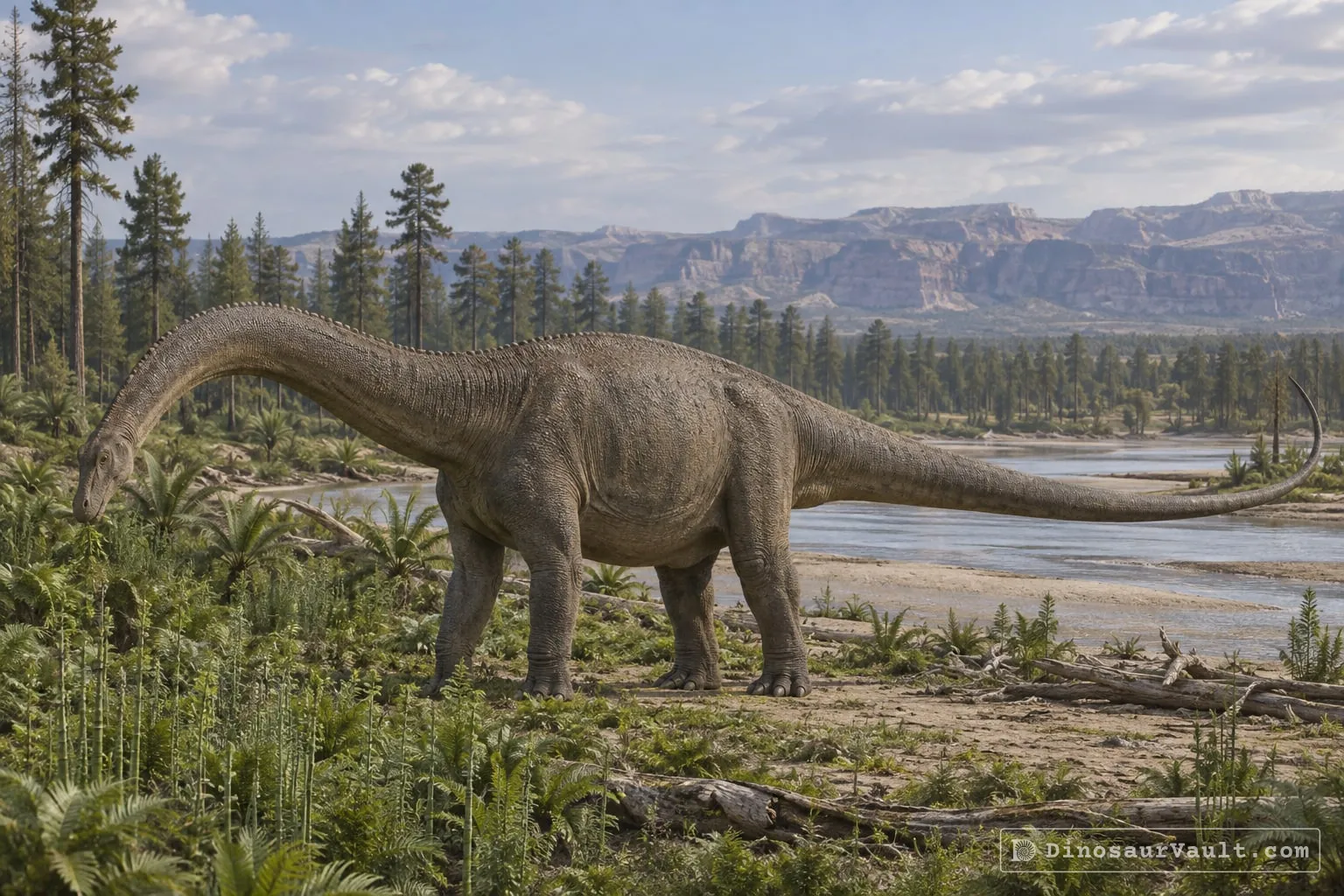
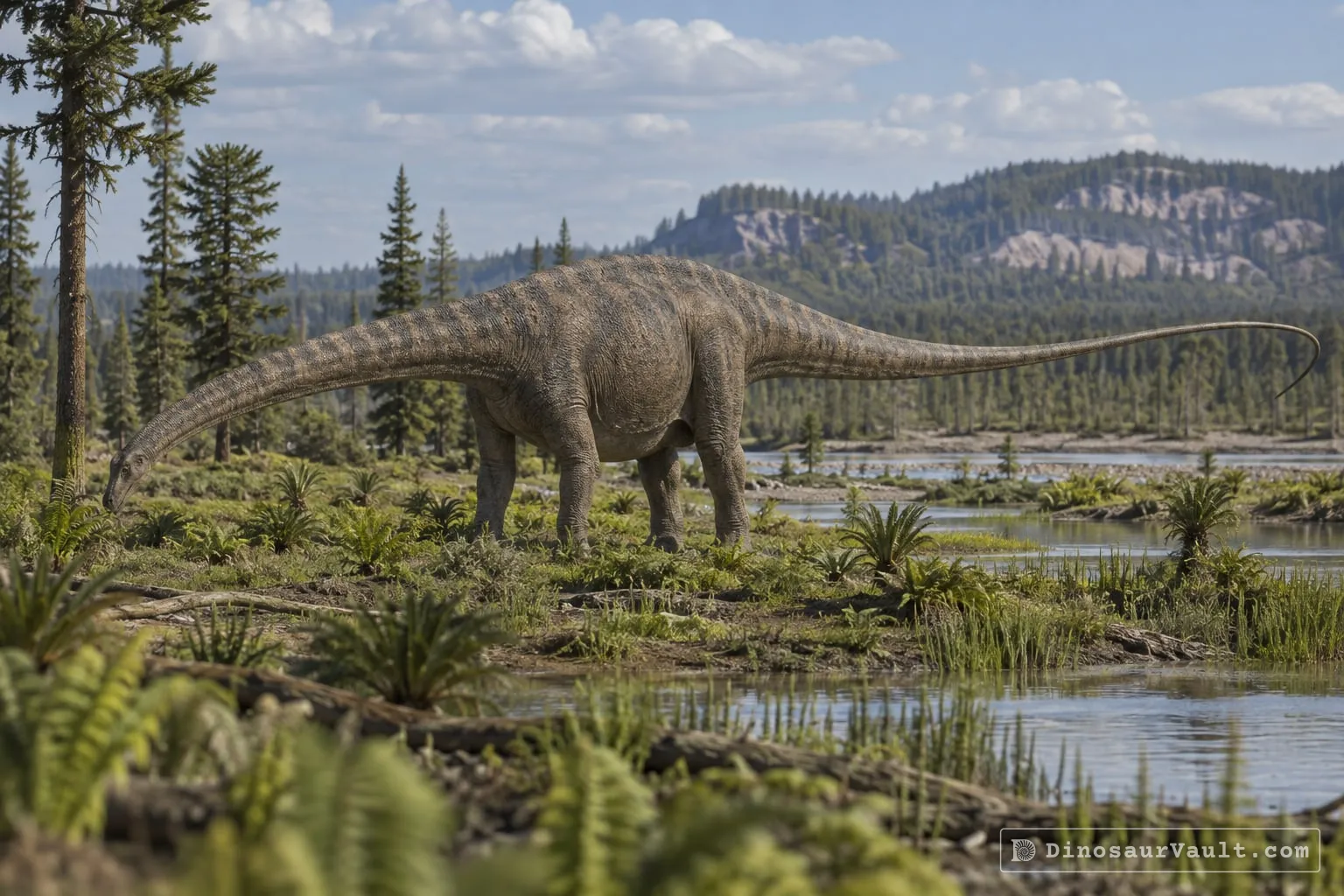
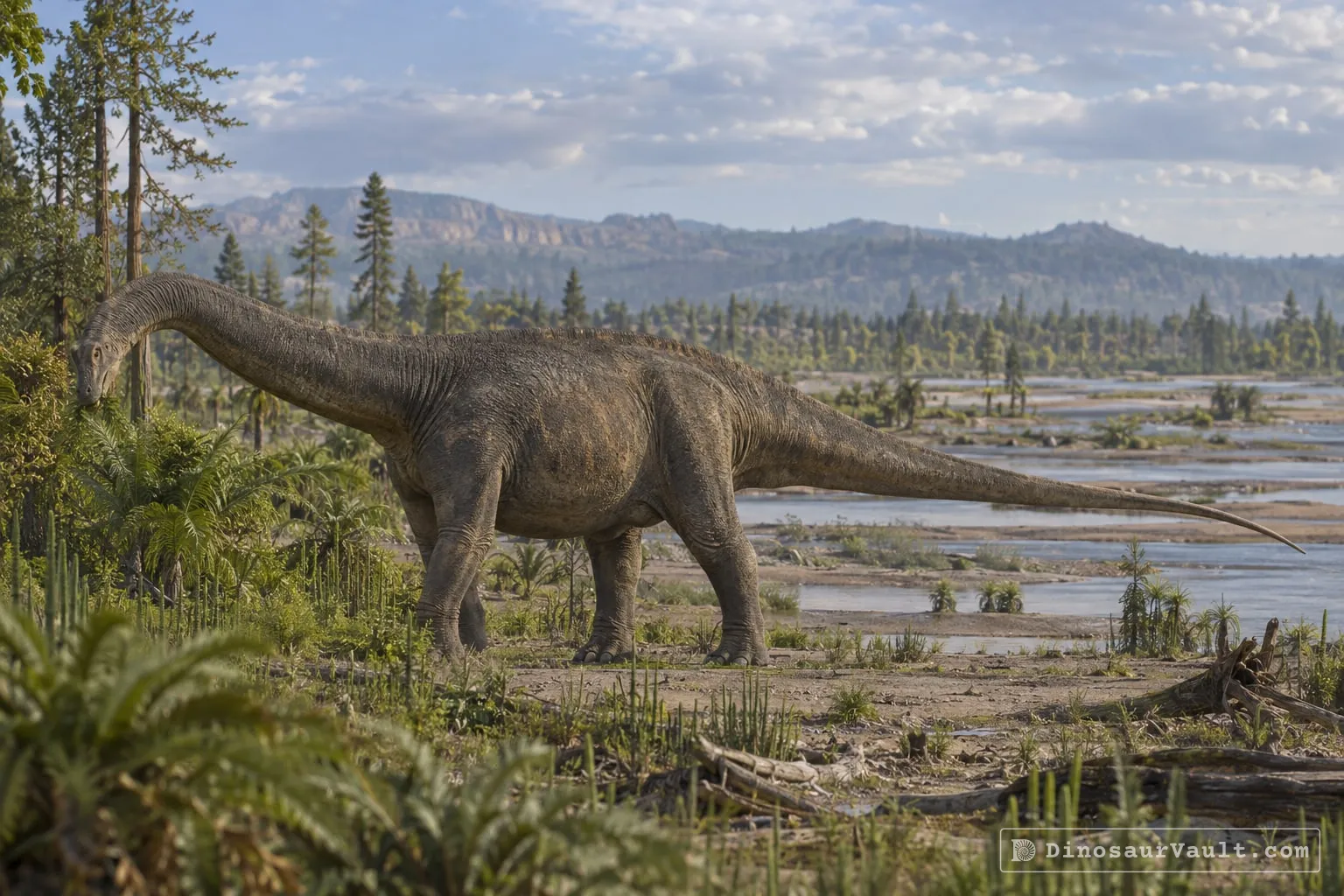


A rock formation can hold fossils laid down millions of years apart, so not every animal here met Saurophaganax.
The evidence
The science behind Saurophaganax
Which parts of the picture come from its own bones, and which come from its relatives.
From its own fossils
- The bones historically assigned to Saurophaganax include back and tail bones, limb bones and parts of the skull.
- A recent reassessment identified a mixture of theropod and sauropod bones among this material.
- The fragment of backbone that anchors the name was interpreted as belonging to a long-necked sauropod.
Borrowed from relatives
- Historical reconstructions borrowed much of the missing body from Allosaurus.
- Comparisons with Allosaurus and long-necked sauropods help separate the different animals represented by the bones.
Still unknown
- Whether Saurophaganax can remain a distinct, recognizable genus.
- The complete body and size of the animal represented by the original backbone fragment.
- Its skin and color.
Often drawn wrong
- Pictures of a giant predator resembling Allosaurus combine bones now interpreted as belonging to different kinds of dinosaur.
Discovery timeline
- 1995Named itChure
- 2020Close relativeChure & Loewen
- 2024RedescriptionDanison et al.
Key papers
The research behind what we know of Saurophaganax
Named it
Named Saurophaganax from large dinosaur bones in Oklahoma and argued that their anatomy distinguished them from Allosaurus.
A reassessment of the gigantic theropod Saurophagus maximus from the Morrison Formation (Upper Jurassic) of Oklahoma, USA. A. Sun and Y. Wang (eds.), Sixth Symposium on Mesozoic Terrestrial Ecosystems and Biota, Short Papers, China Ocean Press, Beijing.
No link available
Close relative
Compared Allosaurus skulls and named a distinct species, providing a framework for testing which large predator bones belong within Allosaurus.
Cranial anatomy ofAllosaurus jimmadseni, a new species from the lower part of the Morrison Formation (Upper Jurassic) of Western North America. PeerJ 8: e7803
Read the paper : Cranial anatomy ofAllosaurus jimmadseni, a new species from the lower part of the Morrison Formation (Upper Jurassic) of Western North America (opens in a new tab)Redescription
Separated sauropod bones from the historical material and proposed Allosaurus anax for the distinctive theropod remains.
Chimerism in specimens referred to Saurophaganax maximus reveals a new species of Allosaurus (Dinosauria, Theropoda). Vertebrate Anatomy Morphology Palaeontology 12
Read the paper : Chimerism in specimens referred to Saurophaganax maximus reveals a new species of Allosaurus (Dinosauria, Theropoda) (opens in a new tab)
Sources: Wikidata