Zupaysaurus
ZOO-pie-SORE-us
"devil lizard"
- Lived
- 227 to 206 million years ago, Late Triassic
- Diet
- Carnivore
- Group
- Theropods
- Found in
- Argentina
- Named by
- Arcucci and Coria 2003
Where its fossils were found
The evidence
Today

220 million years ago
Habitat
Winding rivers crossed a floodplain in what is now Argentina. The Los Colorados Formation also preserves Riojasaurus, Coloradisaurus and Lessemsaurus.
Field notes
About Zupaysaurus
What it was like
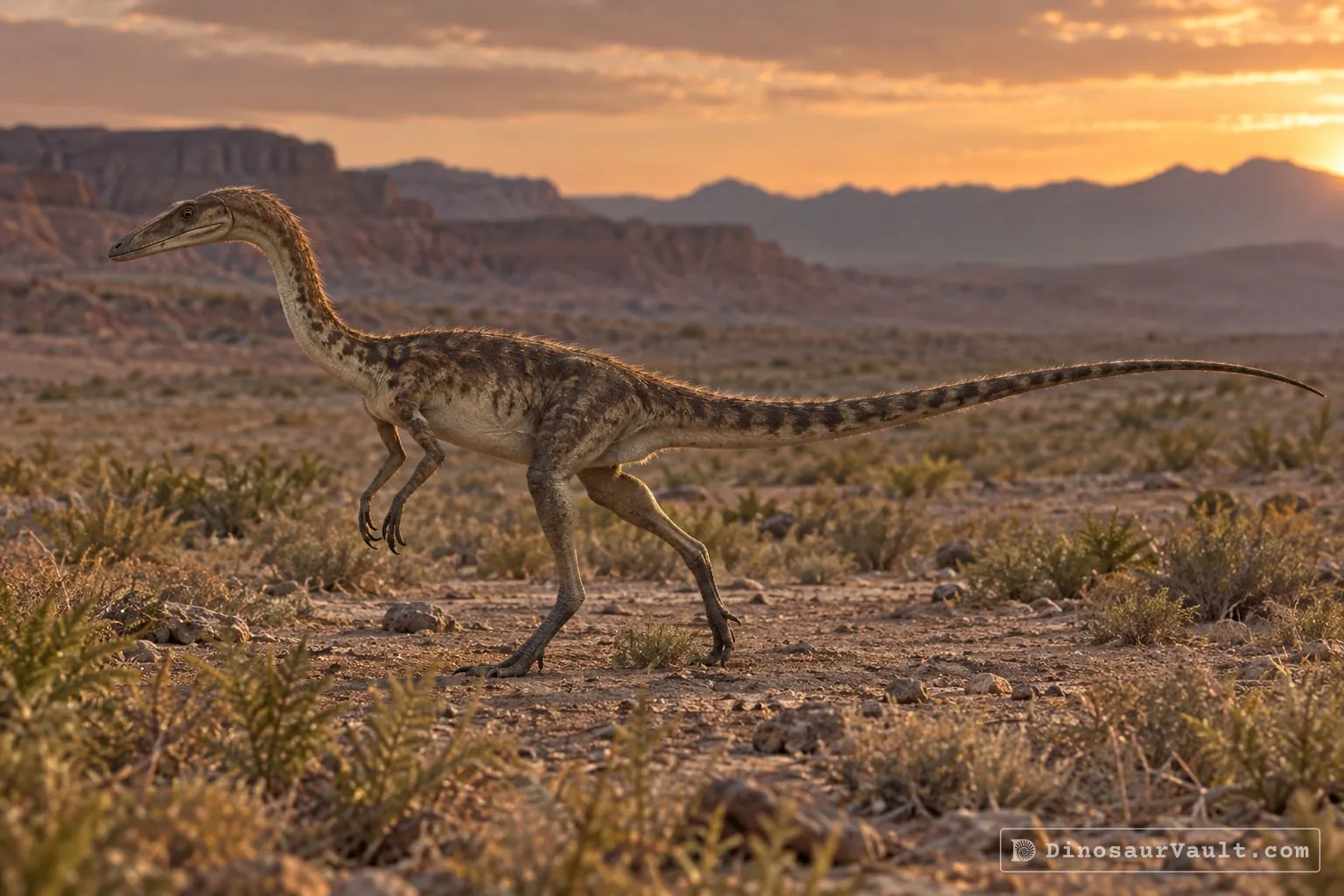
Zupaysaurus was an early theropod, a two-legged meat eater from the Triassic. It was one of the larger predators of its time. A later study found that the tall paired crests first reported on its snout were displaced bones, which formed low ridges in life.
Its world
It lived in the Late Triassic, in what is now Argentina. It shared the Los Colorados Formation with the large plant eaters Riojasaurus, Coloradisaurus and Lessemsaurus.
How it was found
Arcucci and Coria named Zupaysaurus in 2003, from a skull and parts of the skeleton. Its name comes from a local word for devil.
Field gallery
More views of Zupaysaurus
Scenes reconstructed from the available fossil evidence.
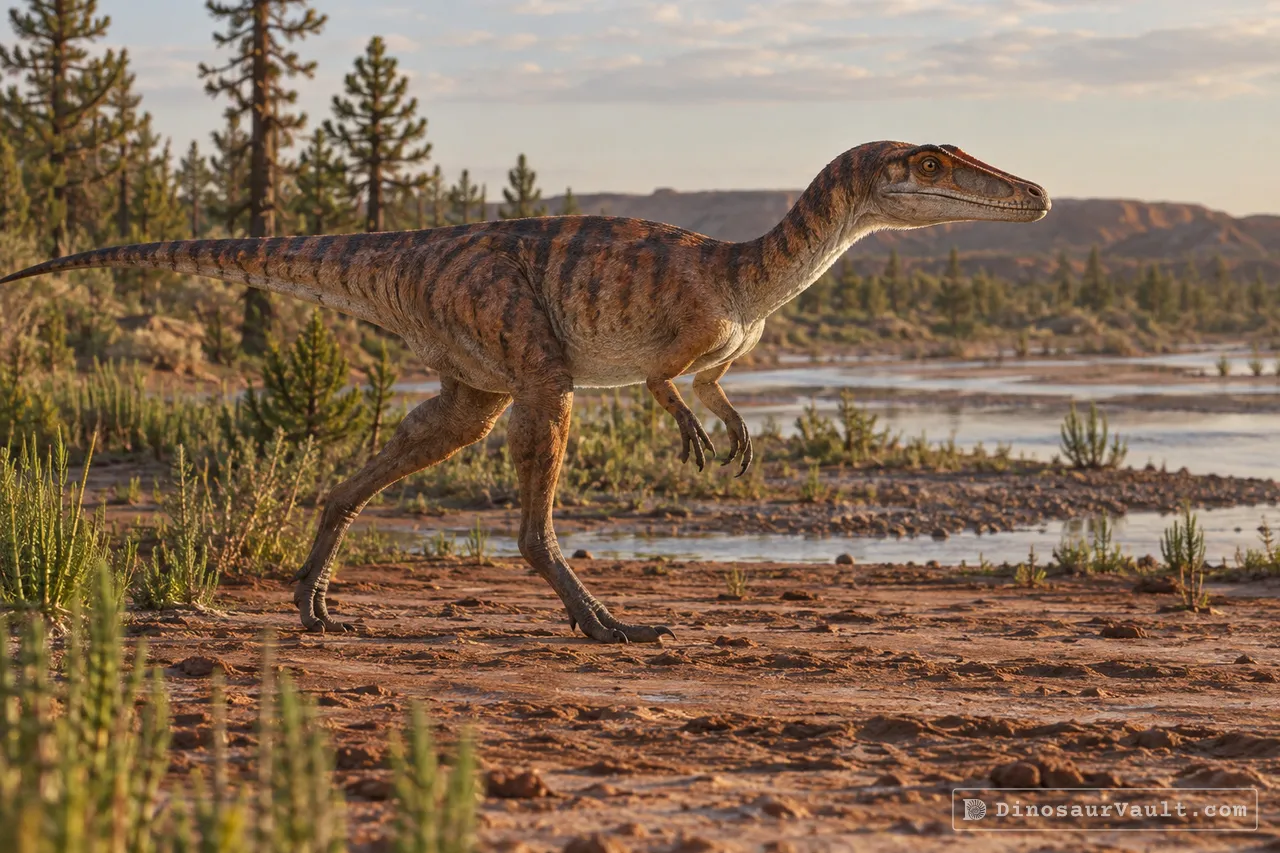
1 of 3
Lived alongside
Found in the same rock formations
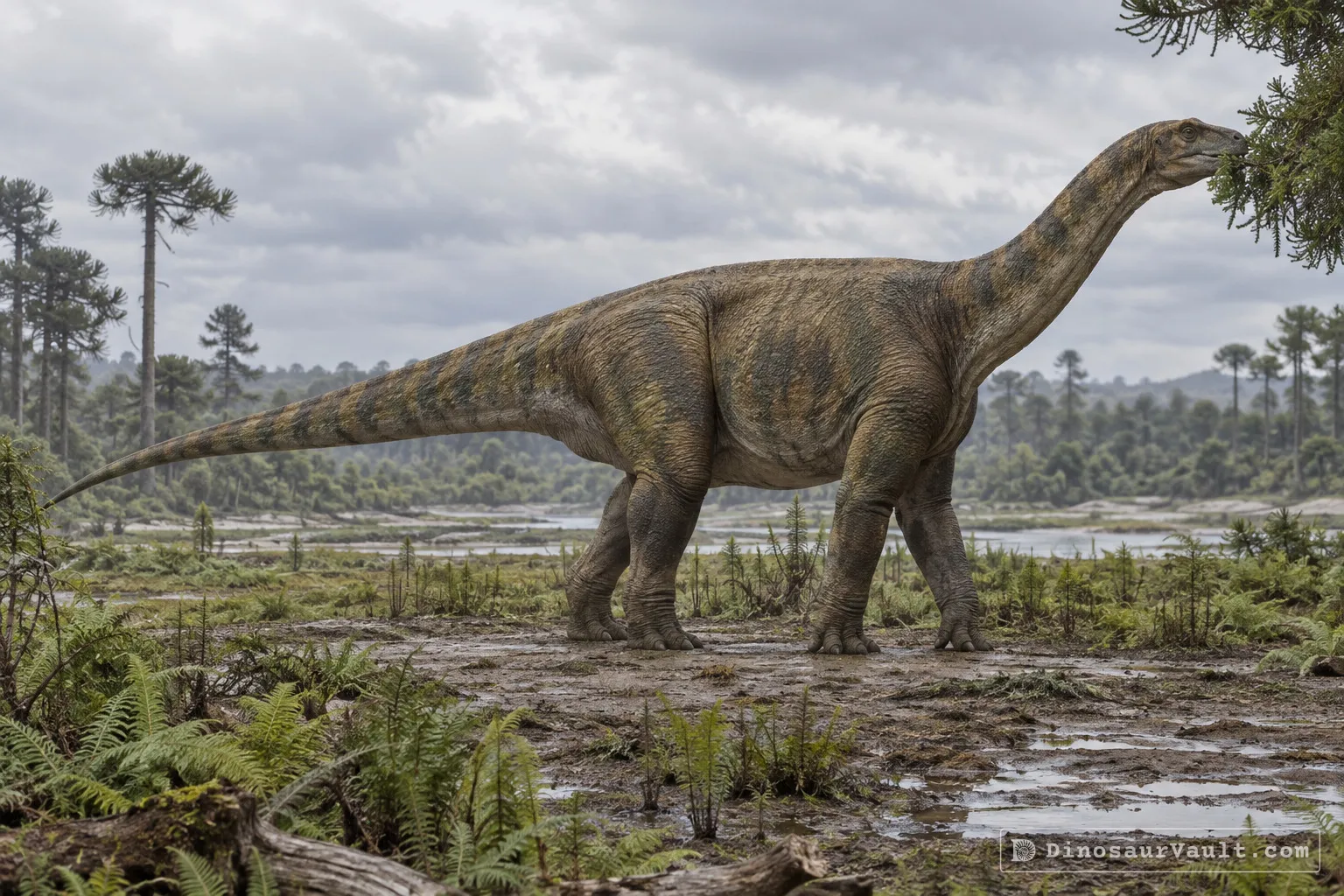
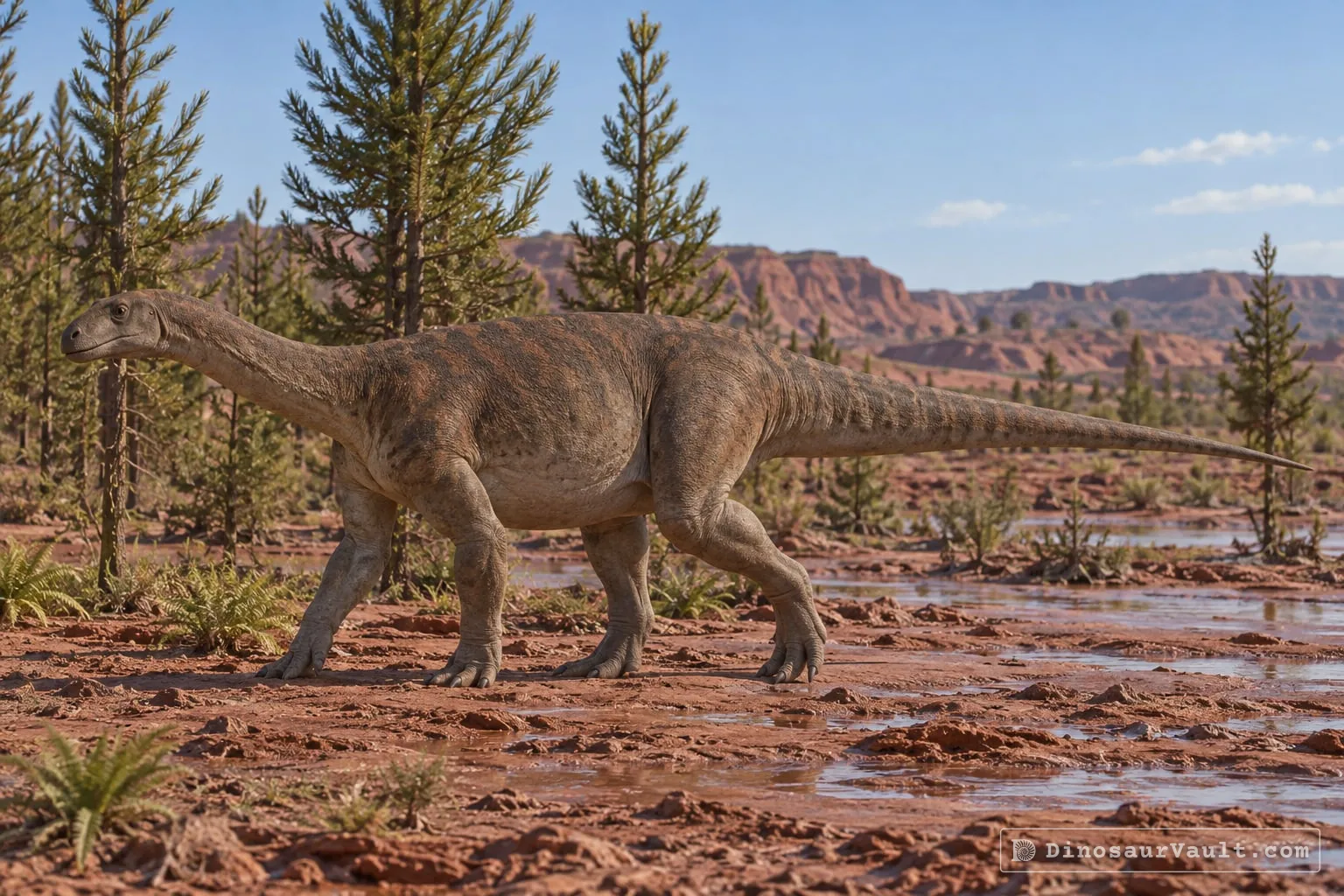
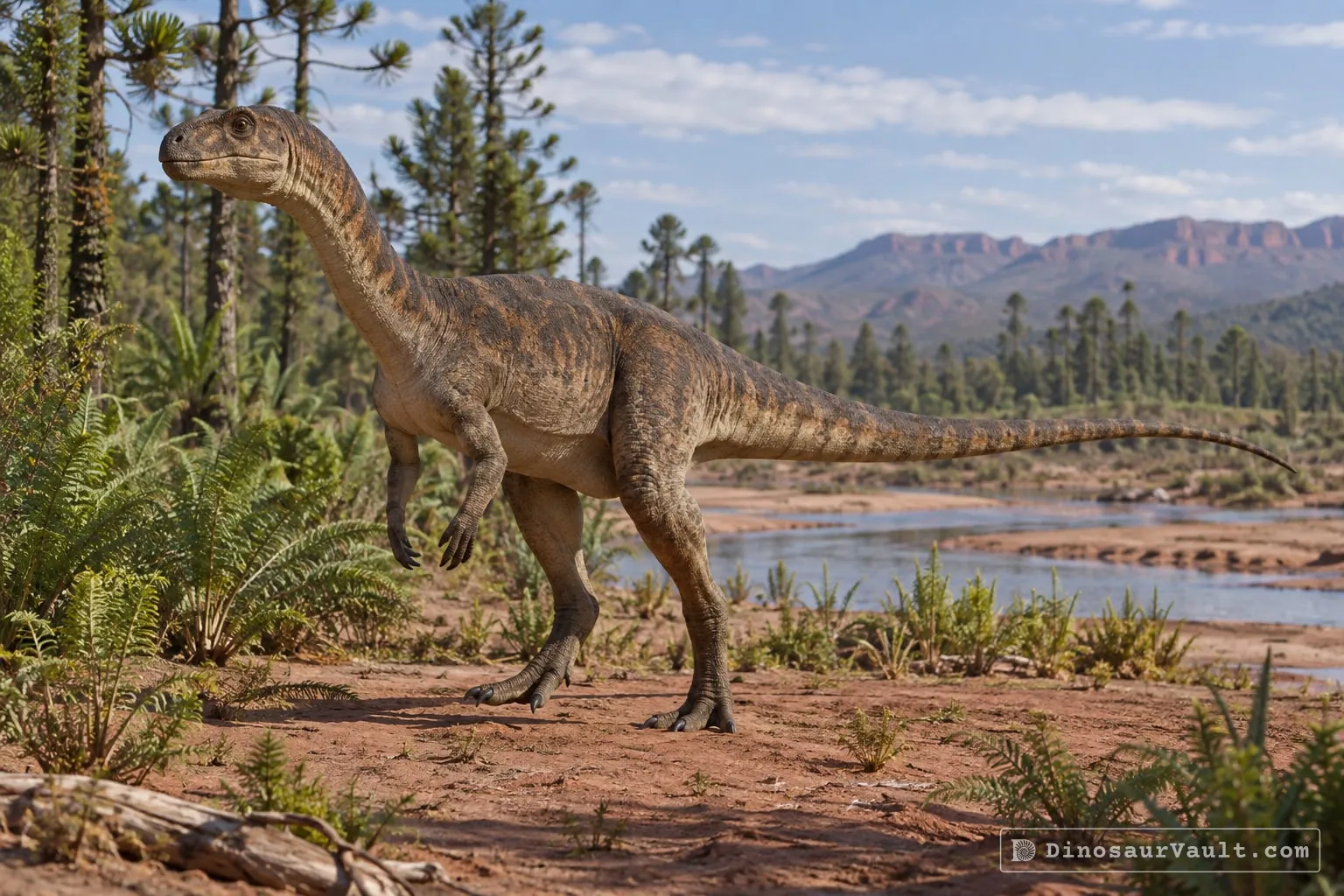


A rock formation can hold fossils laid down millions of years apart, so not every animal here met Zupaysaurus.
The evidence
The science behind Zupaysaurus
Which parts of the picture come from its own bones, and which come from its relatives.
From its own fossils
- A skull and lower jaws missing the front tips of the upper jaws, with bones from the neck, back, hips and shoulder, the lower end of the shinbone and fused ankle bones.
- The skull is long, low and narrow, with a large opening in front of each eye. The lower jaw is long and slender.
- A later study of the skull found that the tall paired crests first reported on its snout were displaced snout bones. In life these bones formed only low ridges along each side of the snout.
Borrowed from relatives
- The missing snout tip and most of the body, including the arms, hands, feet and tail, are restored by comparison with Dilophosaurus.
Still unknown
- The shape of the front of its snout and the teeth it held.
- Its skin covering and color.
- Its exact position among the earliest theropod branches.
Discovery timeline
- 2003Named itArcucci & Coria
- 2007SkullEzcurra
- 2007Family treeEzcurra & Novas
- 2020Close relativeMarsh & Rowe
Key papers
The research behind what we know of Zupaysaurus
Named it
Named Zupaysaurus from a skull missing its snout tip and from body bones, documenting an early predator from Argentina.
A new Triassic carnivorous dinosaur from Argentina. Ameghiniana 40: 217-228
No link available
Skull
Described the skull in detail, showed that the supposed snout crests were displaced bones, and linked Zupaysaurus with early theropods such as Coelophysis.
The cranial anatomy of the coelophysoid theropodZupaysaurus rougierifrom the Upper Triassic of Argentina. Historical Biology 19: 185-202
Read the paper : The cranial anatomy of the coelophysoid theropodZupaysaurus rougierifrom the Upper Triassic of Argentina (opens in a new tab)Family tree
Reassessed the skull and body bones to test where Zupaysaurus belongs among early theropods.
Phylogenetic relationships of the Triassic theropodZupaysaurus rougierifrom NW Argentina. Historical Biology 19: 35-72
Read the paper : Phylogenetic relationships of the Triassic theropodZupaysaurus rougierifrom NW Argentina (opens in a new tab)Close relative
Redescribed the whole skeleton of Dilophosaurus from several specimens and compared its skull and family tree position with Zupaysaurus.
A comprehensive anatomical and phylogenetic evaluation of Dilophosaurus wetherilli (Dinosauria, Theropoda) with descriptions of new specimens from the Kayenta Formation of northern Arizona. Journal of Paleontology 94: 1-103
Read the paper : A comprehensive anatomical and phylogenetic evaluation of Dilophosaurus wetherilli (Dinosauria, Theropoda) with descriptions of new specimens from the Kayenta Formation of northern Arizona (opens in a new tab)
Close relatives
Other members of Neotheropoda


Sources: Wikidata