Lessemsaurus
Type species Lessemsaurus sauropoides
- Lived
- 227 to 206 million years ago, Late Triassic
- Diet
- Herbivore
- Group
- Sauropods, Lessemsauridae
- Found in
- Argentina
- Named by
- Bonaparte 1999
Where its fossils were found
The evidence
Today

220 million years ago
Habitat
Rivers crossed floodplains that experienced dry seasons in what is now Argentina. Riojasaurus, Coloradisaurus and Zupaysaurus lived in the same region.
Field notes
About Lessemsaurus
What it was like
Lessemsaurus was a large, early relative of the giant sauropods. Its vertebrae had tall spines near the base of the neck. It is one of the biggest plant eaters known from the Triassic and helps show how early sauropodomorphs grew large before true sauropods appeared.
Its world
It lived in the Late Triassic, in what is now Argentina. Its bones come from the Los Colorados Formation, where it shared the land with the plant eaters Riojasaurus and Coloradisaurus and the early predator Zupaysaurus.
How it was found
Bonaparte named Lessemsaurus in 1999. The type species is Lessemsaurus sauropoides. It gives its name to a small family, Lessemsauridae, of heavy early sauropodomorphs.
Field gallery
More views of Lessemsaurus
Scenes reconstructed from the available fossil evidence.
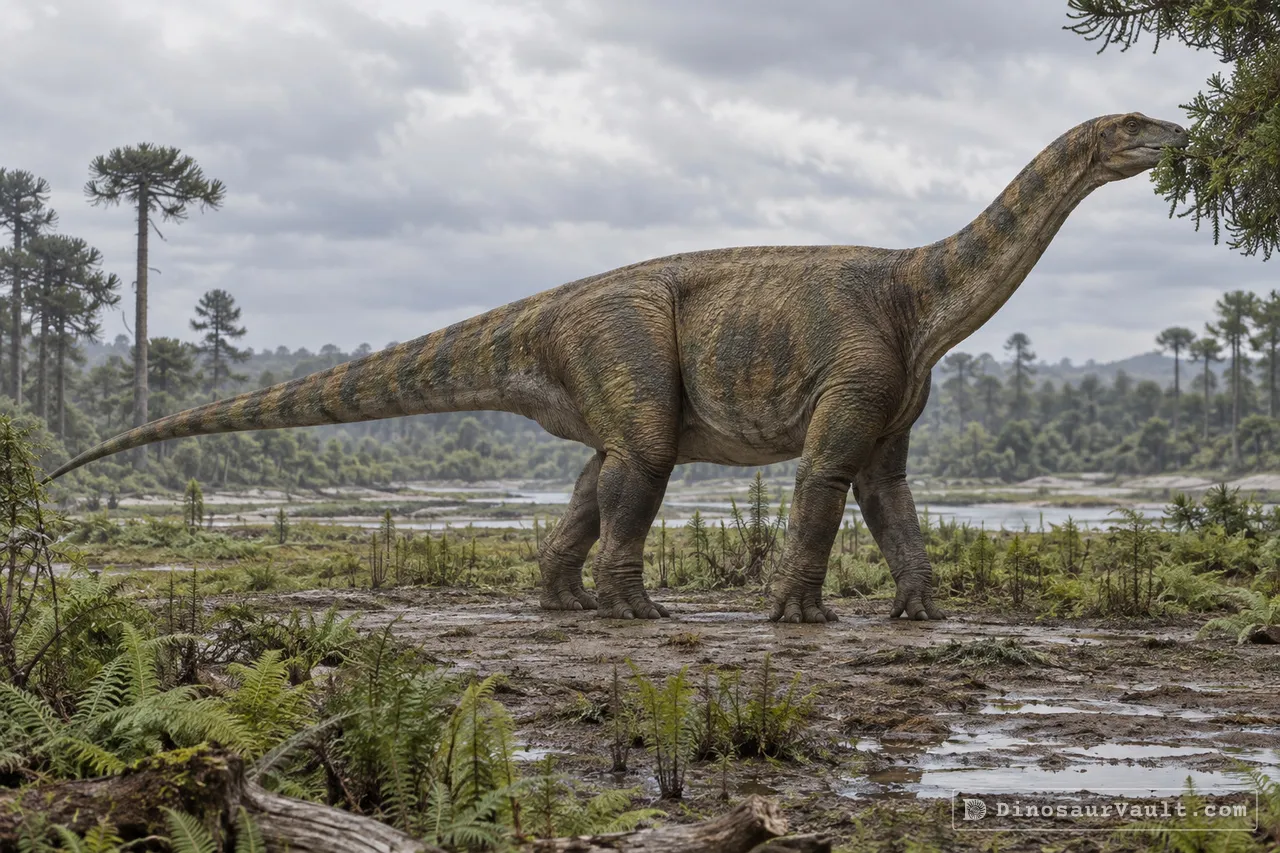
1 of 3
Lived alongside
Found in the same rock formations
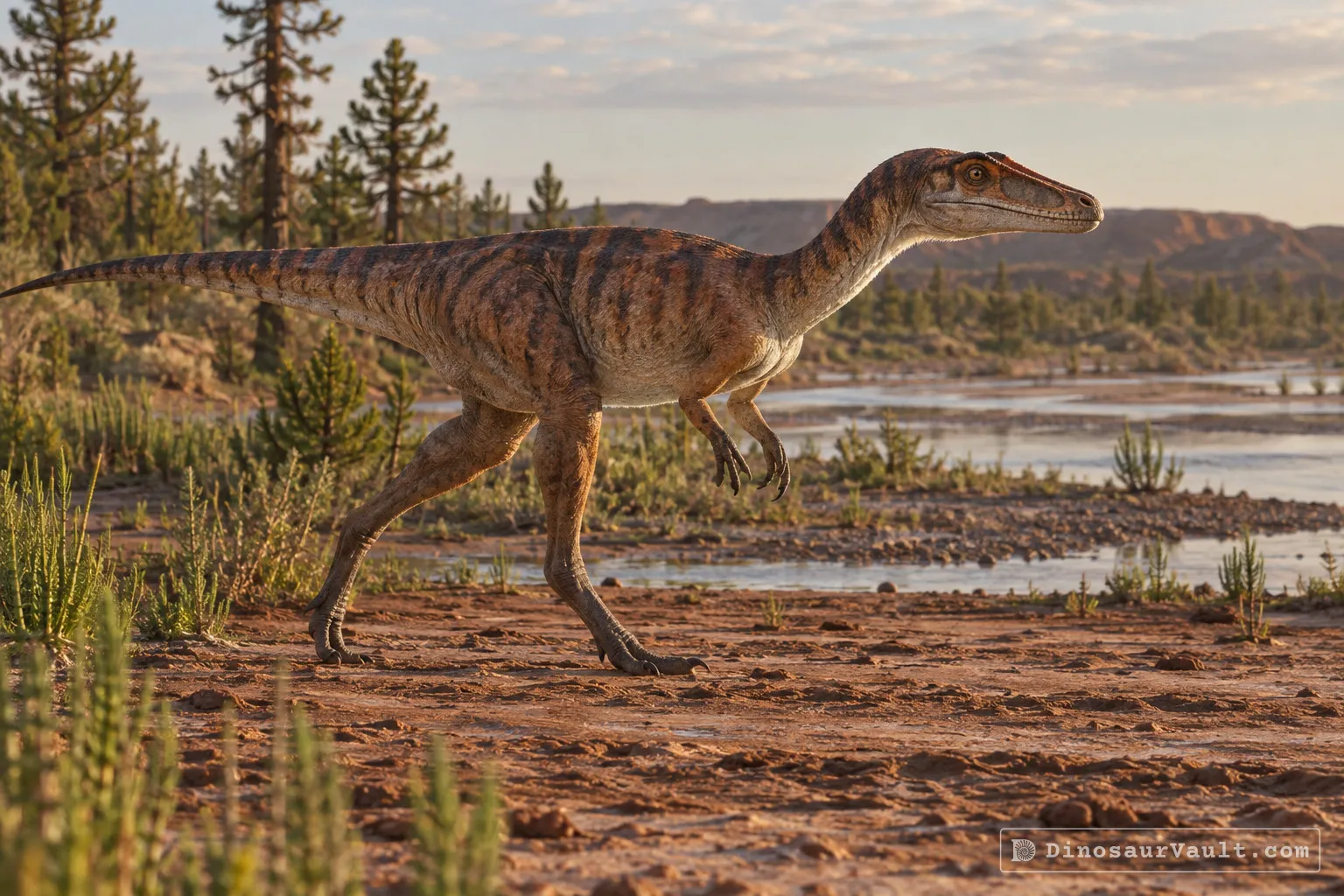
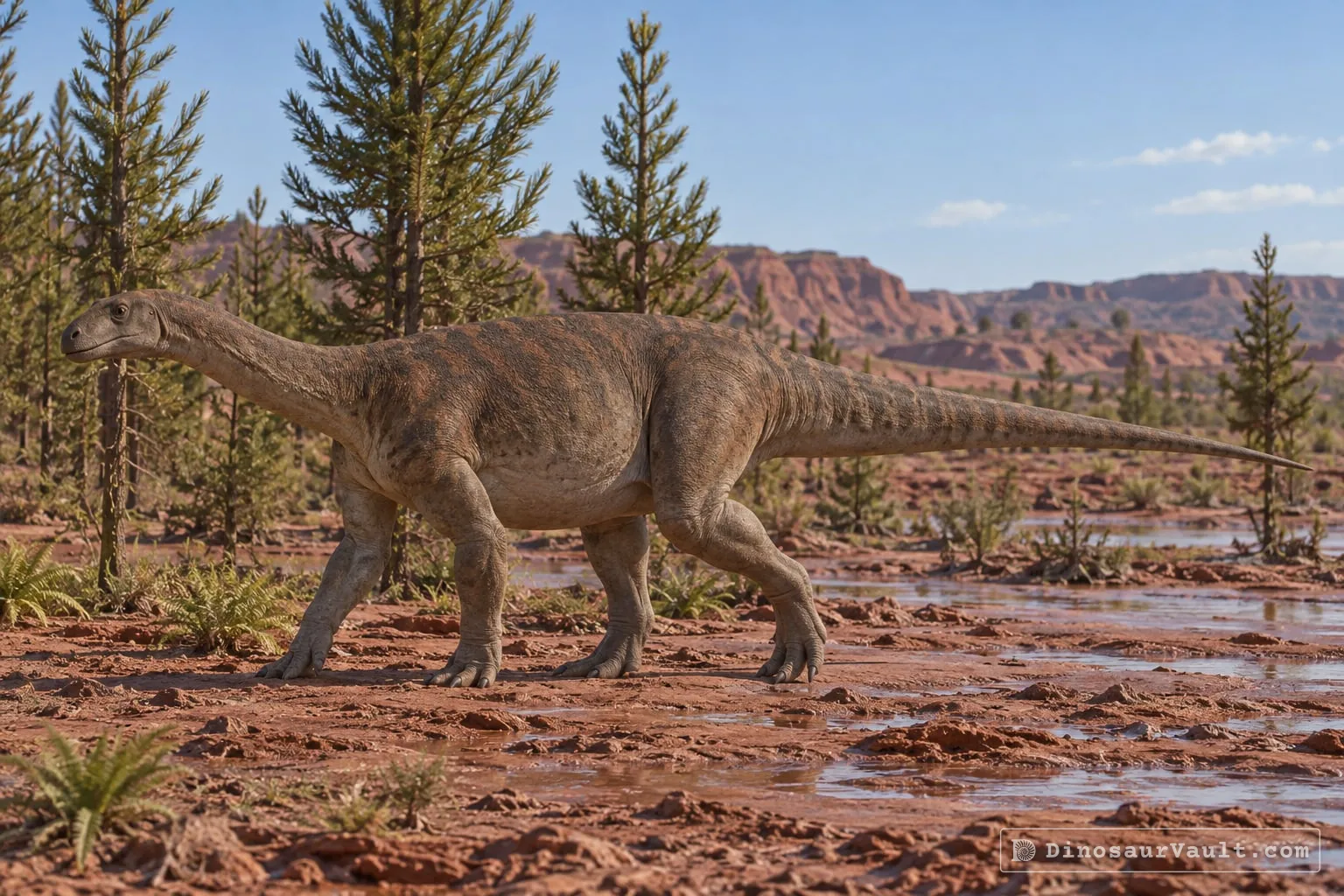
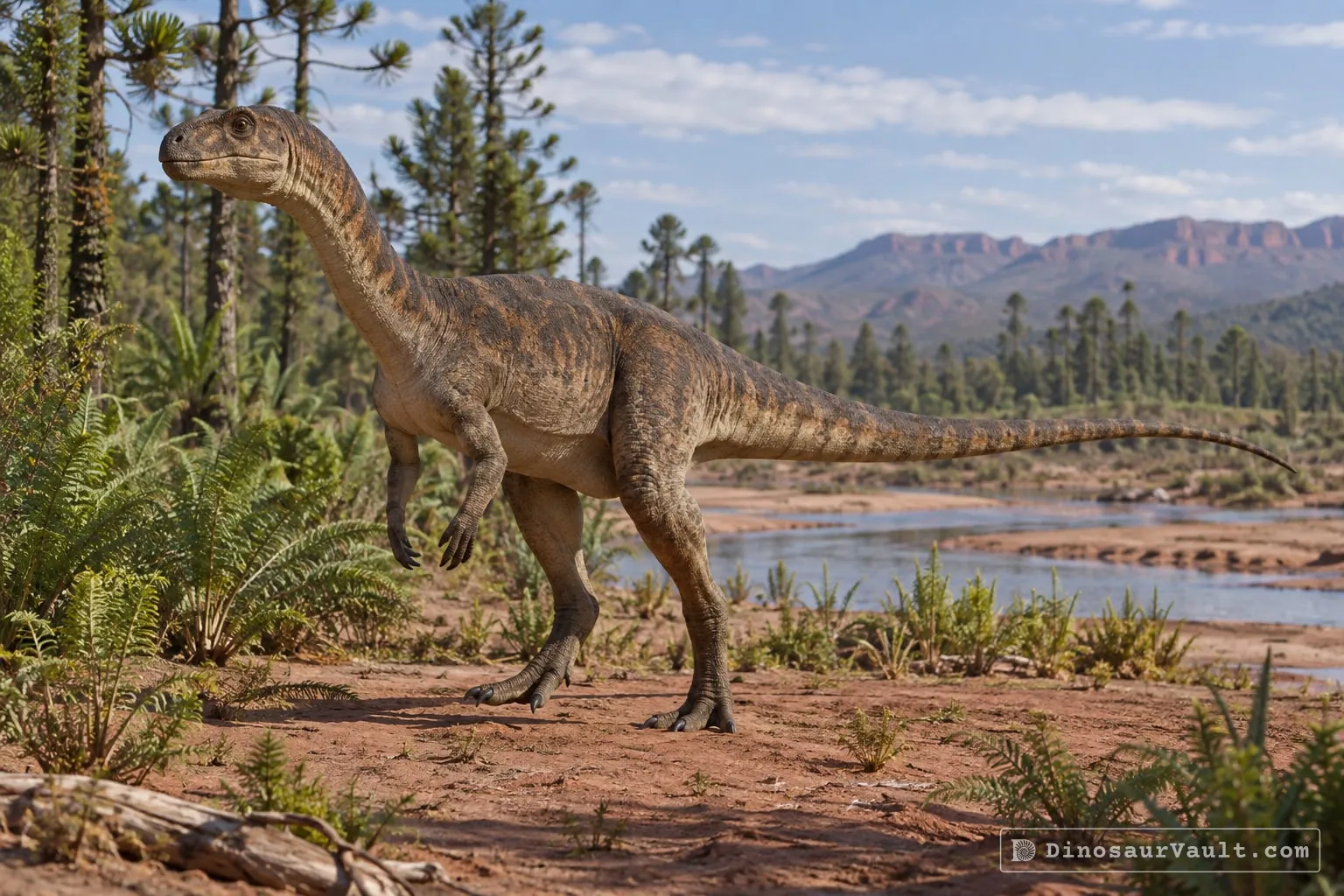


A rock formation can hold fossils laid down millions of years apart, so not every animal here met Lessemsaurus.
The evidence
The science behind Lessemsaurus
Which parts of the picture come from its own bones, and which come from its relatives.
From its own fossils
- The type specimen is a series of neural arches from the neck and back vertebrae. Tall spines rise from the vertebrae near the base of the neck.
- Other bones of the backbone, shoulders, hips and limbs, from several individuals, are referred to it provisionally. Bone tissue from bones assigned to it records rapid growth interrupted by slower periods.
- Referred bones include a broad shoulder blade and a compact first hand bone. The thumb claw is robust, flattened from side to side and less strongly curved than in Plateosaurus, and the toe claws differ in shape from one another.
Borrowed from relatives
- The skull, the ends of the neck and tail, and the outer fingers are restored after Plateosaurus.
- The ribs, limbs, feet and base of the tail are compared with Antetonitrus.
Still unknown
- The shape of its skull. No skull has been found with its bones.
- Whether all the referred bones belong to Lessemsaurus. The scientists who referred them called for a connected skeleton to test the match.
- Its skin covering and color.
Discovery timeline
- 1999Named itBonaparte
- 2014Close relativeMcPhee et al.
- 2018Growing upApaldetti et al.
Key papers
The research behind what we know of Lessemsaurus
Named it
Named a large early sauropodomorph from neck and back vertebrae in the Los Colorados Formation.
Evolución de las vértebras presacras en Sauropodomorpha [Evolution of the presacral vertebrae in Sauropodomorpha]. Ameghiniana 36: 115-187
No link available
Close relative
Described Antetonitrus, a close comparison for the mix of early sauropodomorph and sauropod-like features in Lessemsaurus.
The complete anatomy and phylogenetic relationships ofAntetonitrus ingenipes(Sauropodiformes, Dinosauria): implications for the origins of Sauropoda. Zoological Journal of the Linnean Society 171: 151-205
Read the paper : The complete anatomy and phylogenetic relationships ofAntetonitrus ingenipes(Sauropodiformes, Dinosauria): implications for the origins of Sauropoda (opens in a new tab)Growing up
Studied Lessemsaurus and Ingentia, showing that their family reached giant size through rapid, seasonal growth before later sauropods evolved.
An early trend towards gigantism in Triassic sauropodomorph dinosaurs. Nature Ecology & Evolution 2: 1227-1232
Read the paper : An early trend towards gigantism in Triassic sauropodomorph dinosaurs (opens in a new tab)
Close relatives
Other members of Lessemsauridae


Sources: Wikidata