Outline: a typical theropod
Nankangia
- Lived
- 72 to 66 million years ago, Late Cretaceous
- Diet
- Omnivore
- Group
- Theropods, Oviraptoridae
- Found in
- China
- Named by
- Lü et al. 2013
Where its fossils were found
The evidence
Today

70 million years ago
Field notes
About Nankangia
What it was like
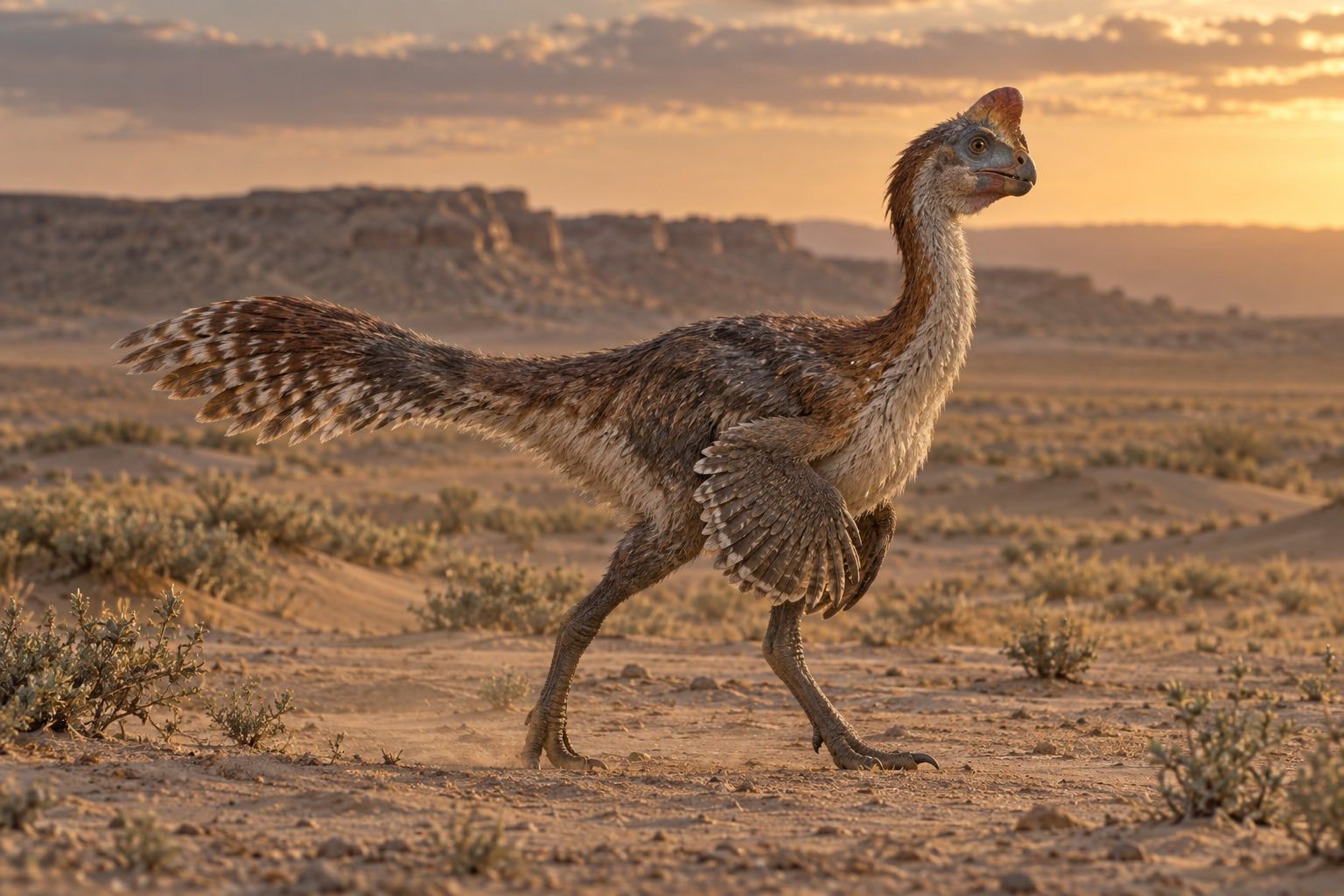
Nankangia was an oviraptorosaur, a toothless, feathered theropod with a short beak. It is known from a lower jaw and parts of the skeleton.
Its world
It lived about 72 to 66 million years ago, at the end of the Late Cretaceous, in what is now southern China. The region was rich in oviraptorids, and many other members of the family have been found there.
How it was found
Lü and colleagues named it in 2013. It is named after the county where it was found.
Close relatives
Other members of Oviraptoridae
Sources: WikidataNamed in: J. Lü, L. Yi, and H. Zhong, X. Wei. 2013. A new oviraptorosaur (Dinosauria: Oviraptorosauria) from the Late Cretaceous of southern China and its palaeoecological implications. PLoS One 8(11):e80557:1-14